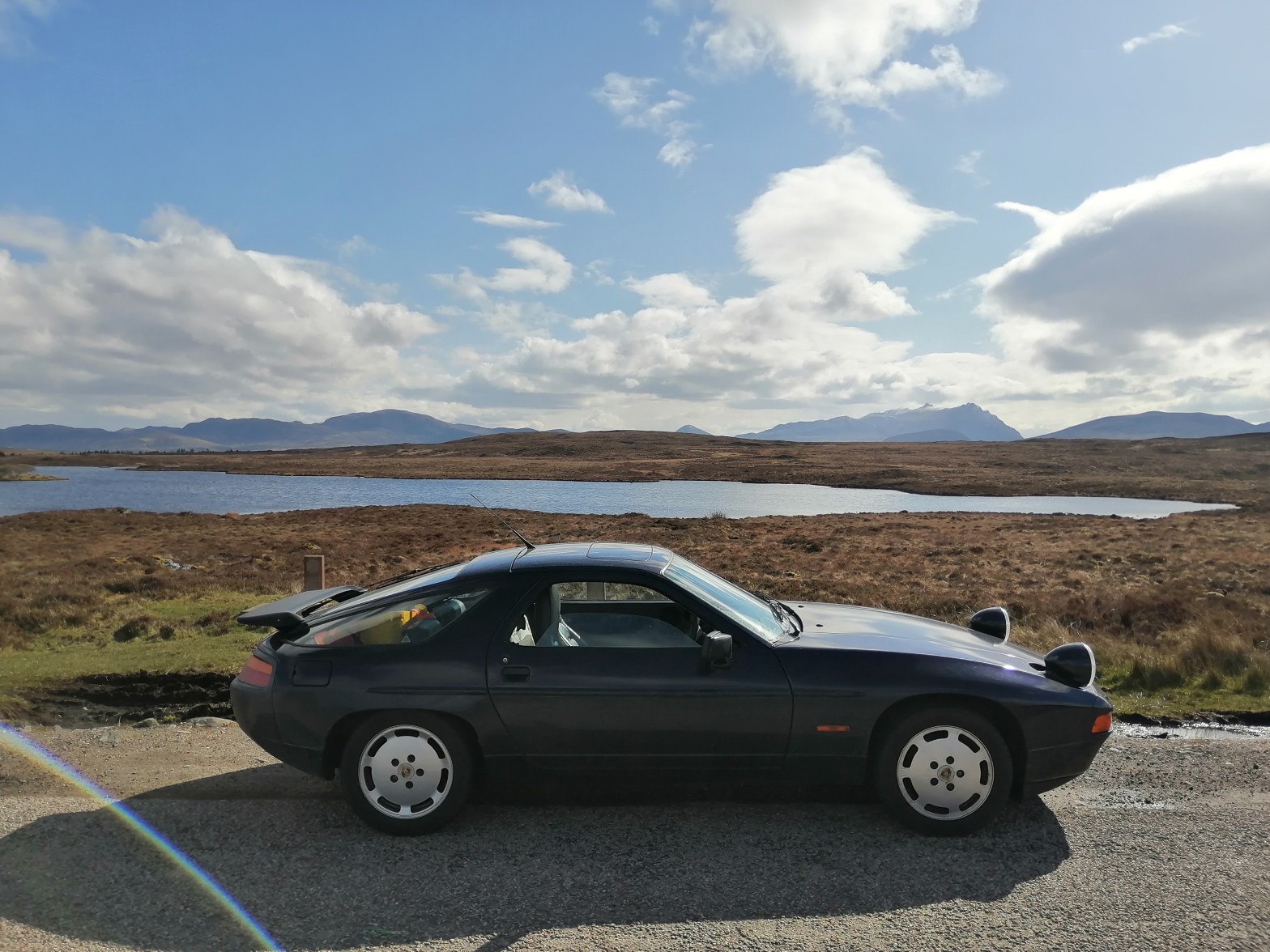
This is not really a geomorphology trip, but the landscapes I drove through are some of the most beautiful in the world (in my opinion), so this blog is not completely out of place here. I will start with a bit of background on the car: if you are not interested in cars, you may skip this section and go straight to the next one about the trip!
Background: the Porsche 928 S4
A bit of context: for those who don’t know yet, I am a car enthusiast. I grew up in a garage (my car was a mechanics) during the Group B rallying era, and have been obsessed with cars since I was a kid. The first time I came across the Porsche 928 S4, I was 12, and its unique design (including the cool pop-up headlights) left me speechless. I drove my first one in the Arcade game Chase HQ, where one stops criminals by bashing their cars in high-speed chases: https://www.youtube.com/watch?v=Dfz2qofmZx0.
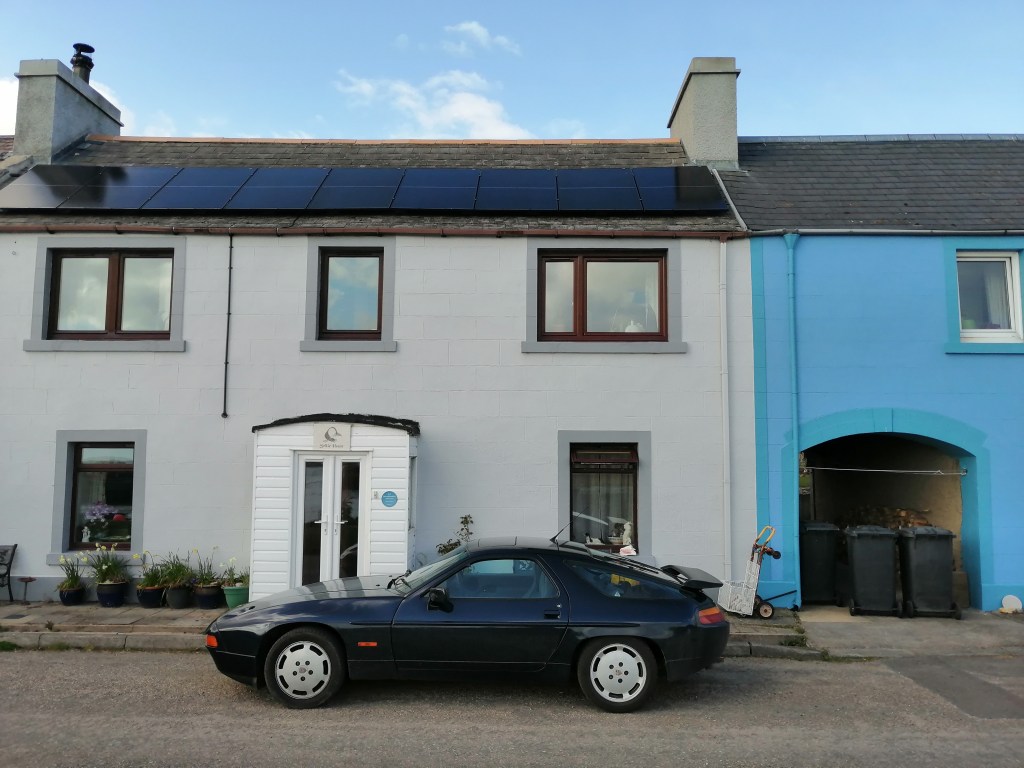
In 2012, I had a bit of an midlife crisis, with my 1985 Peugeot 205 GTi dying of rust and other events in my life. I therefore bought myself a 1992 Porsche 928 S4 on ebay! I paid the price of an 8-year old Ford Mondeo (you could get them cheap at the time) and it has been an “interesting “experience, to say the least! The driving couldn’t be more different than with the 205: the 928 has a 4-gear automatic gearbox(!) and a 5-litre V8 engine that allows it to top nearly 160 mph! The car has a lot of torque, and a weight of nearly 2 tons. It is a cruiser that was initially designed for the USA market, not a sports car for very windy roads. The car is incredibly smooth, comfortable and practical, believe it or not, as I demonstrate in this video: https://www.youtube.com/watch?v=ICpvQf8x0Dw. The fuel consumption is atrocious (20 mpg).
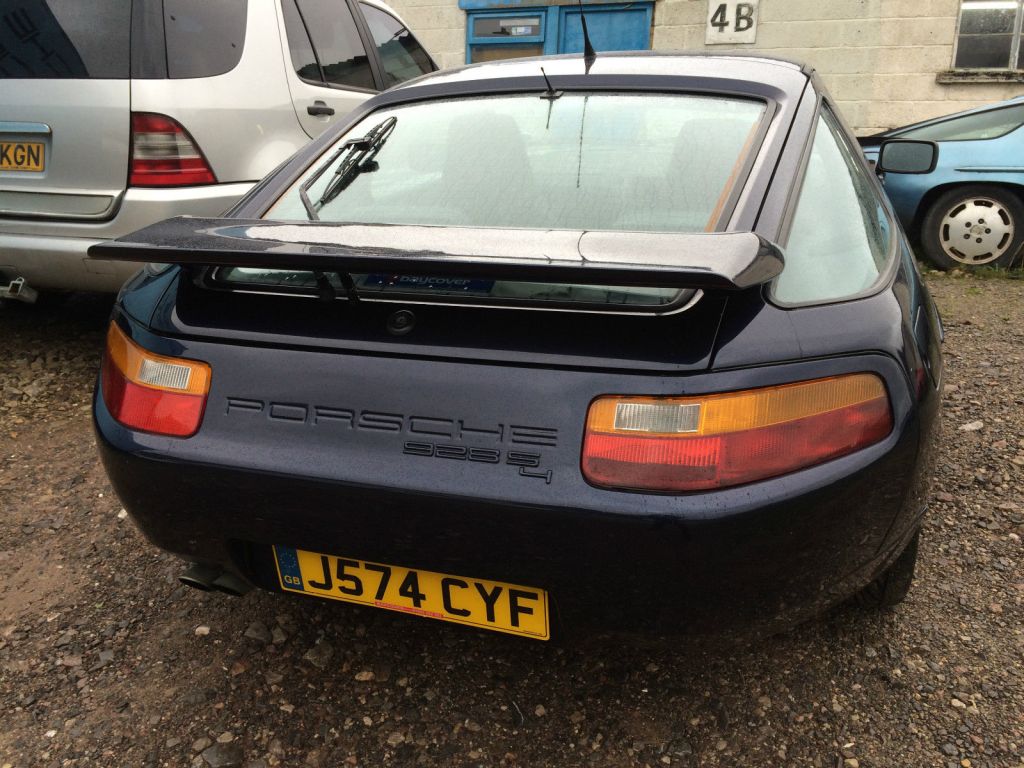
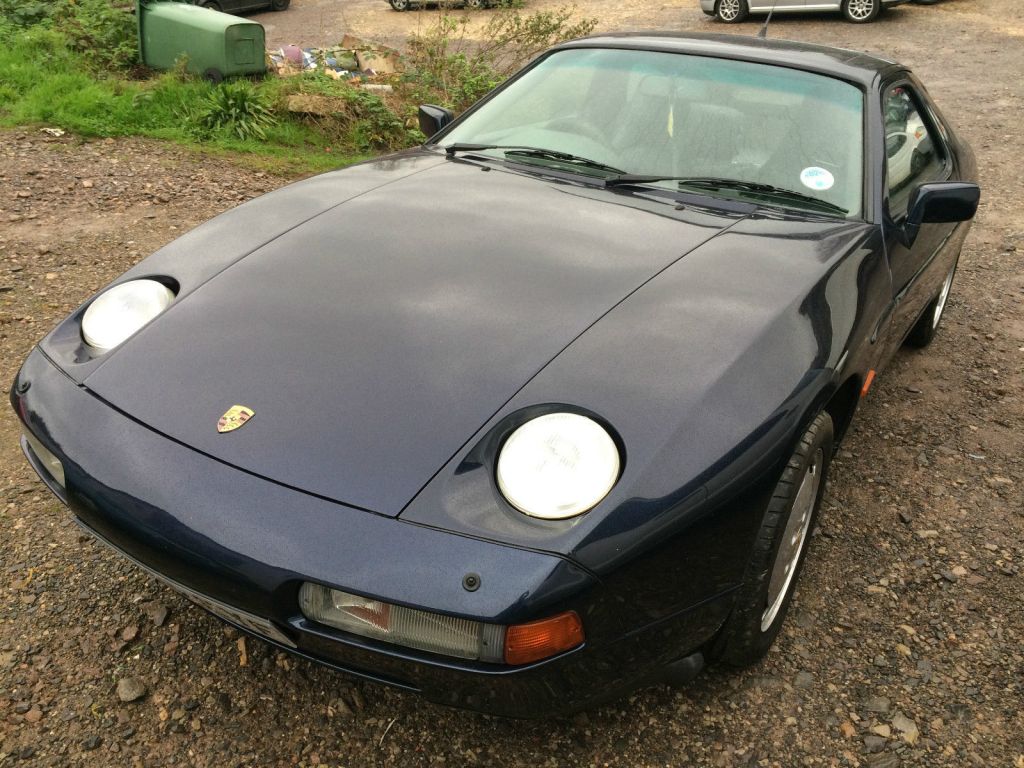
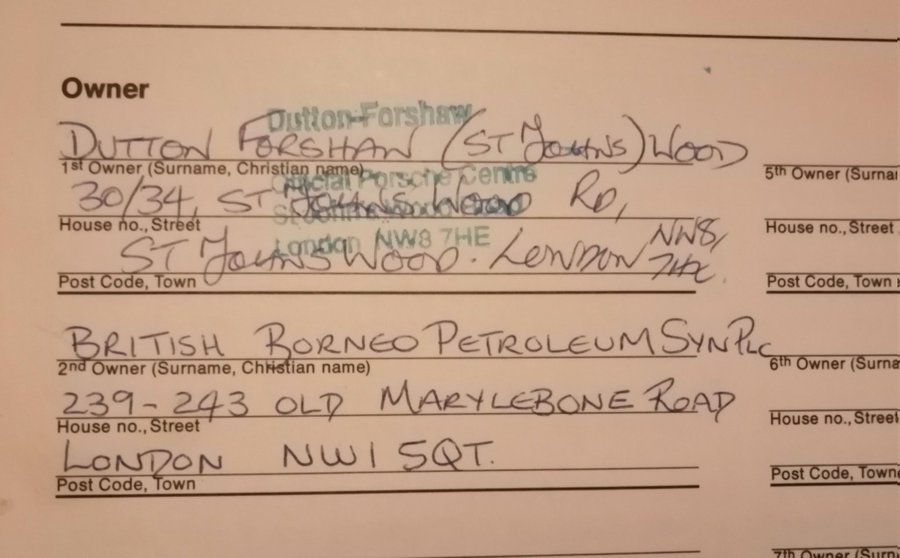
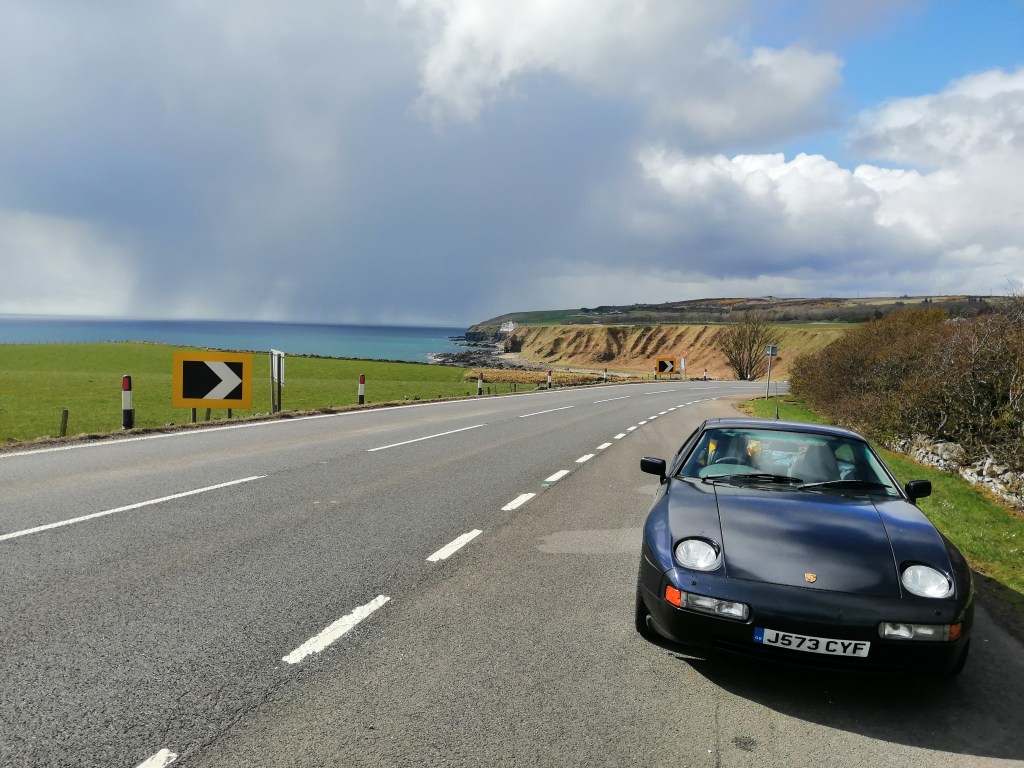
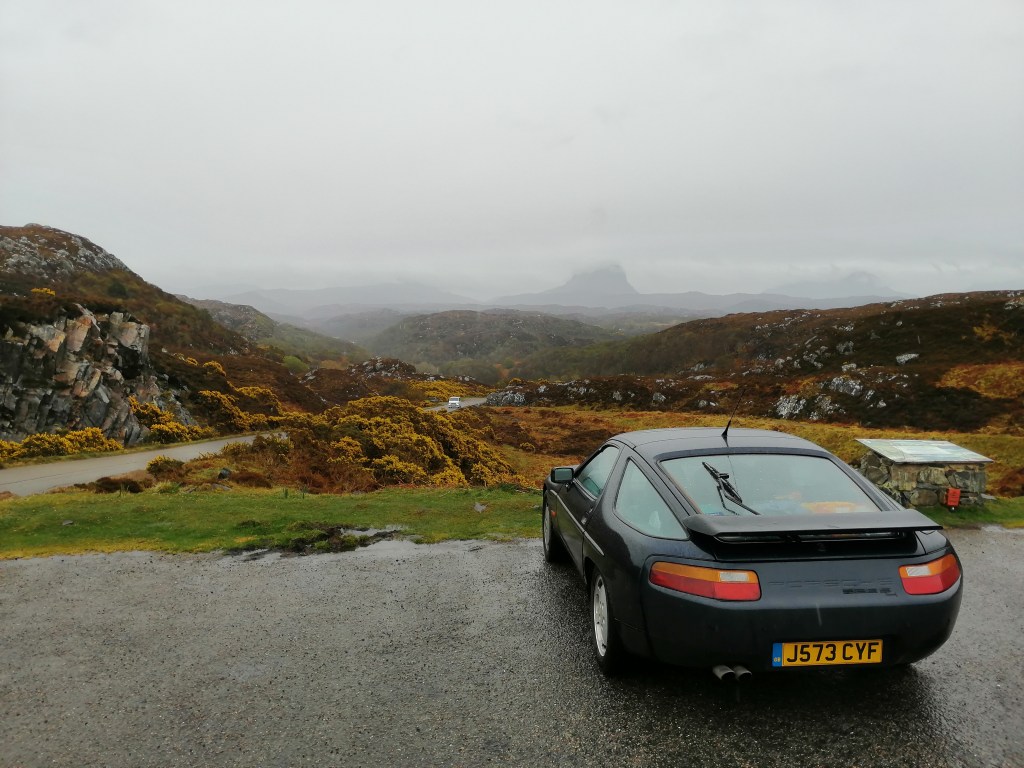
The car had 10 owners before me, and what could be an interesting story: it has a twin. I found the twin for sale on ebay in 2014, and they are so similar that I thought someone was trying to sell my car! Registration of my car is J573CYF. The one for sale was J574CYF. They were both registered on the 16th January 2012, and the first registered owner of mine was the “British Borneo Petroleum Syn Plc”, which makes me wonder whether they were bought as “company cars”? The twin had 180,000 miles in 2014, and seems to have become SORN in 2021.
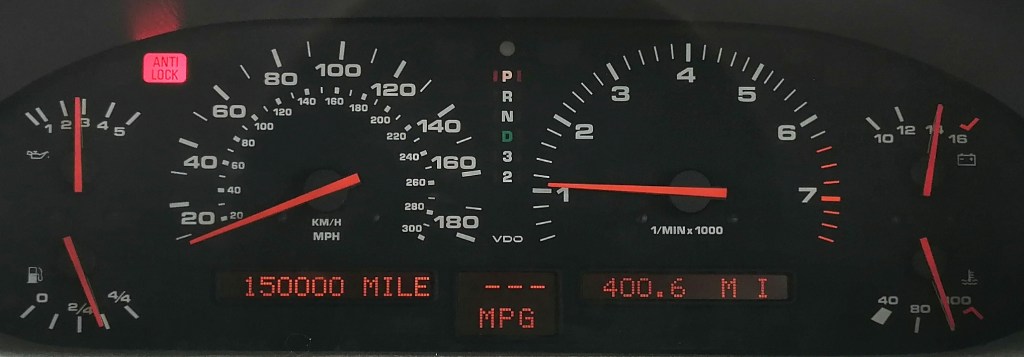
We had many adventures and the car never let me down, except numerous battery and electrical problems (partly solved by installing a battery switch on the car). But after 11 years of ownership, it is becoming very hard to keep the 928 going, with spare parts coming at exorbitant prices and sometimes being just impossible to find anymore. The 928 is 31-year old and has done 150,000 miles, and corrosion is starting causing problems. And because it is made of aluminium, it is nearly impossible to repair (if you want to know more about why aluminium is so difficult to weld, check out this very interesting and technical article: https://www.uti.edu/blog/welding/aluminum-welding). So, I thought I should sell the car to someone who has the financial and/or technical means to keep it going, before it rusts to dust like the 205. But I had to do a last farewell road trip, and the north of Scotland was the obvious candidate: I have always dreamt of taking the 928 up there as the roads and scenery are extraordinary, but I never did it as I was worried about a breakdown.
The trip: North Coast 500 (NC500)
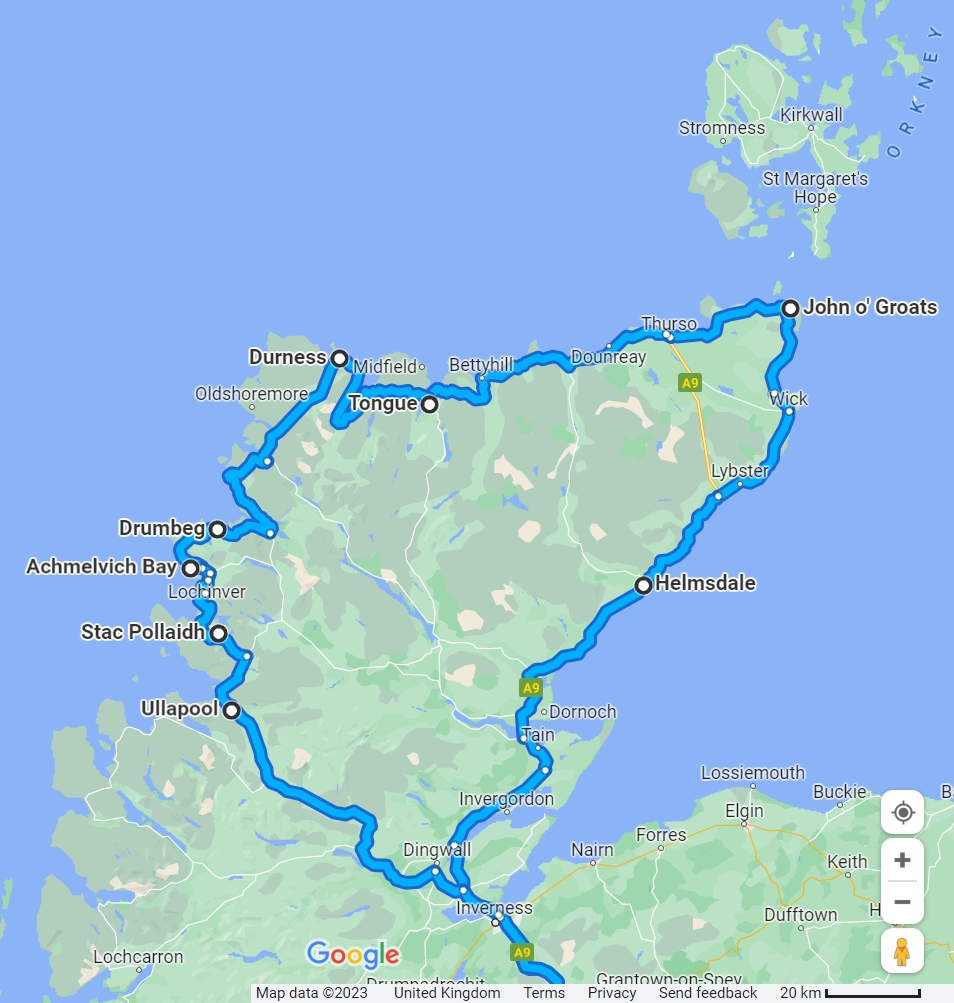
The NC500 is a 500-mile long loop around the far north of Scotland that has been promoted in the past few years to increase tourism in the area. It worked, and better than they were expecting, with thousands of campervans coming to the area from the UK, France, the Netherlands, Germany, etc. over the summer and causing mayhem for locals, with overwhelmed little towns and beauty spots, and traffic jams as most of these roads are single track with passing places. April should be ok I thought, and it was…
25th April: trip to Helmsdale
I initially didn’t plan to do the NC500, just go around Assynt which I find very beautiful, but the weather forecast for the NW was not great. The east on the other hand looked ok, and I had been to Helmsdale many times for a Geophysics field trip I used to demonstrate on. I decided to aim for Helmsdale, and booked a B&B at the last minute.
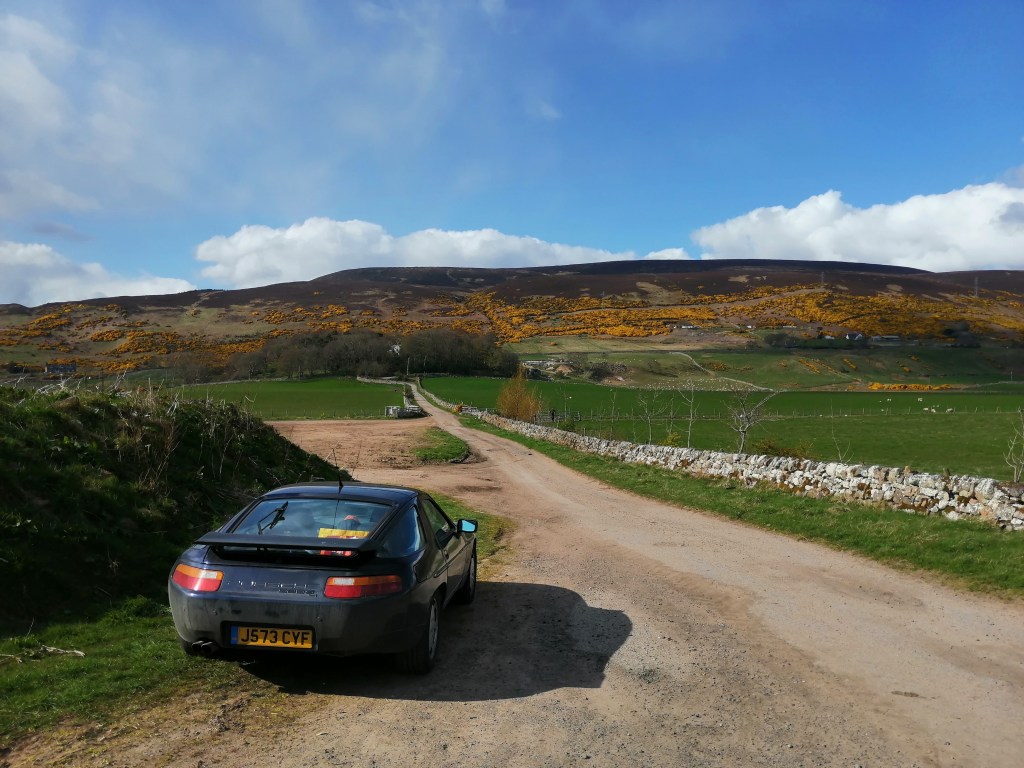
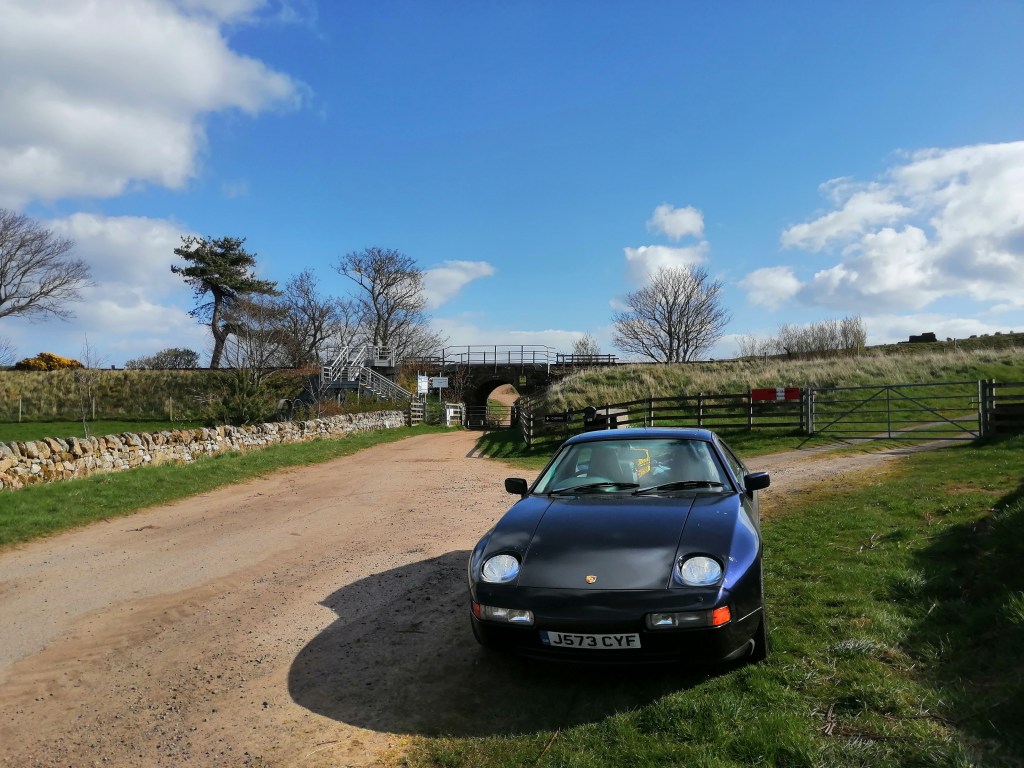

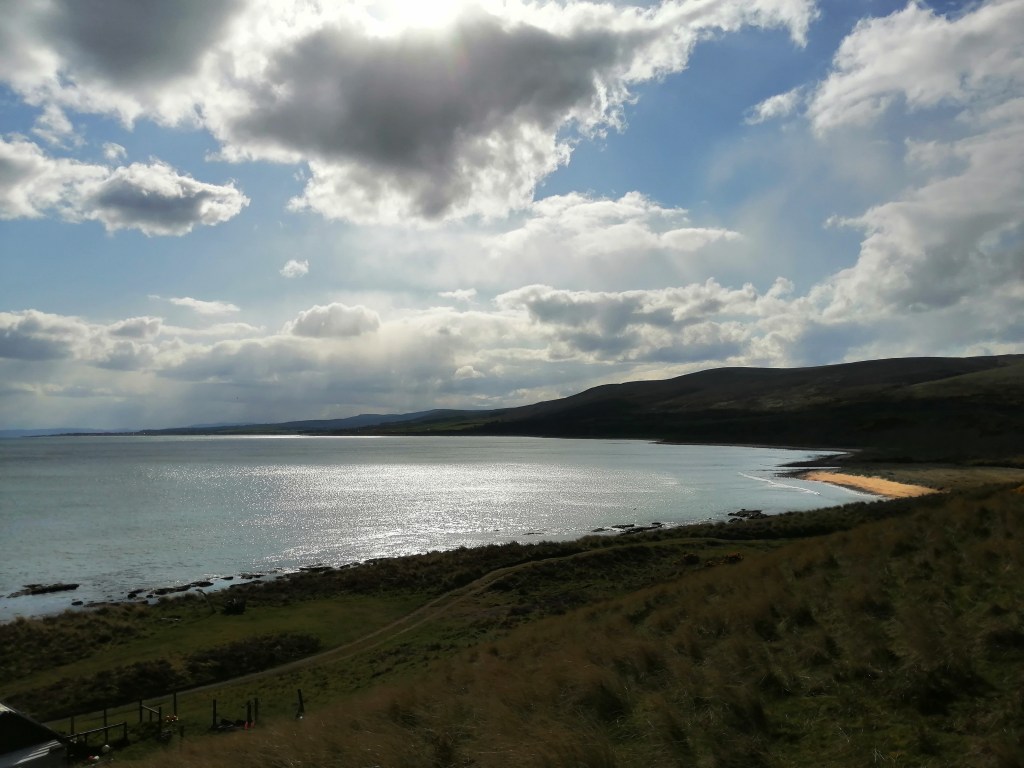
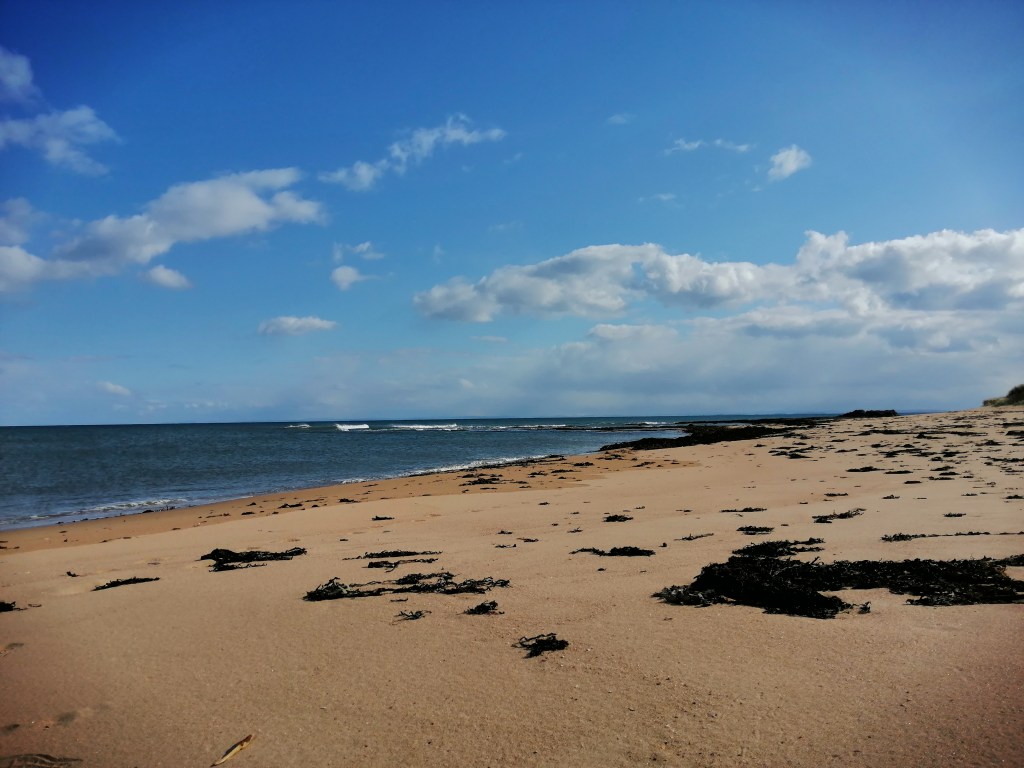
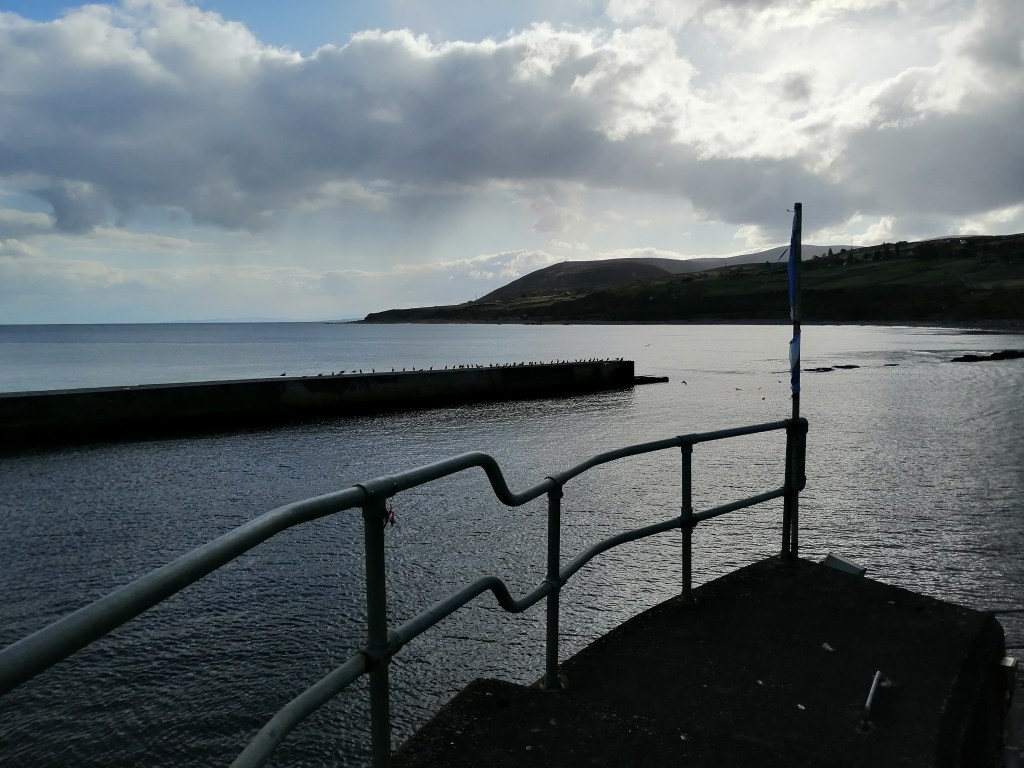
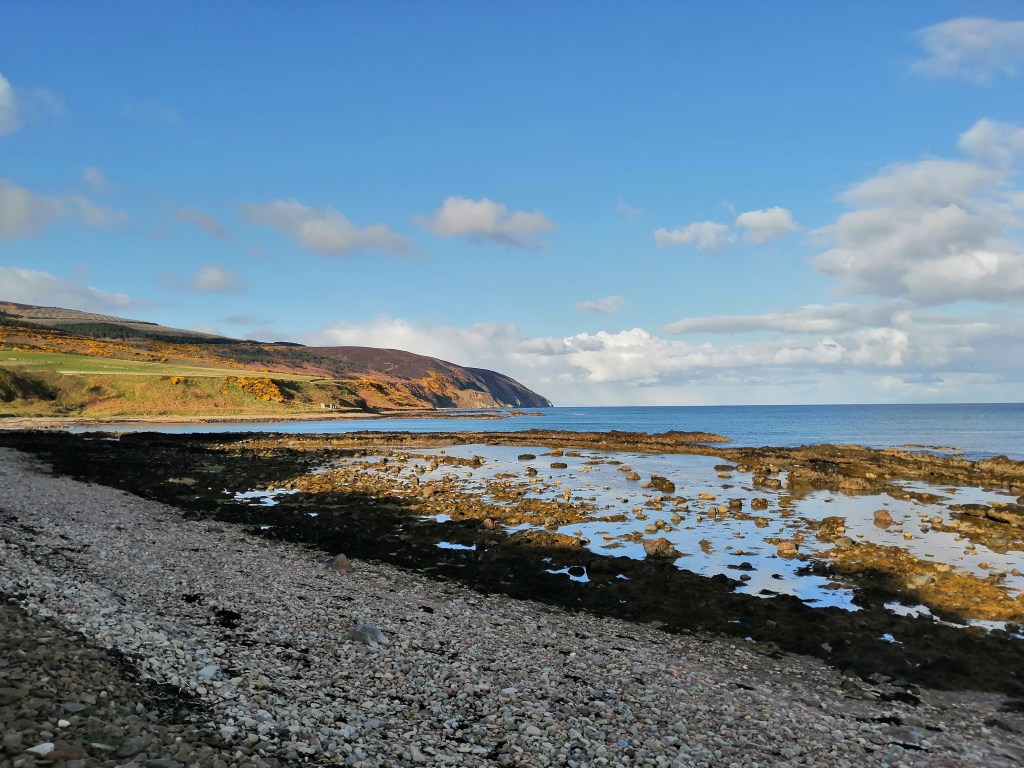
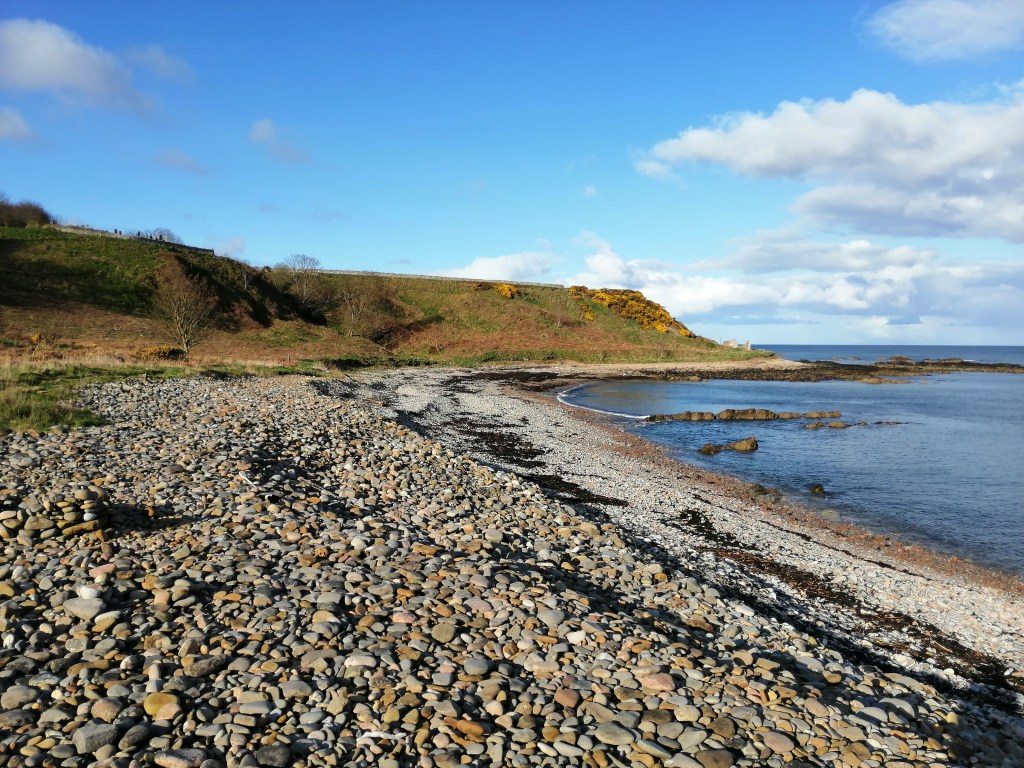
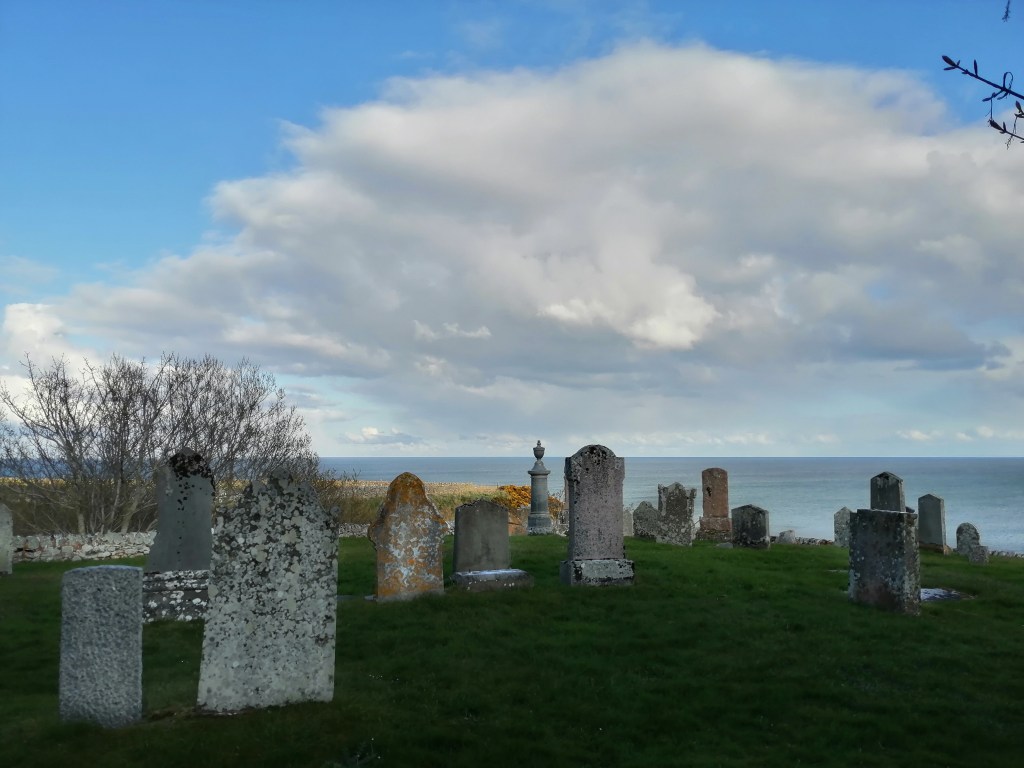
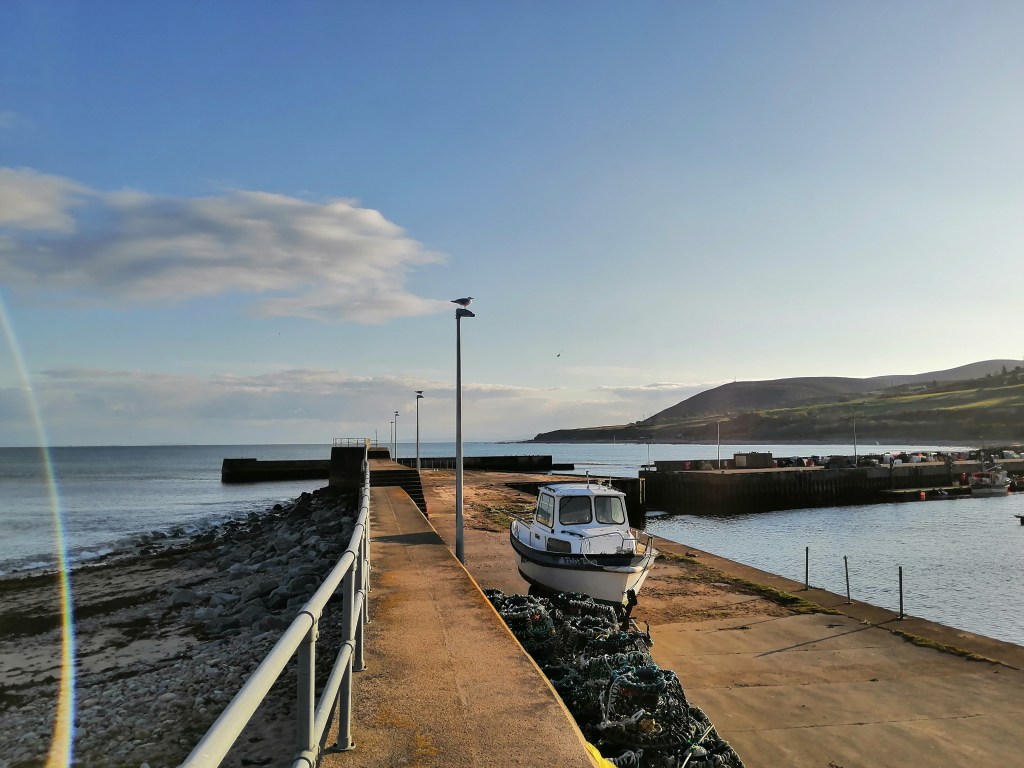
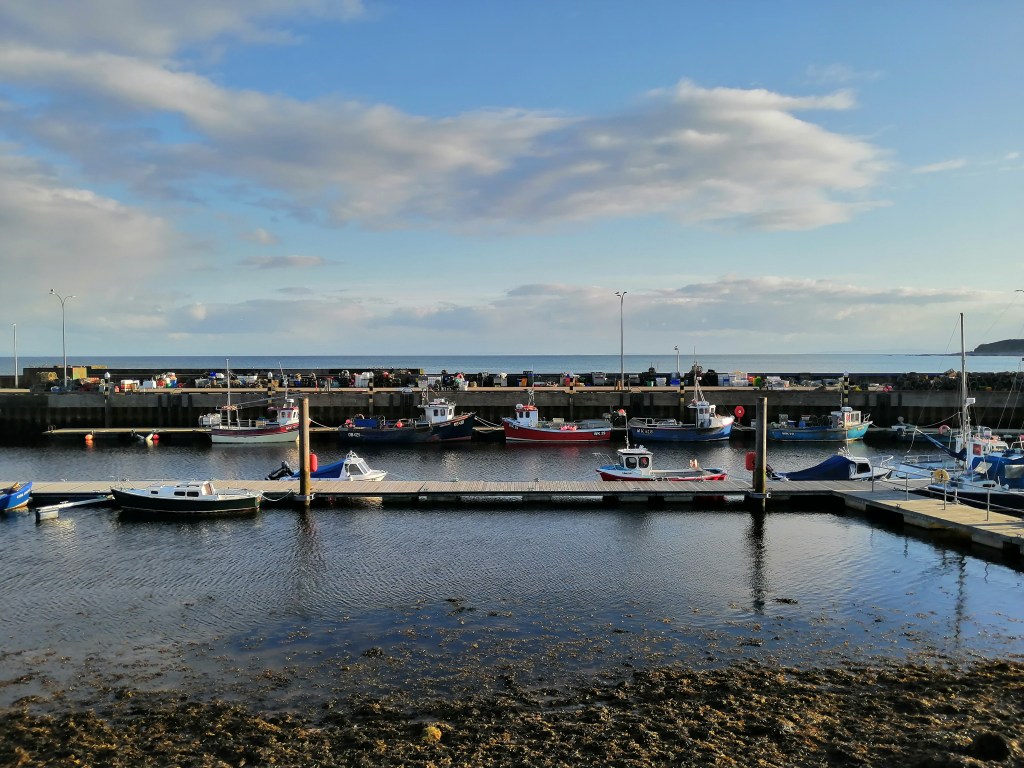
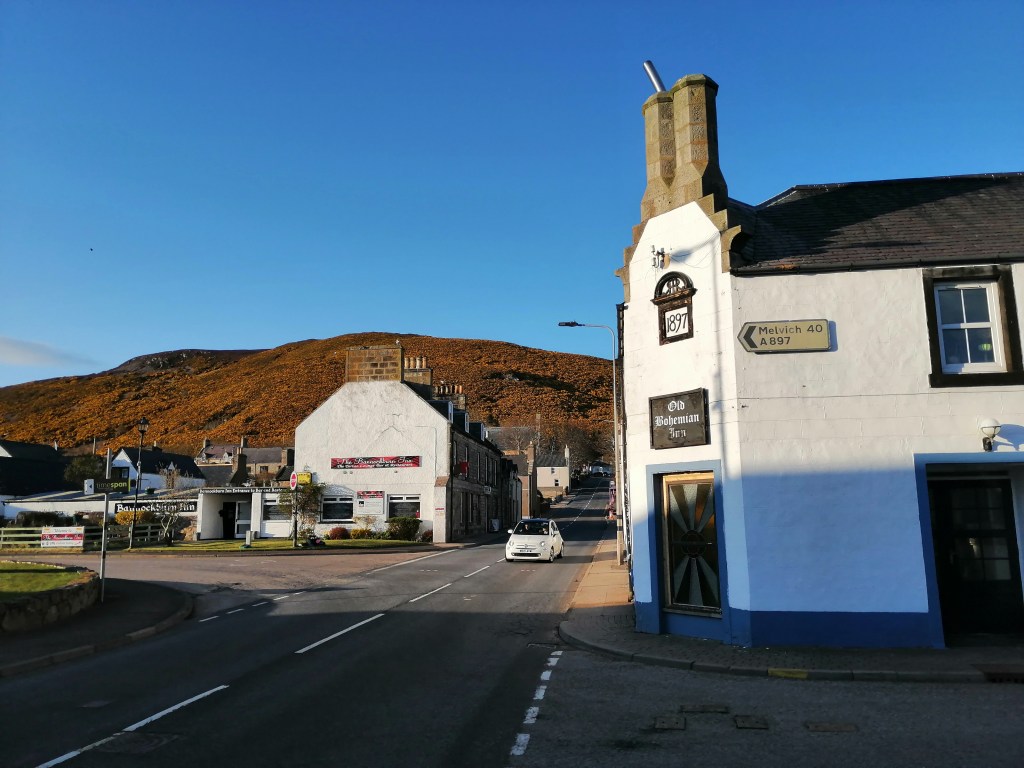
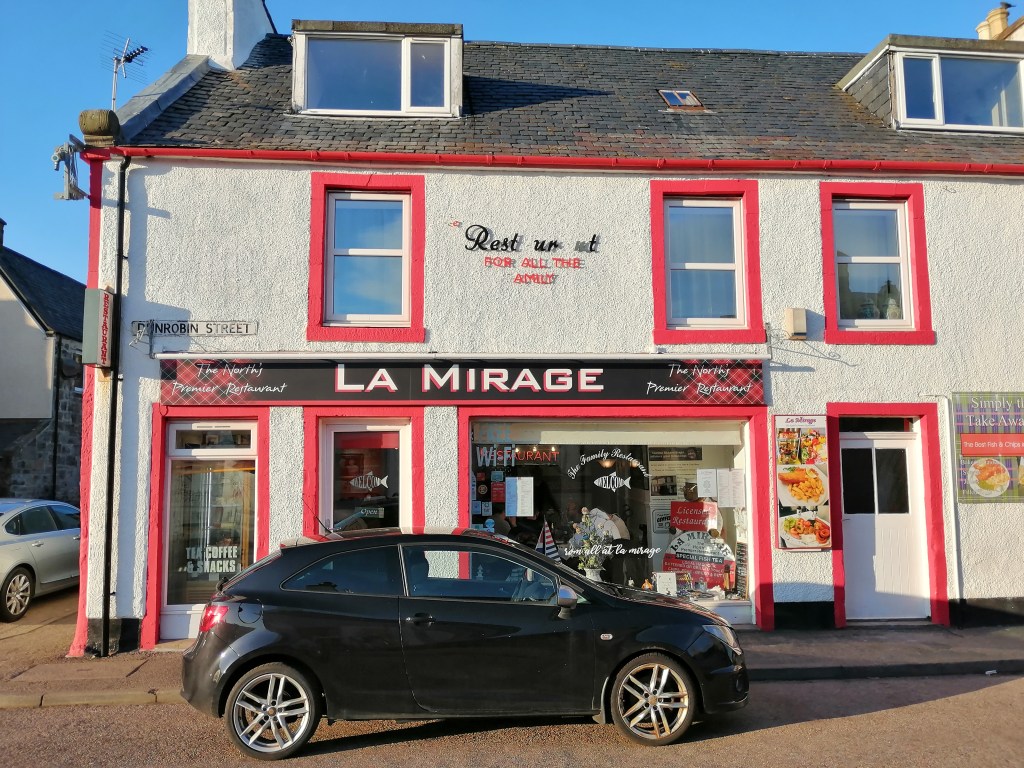
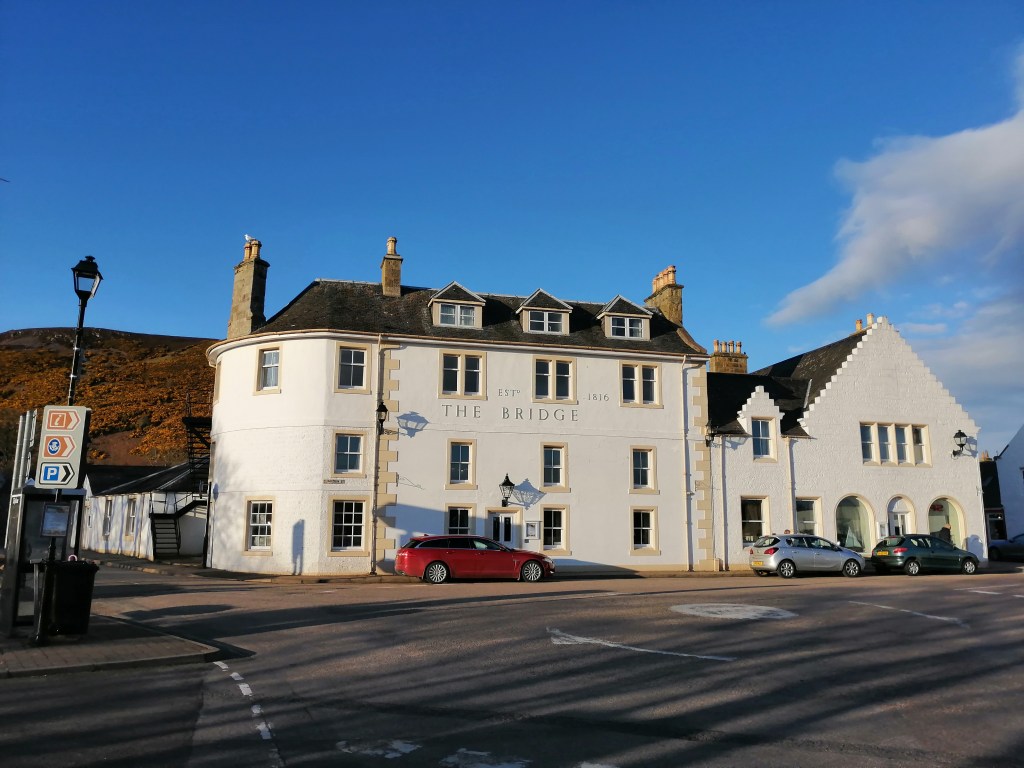
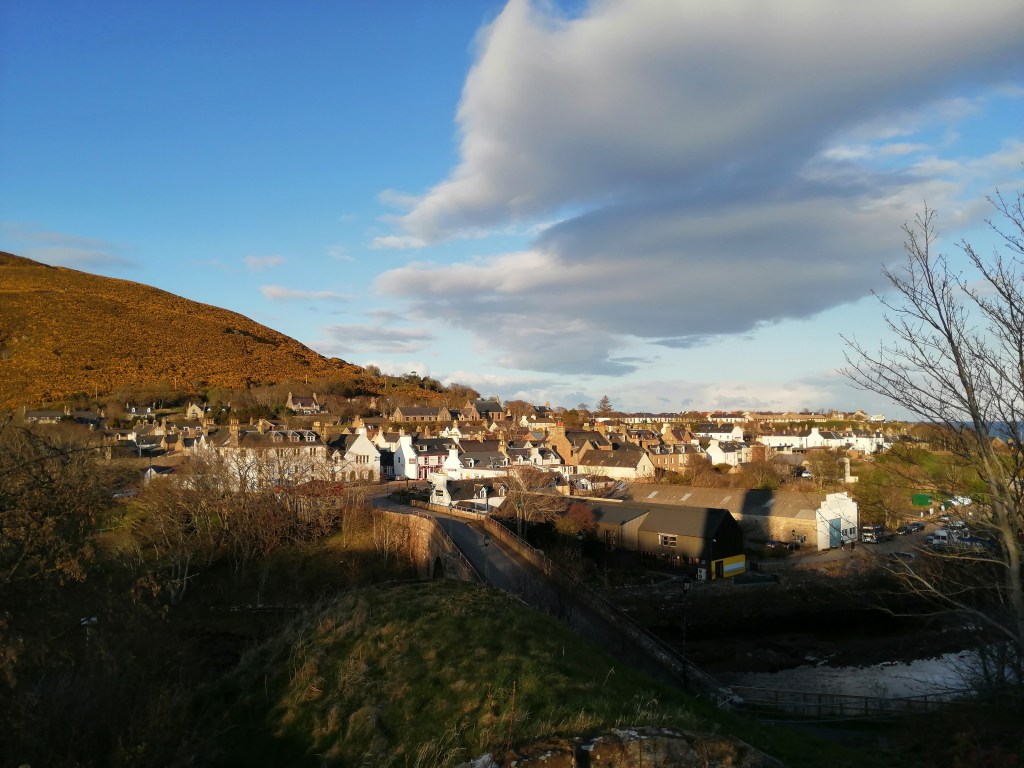
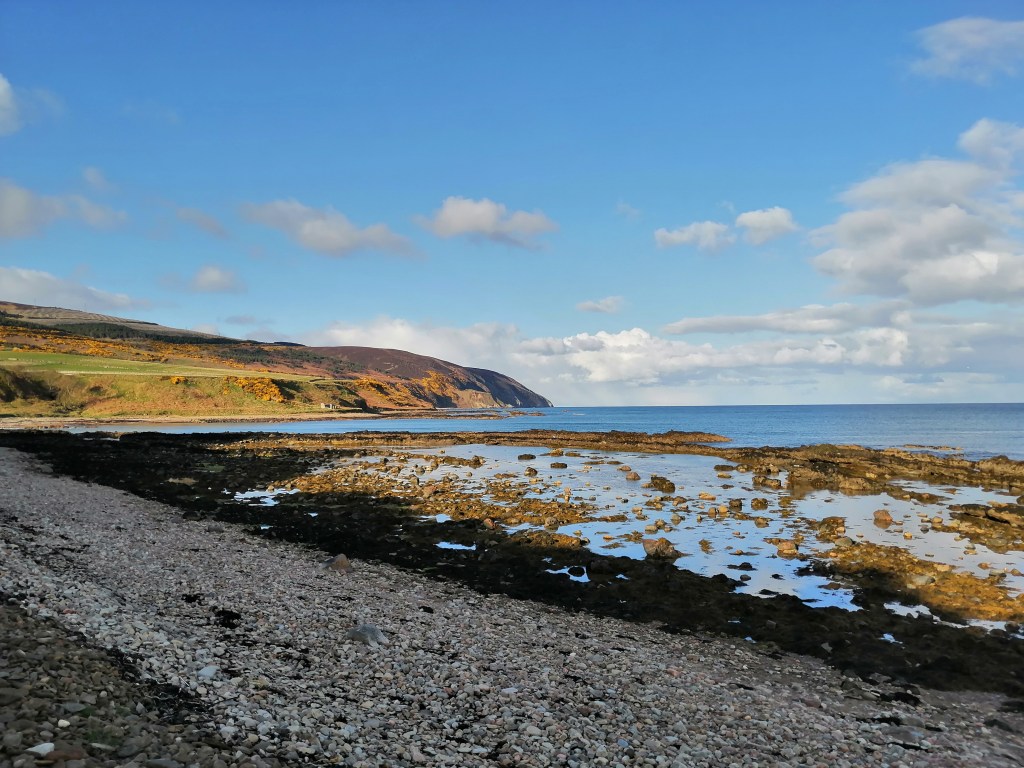
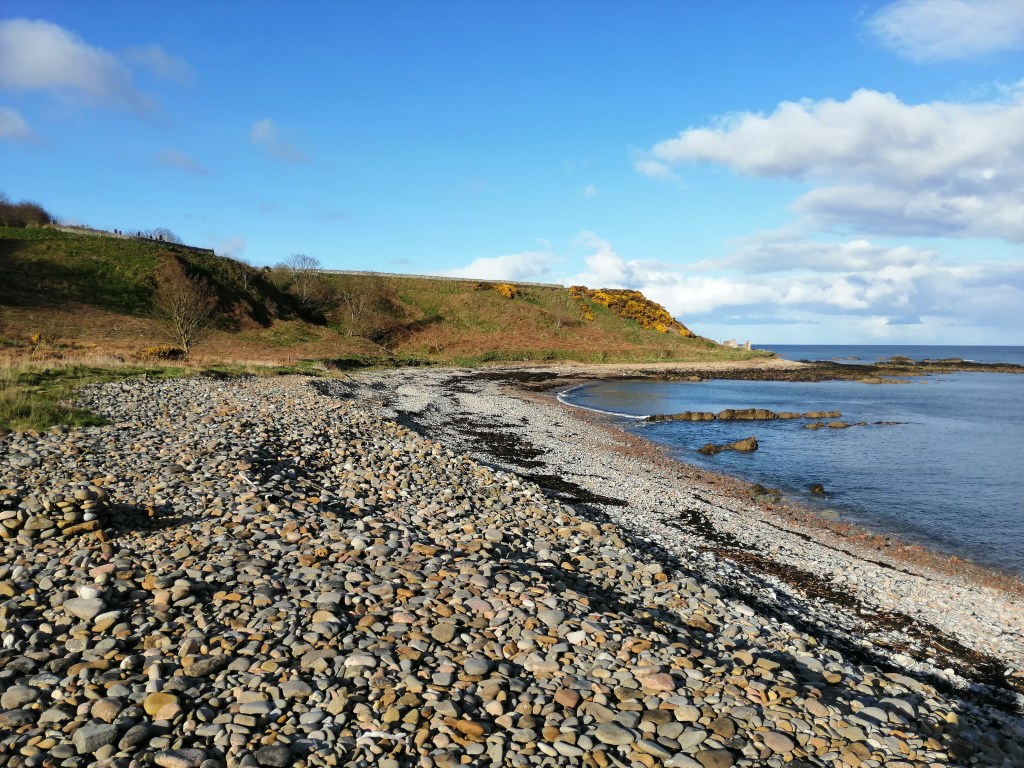
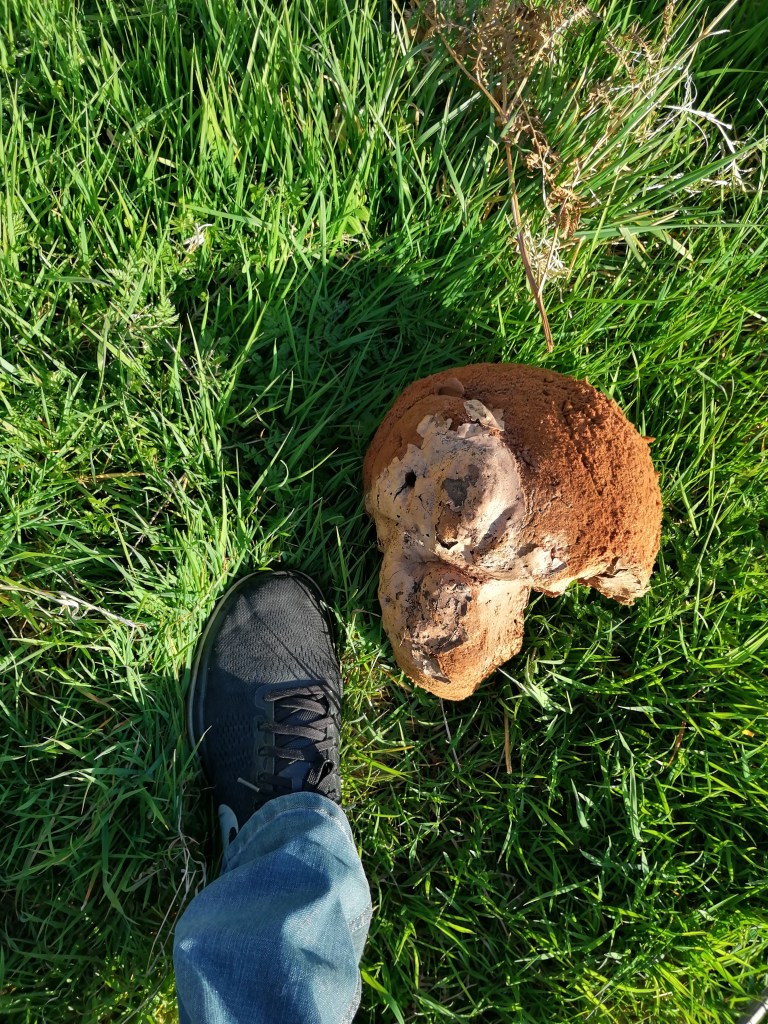
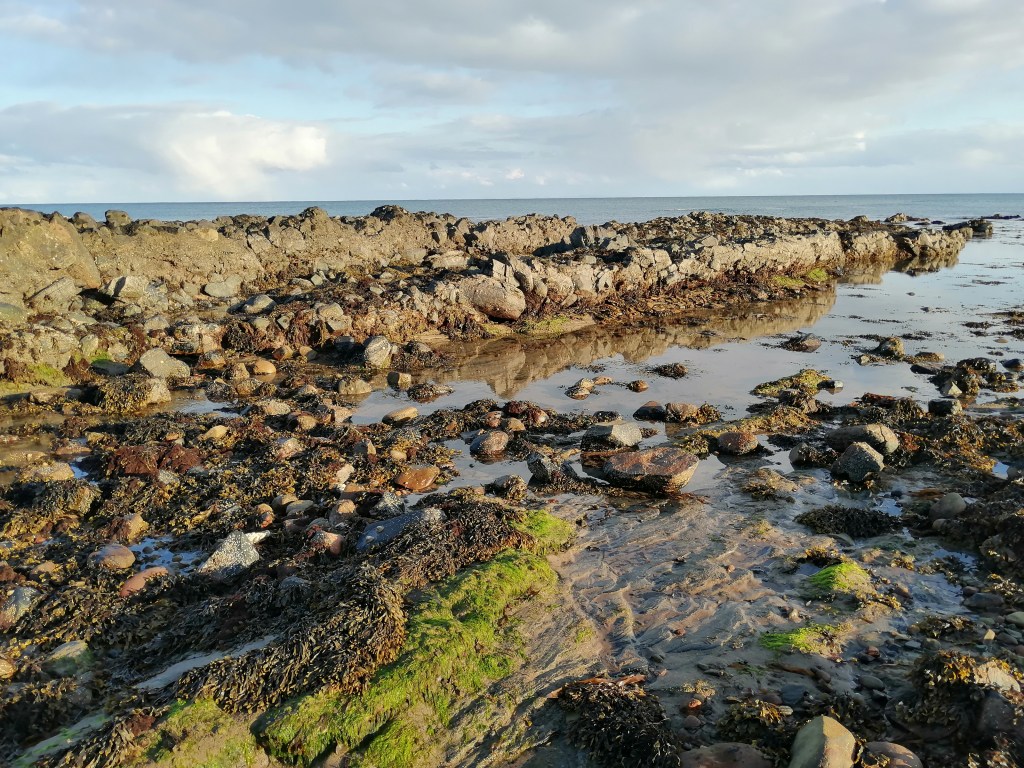
I had forgotten how spectacular the geology was here! Below, the Helmsdale’s fault scarp in all its glory, very round pebbles, a raised beach (from isostatic rebound), and the extraordinary boulder beds, intercalated within blach shales, testifying to the intermittent fault scarp’s submarine collapse during the opening of the North Sea. And some (old) giant puffball mushrooms – did you know they could grow up to 1.5 m in diameter?! https://en.wikipedia.org/wiki/Calvatia_gigantea
26th April: Helmsdale to Tongue via John o’Groats
It is at that point that I decided: I’m so close to the north coast, and I have never been further north, why not doing the NC500? That was an excellent decision, although the trip was almost cut short, as you will see below…
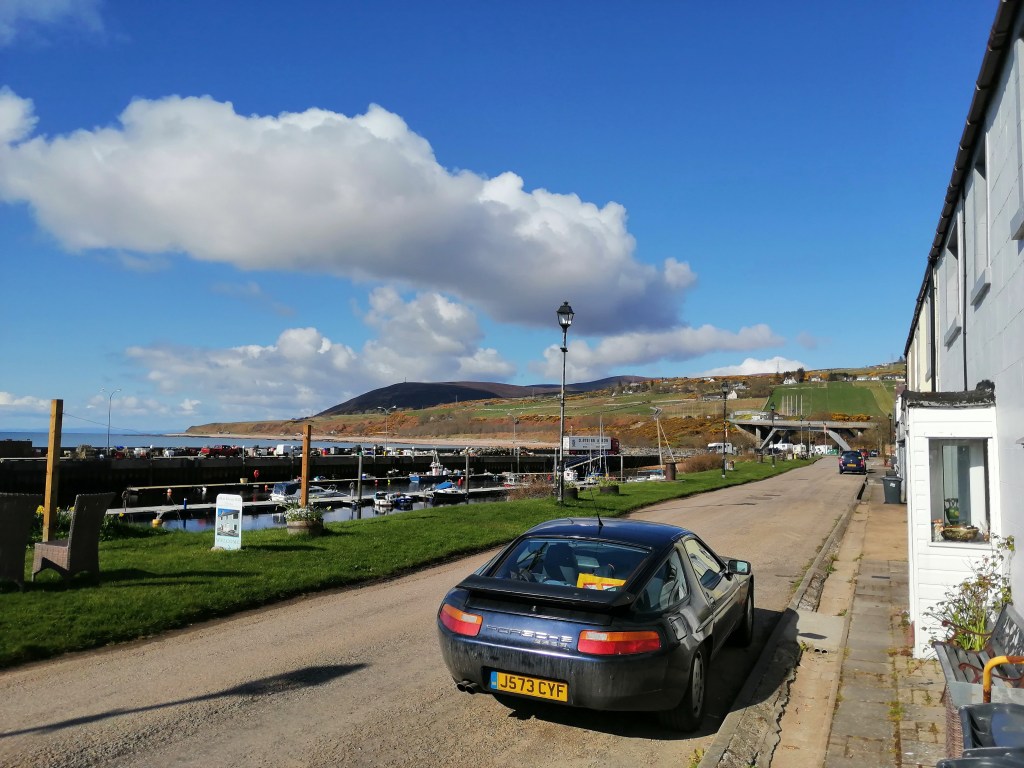

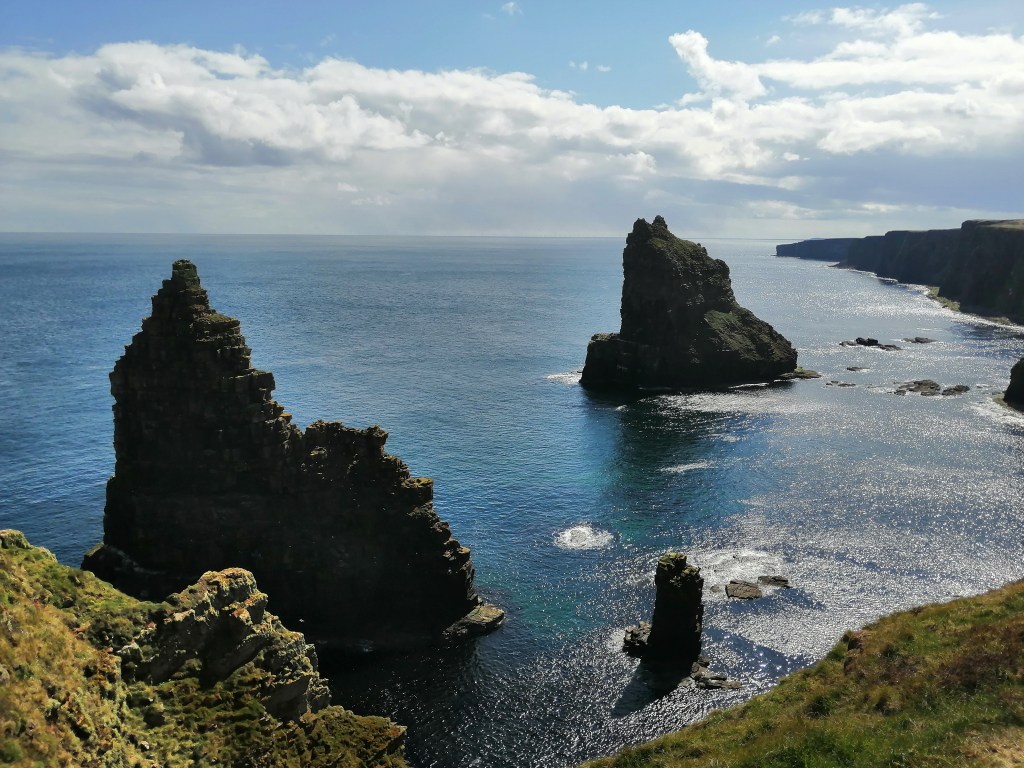
We make it to John o’Groats, with a view over Orkney and impressive stacks of Devonian sedimentary rocks:
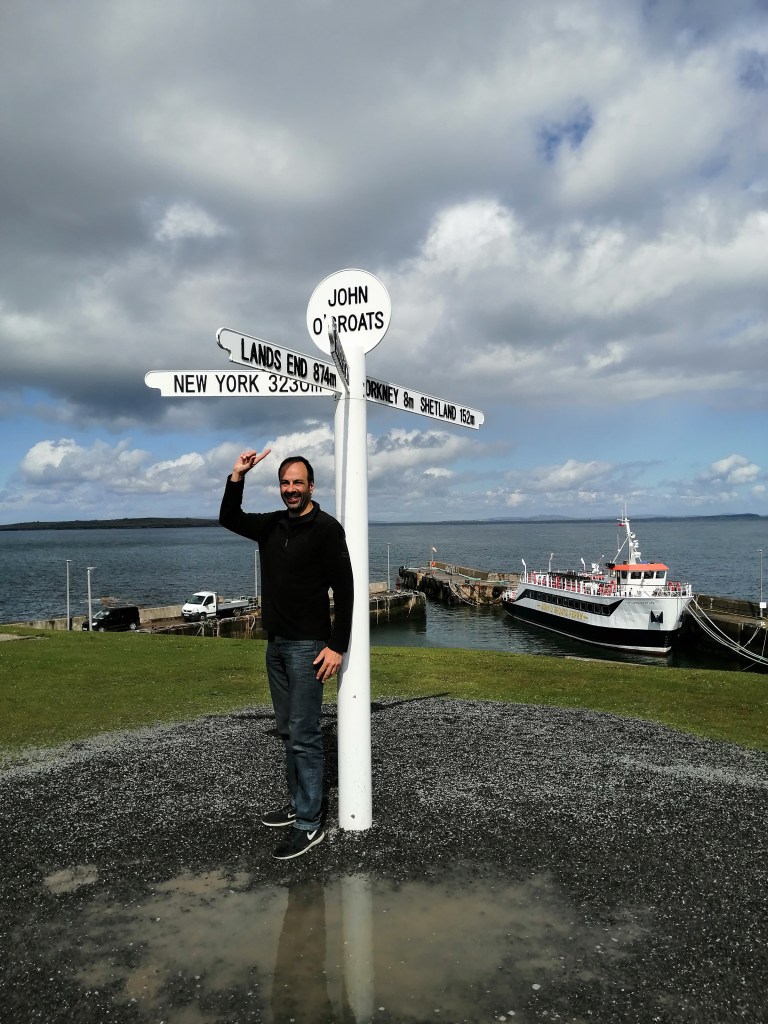
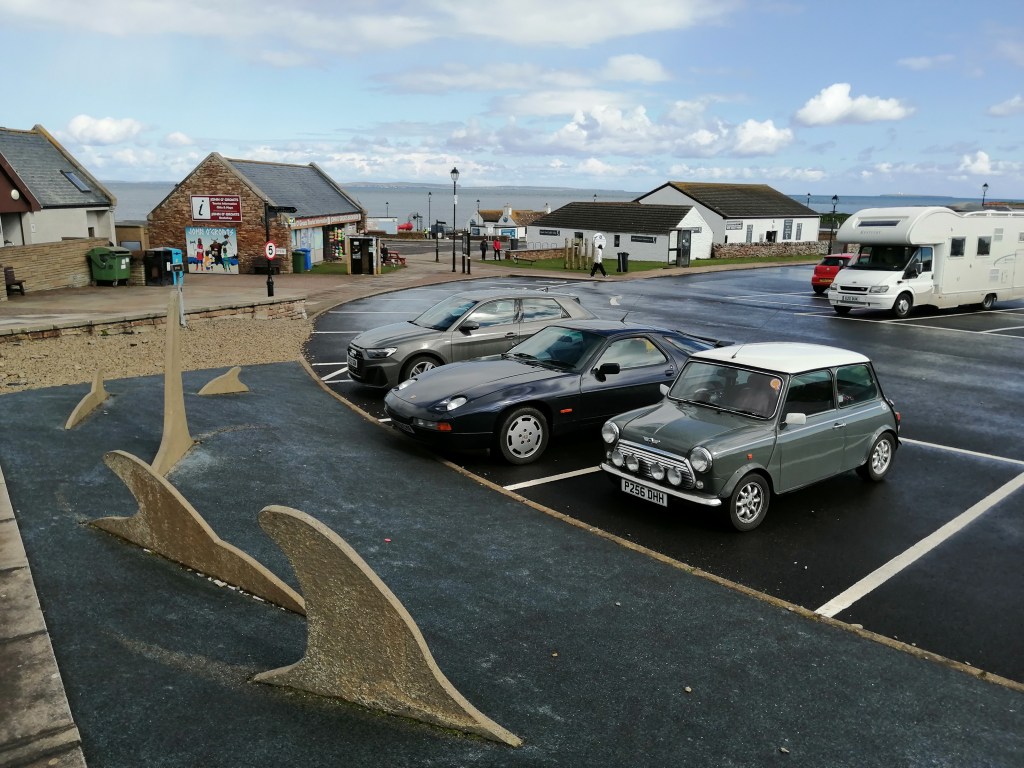
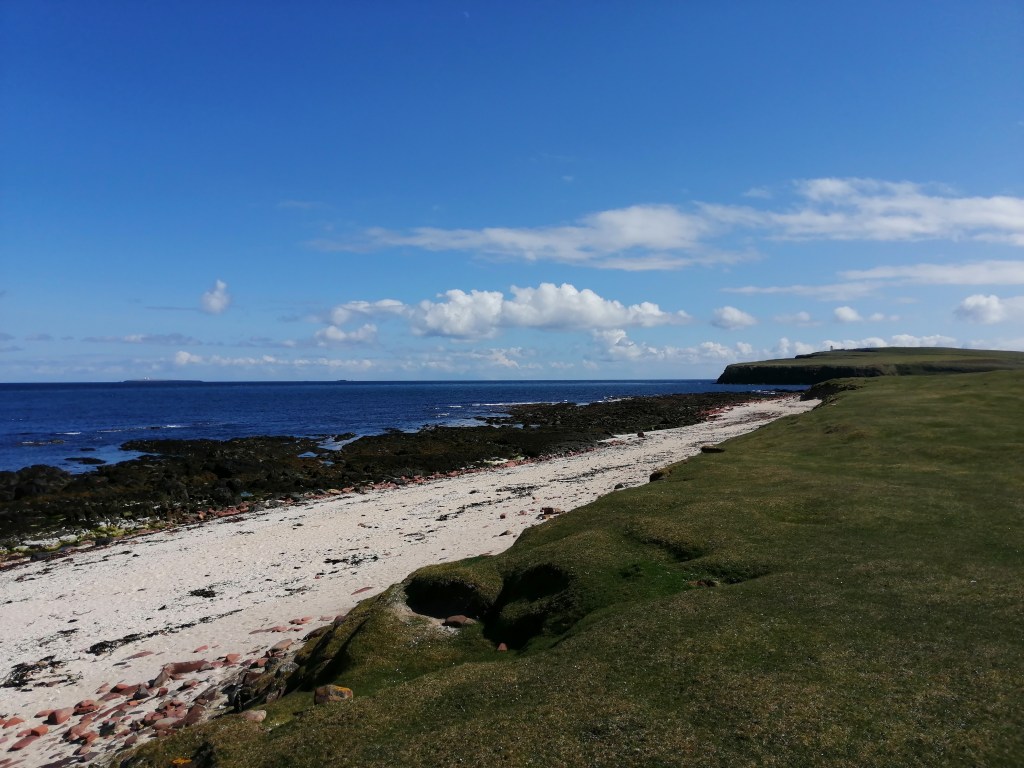
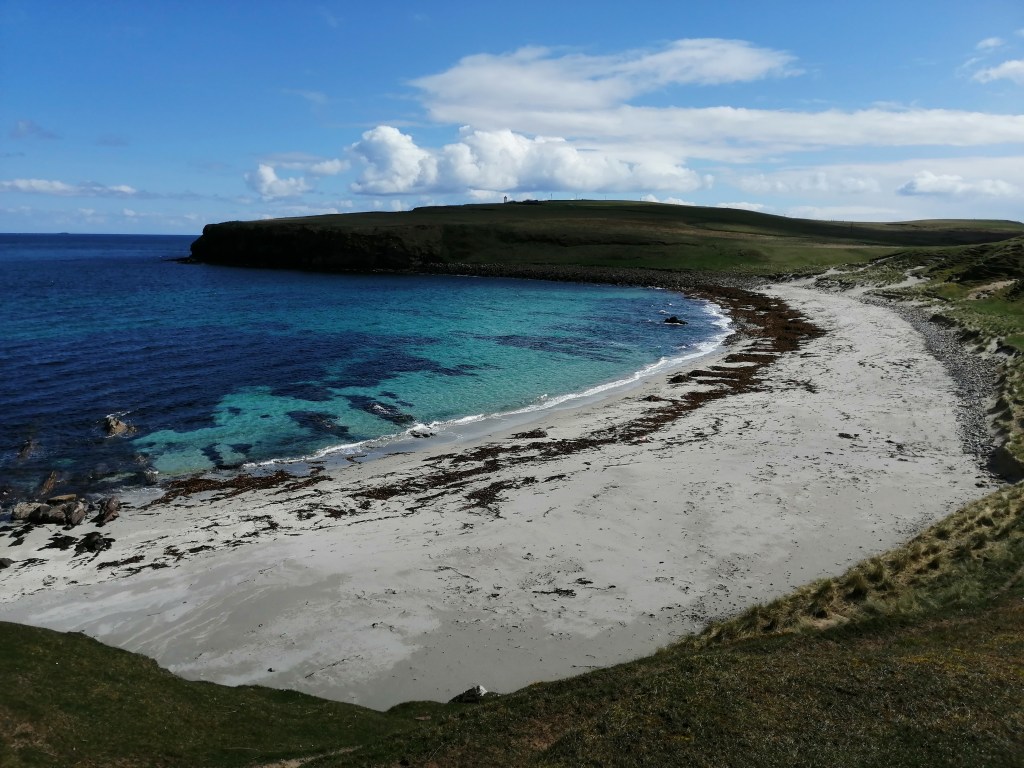
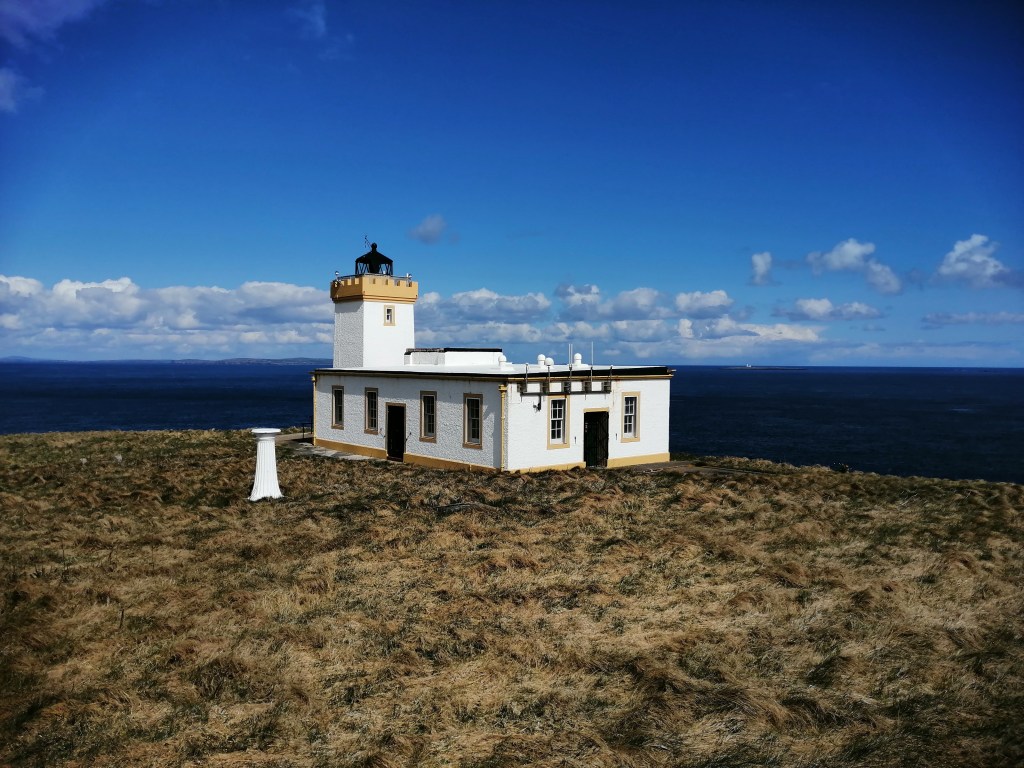
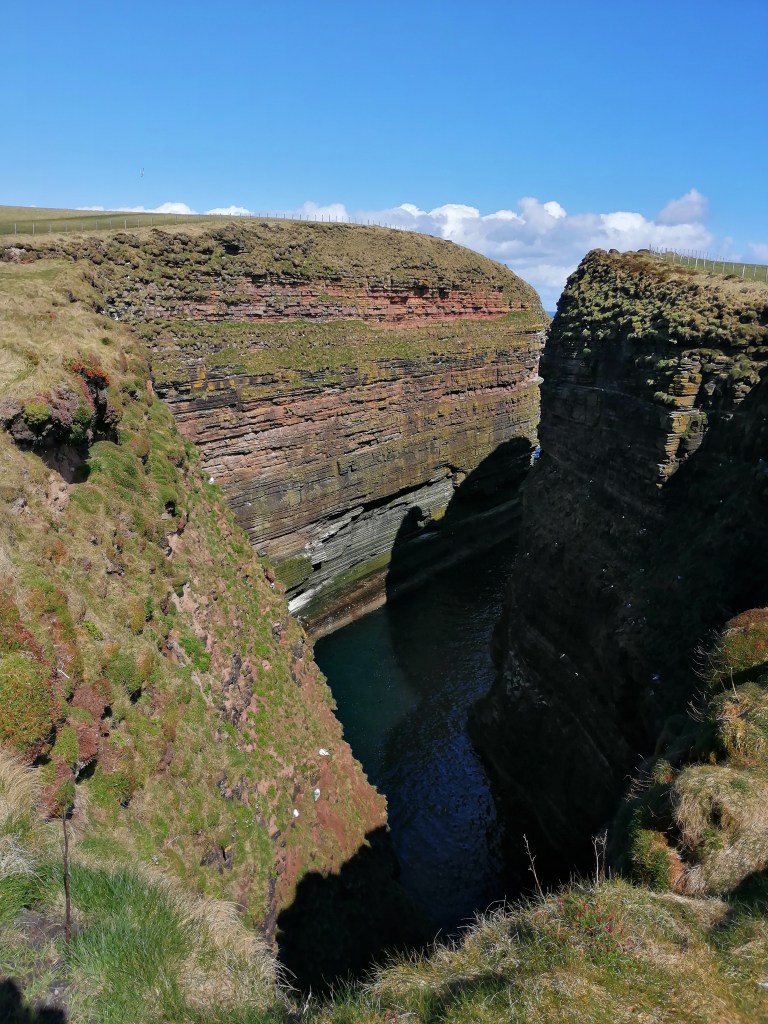
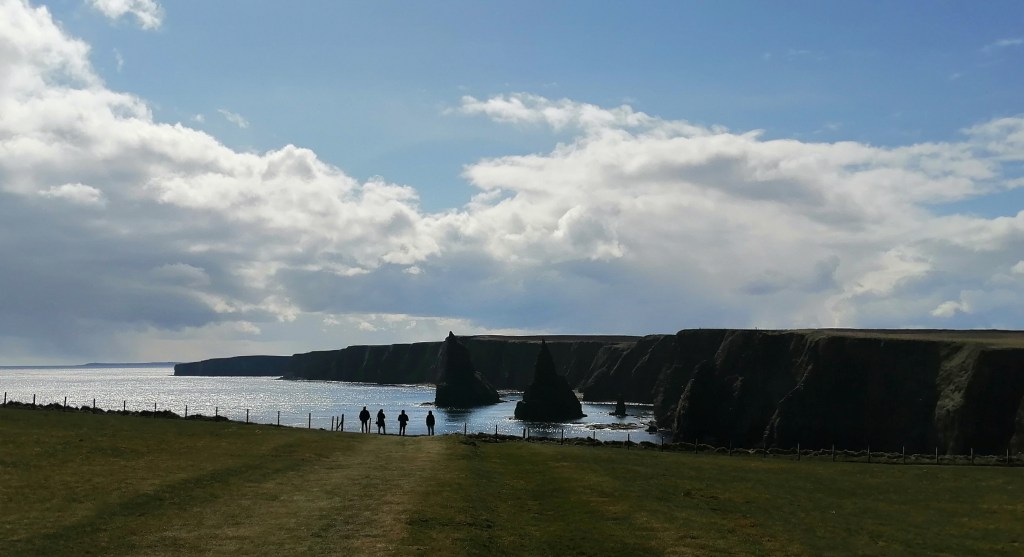
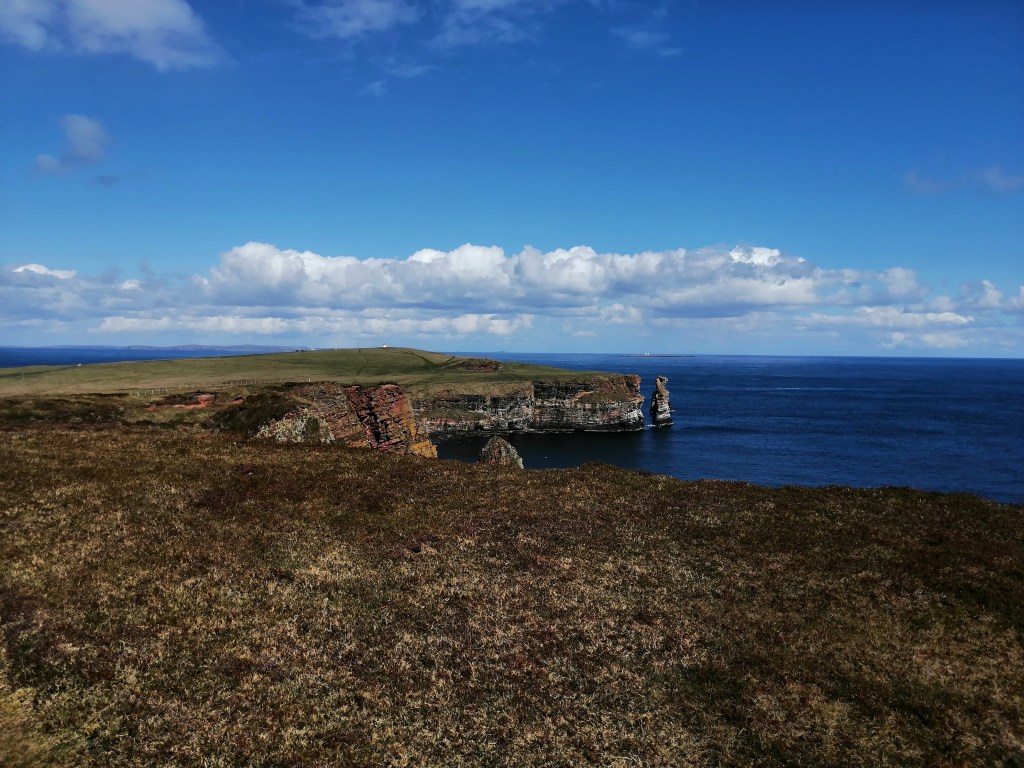
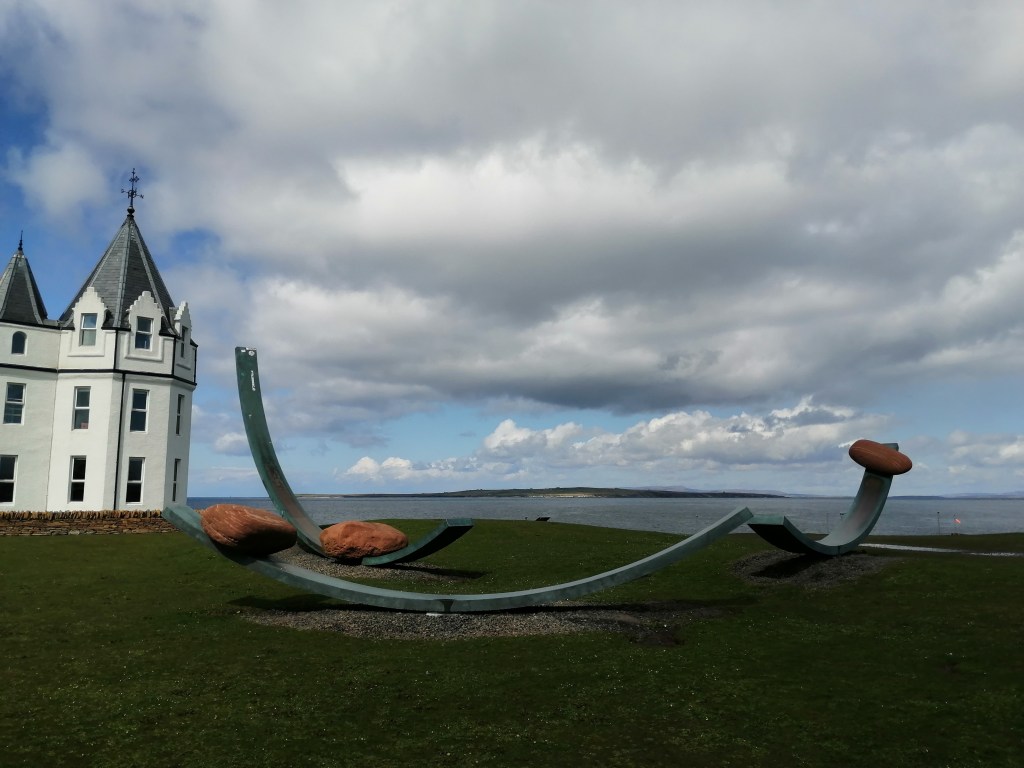
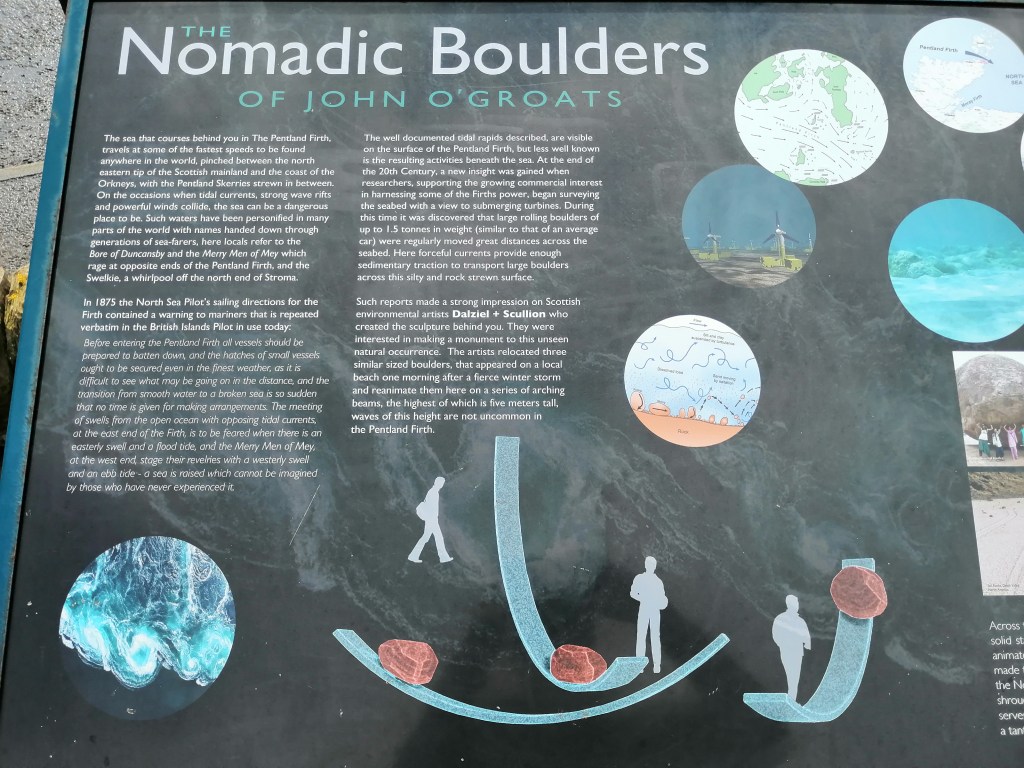
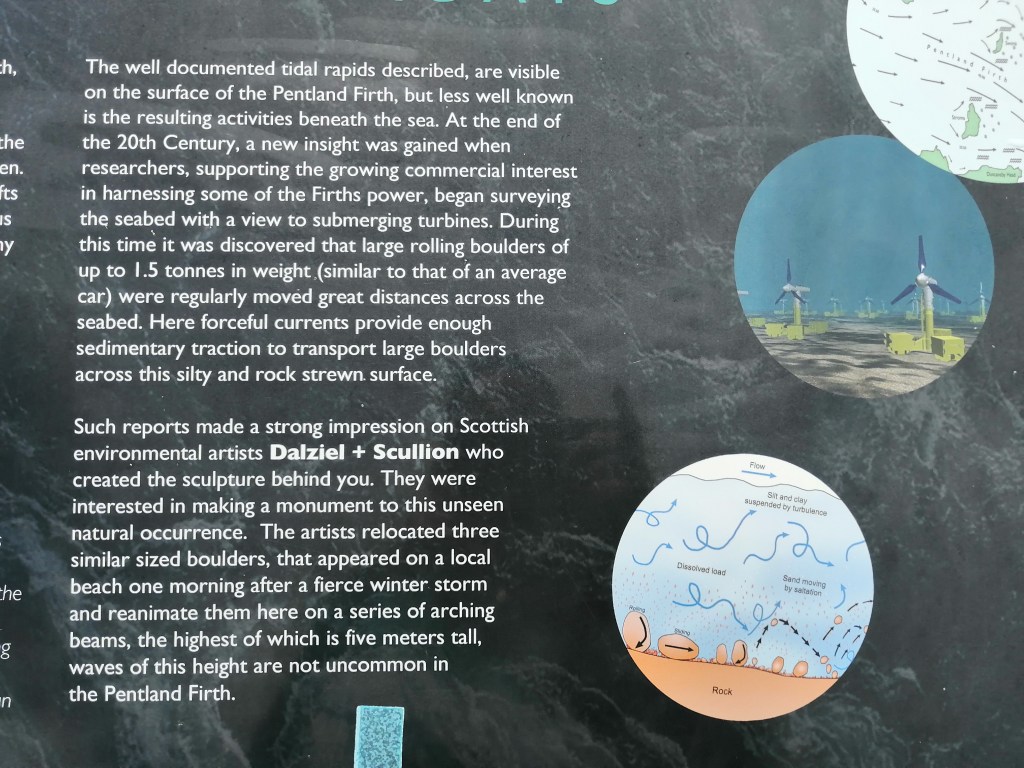
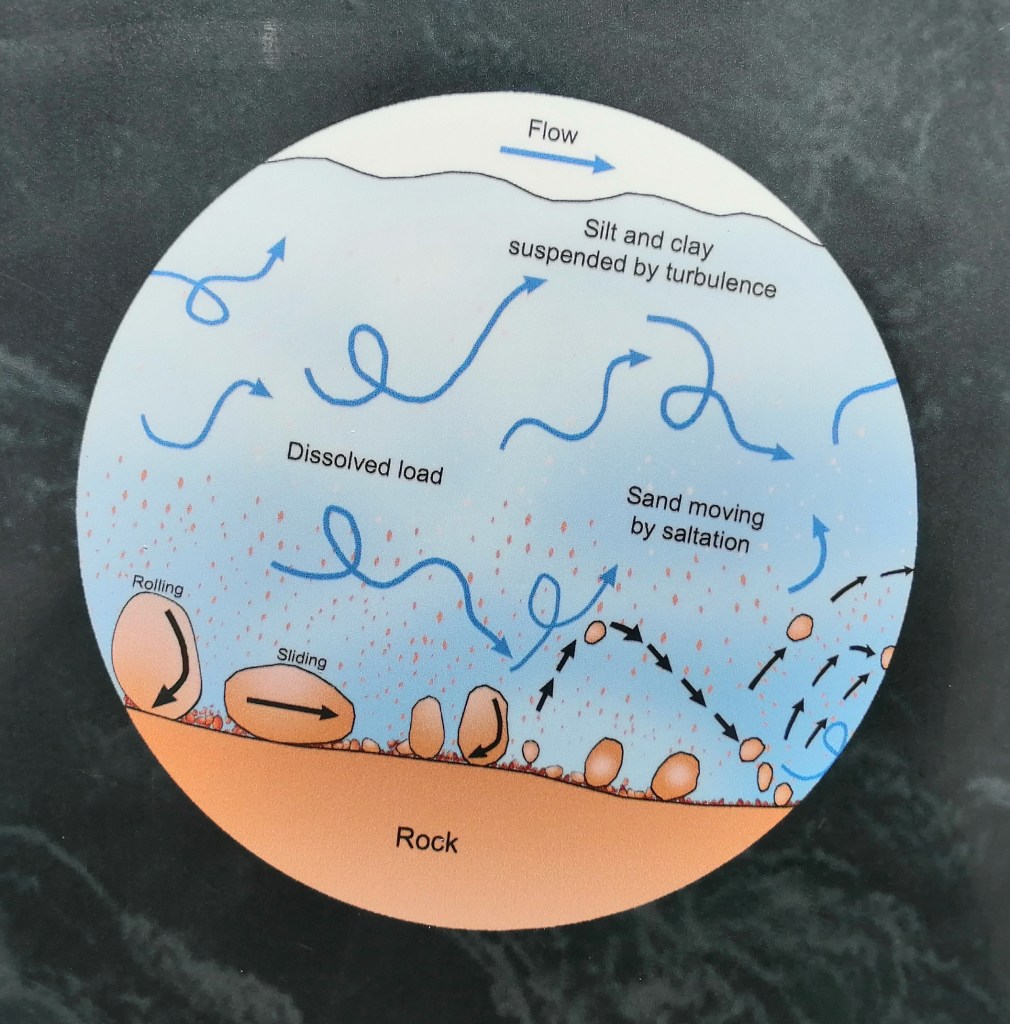
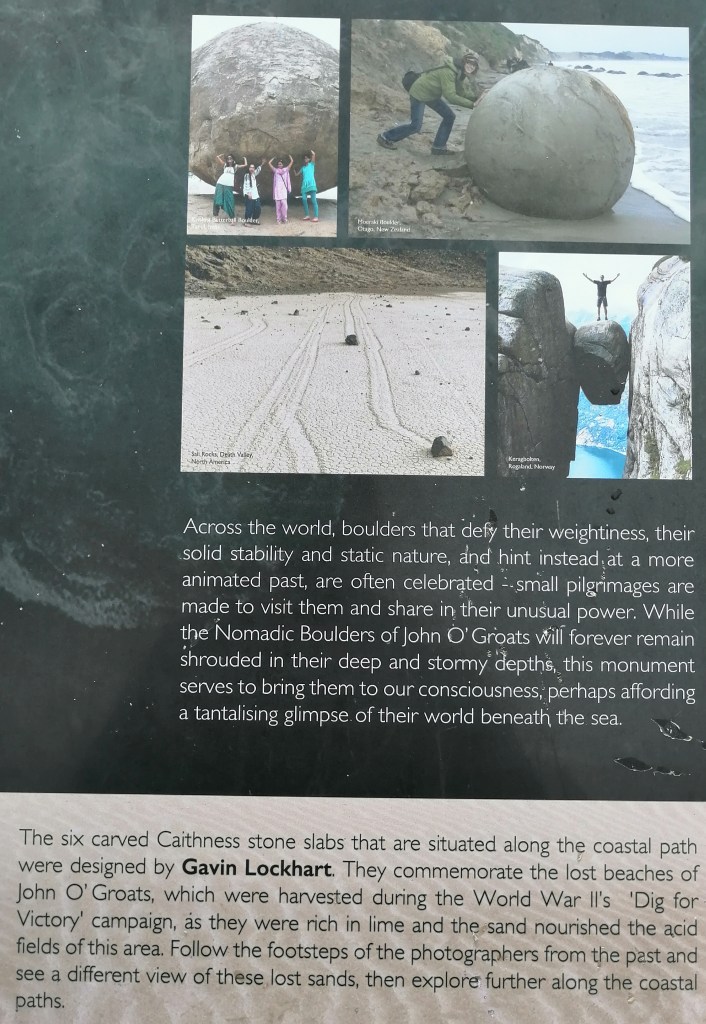
There is even a boulder appreciation poster and sculpture! They found evidence that strong underwater currents regularly move 1.5 ton boulders! I love the boulder quote, the suspension vs saltation diagram and the sculpture they inspired:
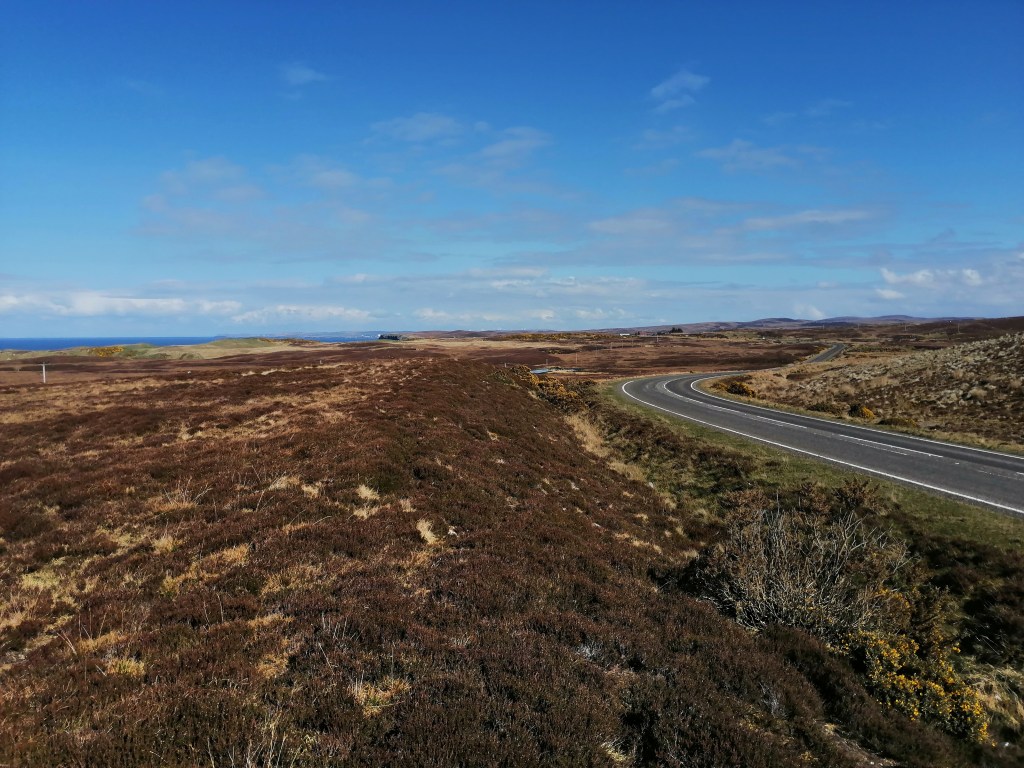
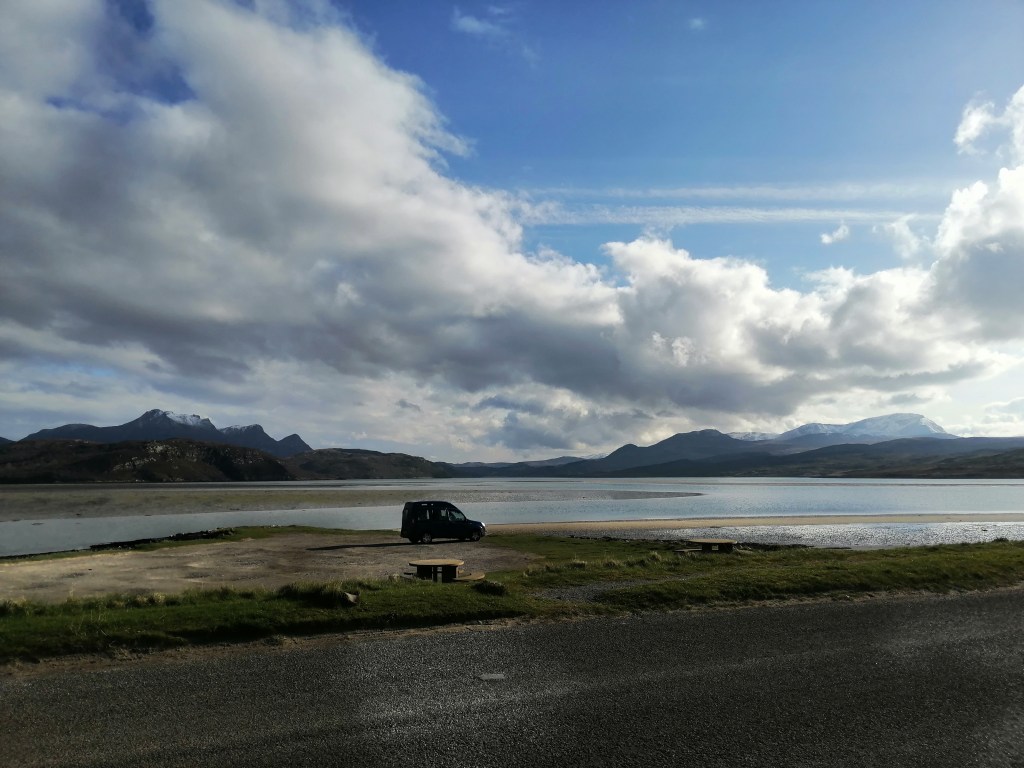
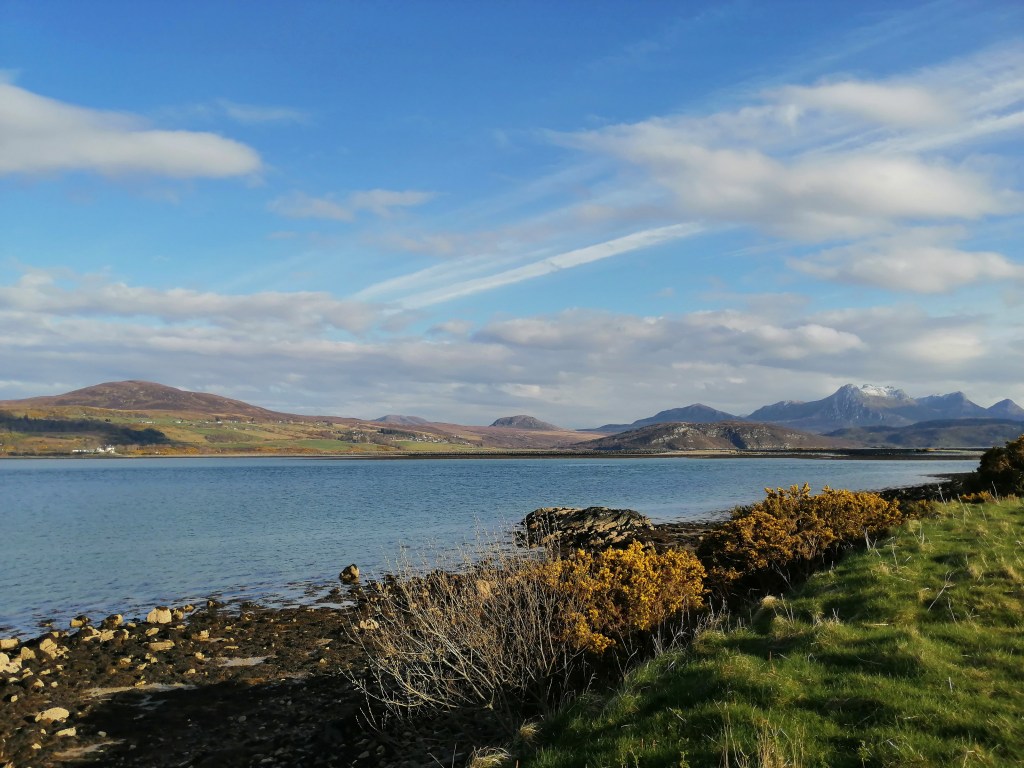
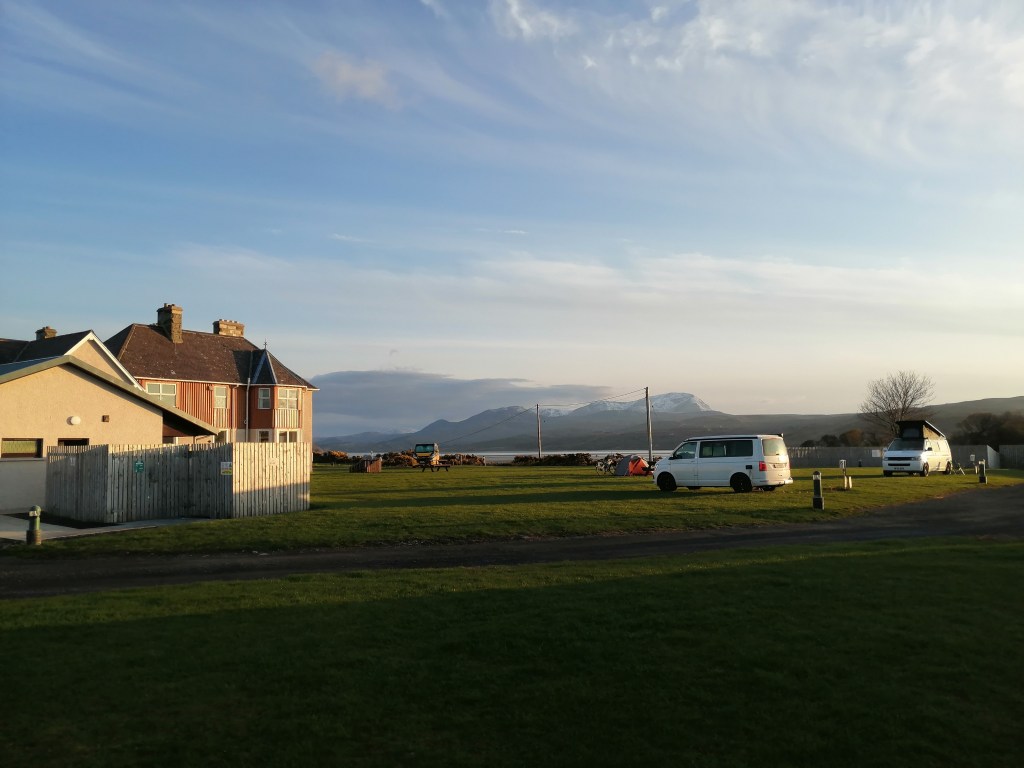
I decide to make my way to Tongue where I will spend the night. The road to Tongue rapidly turns into a beautiful single track road. Very little traffic. Just bliss.
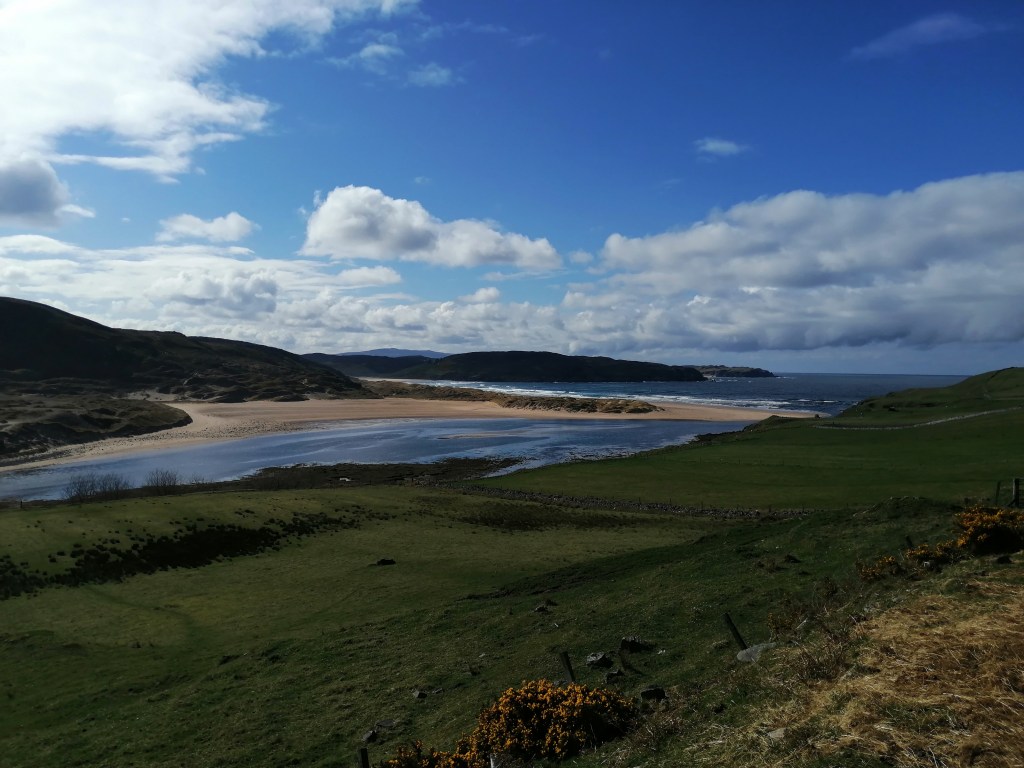

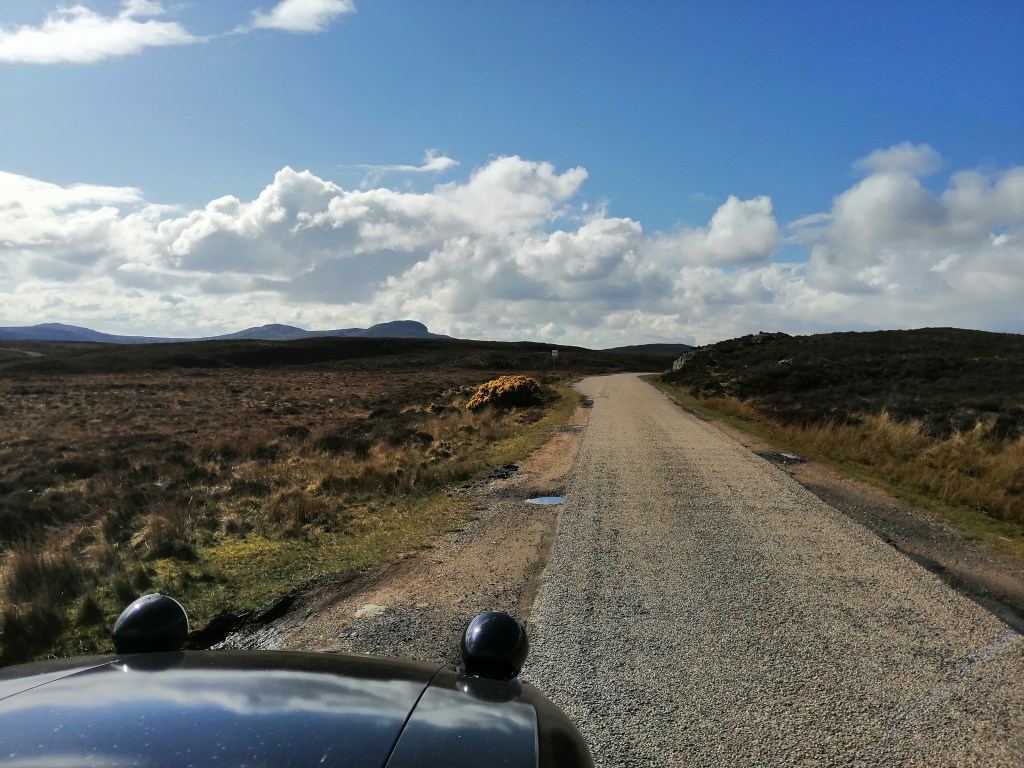
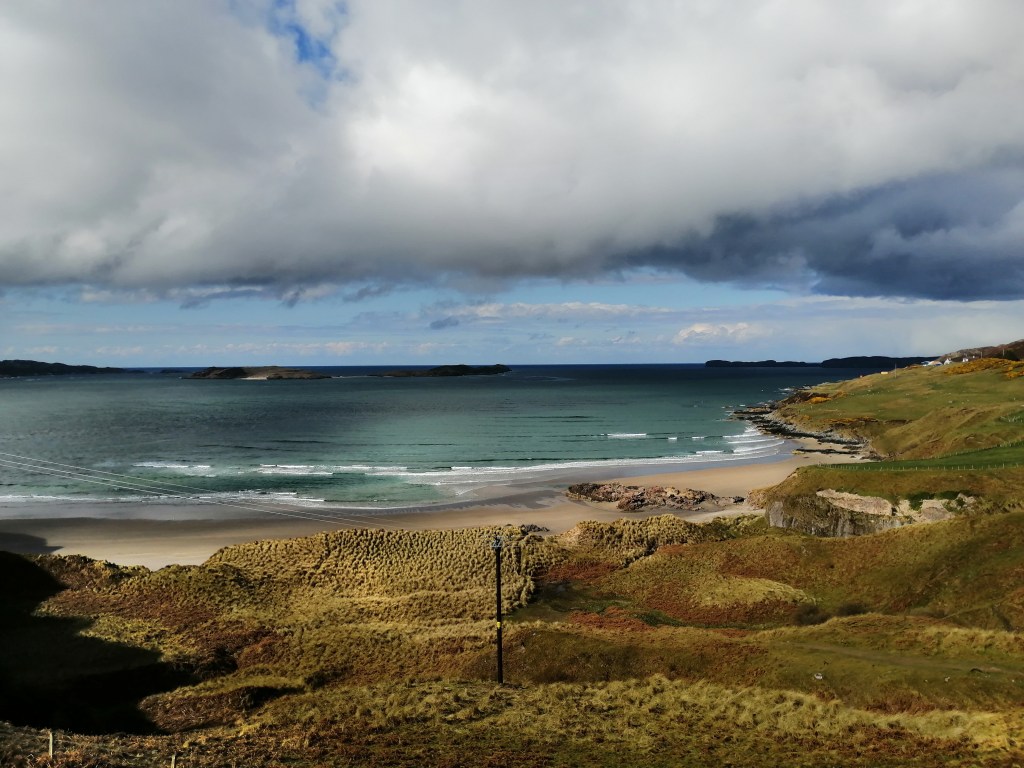
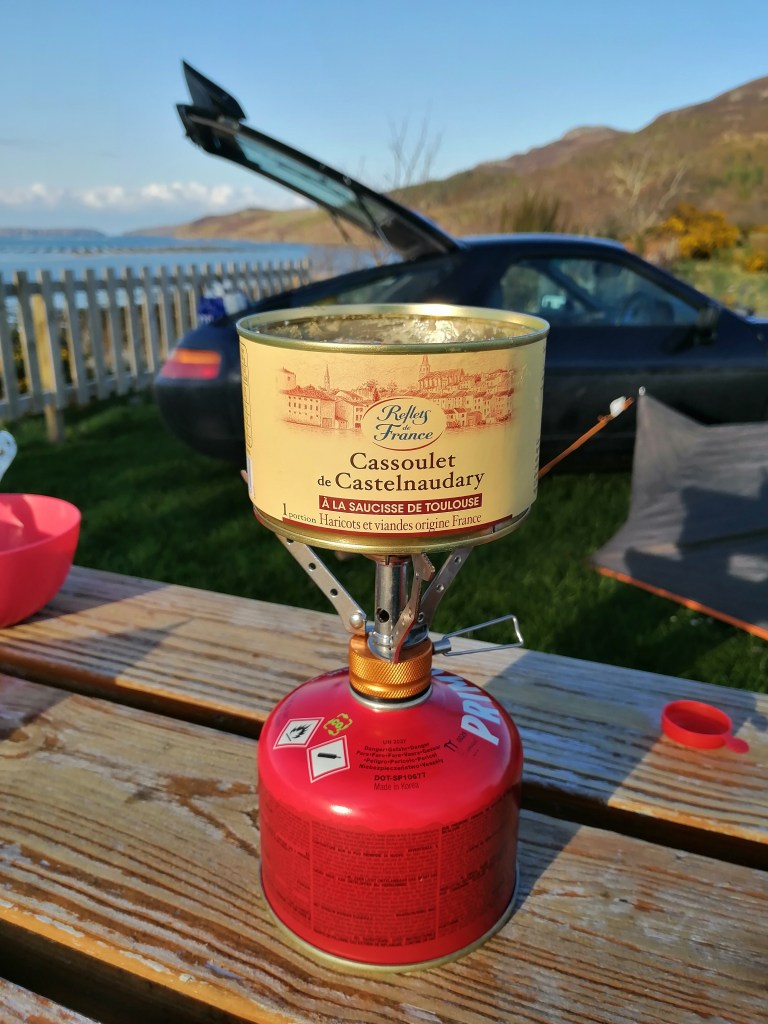
Time to refuel and settle down. Unfortunately, I realise I forgot to take a pan with me. Tea will taste of cassoulet tomorrow at breakfast…
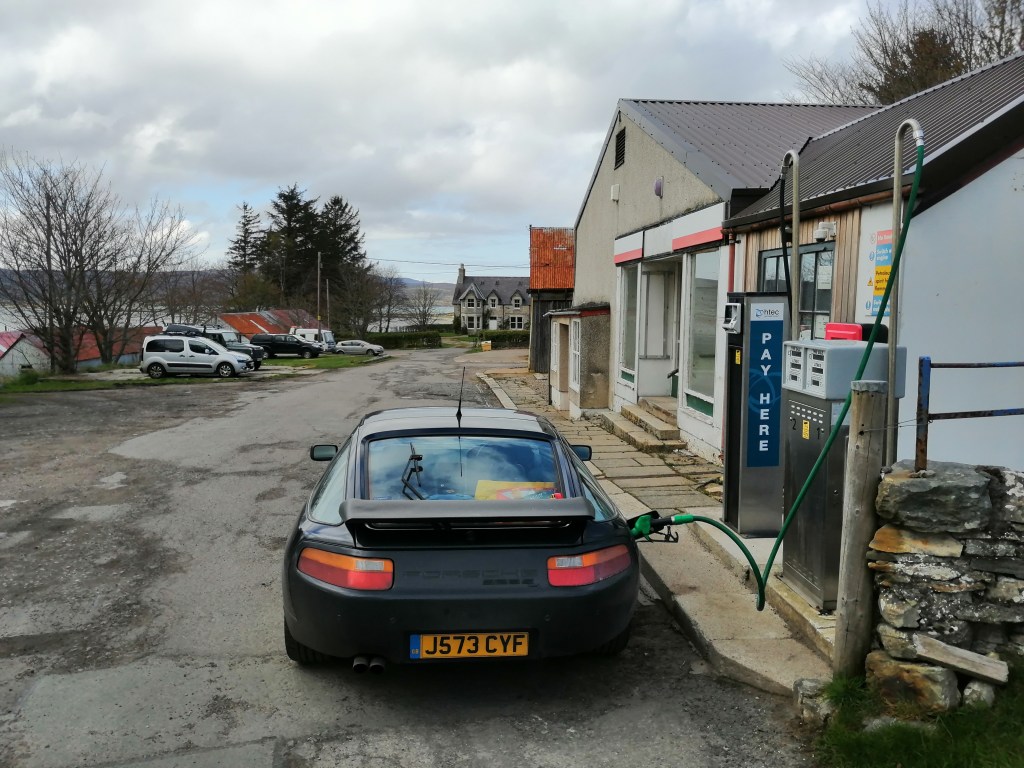
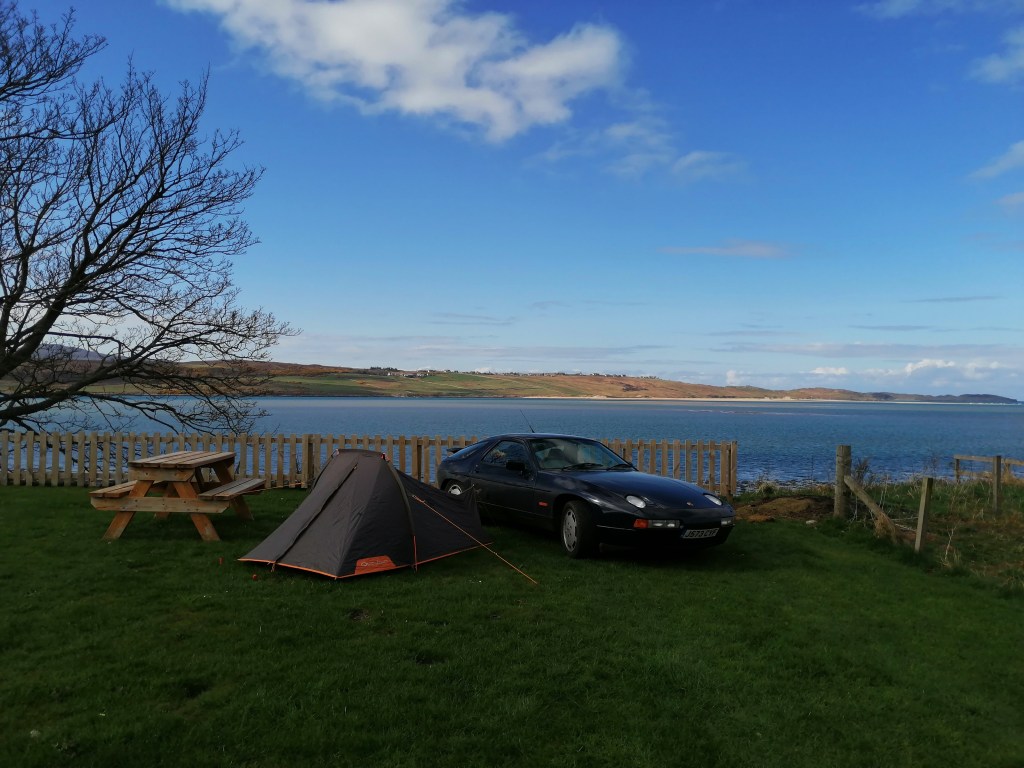


27th April: Tongue to Achmelvich via Durness
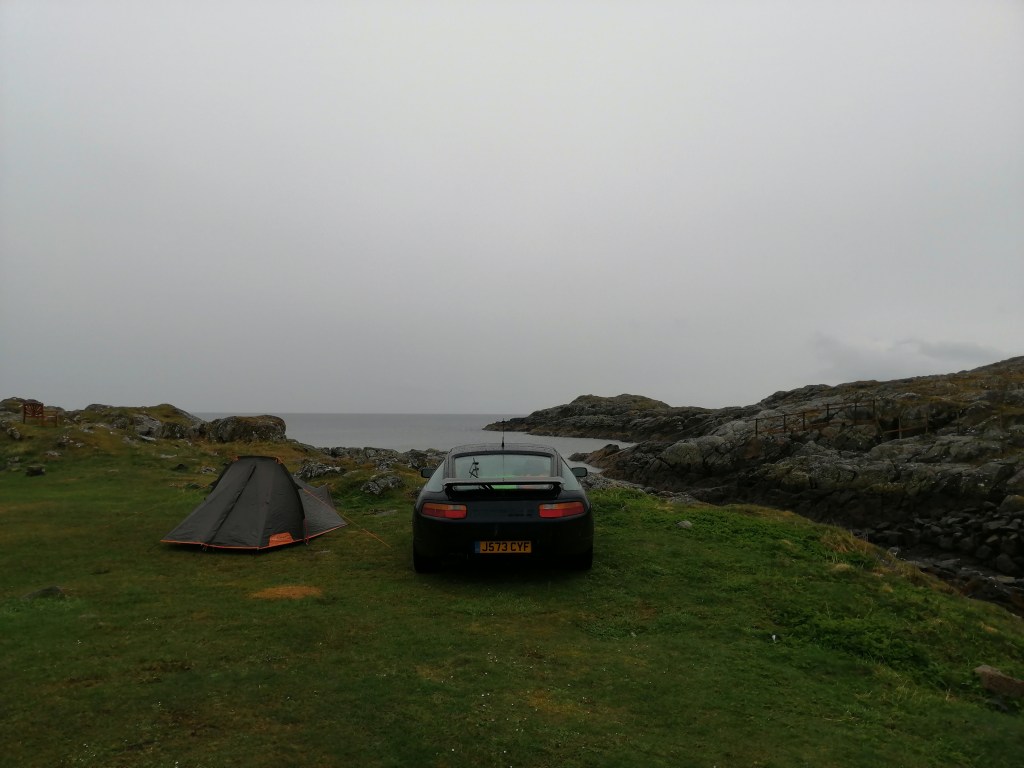
The night was cold and the weather is menacing, but the 928 and I are ready to explore more!
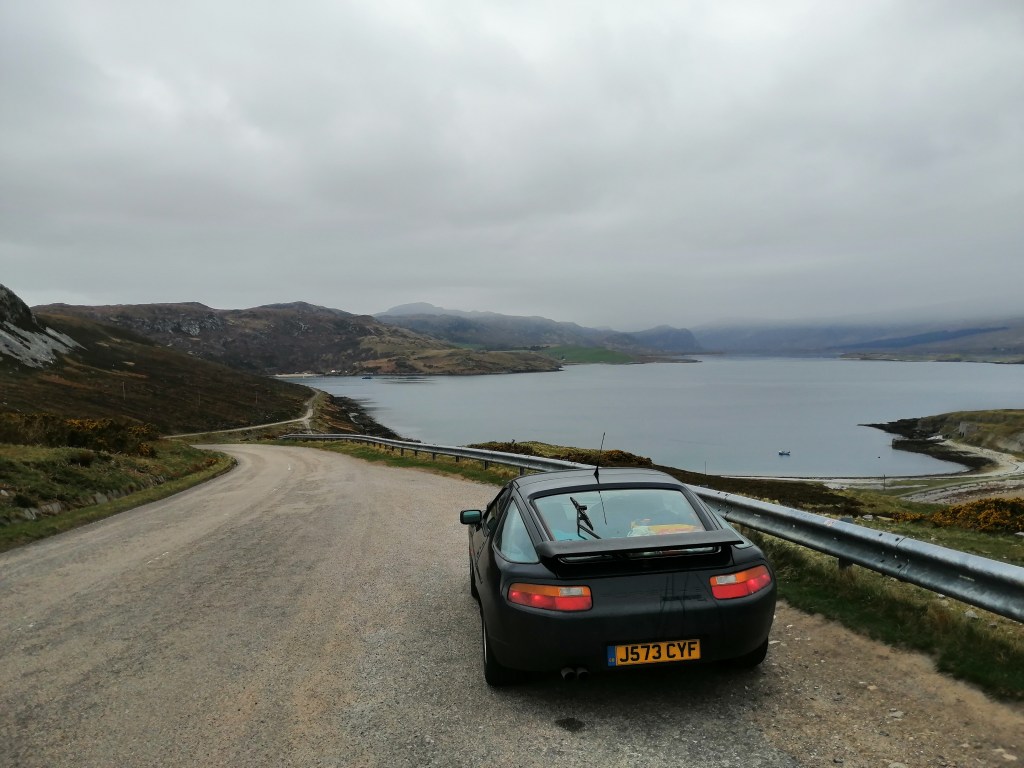
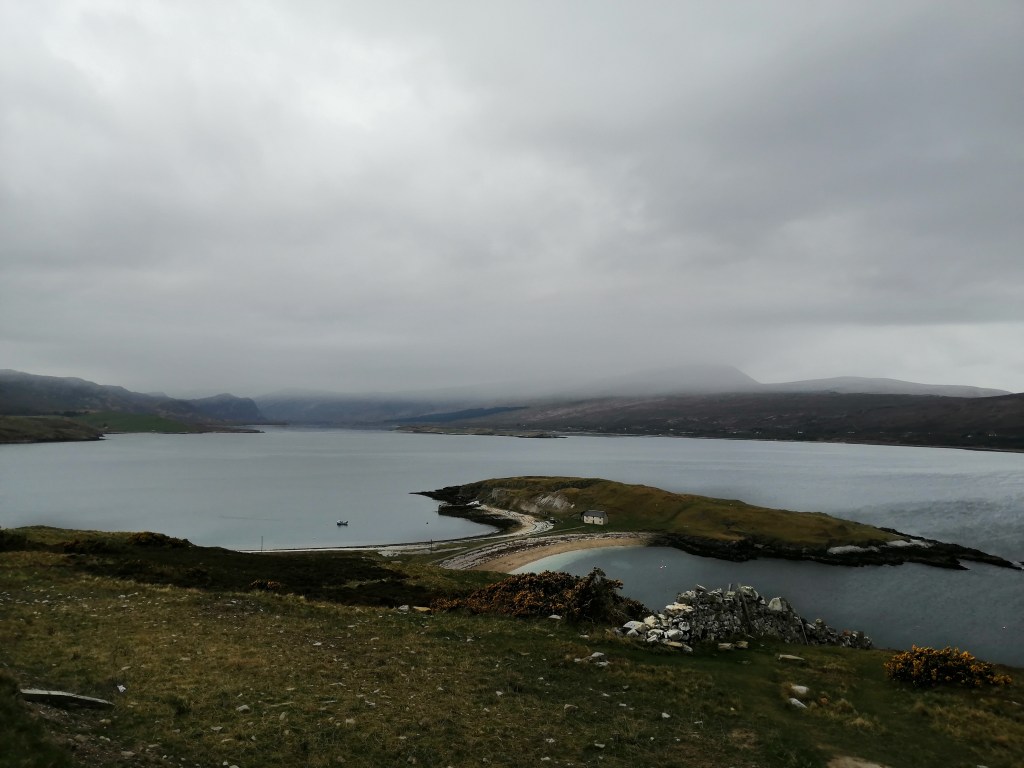
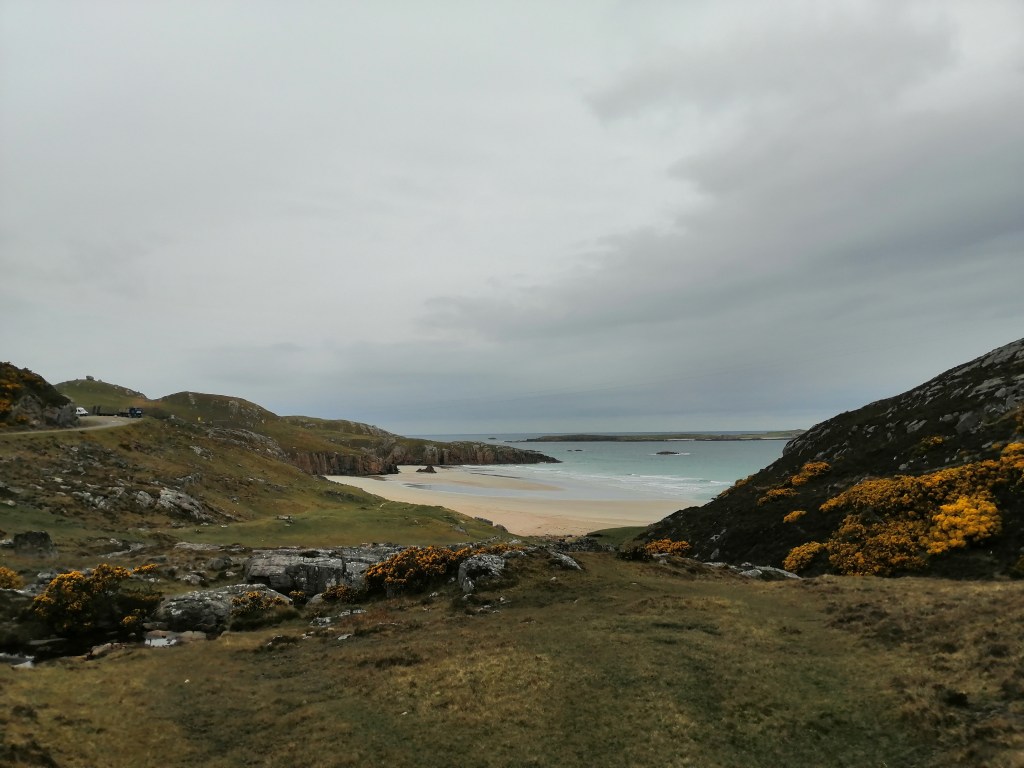
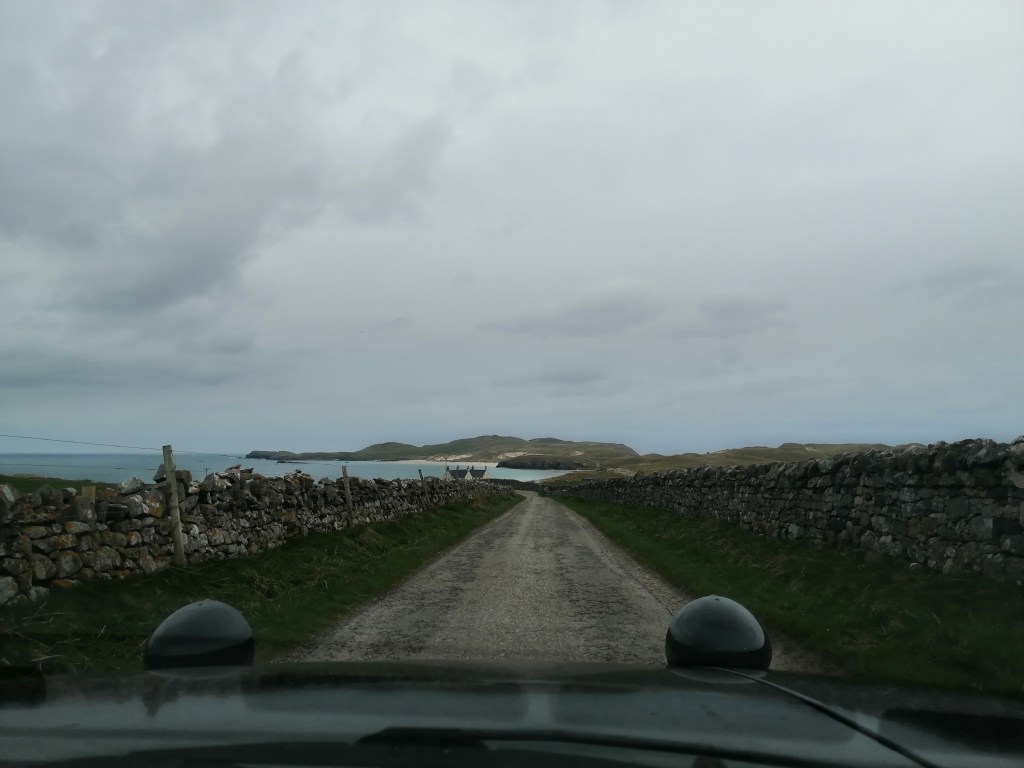
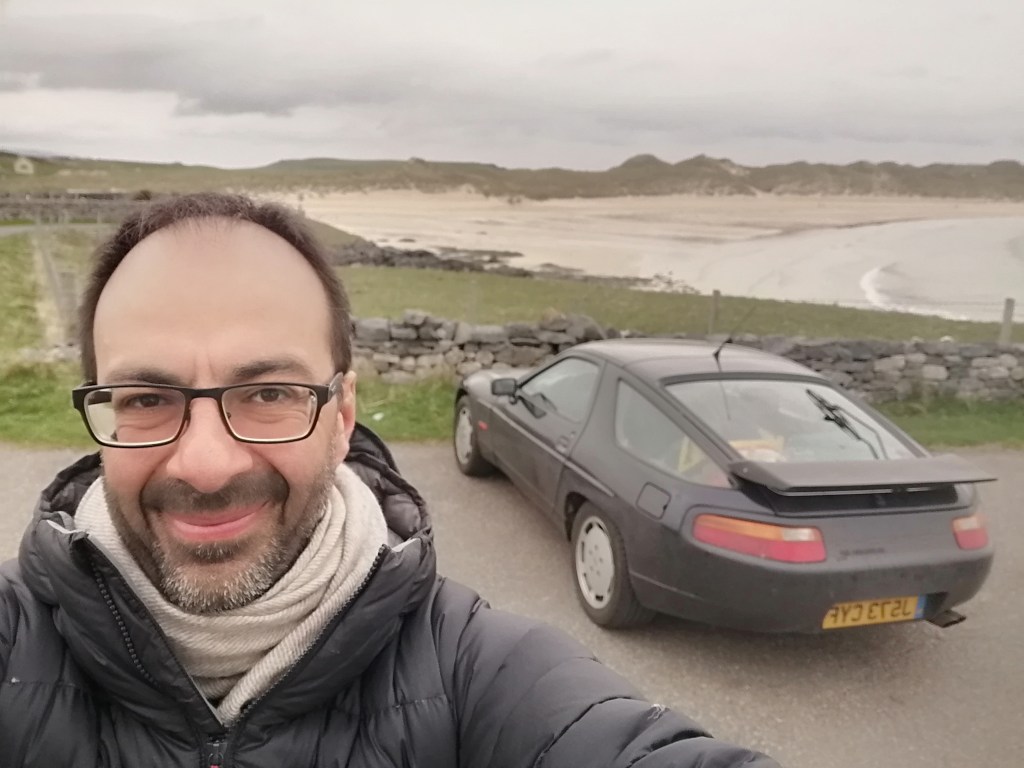
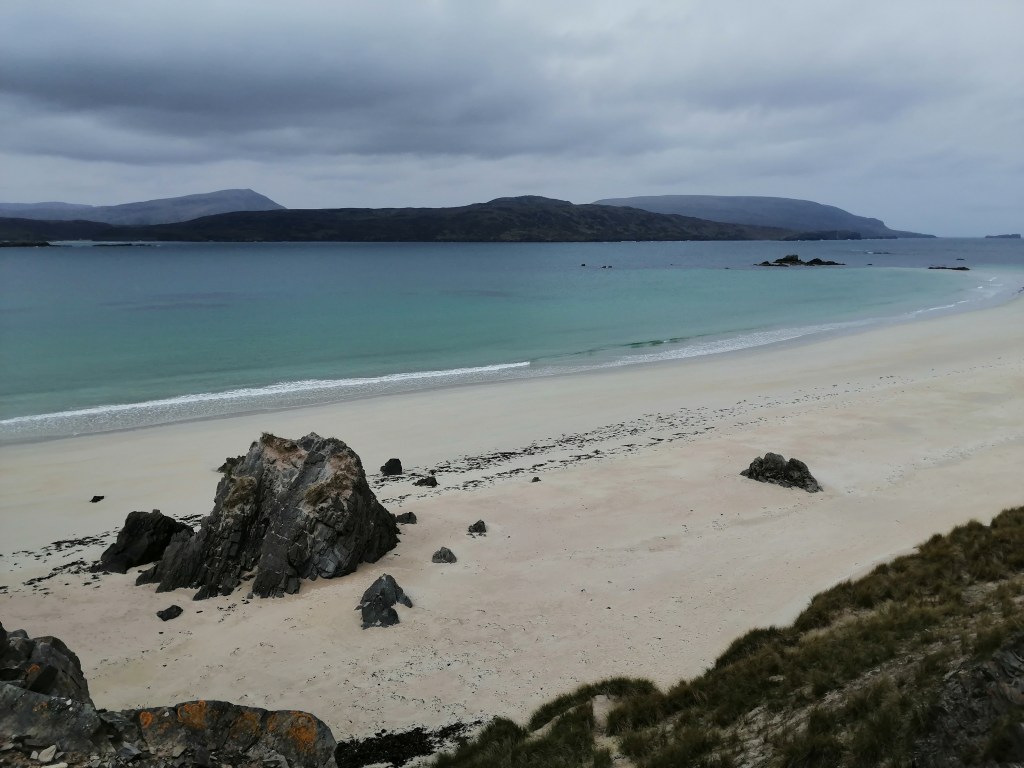
Balnakeil Beach in Durness is spectacular. I really enjoyed a stop at Cocoa Mountain too, probably the northernmost Chocolatier in the UK!

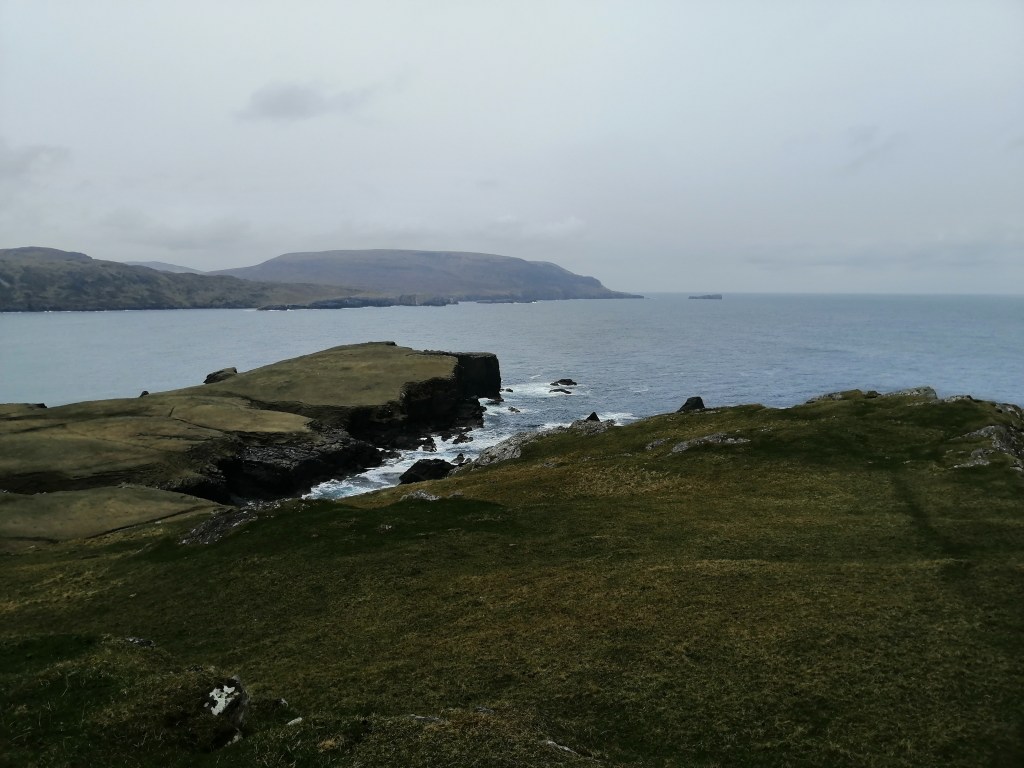
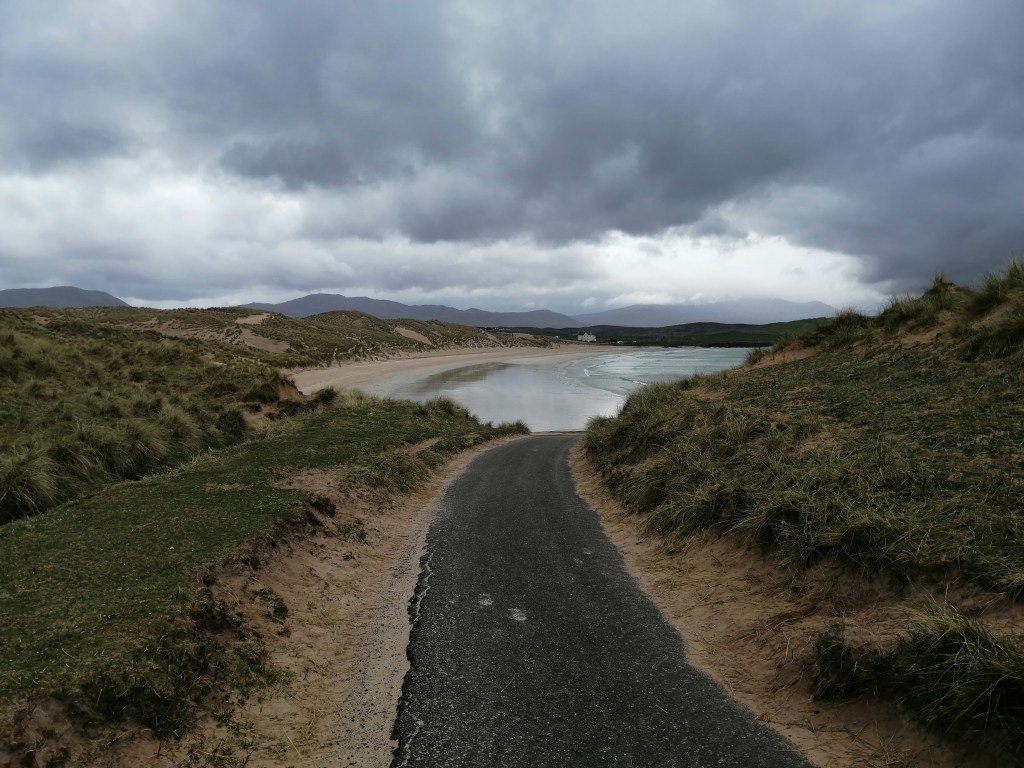
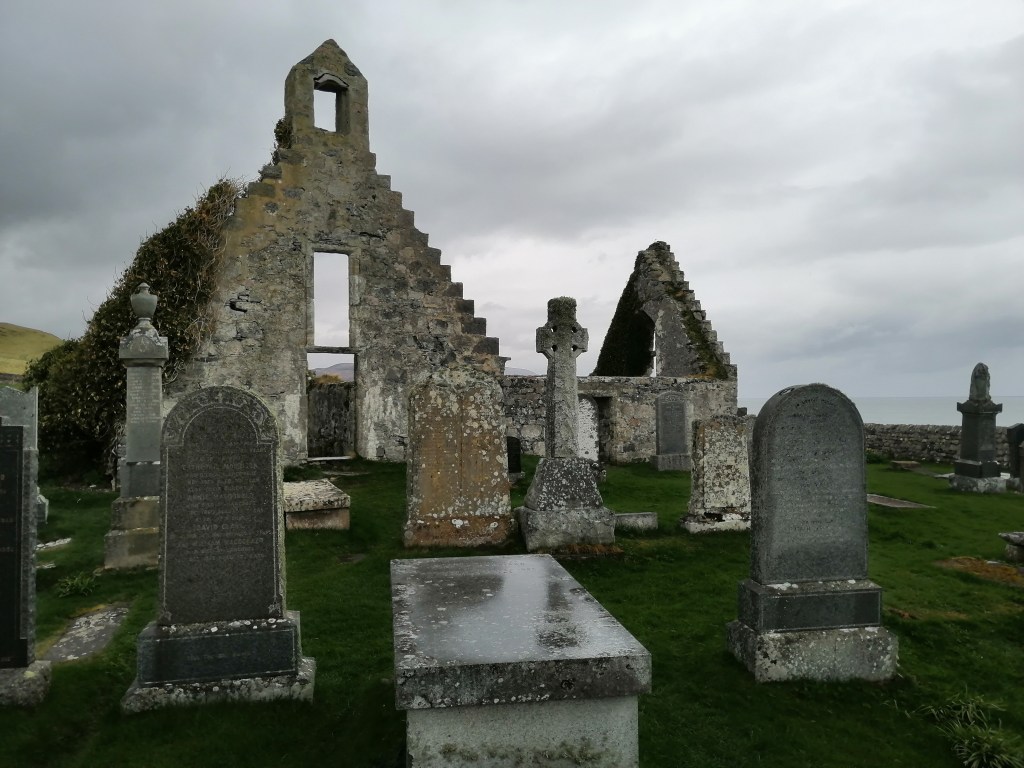
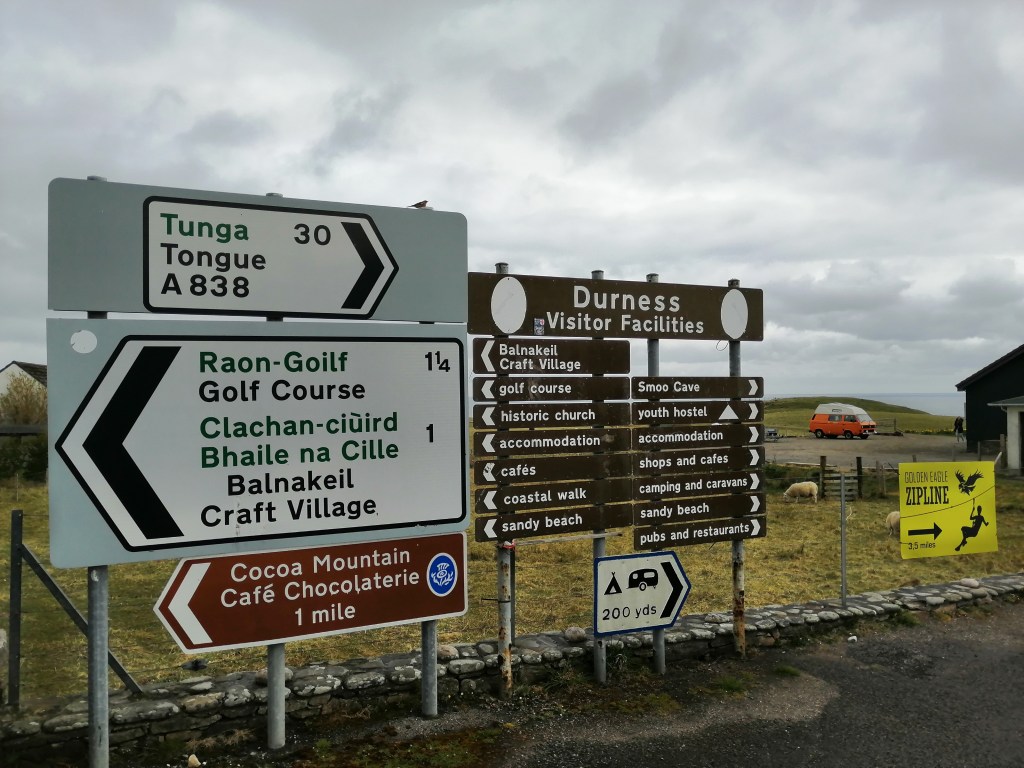
The signs introducing the Cape Wrath Bombardment Range include sentences and pictures that I would have never thought I would find in close proximity, including “area of outstanding beauty” and “you may see RAF Tornadoes dropping bombs”, or “Razorbill” and “Gunnery”. Very interesting though!

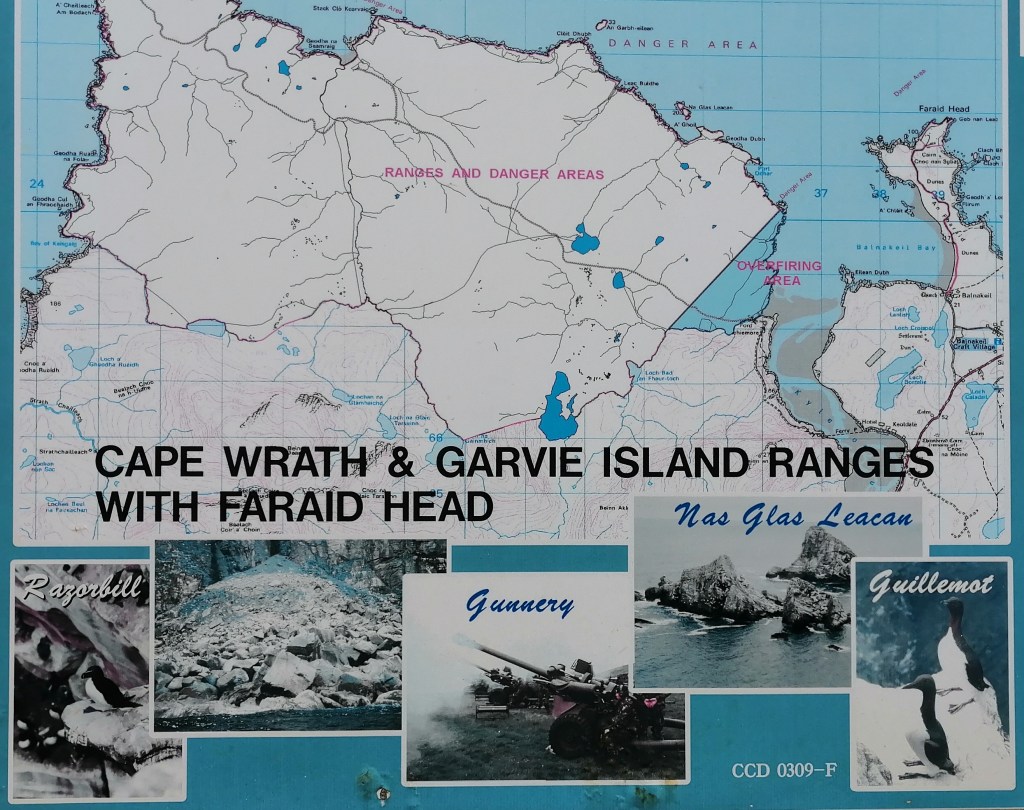
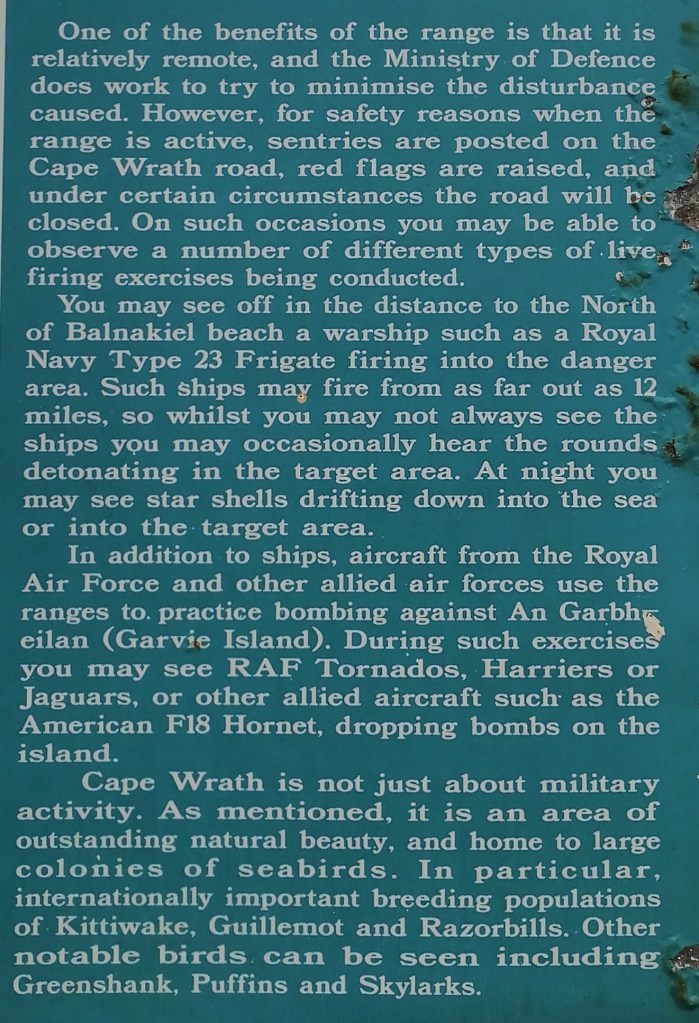
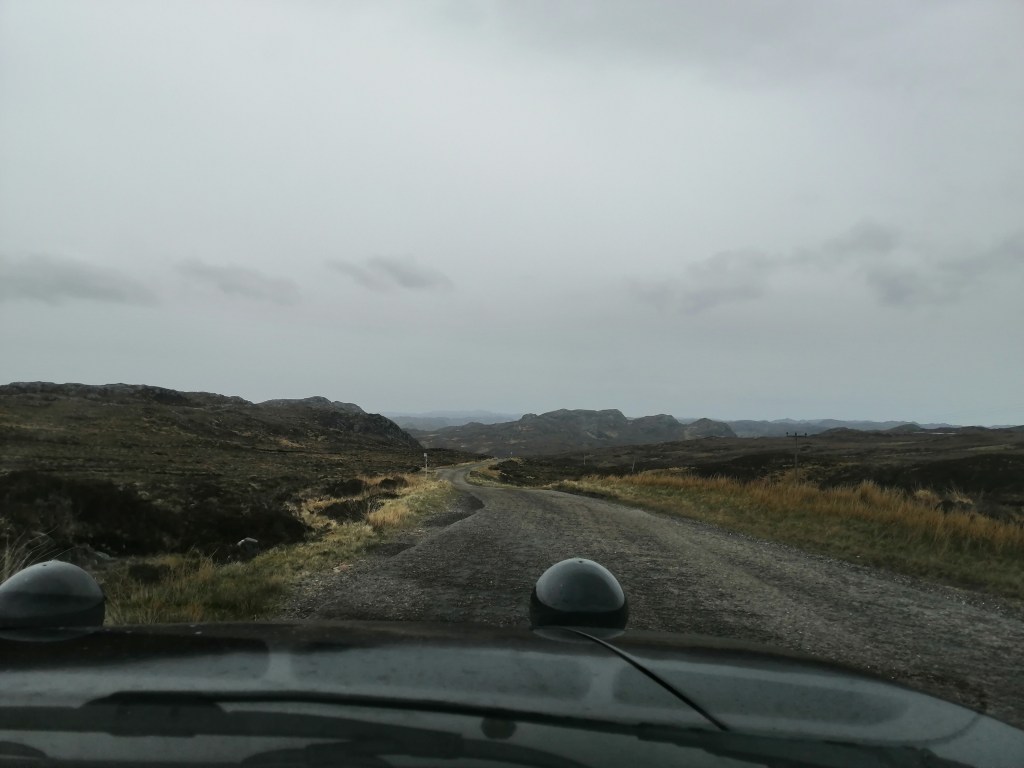
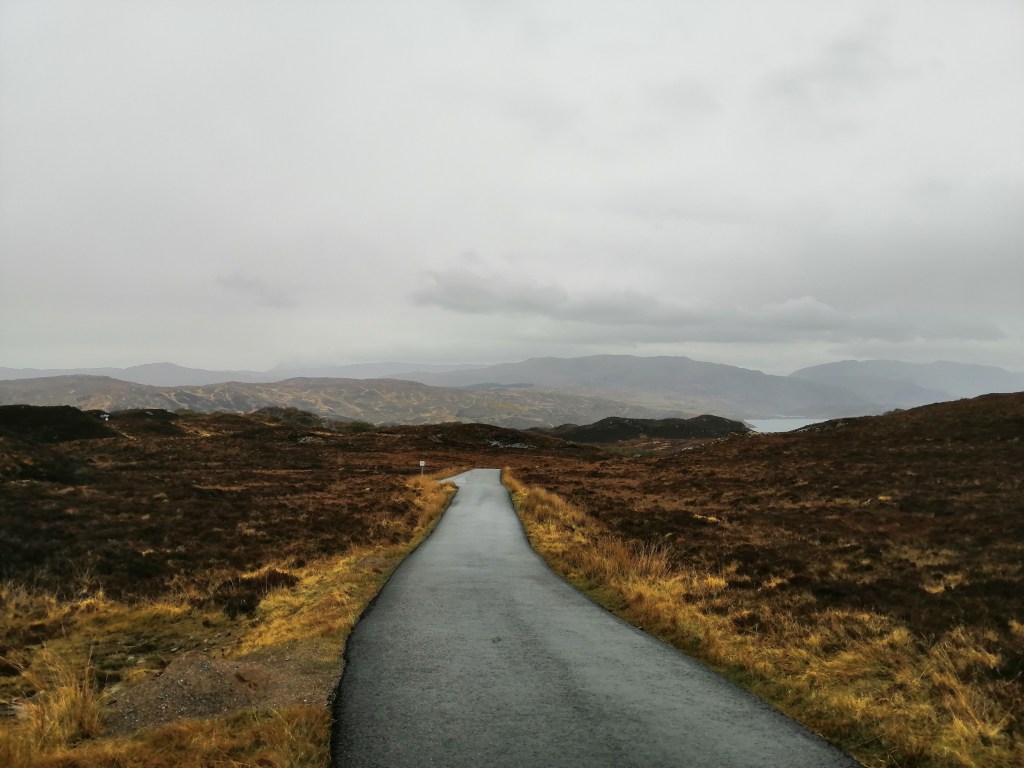
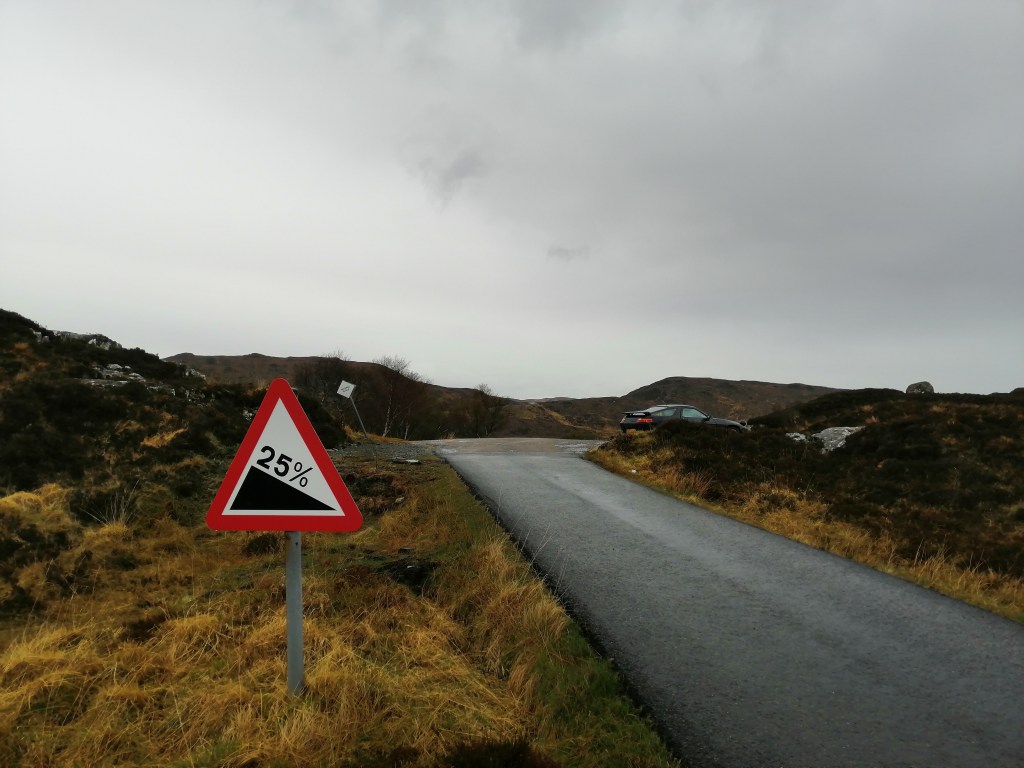
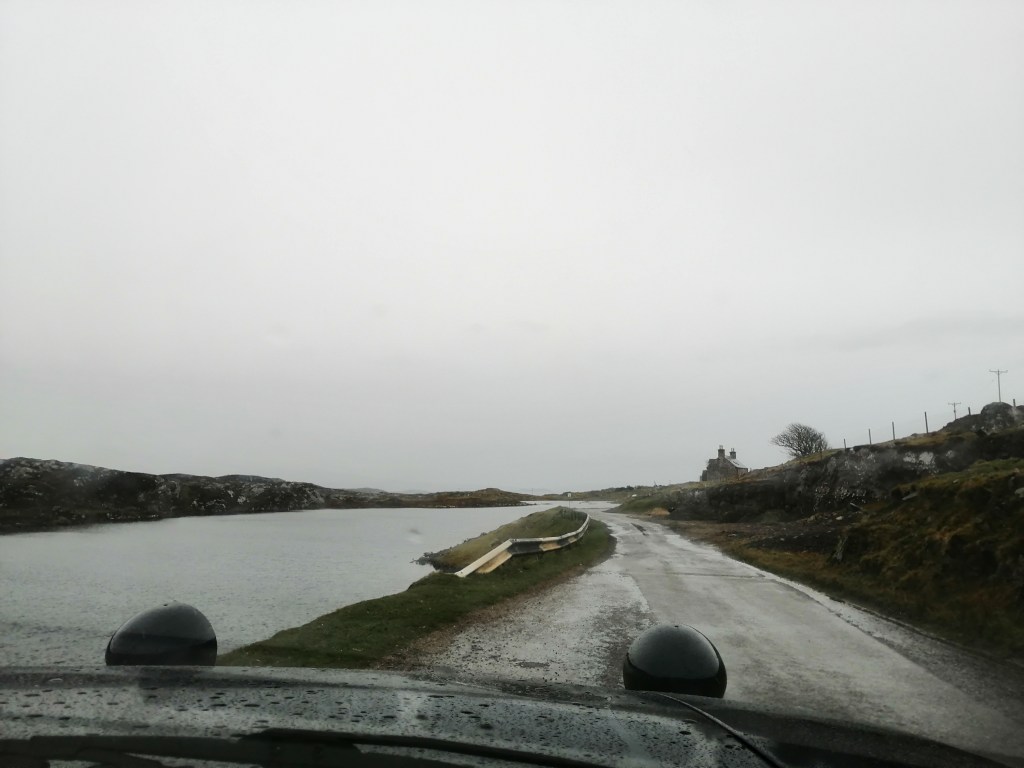
The drive to Lochinver is relatively wet but the roads are absolutely stunning, with barely any traffic. The tiny single track along the coast is hard work though, incredibly sinuous and steep. That was very tiring. But there is reward in Lochinver…
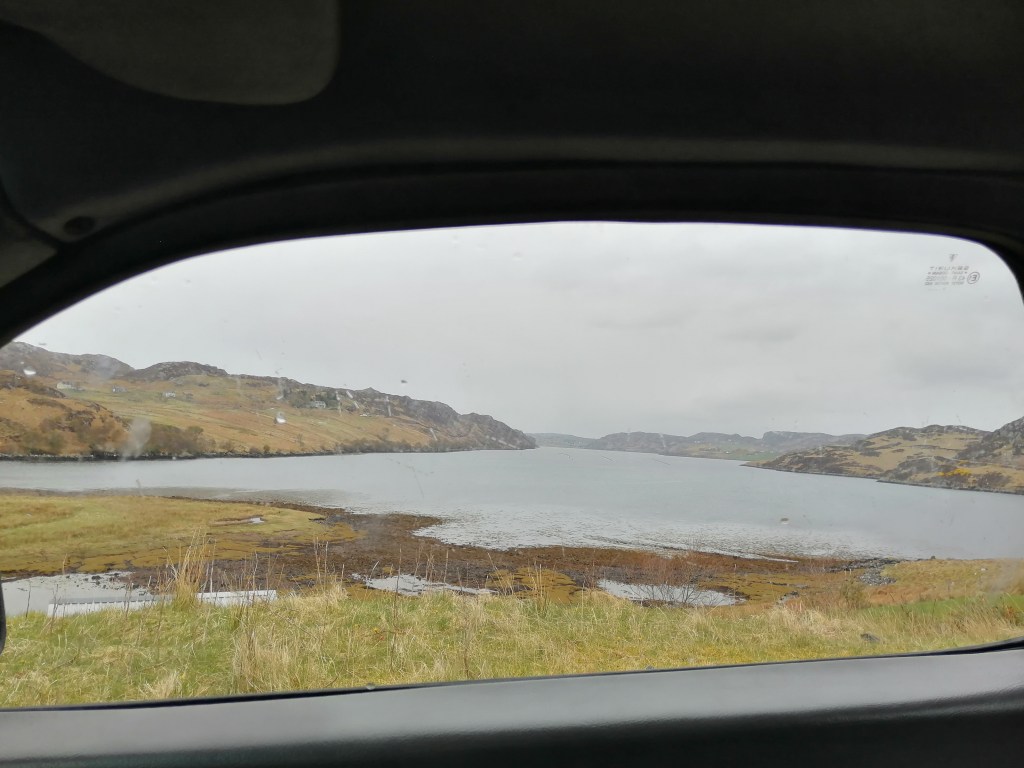
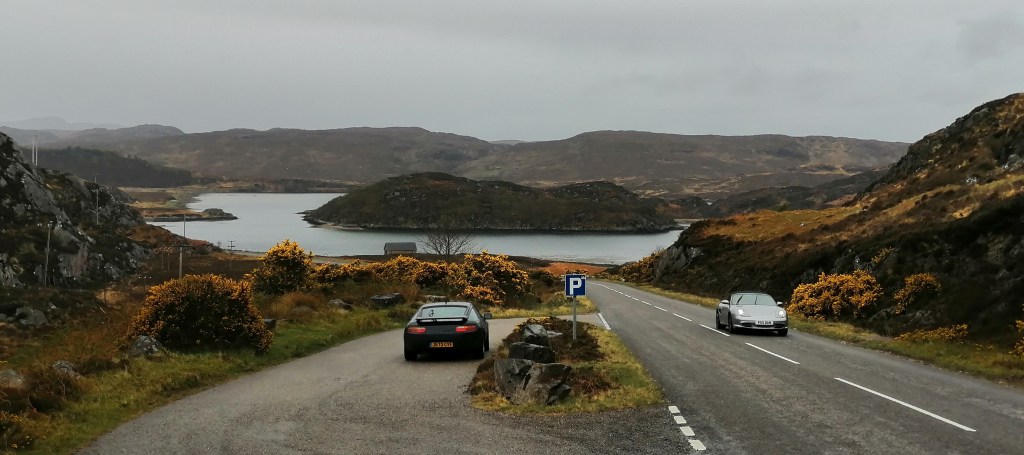
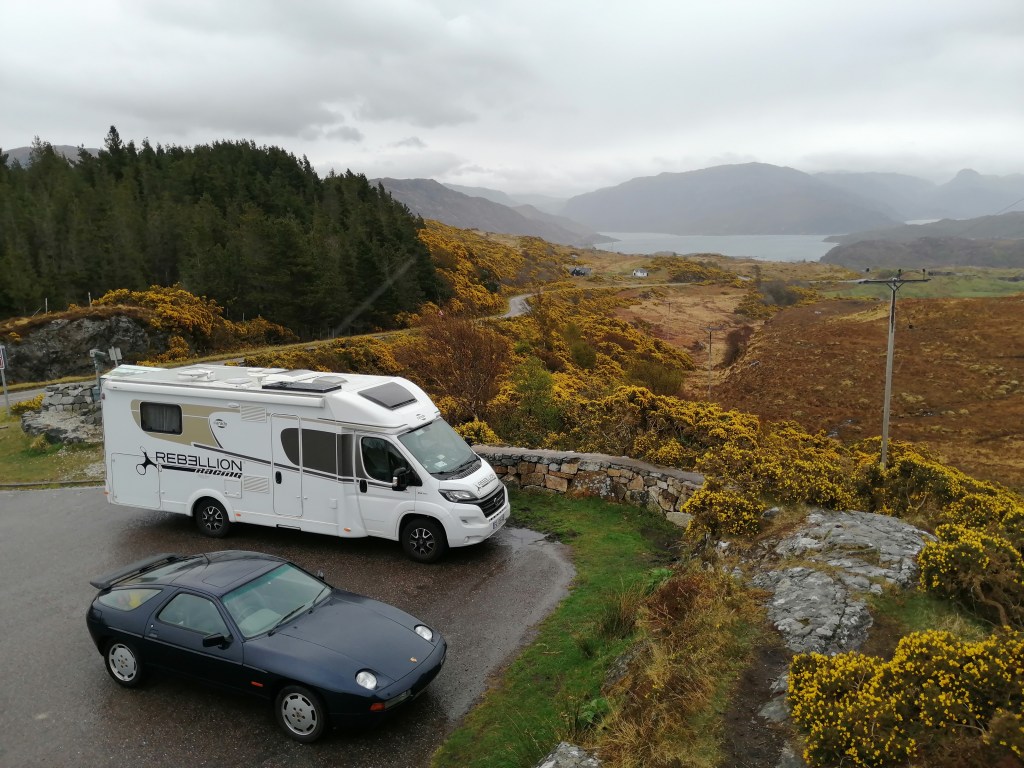
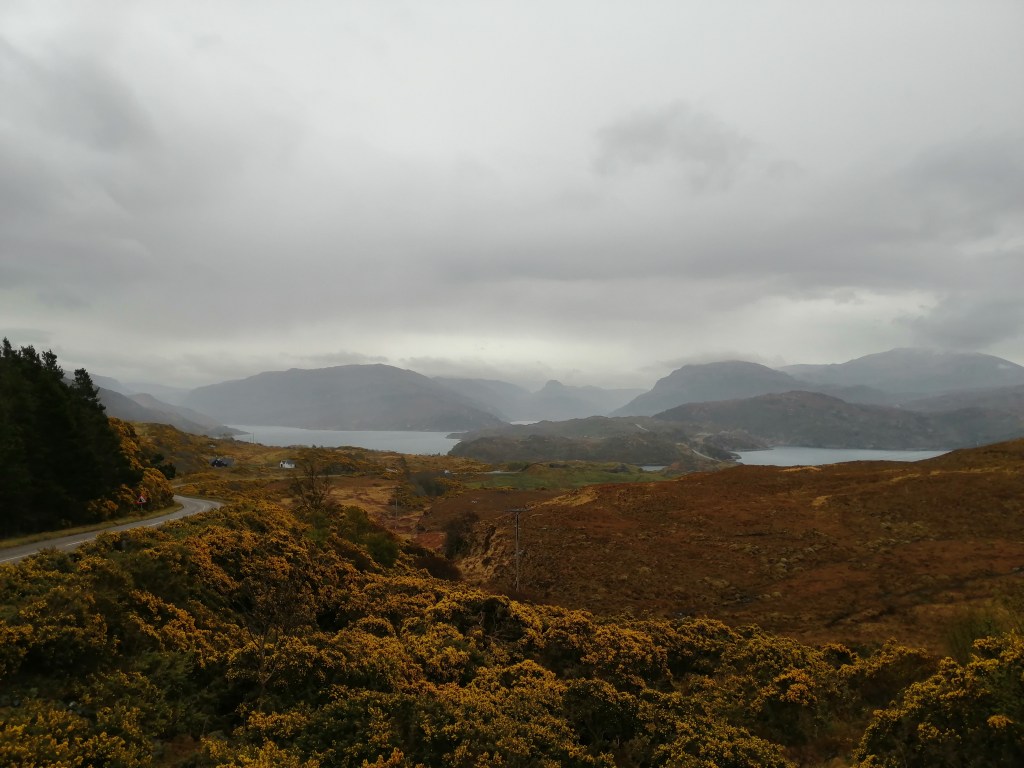

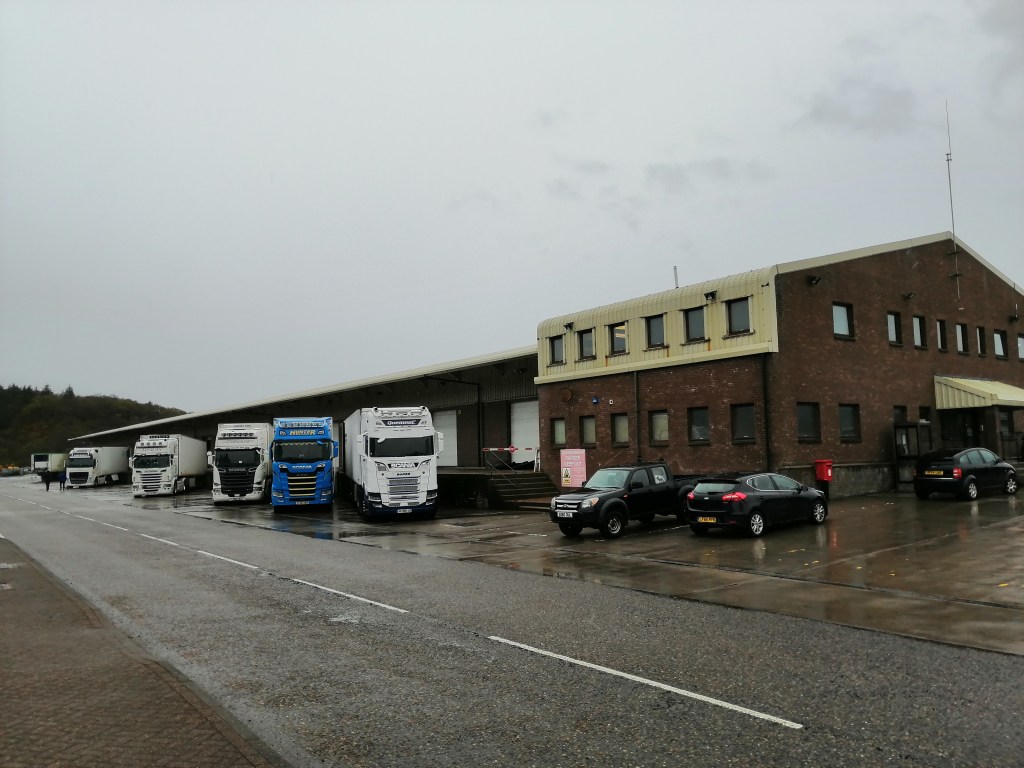
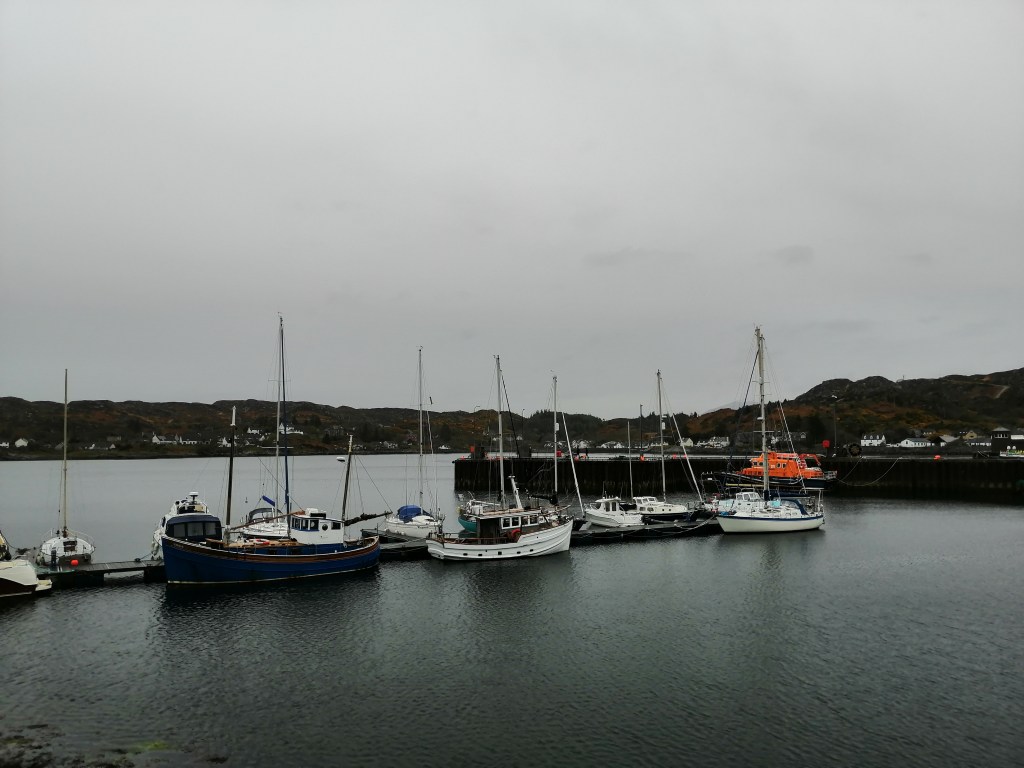
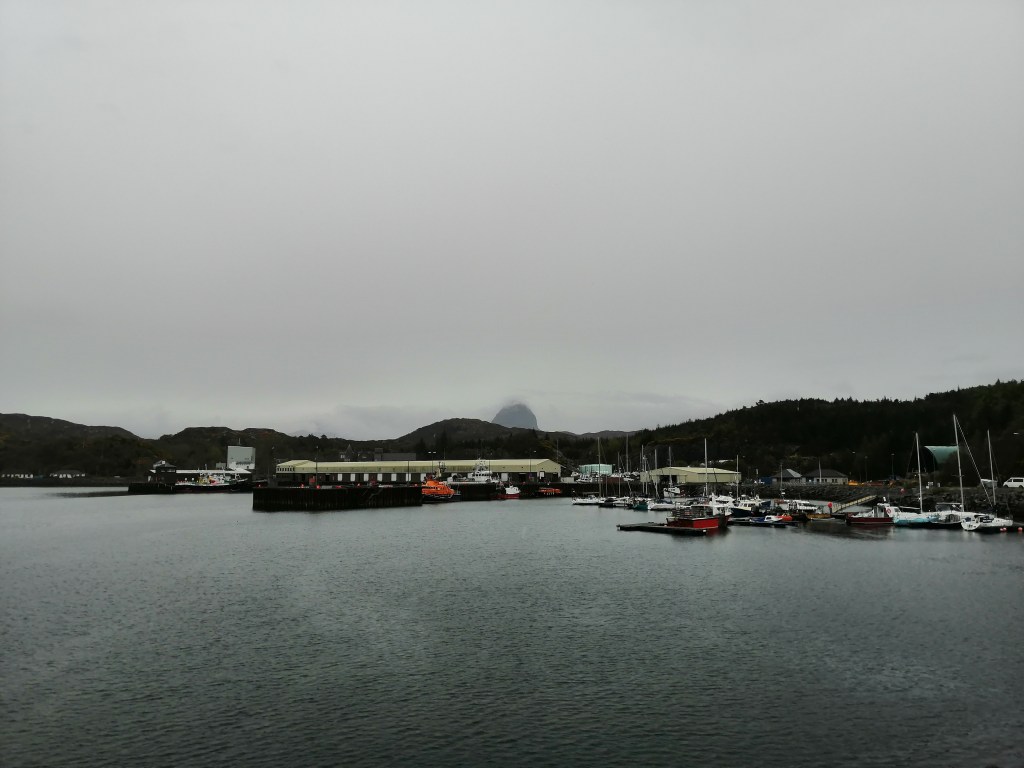
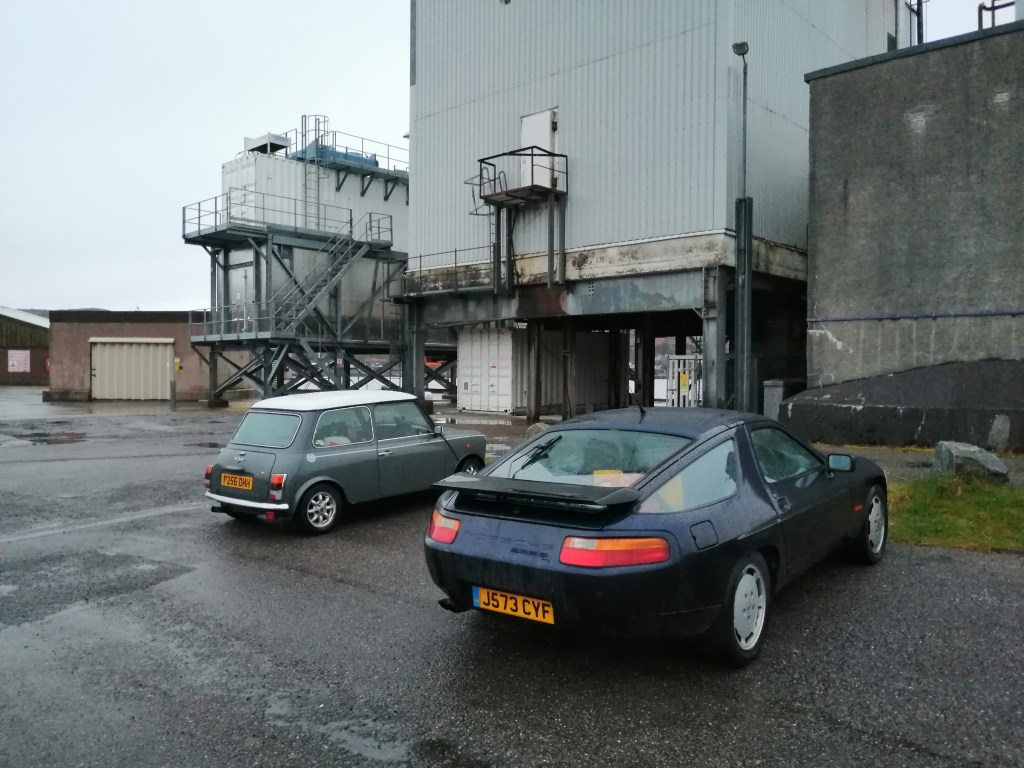
In Lochinver, Spanish and French lorries are waiting to load fish and seafood, but fortunately some of the catch makes it to the local restaurants, and I get a chance to sample it. I feel it is well deserved after the sandwiches and nibbles of the last couple of days.
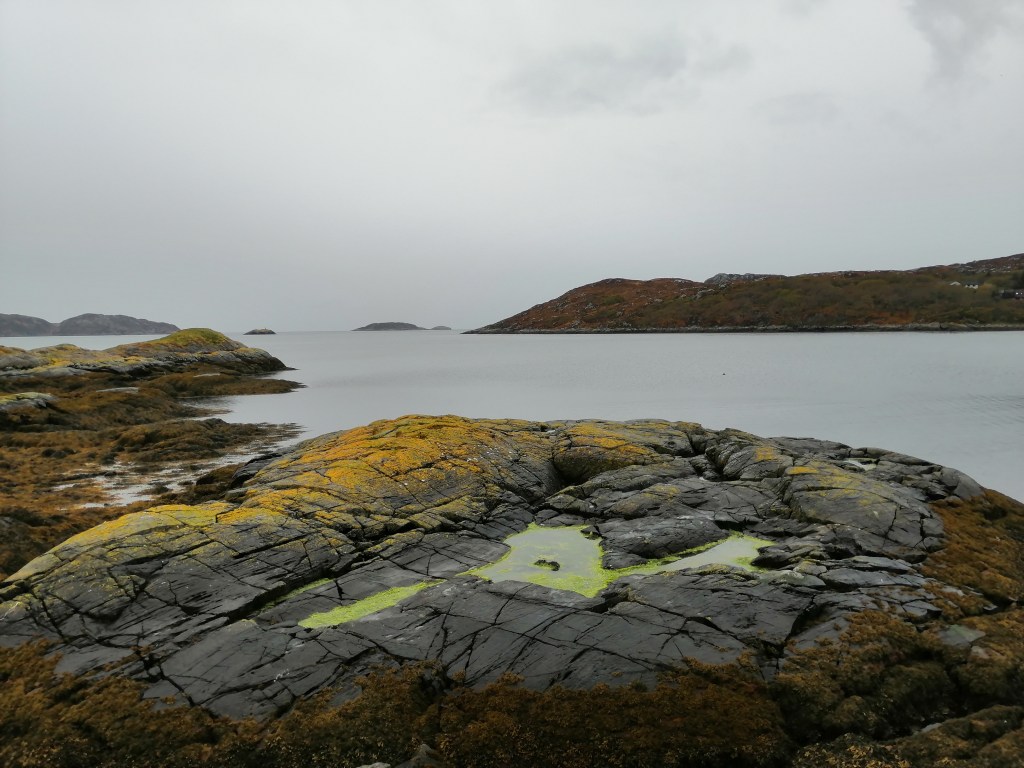
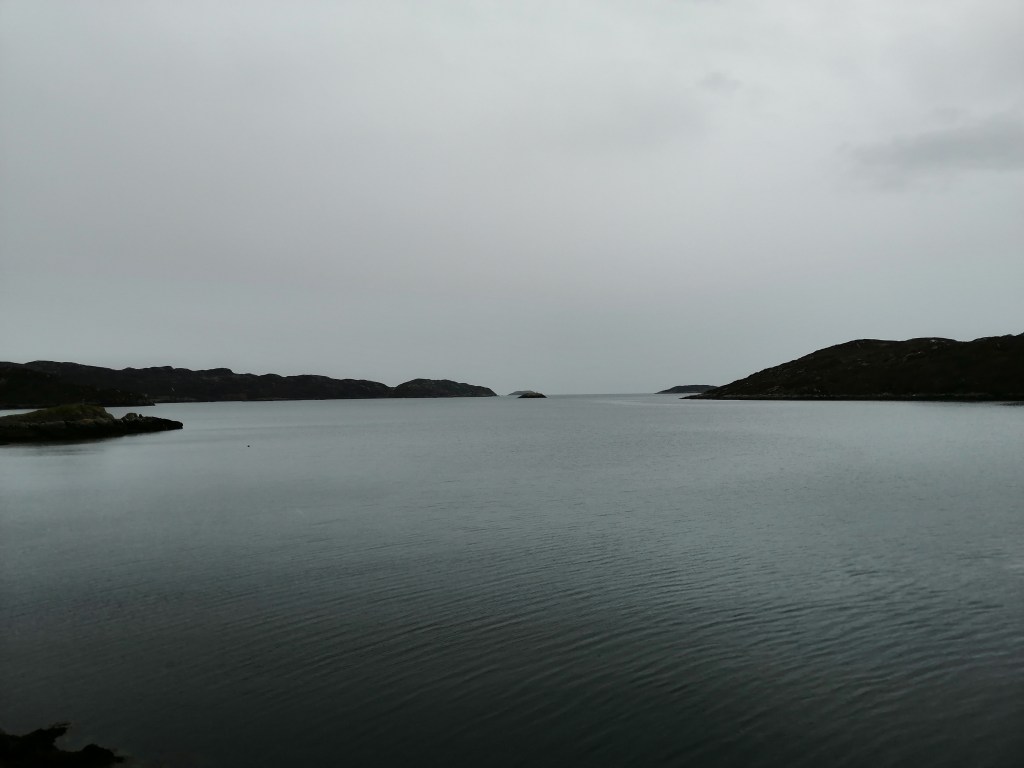
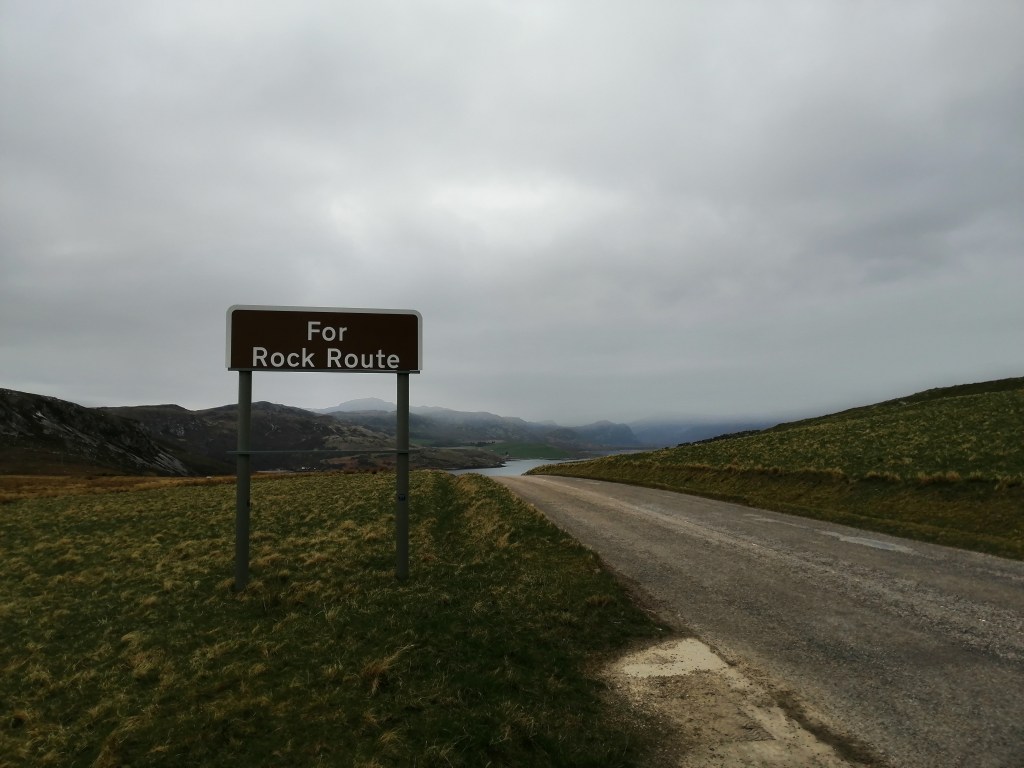
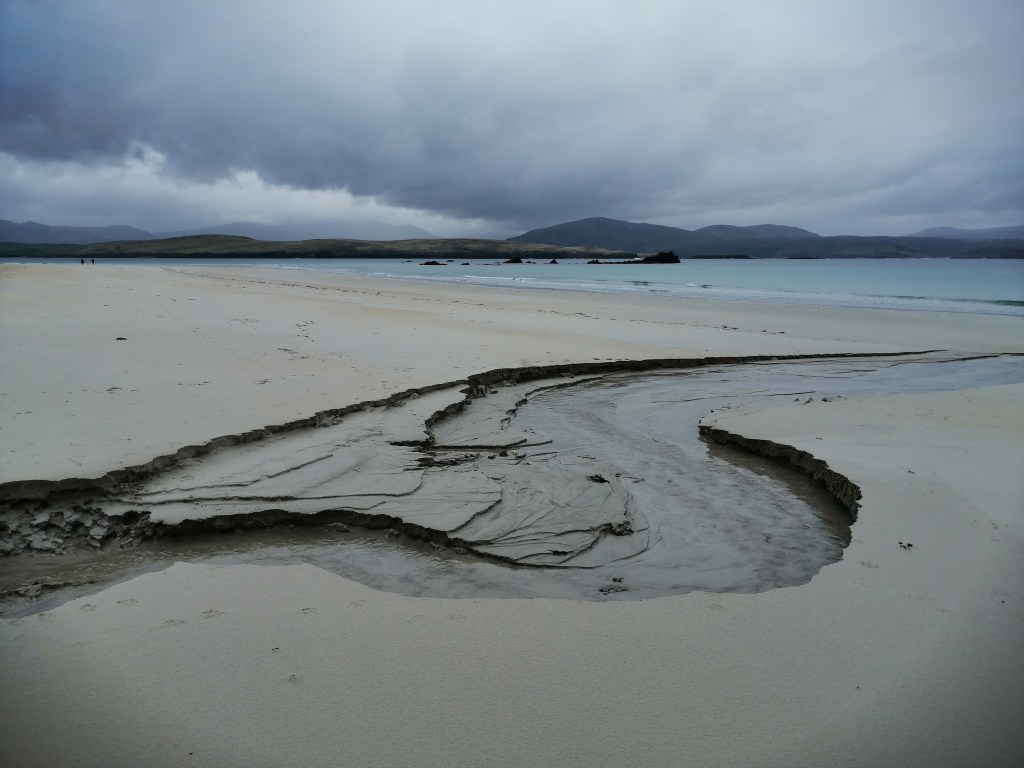
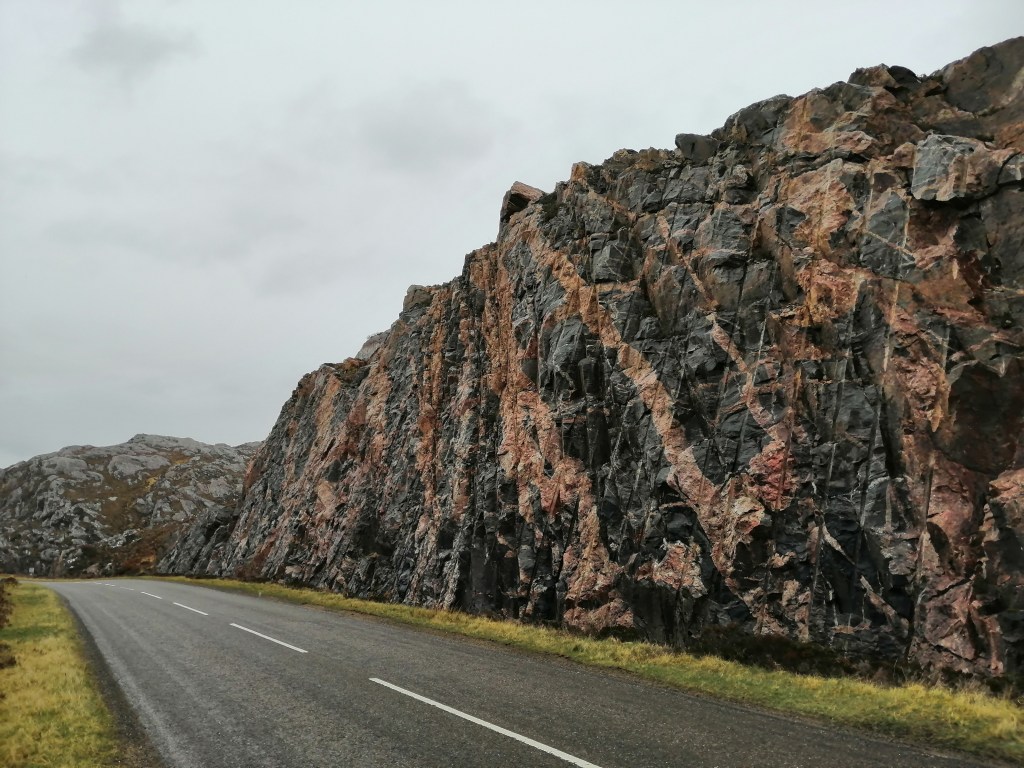
For the geologists and geomorphologists, some beautiful features along the “Rock Route”: seepage channels with incredible flights of terraces, and some crazy things happening to the poor 2 billion-year old Lewisian gneiss.

28th April: going home, but not without climbing Stac Pollaidh
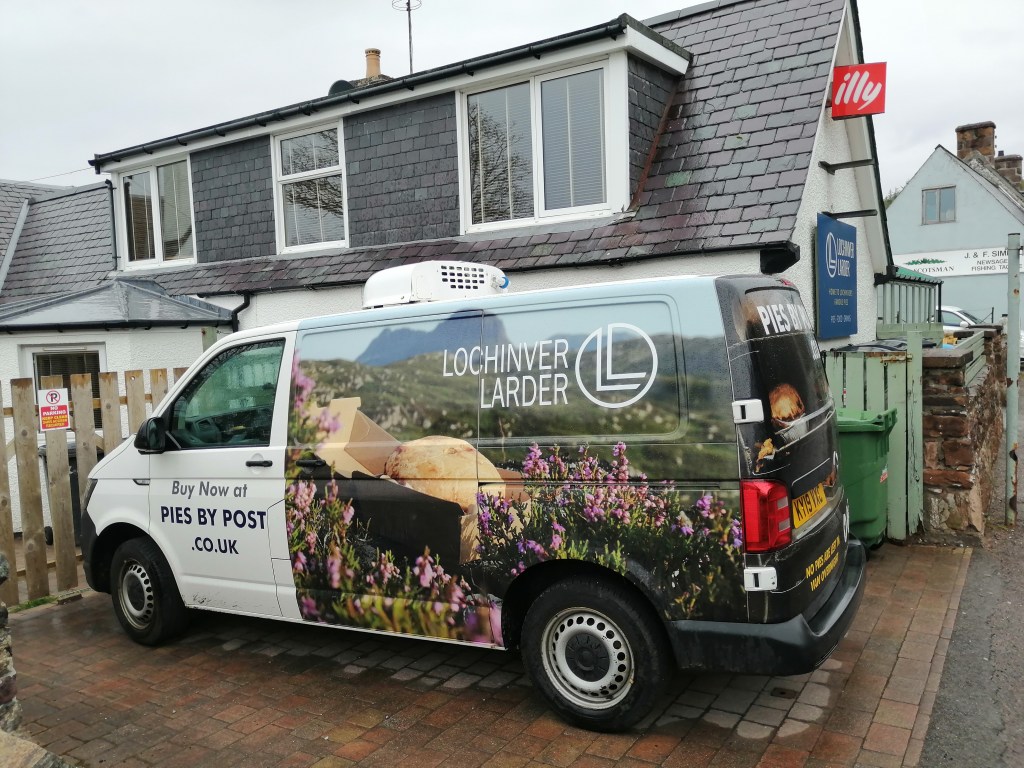
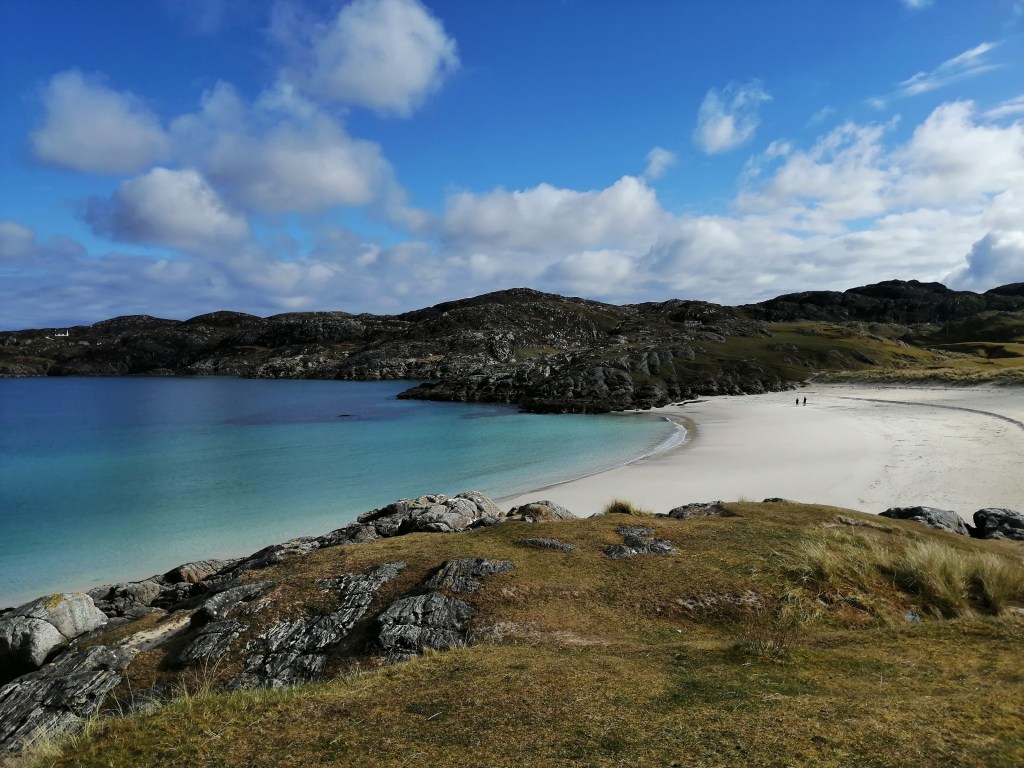
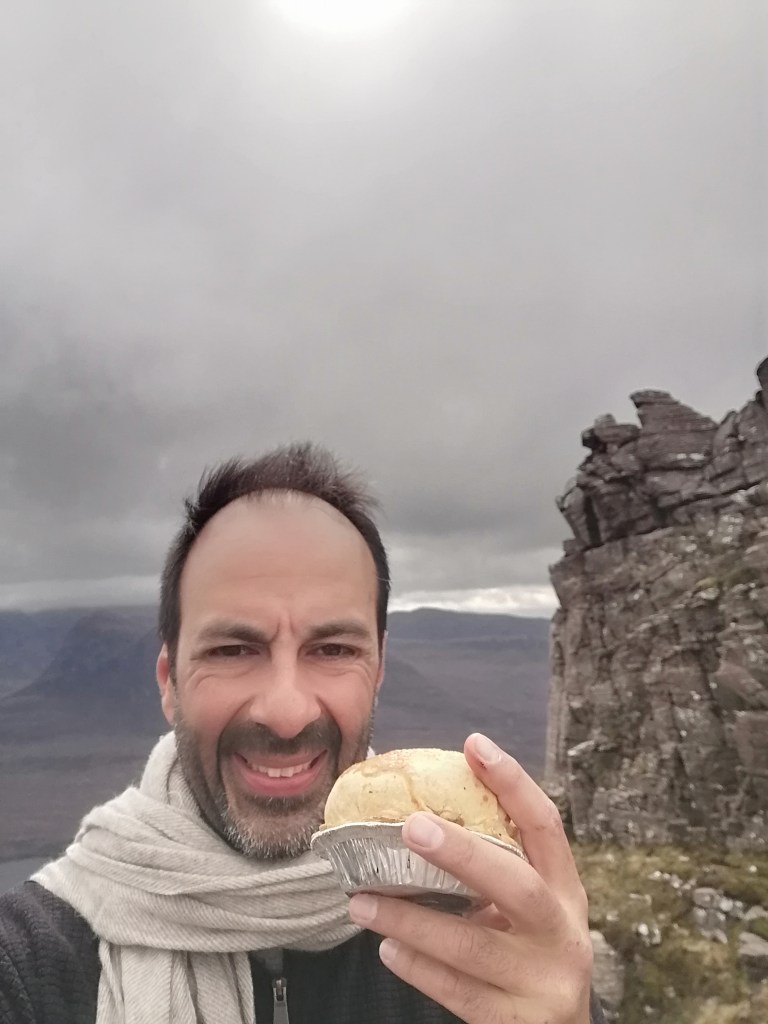
After a breakfast on Achmelvich beach, I drive to Lochinver to stock on pies from the Lochinver Larder. These are by far the best pies I have ever had: https://www.lochinverlarder.com/. And then I take the coastal road to Stac Pollaidh. I absolutely love this area.

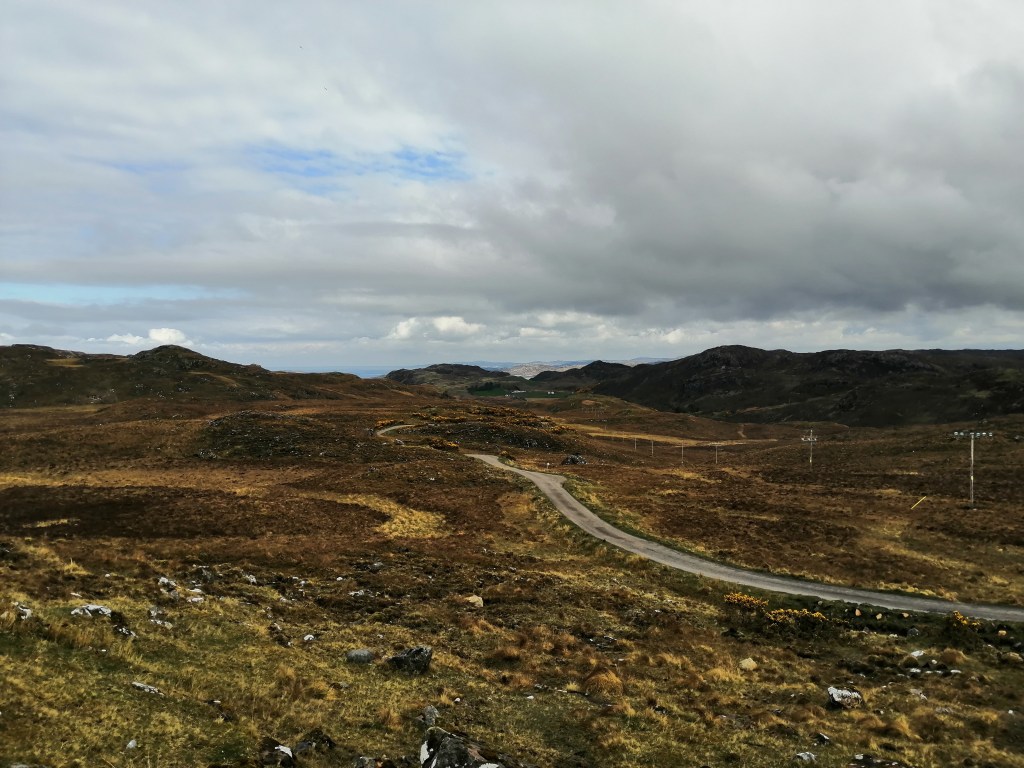
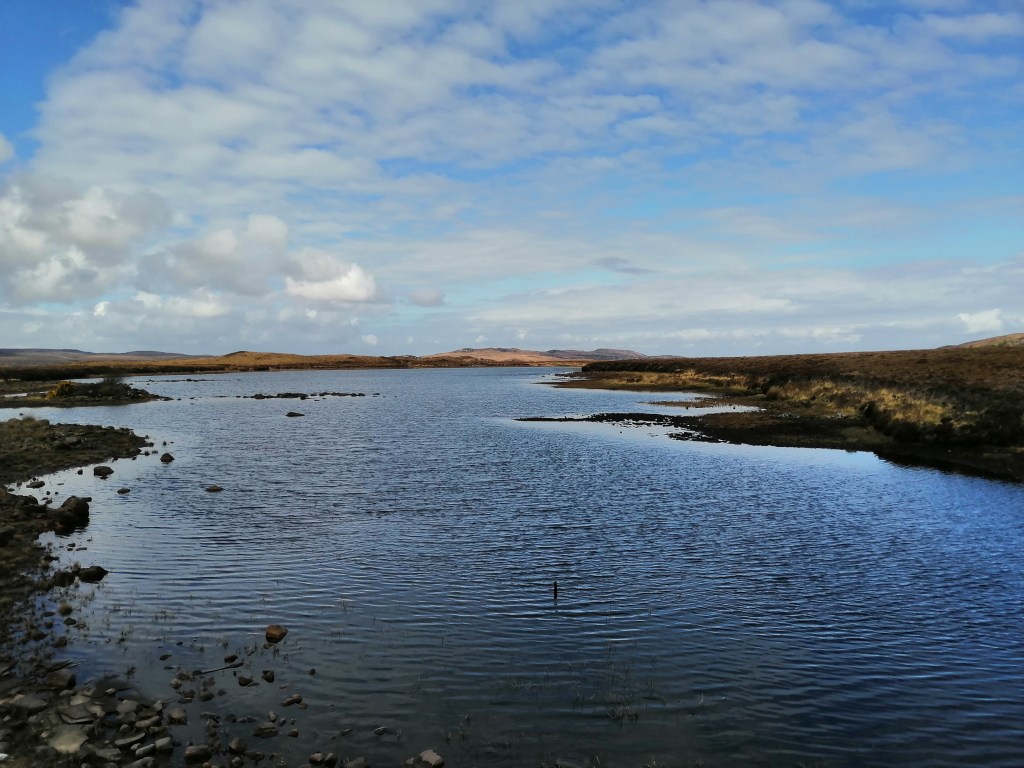
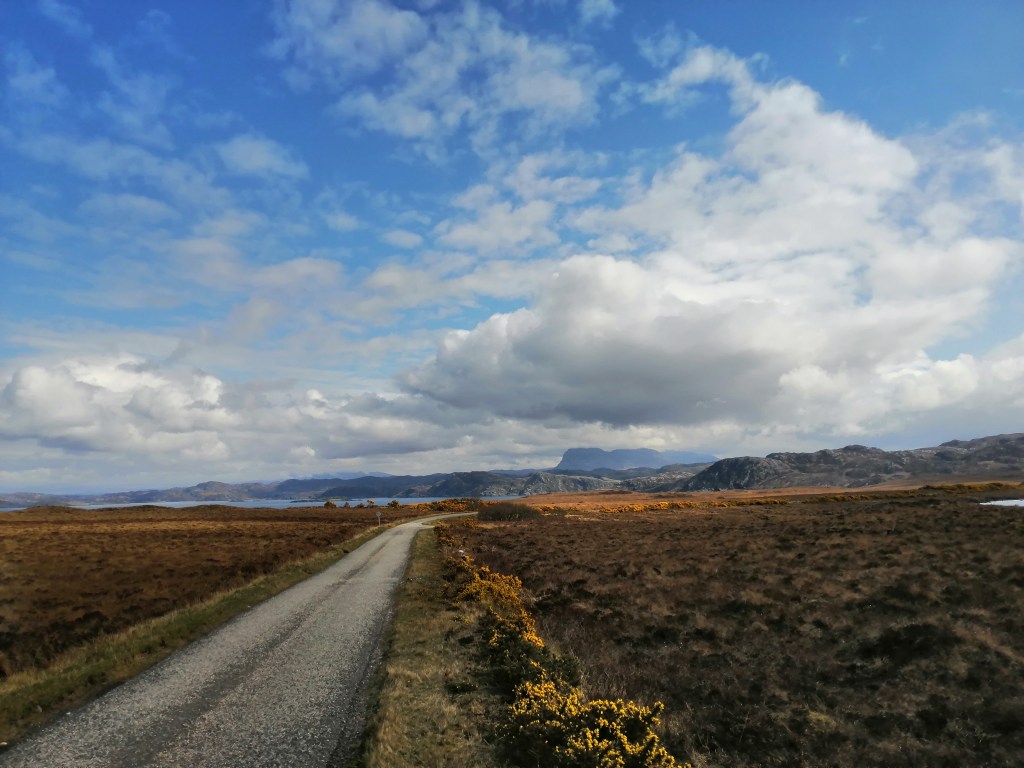
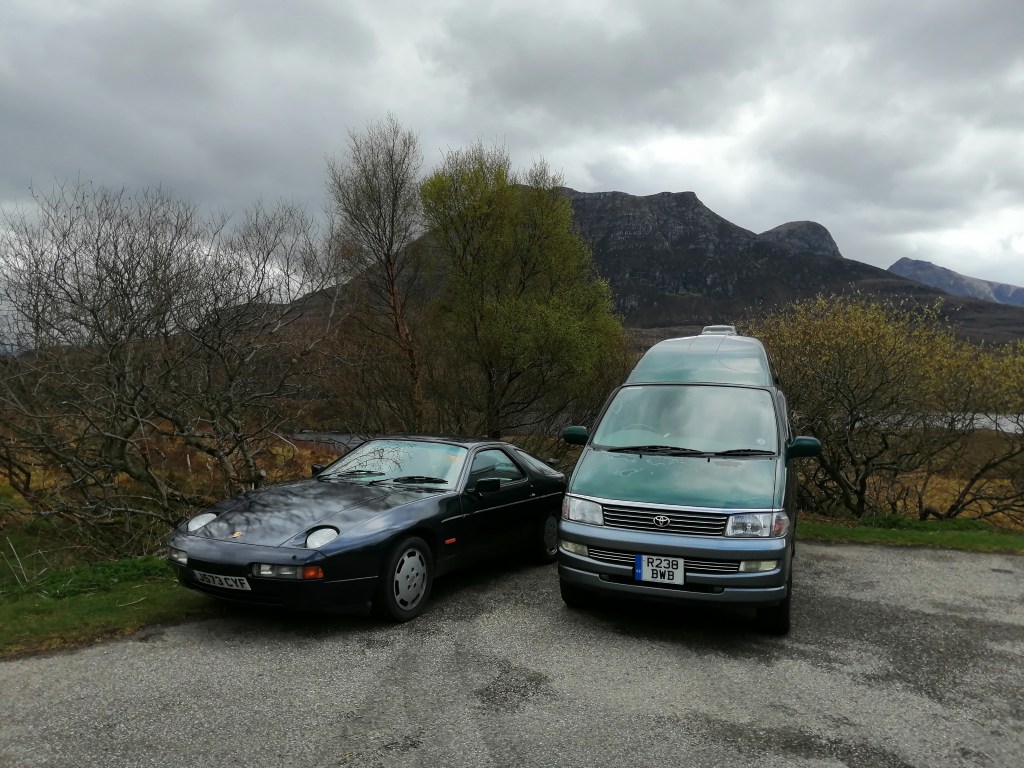
The climb to Stac Pollaidh is very pleasant, in particular when it ends with a Lochinver Larder pie. Stac Pollaidh is a stack of 0.6 to 1 billion-year old sandstones resting on the Lewisian gneiss. When glaciers carved the area during the last glacial periods, they left blades of sandstone between ice streams (including Stac Pollaidh and Suilven), and carved the surface of the Lewisian, leaving a multitude of depressions that are now lakes.
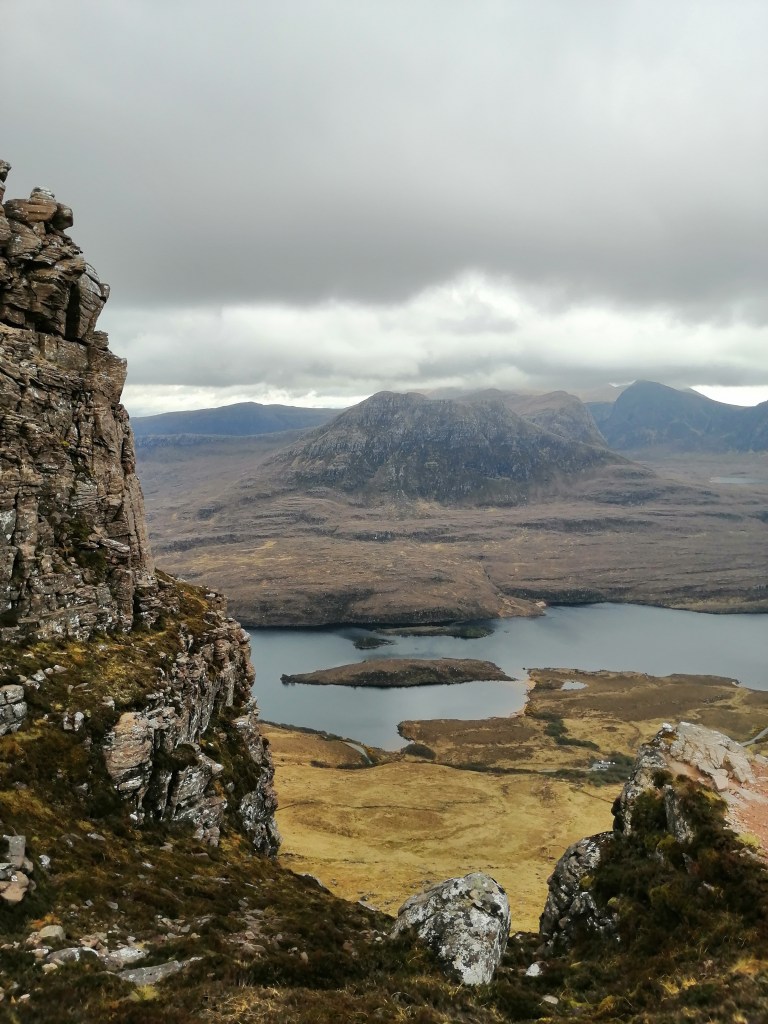
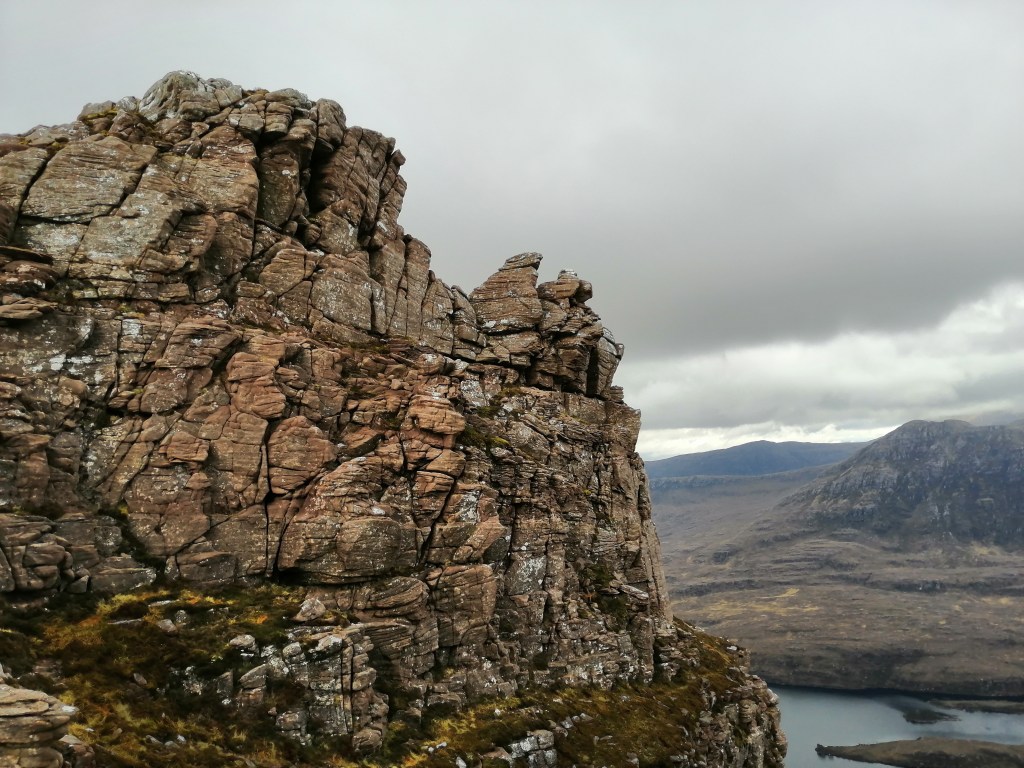
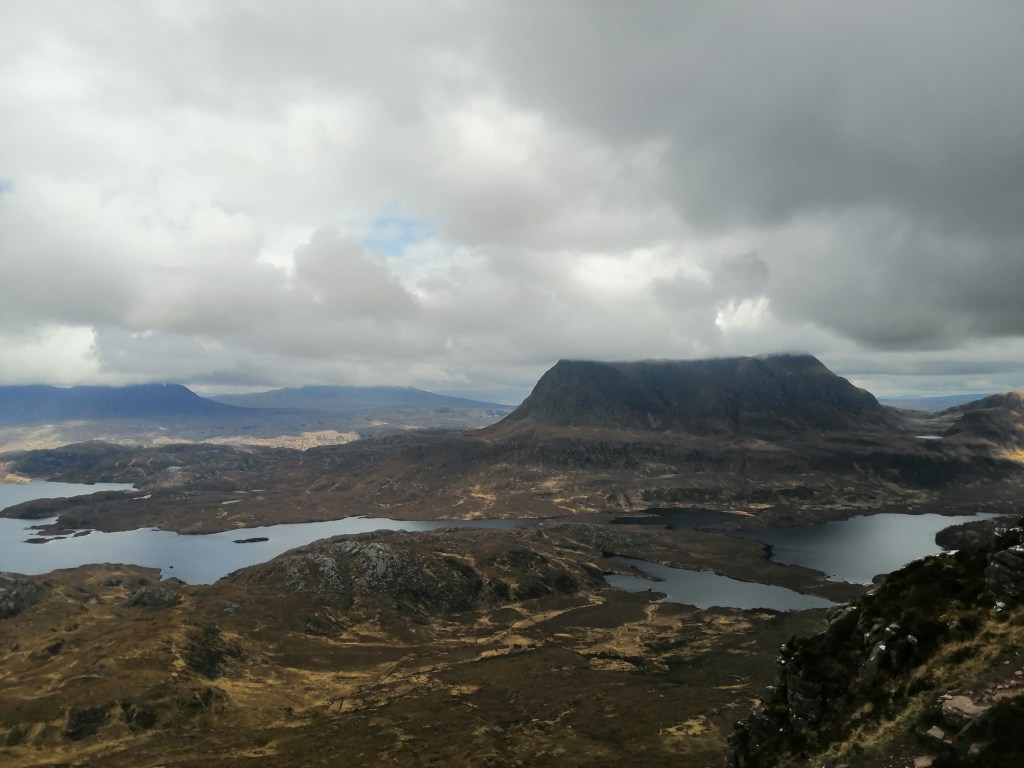
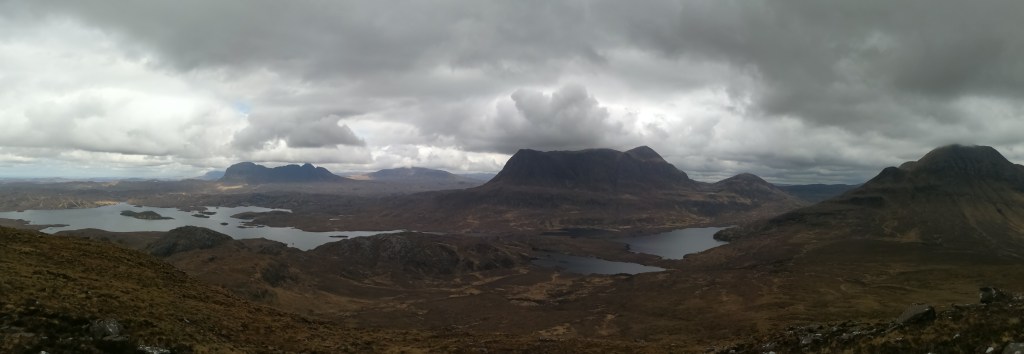
And that’s it! I then drove back home and did not encounter any problem. I guess that was the main surprise: I really didn’t think the car would make it, but the only problem I had in 750 miles is that the CD player stopped working. Not bad for a 31-year old car that has been driven the equivalent of six times around the globe!
The experience has been incredible. The last few months have been fairly stressful and nothing allows me to evade the stress of daily life like a road trip: me, my car, a tent and a rough outline of a plan that can be adapted depending of what I find when I get there. There are treasures everywhere. I absolutely loved this road trip, and the 928 has contributed to that. The power, the handling, the comfort and the practicality are unique. I love the fact that I drive a unique piece of automotive design and history, and keep it alive by doing so (there are only 240 left on the road in the UK). That is probably the biggest negative outcome of this trip: I don’t want to sell it anymore. Can I afford to keep it going? I need to check how bad the corrosion is, and then we will see. Histoire a suivre…
There is always the question of sustainability. Driving a gas-guzzler is certainly not a good thing for the environment. However, I drive the 928 very little and do less than 1,000 miles a year. The emissions would be half that of a fuel-efficient car (e.g., doing 60 mpg) doing 6,000 miles per year. Also, I don’t think I would have emitted much more on that trip than the campervans. I understand that every little helps, and this is why I drive the car very occasionally and bus or cycle to work.
Note that April is definitely a good time to do this. It was not too busy (most of the tourists were French, interestingly), and no midges.
I hope you enjoyed the adventure!
 Travels Through Geomorphology
The timing belt warning is likely to be a faulty electrical connection on the tensioner. I had the same issue with my ’87 S4. They’re amazing cars and deserve to be preserved.
LikeLike
Hopefully so! I wasn’t feeling so happy and it was the first time in 11 years! The fact the warning did not reappear gave me comfort and yes, electrical connections are a disaster but how many computers still work after 31 years 😊. Thanks for sharing!
LikeLike