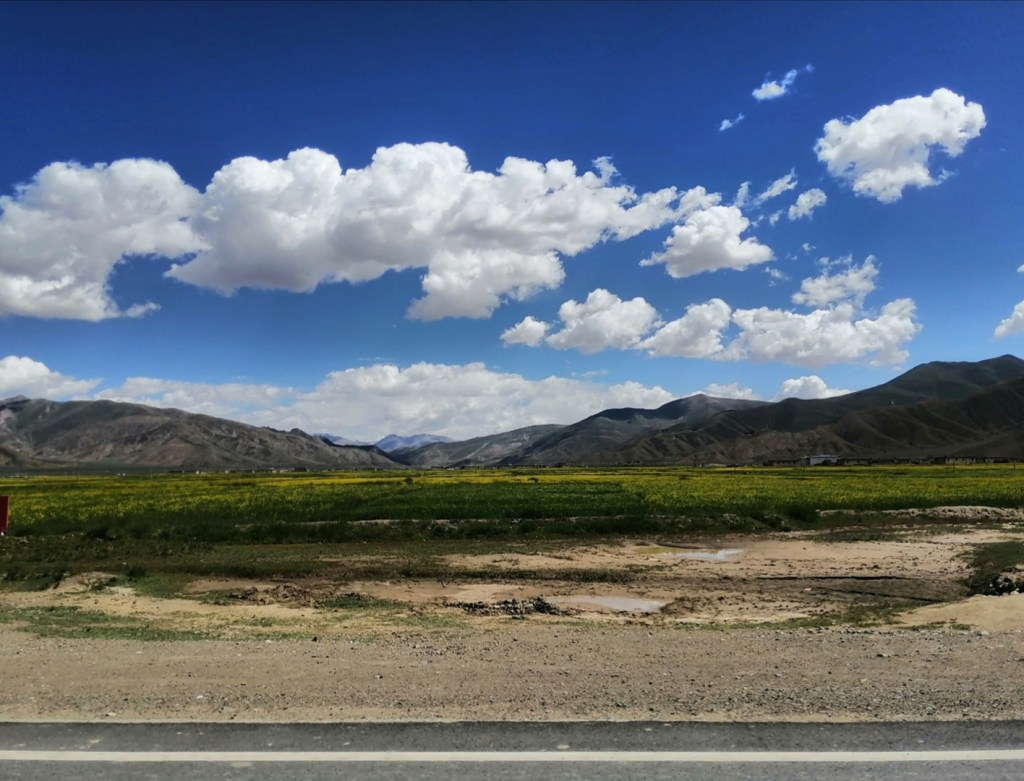
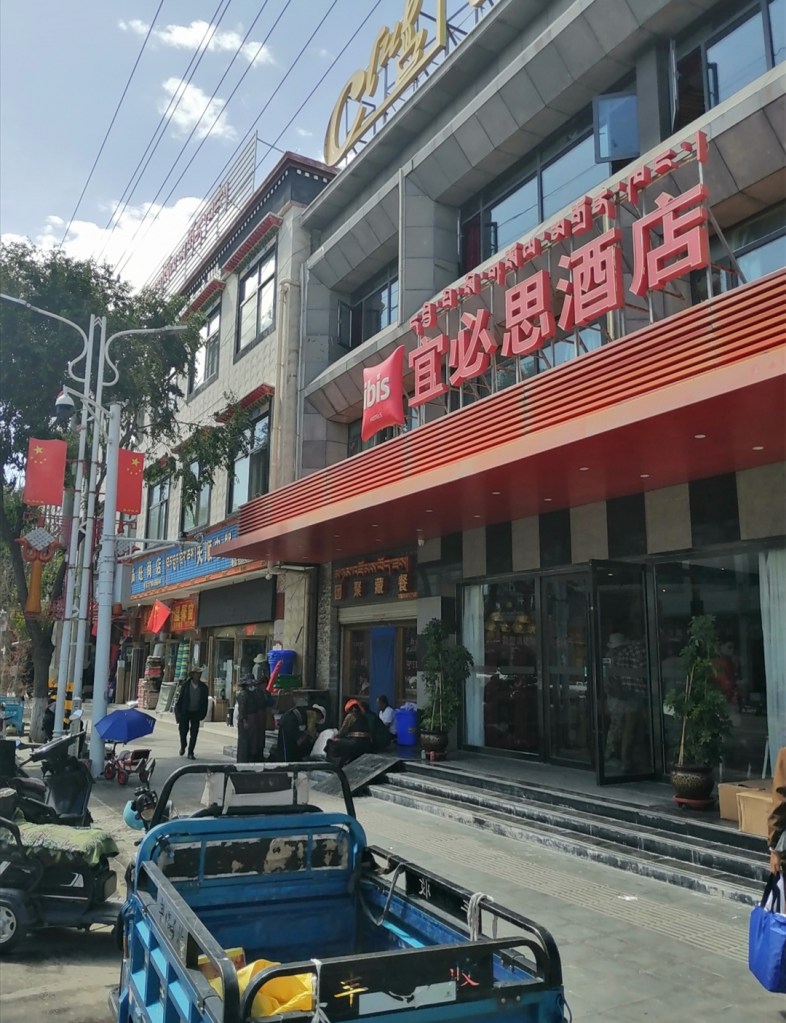
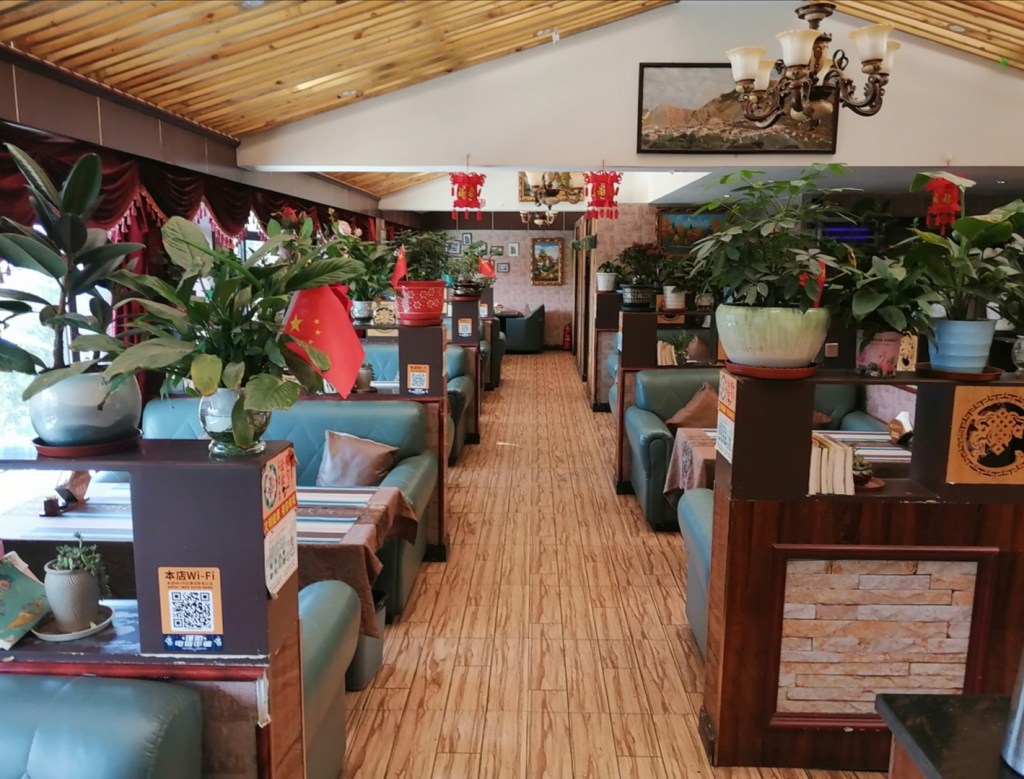
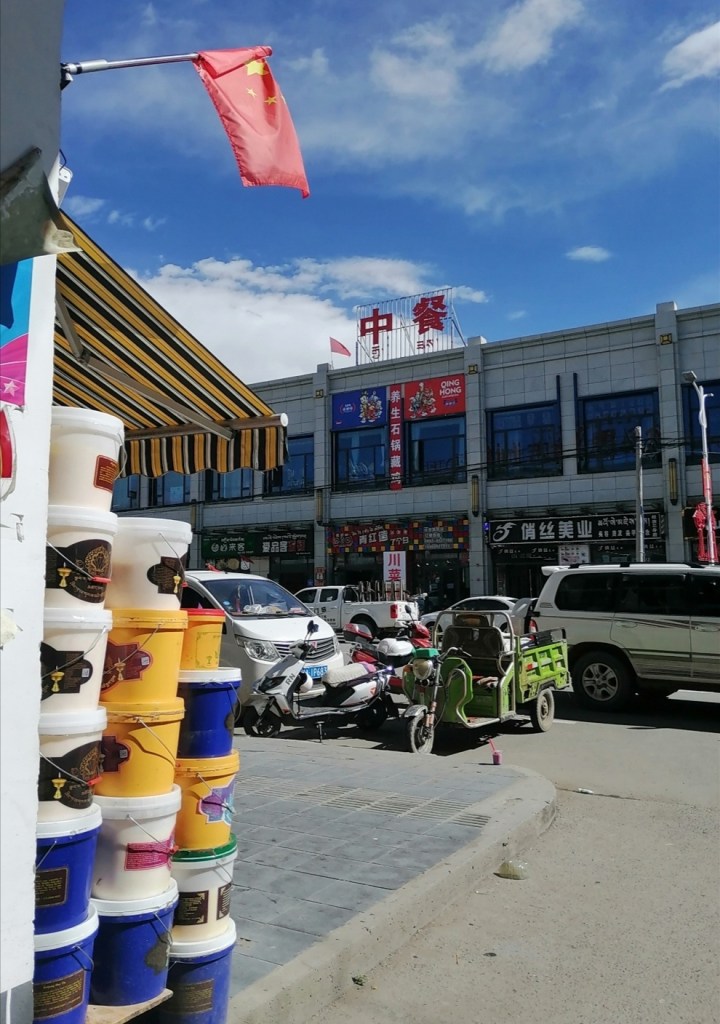
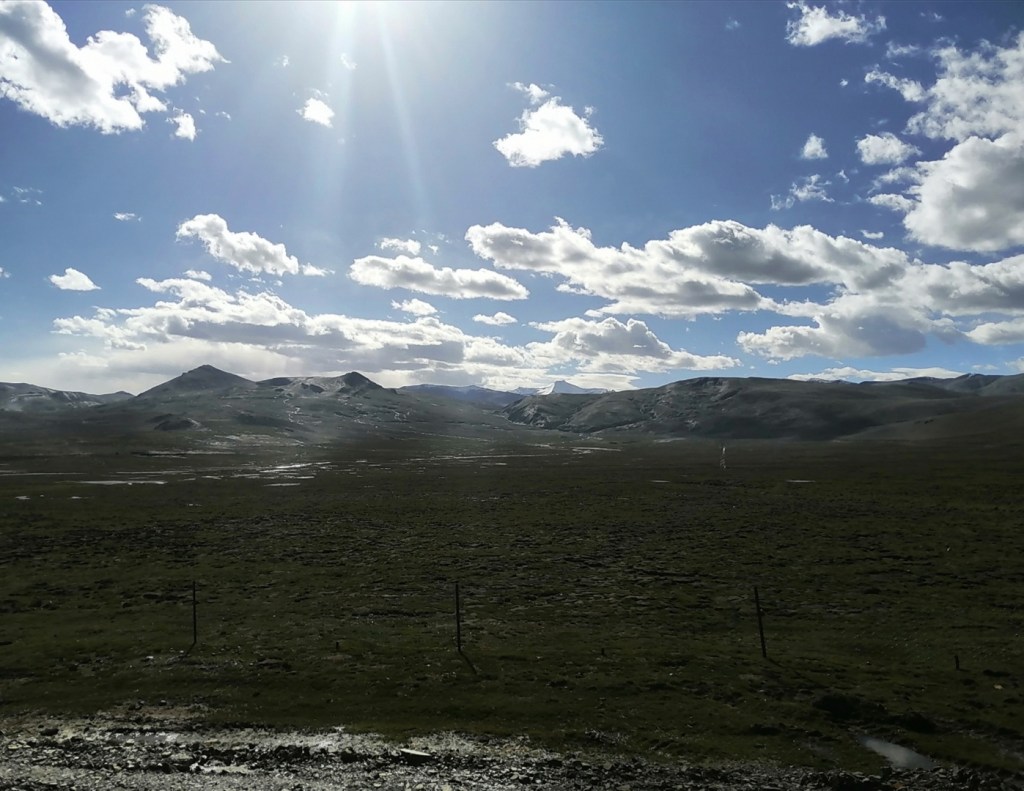
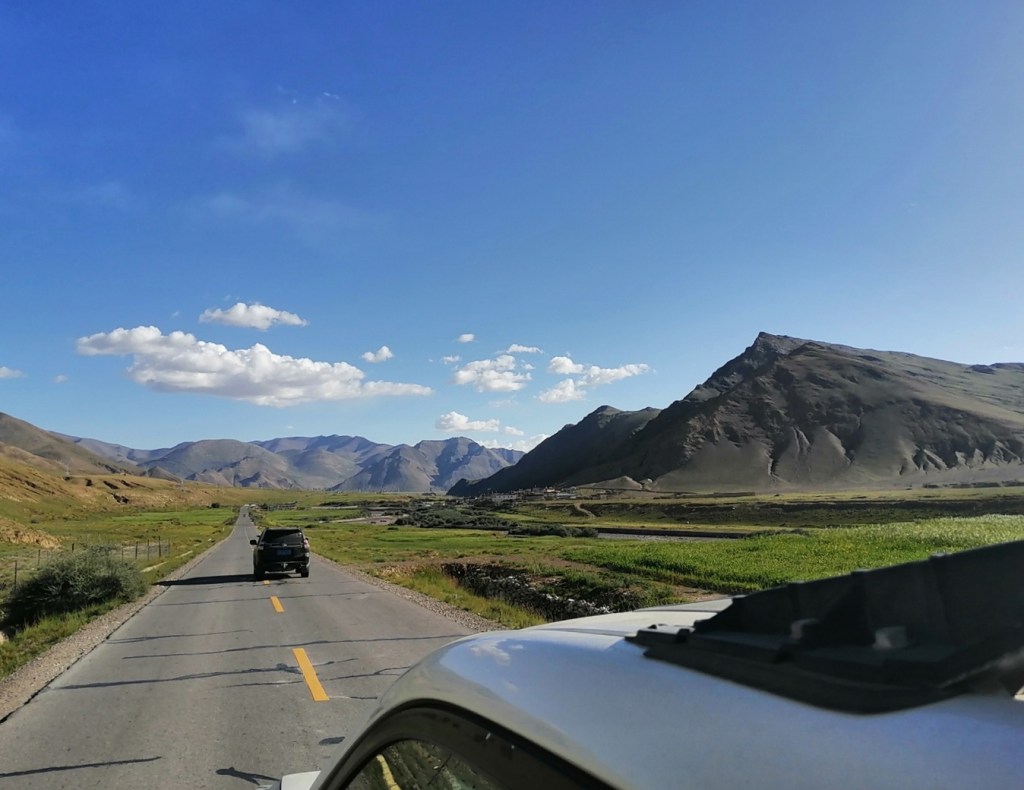
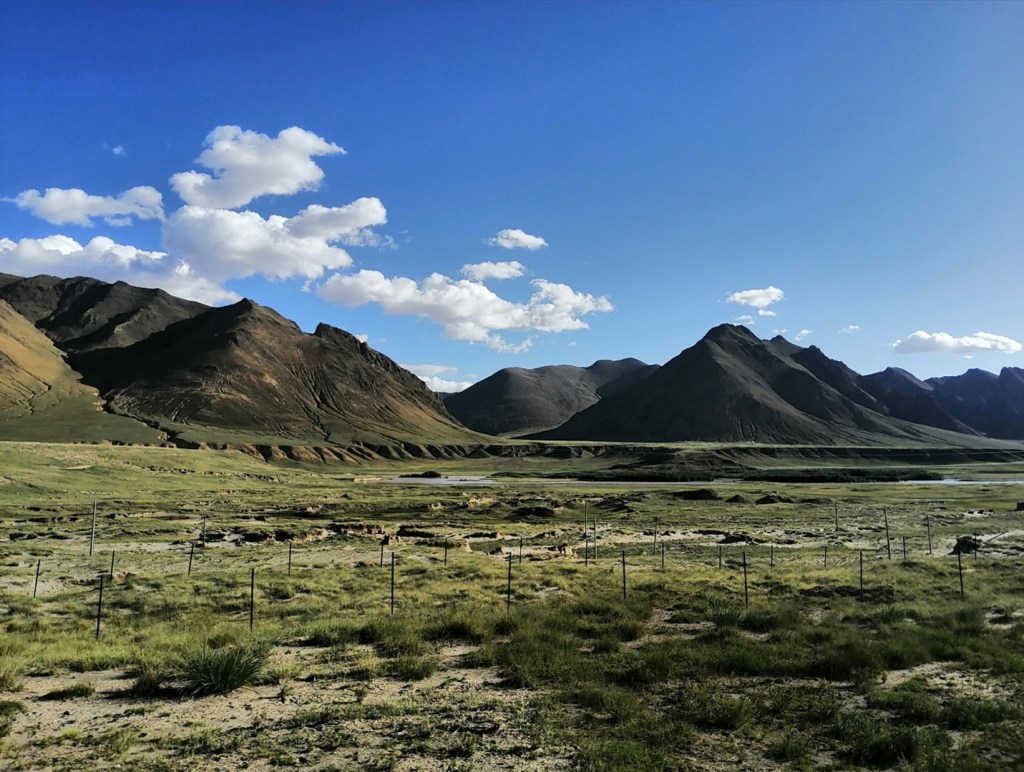
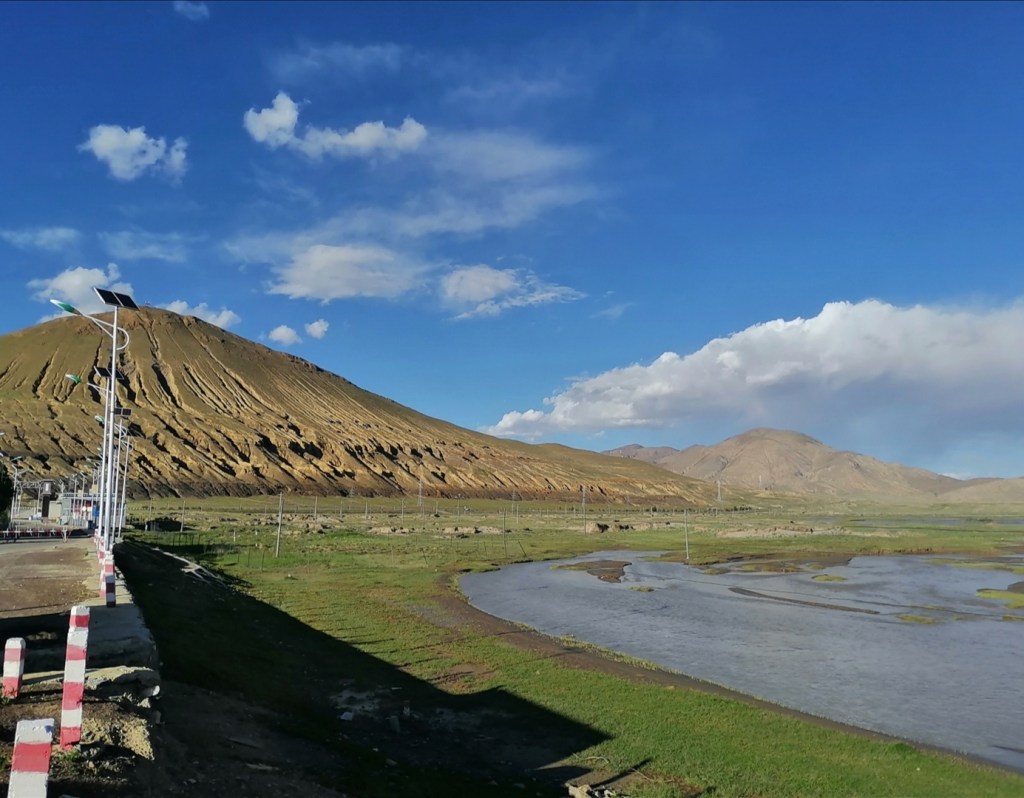
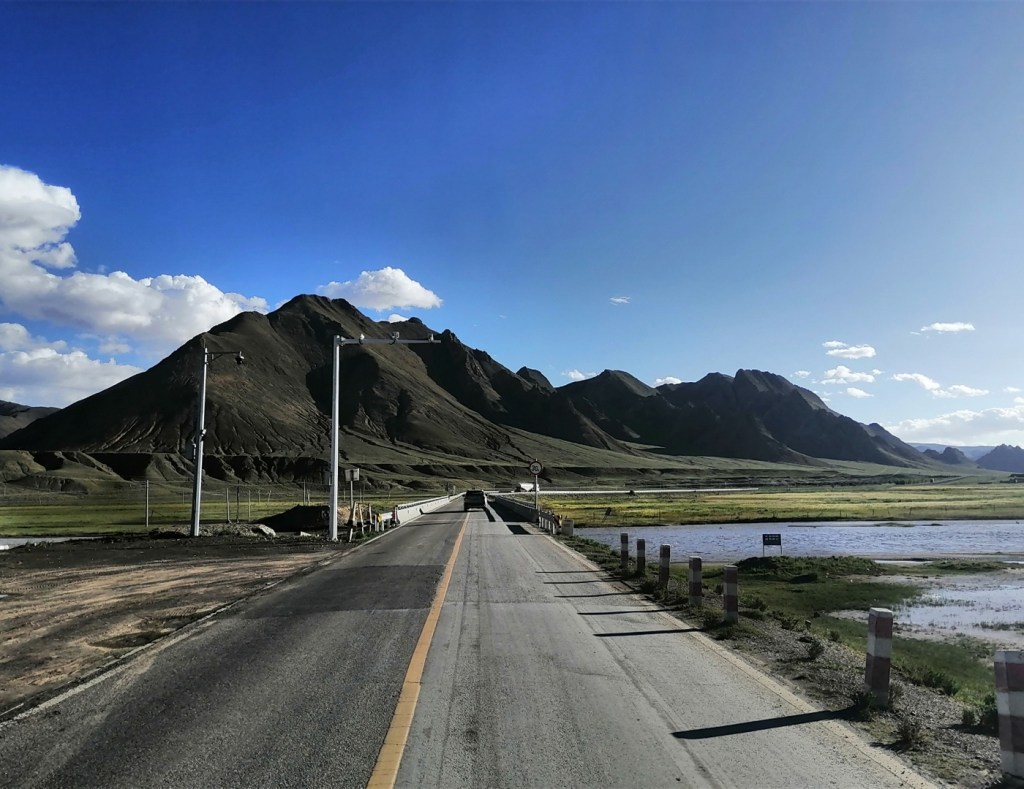
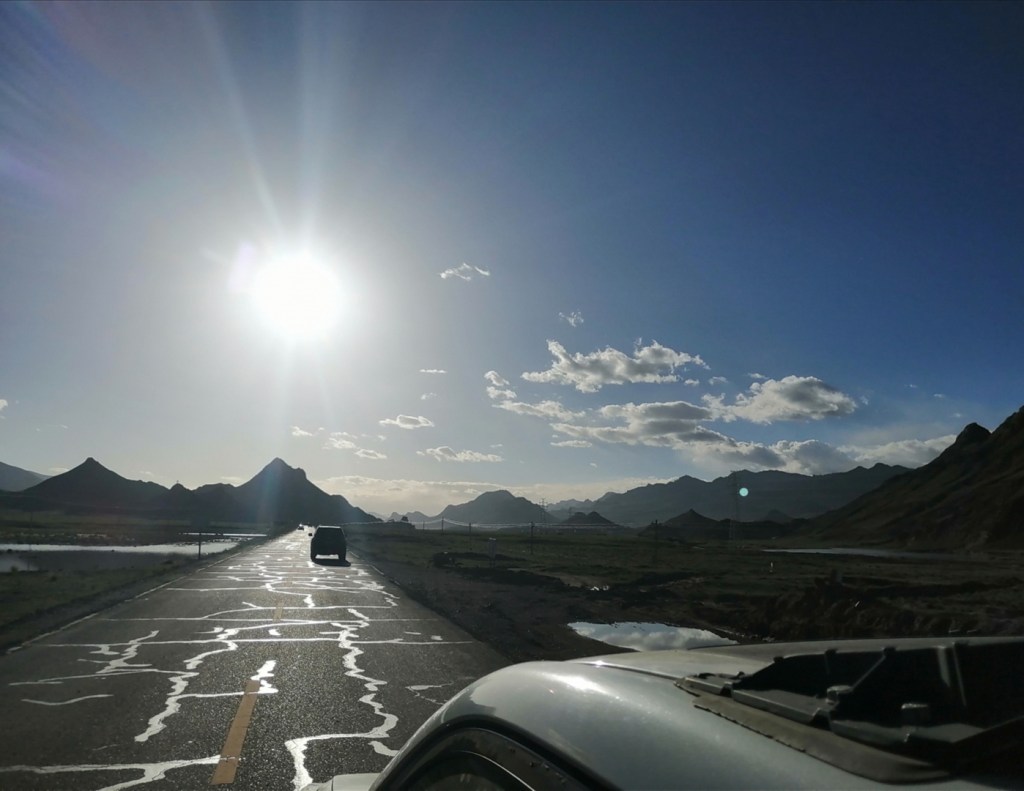
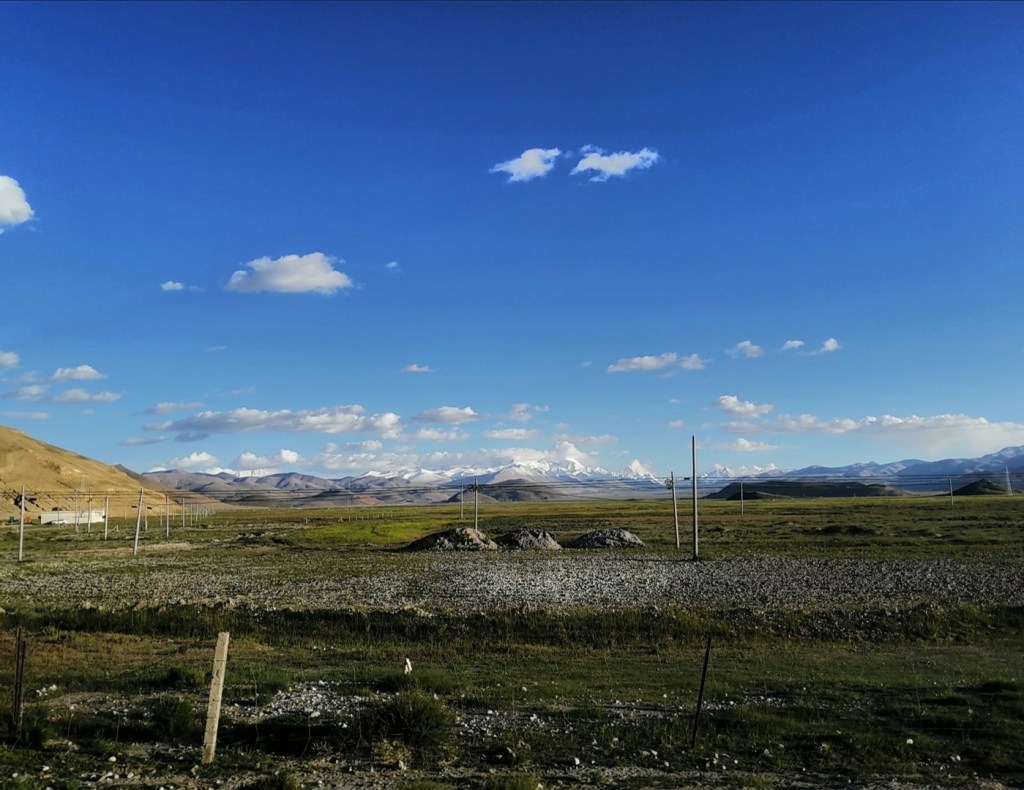
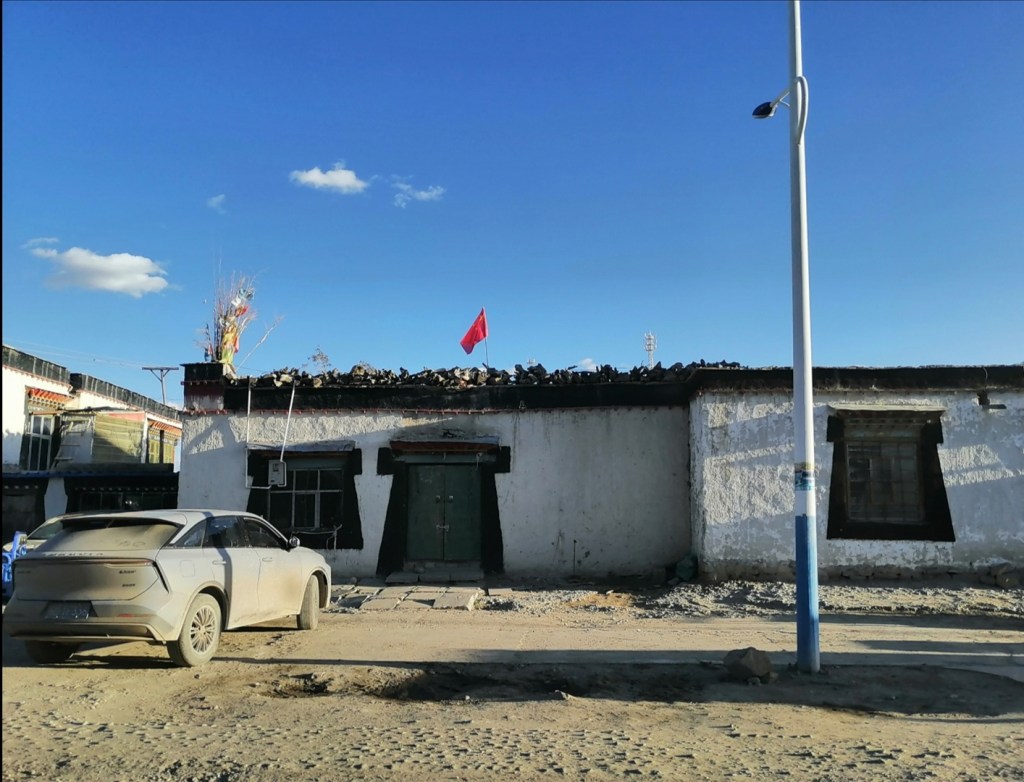
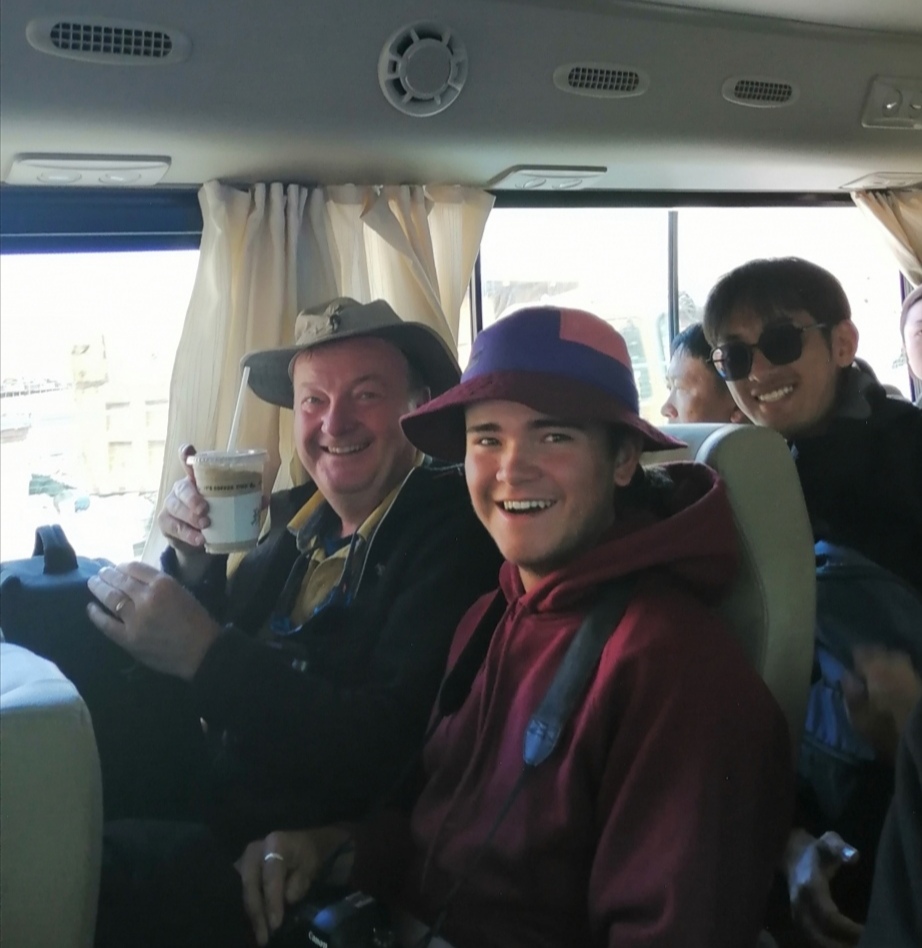
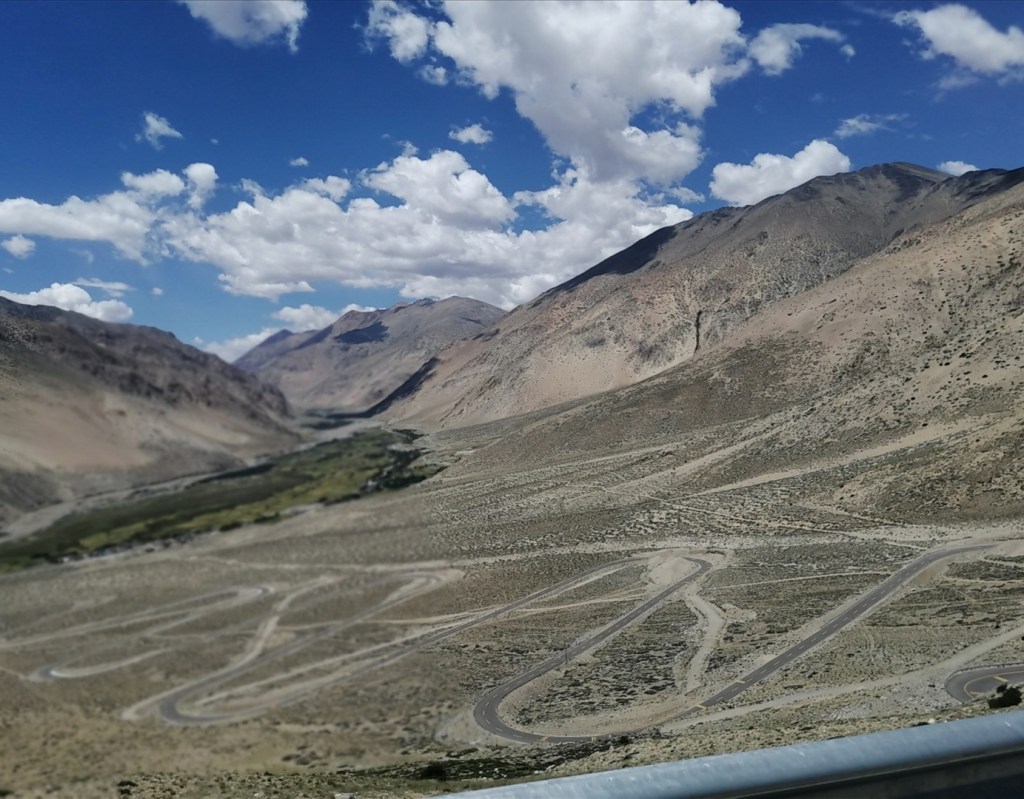
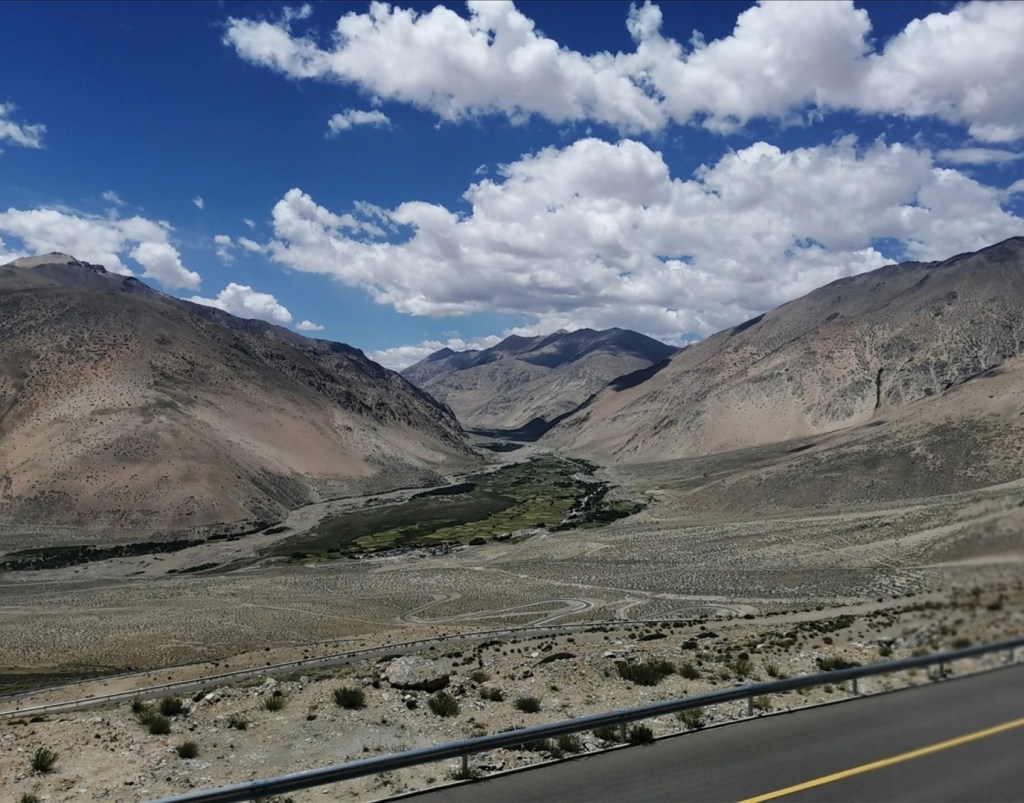
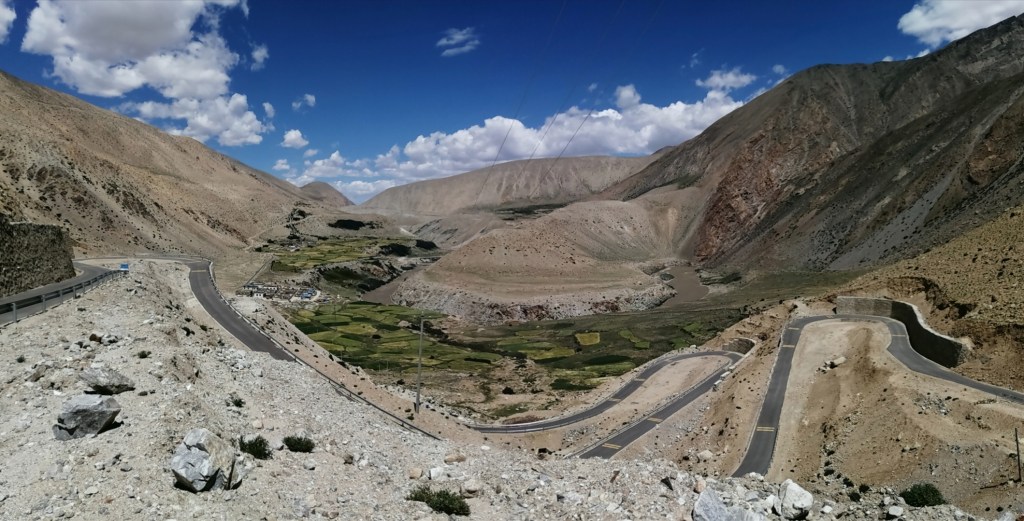
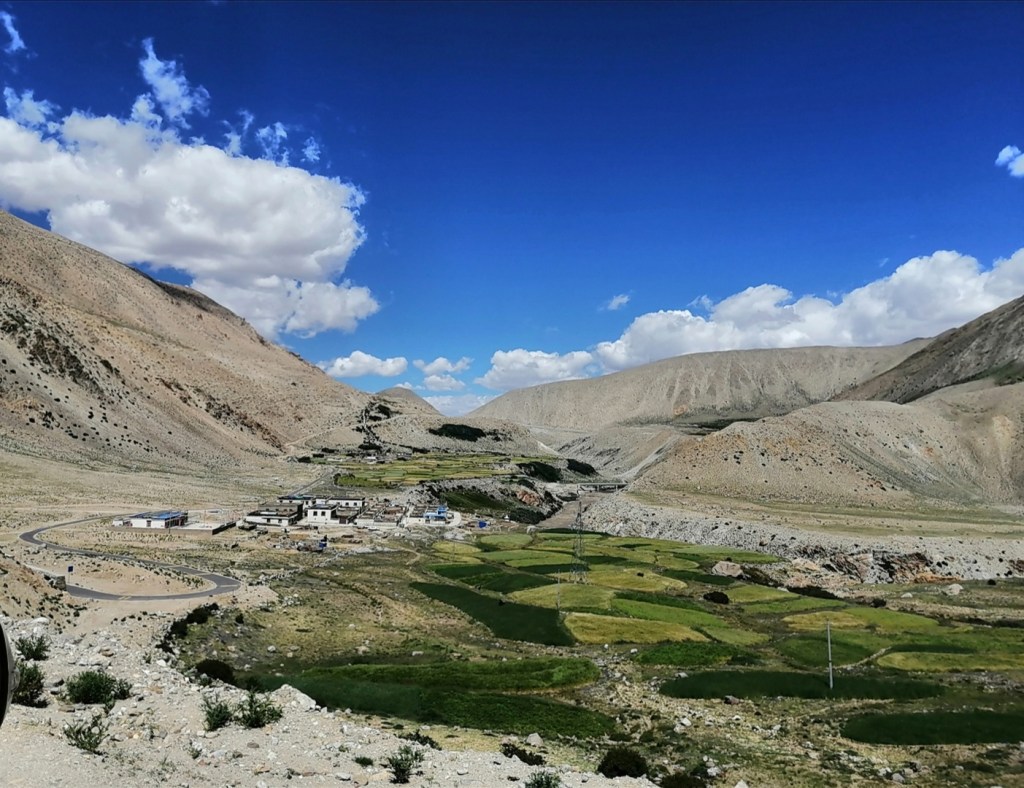
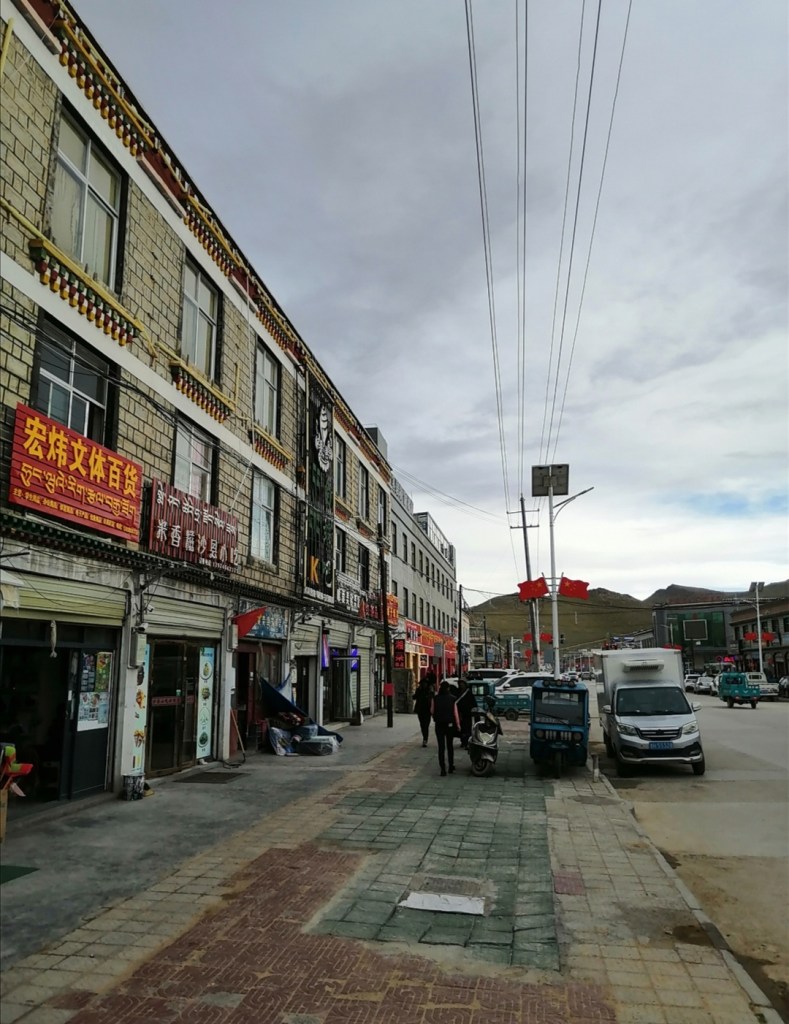
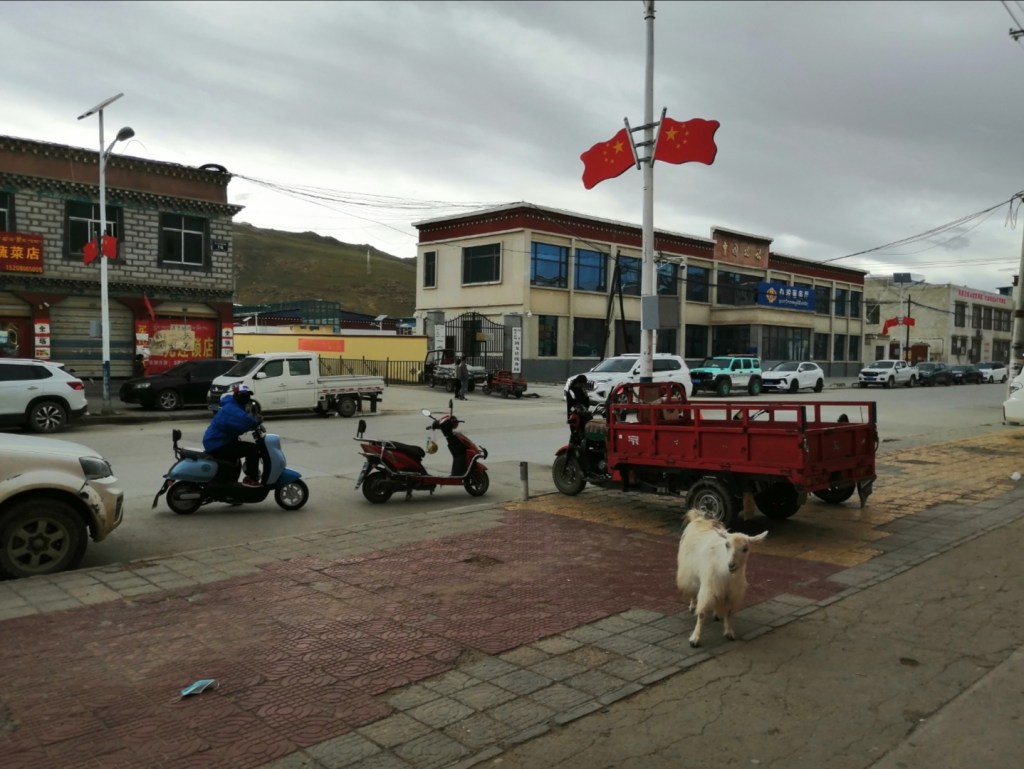
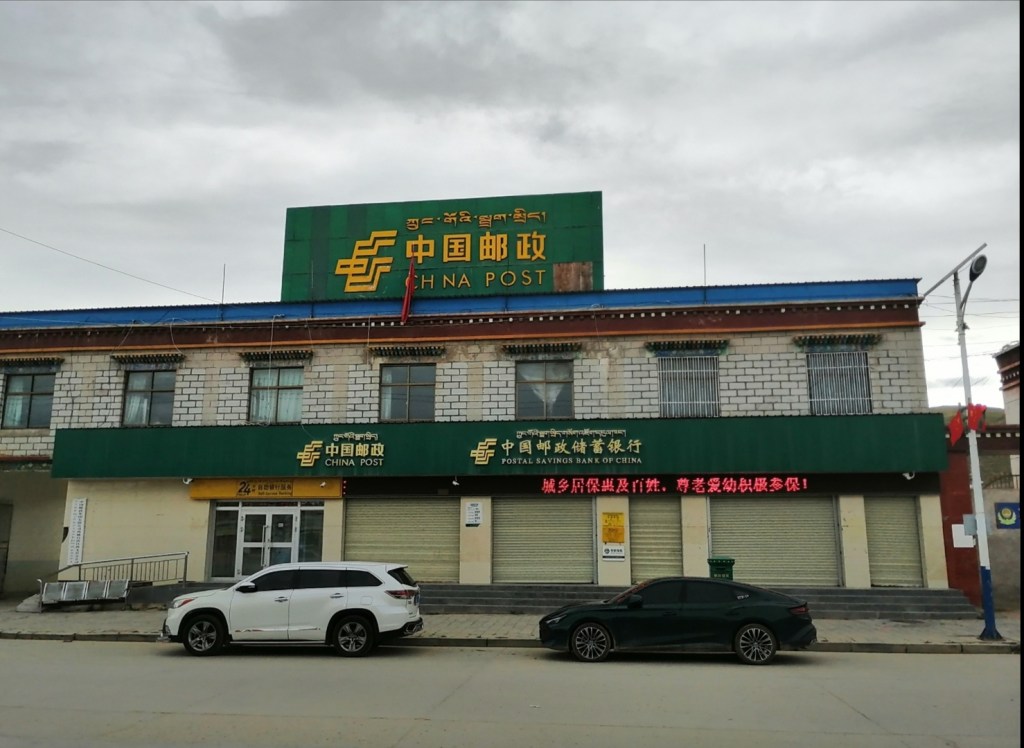
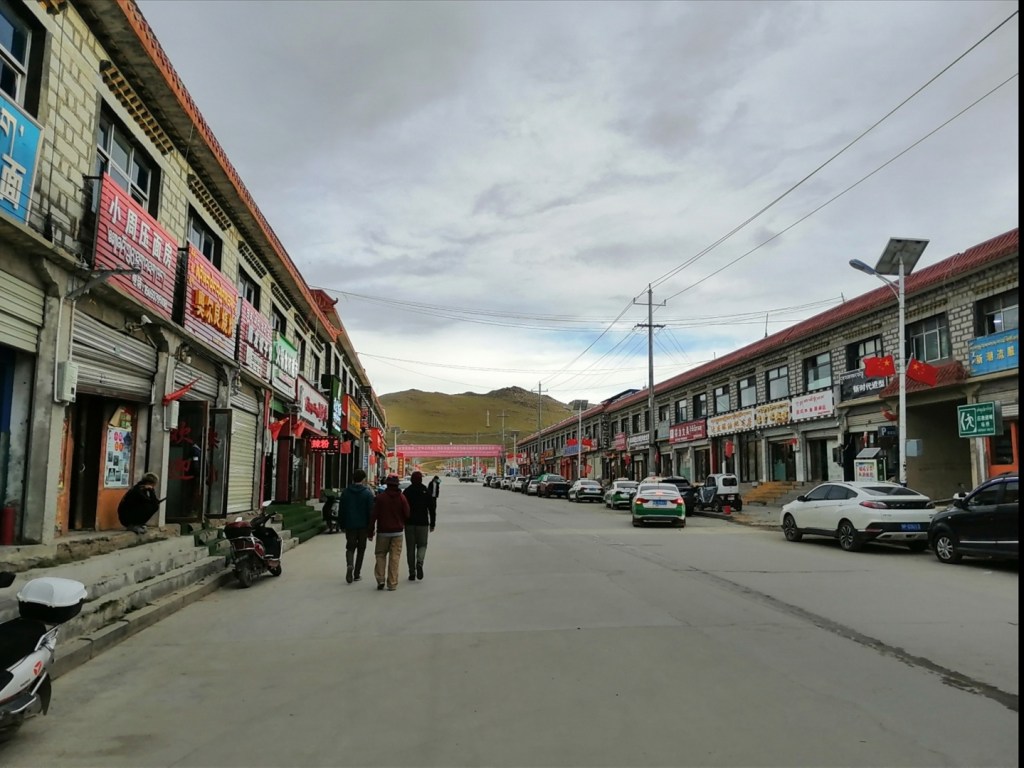
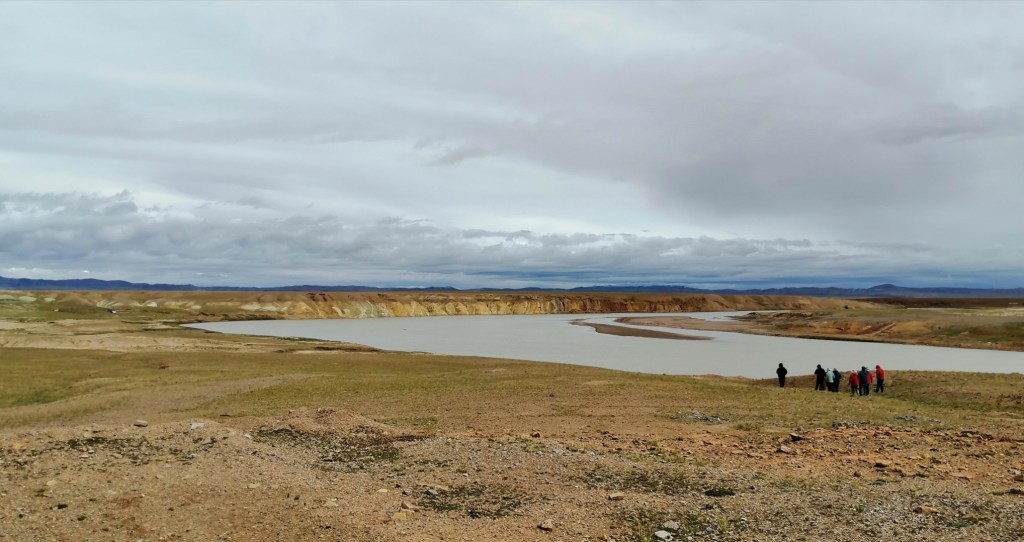
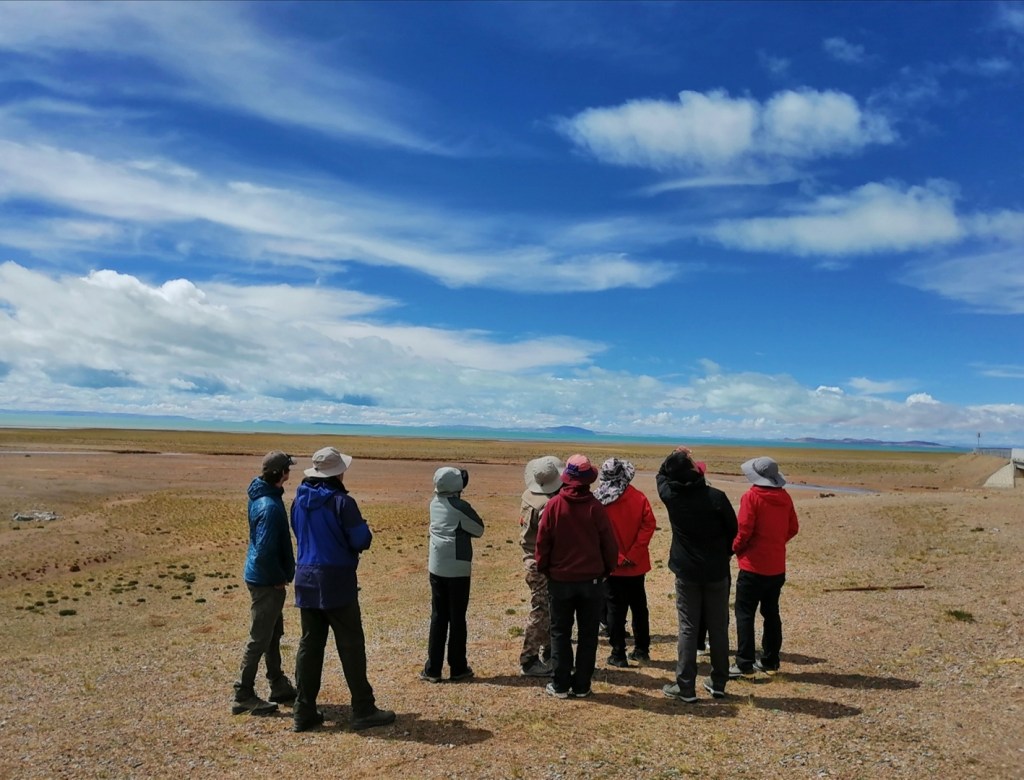
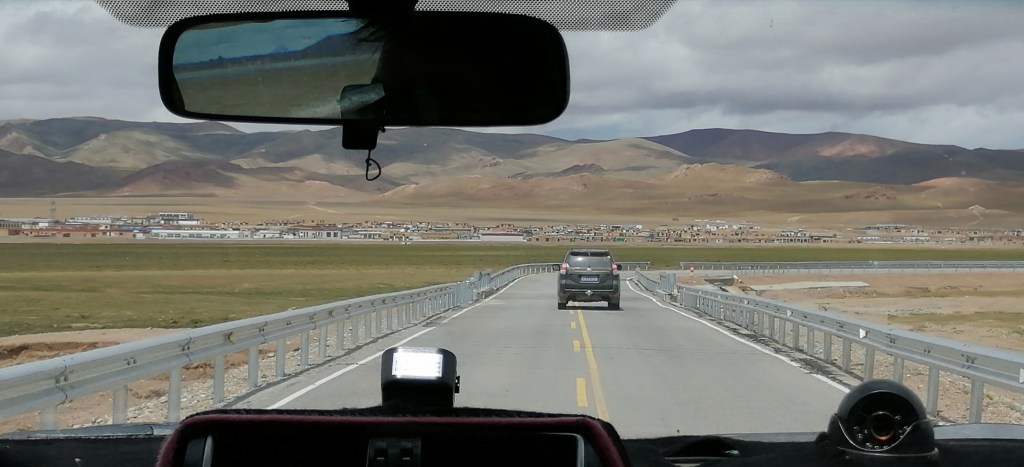
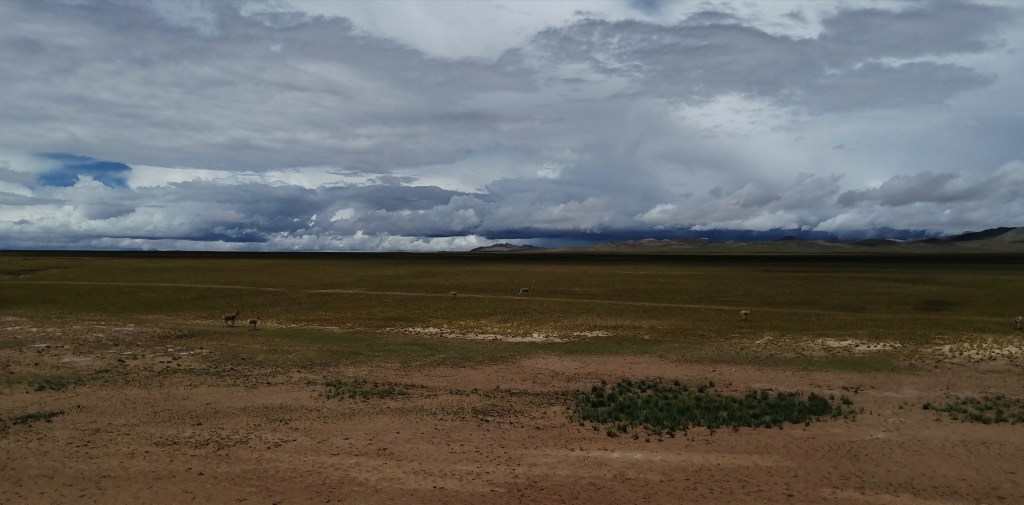
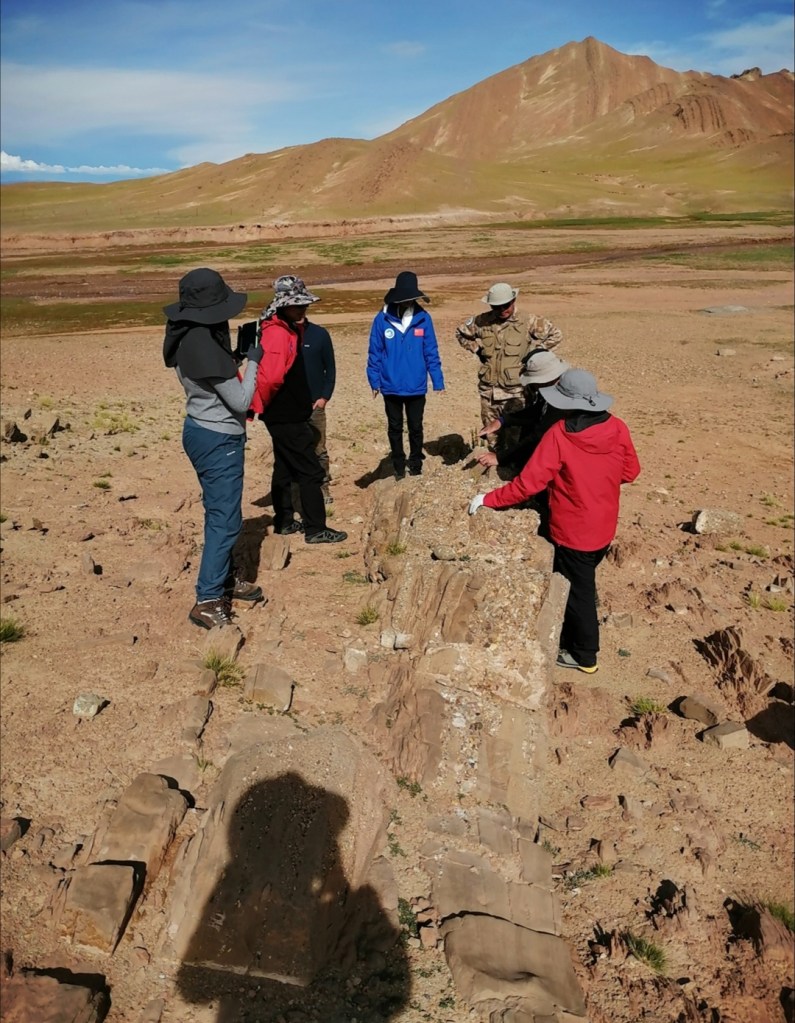
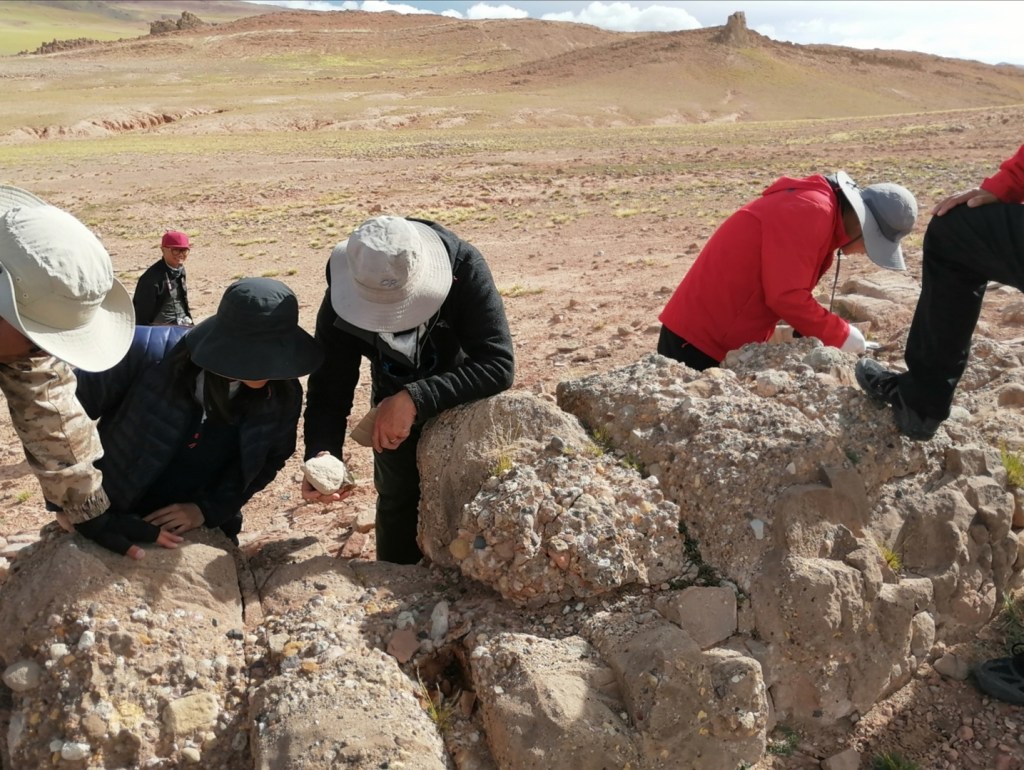
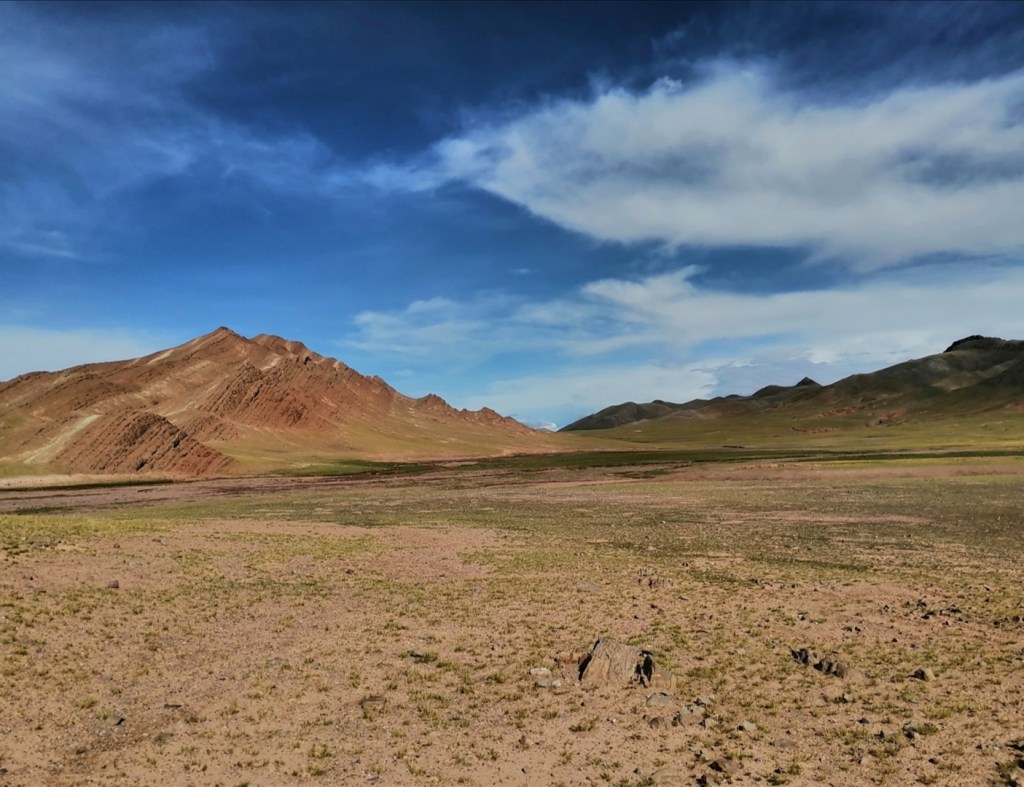
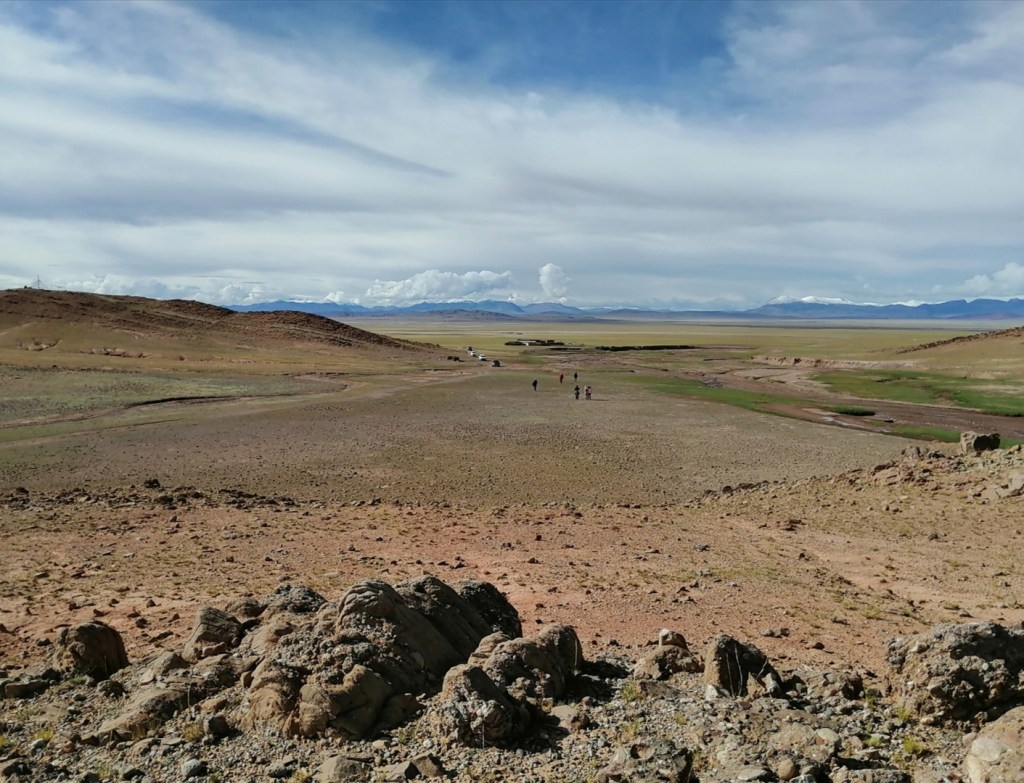
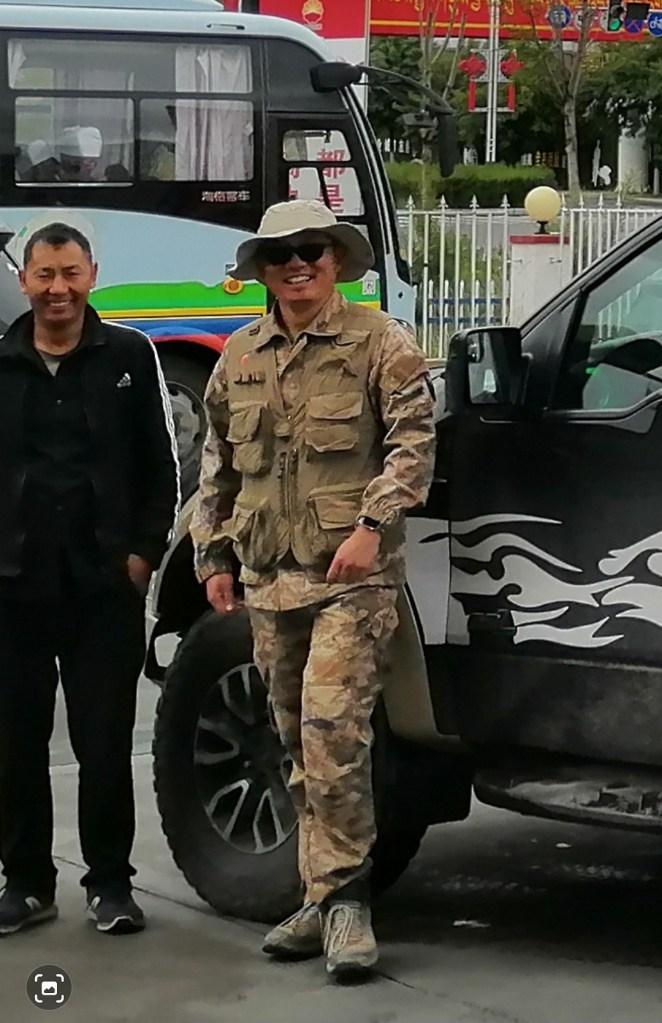
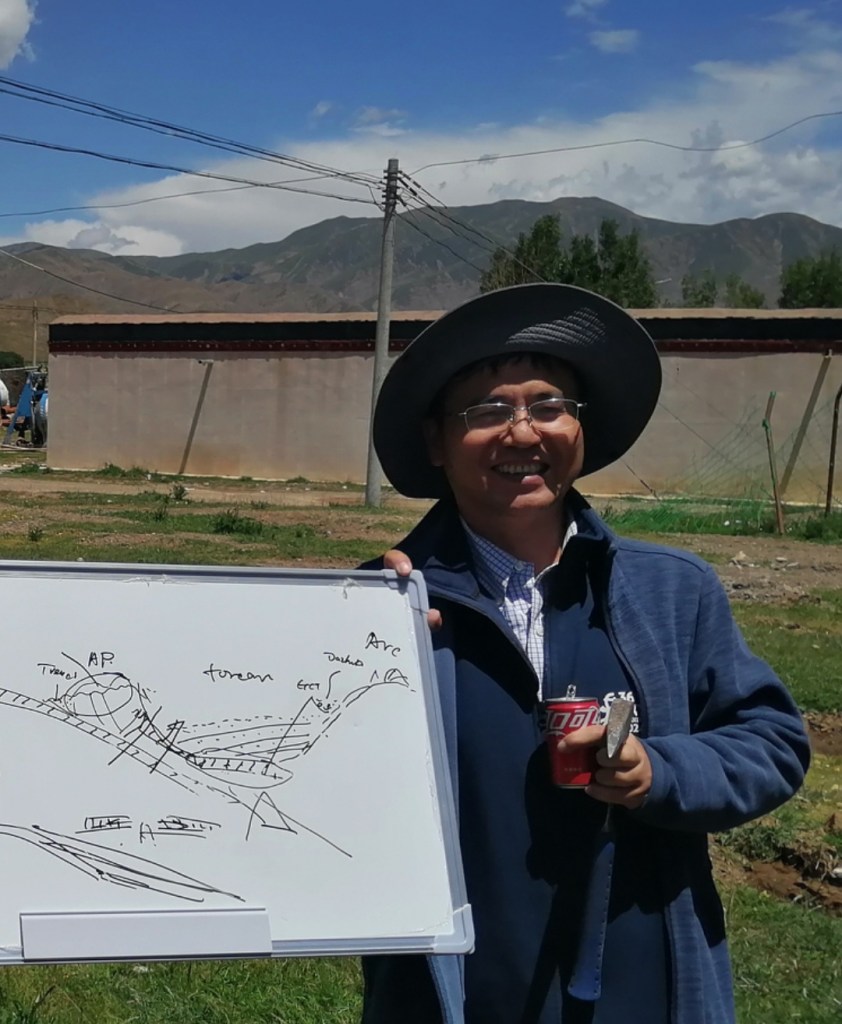
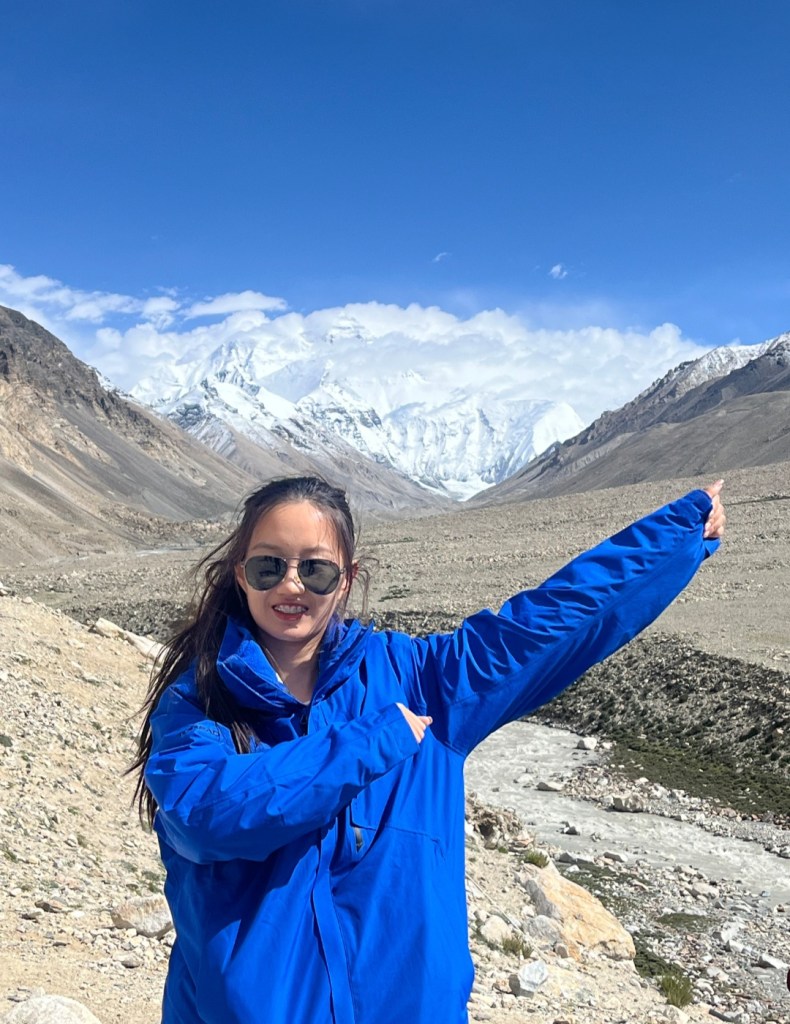
Tibet 2024

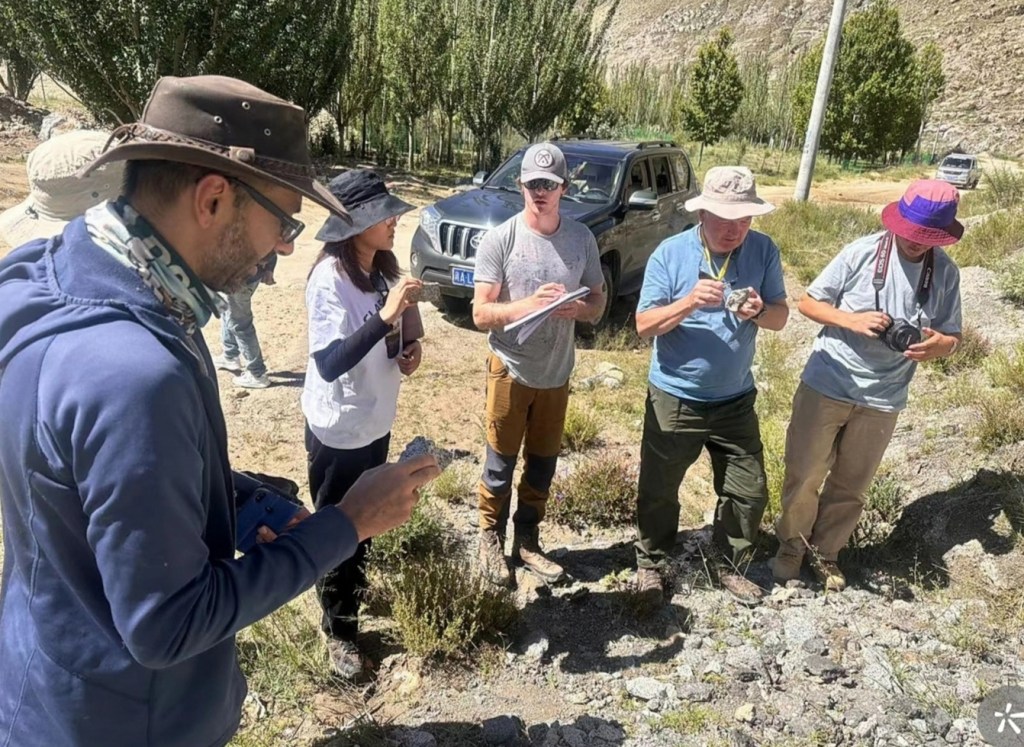
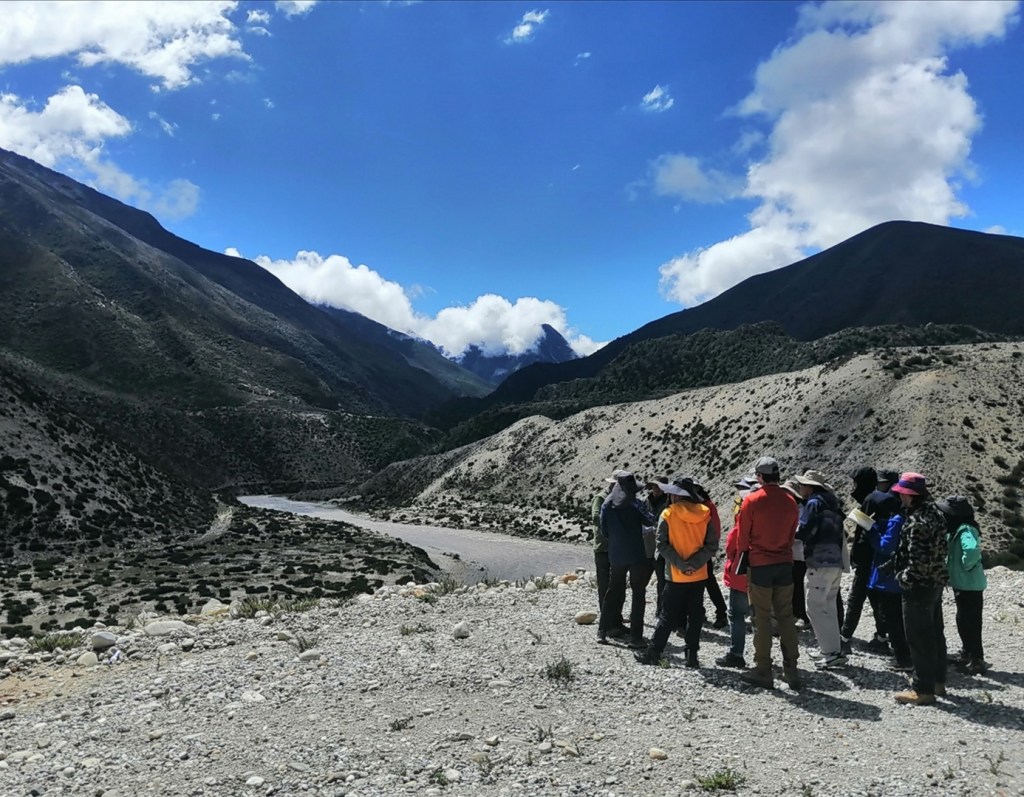
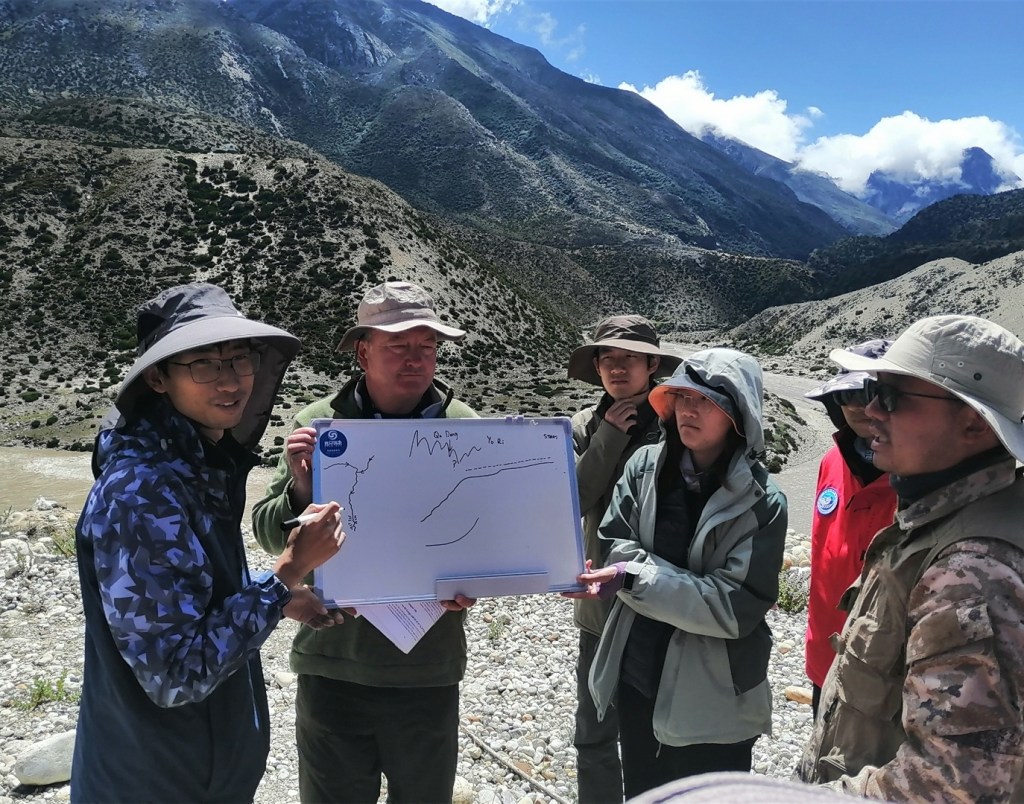
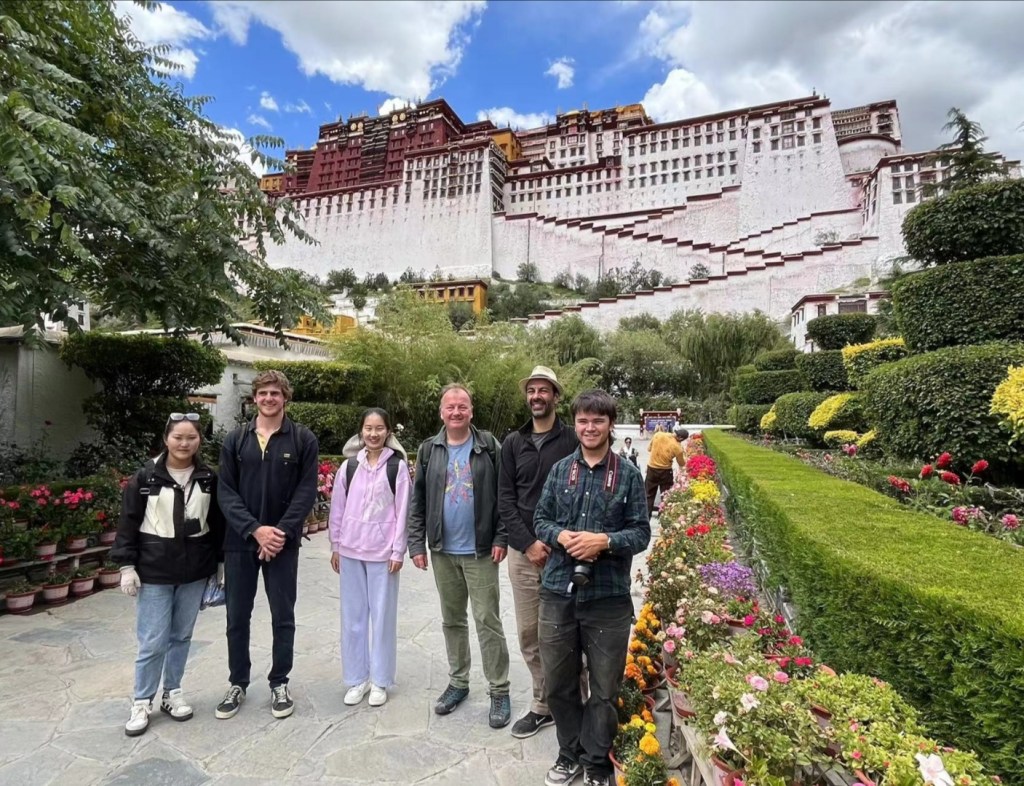
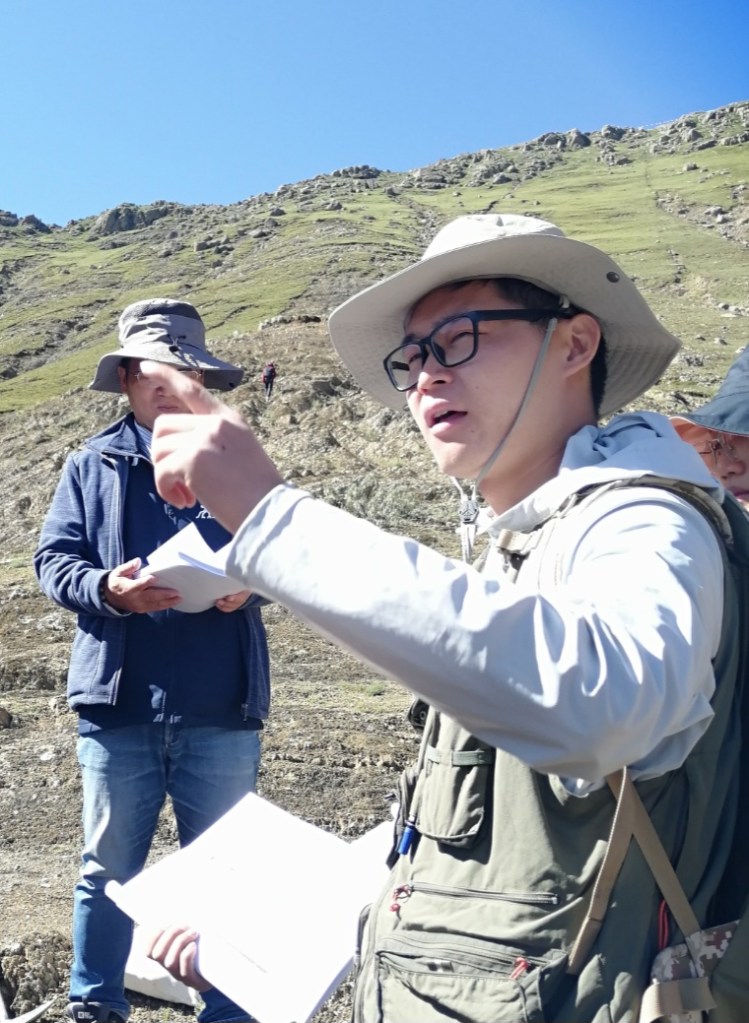
An exciting trip is coming up! I will try to provide updates here… We have been invited by Zhongpeng Han (China University of Geosciences Beijing – CUGB) to join a trip to Tibet! The aim is to scope for projects on the development of past and modern river systems in relation to tectonics. Zhongpeng has a lot of expertise working there, and two PhD students whose projects are related to the sort of work Hugh Sinclair and I do, Xinhang Wang and Yalige Bai. Eliot Weir and Darwin Sinclair are joining too.

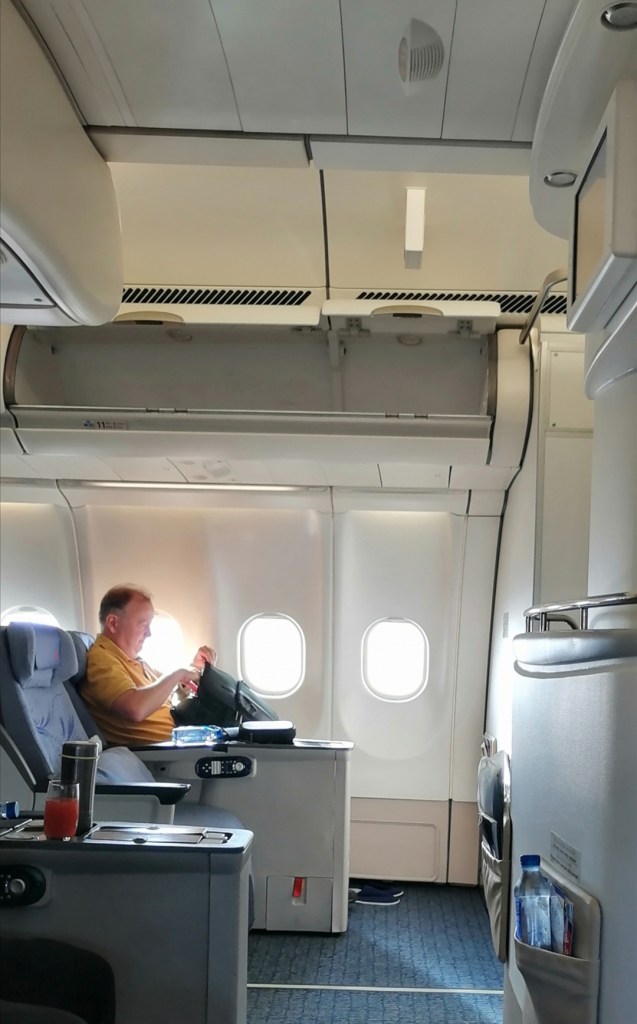
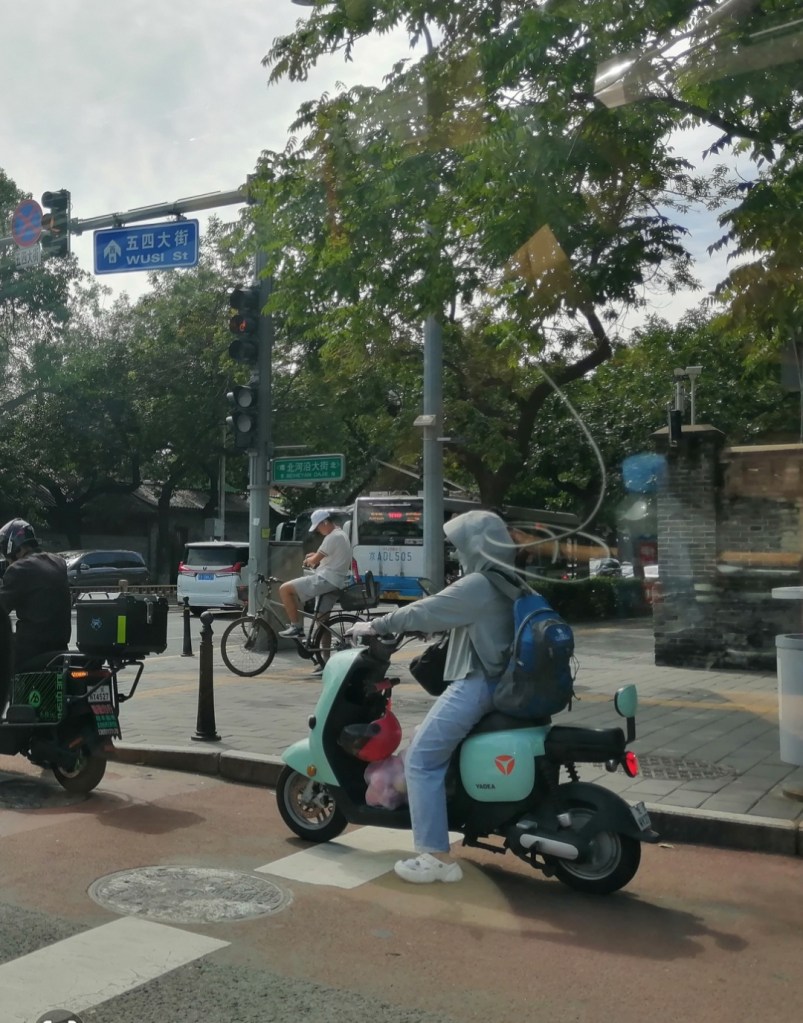
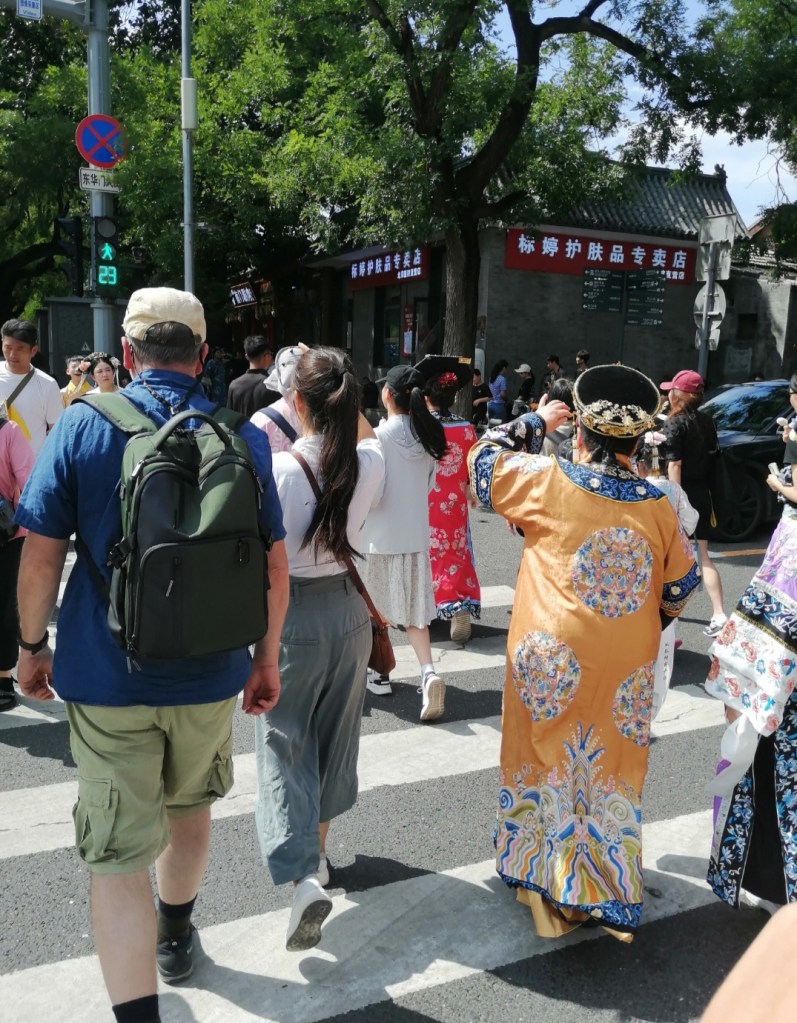
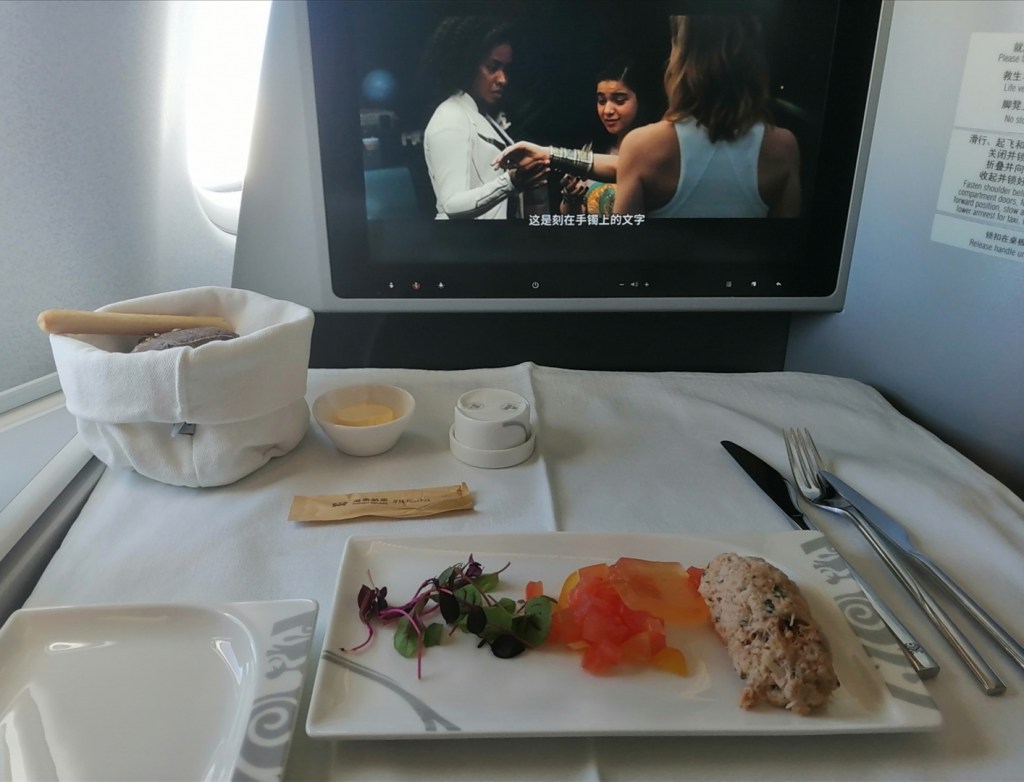
9-10th August: travel to Beijing. We fly direct with Hainan Airlines. Hugh and I even have an incredible business class experience! Zhongpeng, Xinhang and Yalige pick us up at the airport and take us to our hotel at CUGB. We have breakfast, a bit of rest, then a massive lunch, a surprisingly good coffee in a wee shop, and do a bit of sightseeing in the afternoon… Trying to stay awake is our challenge today! It’s very hot, and the afternoon ends with a thunderstorm. Seafood dinner is lovely.
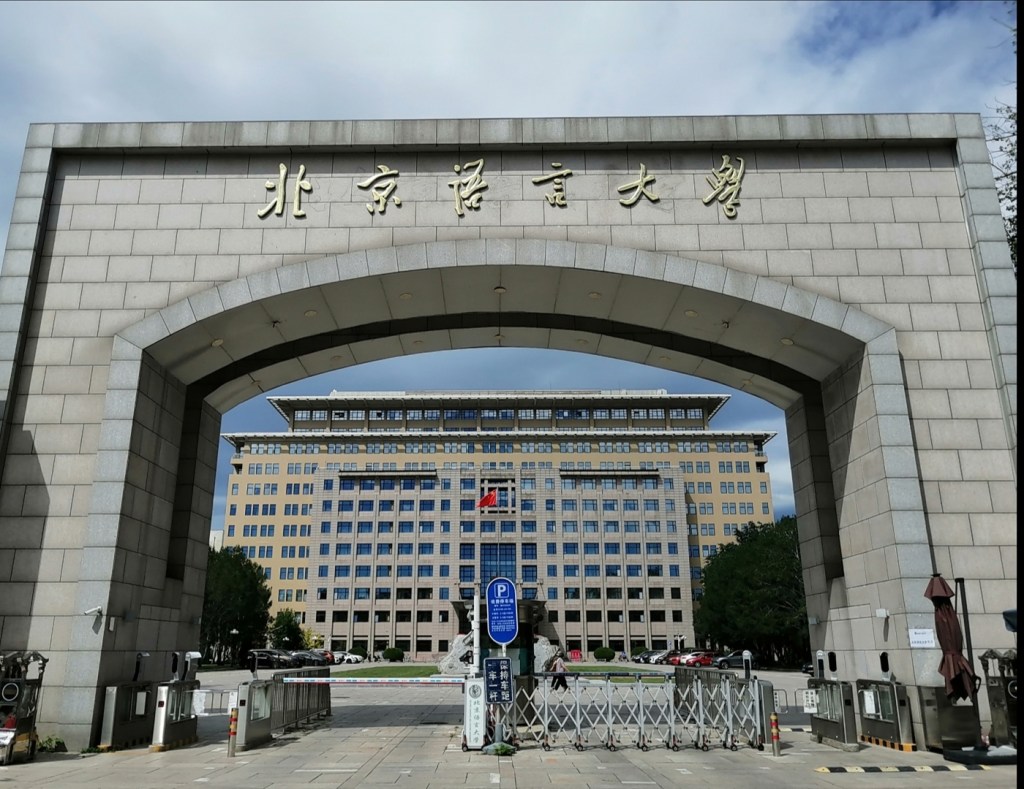
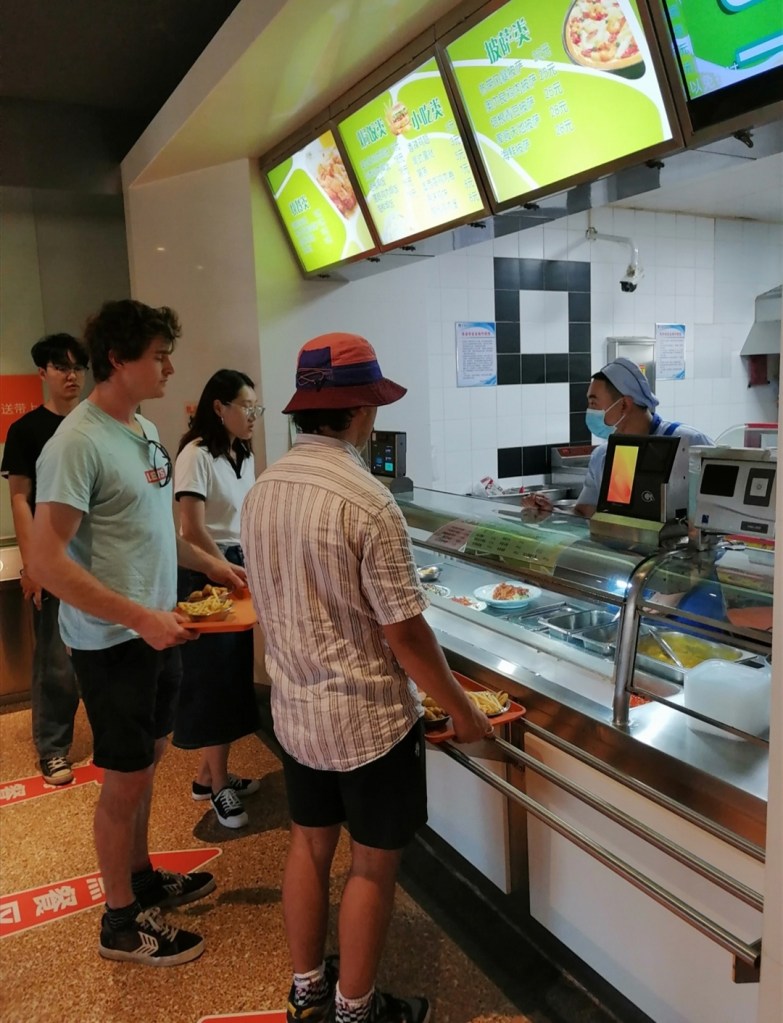
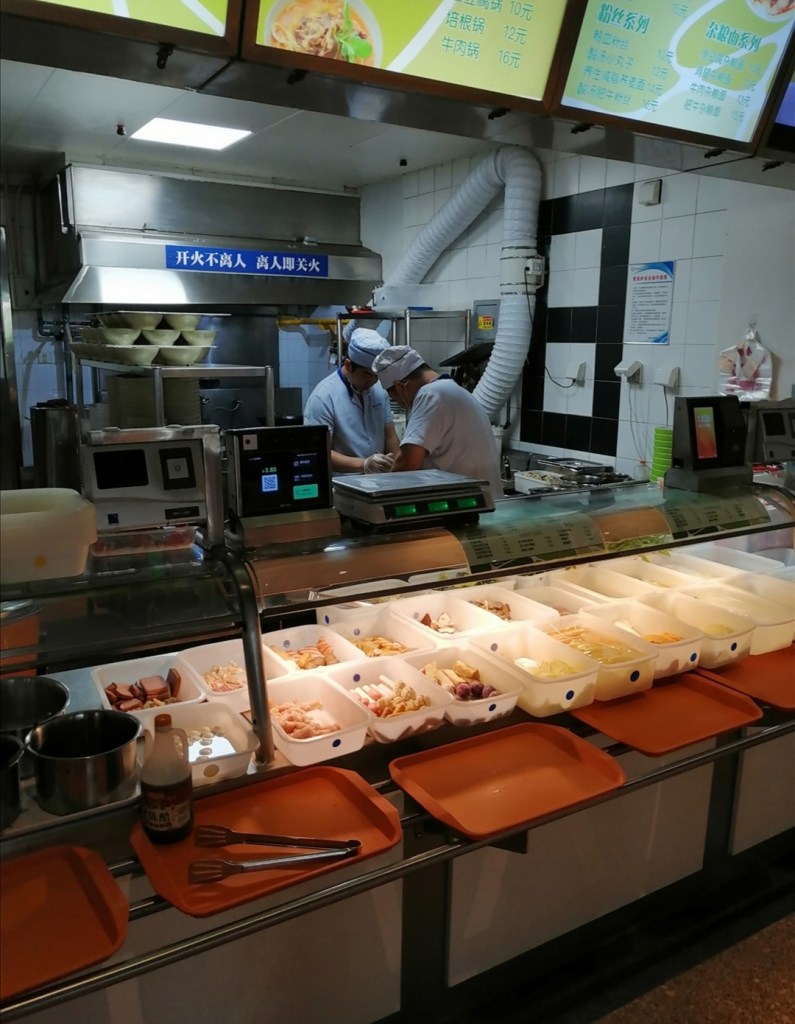
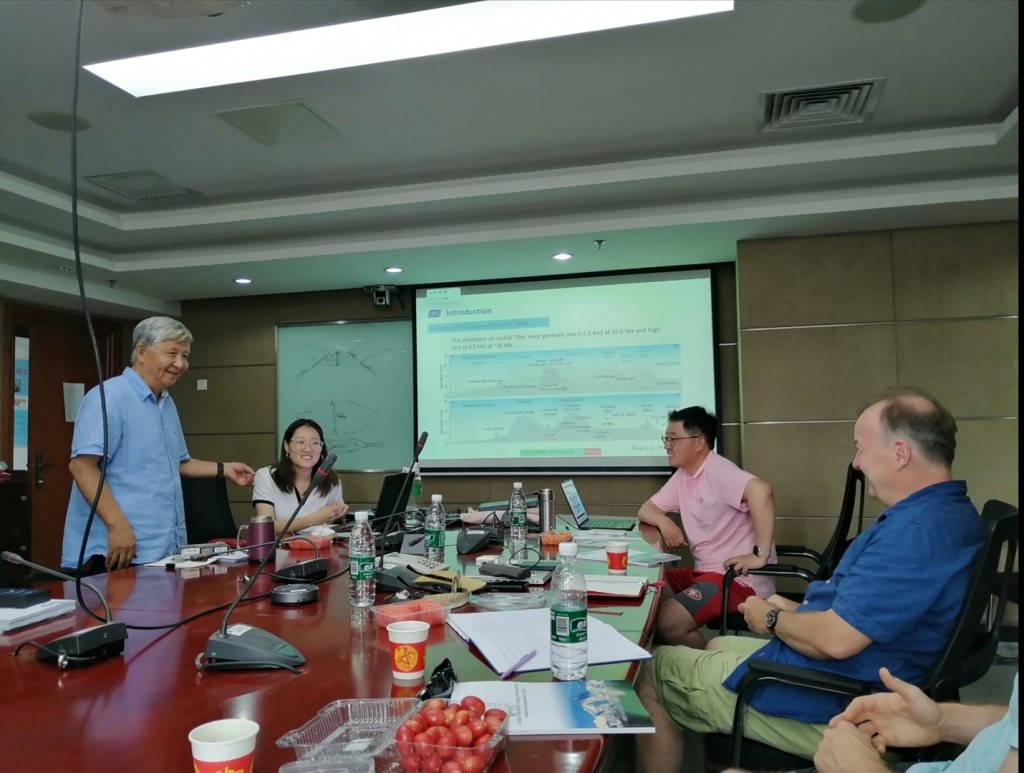
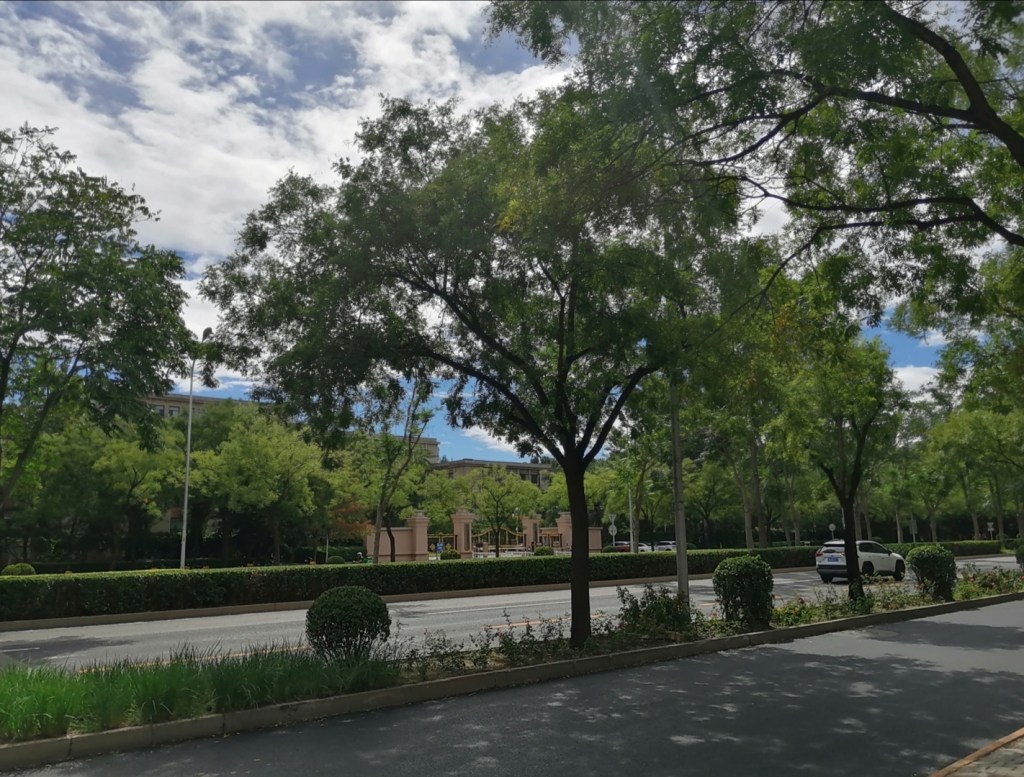
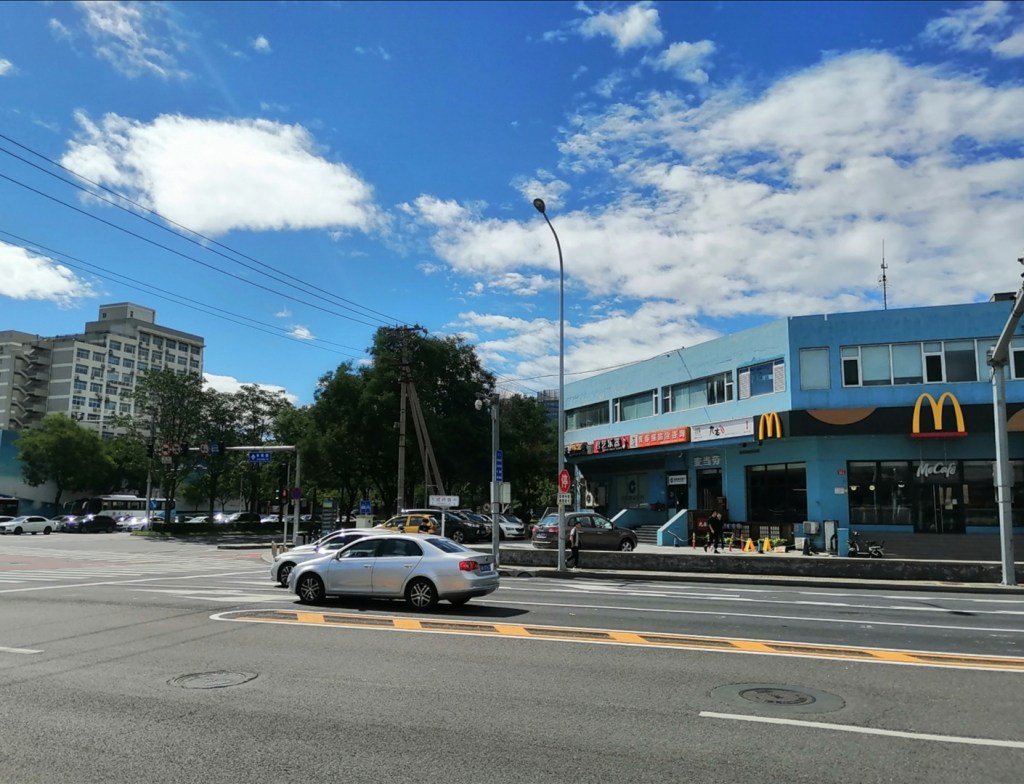
11th August: I slept well. Darwin too. Hugh and Eliot not so. I’m first at breakfast, which is outrageous! The morning is spent walking through the leafy University neighbourhood and to the shopping mall. We then have lunch at the canteen (cheap and tasty) before a meeting at CUGB to discuss the plans for the field trip. We have some very exciting presentations, visit by senior colleagues, and discussion about the sites we will visit and what we are trying to achieve. We have a briefing about working in Tibet as well, including tips about high altitude. It’s just got real, and we all start our Diamox treatment tonight. Dinner is preceded by learning how to play a card game, which we will have two weeks to perfect. A superb dinner again (not too sure about the stinking tofu though), and an early night as we have to leave at 5am tomorrow. Waking up will be painful… We’re off to Tibet!!!
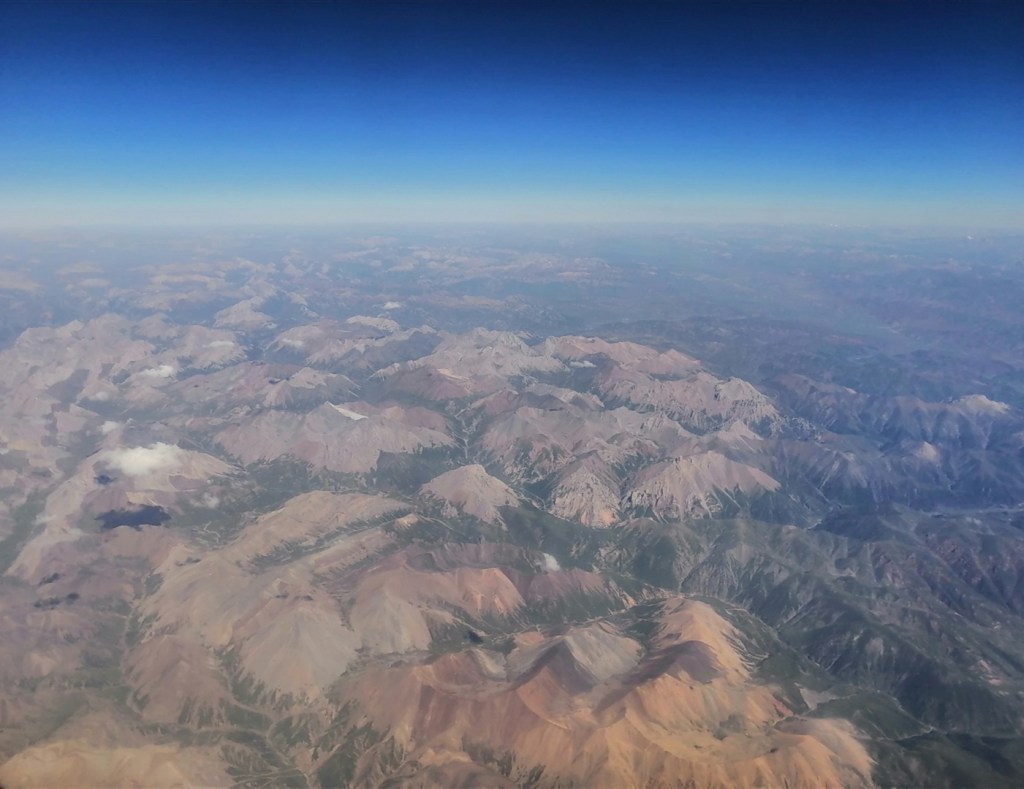
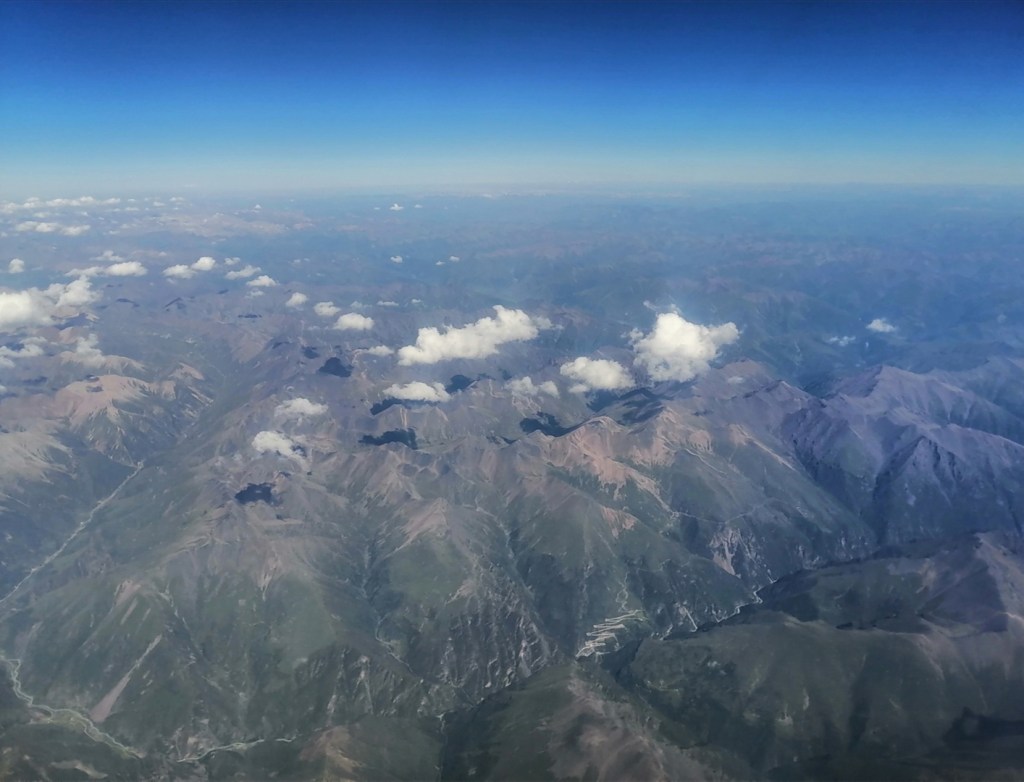
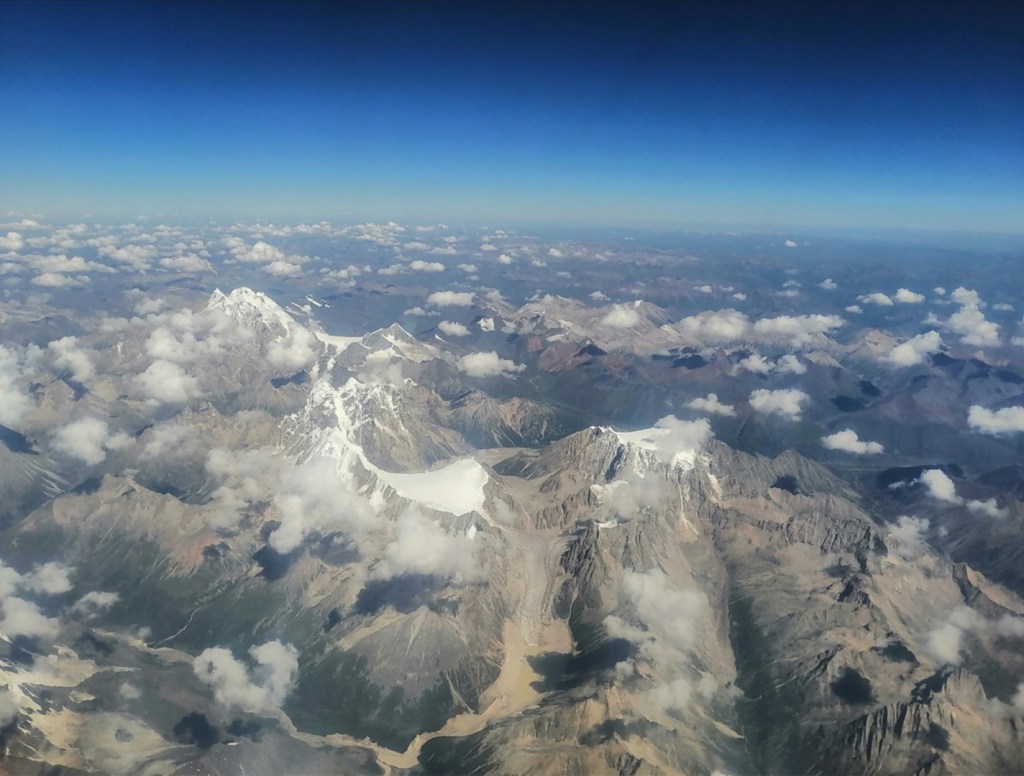
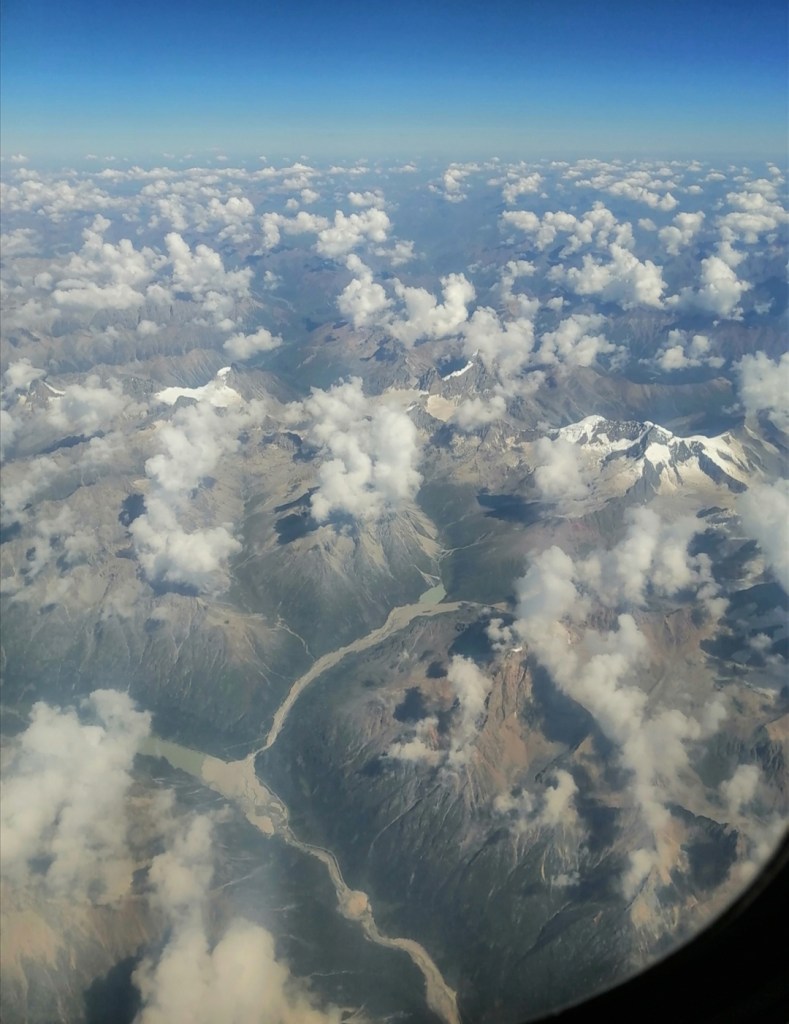
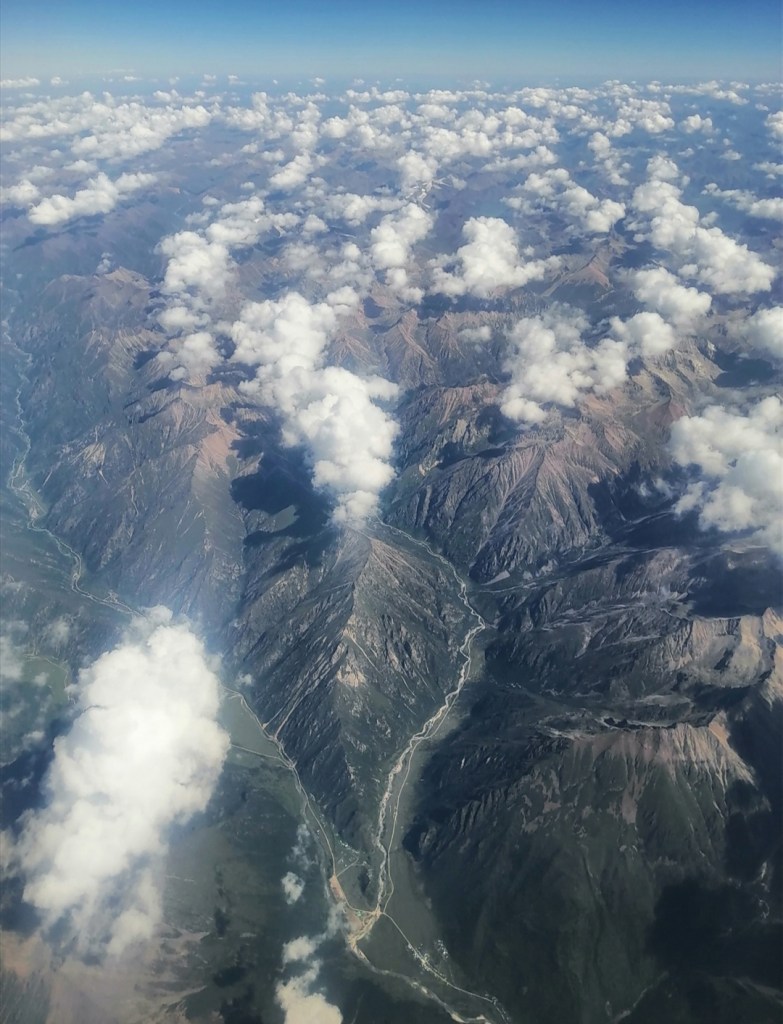
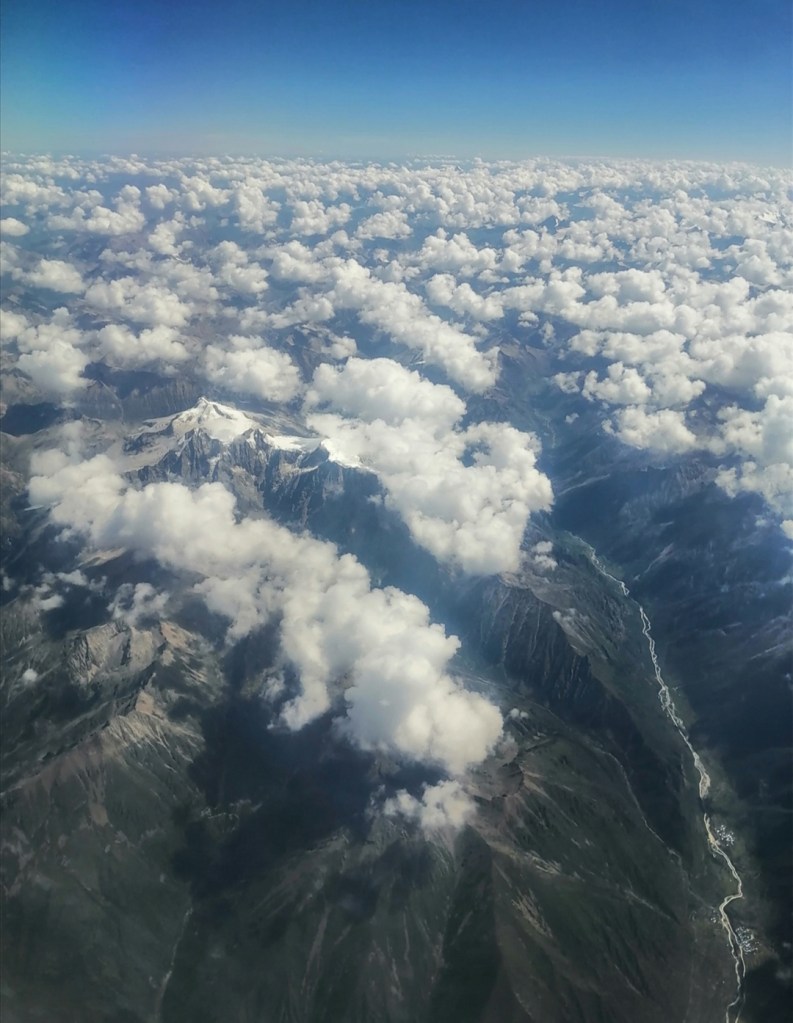
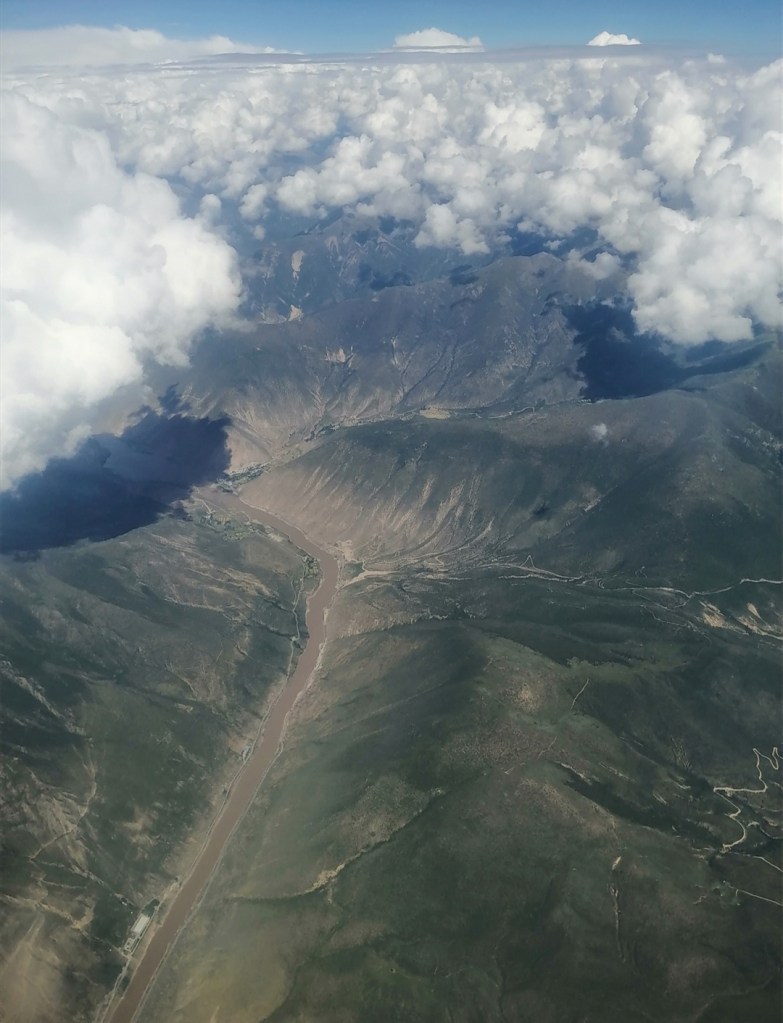
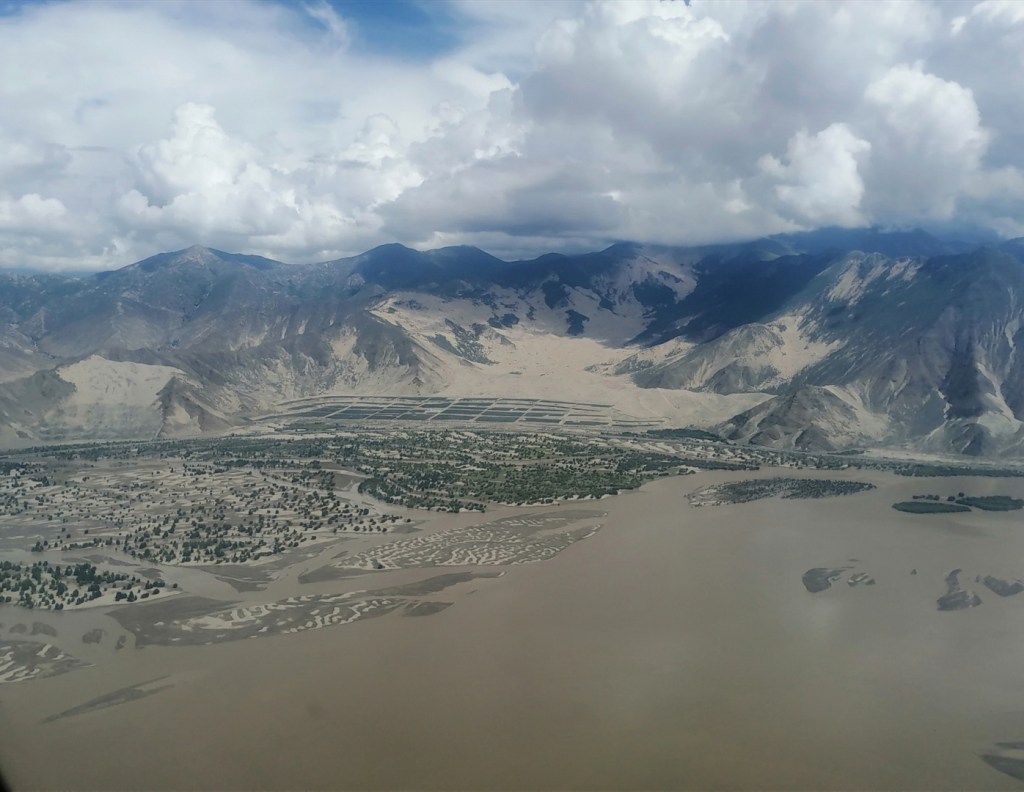
12th August: travel to Lhasa. The night was not so good for me, and waking up at 4:30 was very challenging. We travel to the airport to catch a flight to Lhasa at 7:45 with an Airbus A330 (sizeable plane) of Air China. Hugh and I travel first class again; apparently professors travel first class. We are not going to argue. The flight is eventless and the last hour of the flight is spectacular. So much relief on the edge of the plateau, and on such a vast expanse! The landscapes are mind blowing. 10 minutes before arriving to Lhasa, it gets very cloudy and wet, which is the first surprise. Parts of the Tibetan plateau are fertile, green and very wet during the summer monsoon! There is also evidence of much sand blown as we approach the Yarlung valley, with many dune fields and a lot of planted trees to stabilise them (this is what Yalige is working on).
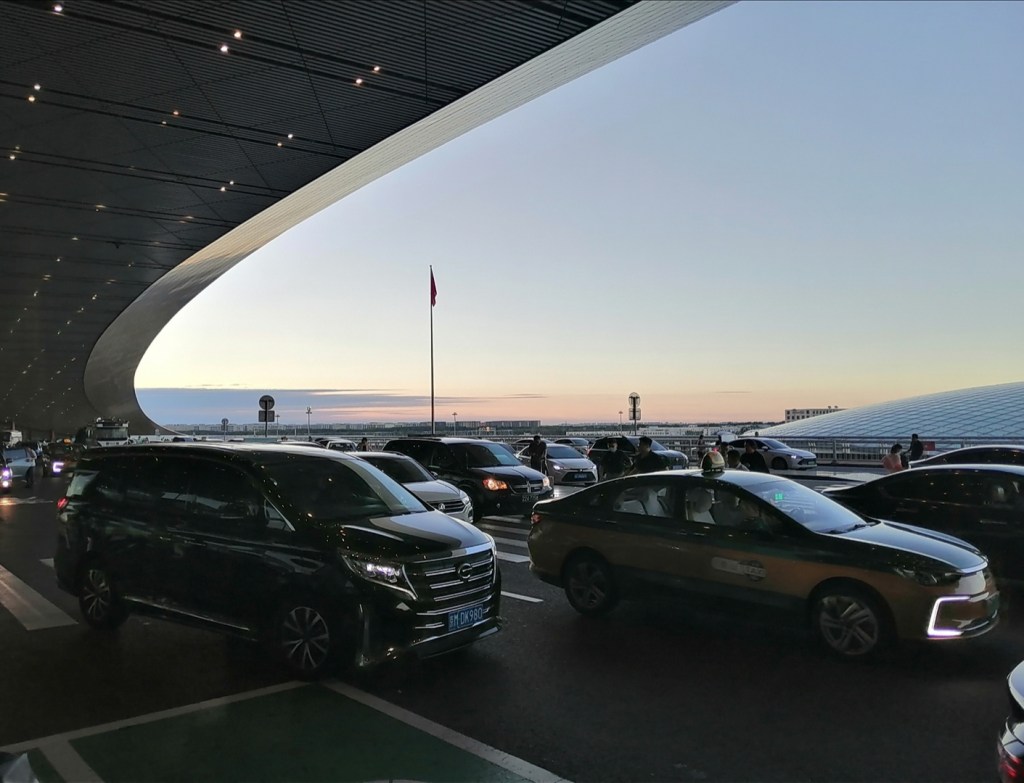
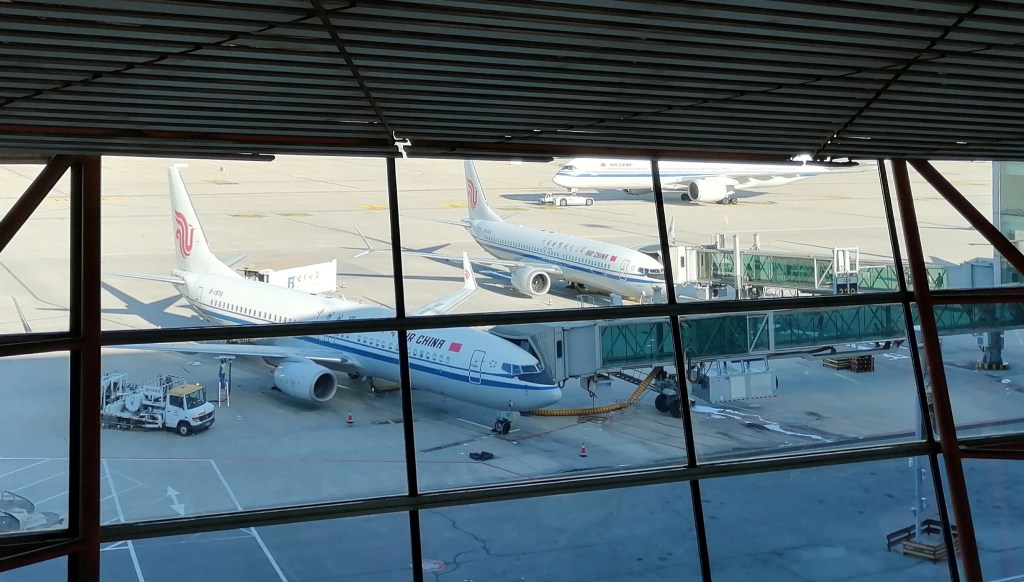
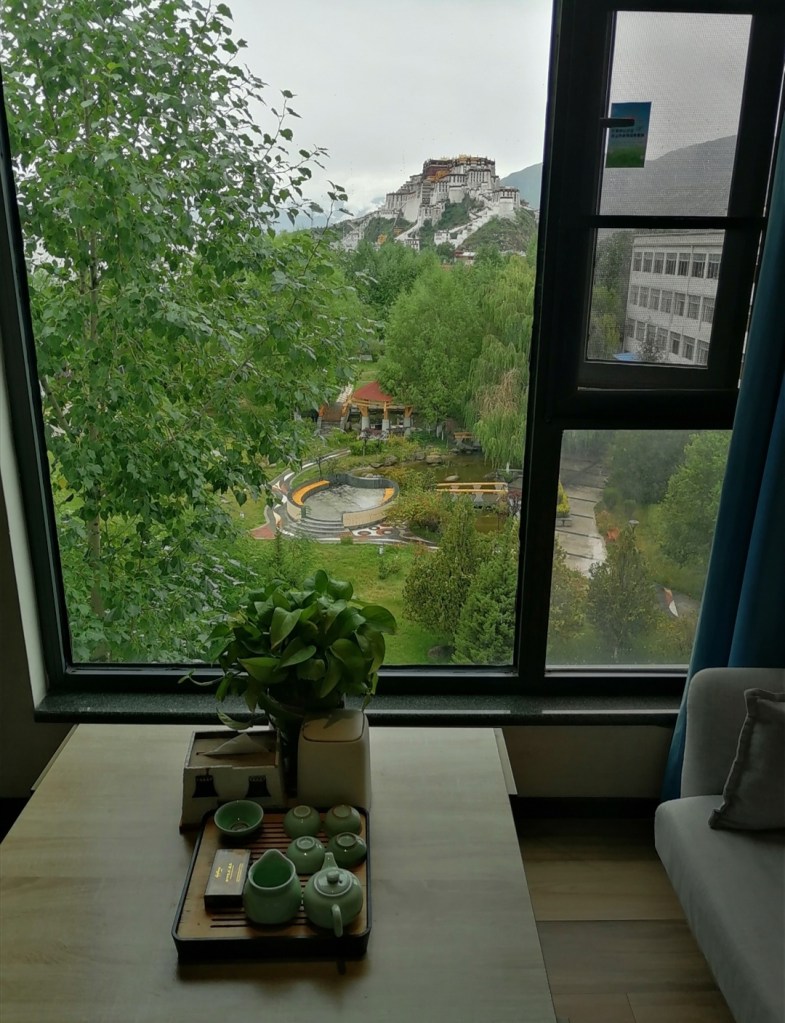
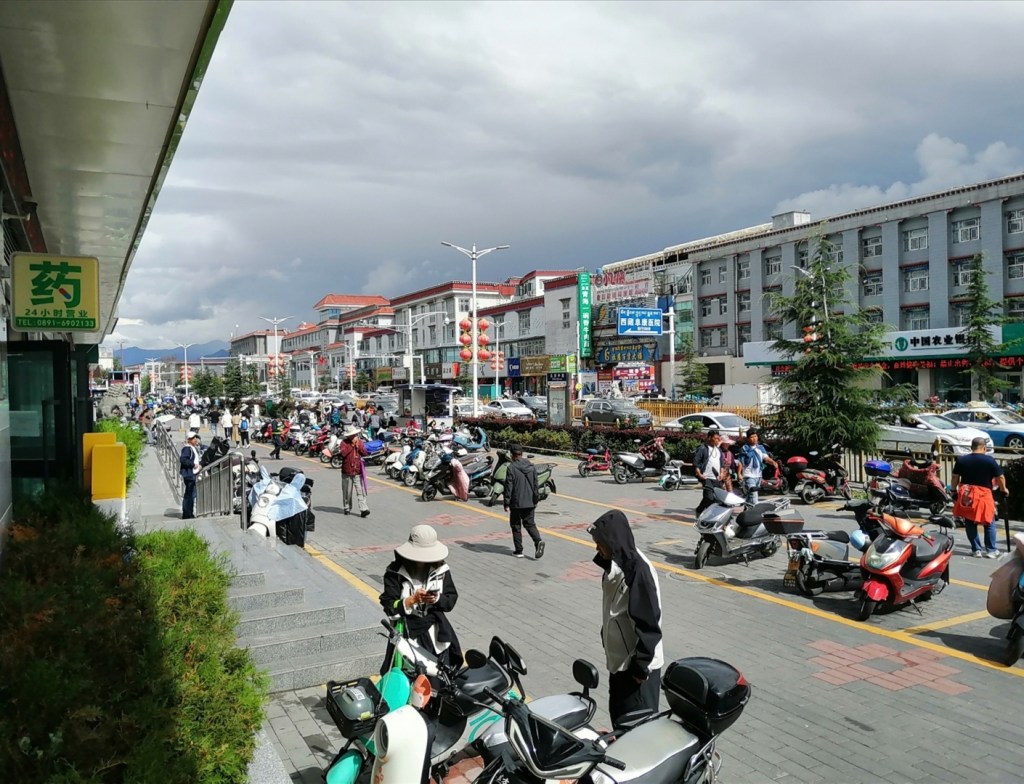
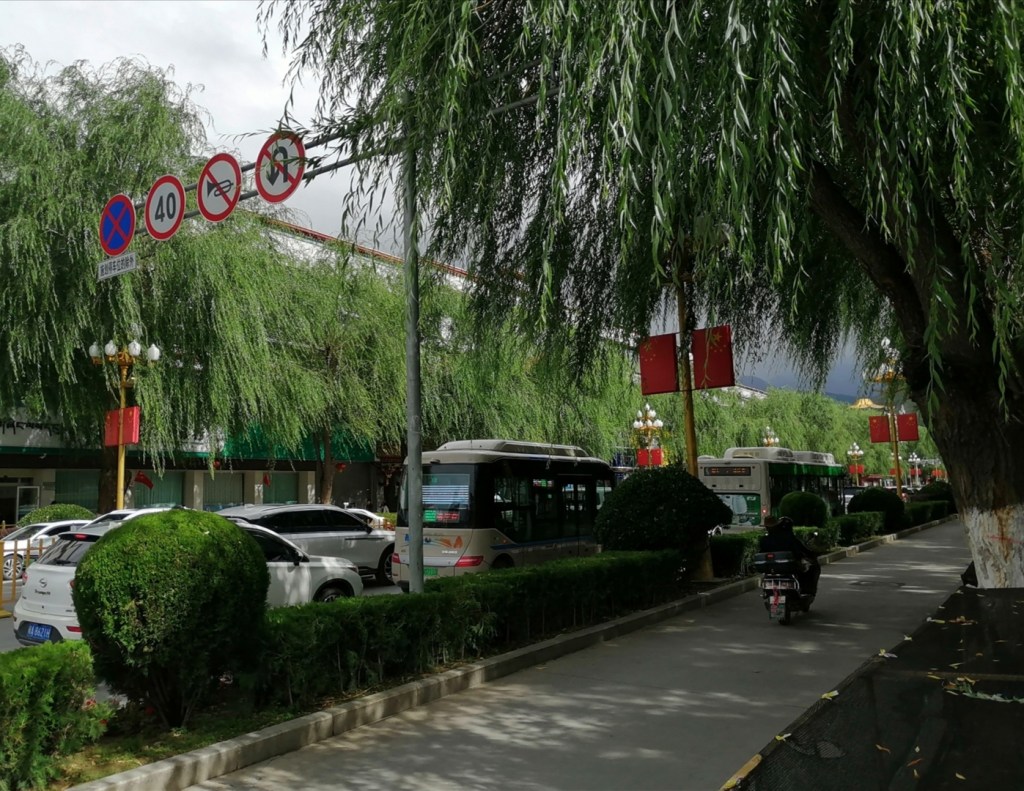
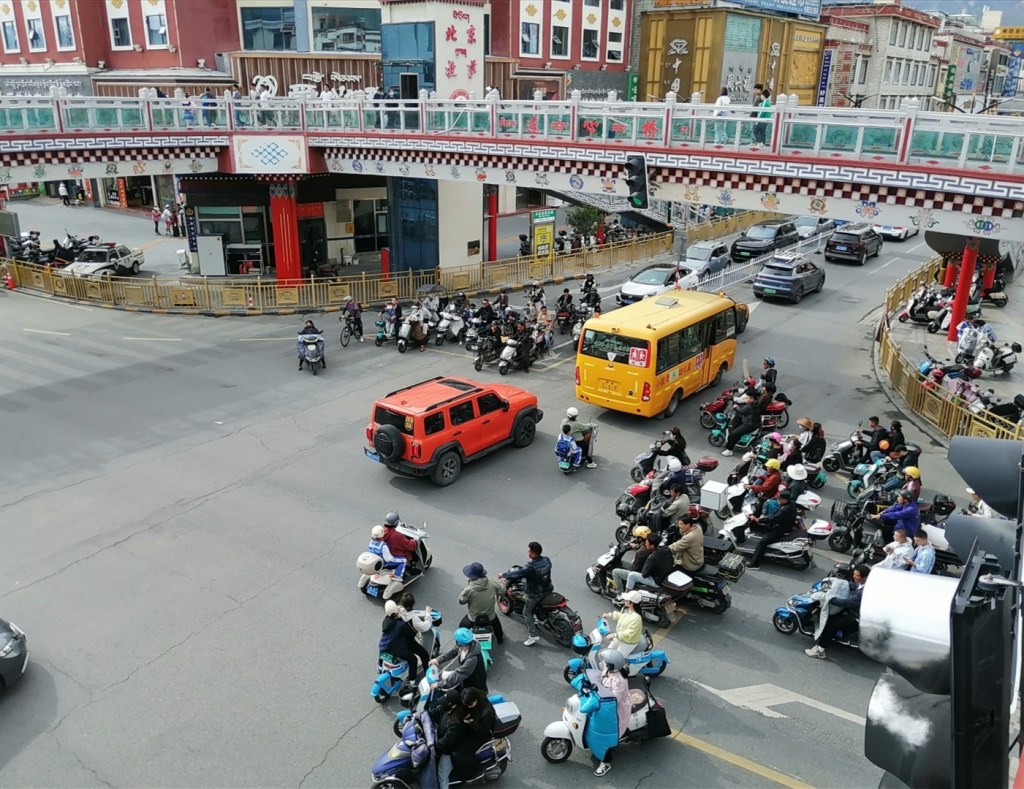
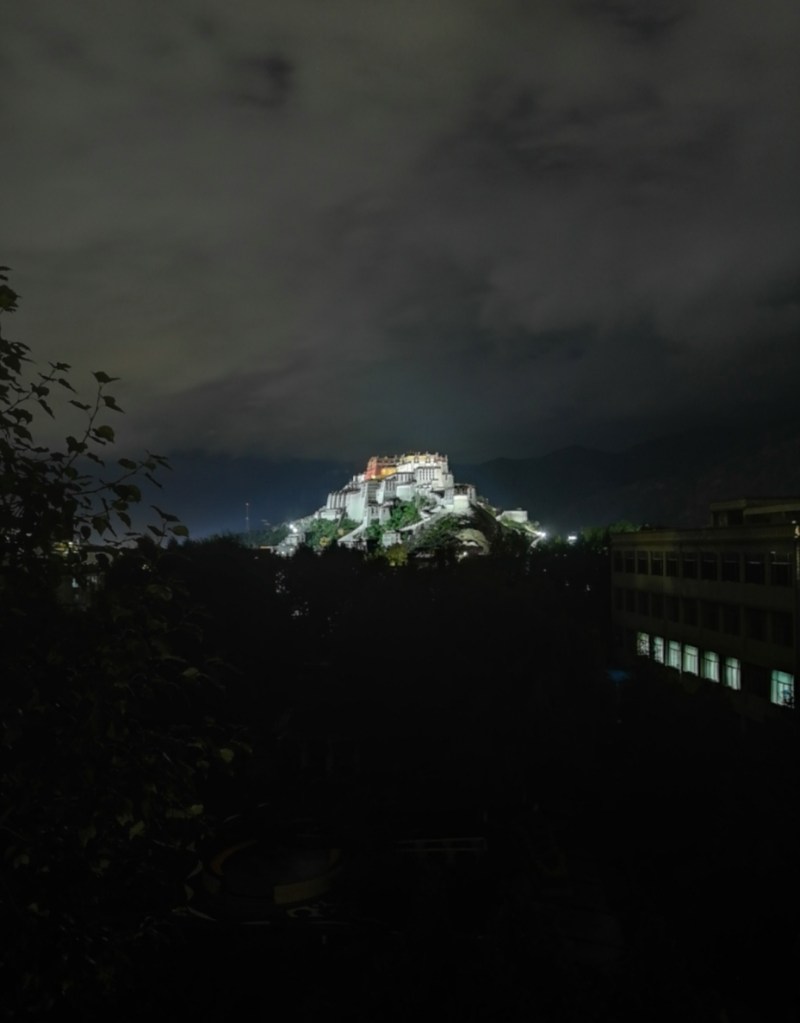
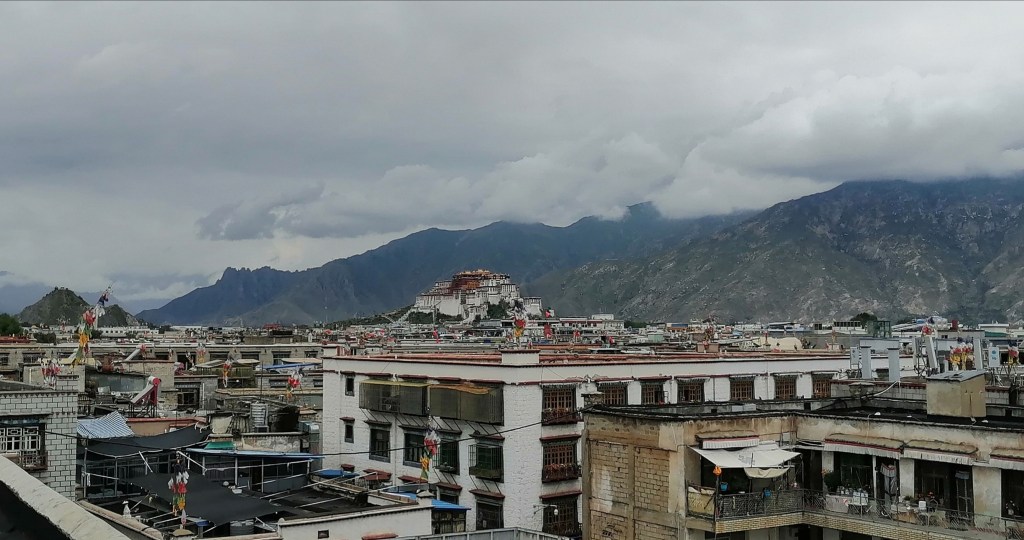
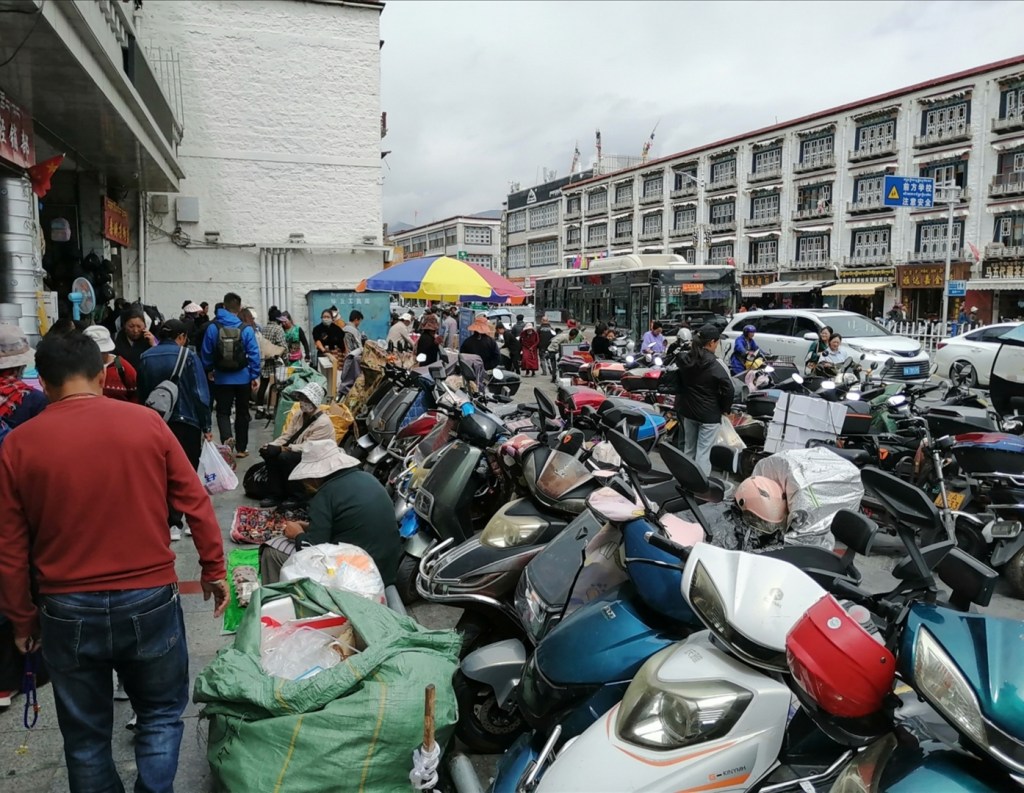
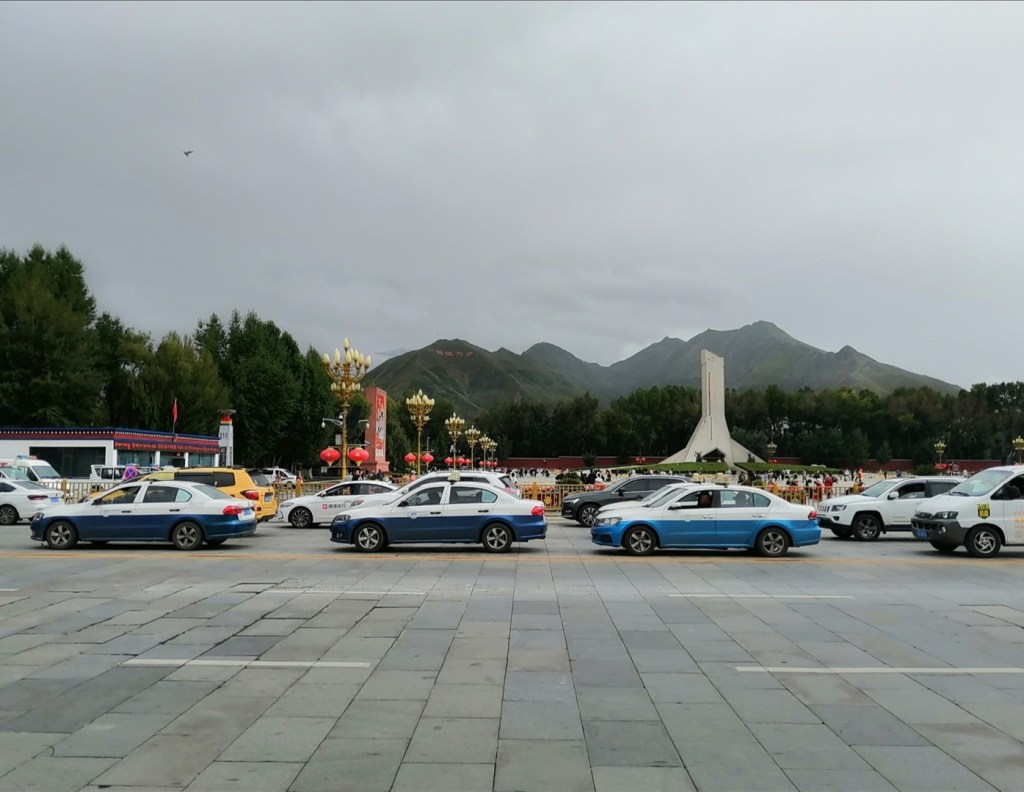
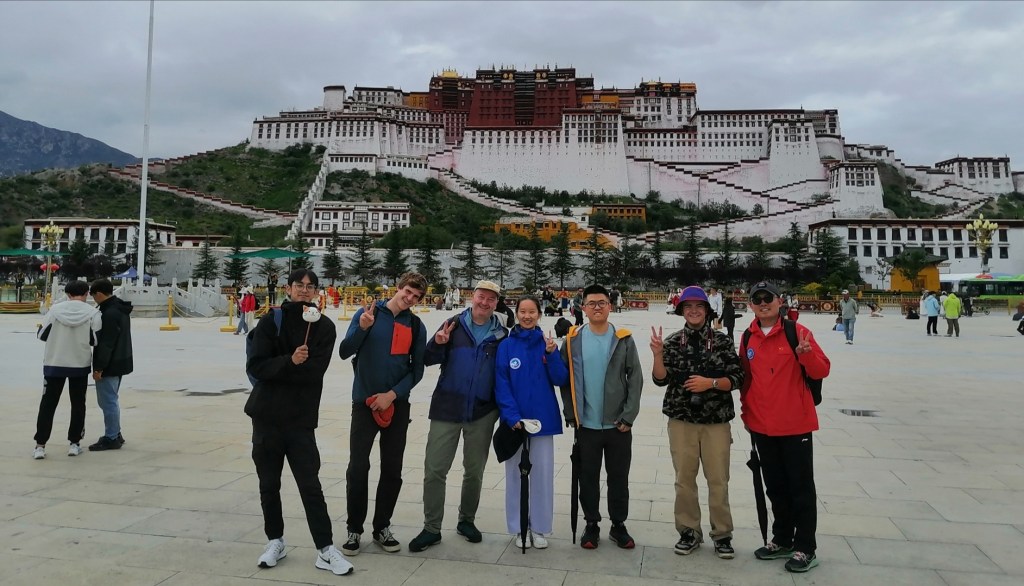
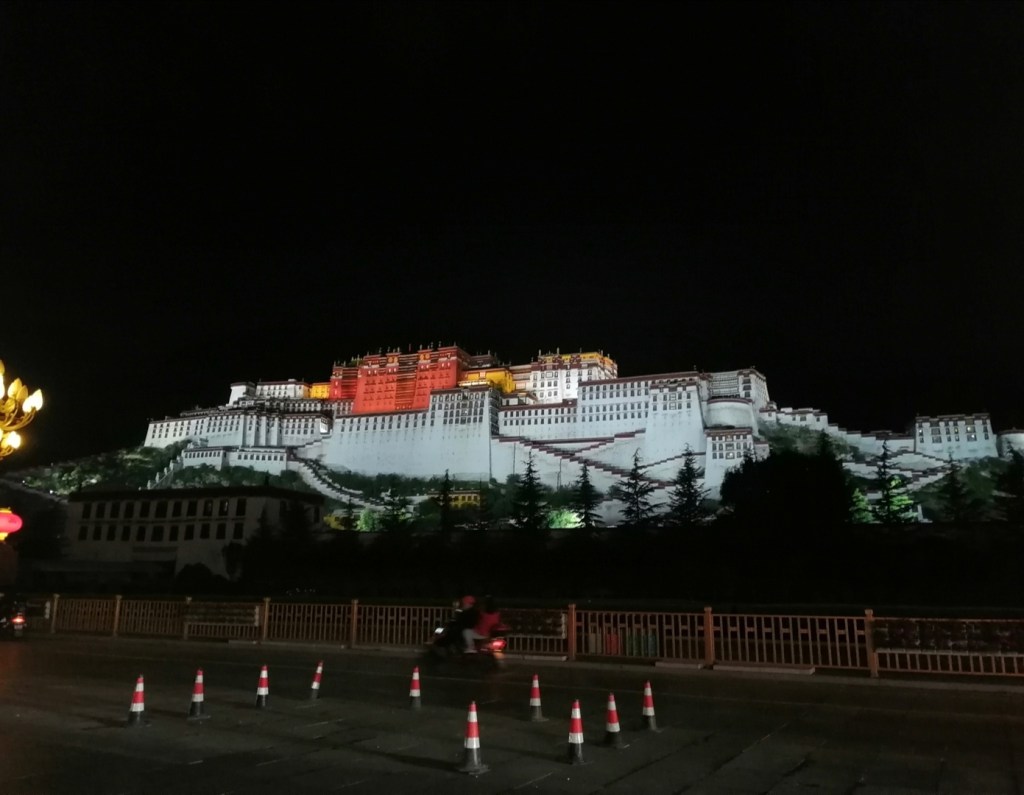
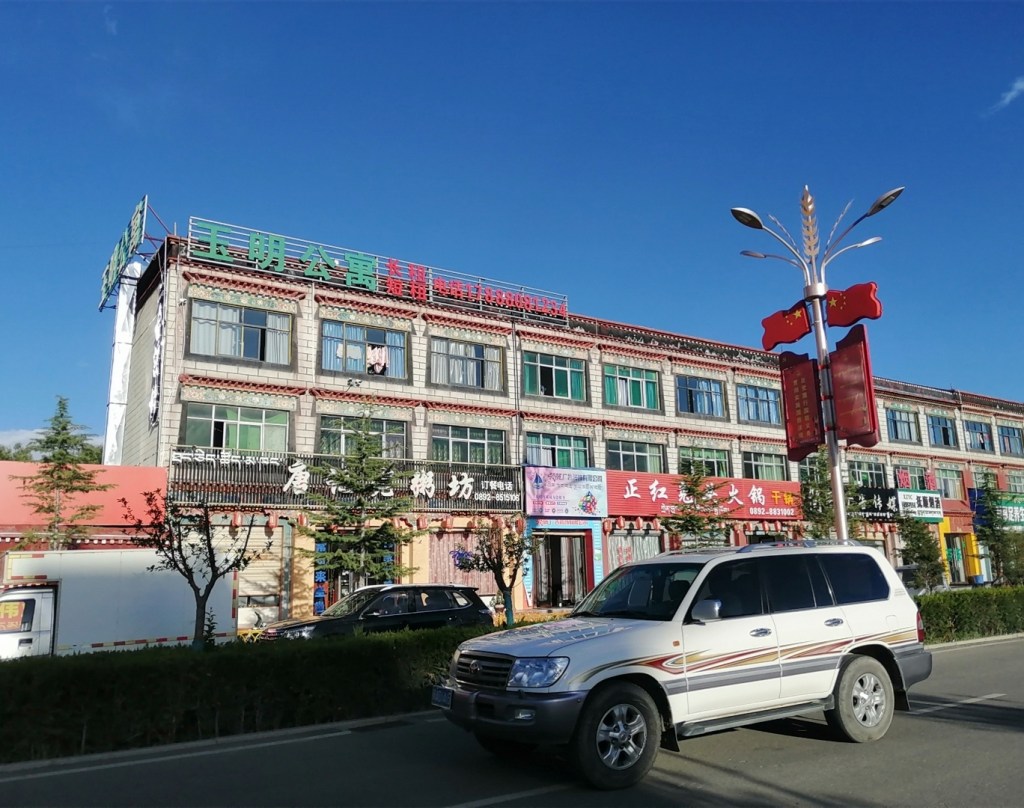
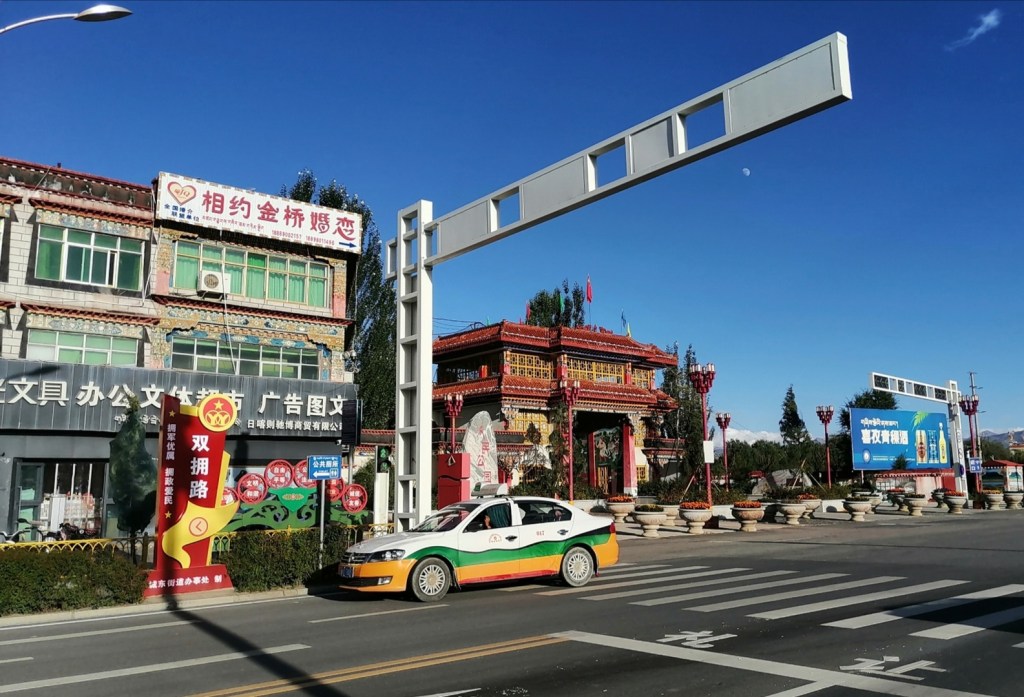
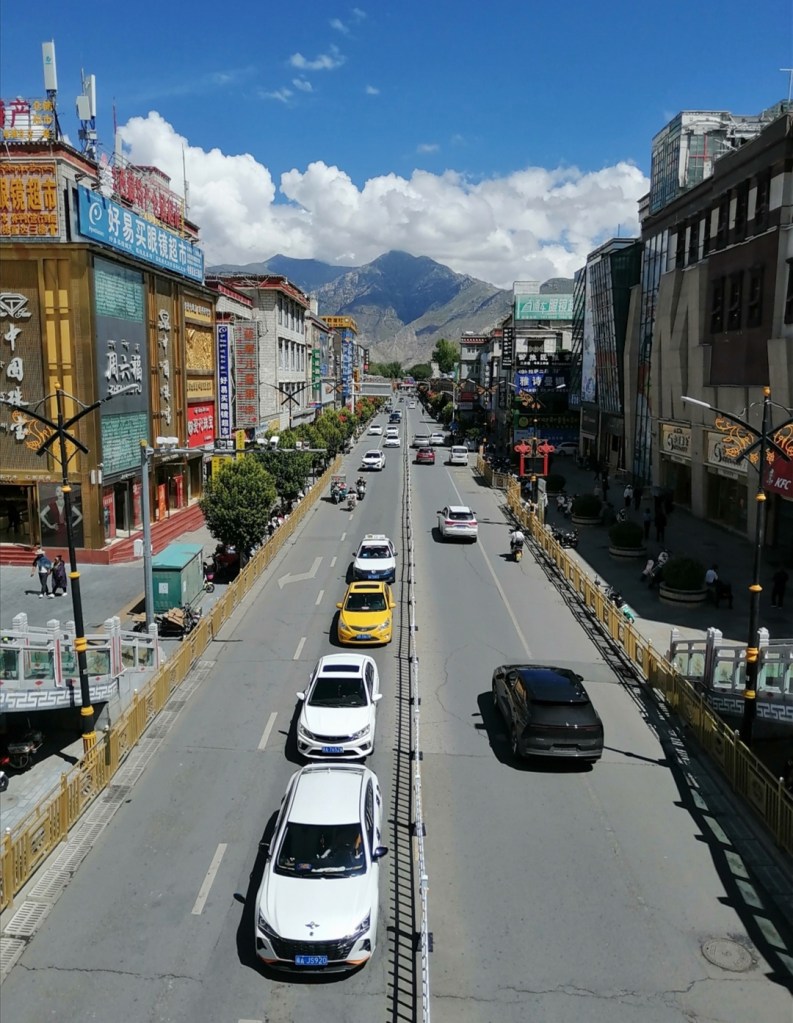
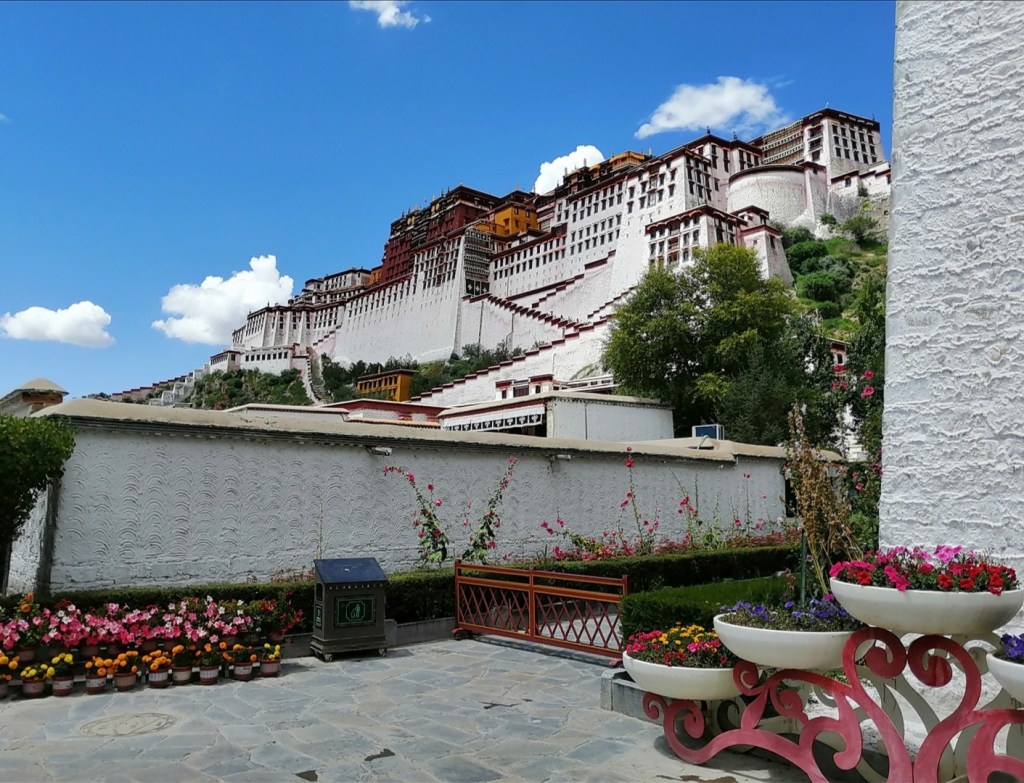
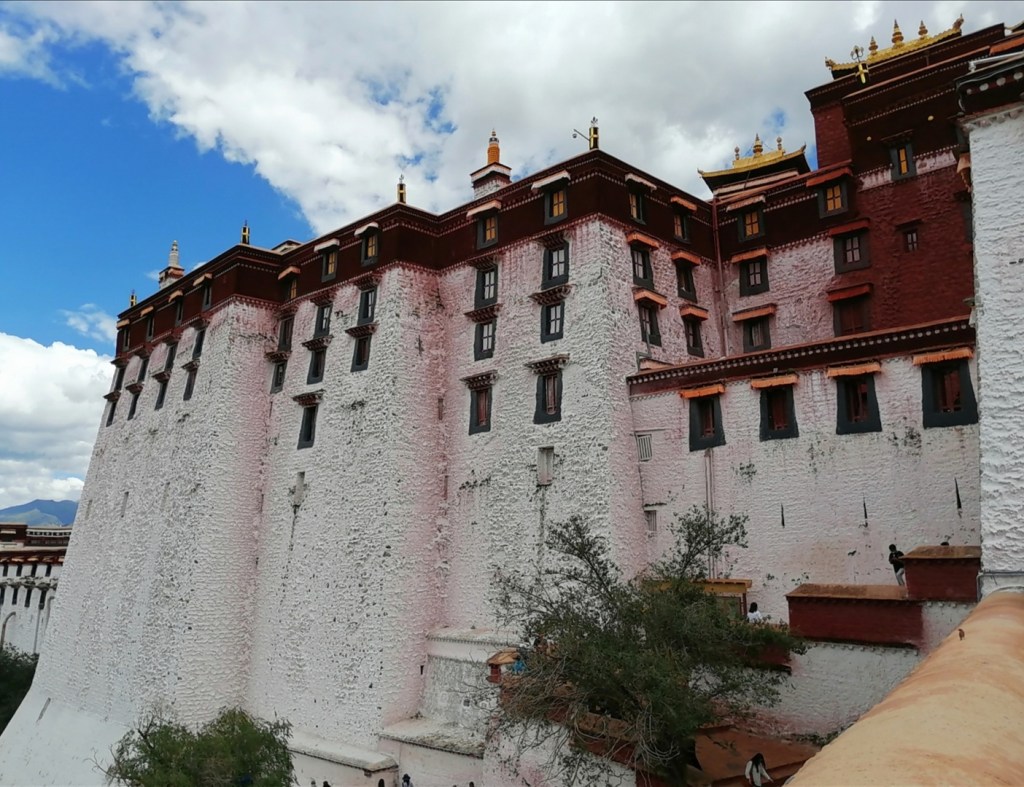
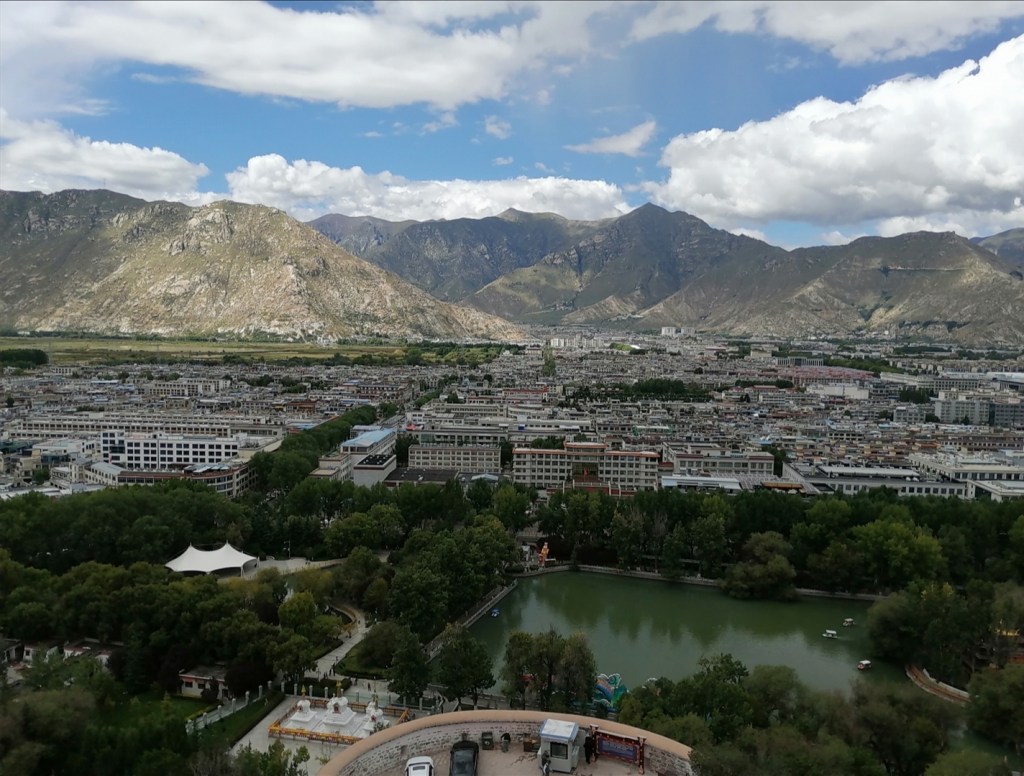
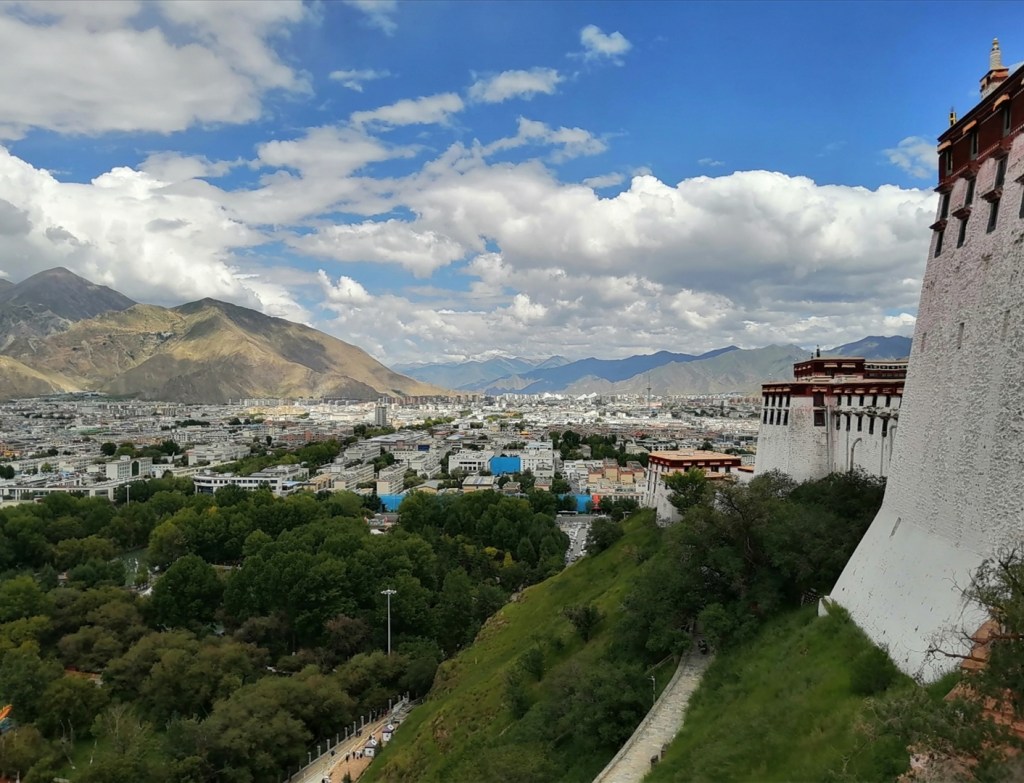
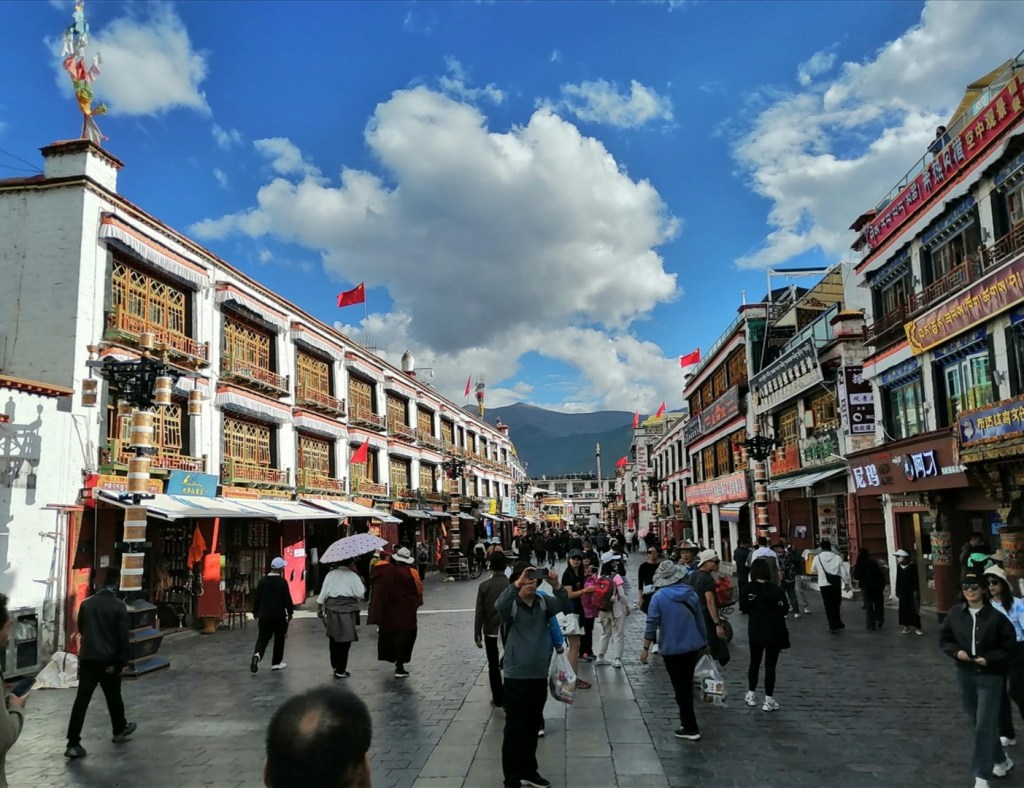
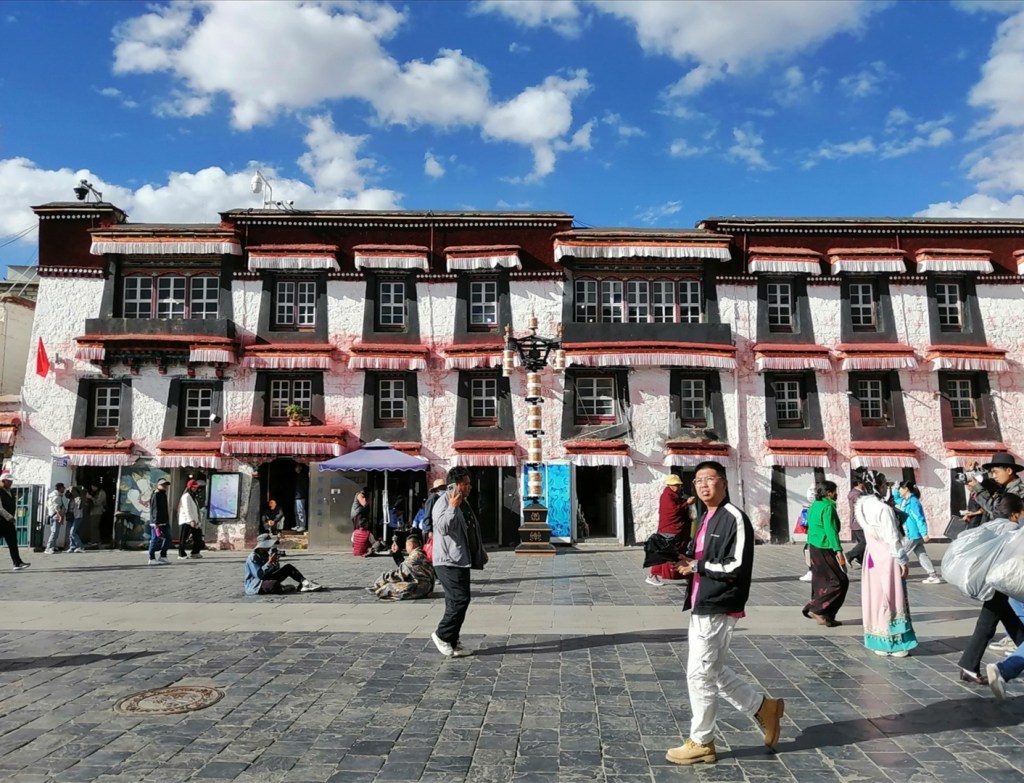
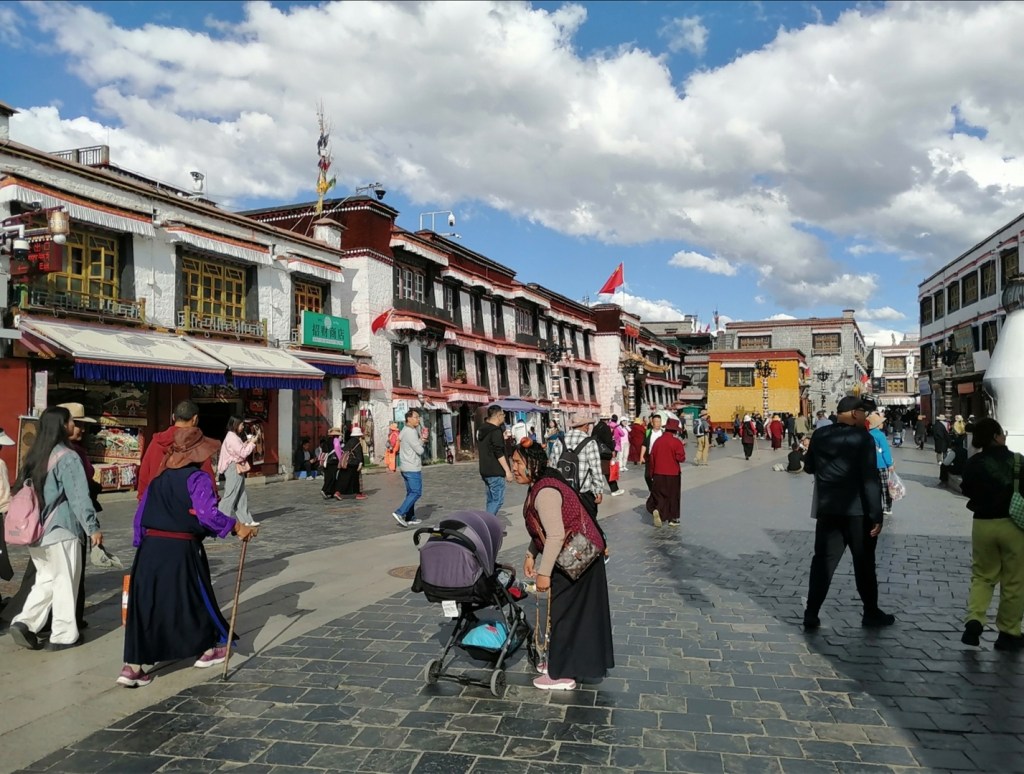
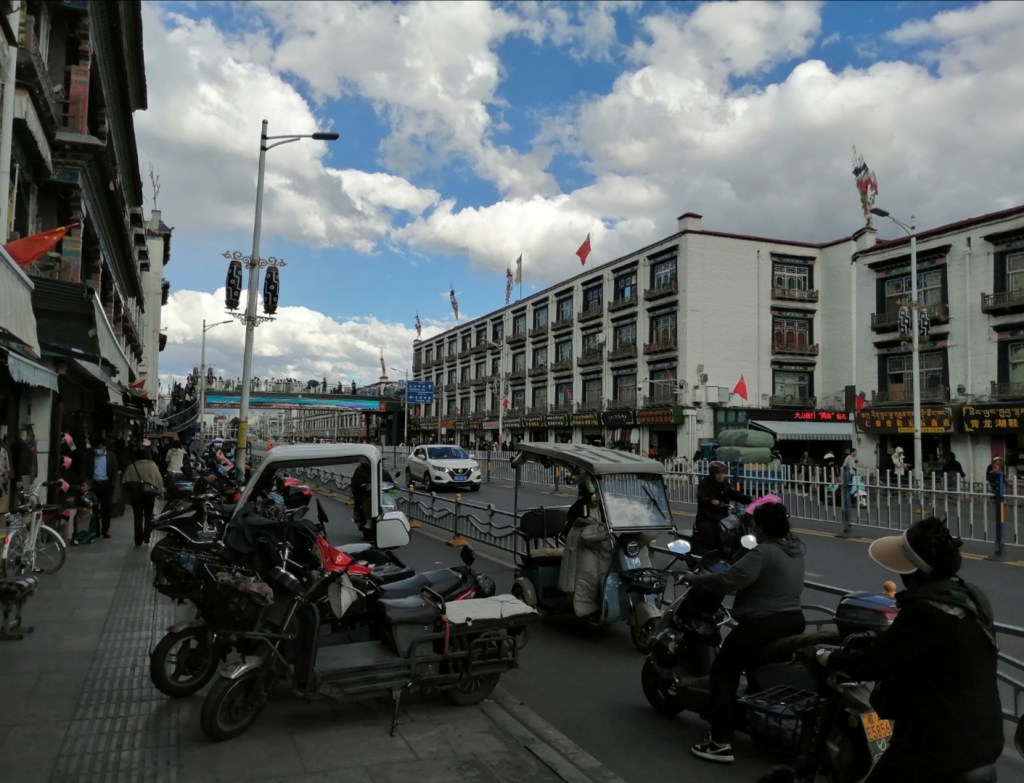
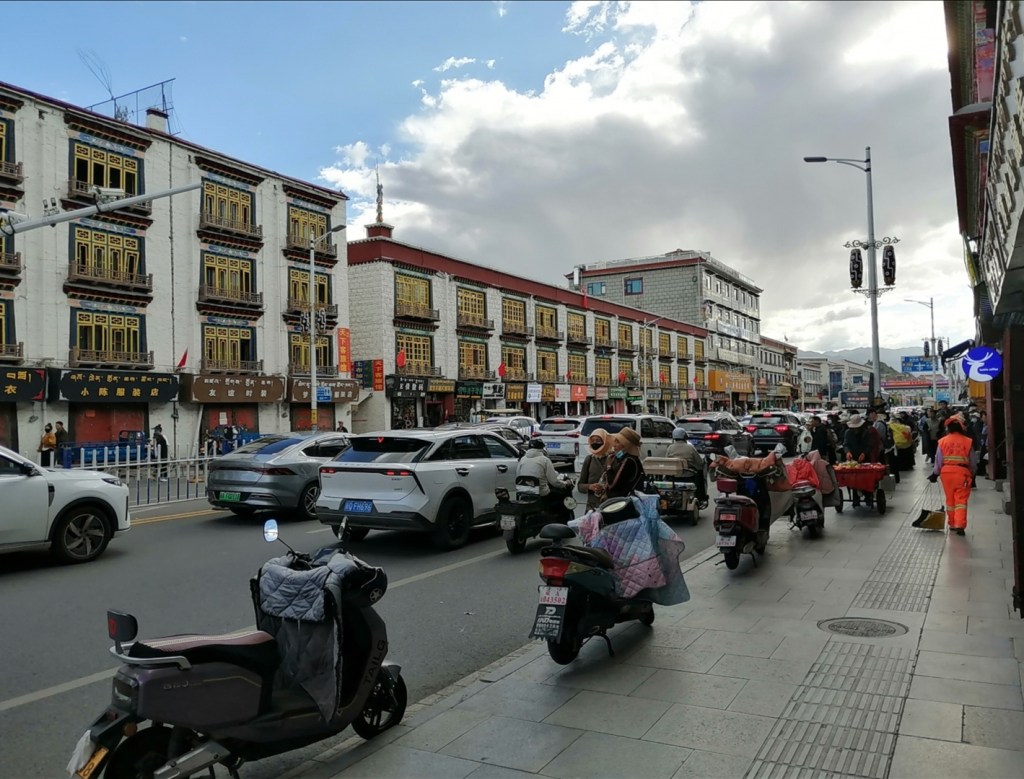
My bag has not made it. We have a very wet 30-minute drive to Lhasa. Everyone is feeling a bit light-headed, which is expected (we’re at 3600 m elevation), but the temperature is very pleasant, 20-22 degrees. I’ve got a headache that will last all day, and Eliot some tingles in his hands. Many of us have very low blood O2 levels (around 88%) but hopefully we will acclimate! The city is very busy and congested, and very lively with locals and tourists. Zhongpeng got us a hotel room with quite a view. The Potala Palace! We have a late hotpot lunch at the hotel, then a nice stroll (taking it easy, we feel so weak!) across the city. After a break (and my bag has arrived!), we have a nice dinner in a Tibetan restaurant with live music, where we meet some more of Zhongpeng’s colleagues working in Tibet. Quite a busy day! We should sleep well (I hope…)
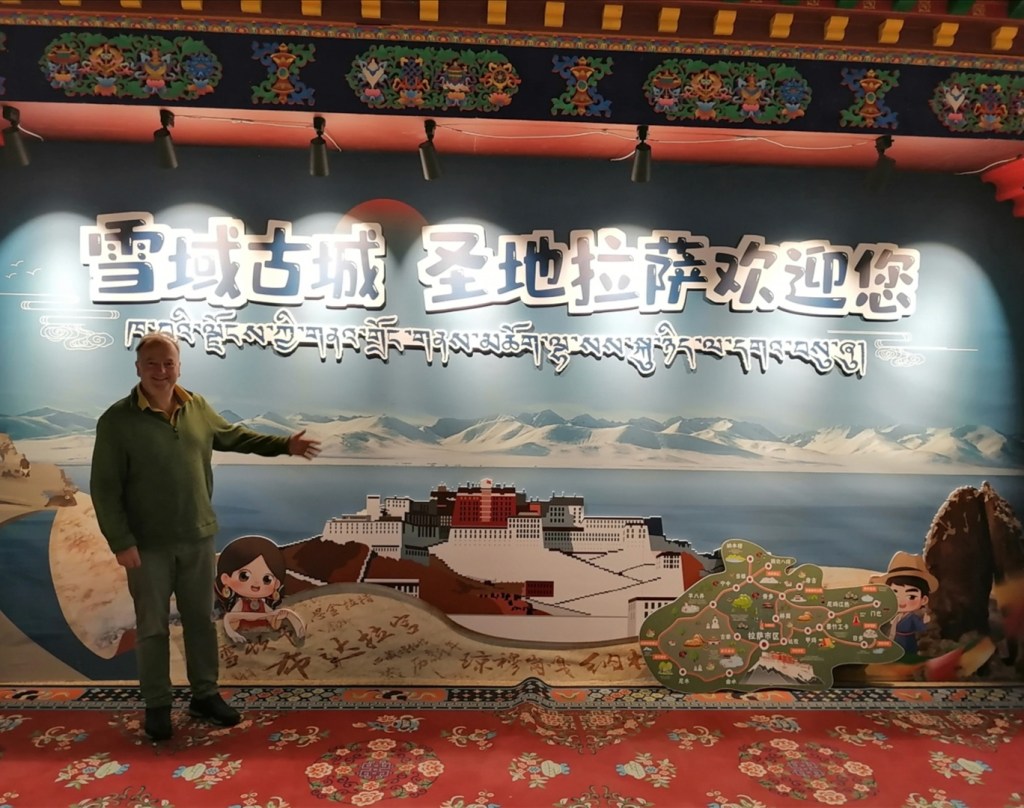
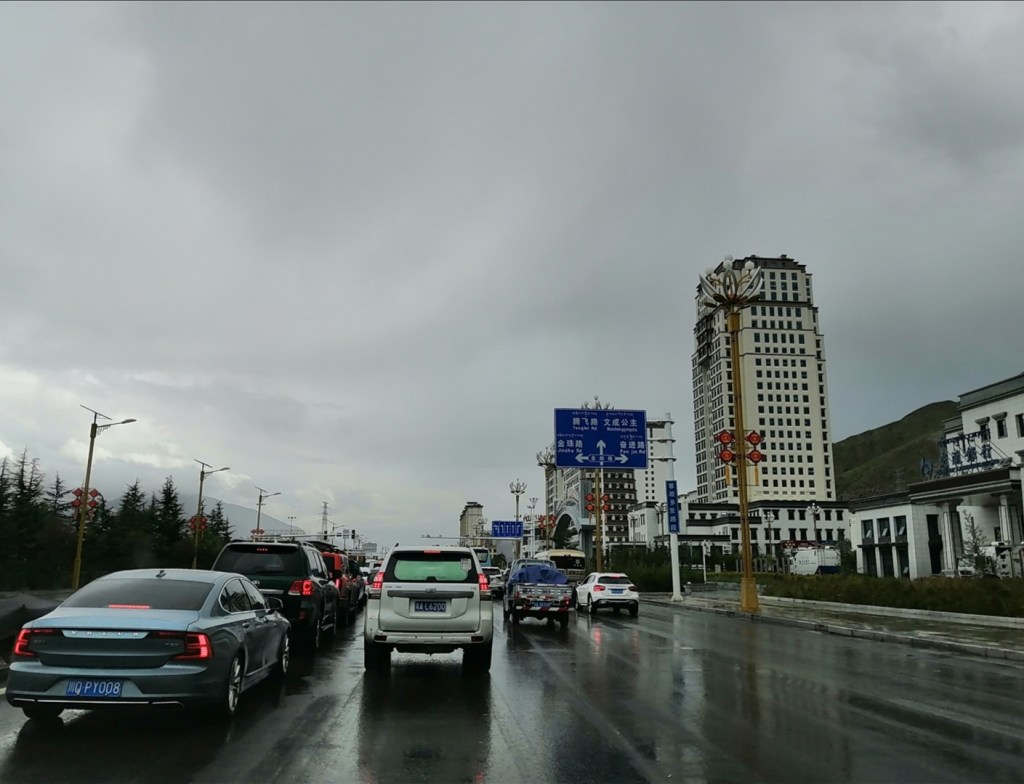
13th August: I didn’t sleep so well. Shortly after going to bed, I woke up with a massive headache and short of breath. My blood oxygen readings were around 80-83%, which is not great, so we put the oxygen machine on in the room for the whole night and I took a few good breaths: my oxygen levels went to 100% within a few seconds. It’s incredible how quickly the body respond to this! I eventually had a great night, and woke up very well: headache is gone and my blood oxygen levels stayed between 92 and 95% all day! It’s amazing how the body can acclimate.

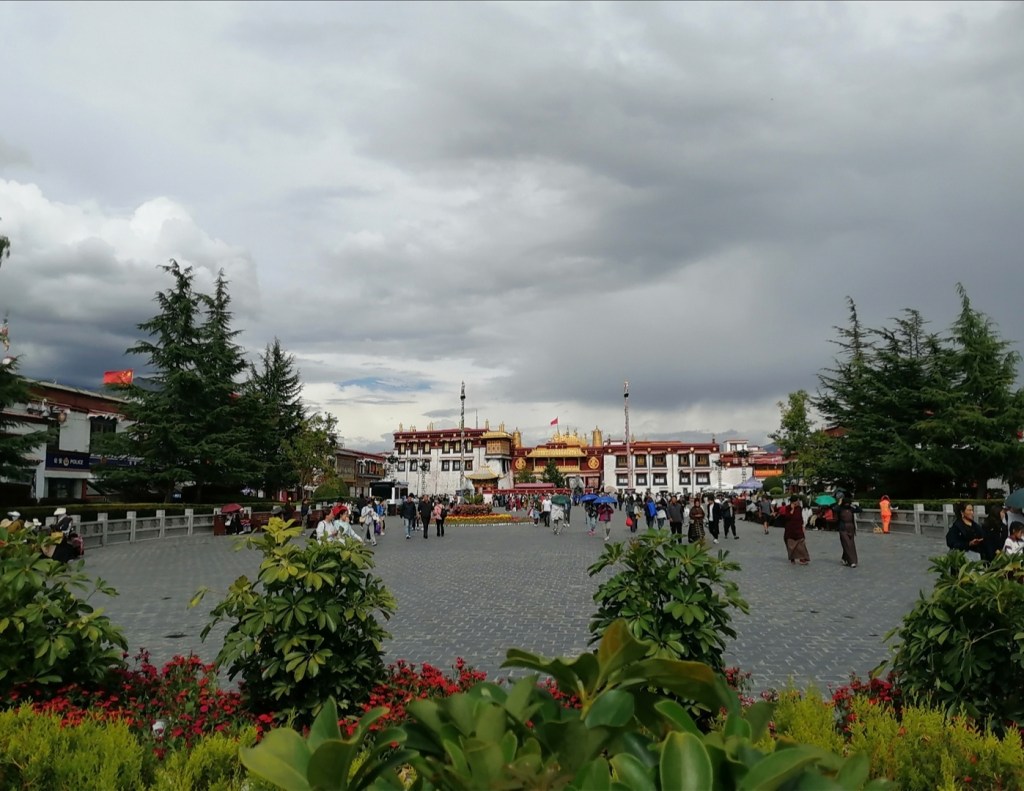
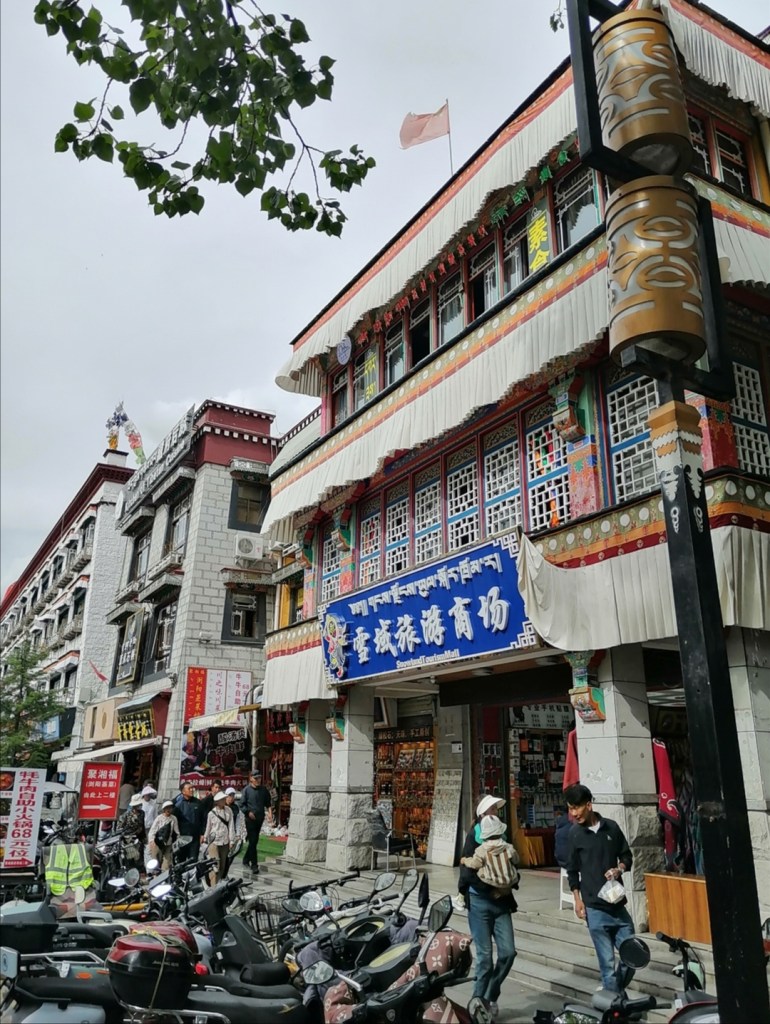
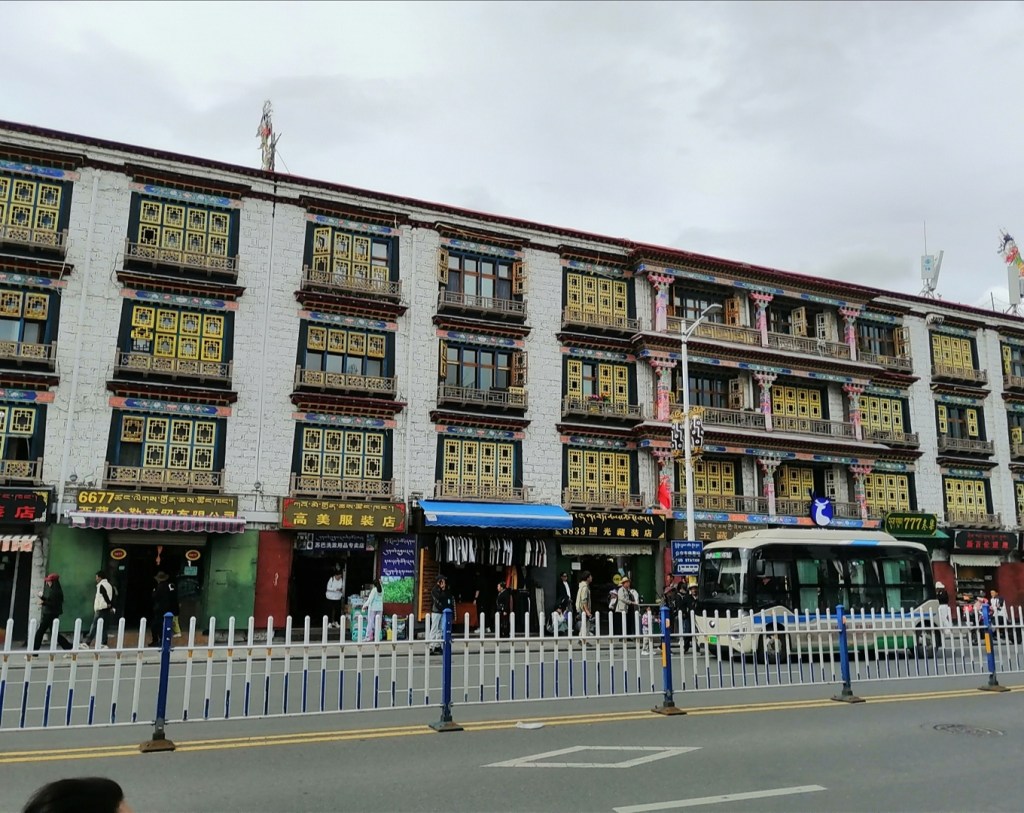
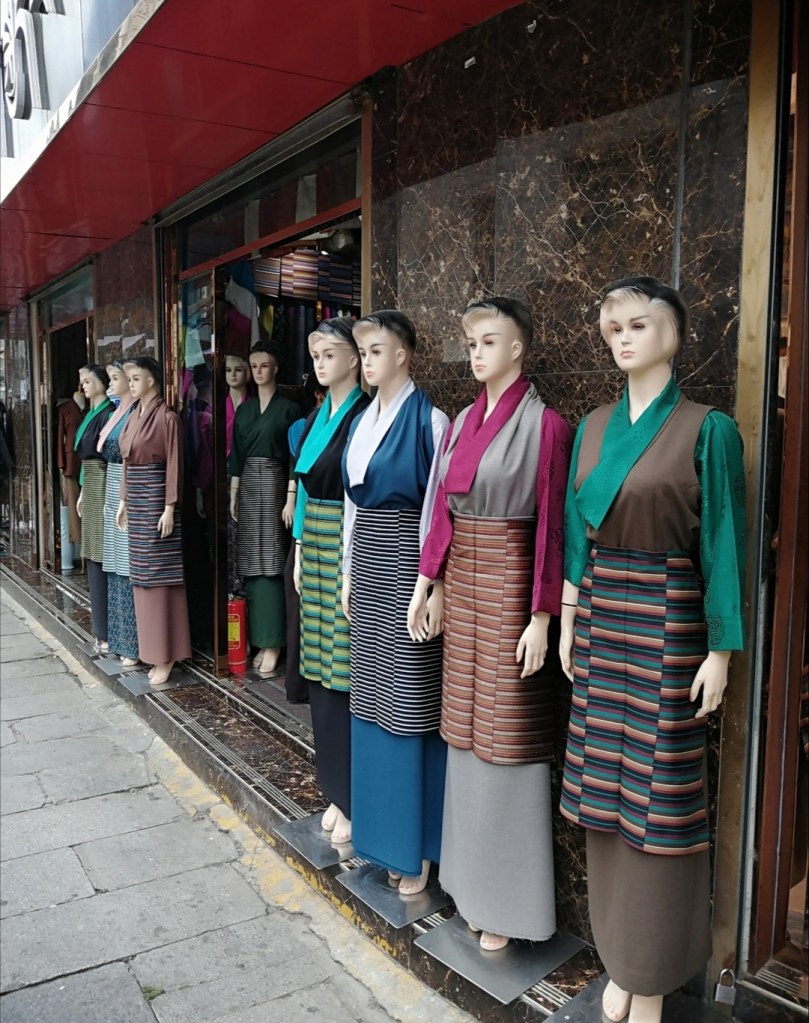
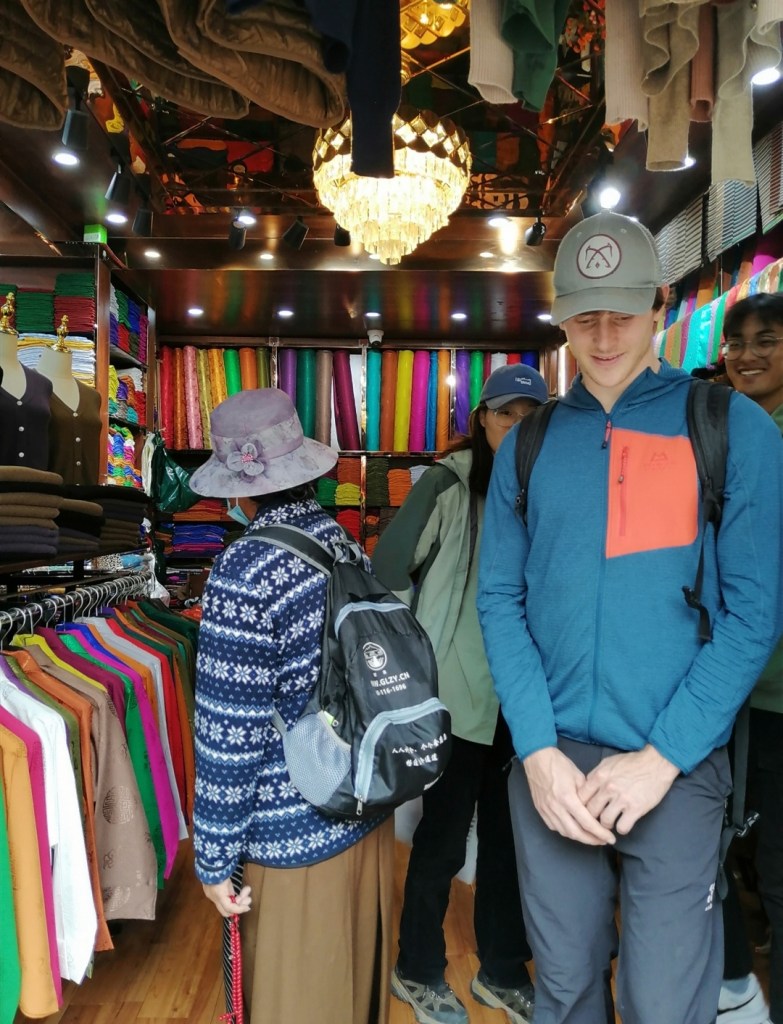
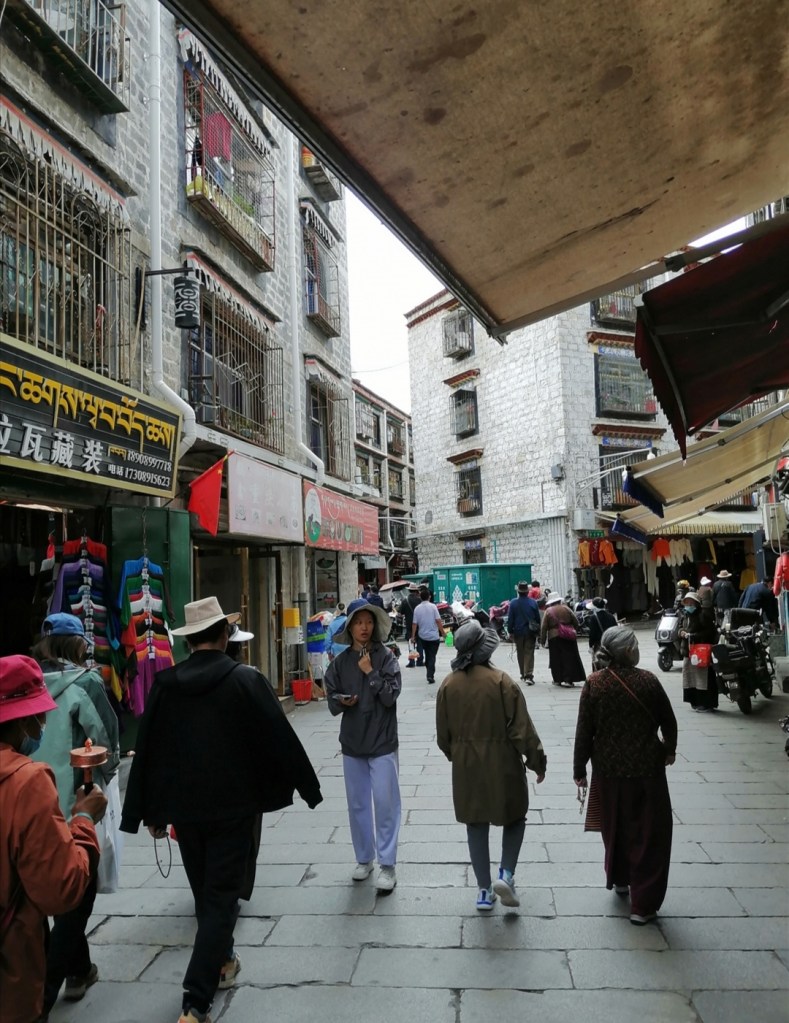
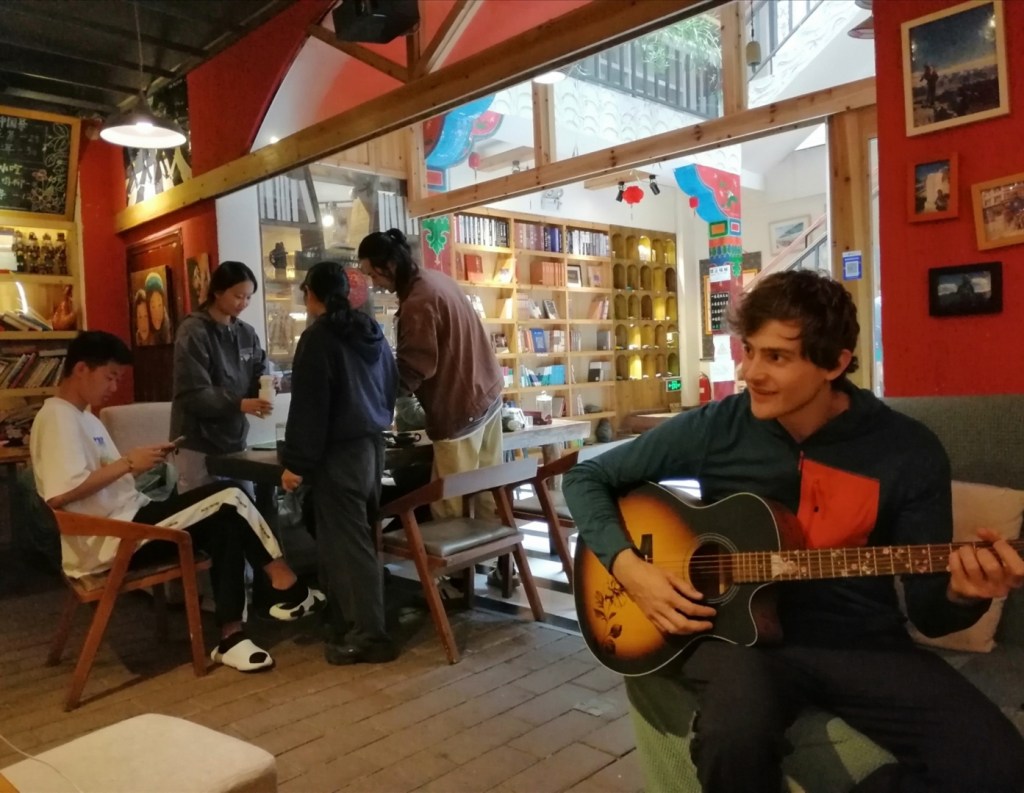
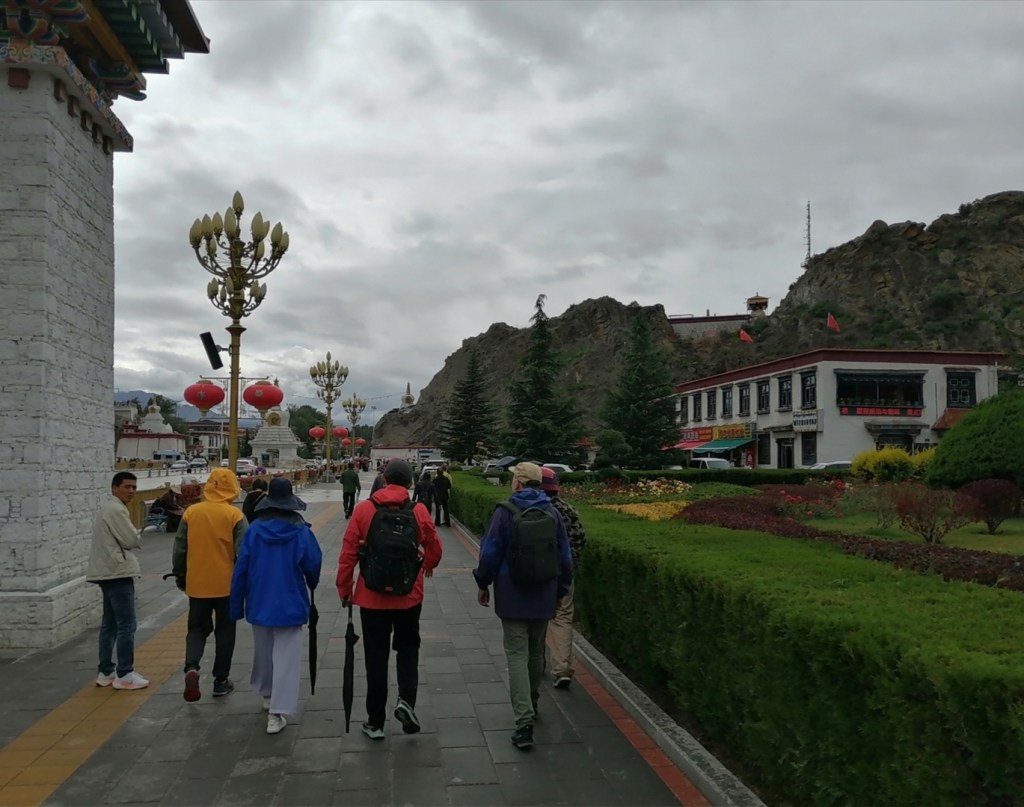
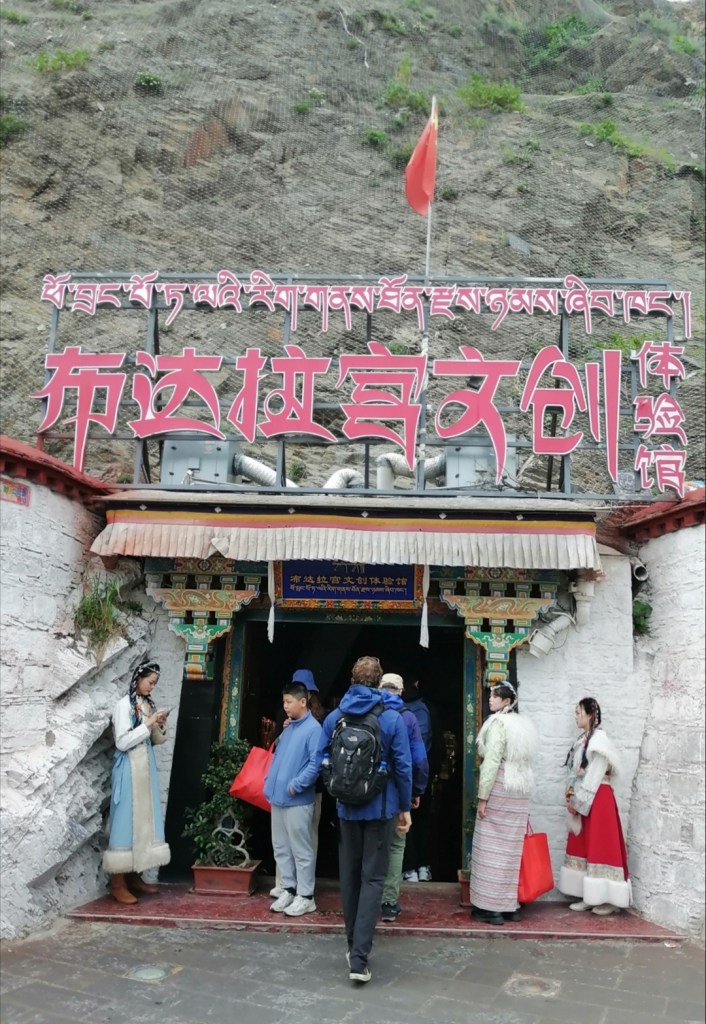
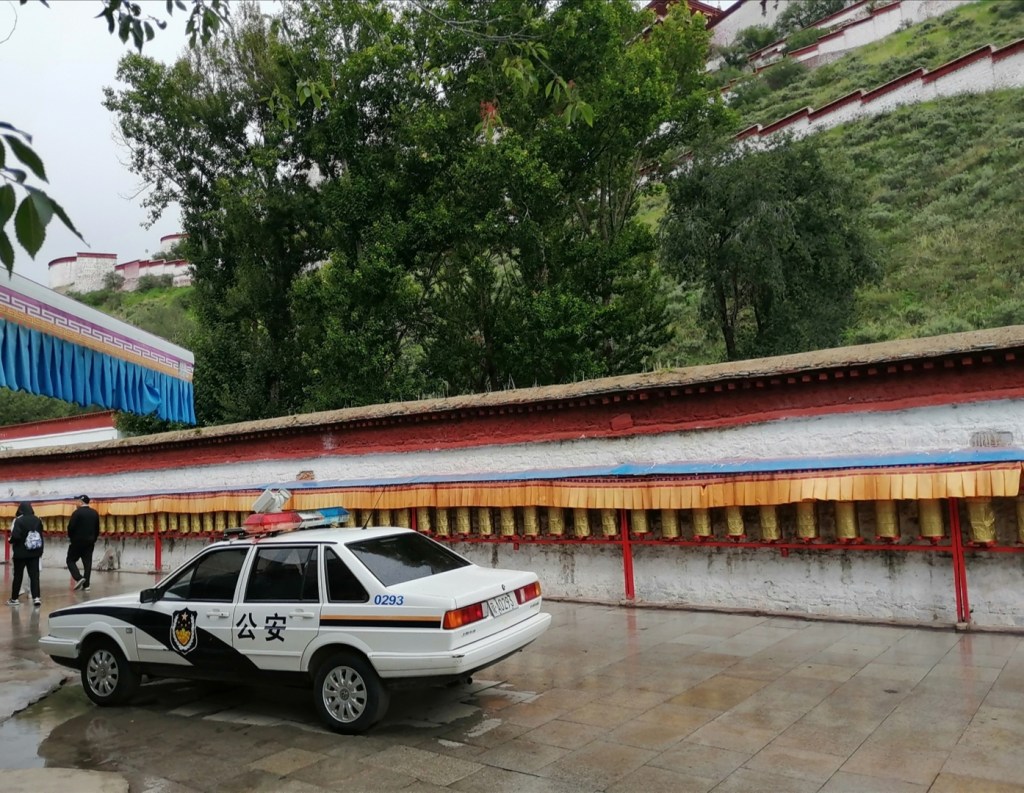
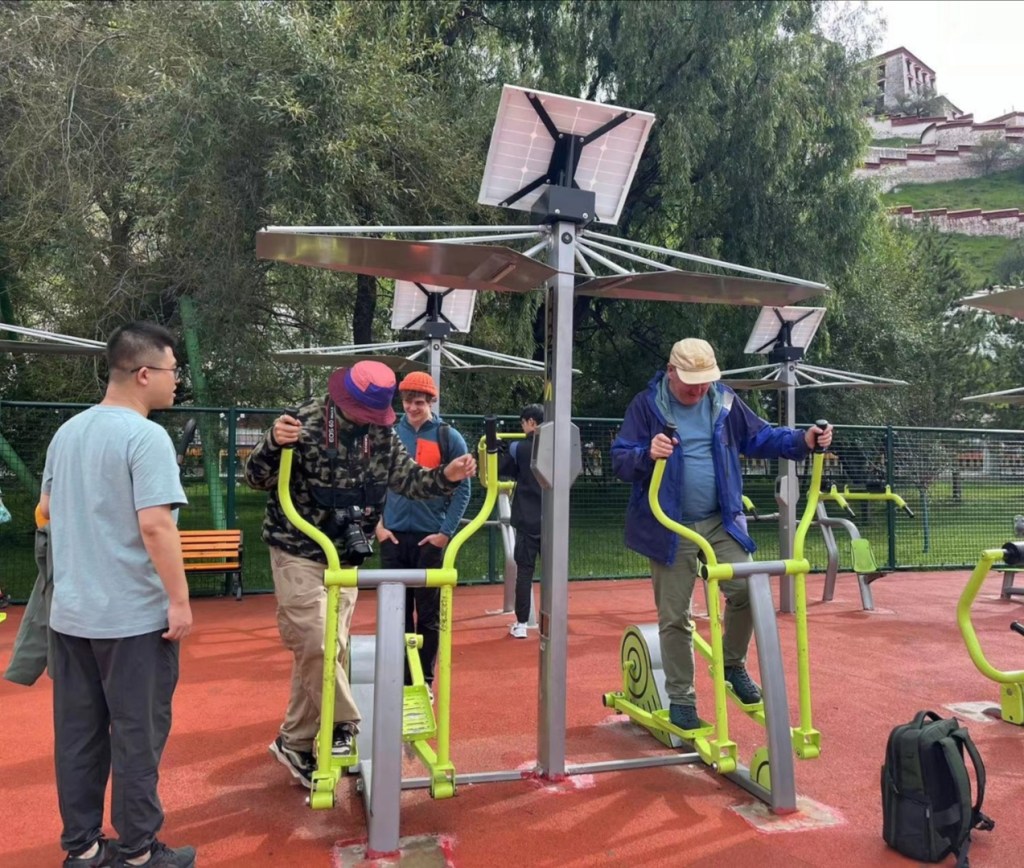
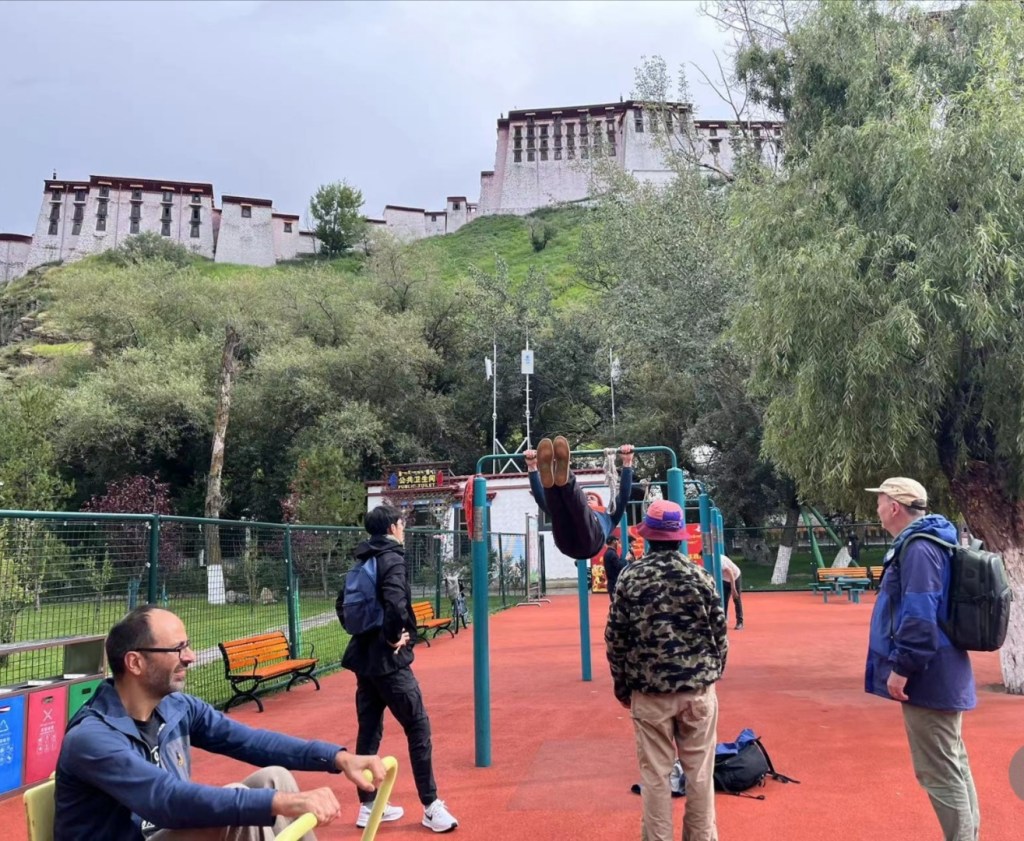
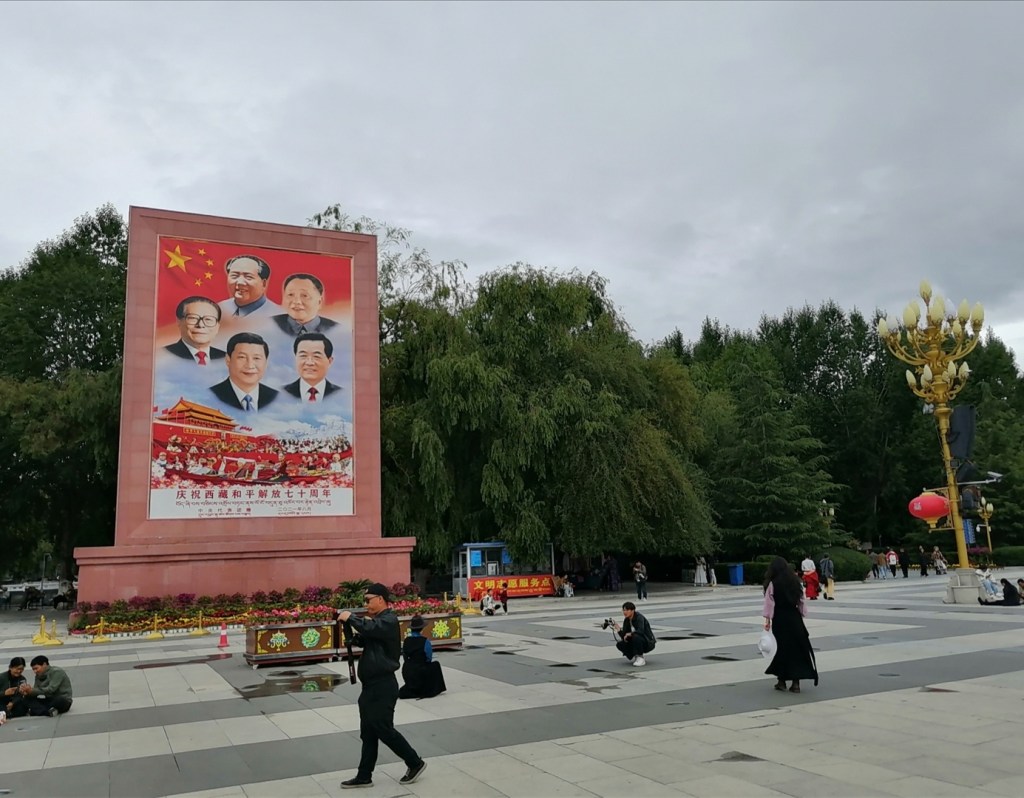
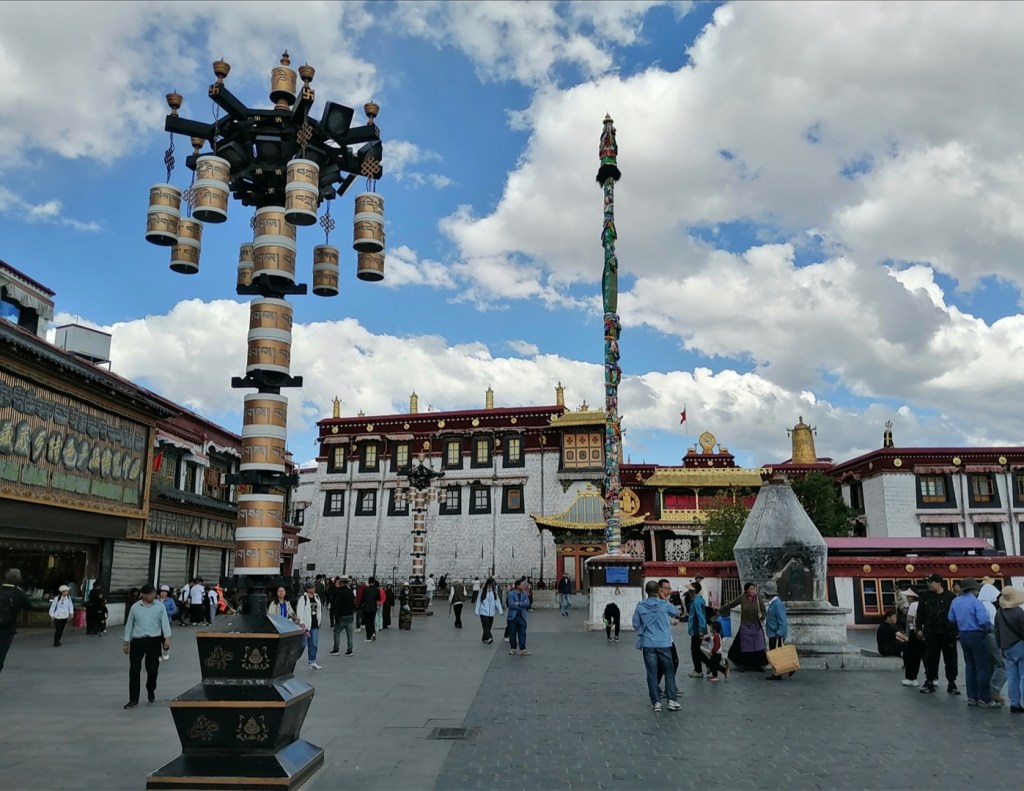
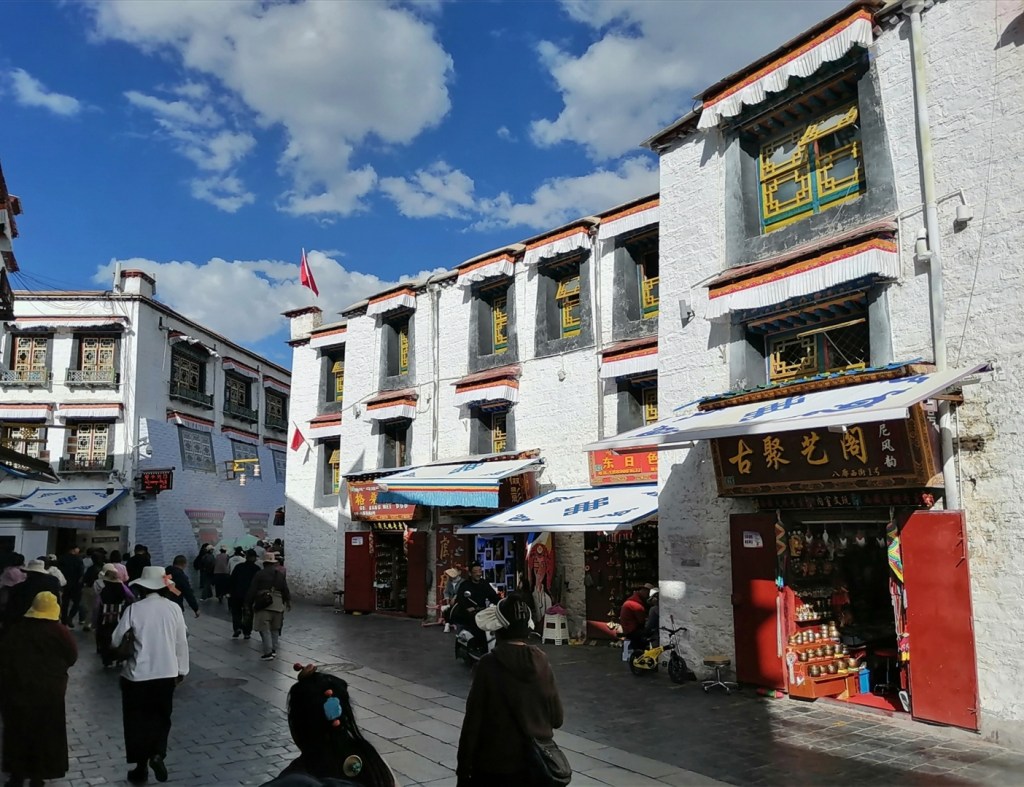
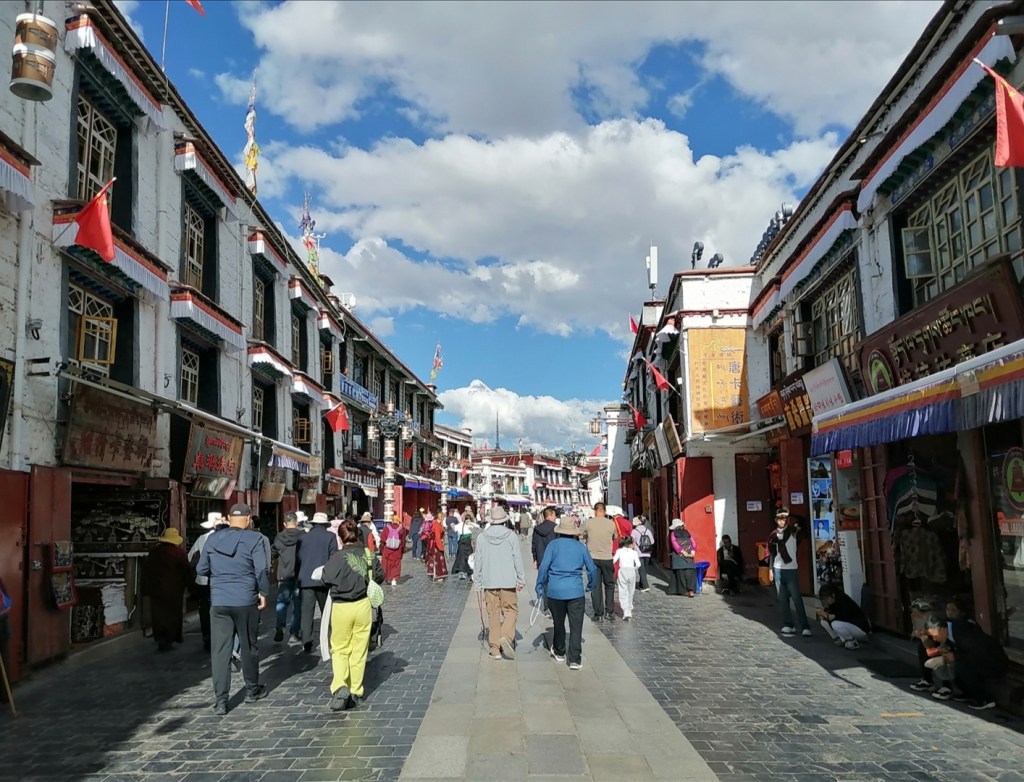
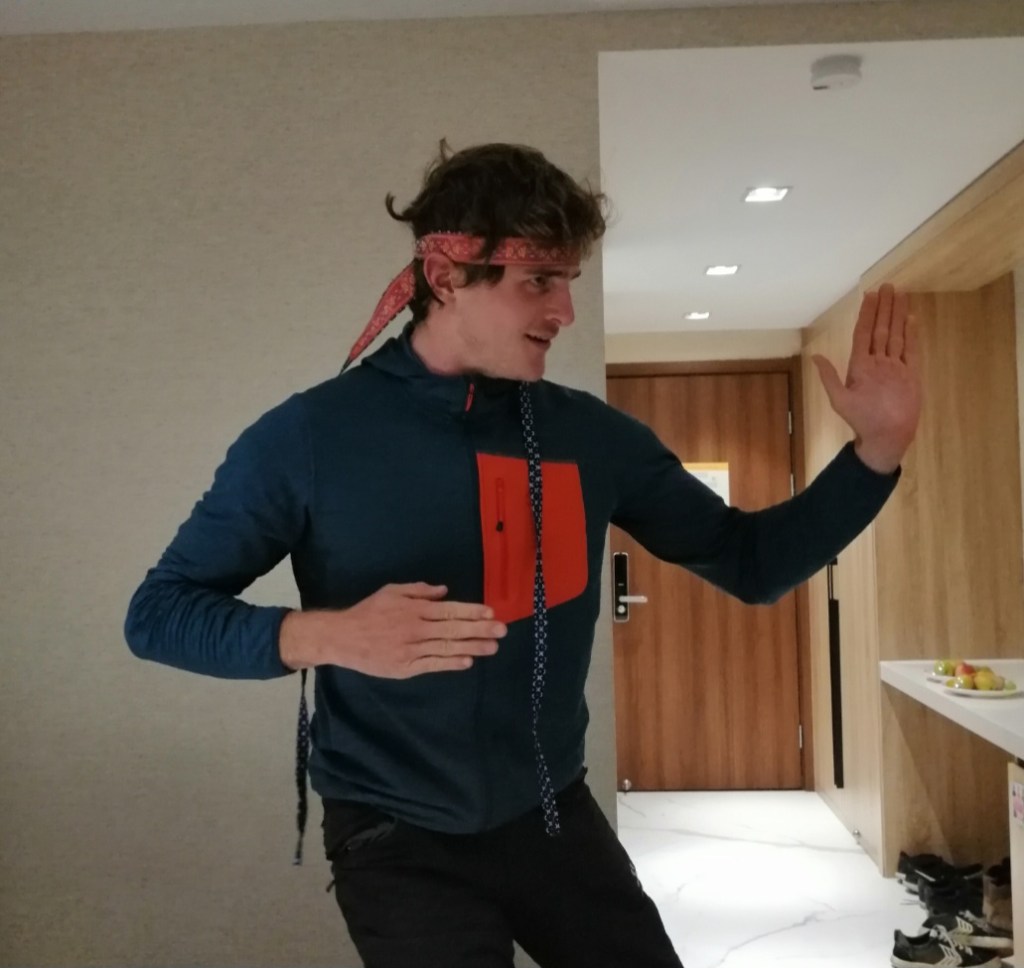
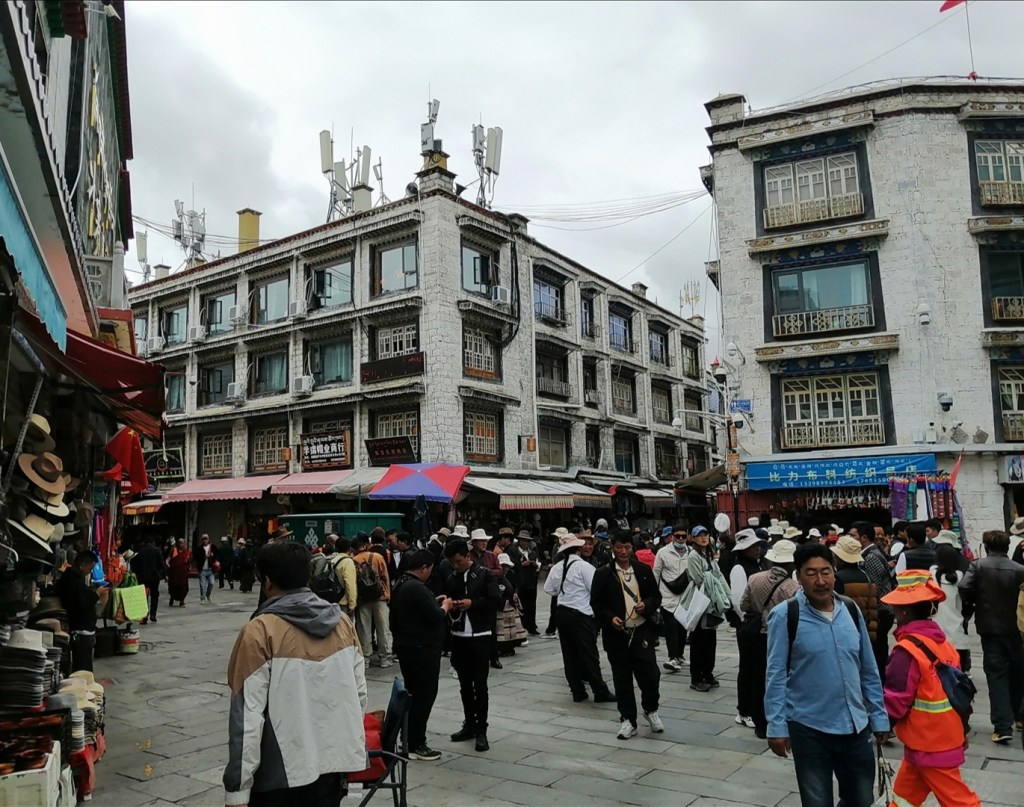
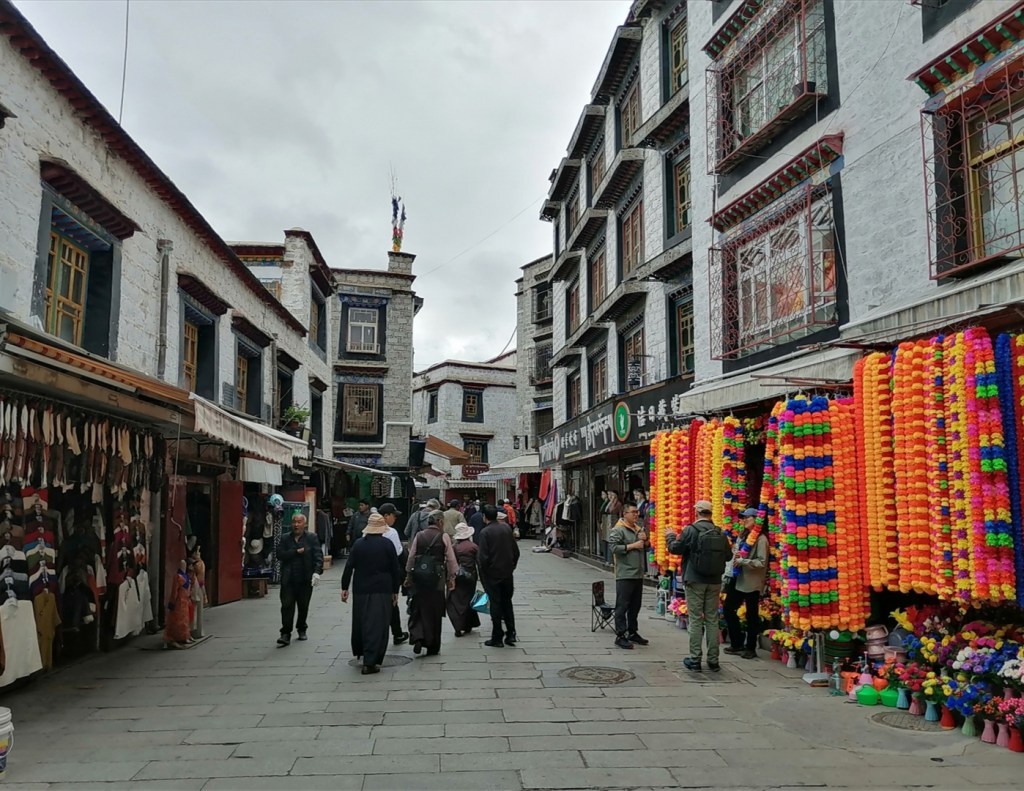
We have breakfast, then go to visit the busy and colourful old town. We have tea at a beautiful hotel where we discover one of Eliot’s talents 😊. We have lunch, then a wee break back at the hotel (and a bit of work). In the afternoon, we go for a walk around the Potala Palace, visit the royal gardens, and workout a bit to try to burn all the tripes and other strange and delicious bits of animals and vegetables we have consumed in vast quantities.
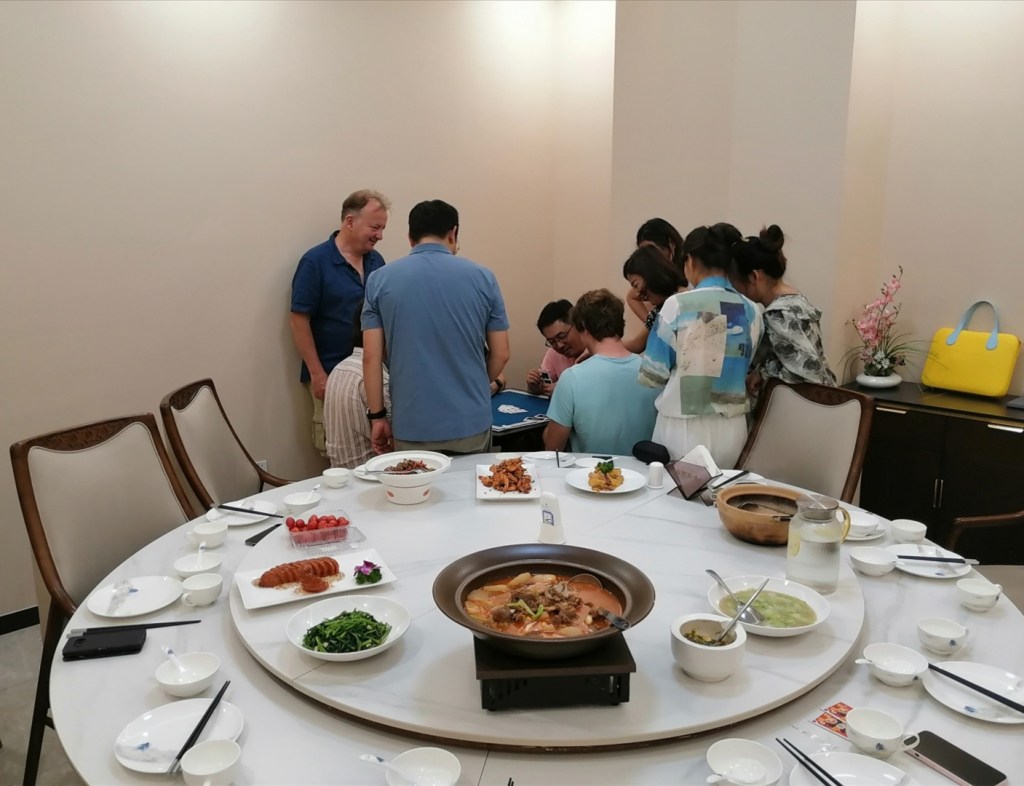
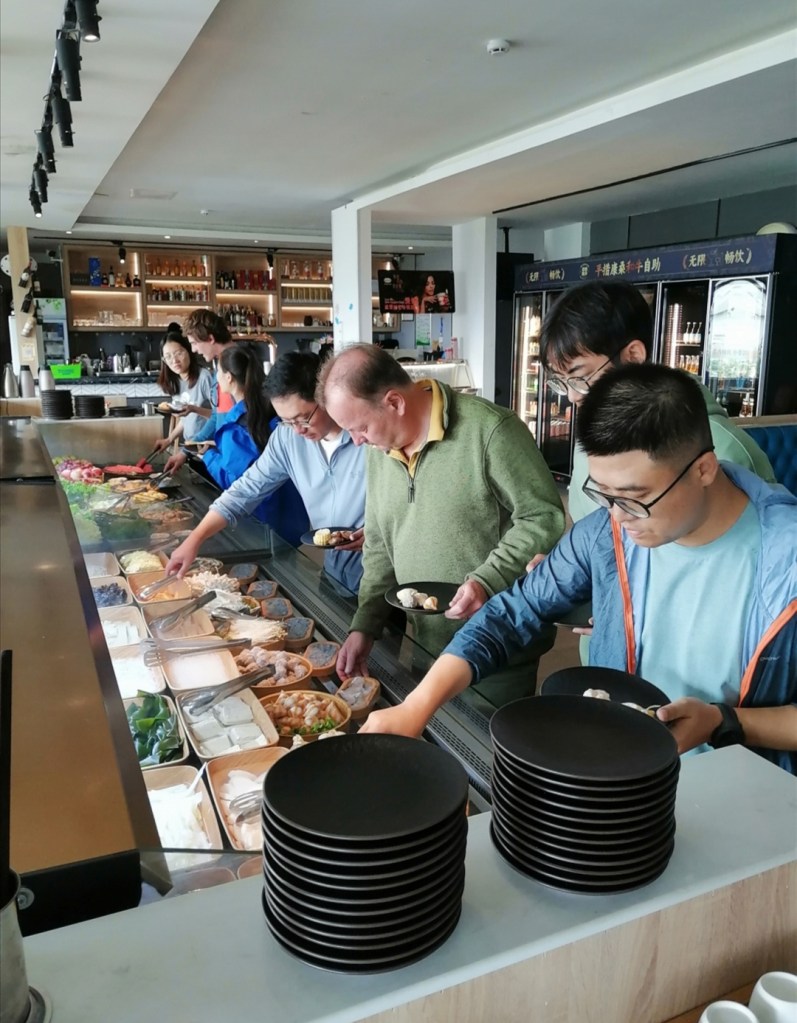
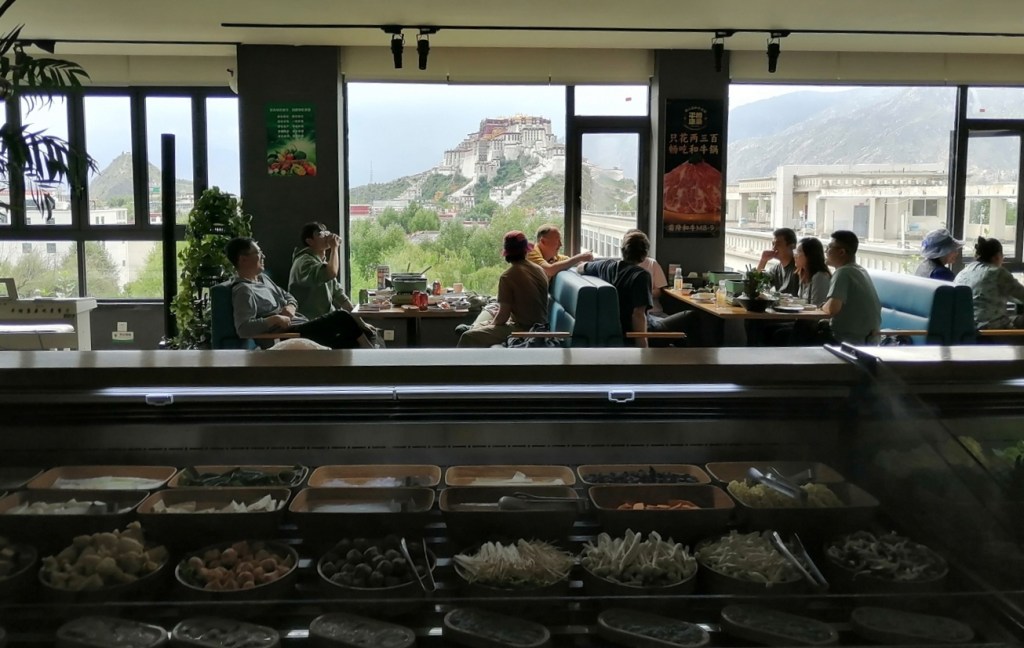
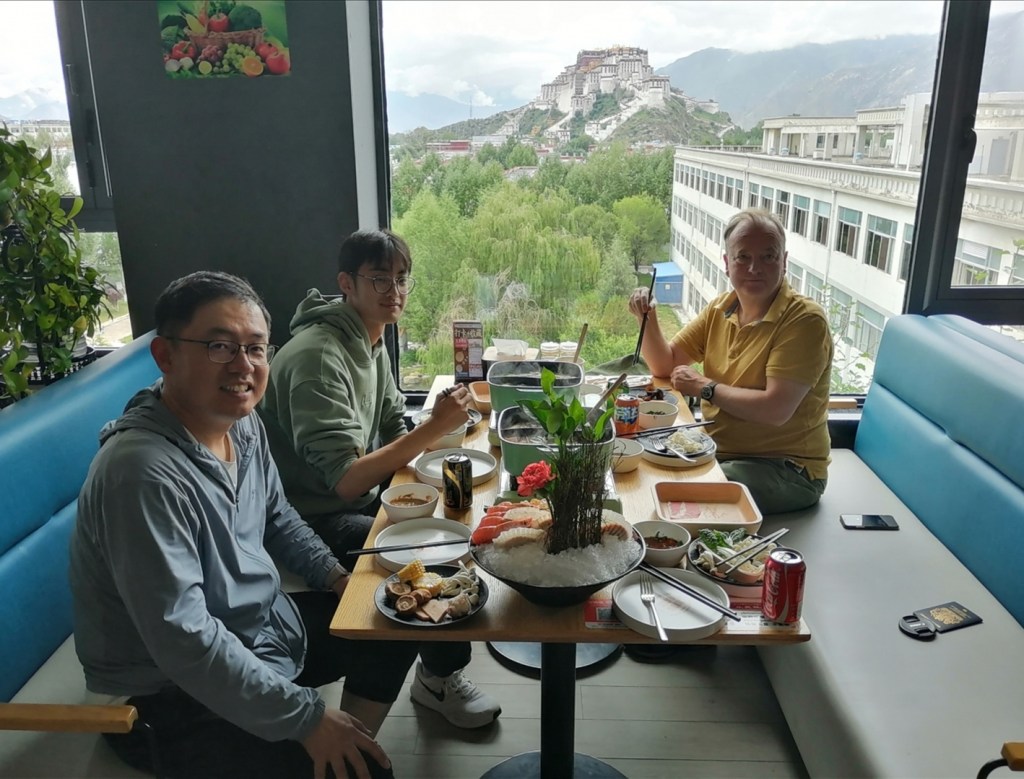
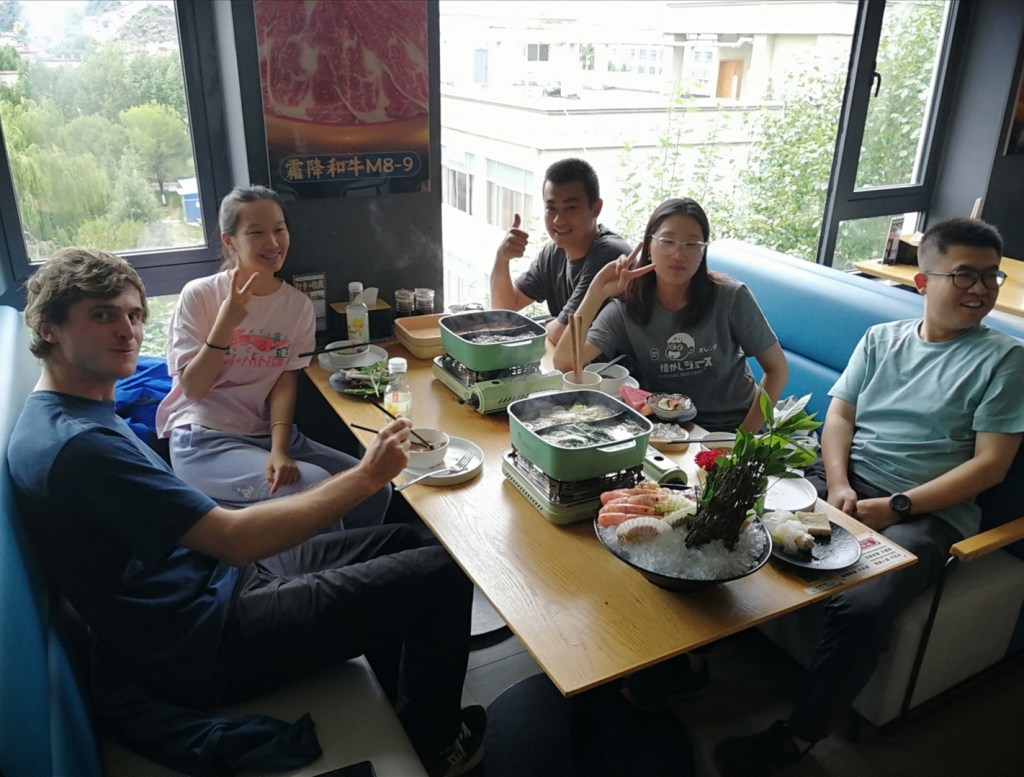
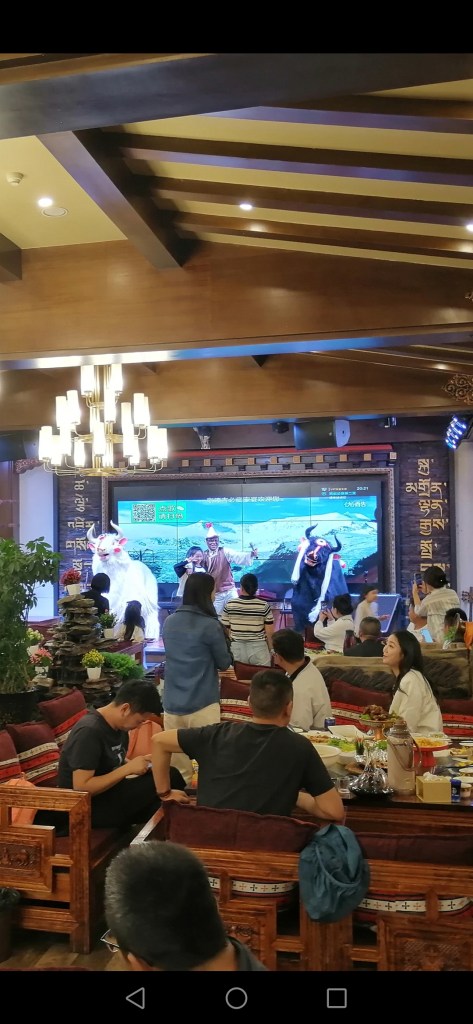
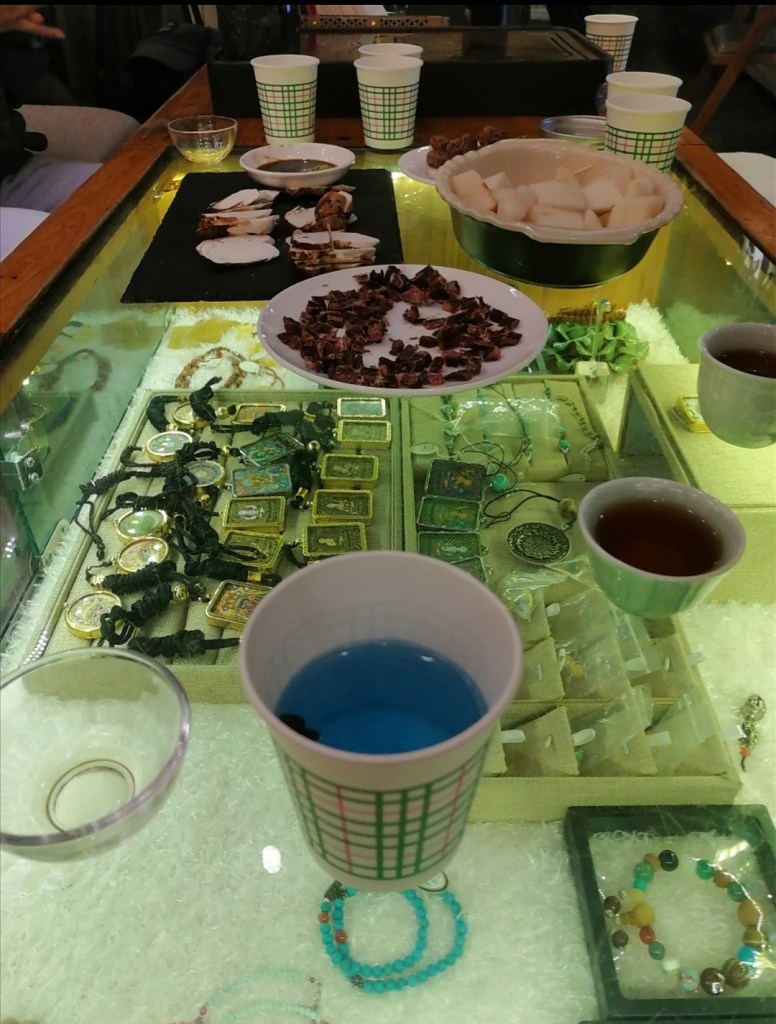
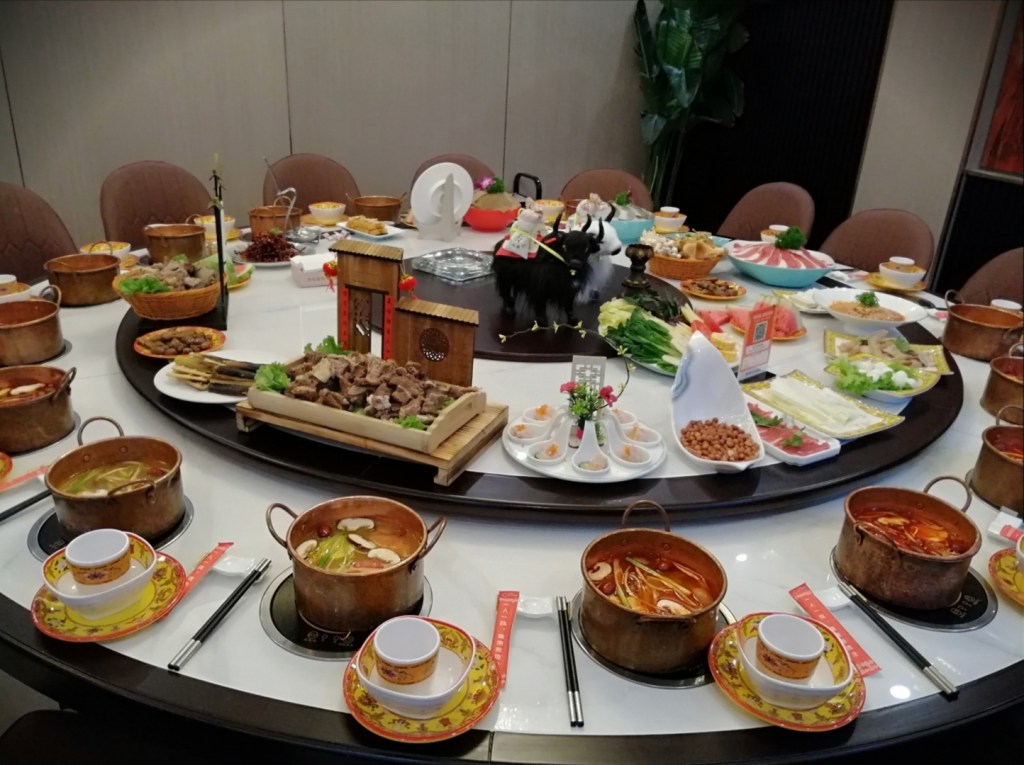
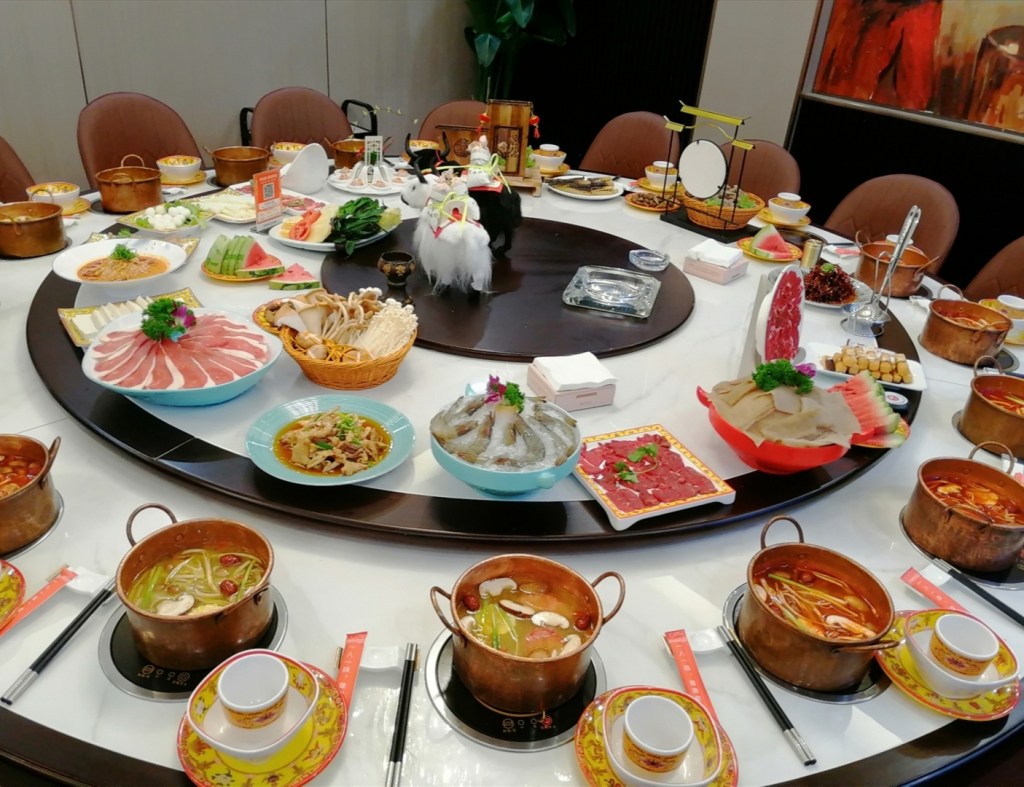
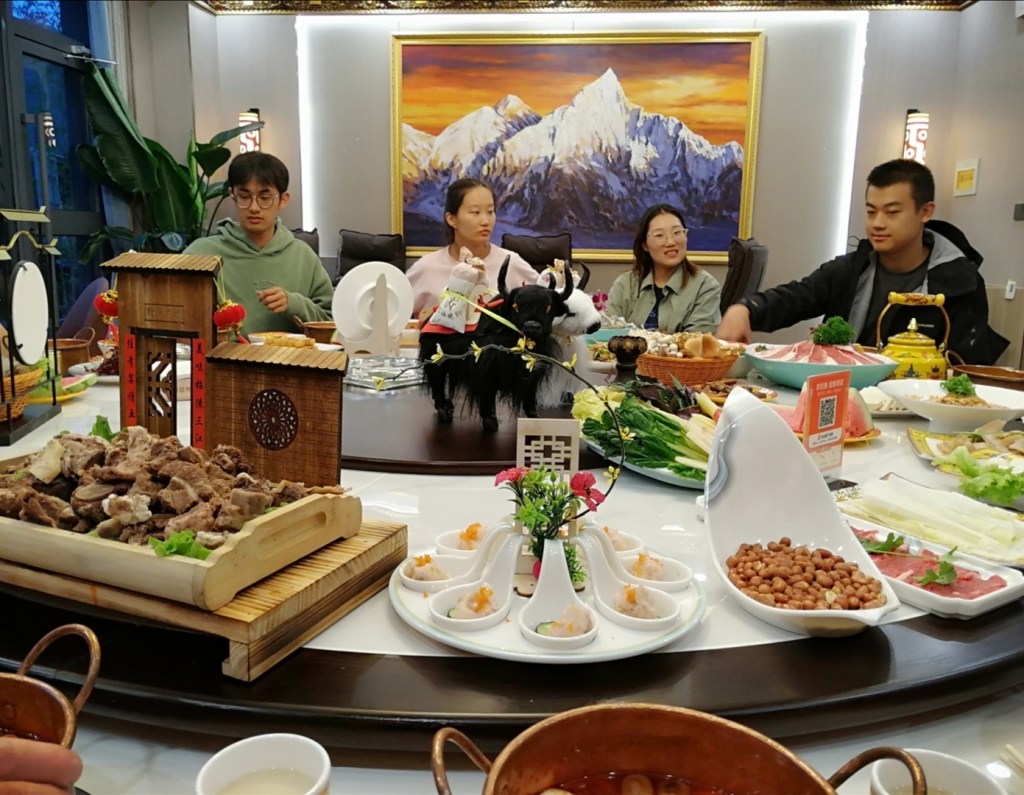
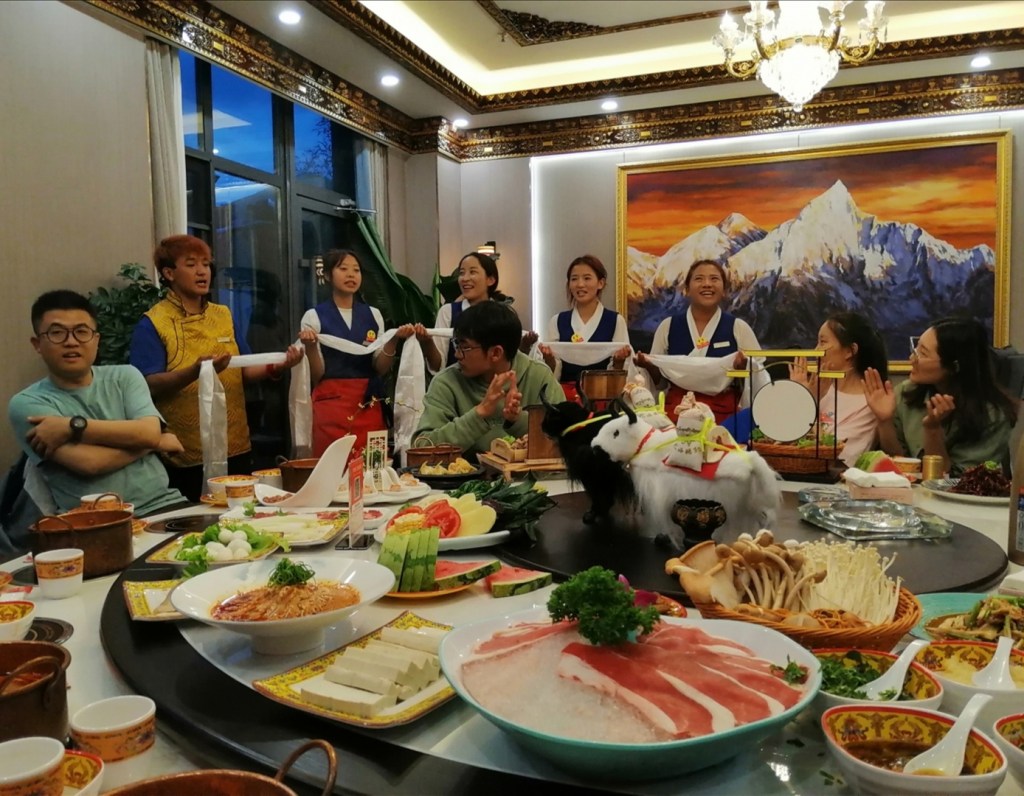
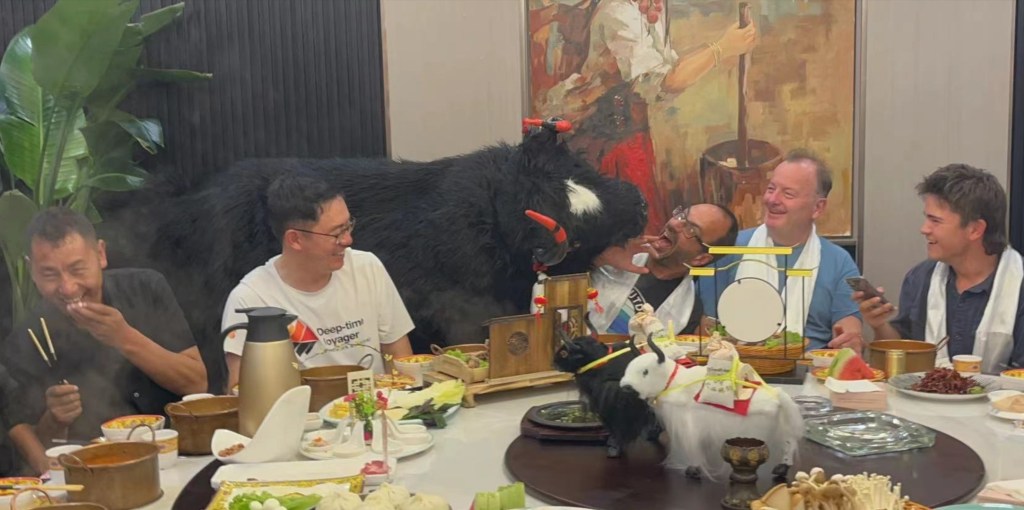
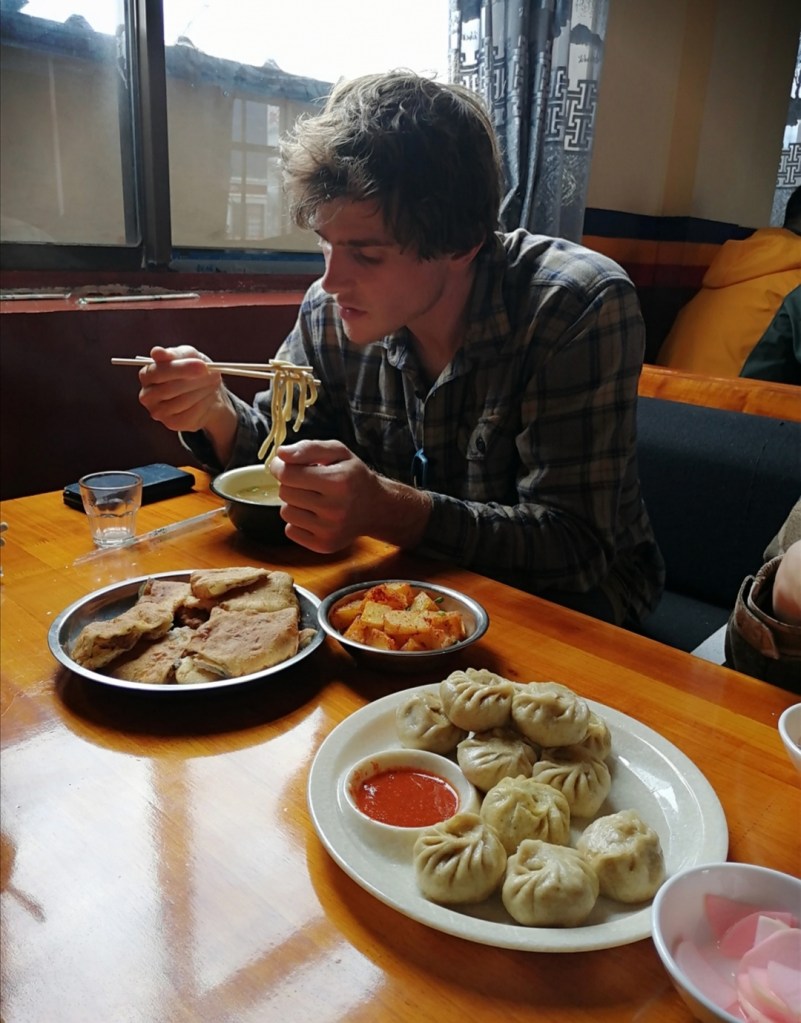
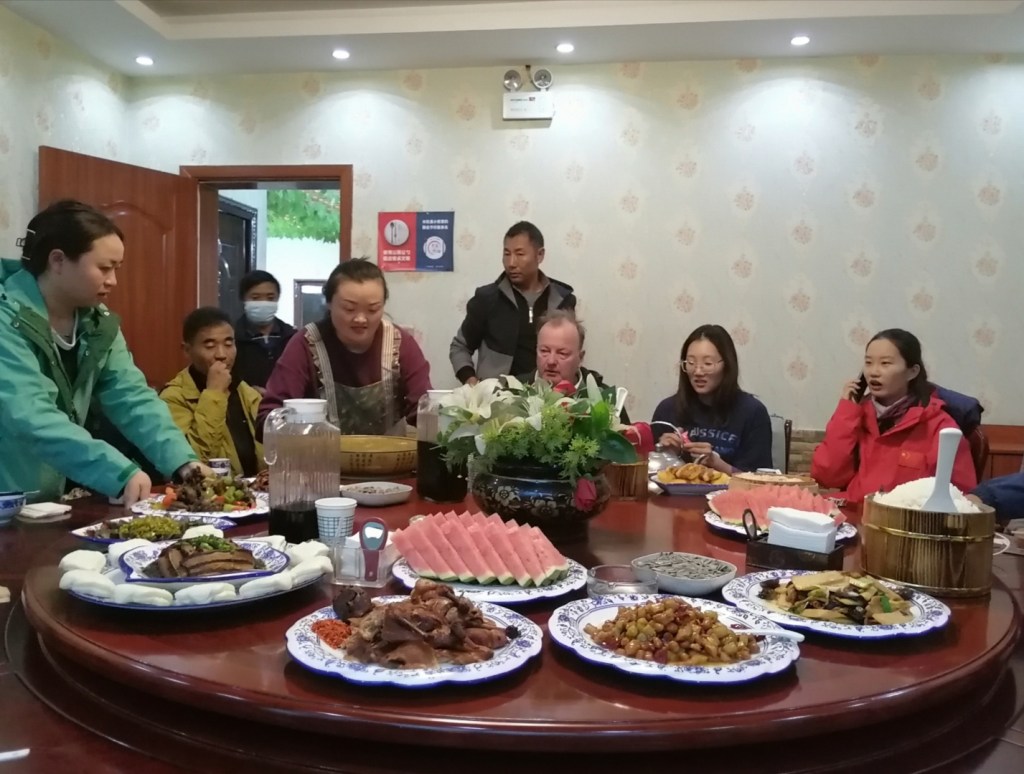
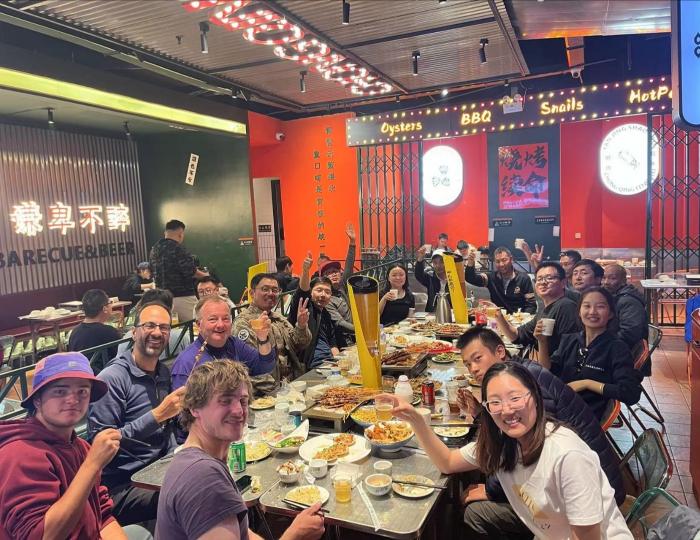
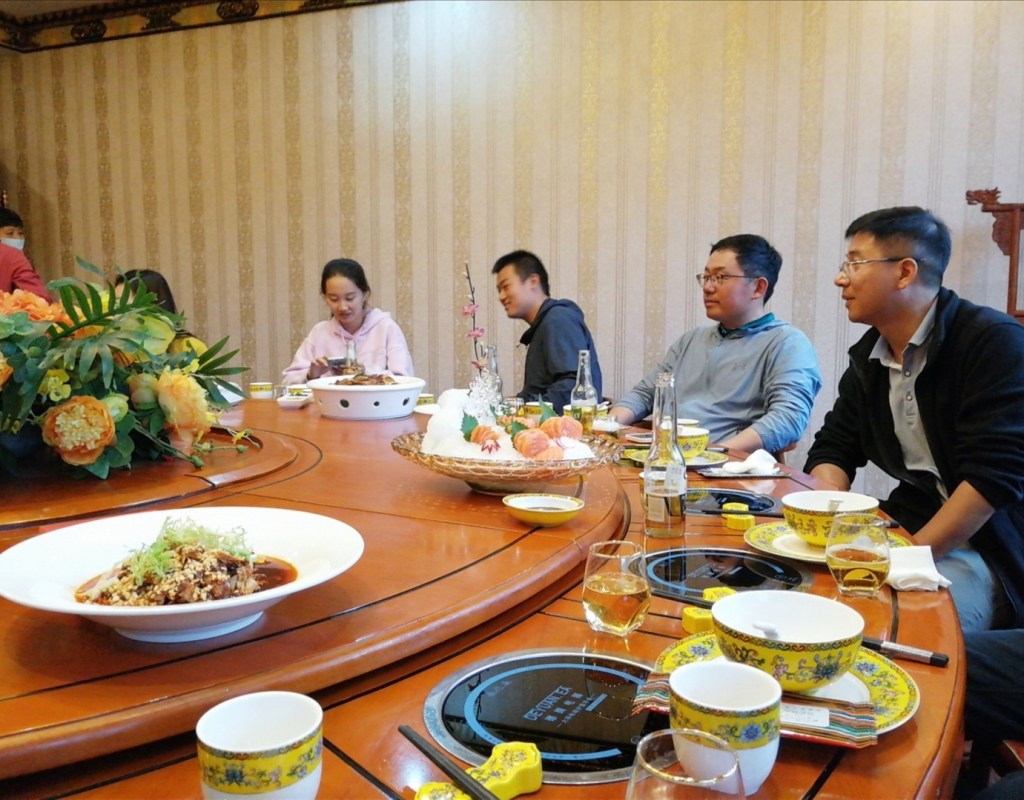
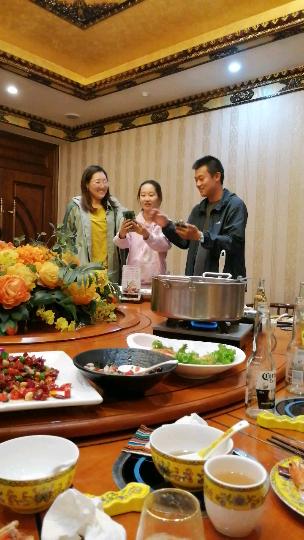
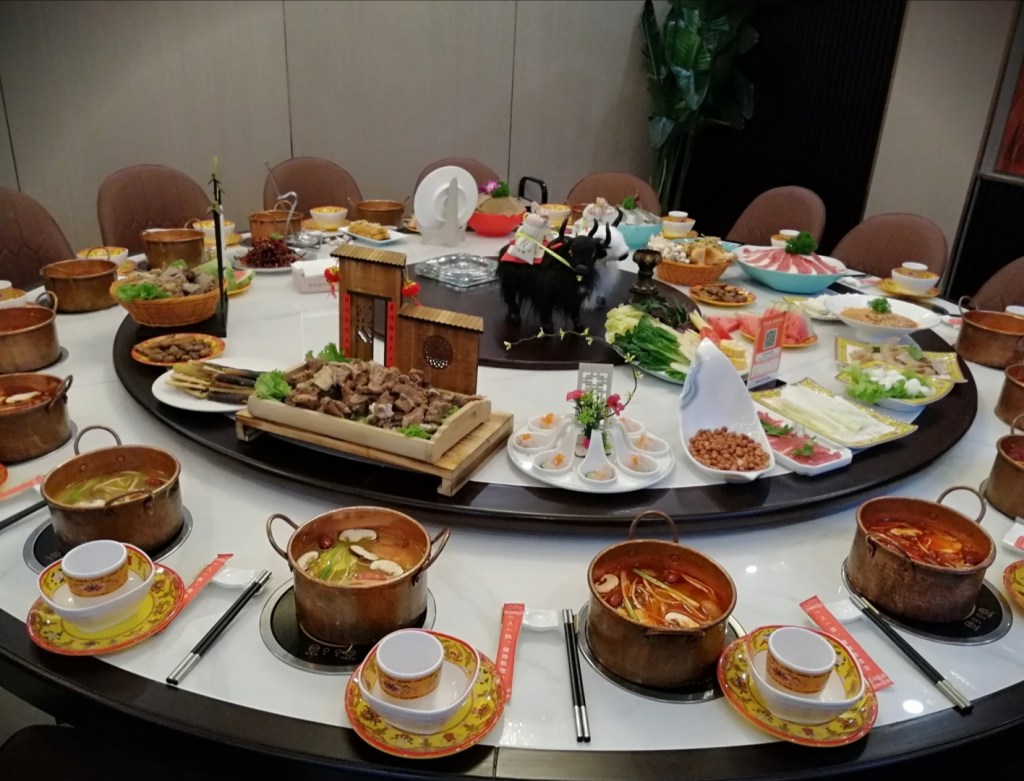
We end the day with yak hotpot. The table is stunning so I thought I had to share a few pictures with all the dishes. Each person has an individual hotpot where they cook the items of their choice. Dinner doesn’t start before a game card, and it is fantastic, as usual. There is also live music and theatre in the main room of the restaurant, and one of the characters invites itself forcefully into our dinner room at some point. I try to explain to the yak that I am vegetarian, but I couldn’t conceal the evidence. Bye bye Mikael 😂. Full and entertained, we return back to the hotel. Acclimatisation is now well under way, the work can start tomorrow! Thank you Yalige Bai for the pictures of the workout and yak attack. And to our Chinese hosts for their incredible hospitality 😊

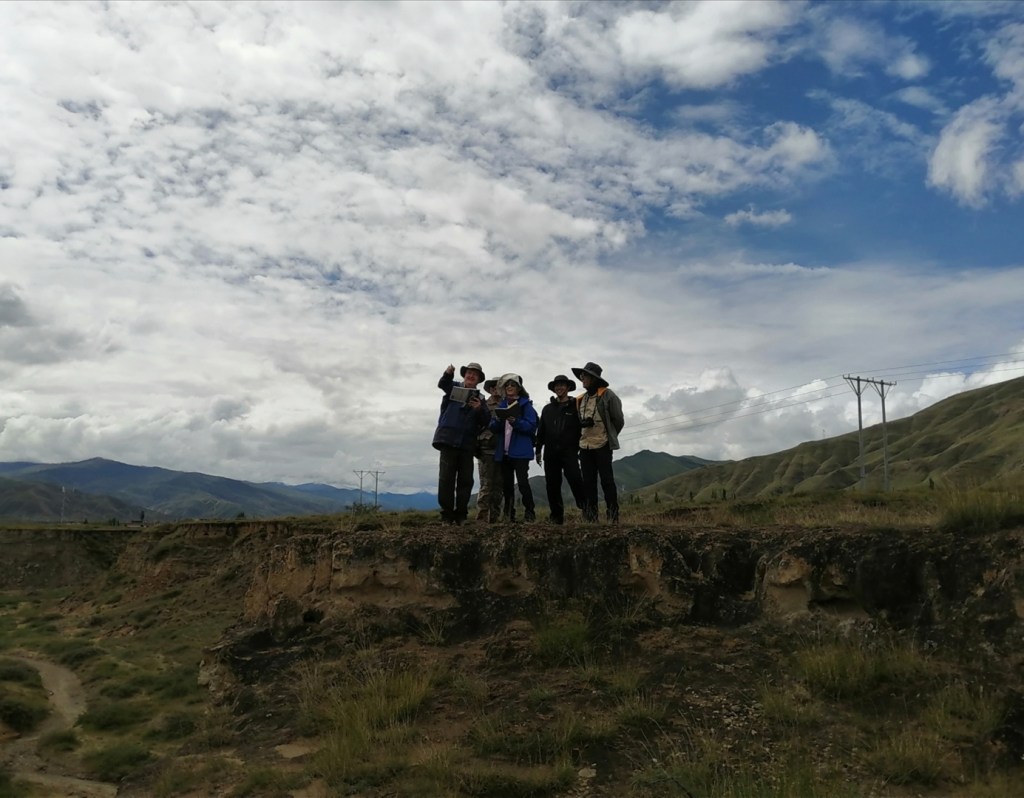
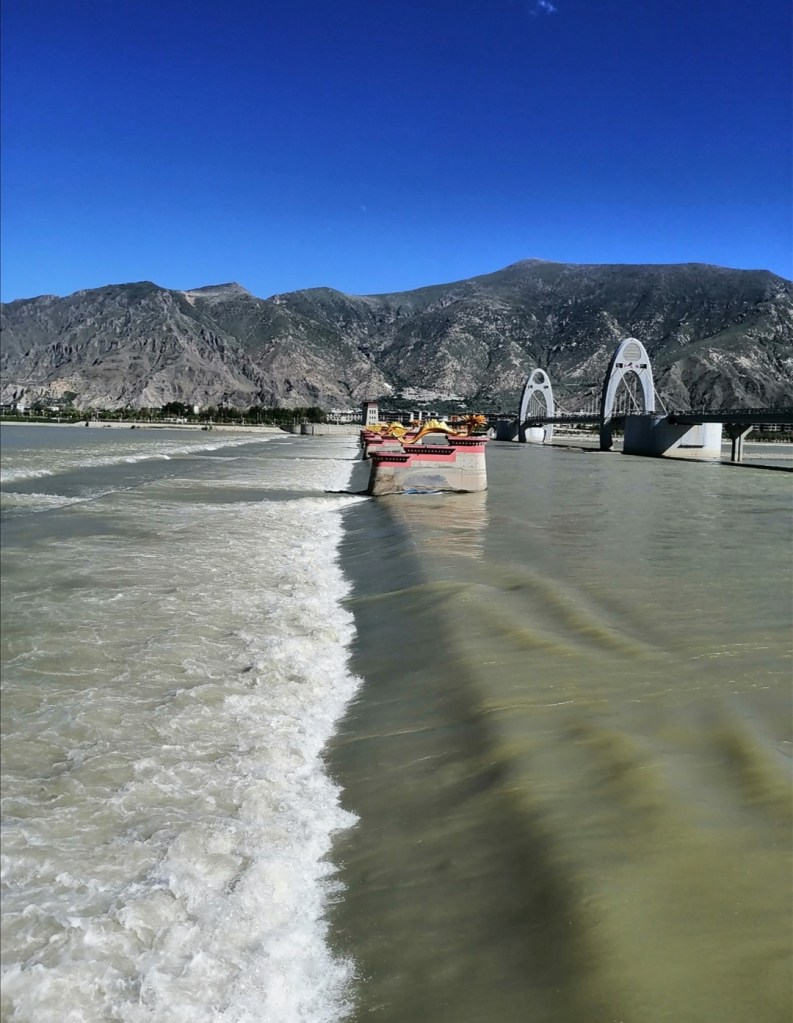
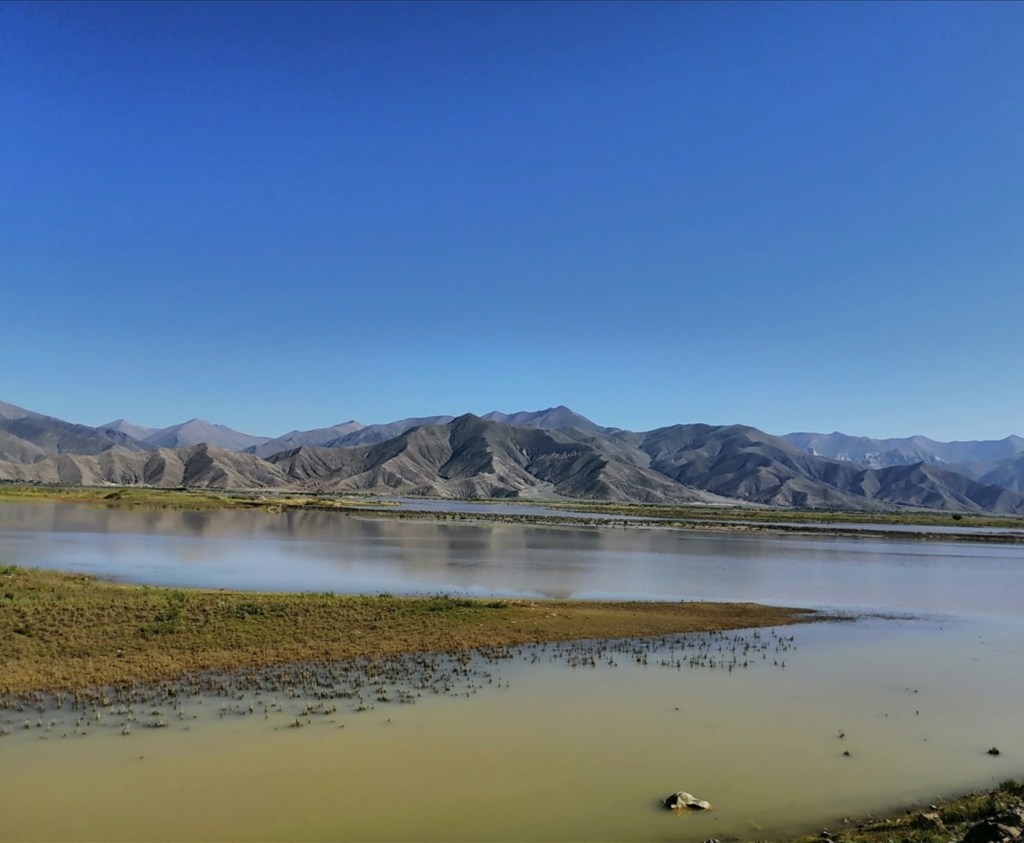
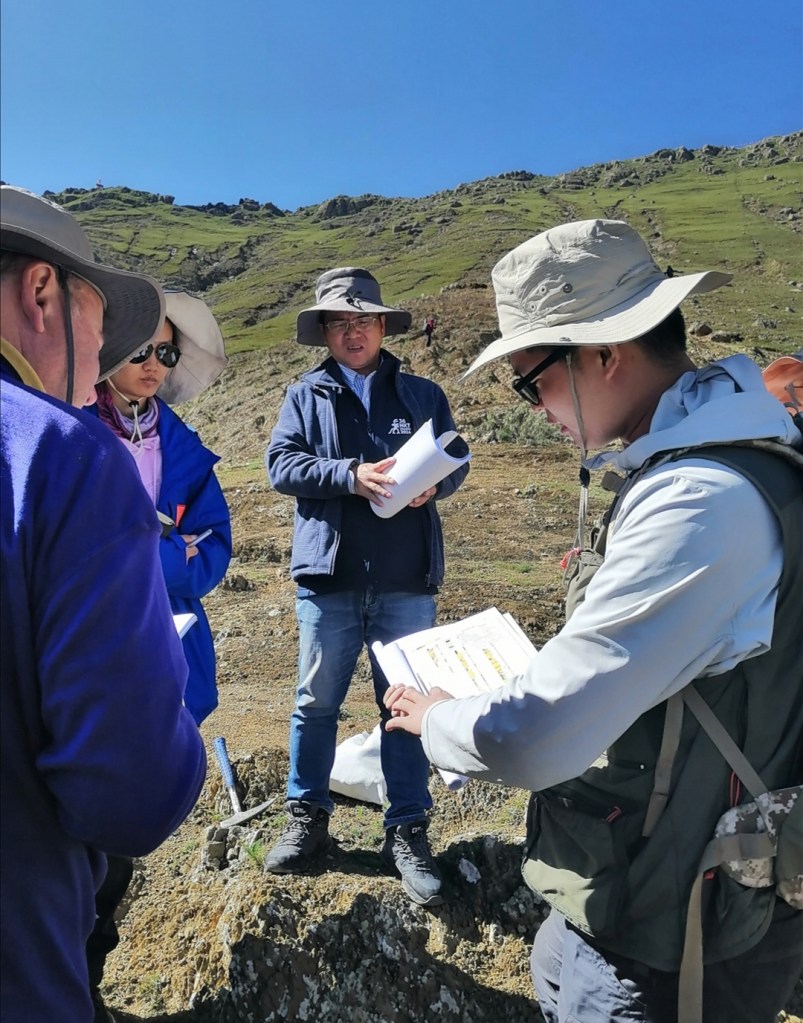
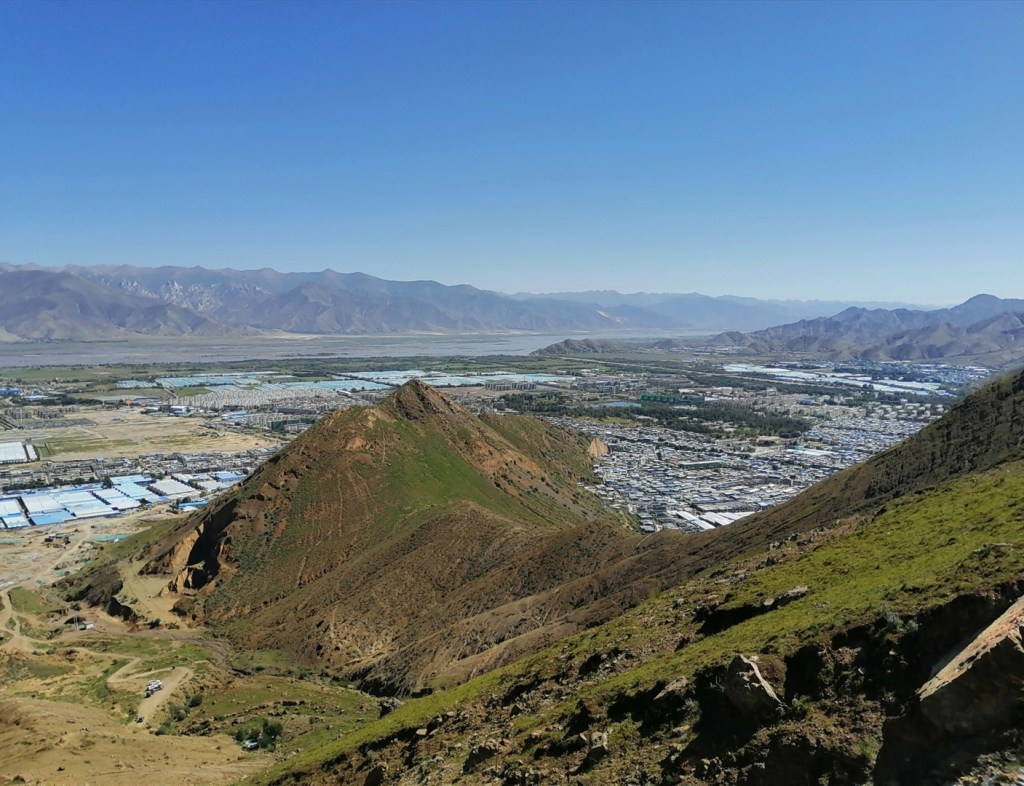
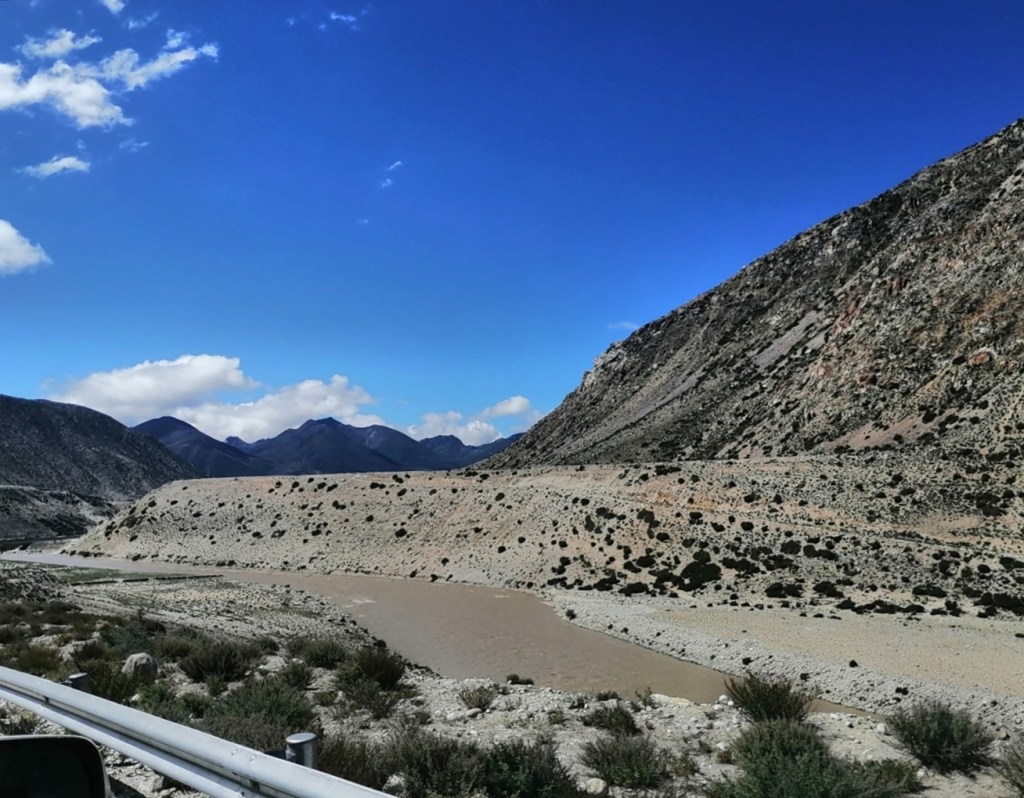
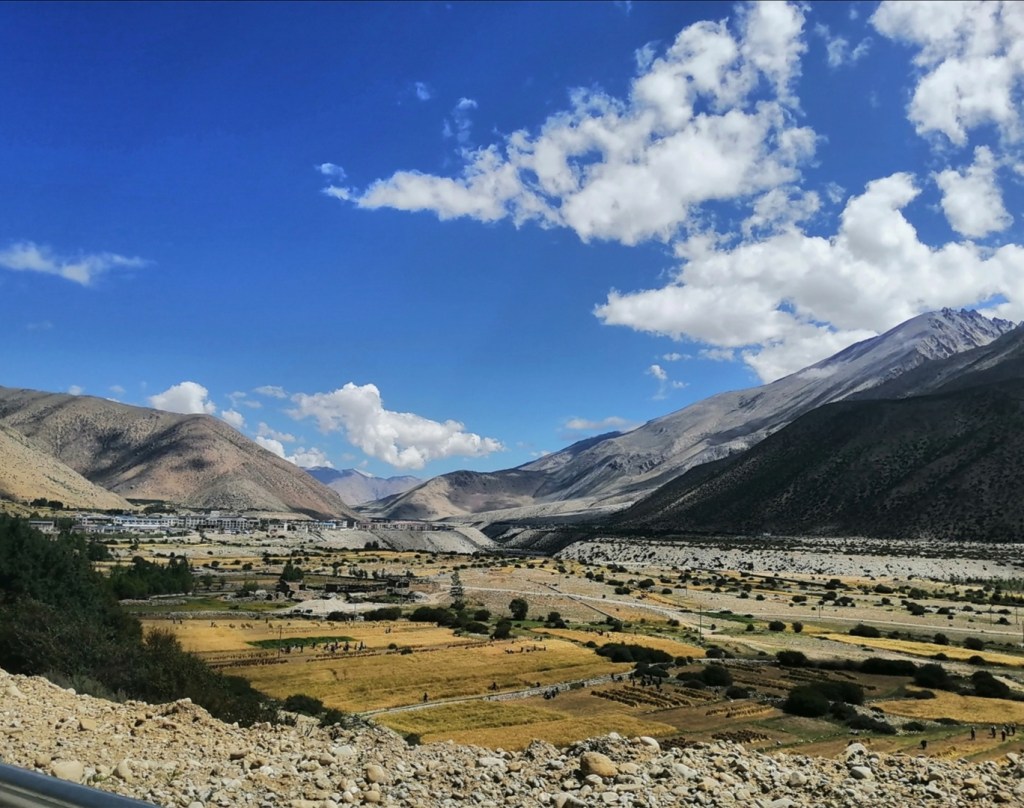
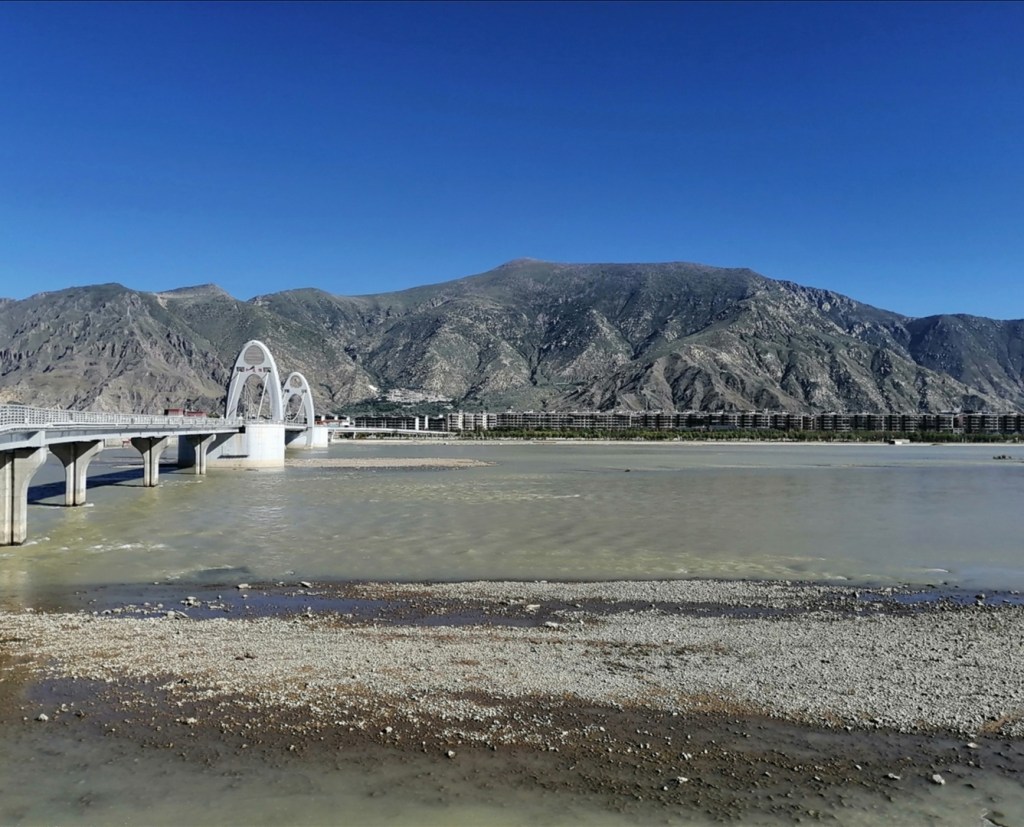
14th August: after a decent night and our first shower, we’re ready to go to work! The aim of today is to go south to the Yarlung River and (1) look for evidence of palaeo-lake Jiedexiu and (2) visit a dune field to better understand the interactions between fluvial and aeolian processes (Yalige Bai’s project). The Yarlung River flows on the Yarlung Tsangpo Suture Zone: to the north, the Gangdese batholith of the Lhasa terrane that belongs to the Asian plate; to the south, the triassic flysch of the Tethyan Series that belong to the Indian plate. It’s amazing to see this major plate boundary that I first heard of in 1994 in a fascinating lecture by Prof. J.-F. Stephan at Nice University!

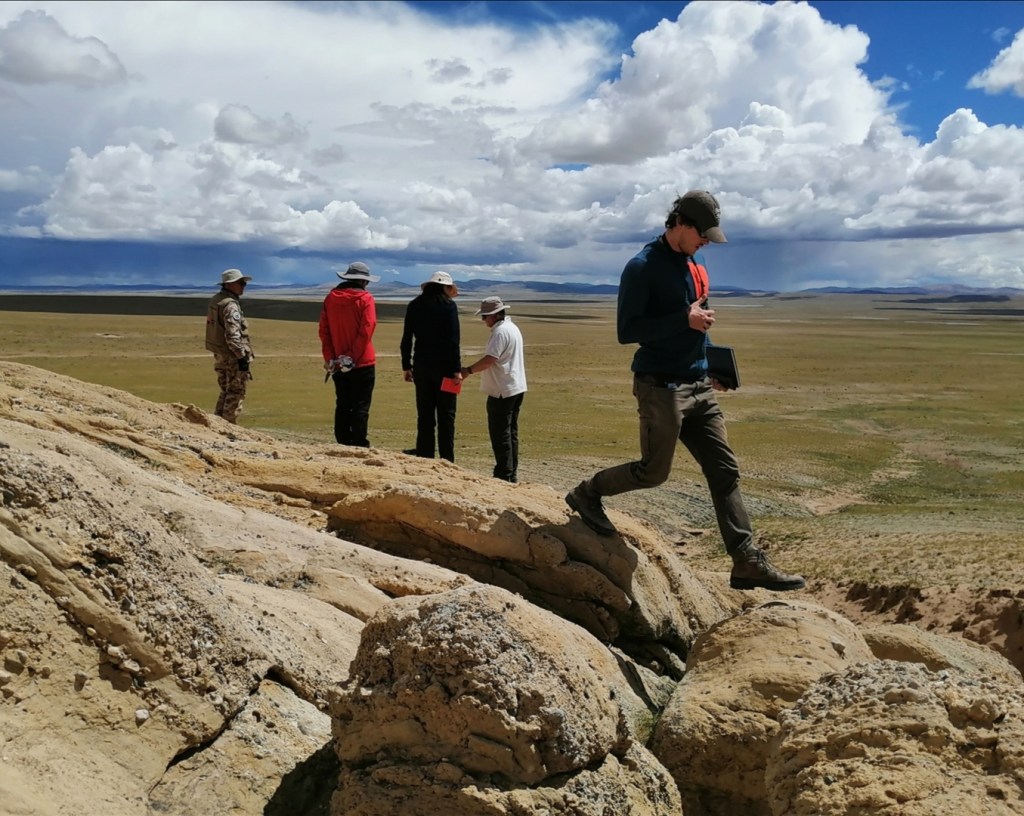
The Jiedexiu lake was a glacially dammed lake that existed 15 to 11 ka, West (upstream) of the more studied Gega dam lake. We look at the palaeo-lake deposits and discuss evidence of water level fluctuations, delta progradation episodes, and interaction with sediment sourced from hillslopes and tributaries. I see for the first time a massive mud deposit with an erosive base, with sandstone underneath (it is usually the other way around).

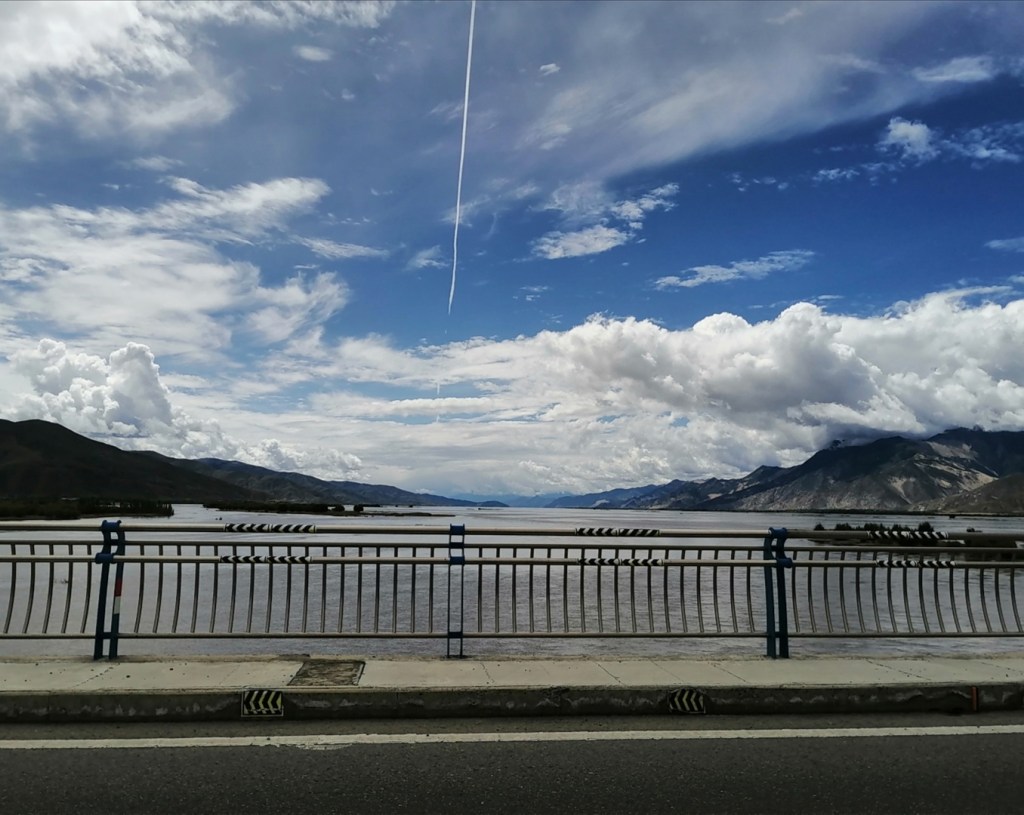
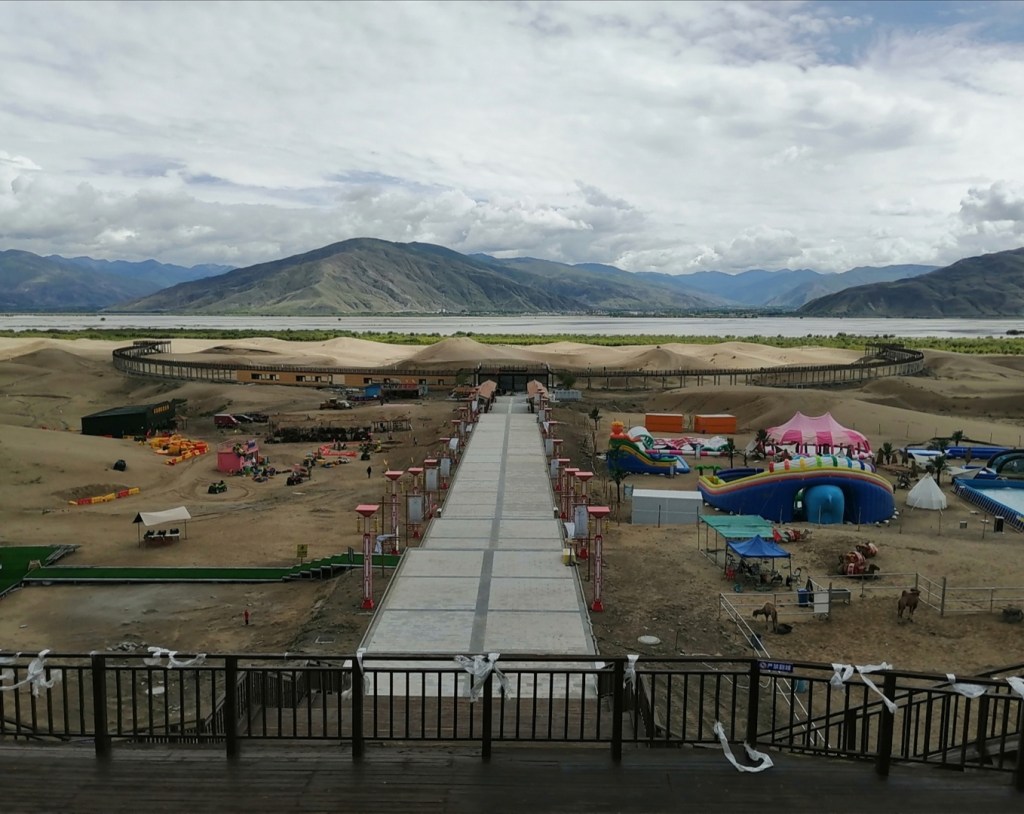
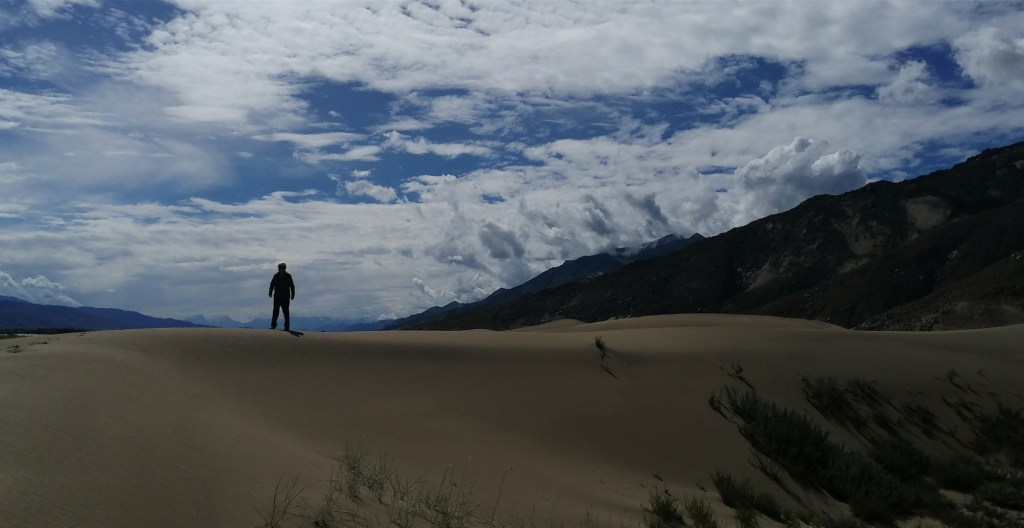
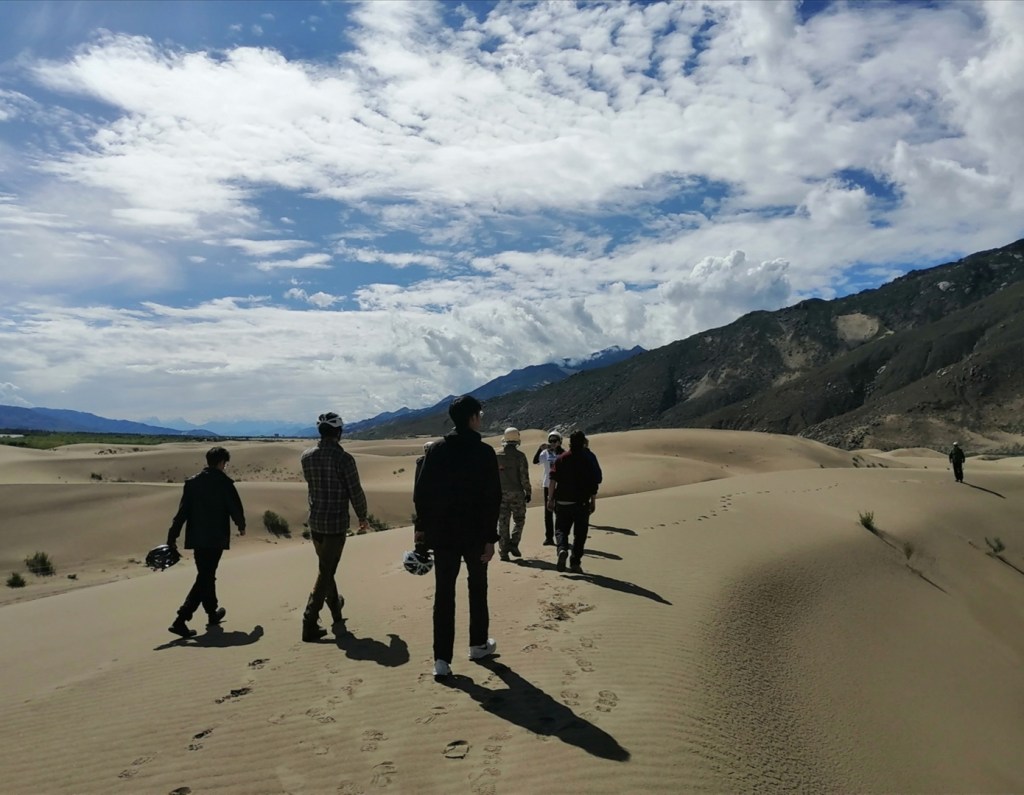
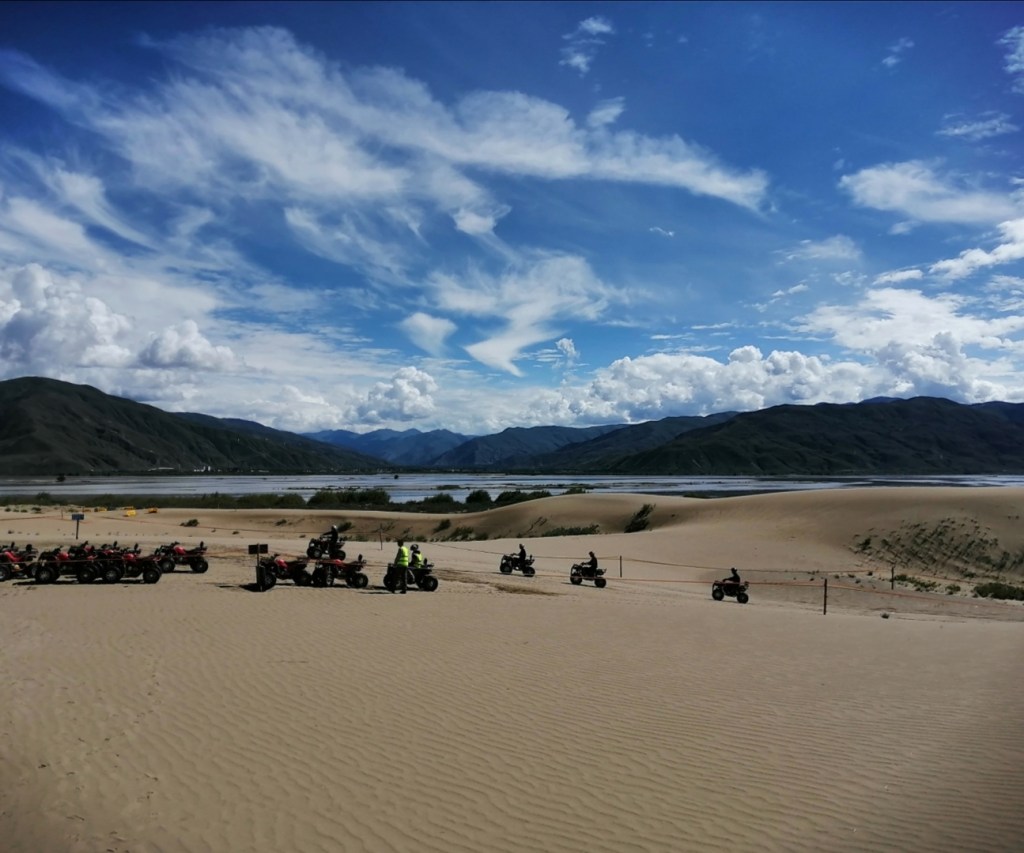
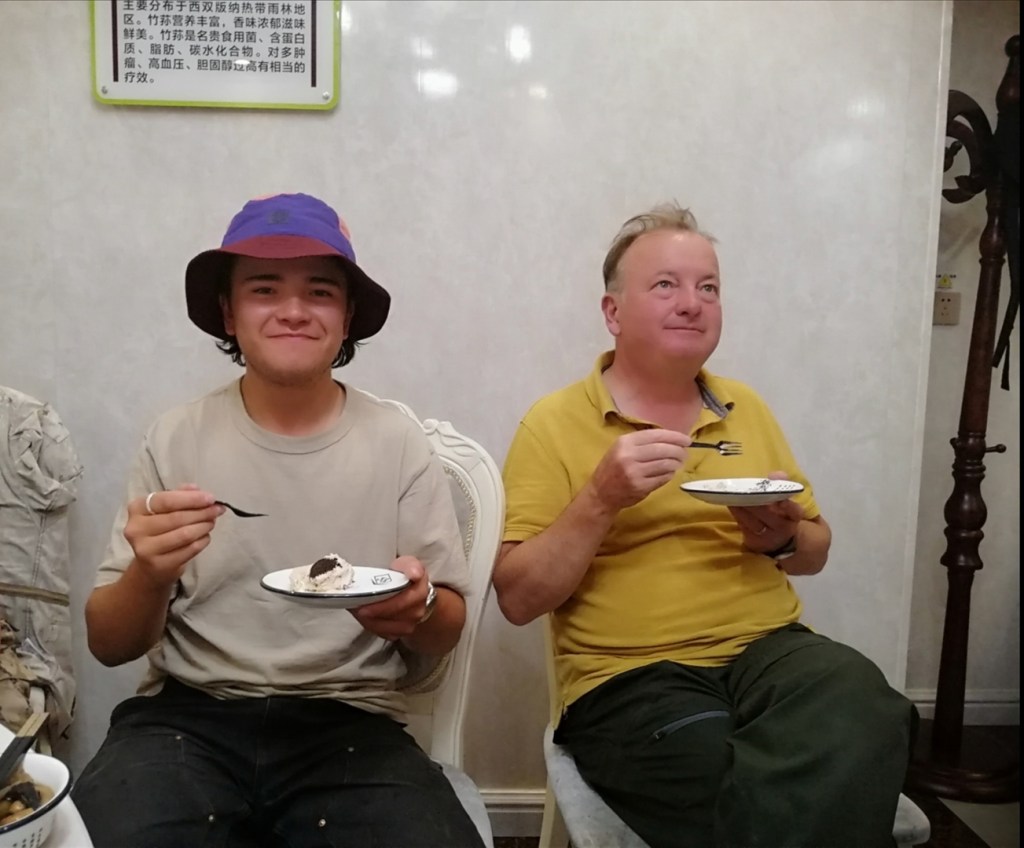
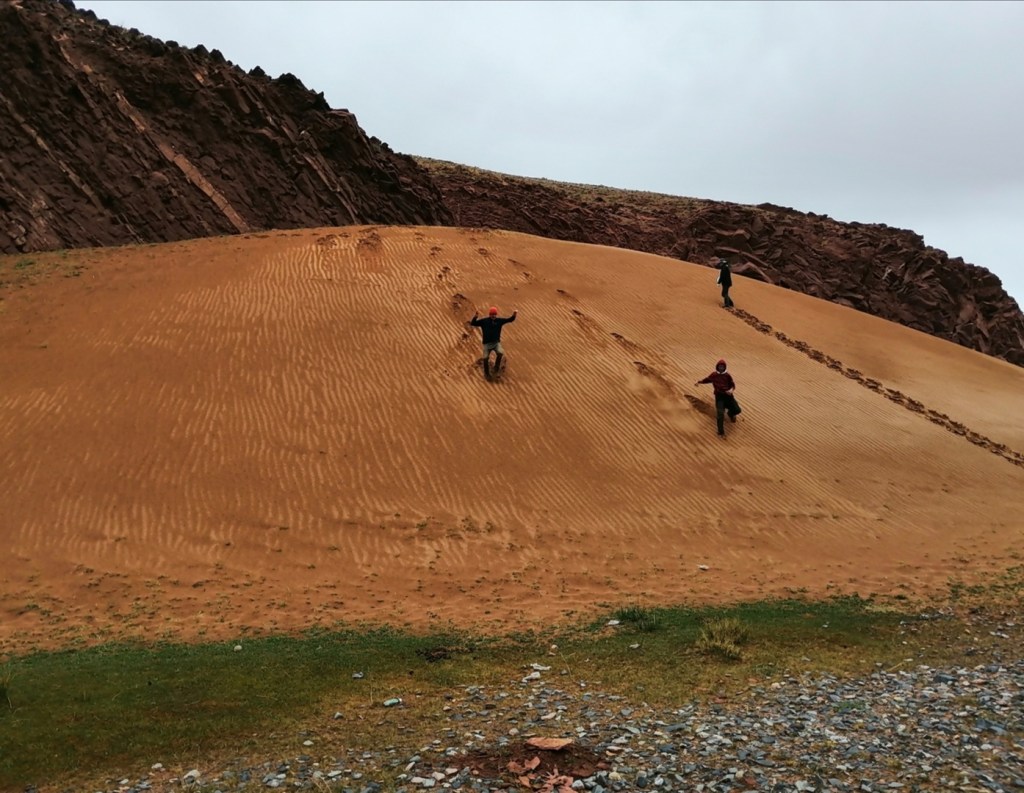
We have lunch in a small town on the south side of the river, then cross the river and go to a dune field that has become a theme park. Field work on quad bike is a first, and something we all thoroughly enjoyed! We then get back to Lhasa, have a mushroom hotpot as well as a birthday cake for Zhihang who will start his master in Edinburgh next month, and return to the hotel for early packing. Tomorrow we leave at 9:30 for Shigatse.

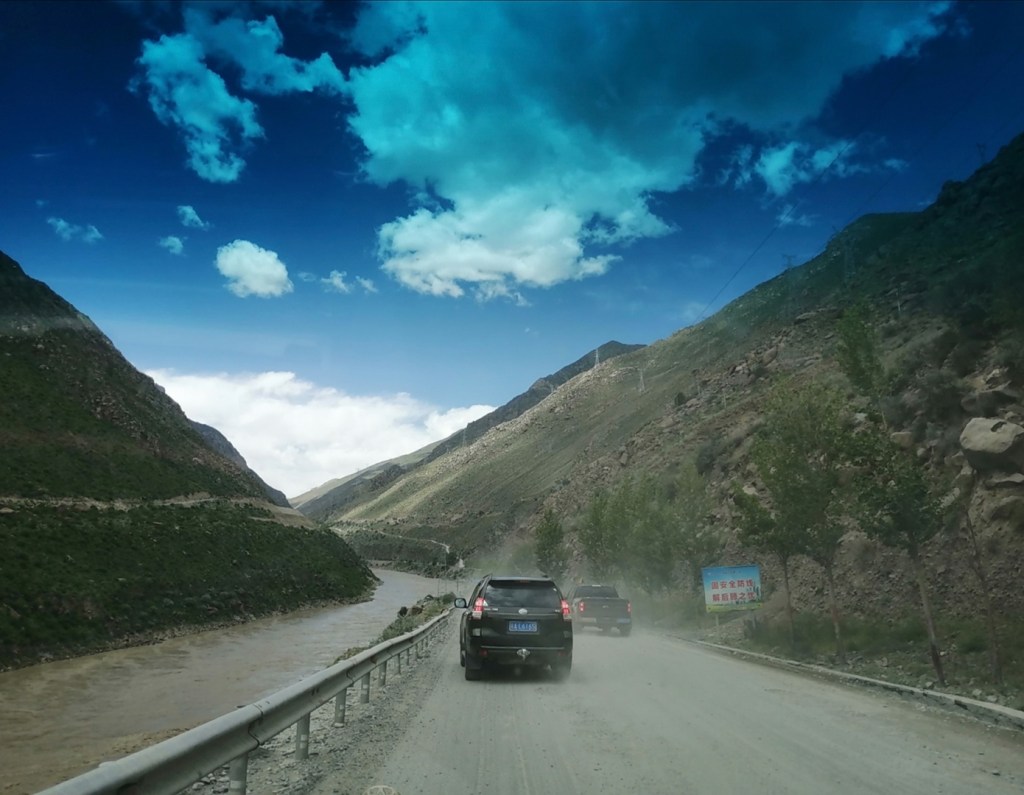
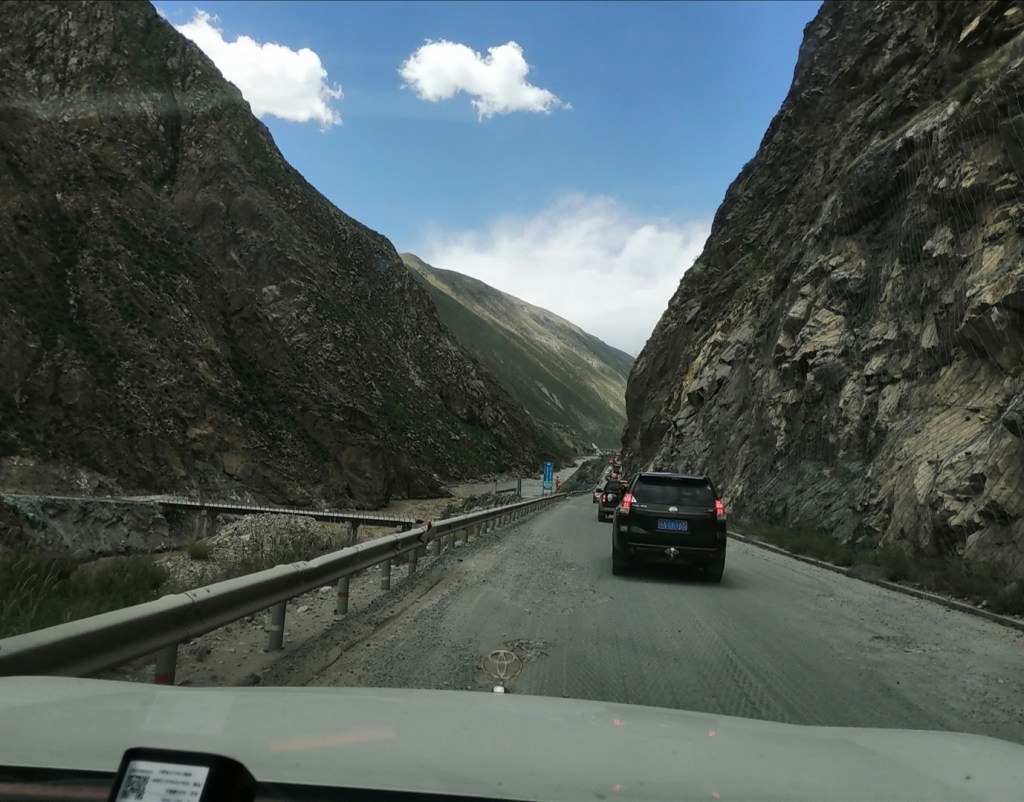
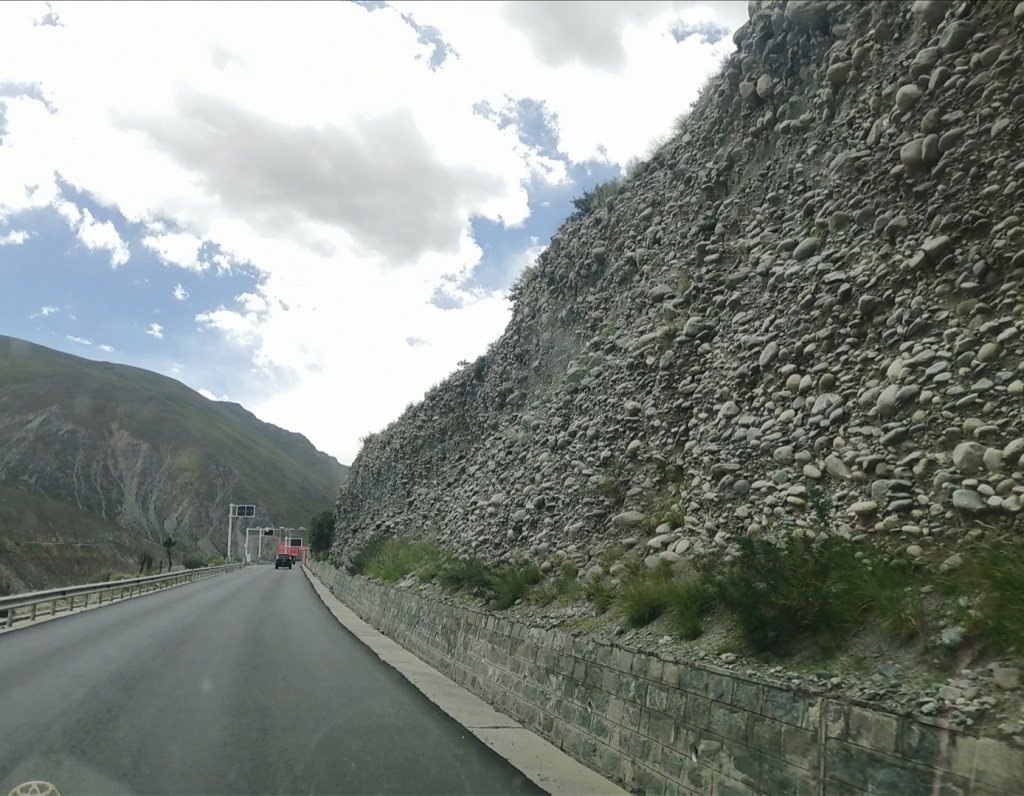
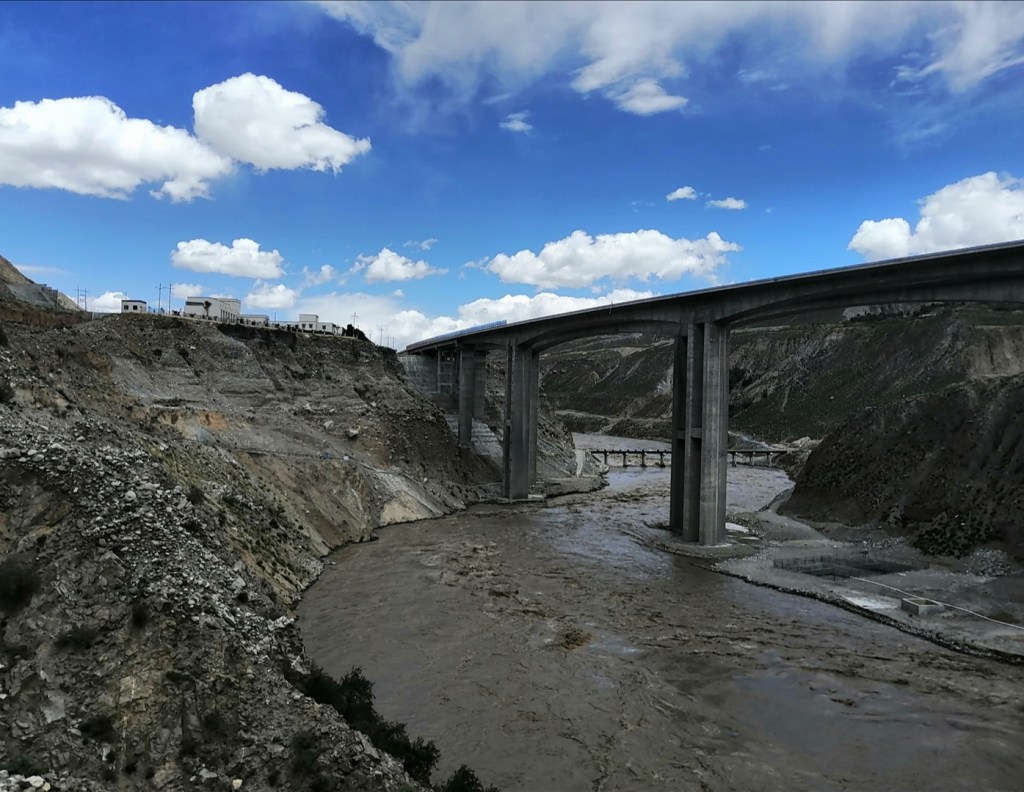
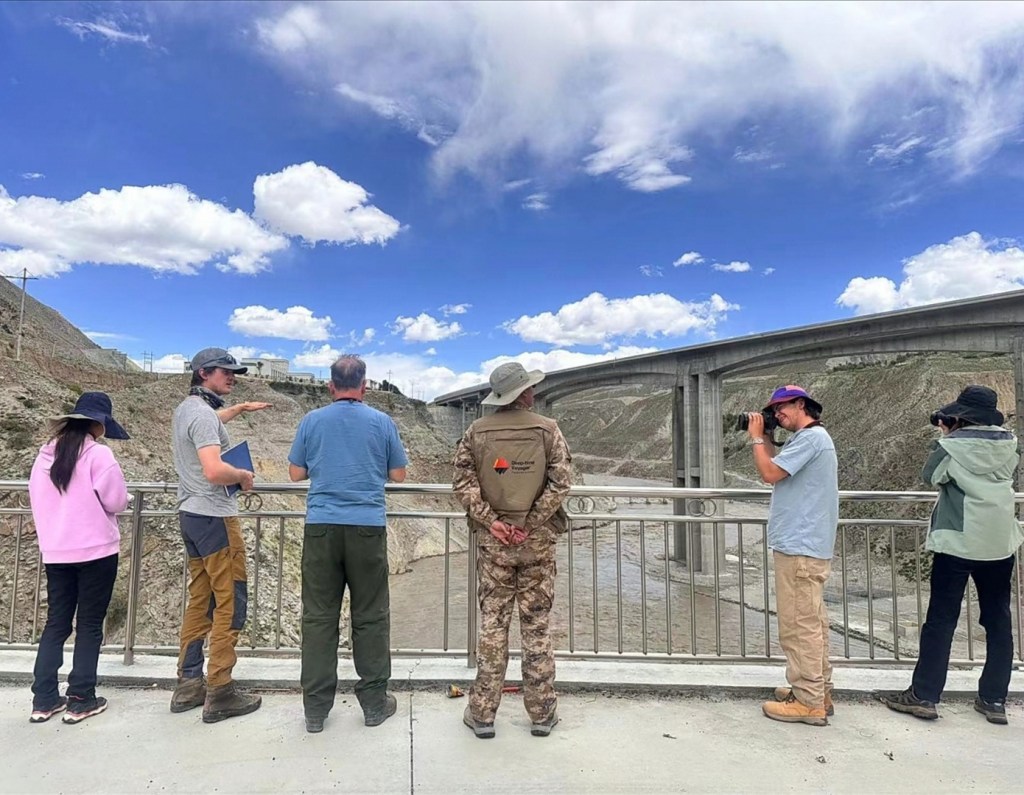
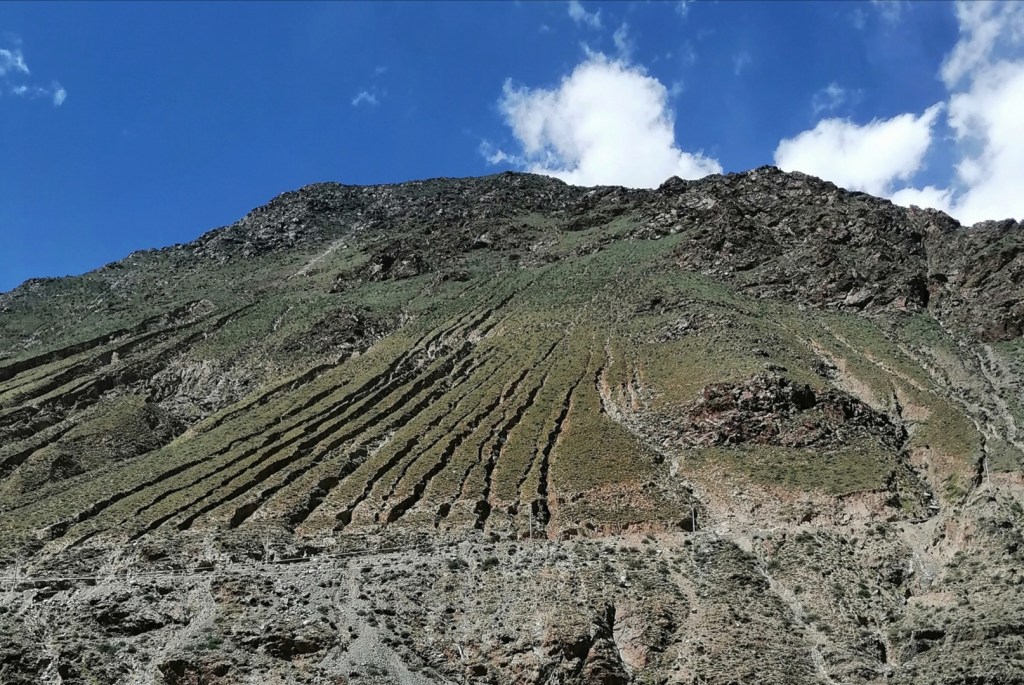
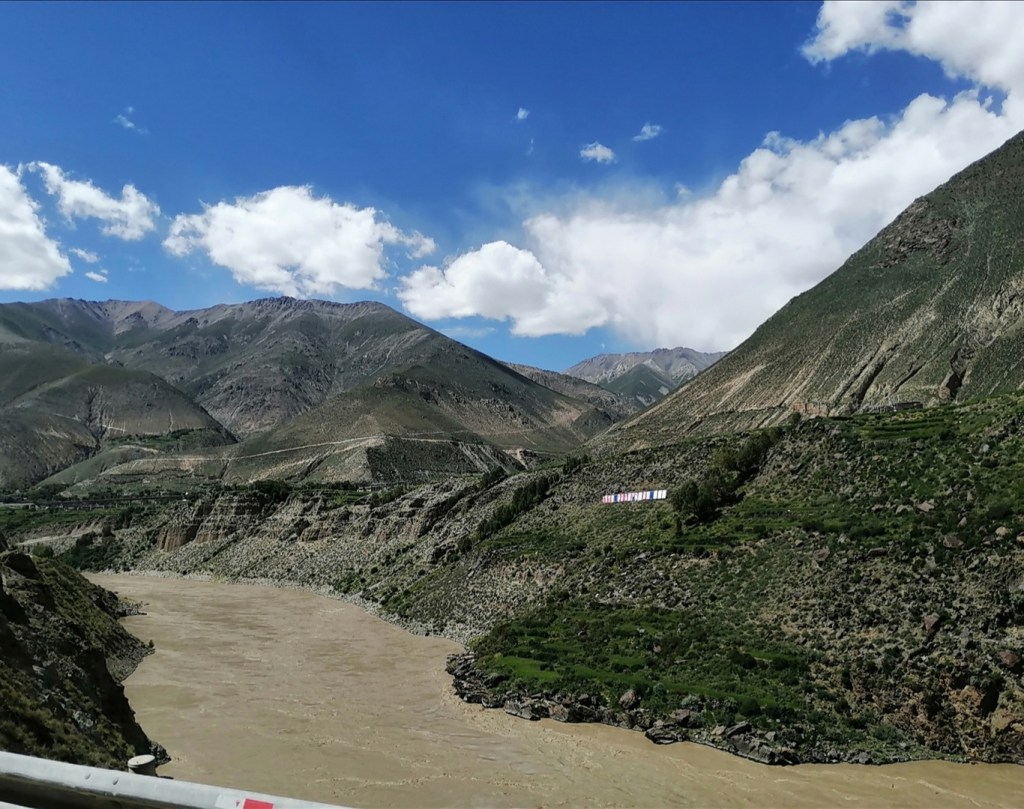
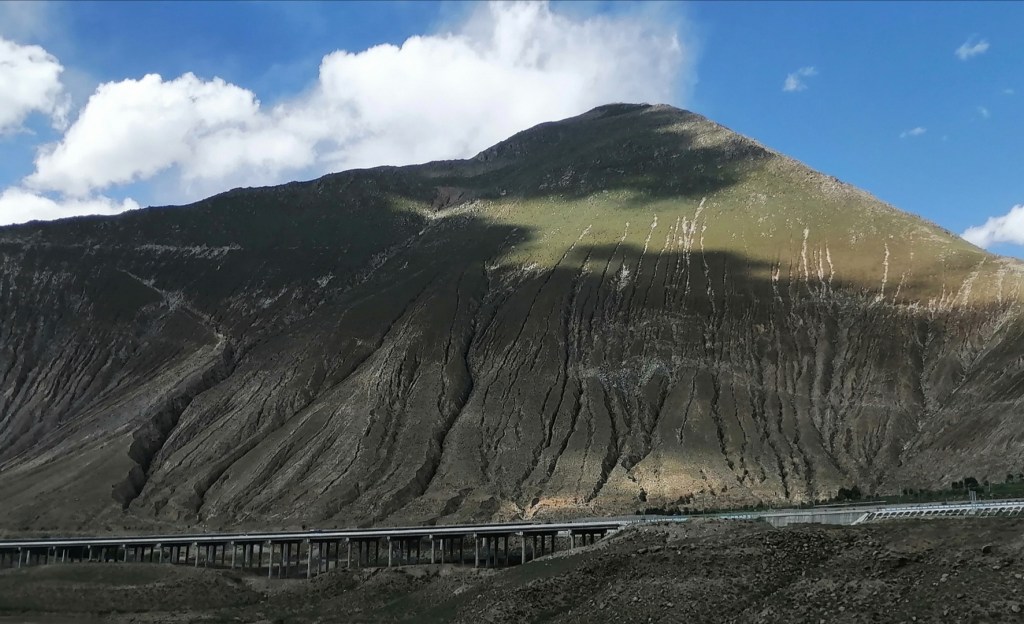
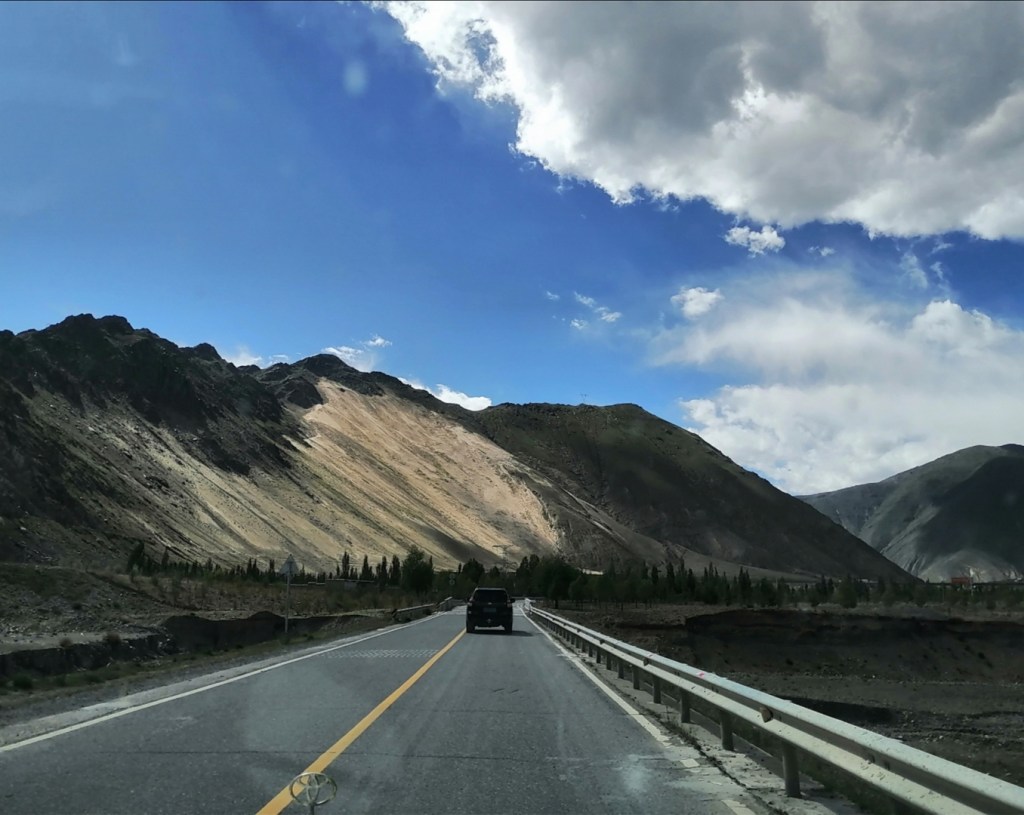
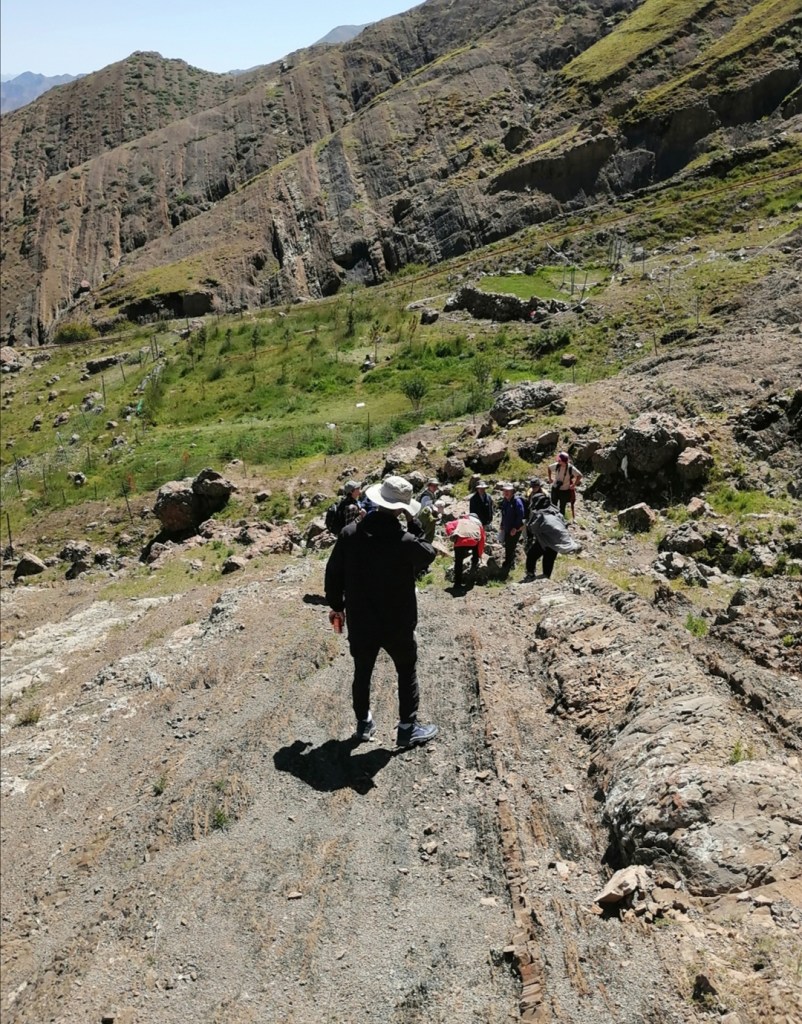
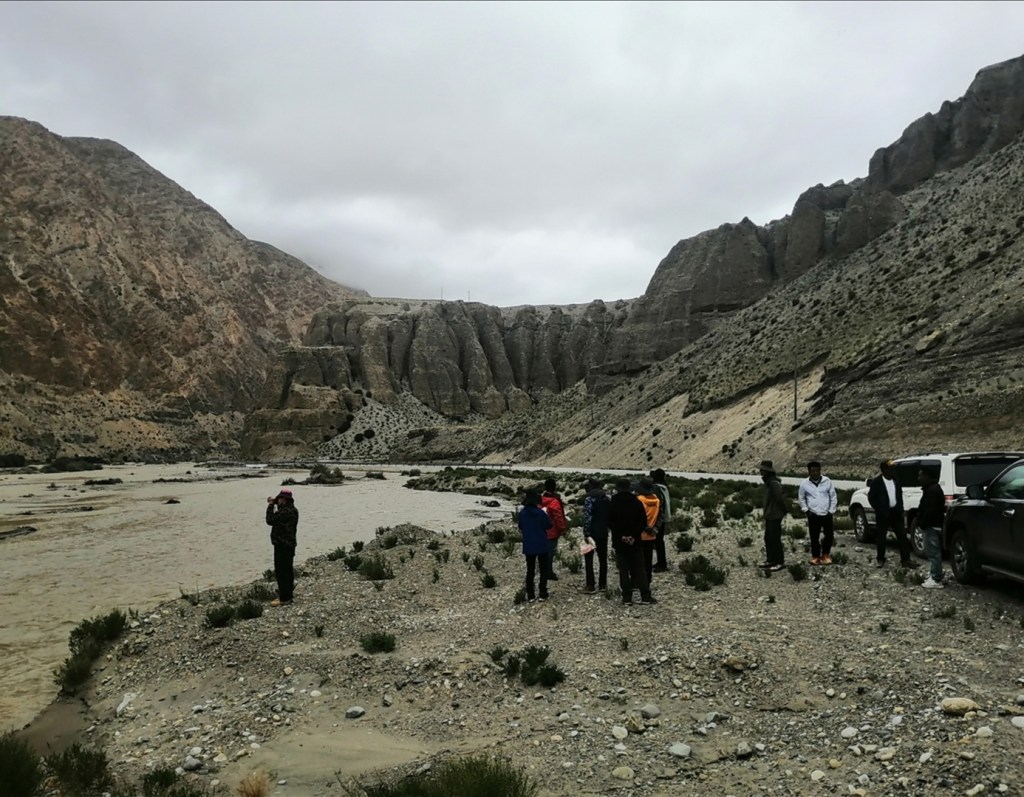
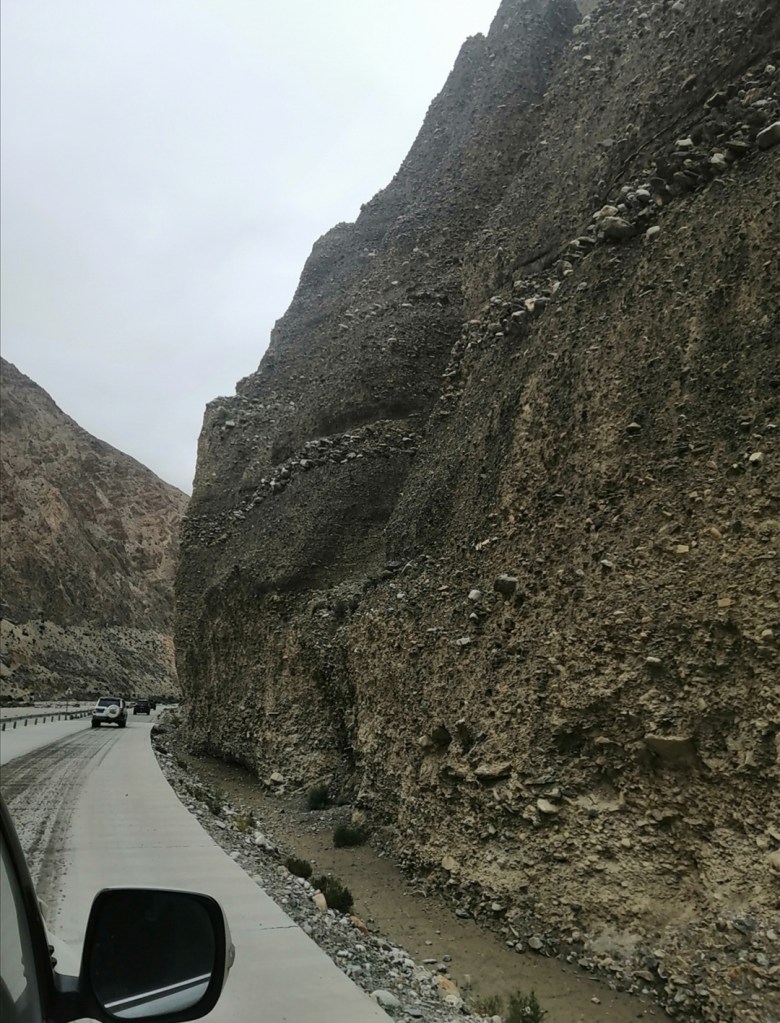
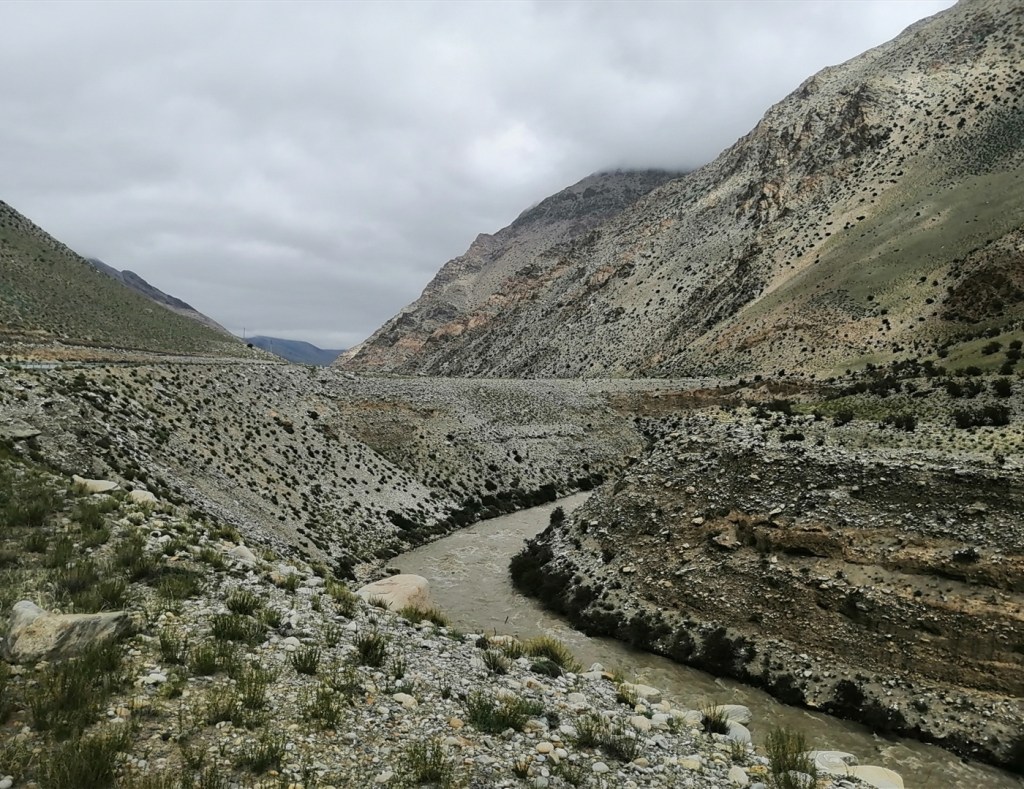
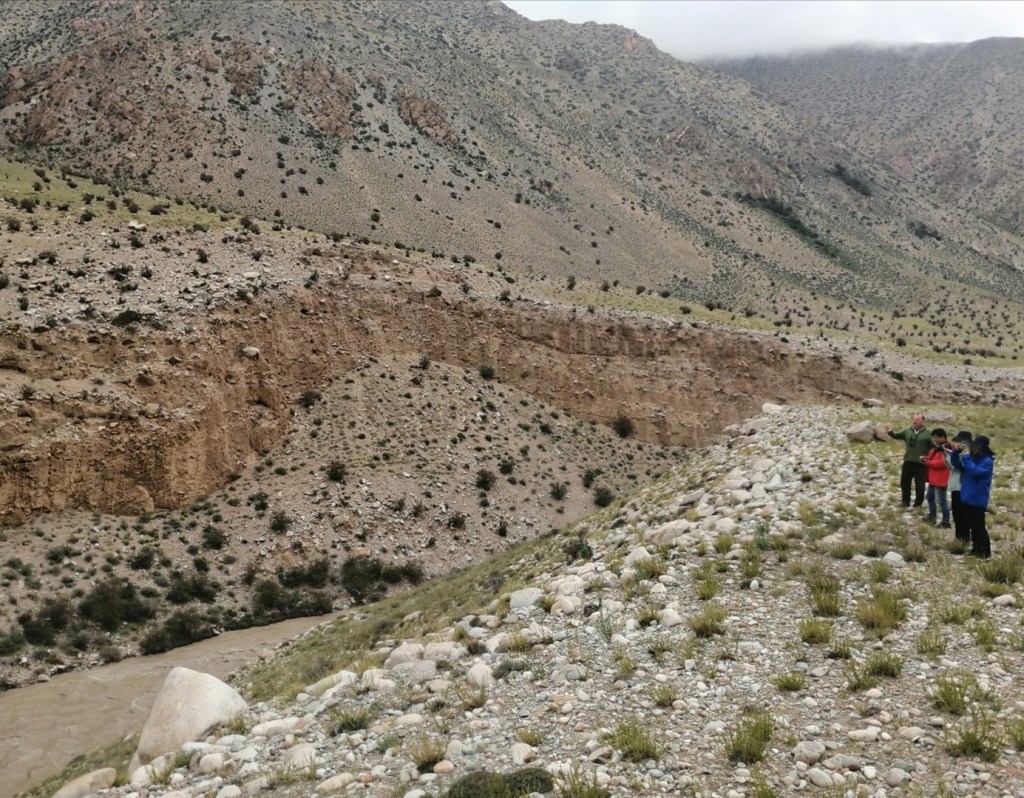
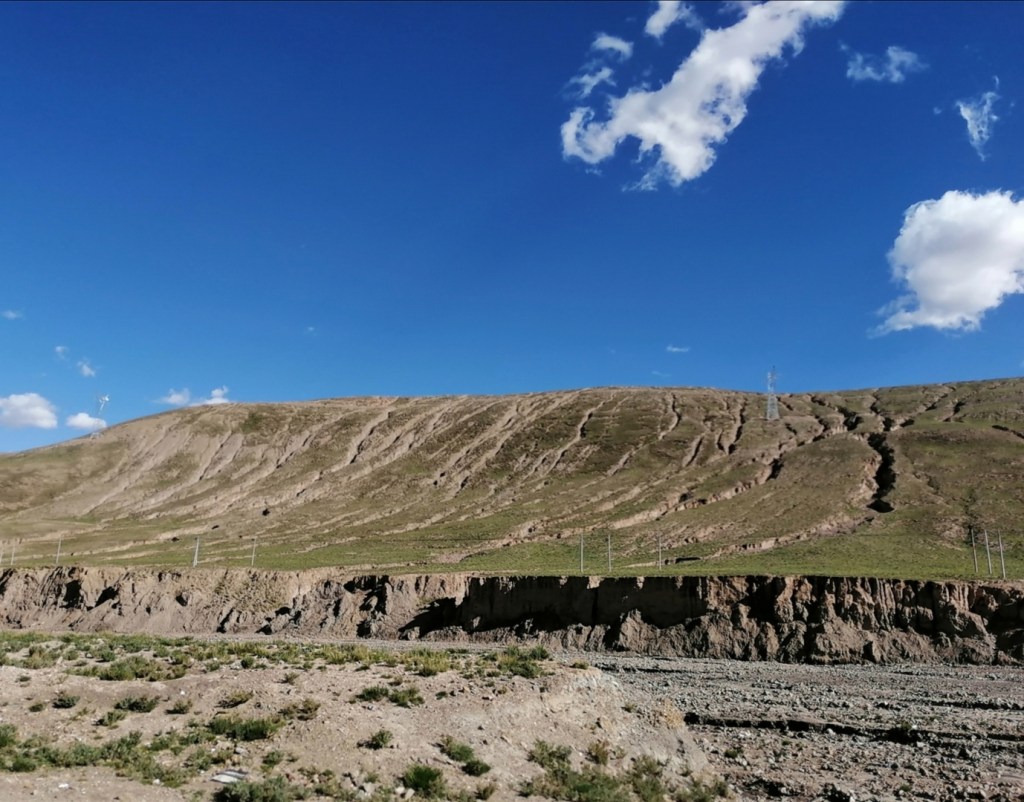
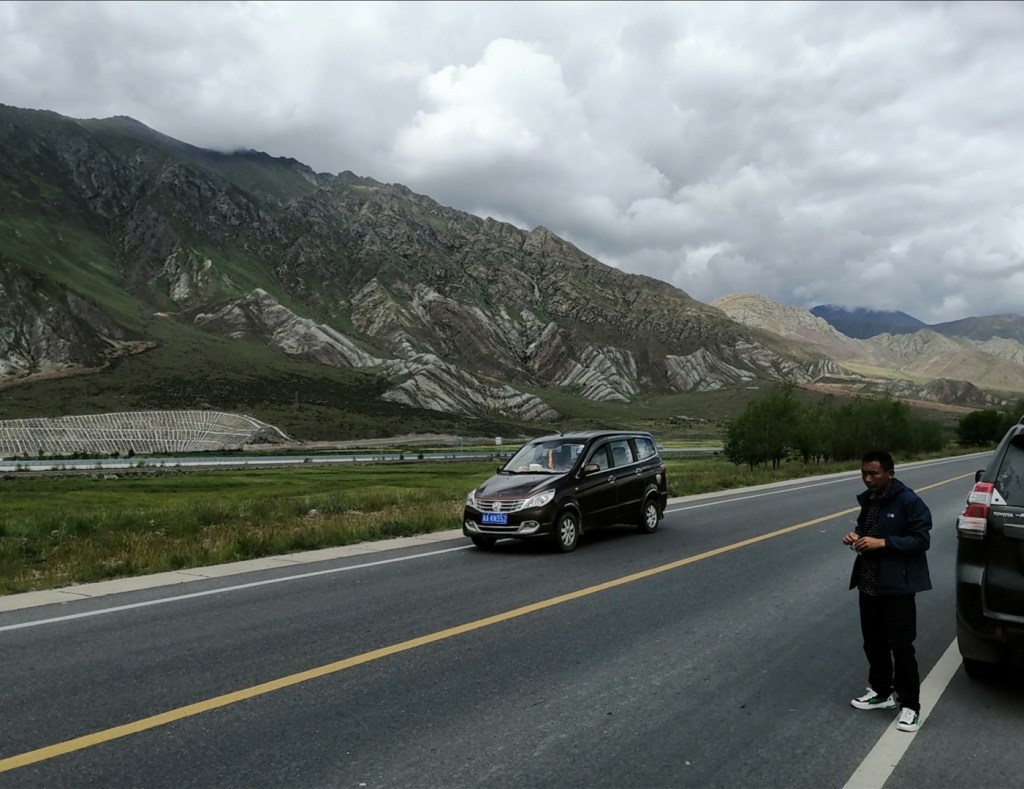
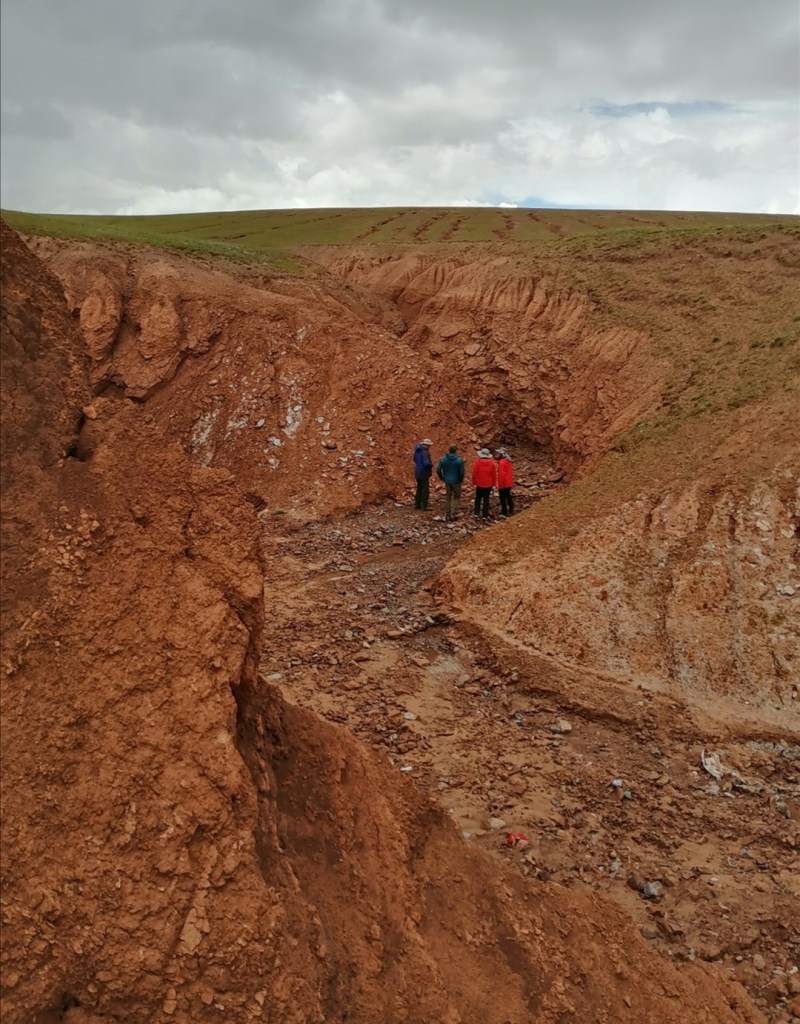
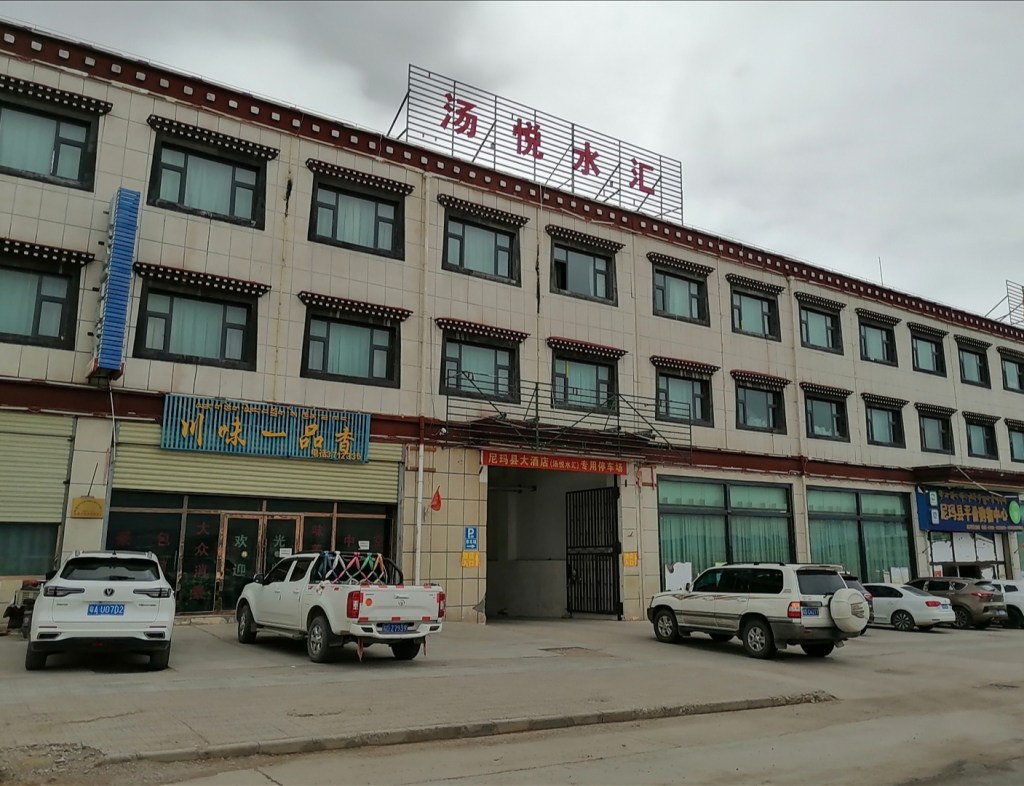
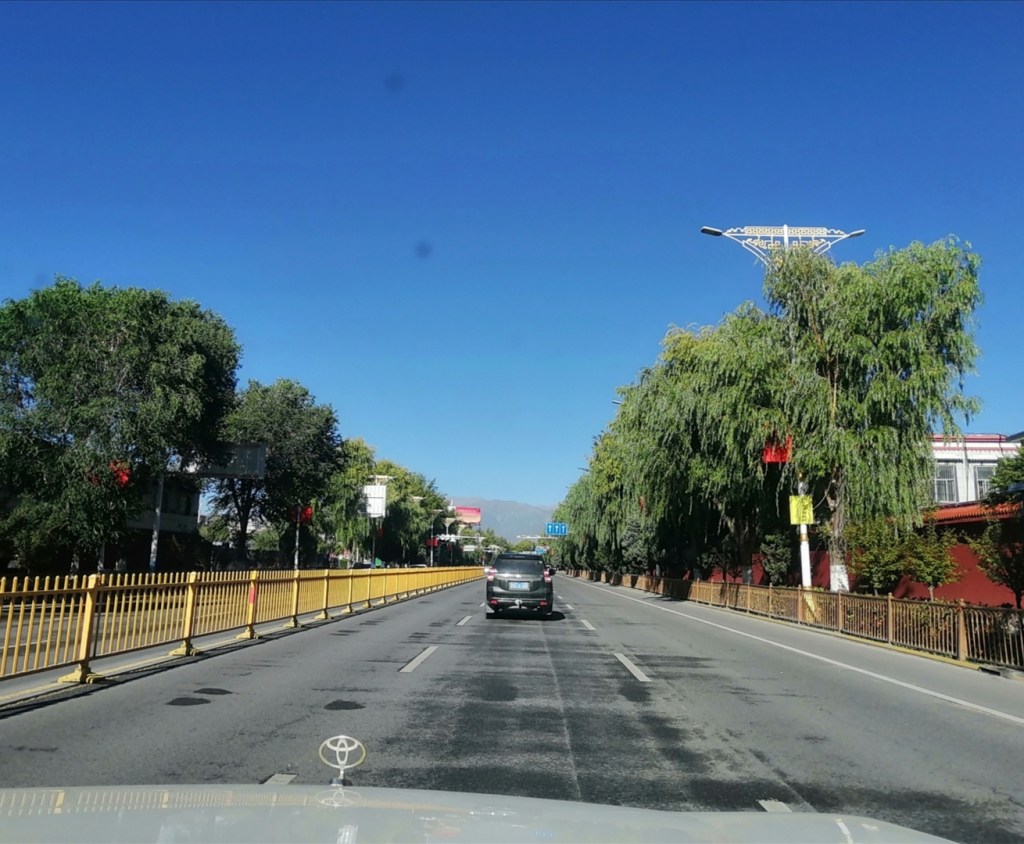
15th August: we’re off to Shigatse! Darwin had a bit of a tummy problem last night, maybe the soft shelled turtle was not such a good idea, but he’s OK now! We have a late start and a break at a park on the outskirts of Lhasa where we get a chance to see the Lhasa River and a gravel bar! I’d say D50 was about 5 cm, with a max size of 20 cm. That’s quite a contrast with the Yarlung. We pick up a new vehicle and new people, including Li Yuan from the Natural History Museum of Tibet. We drive to the Yarlung, have lunch where it is the widest before entering the gorge to the west (more than 1 km wide versus less than 20 m wide in most of the gorge). The gorge is impressive, very steep and threatening, with a very turbulent and sediment-laden Yarlung that must be up to 30 m deep in places. The gorge contains what we interpret as megaflood deposits, with boulder bars and very thick, chaotic and poorly sorted deposits. As the gorge widens a bit upstream, the terraces become more extensive, including megaflood deposits and well-sorted sediment clearly representing a period of widespread valley aggradation. We discuss the 3D geometry of these deposits, relative chronology and source of the megaflood. We also discuss the widespread recent (?) gullying on most hillslopes: climate change / permafrost destabilisation? We eventually come out of the gorge. We keep following the Yarlung upstream (and the Yarlung Tsangpo Suture Zone) until we get to Shigatse around 8pm, elevation 3800 m.

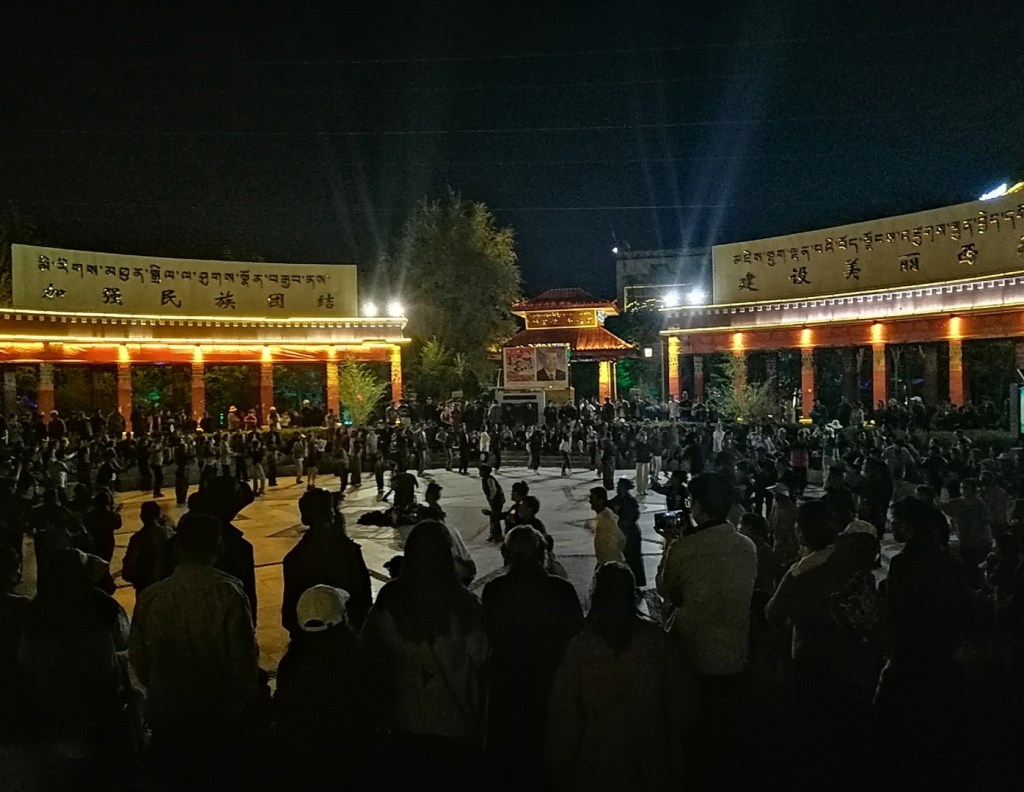
We had a gorgeous sunny day. The sun is strong, and we burn instantly without sunscreen (thin air?) In Shigatse, we meet Zhongpeng’s “big brother from the ITP who kindly organised all the paperwork for our permit, as well as Xiumien who was a visiting professor in Edinburgh with Hugh in 2011-12. They will join us for the rest of the trip. We go out for dinner and end with traditional dancing on the central square. Eliot and Darwin are delighted to show their moves. These dances happen daily. That was a pretty surreal day!
16th August: today will be an interesting day. We’re going to see the Xigase ophiolite (bit of oceanic crust that was once the seafloor between India and Asia) and move south to the headwaters of the Kosi River, as it is known in Nepal. We have visited the Nepal side many time, and it feels surreal to approach it and the high summits of the Himalayas from “behind”, that is, from the north.

Very schematically, this is the situation in the Cretaceous, with India moving towards Asia (“Lhasa block”), the Tethyan Ocean in-between, and erosion of the two continents supplying sediment to the ocean. When the collision occurs, many of the units shown below end up sandwiched and thrusted over each other, meaning that as we travel south we will see bits that used to belong to the sedimentary basin south of the Lhasa block (forearc), the ophiolite, the accretionary wedge, and then sediment that was deposited in the ocean on the Indian passive margin (the Tethyan Series).

We start by looking at rocks a few km west of Shigatse: firstly, the Miocene Tajuka conglomerate, sourced from the North (Asia), and then the 1 to 4-km thick Cretaceous deep-marine Ngamring Formation, complete with turbidites and even conglomerate channels.
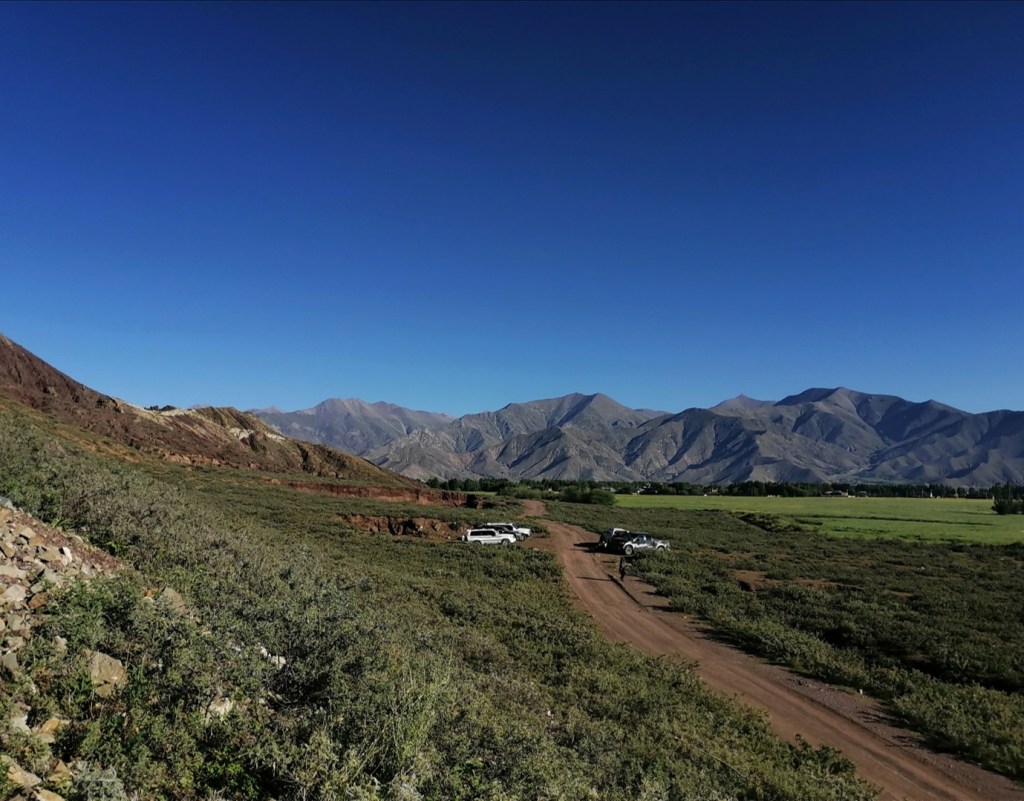
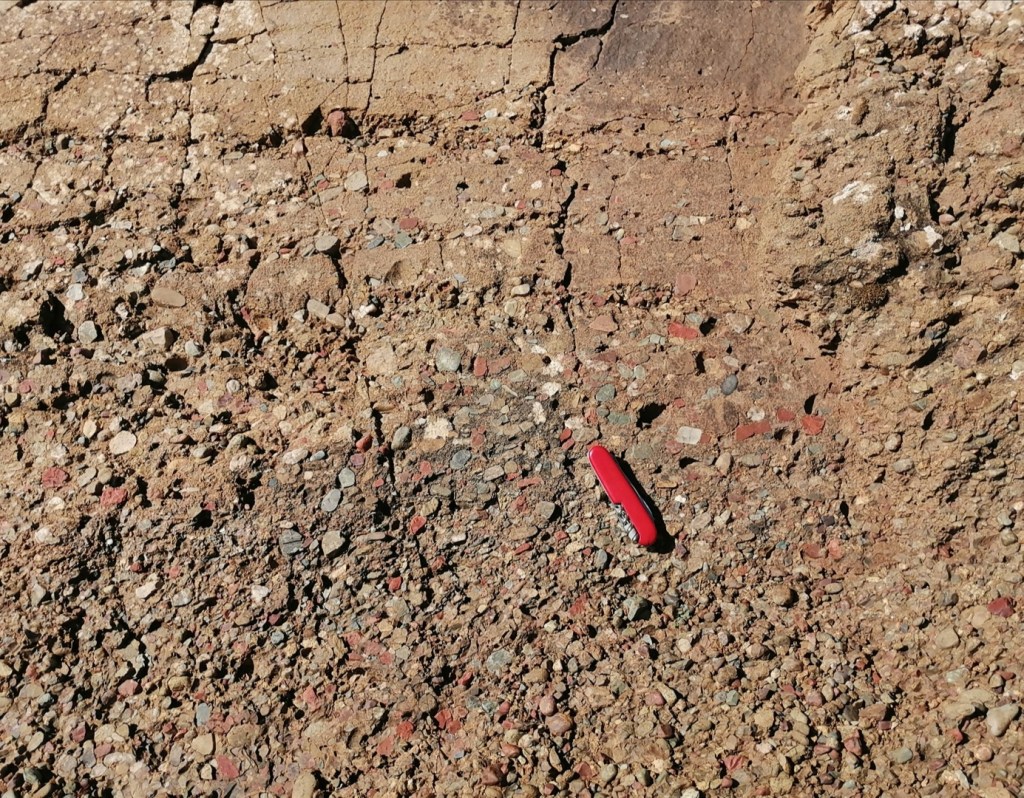
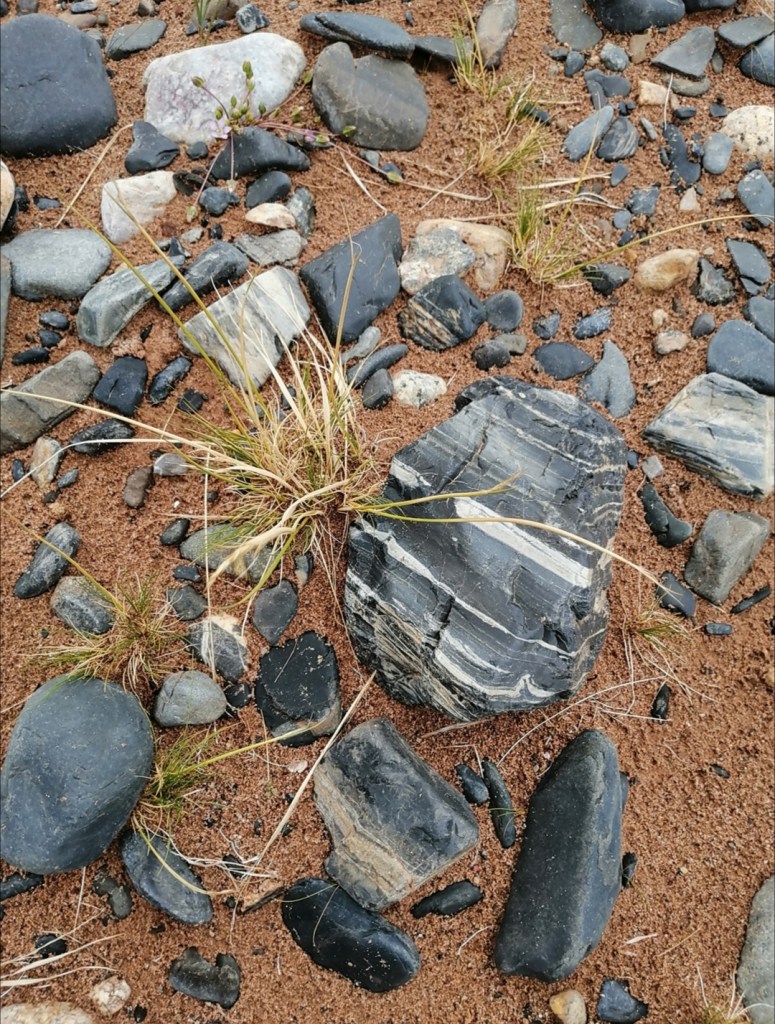
After a picnic, we drive south. As mentioned earlier, we stop at the contact between the forearc sediment and the ophiolite. The ophiolite is nearly complete in places, with the full oceanic succession, early deep marine sediment (chert), etc. The ophiolite is thrusted northwards over the forearc. We then see the early Miocene Liuqi conglomerate, which were deposited by large braided rivers and contains fragments of ophiolite and accretionary wedge, sourced from the south. The ophiolite and wedge were starting to emerge to the south due to N-S shortening. The conglomerate is thrusted over the ophiolite, but also deposited on the ophiolite in places: this is a very dynamic environment! We arrive at 16:30 in Lazhi County to have tea. The place is famous for its 700-year old music tradition listed as intangible heritage.
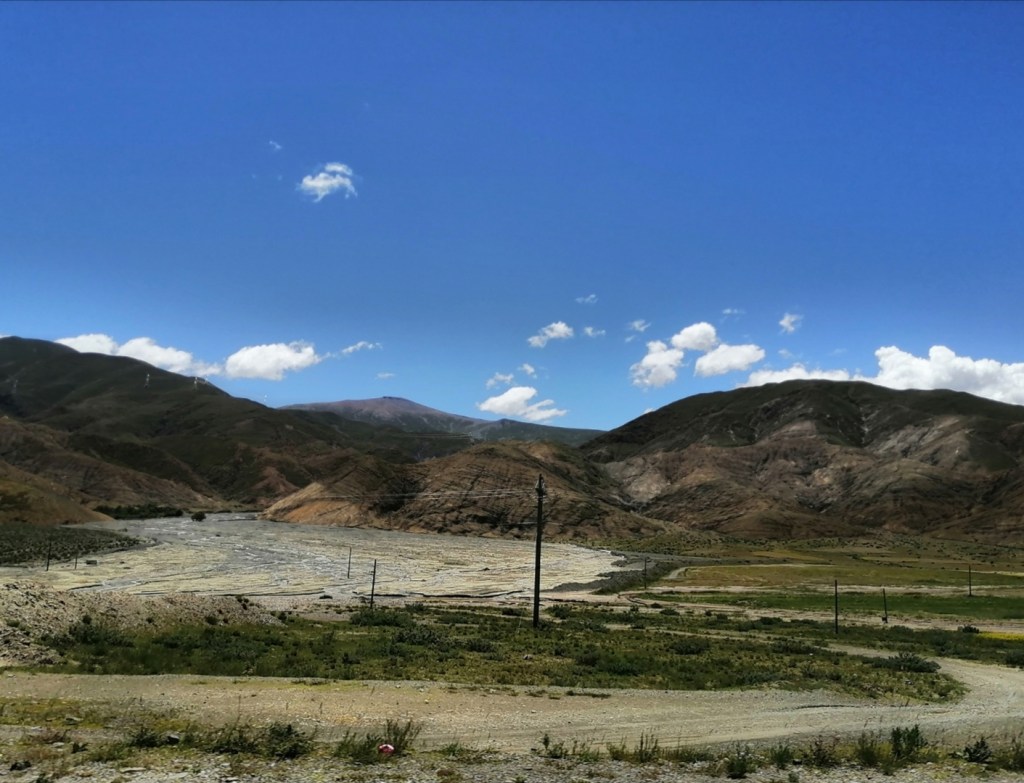
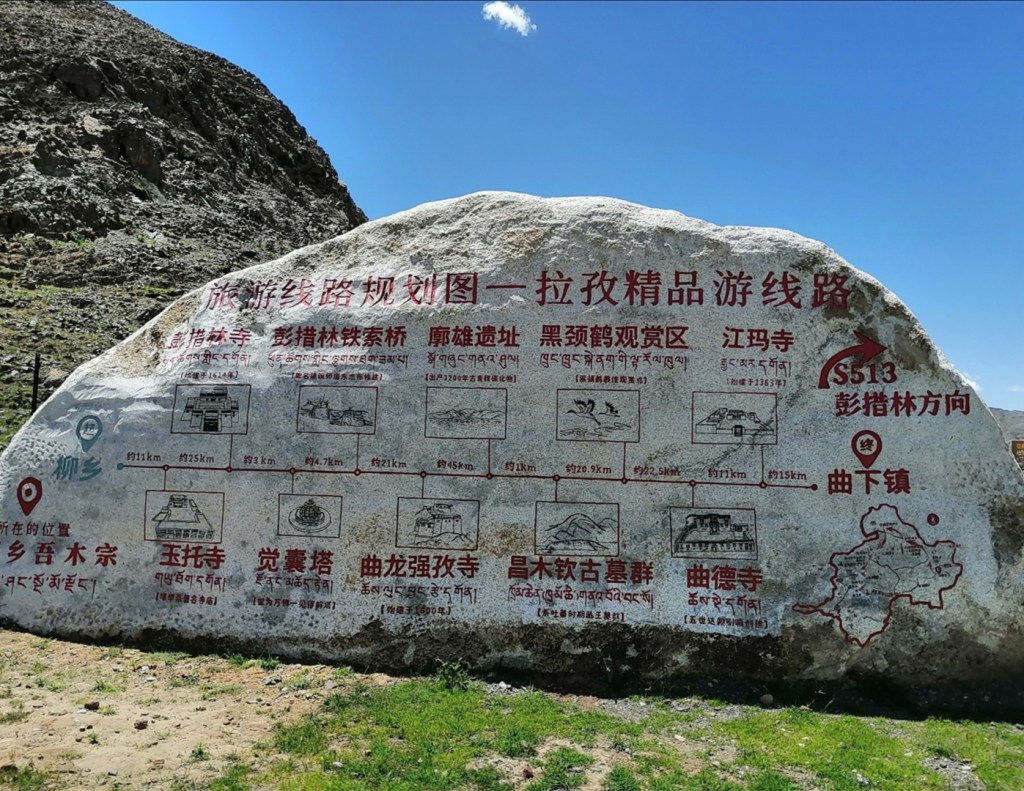
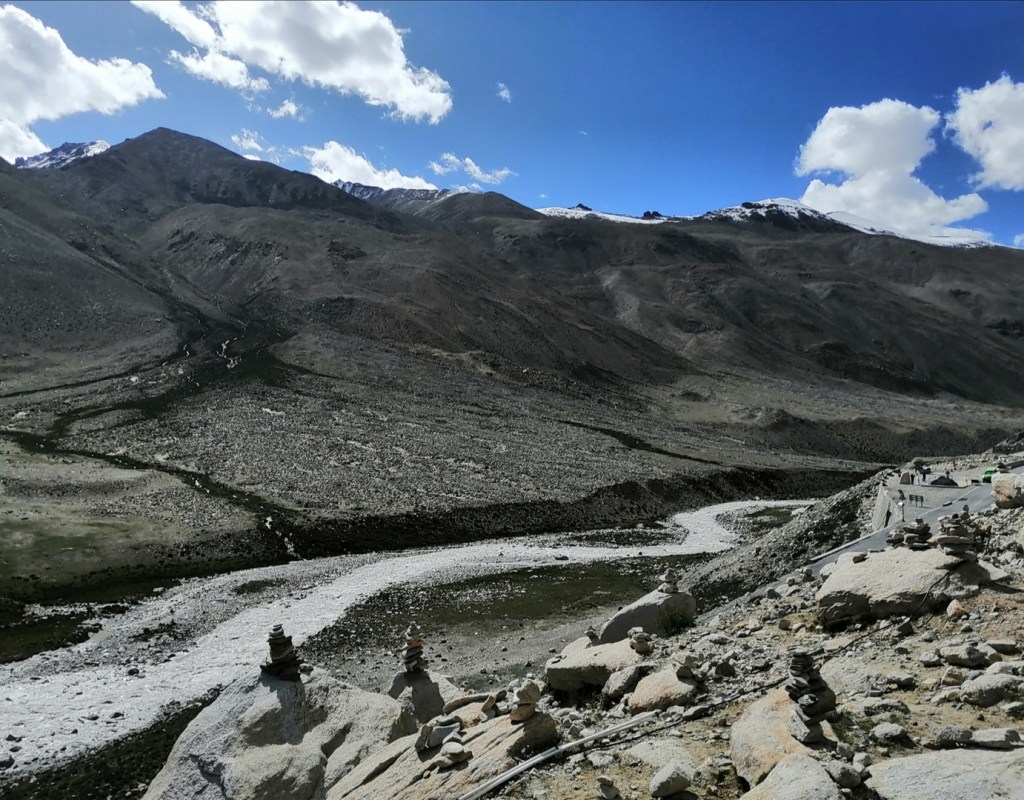
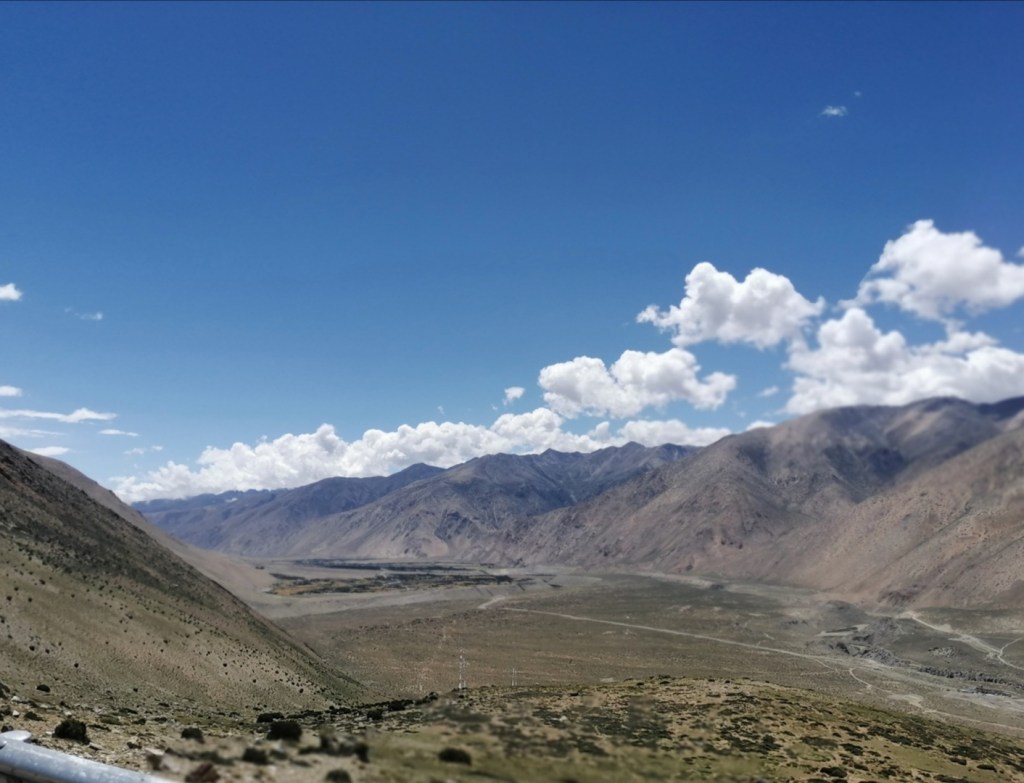
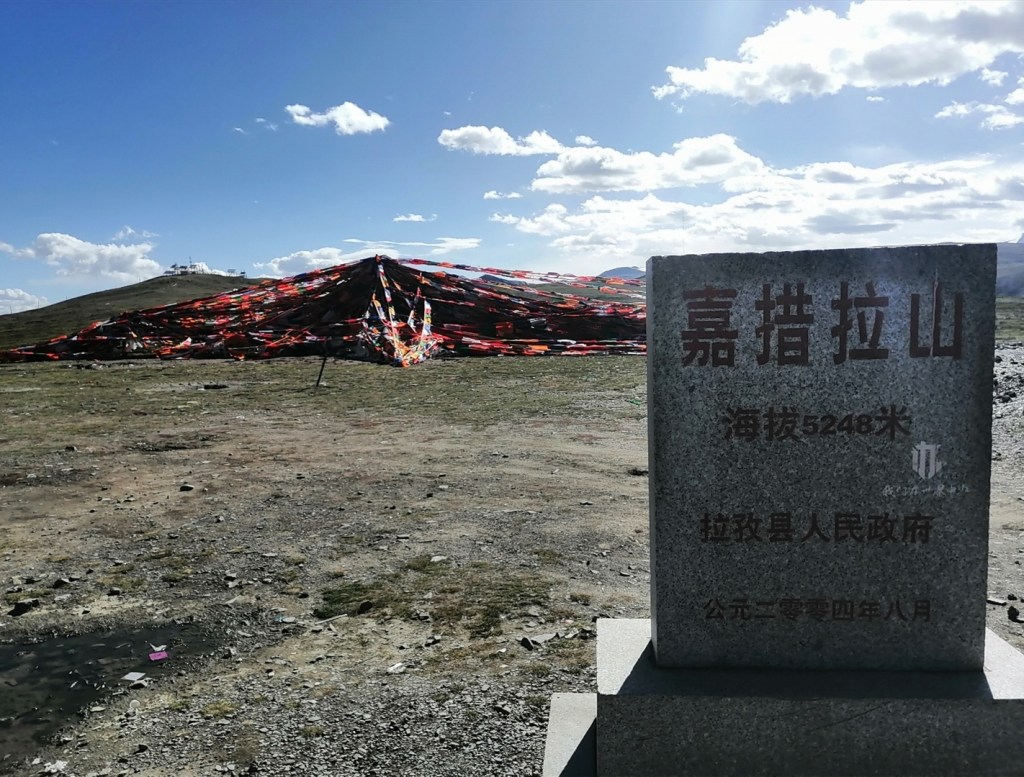
We keep driving south and enter the Tethyan Series. We climb towards a pass that will allow us to leave the Yarlung catchment. The landscape looks very Alpine minus 2000 meter elevation! We reach the pass at 5248 m and drop into the Kosi catchment! The valley quickly widens and features braided streams, marshes, terraces and spectacular gullying of the hillslopes. We reach the town of Ganga at 8pm. We can see Everest (Qomolangma) from our hotel. We are at 4200 m. This is incredible.
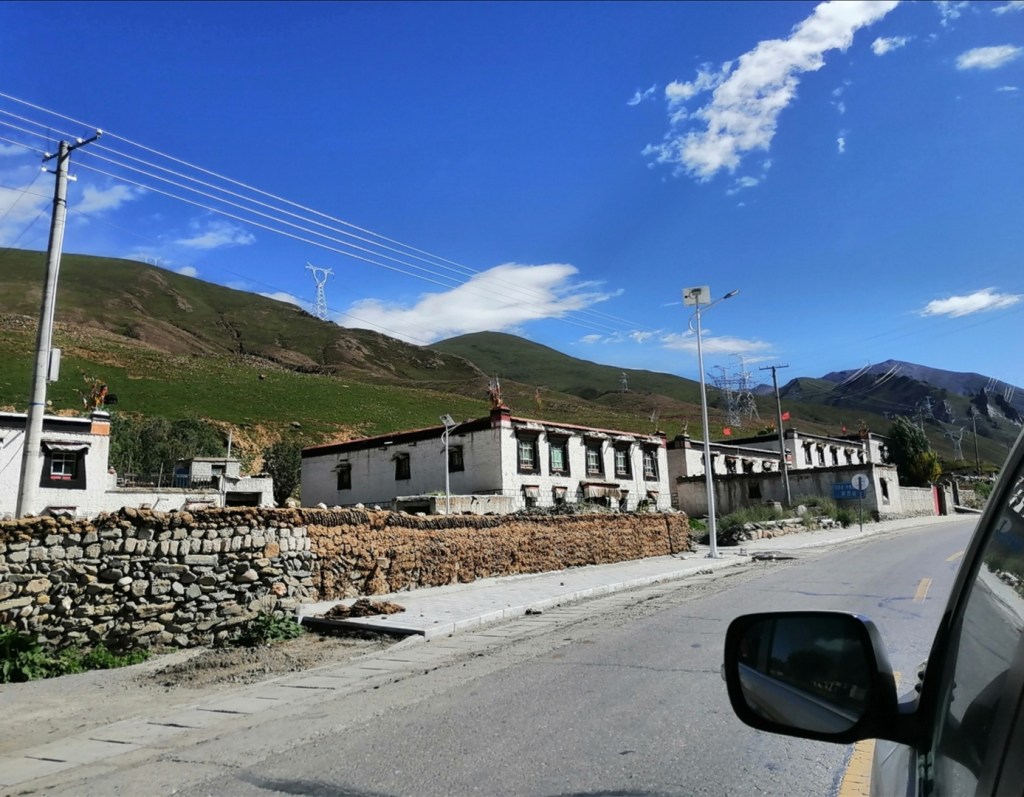
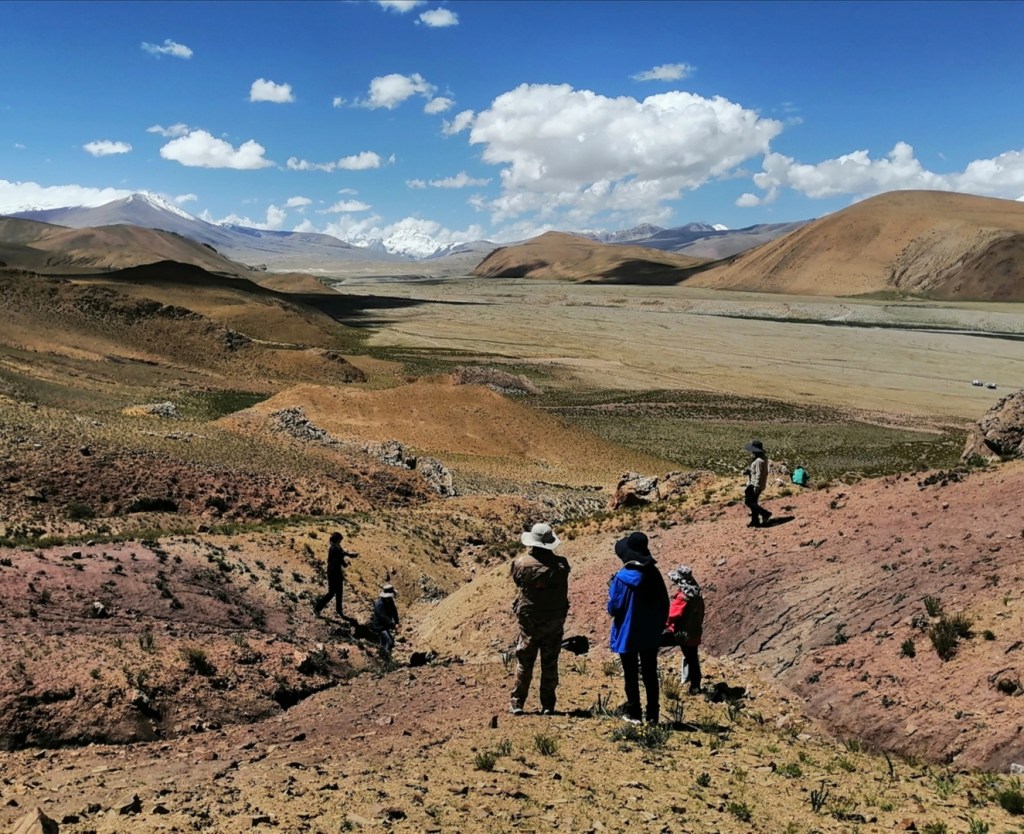
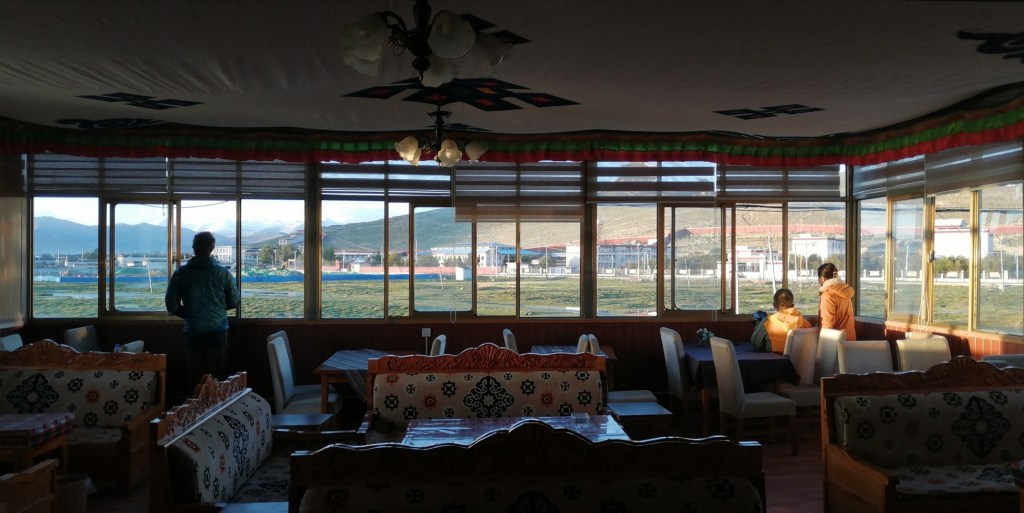
17th August: I didn’t have the best night. I struggled to go to sleep and regularly woke up with low blood O2 and scenarios of AVC or my head exploding because of the pressure and smashing all the windows in town. I am pleased to report windows are intact when I wake up, and my blood O2 is at 90%, which is good. Over the next two days, we are going to visit two significant areas: an inactive rift to the West, and an active one to the East. Both feature some spectacular geological and geomorphological sites, as you will see. I recognize that my blog has become a bit technical, and I’m sorry for the non experts. I will try to keep it as low level as possible, and hope you can still appreciate the photos! We leave Ganga at 10am after having refuelled. The first site is a late Neogene succession (a few million year old) that shows evidence of large braided rivers with episodes of damming and lake formation (lacustrine sediment). The lake formation may be tectonic in origin – we don’t know. The sedimentary features are beautiful, and the view over the surrounding plains and the high peaks to the south is breathtaking.
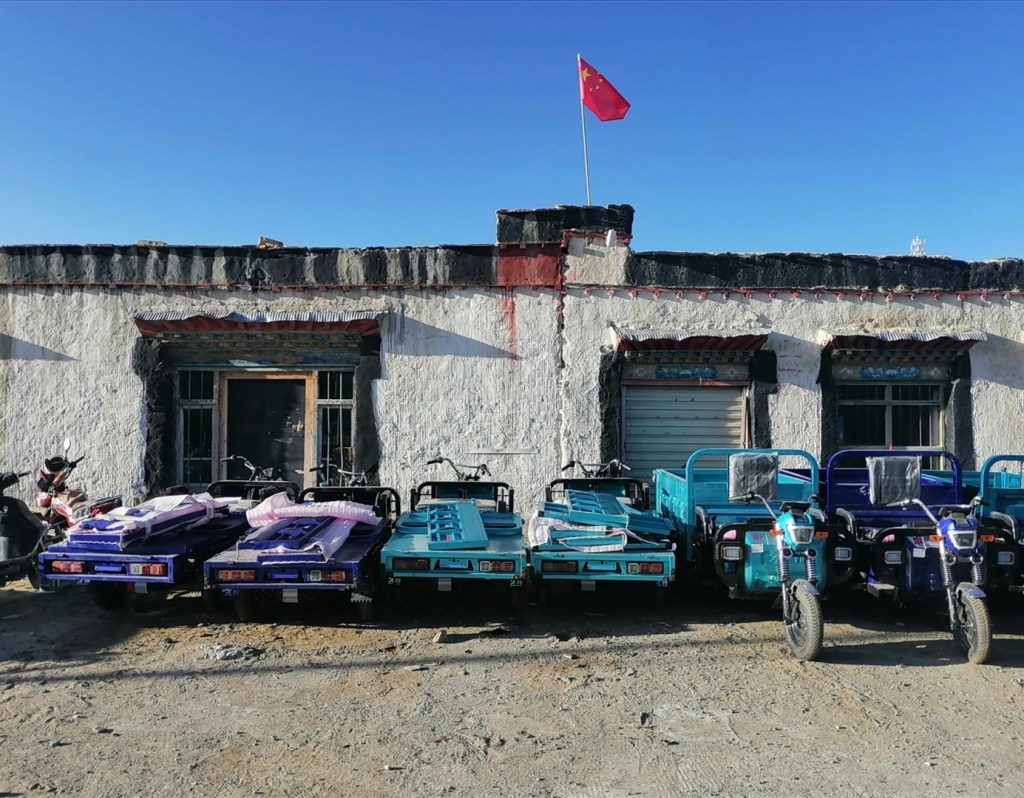
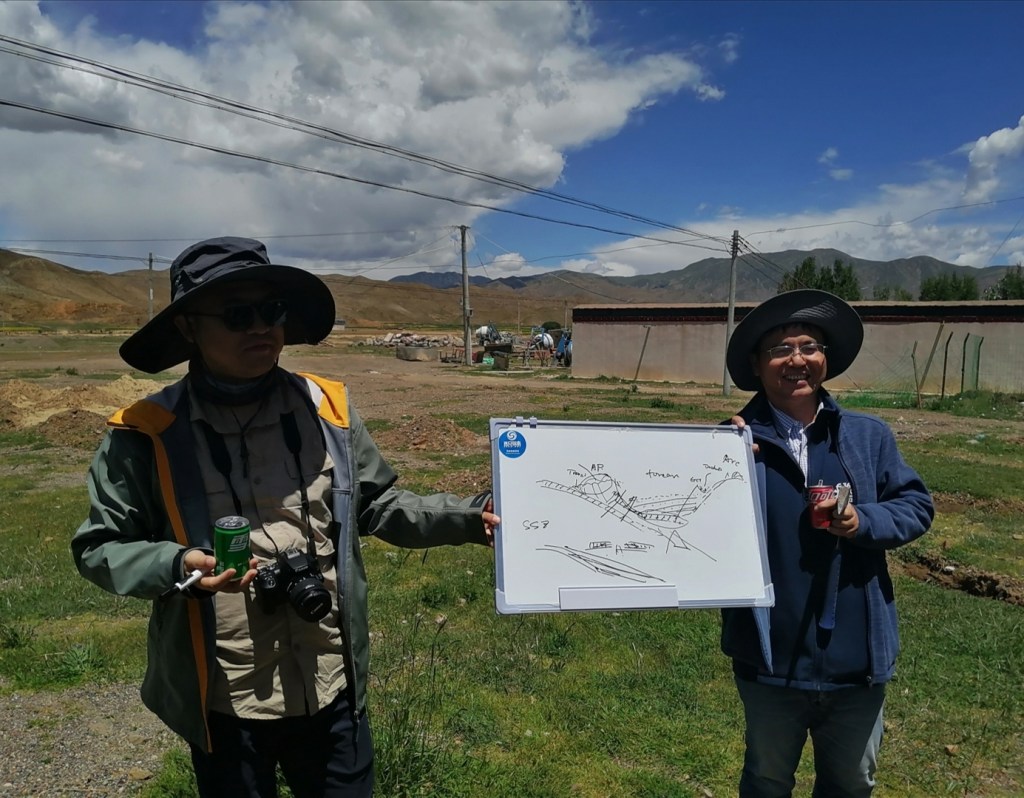
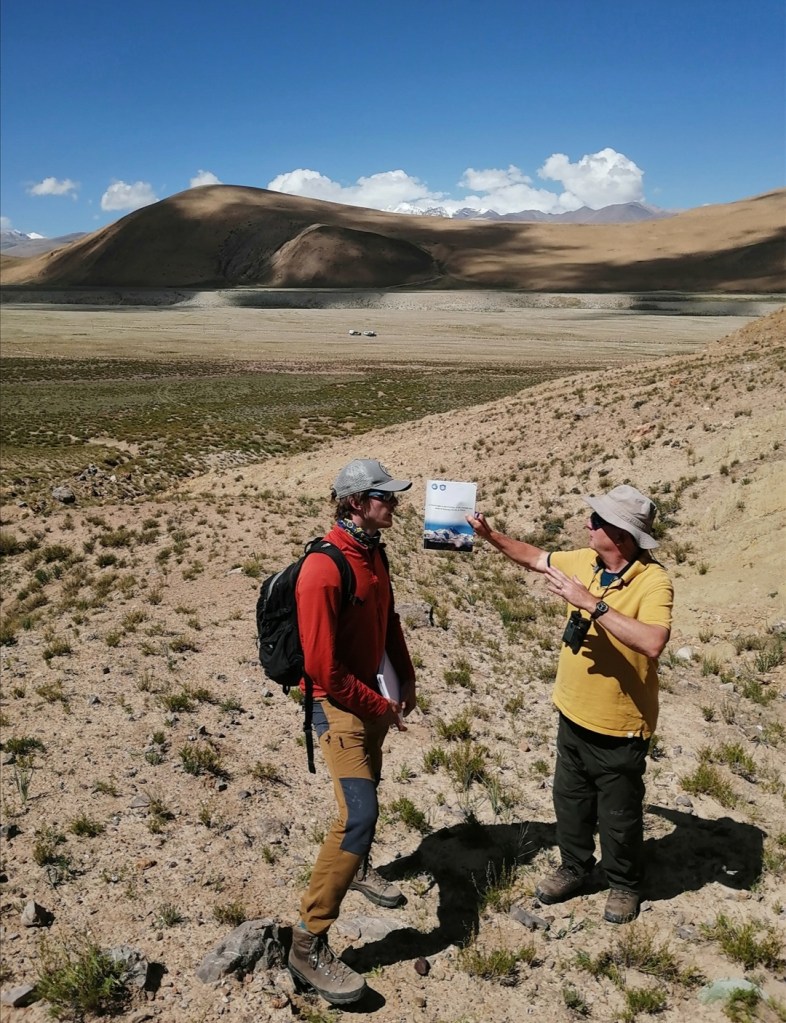
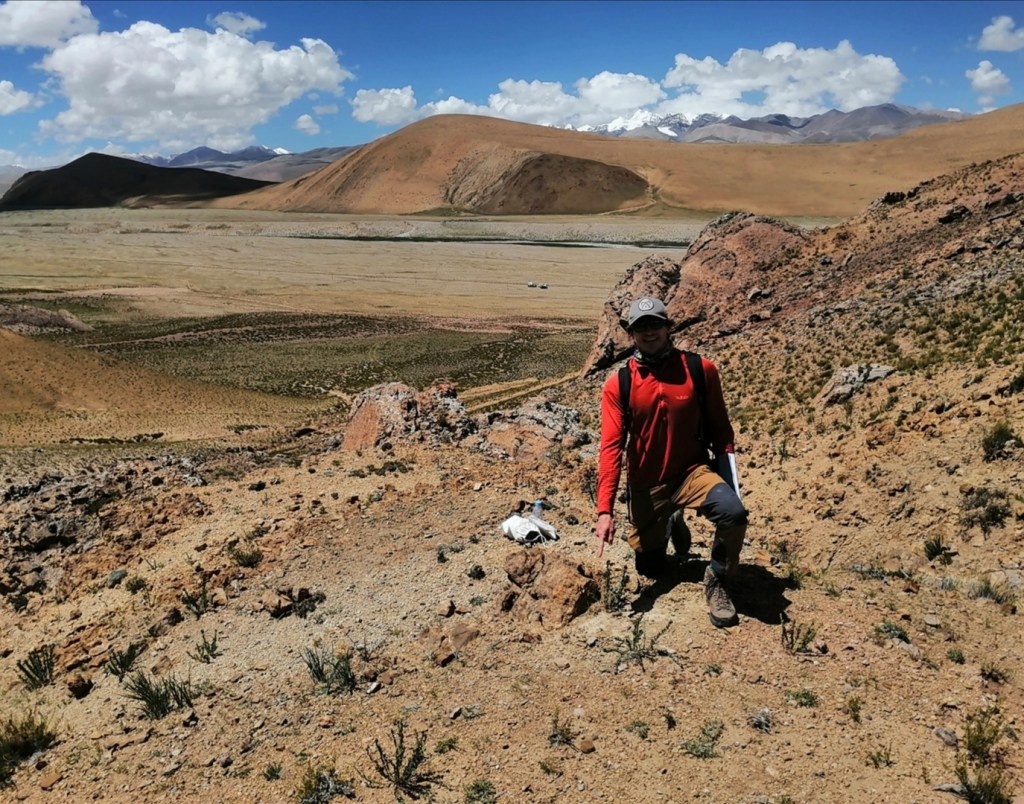
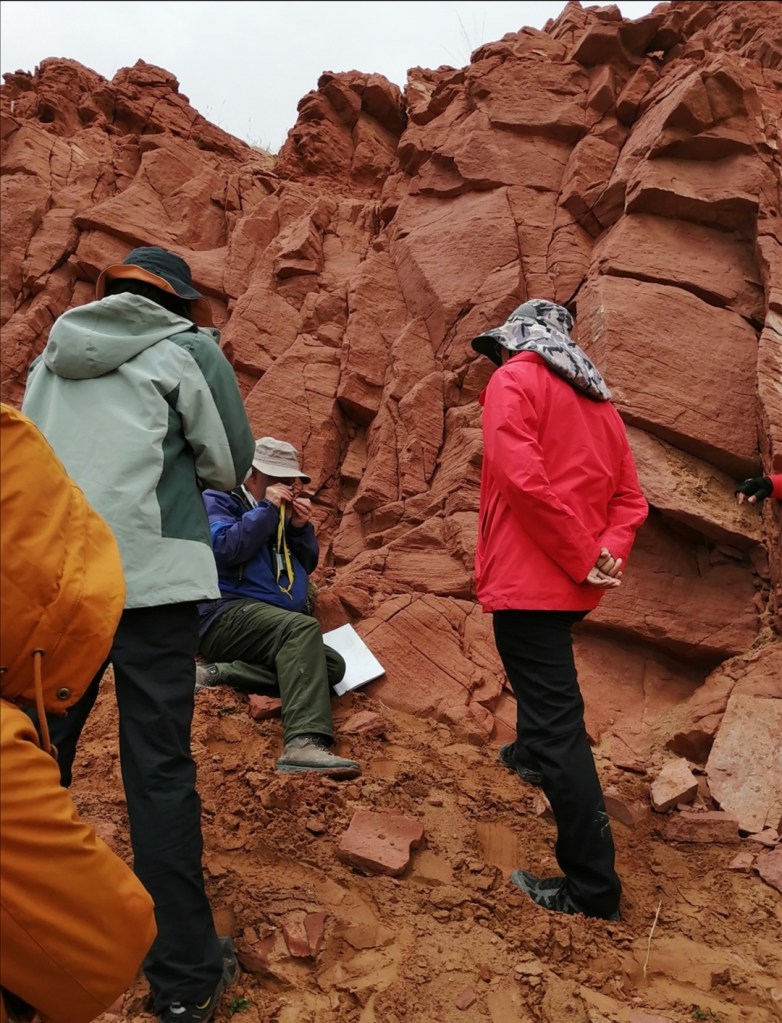
We then drive 15 minutes SE, do a bit of off-roading, and reach a succession of sedimentary rocks that belong to the Tethyan Series. The Tethyan Series were deposited on the passive margin of India when there was an ocean (the Tethyan Ocean) between India and Asia. The succession starts in the Devonian (more than 300 million years ago) and ends in the Neogene, recording different phases of the history of the adjacent continents. Xiumian leads us through the succession which includes slices of the Tethyan Series trusted on top of each other towards the north during the early stages of the collision between India and Asia. More specifically, we are looking here at the Eocene part of the succession, which includes nummulitic limestones and marls. Importantly: in all the rocks older than the limestone, the sediment is sourced from the south, from India. The marls on top of the limestone include the first sediment grains from Asia (from the north), indicating the onset of the collision between the two continents, 45 to 50 million years ago! The provenance of the sediment was established using zircons, which are minerals that have very specific properties. Zircons from Asia are different from the ones from India. And Eliot in the photos below is pointing at that very transition, when sediment from Asia arrives for the first time in the Tethyan Ocean, which is pretty cool!

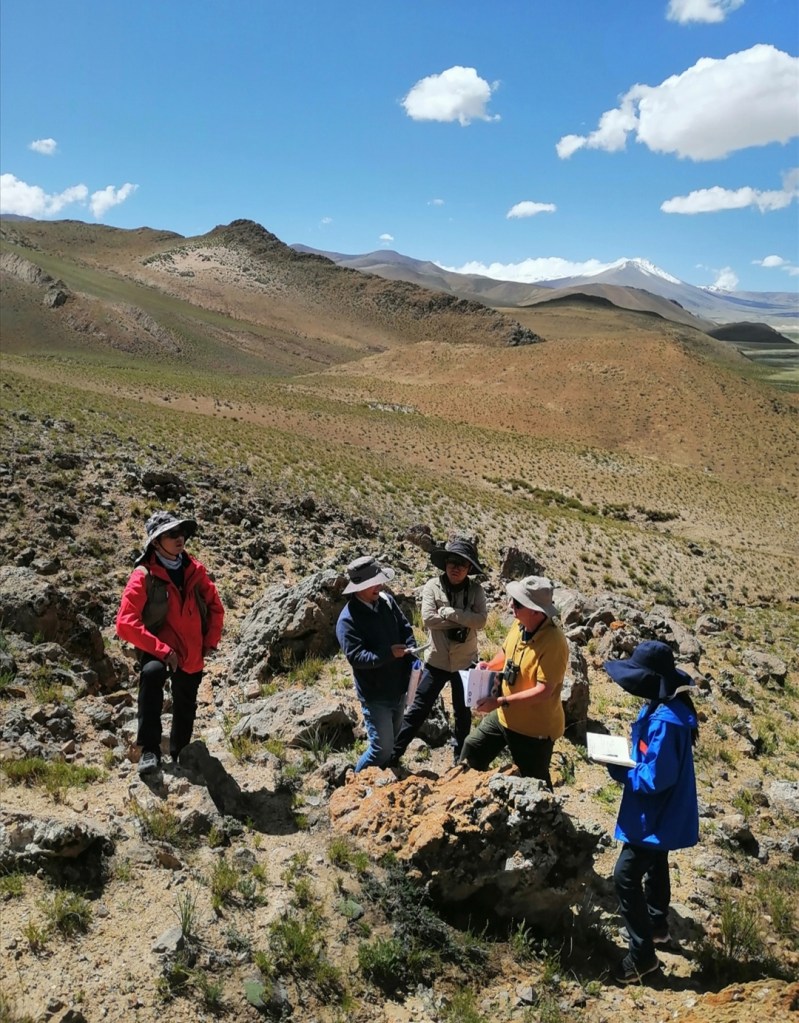
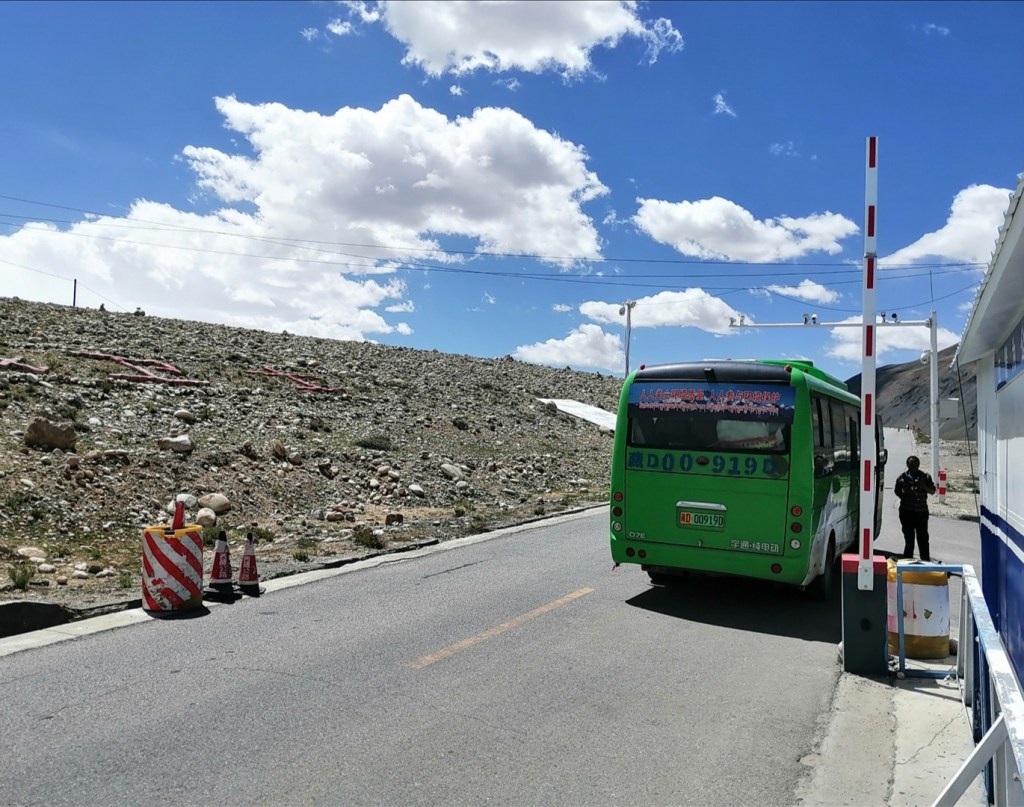
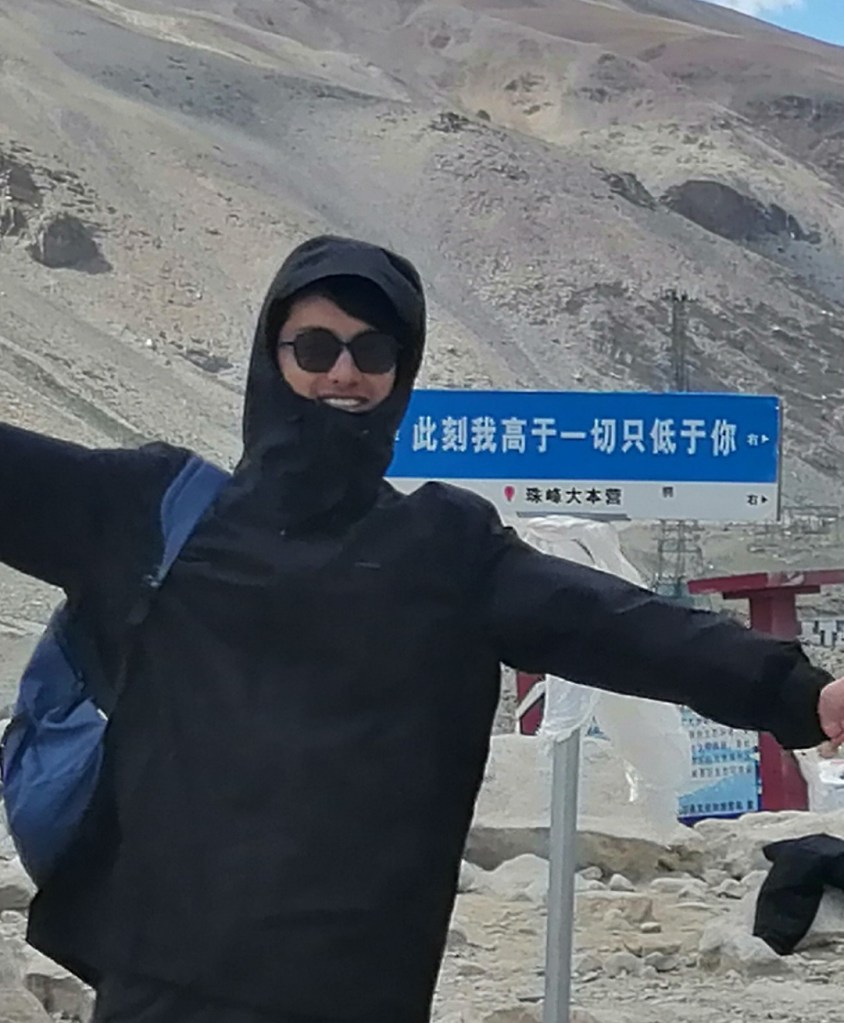
After a quick lunch, we drive east towards Qomolongma / Everest base camp, the north side one! We stop at a “town” at 4400 m elevation, and electric buses take us to the base camp at 5200 m (40-minute ride). On the drive towards the base camp, we get into older Tethyan Series rocks: Carboniferous, Devonian, before reaching one of the most significant “normal fault” in the world, the South Tibetan Detachment (STD). To the south / underneath the STD lie the metamorphic and igneous rocks of the Higher Himalayas Crystalline (HHC). These rocks come from great depths in the Earth’s crust, due to tectonics and erosion. The STD cuts through the top of Everest: the bulk of it is HHC but the top 100-200 m is sediment from the Tethyan Series!

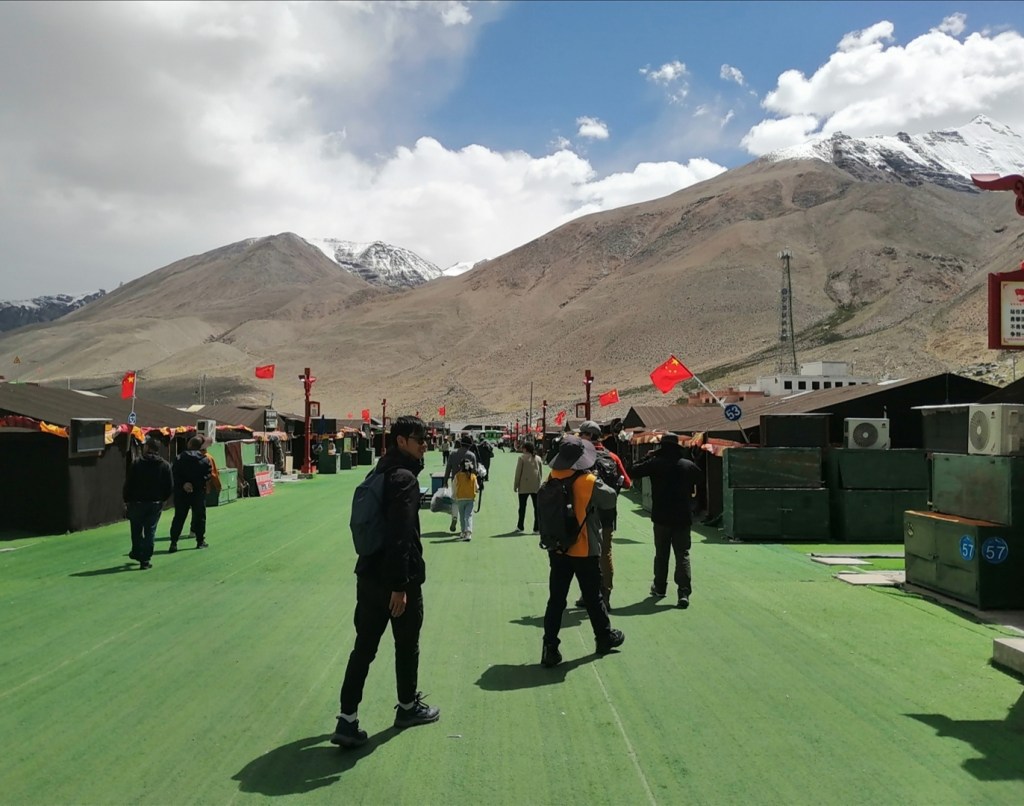
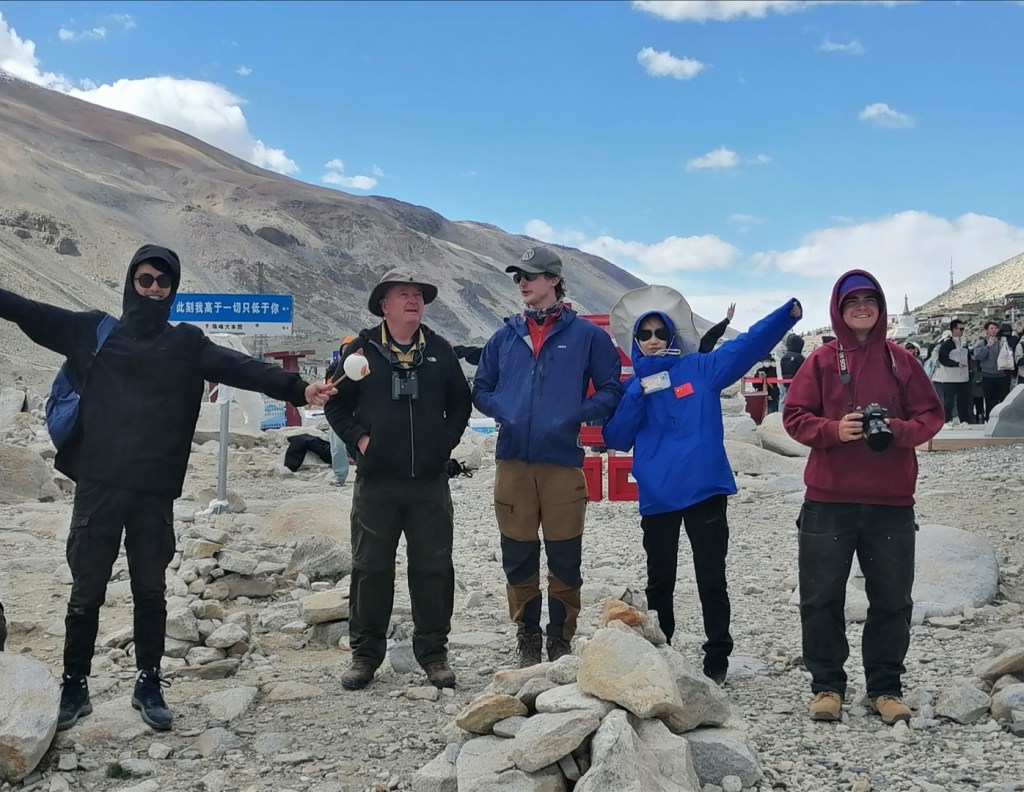
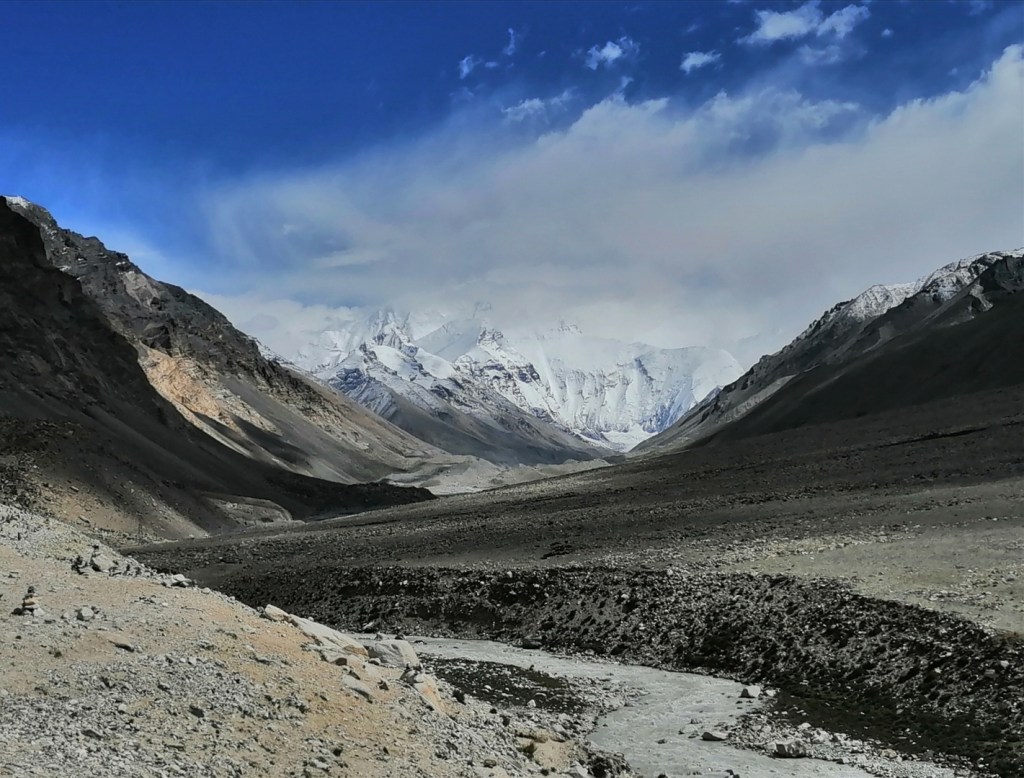
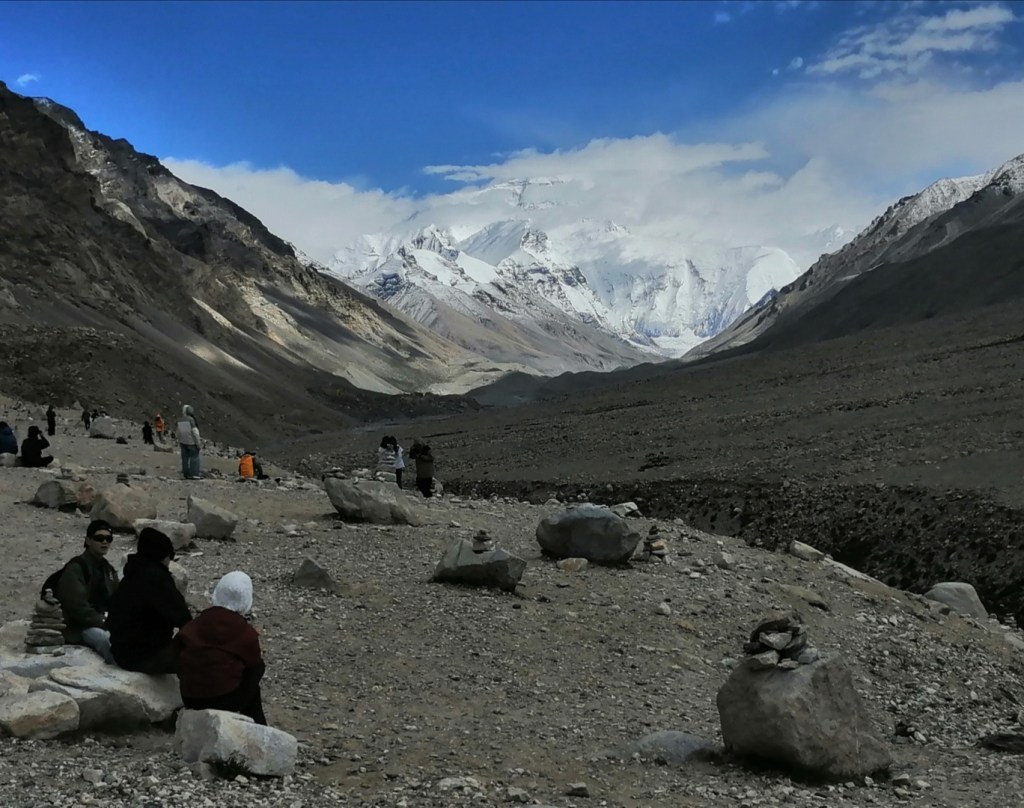
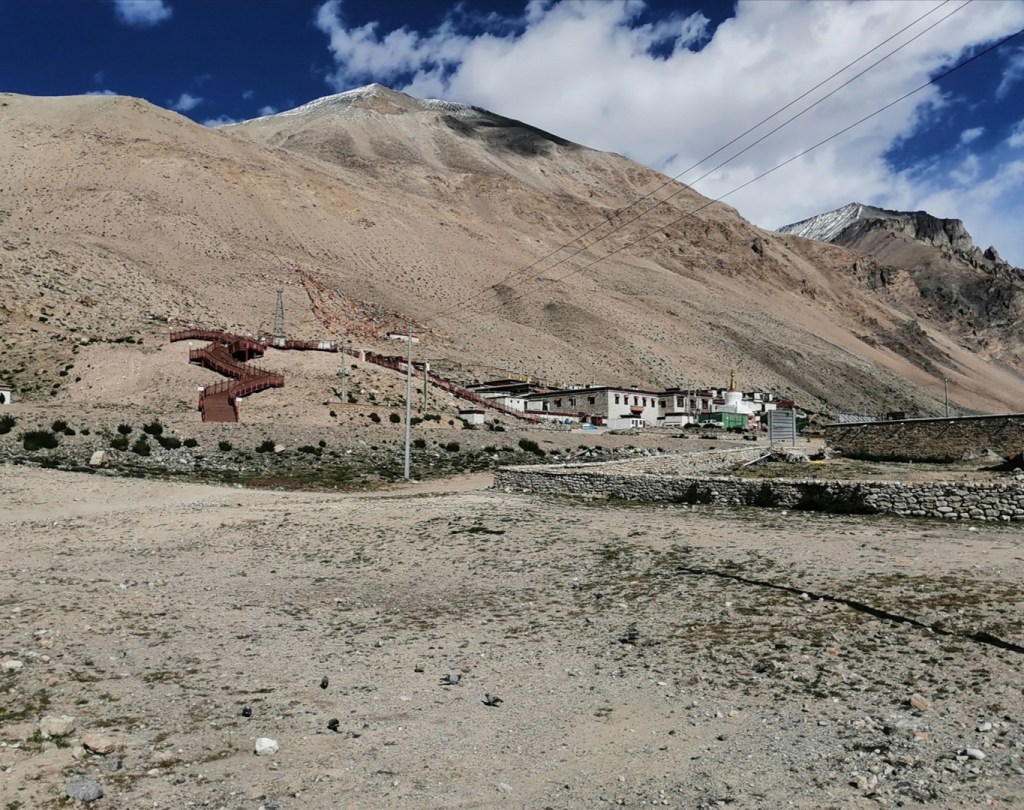
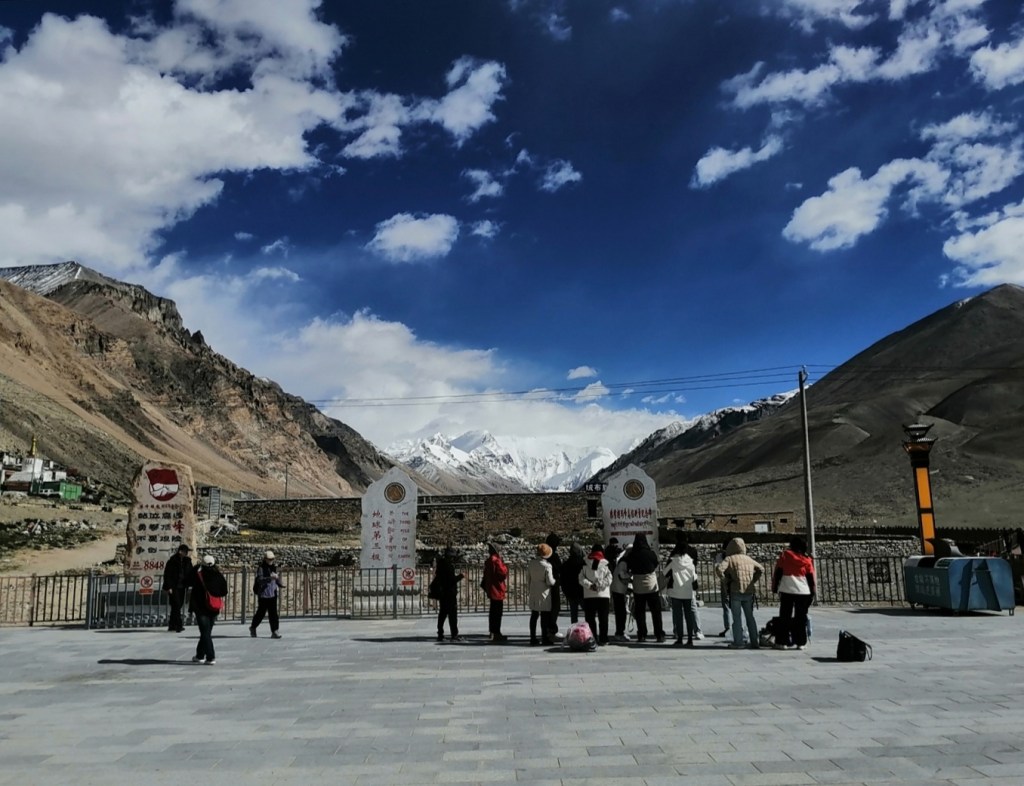
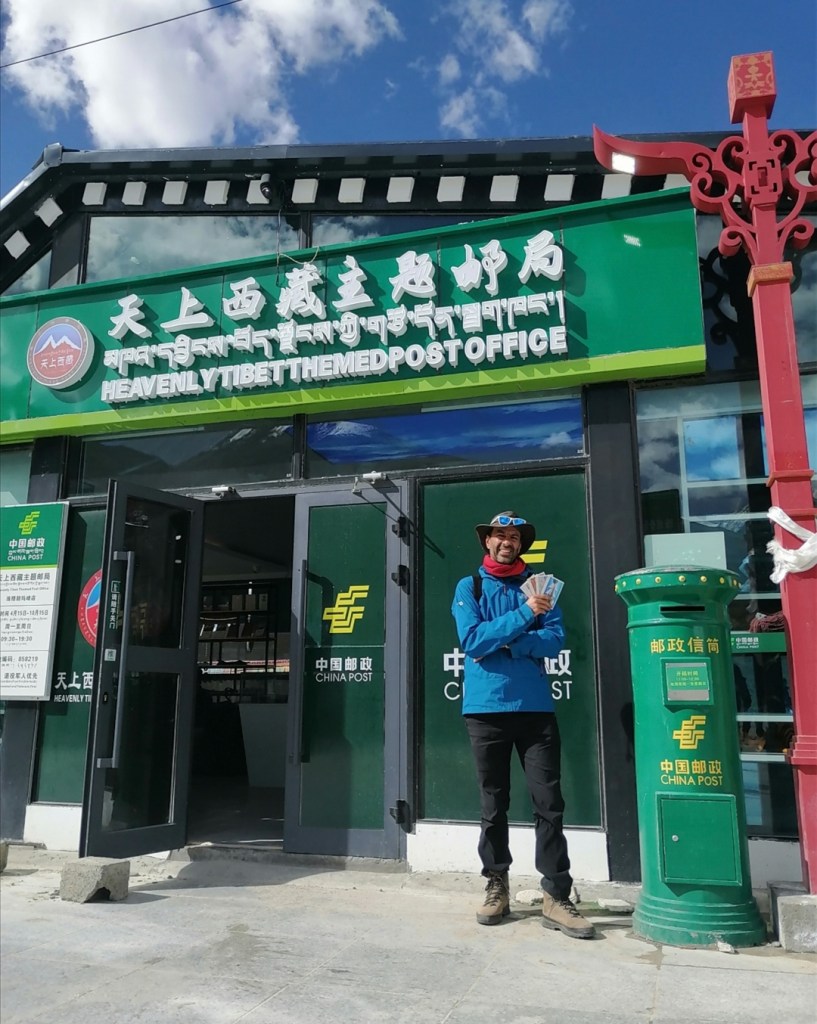
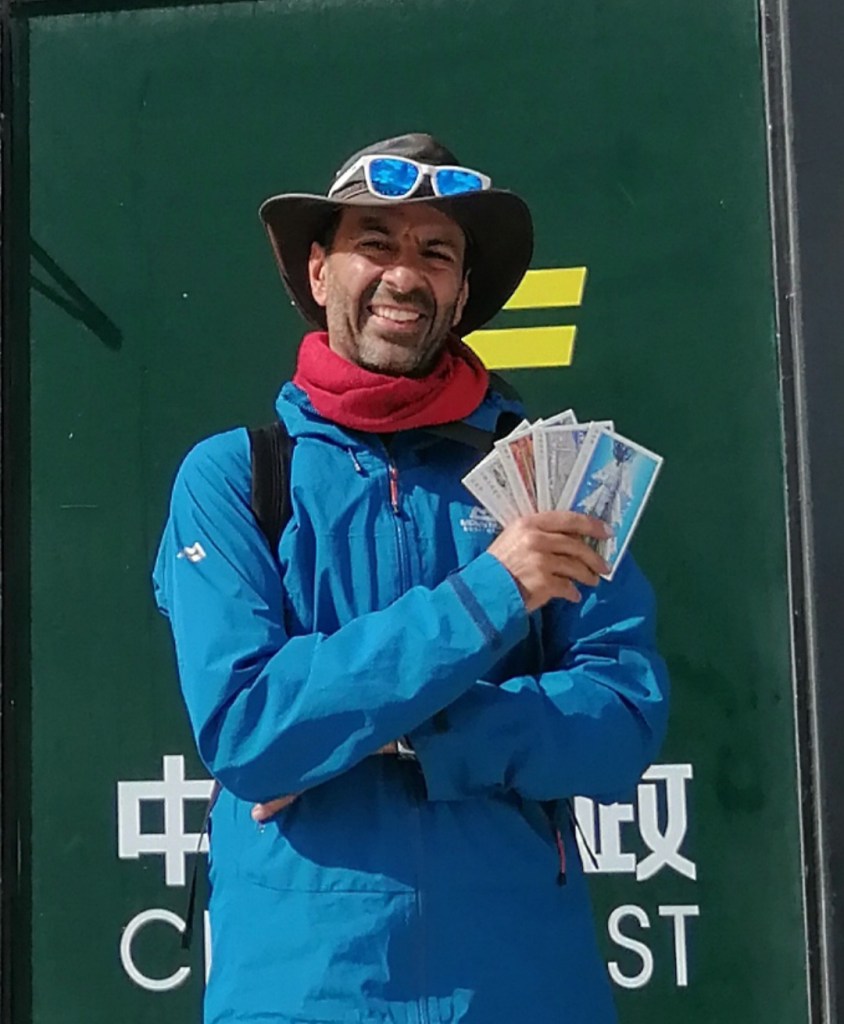
In terms of geomorphology, we observe outwash plains, terraces, hanging valleys and sediment reworking by modern braided rivers. Sediment is dominated by granite and well rounded (which formed due to decompression of rocks during the functioning of the STD here). As we approach the base camp, we rapidly transition to the glacial realm: till, moraine, giant scree slopes and debris fans full of angular material. The base camp is more like a tourist village, including shops and even the highest Post Office in the world! Everest is covered in clouds but kindly reveals itself at some points. What a sight. We can’t help but think about the first alpinists who got there with their primitive equipment, saw this and thought “let’s do it”!

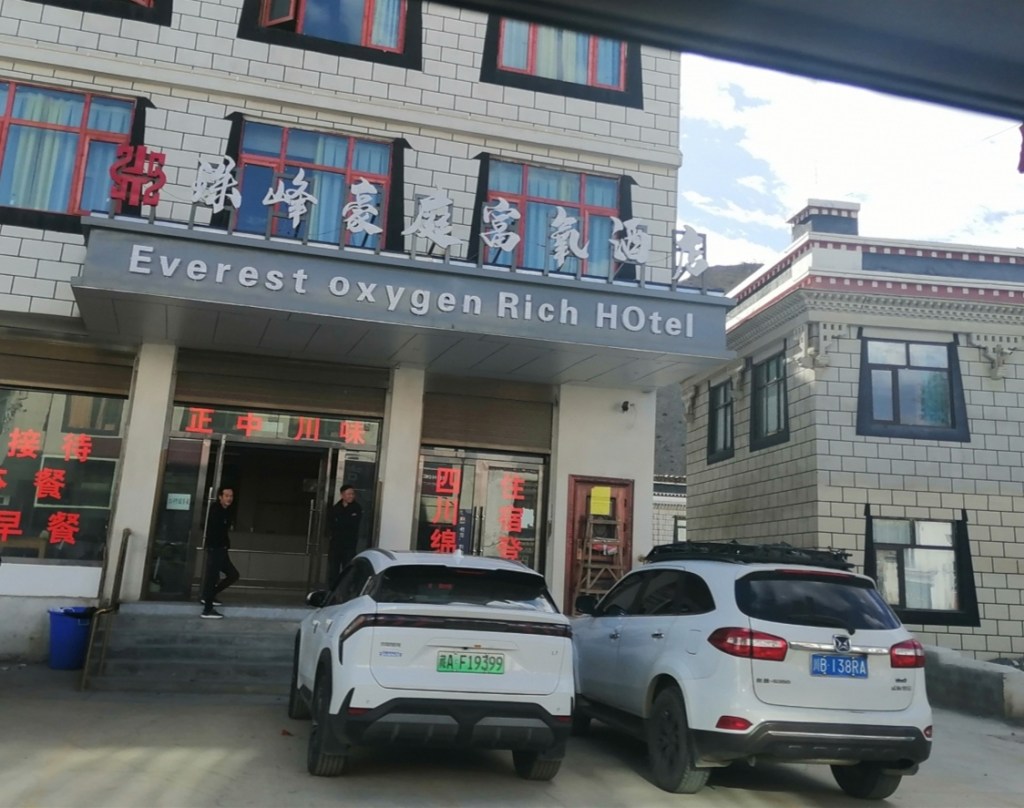
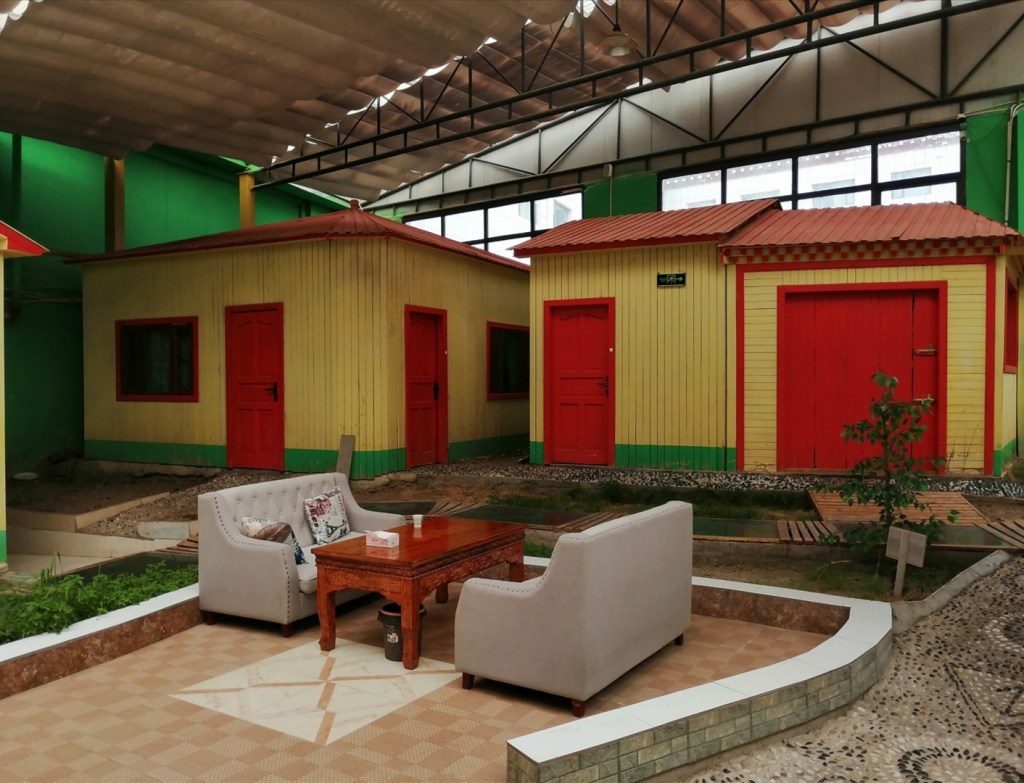
We enjoy a walk, the views and spicy sausages. On the drive back to town, we have a quick stop at the local offices of the Institute of the Tibetan Plateau. We have yak hotpot / BBQ in town, and check in a very swanky hotel, complete with oxygen diffusers in the room. I have a massive headache (and a funny tummy, sorry Eliot), but blood O2 levels are stable at 88-92% and we’re pumping O2. We should be OK!
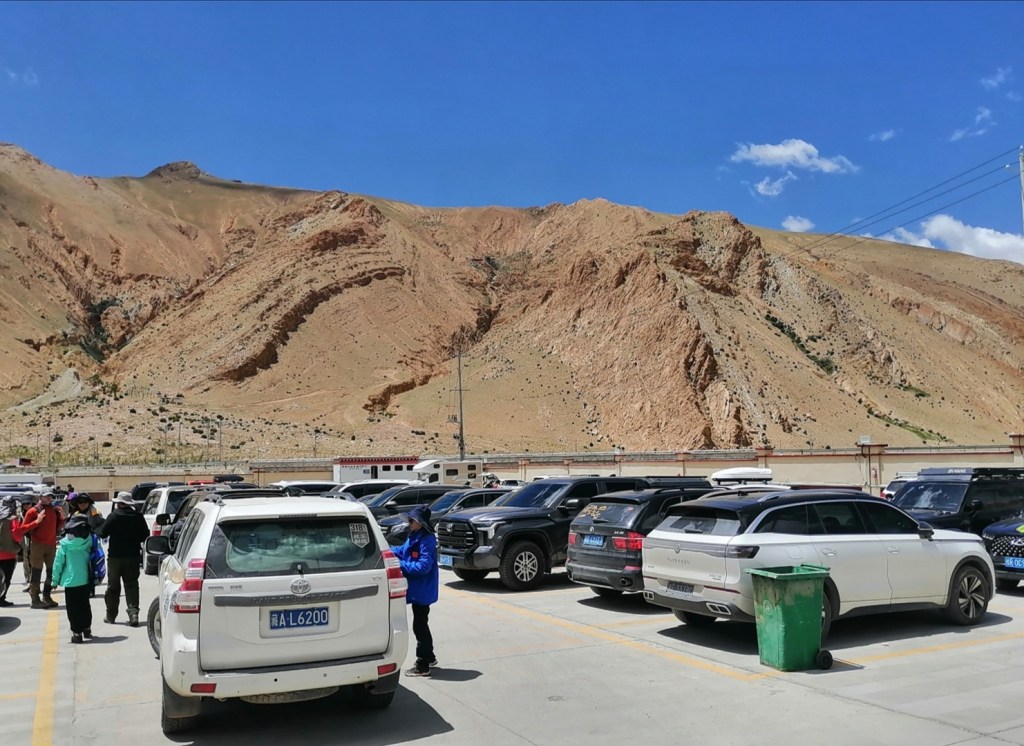
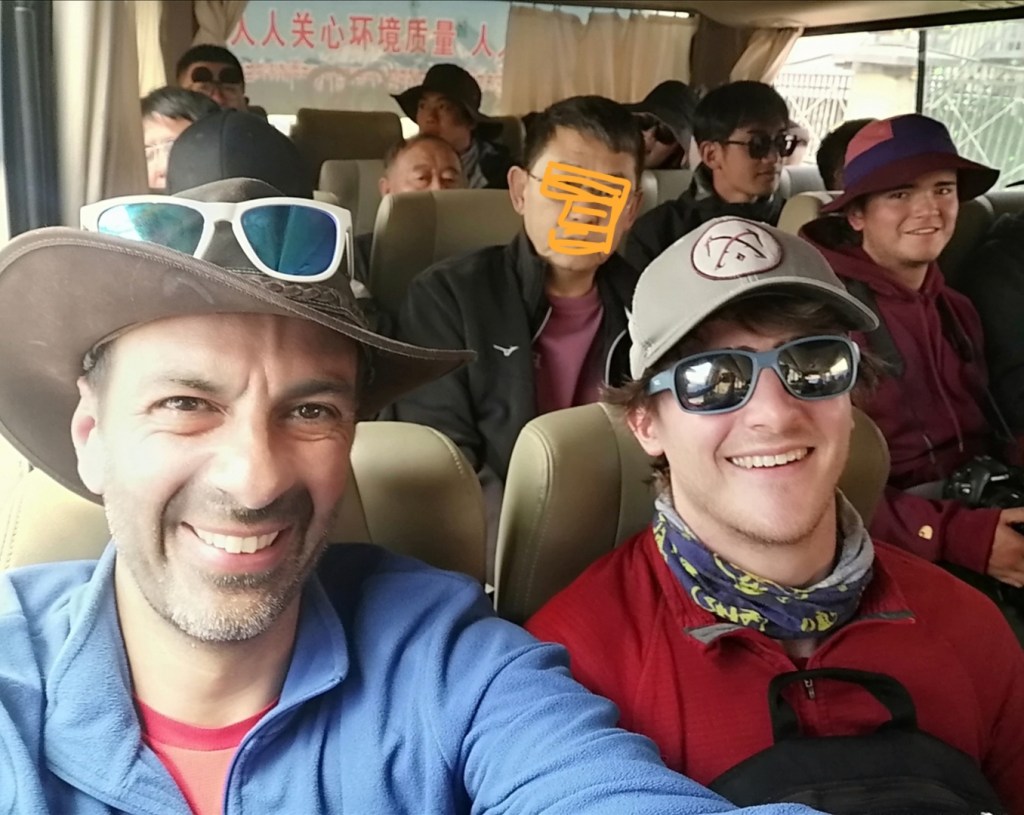
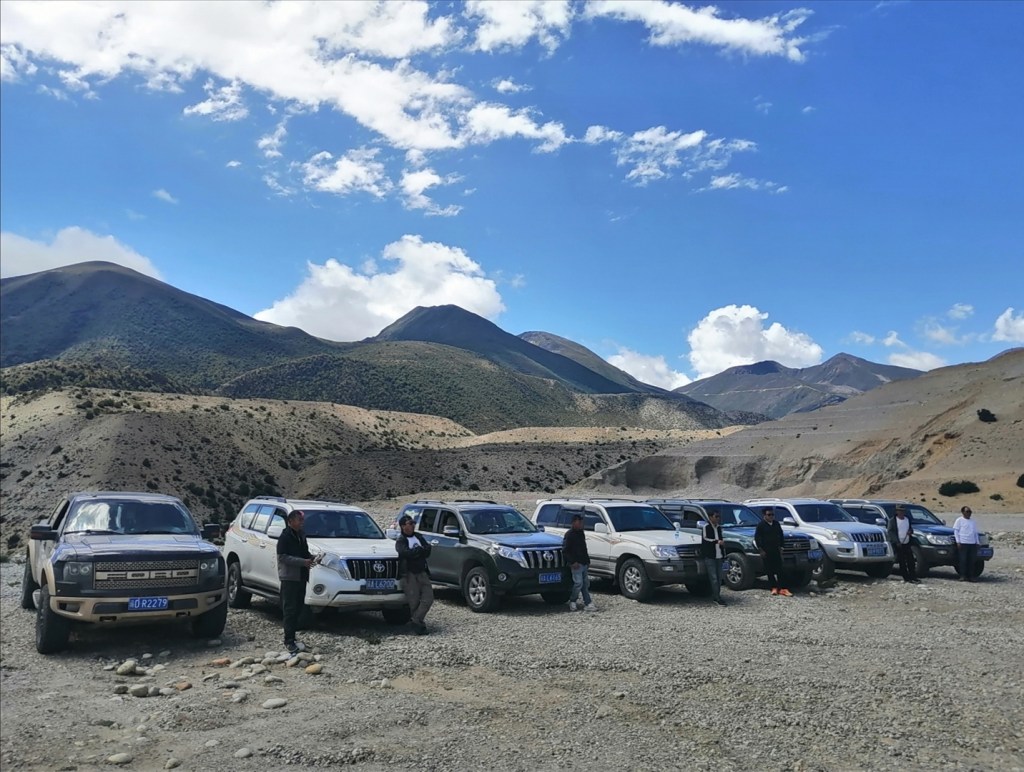
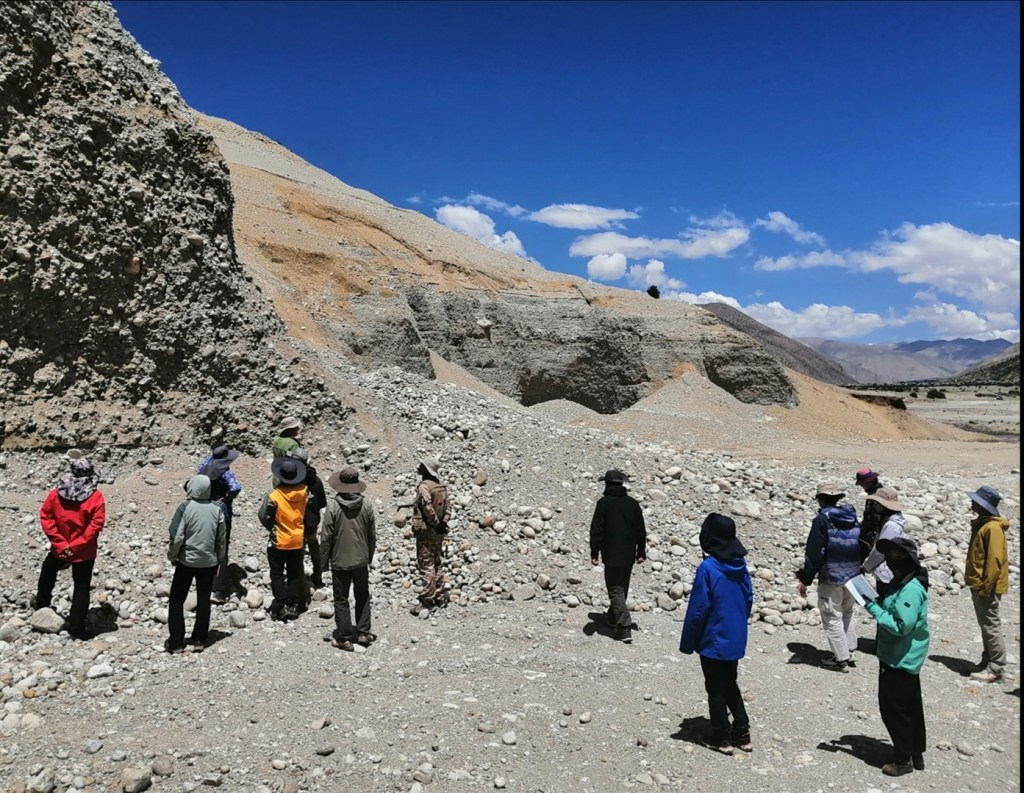
18th August: this is the best night I’ve had! Start of the day is overcast and we drive east, down the Dzakar Chu (chu means Water and river in Tibetan). The day is led by Dr. Xu Han. We are now a 7-vehicle convoy as we are joined by Xu and his team, including students and researchers. As the river crosses a HHC dome, it forms a gorge. We look at terraces up to 80 m thick upstream of gorge, and up to 30 m thick in the gorge, and discuss the sedimentology and processes of formation. We then reach the main stem of what will become the Kosi. This section of the river, which is the base level for the Dzakar Chu, is very interesting: to the east are 7000-m peaks that had glaciers that reached the valley at the last glacial maximum, unlike the Dzakar. The morphology is strikingly different, with many moraines, boulder-rich alluvial fans breaching the moraines, and massive fluvio glacial terraces. As we drive south, we reach the entrance of a gorge, the hypothesized capture point that features in an article that should be published soon (I will put the link here when it happens). The idea is that the whole headwaters of the Kosi upstream of that point were an internally drained basin up to around 80000 years ago. We look for and discuss evidence of the capture.
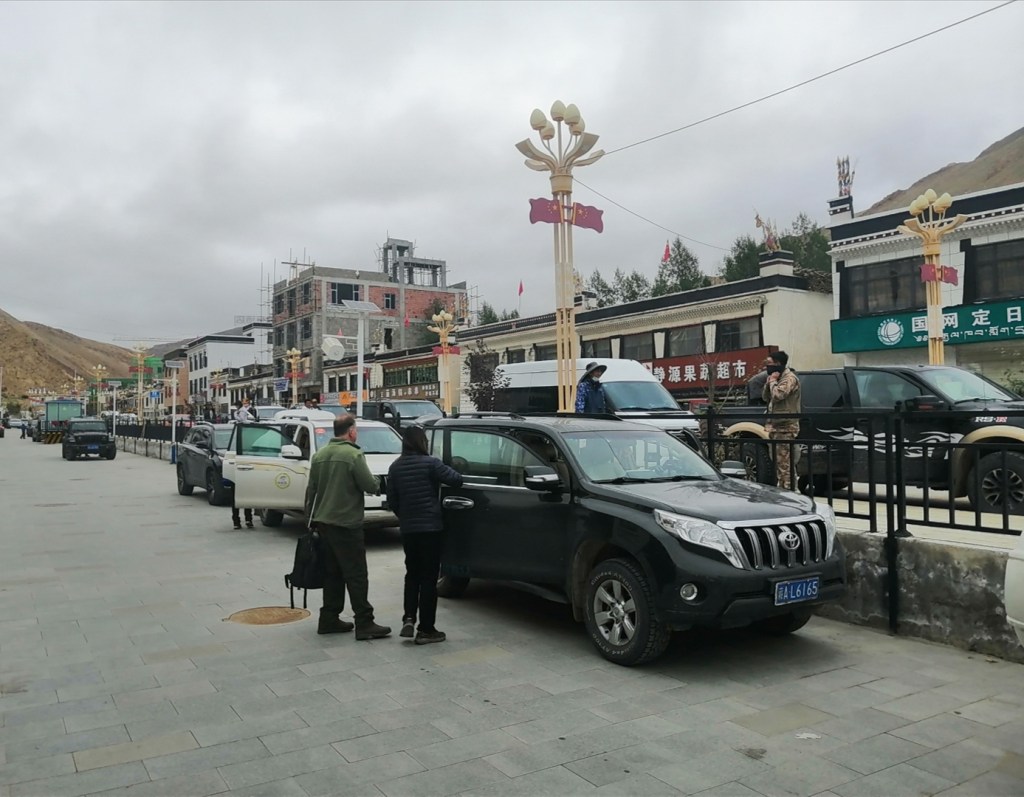
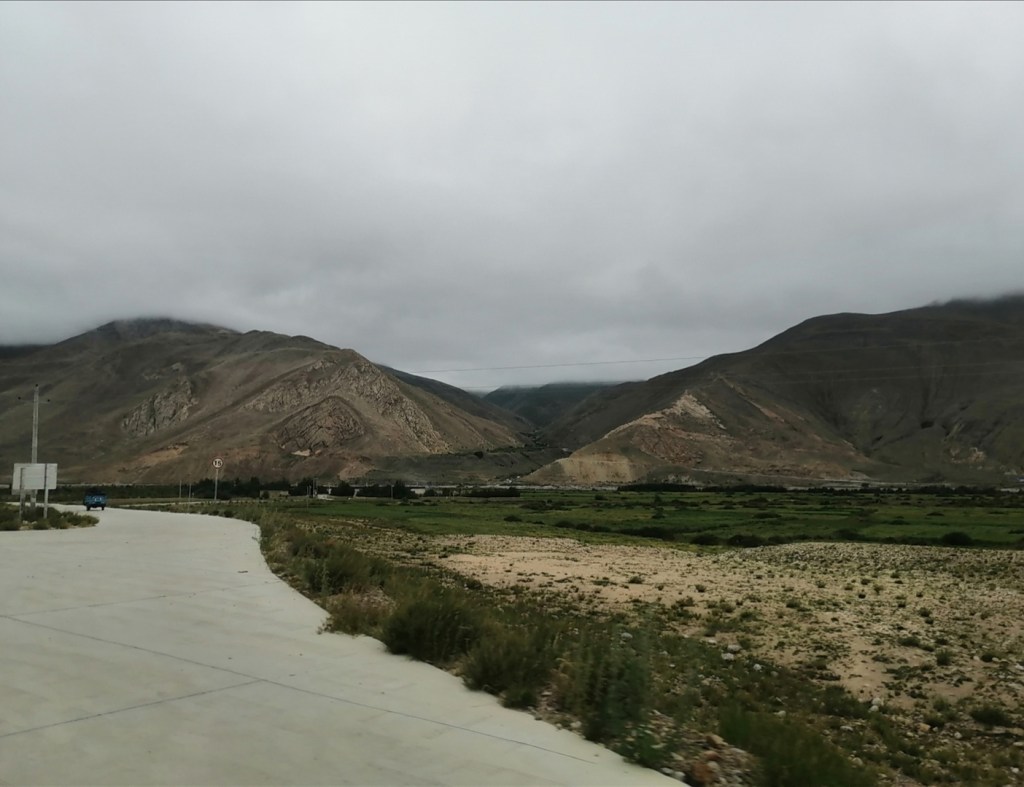
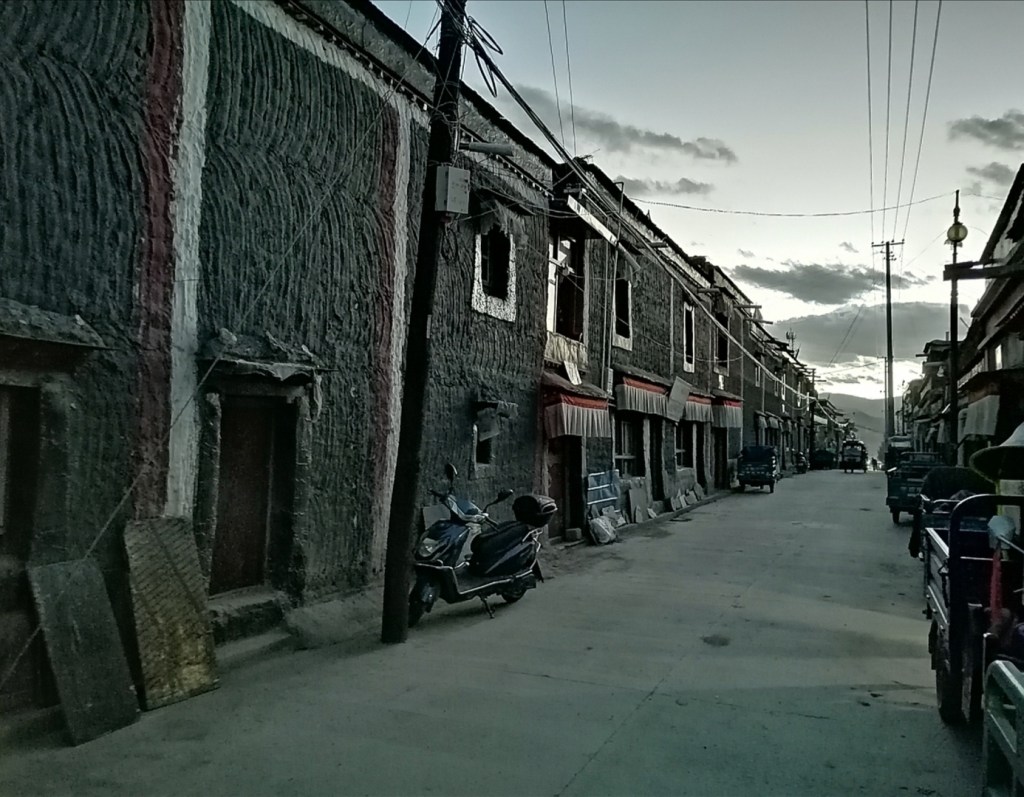
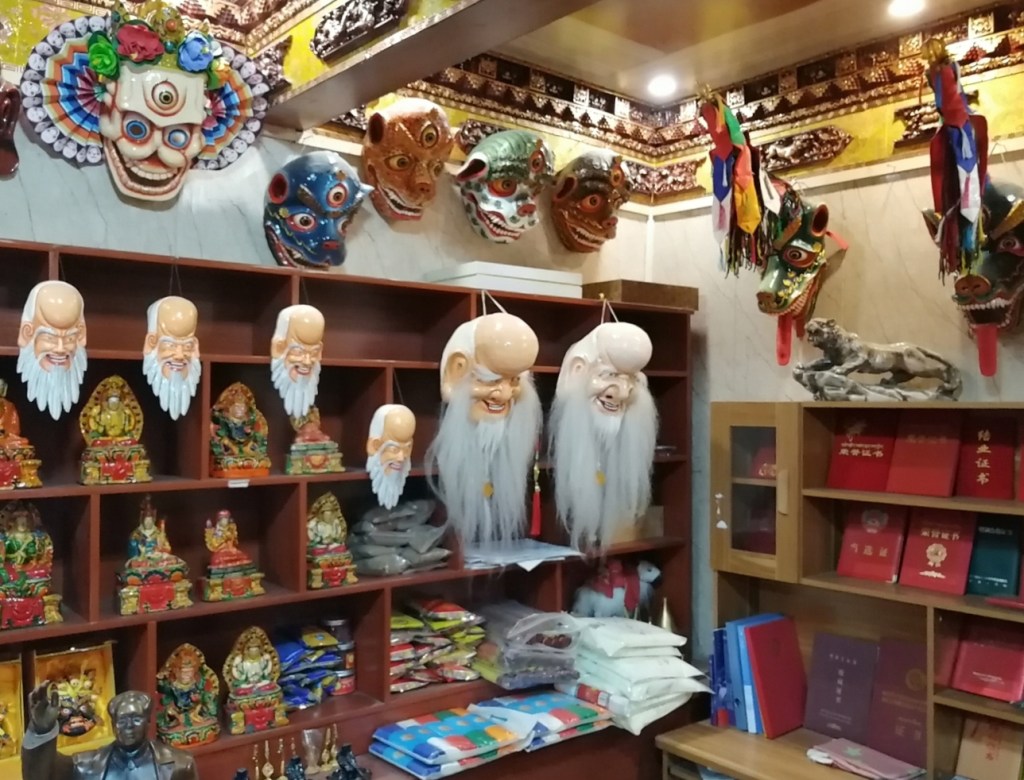
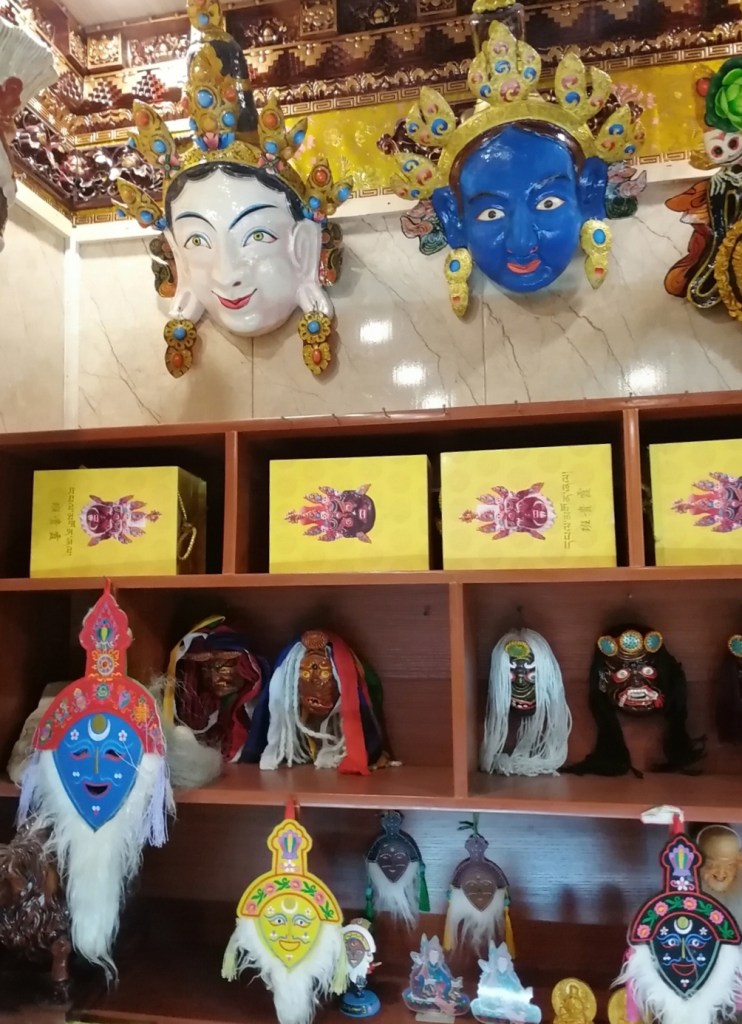
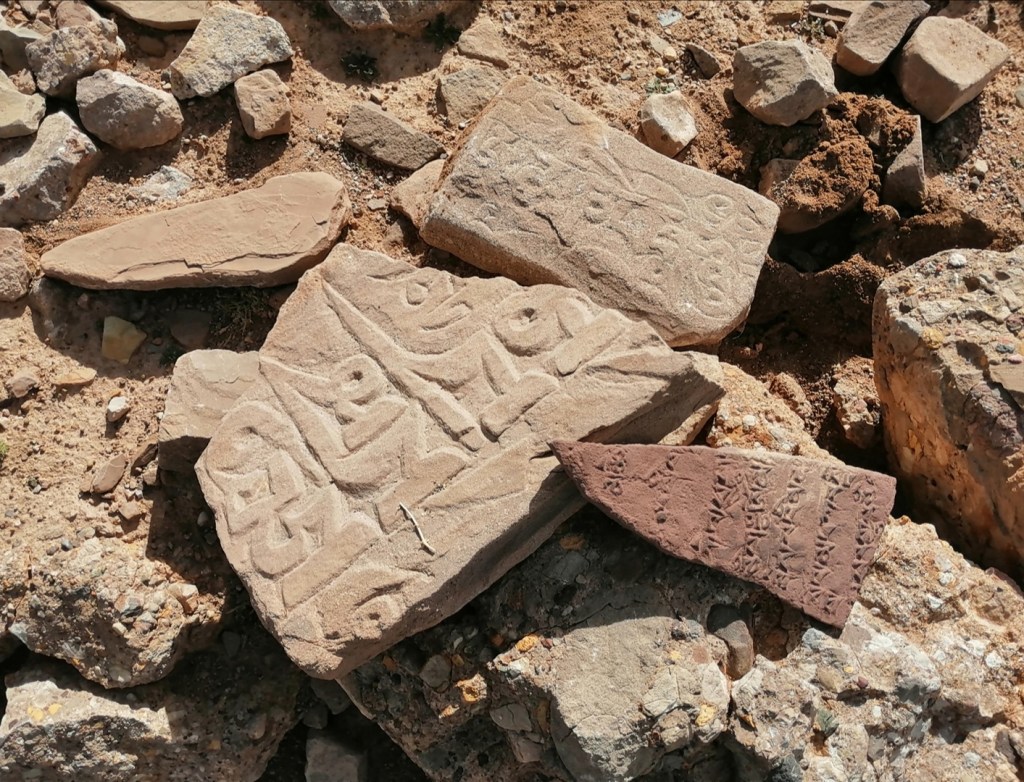
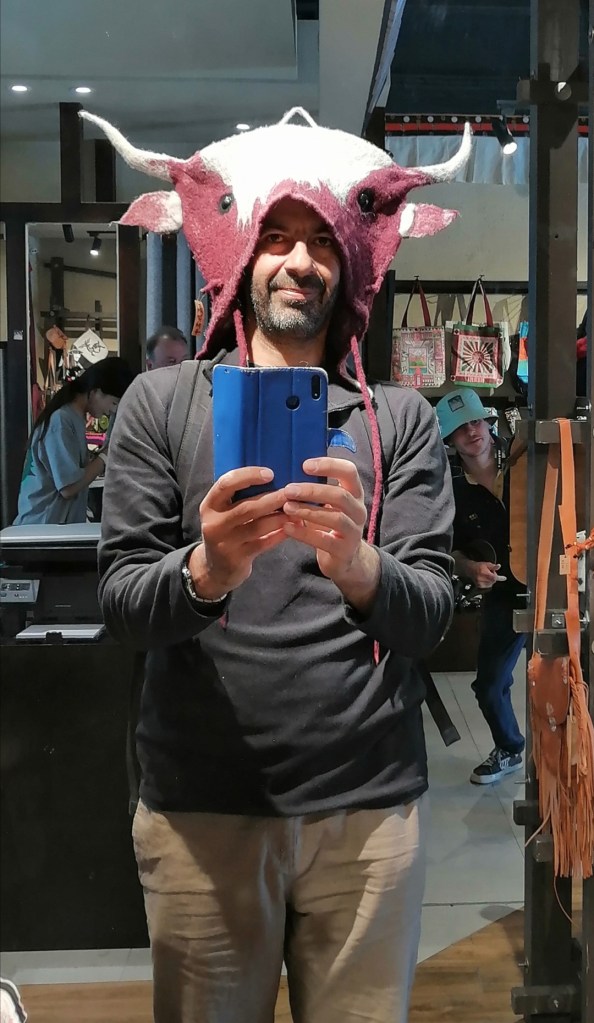
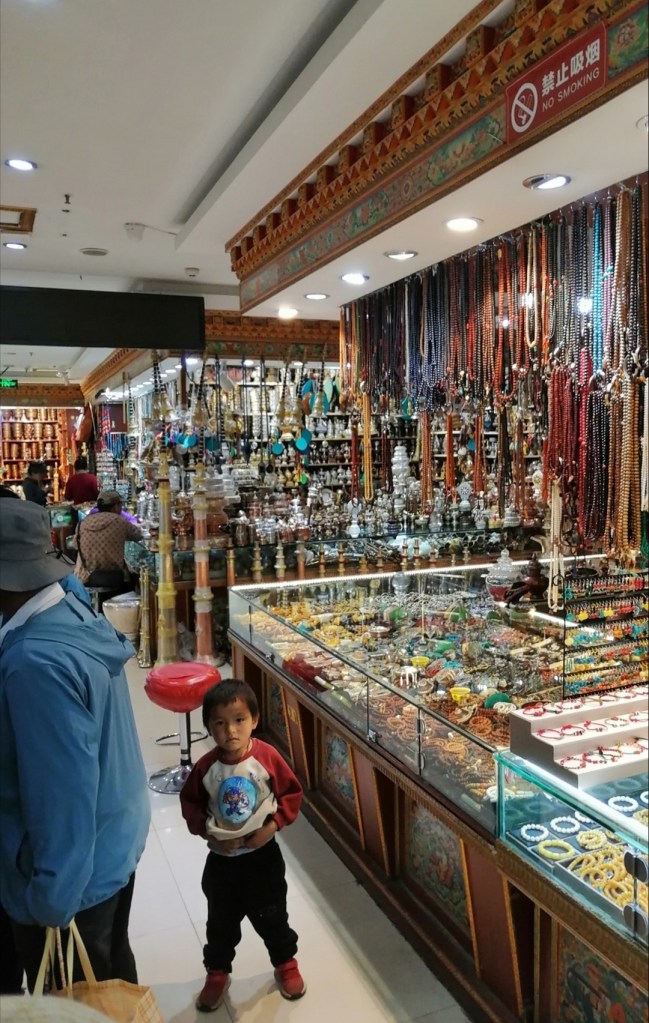
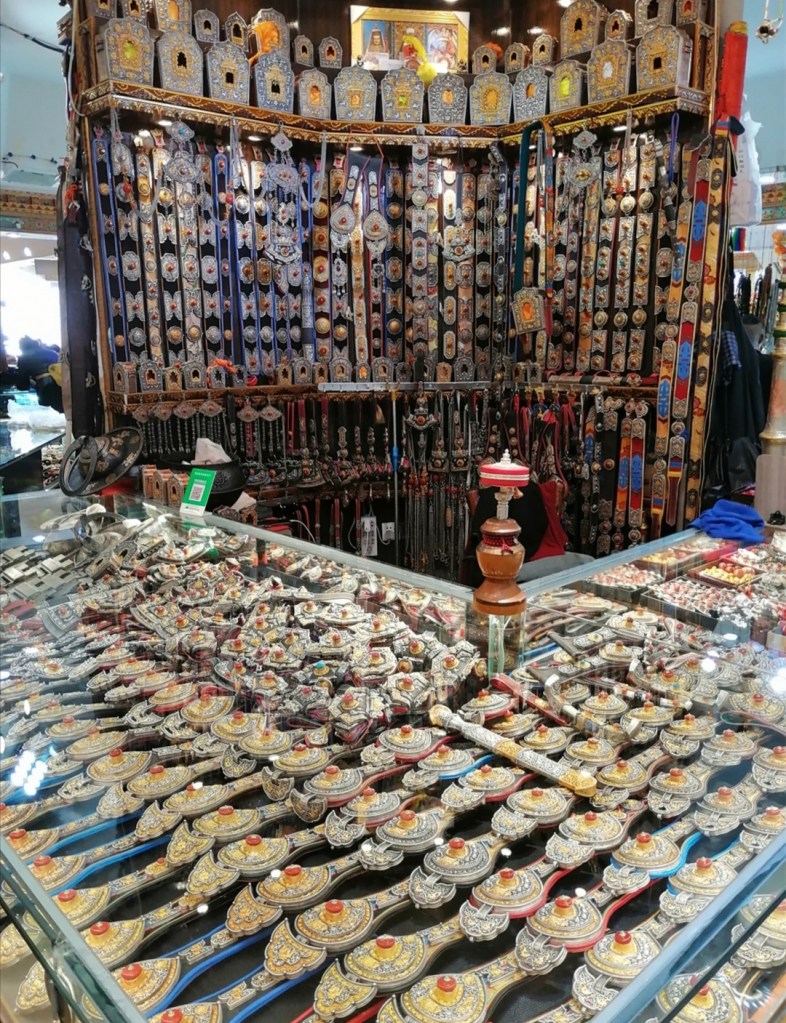
We then drive back north (upstream) through the main valley, pass a point which I was convinced was a capture point from satellite imagery but is a clear example of antecedant drainage, as the river forms a gorge and a strange right angle turn, as it goes in and out of one of these rapidly exhuming HHC domes (thermochronology gives ages of only a few million years). We drive north, see evidence of a very large palaeo-lake, pass through an active graben that interrupts the chain of high peaks (check out the triangular facets!) and arrive in the lovely town of Sakya, that includes a Buddhist temple founded in 1077. We do a bit of shopping / sightseeing on the way back to the restaurant (hat for Eliot, sunglasses for Darwin, visit of a spectacular traditional mask-making workshop). We are at 4350 m.
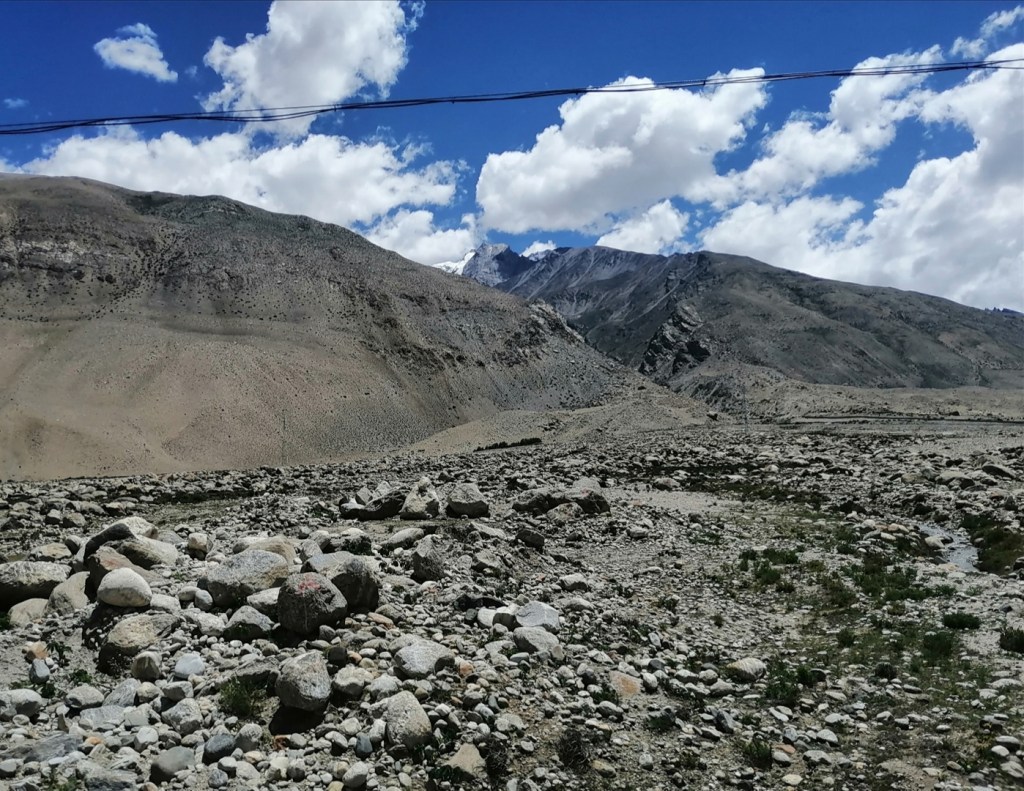
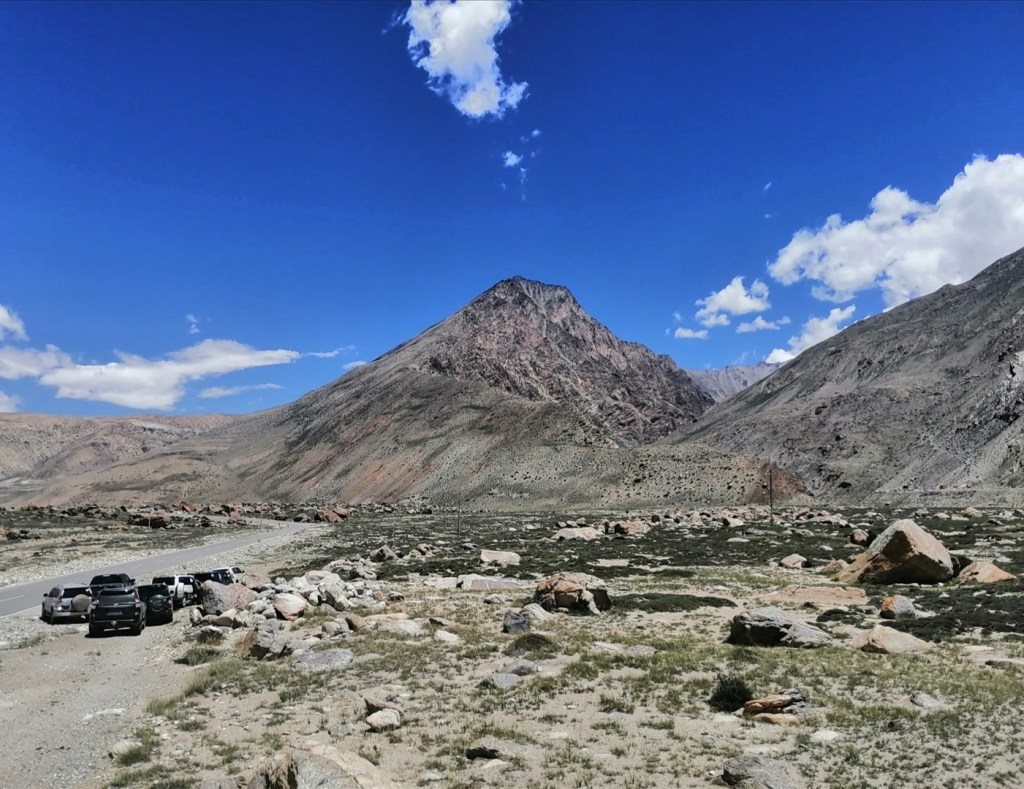
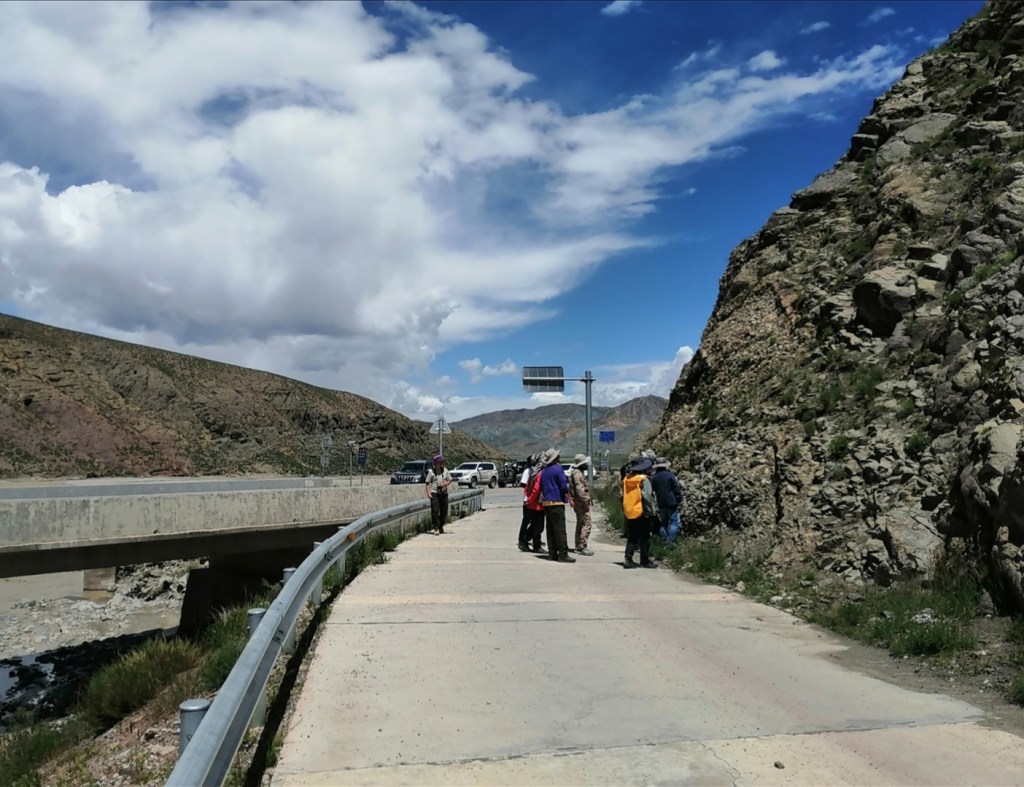
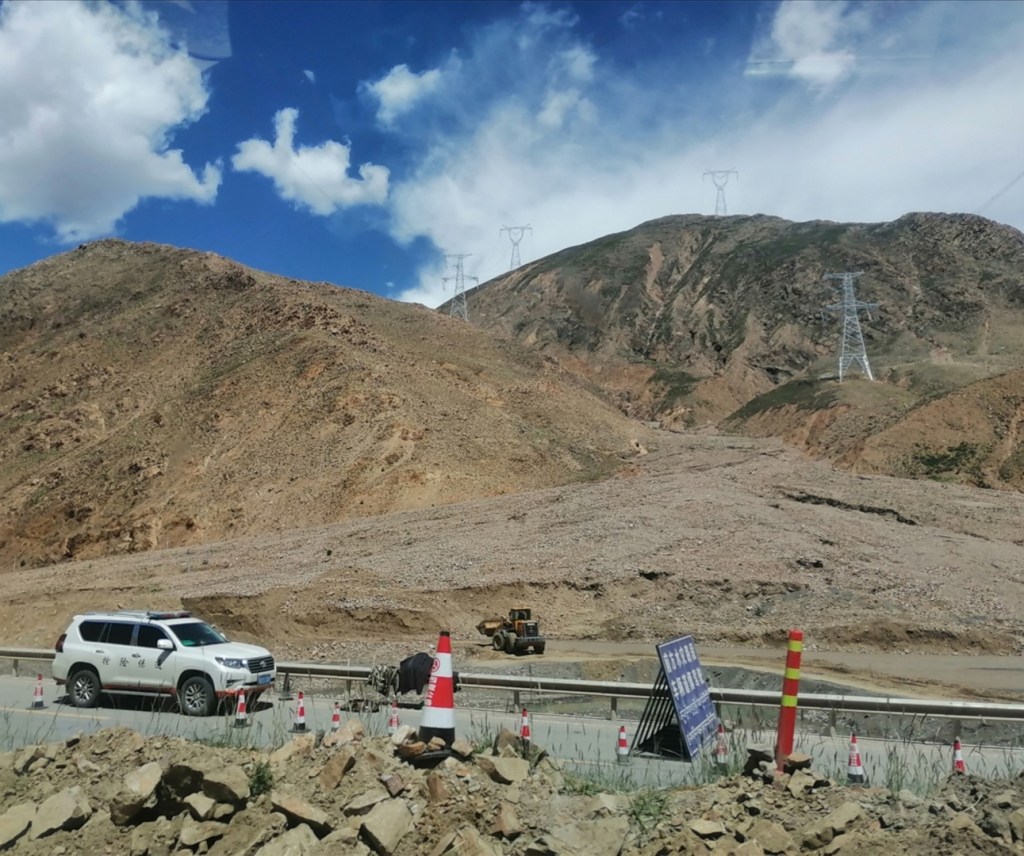
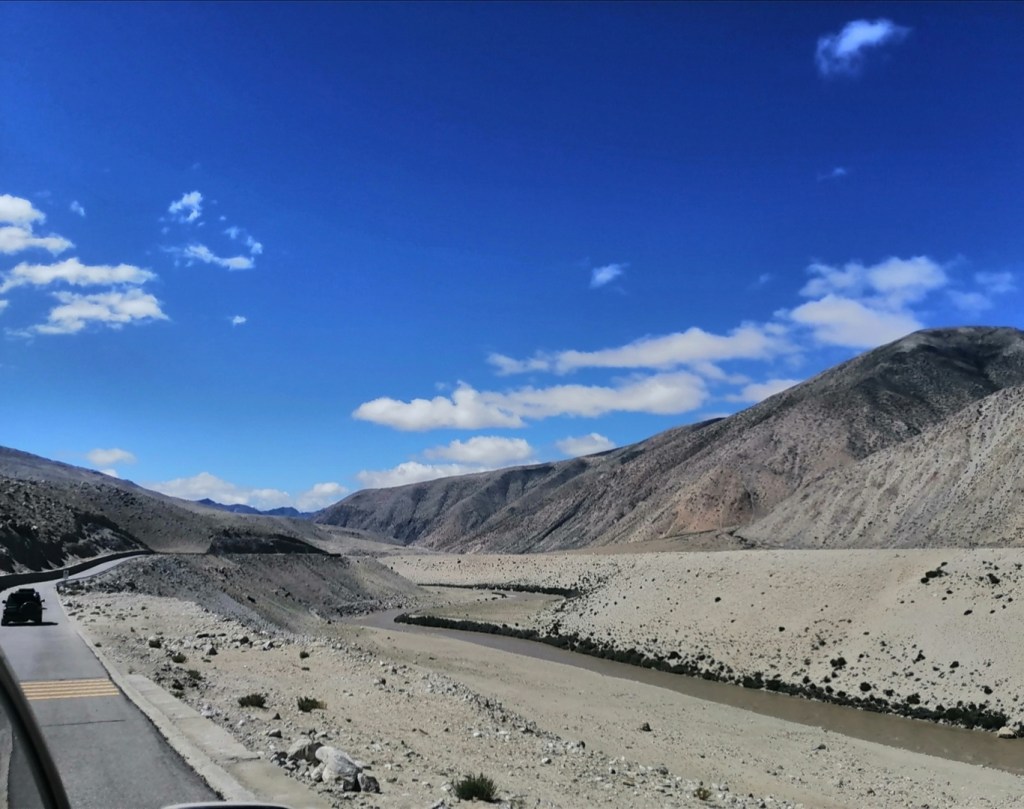
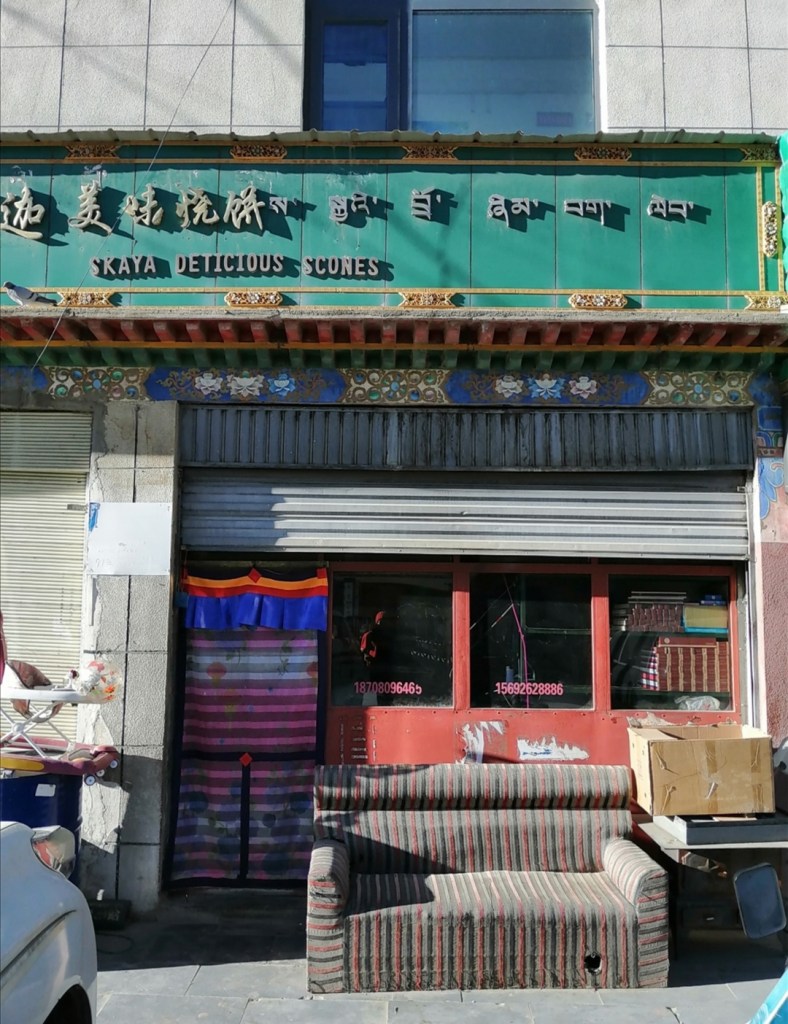
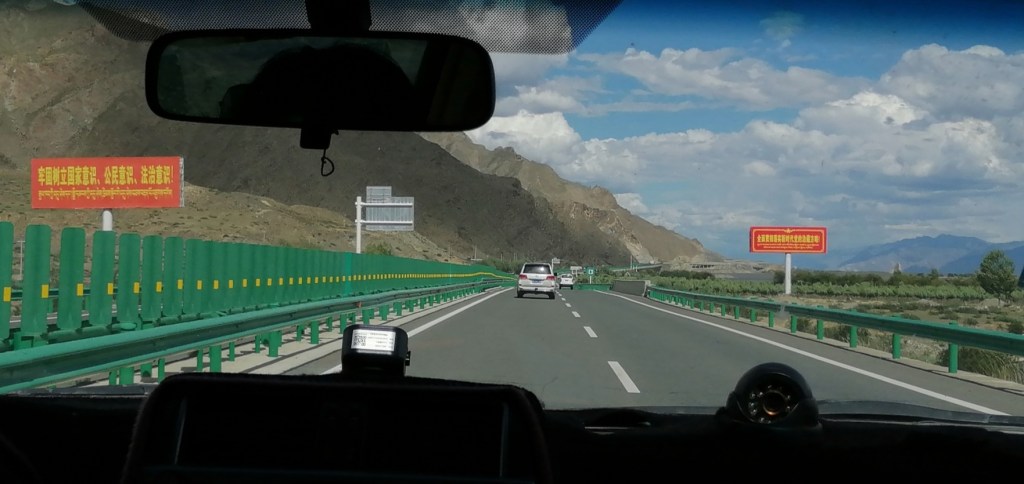
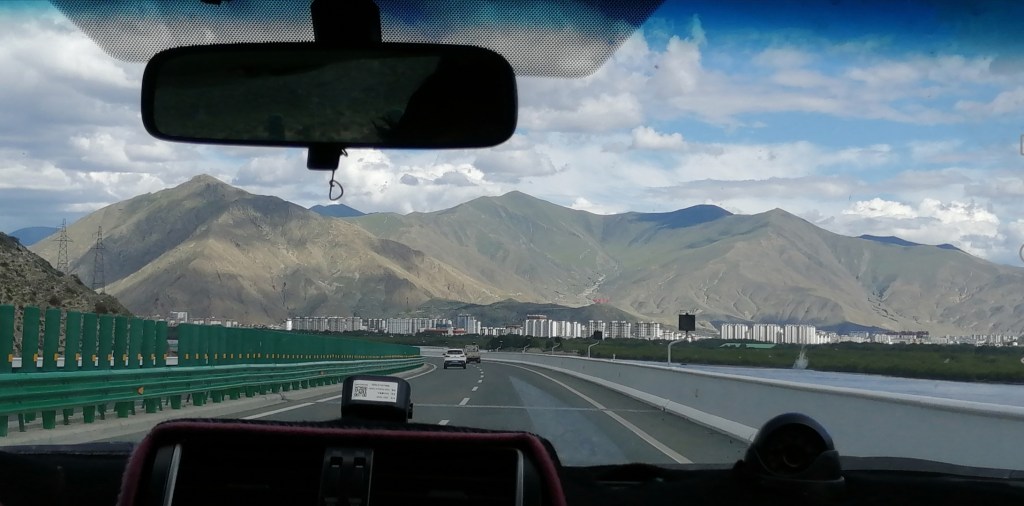
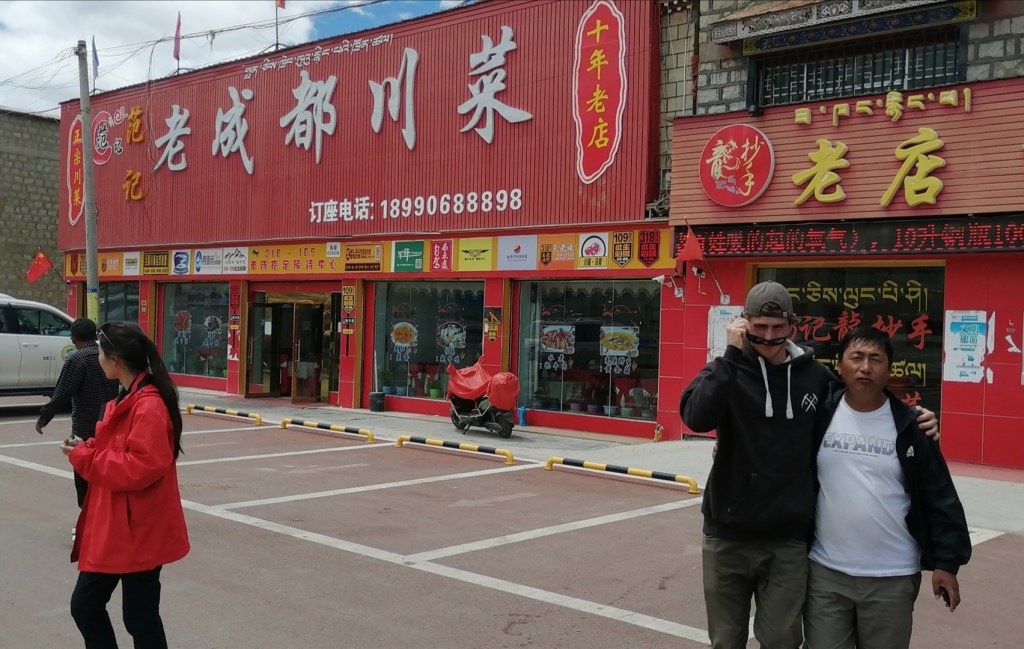
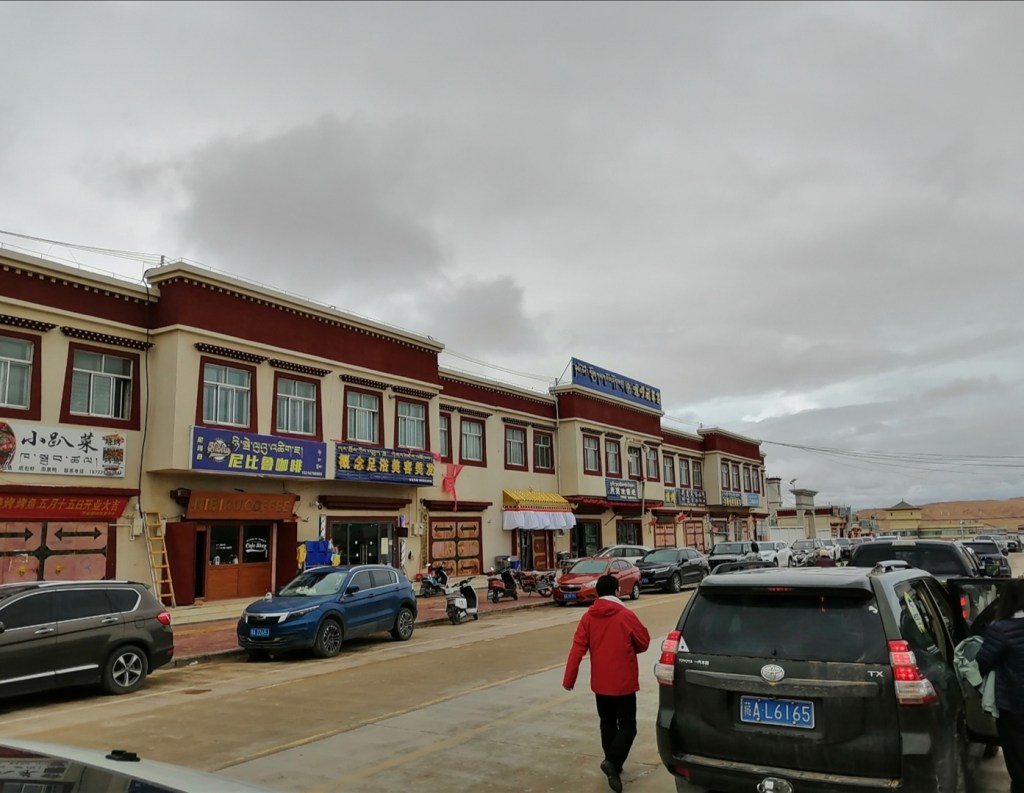
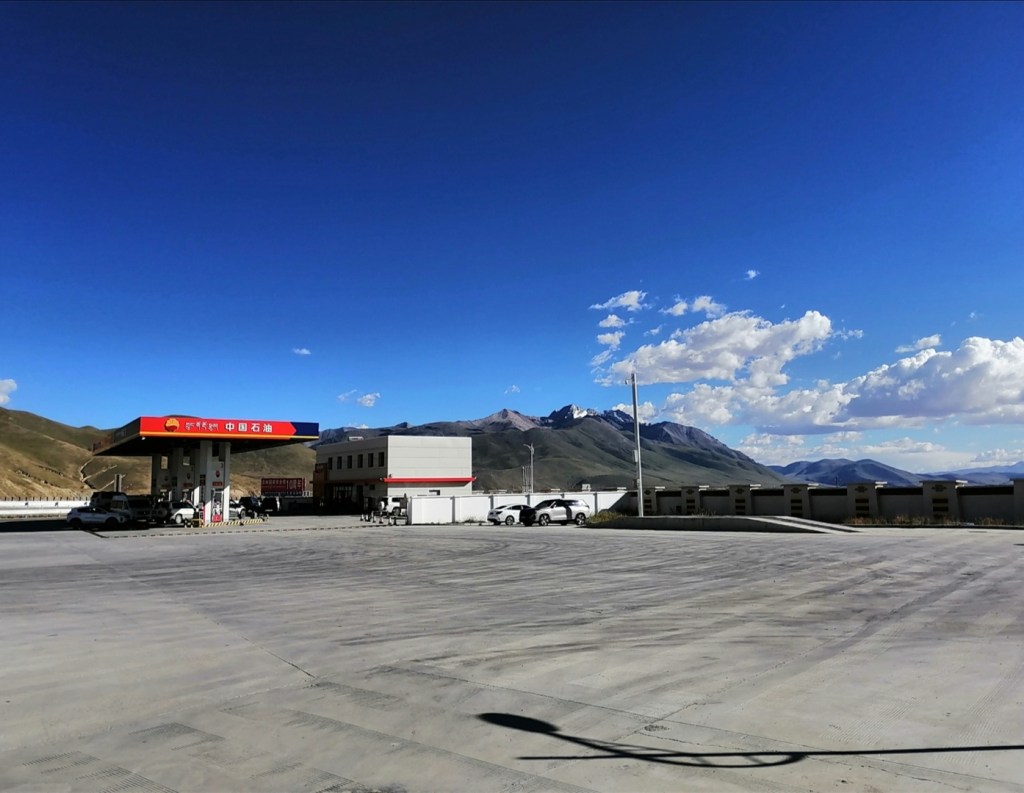
19th August: today is a (long) travel day. We leave Sakya to travel east, back along the Yarlung, pass the confluence with the Lhasa River, all the way to Zedang where we will spend the night. I didn’t sleep so well and keep having nightmares; maybe it is my body’s way to increase my heart rate and get more oxygen in? We have breakfast in a popular small eatery (we don’t get to try the Sakya Delitious Scones unfortunately), and we’re on our way! 30 minutes later, we are stopped: a very large wind turbine blade is coming our way and we have to wait. Instead, we turn around, back to Sakya, and across the hills through lovely green valleys. One of the big surprises of this trip is how green south Tibet is, possibly because it is the rainy season. We then rejoin a motorway and make good progress until the section where tunnels where destroyed by landslides: the ride is as bumpy as on the way in, and the Yarlung is as impressive as before (by the way, Tsangpo means river in Tibetan). I manage to take some pictures of the giant boulder terraces in the gorge. We are back on the motorway and travel to one of Xiao Bai’s sites near Zedang, which is unfortunately under water! Instead, we find a site near a tributary nearby where we get a chance to observe, describe and discuss aeolian / fluvial interactions and their preservation in the stratigraphy. We check in the lovely Meikang International Hotel where we met Yao Gan, who does thermochronology, was in Edinburgh at the same time as Xiumian, and with who I went on the Inch field trip. He will join us for the trip north.

I have a good chat with Zhihang who leaves tomorrow. He seems to have learnt a lot on this trip, and we will meet again in Edinburgh in September! I manage to do a bit of work and go to bed at midnight. Tomorrow is an early start for a long drive…
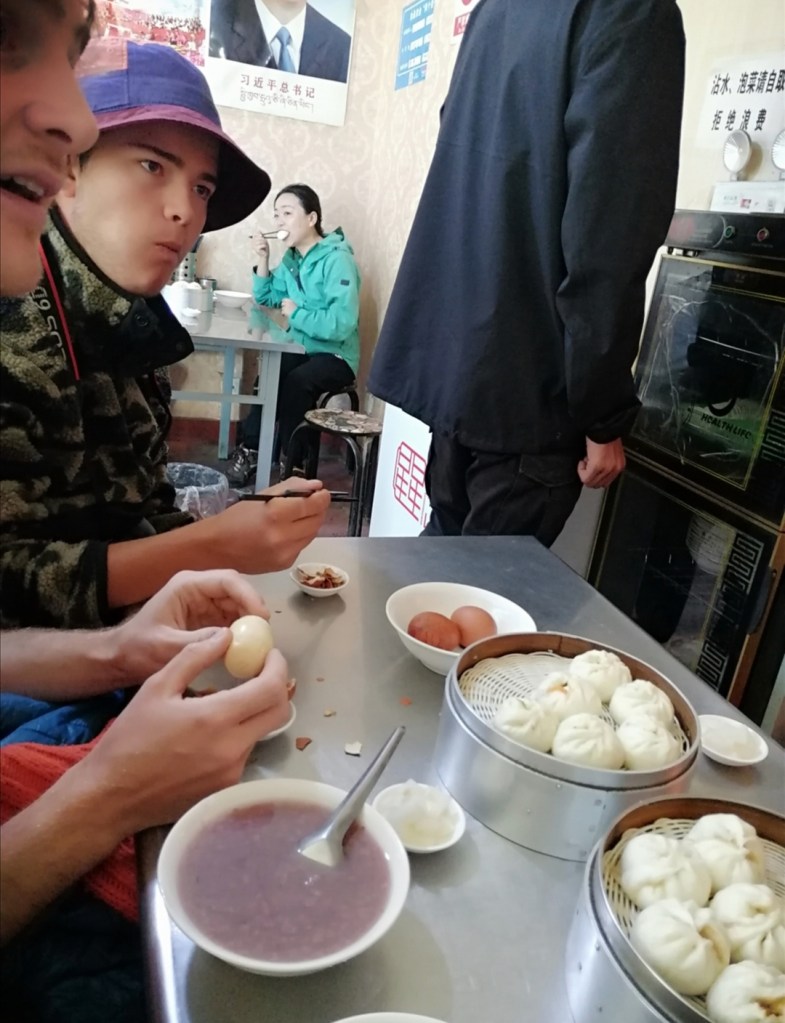
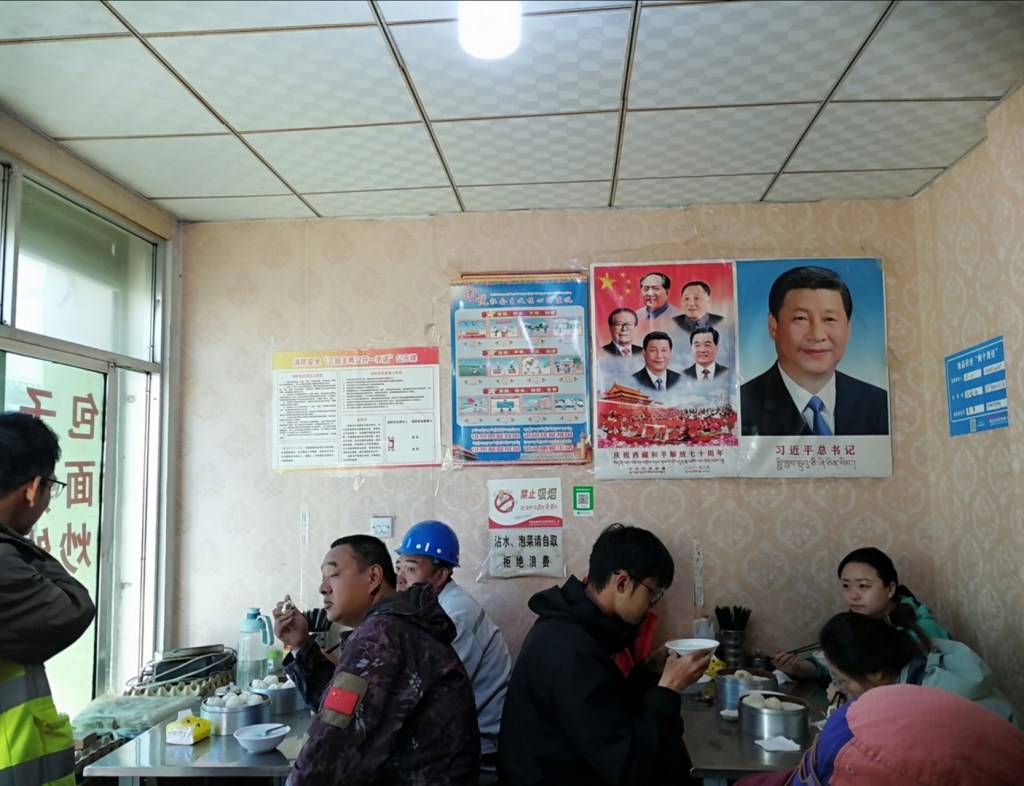
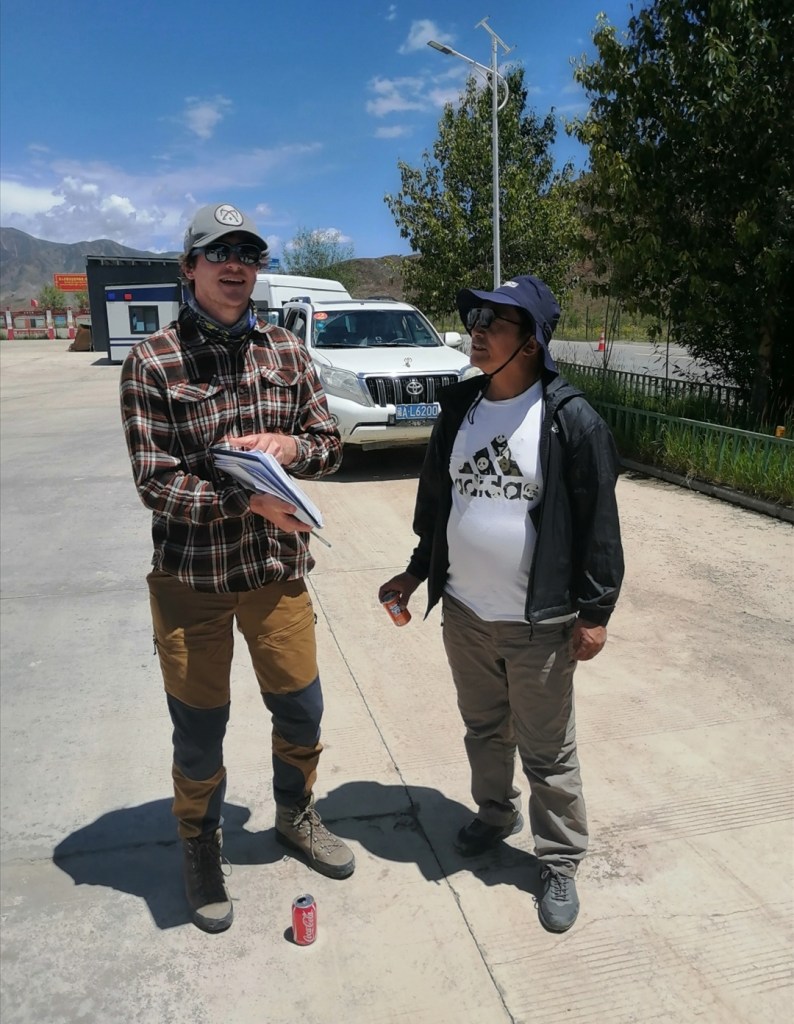
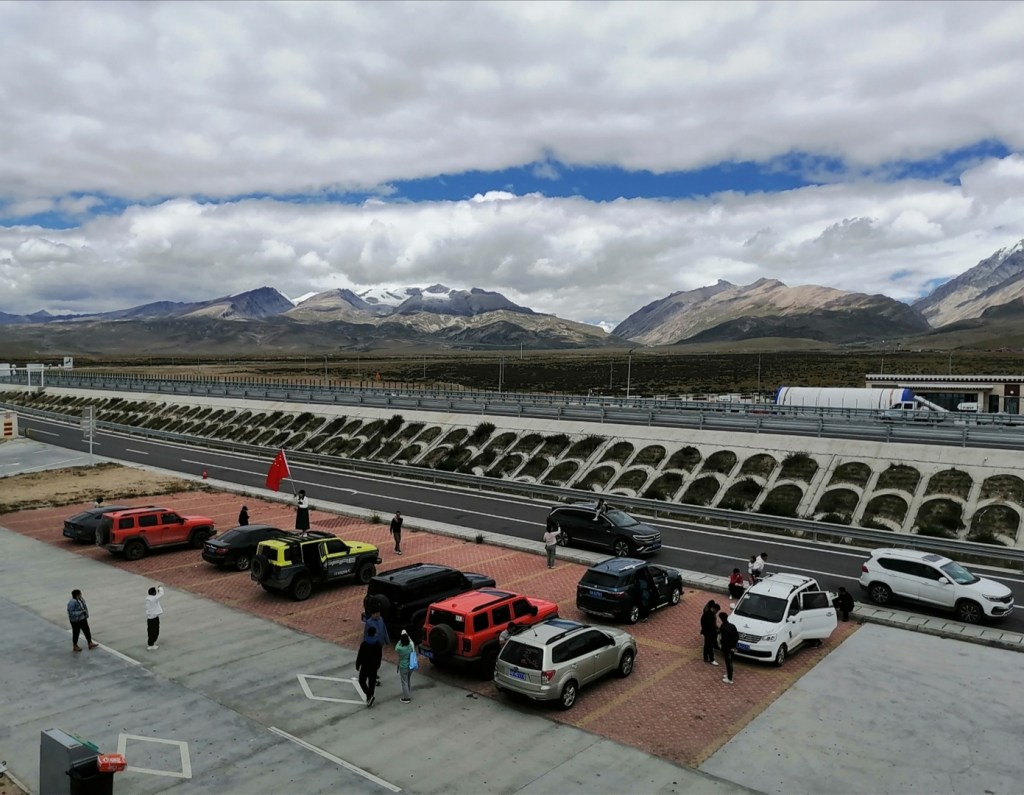
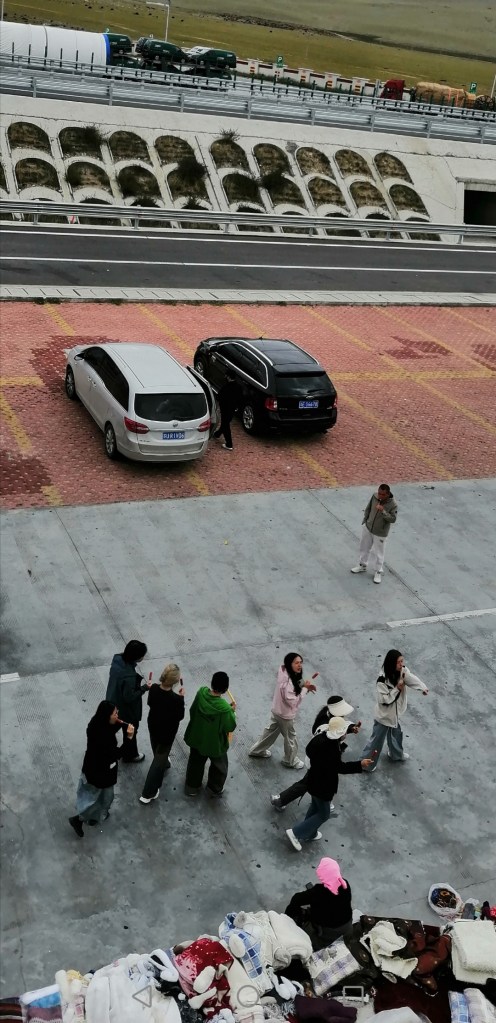
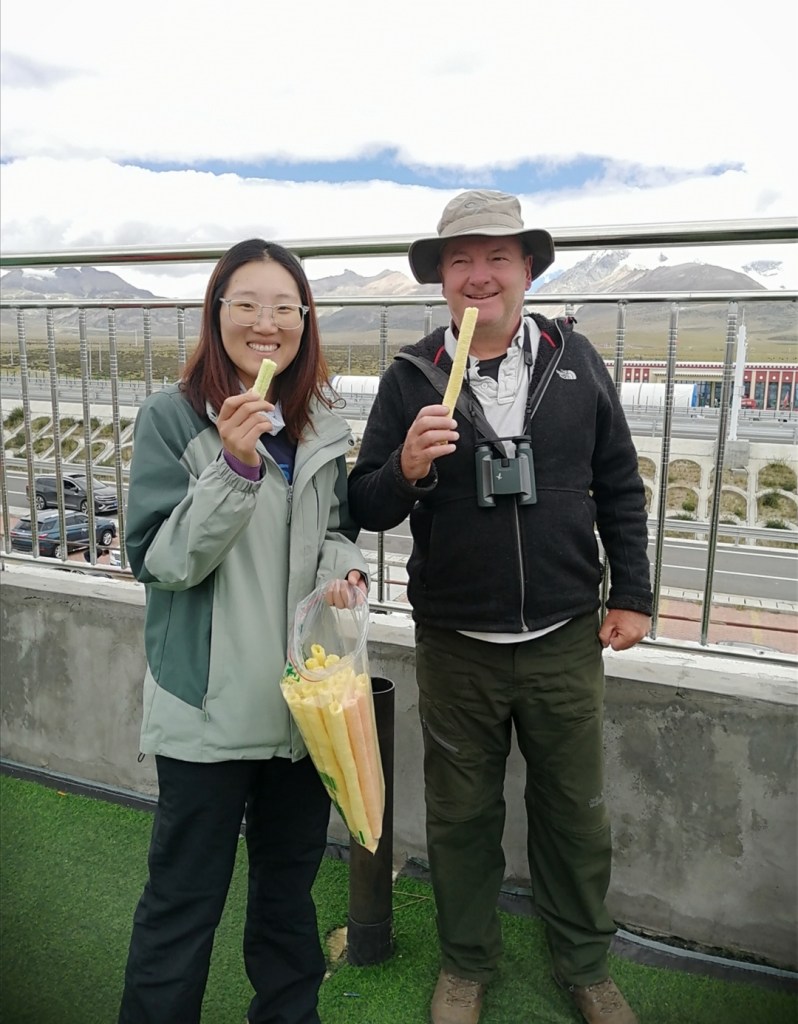
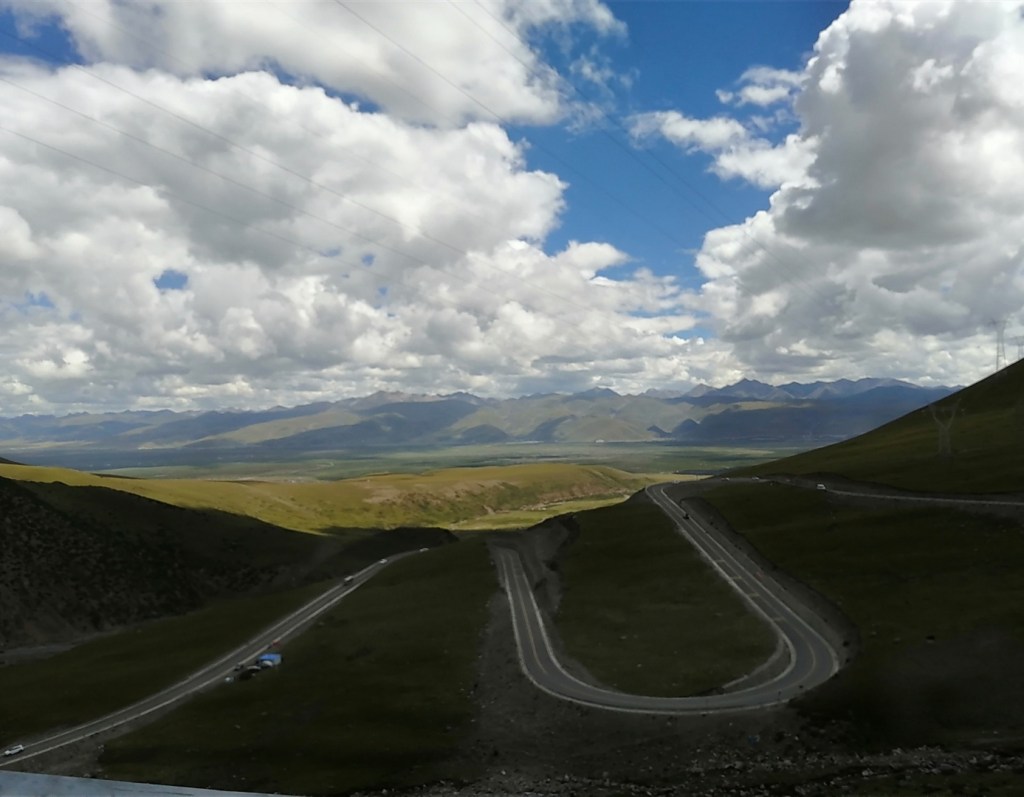
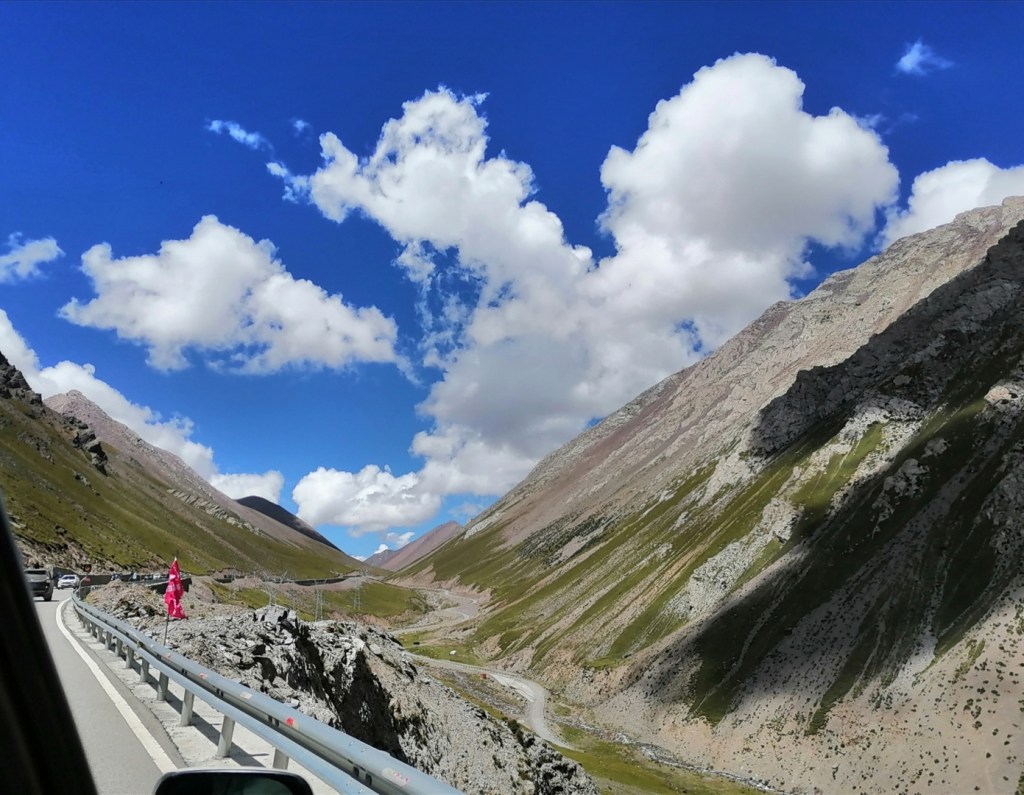
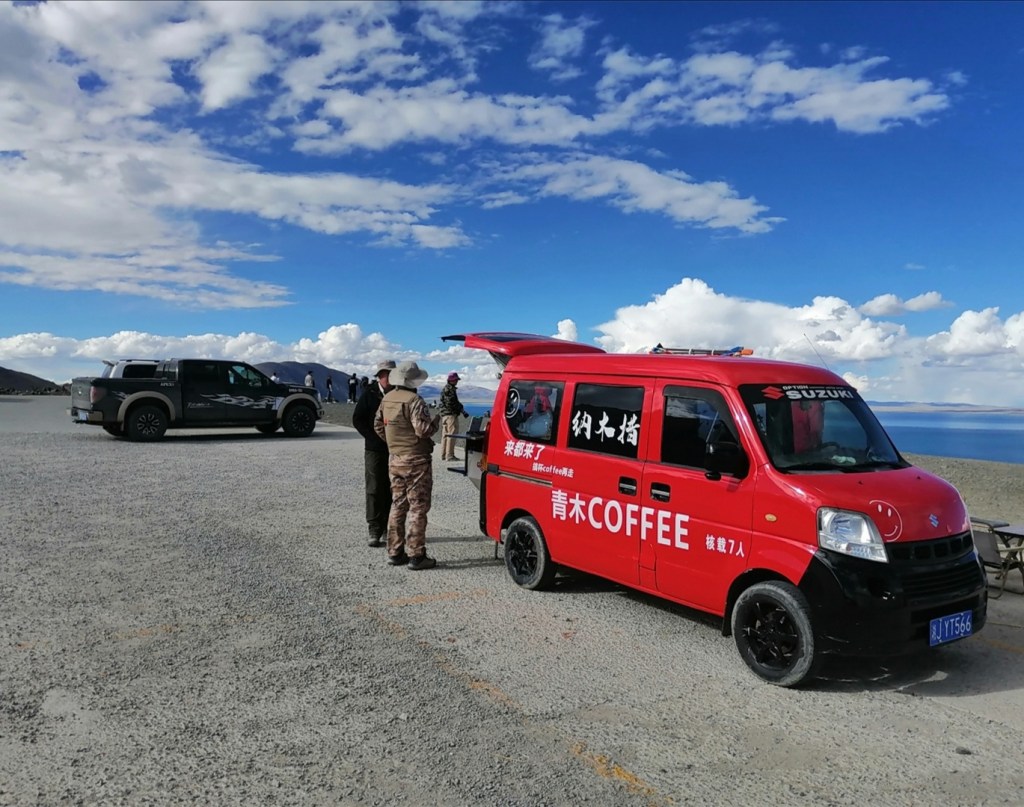
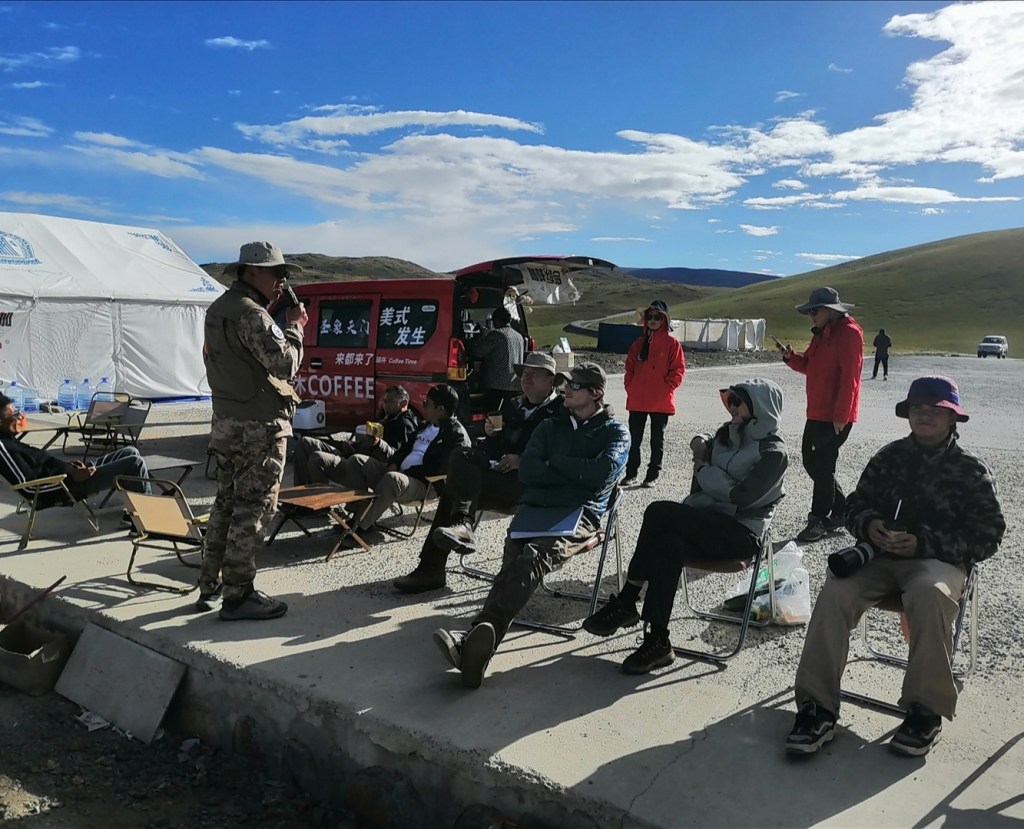
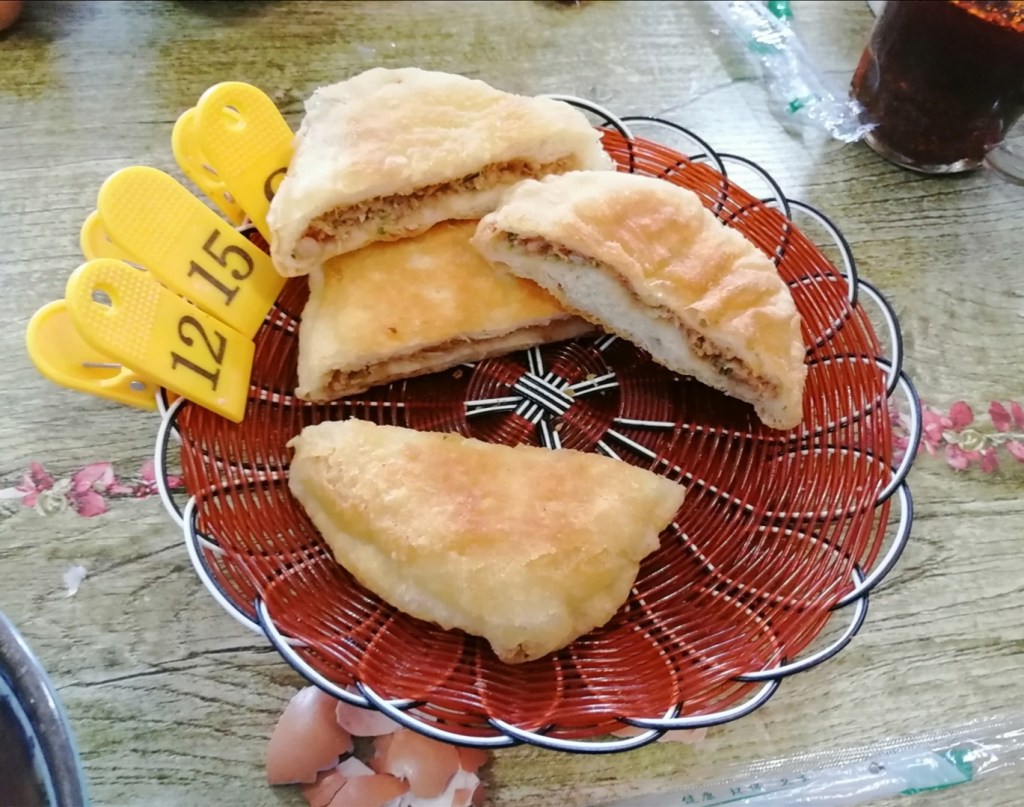
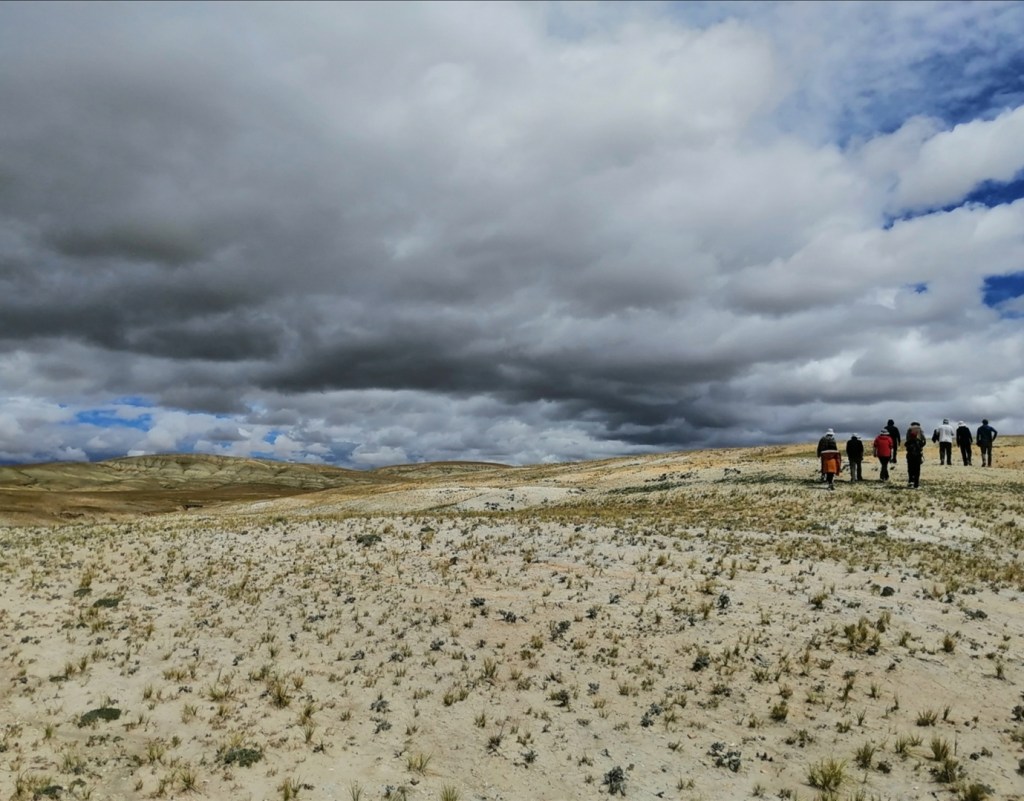
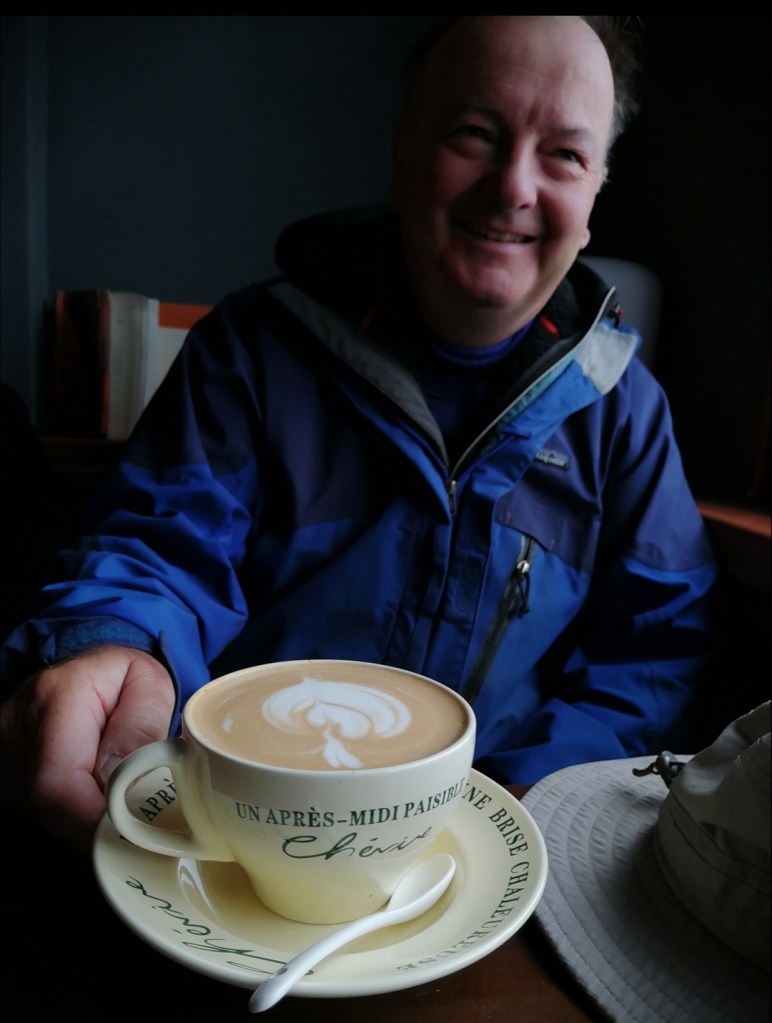
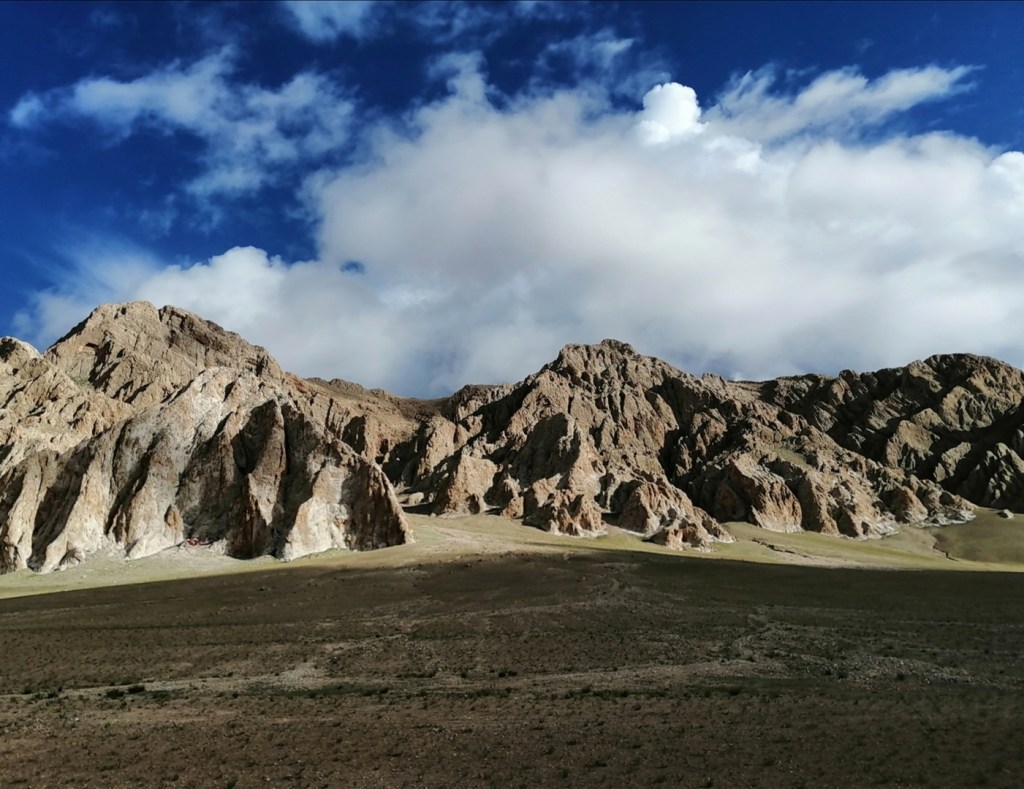
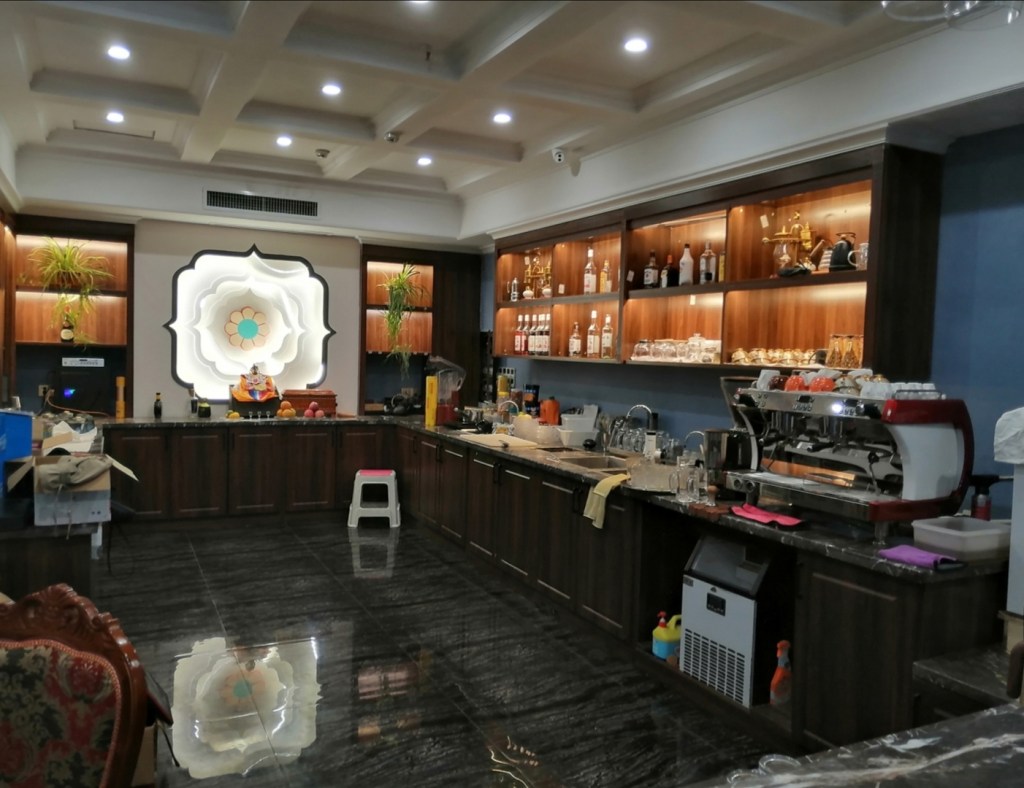
20th August: I had a very good night and am feeling pumped up. Eliot didn’t sleep so well, maybe because he slept too much in the car. We pack, have breakfast and leave around 8, after having said goodbye to Jiawei and Zhihang. A photograph joins up for the trip north. We drive through Lhasa, attempt to have coffee and fail (nice coffee machine but the barista is still in bed), and drive north along the Duilong River. We stop at a spectacular unconformity between a folded Cretaceous sedimentary succession and 69-65 Ma old volcanics on top. There is a 30 Ma gap during which the sedimentary rocks were deformed, uplifted and eroded, before the arrival of the volcanics associated with the subduction under the Lhasa block. We then keep driving upstream and I fall asleep. I apparently miss a spectacular gorge and wake up at a service station with a viewpoint over a range of spectacular peaks to the NW. We are in a half-graben opening at 3-6 cm per year (!) The glaciated 7000-m high summits are the tip of the uplifted footwall. We have snacks at this service station that is very popular with tourist. Chinese tourists. Westerners are not common, judging by the looks we get. We will have to get used to it as it will become more intense as we penetrate further into the plateau. Xinhang gets us some stick-like hollow things that are just very yummy. We keep driving NE along the river, then head NW up the steep footwall, to a pass at 5200 m.
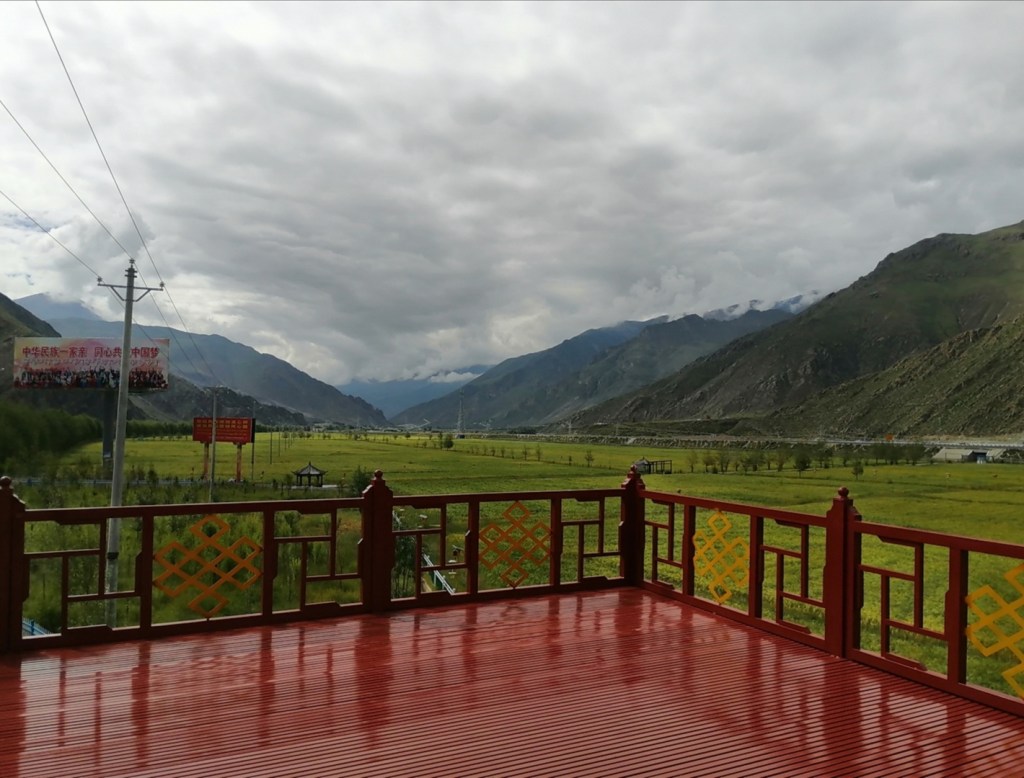
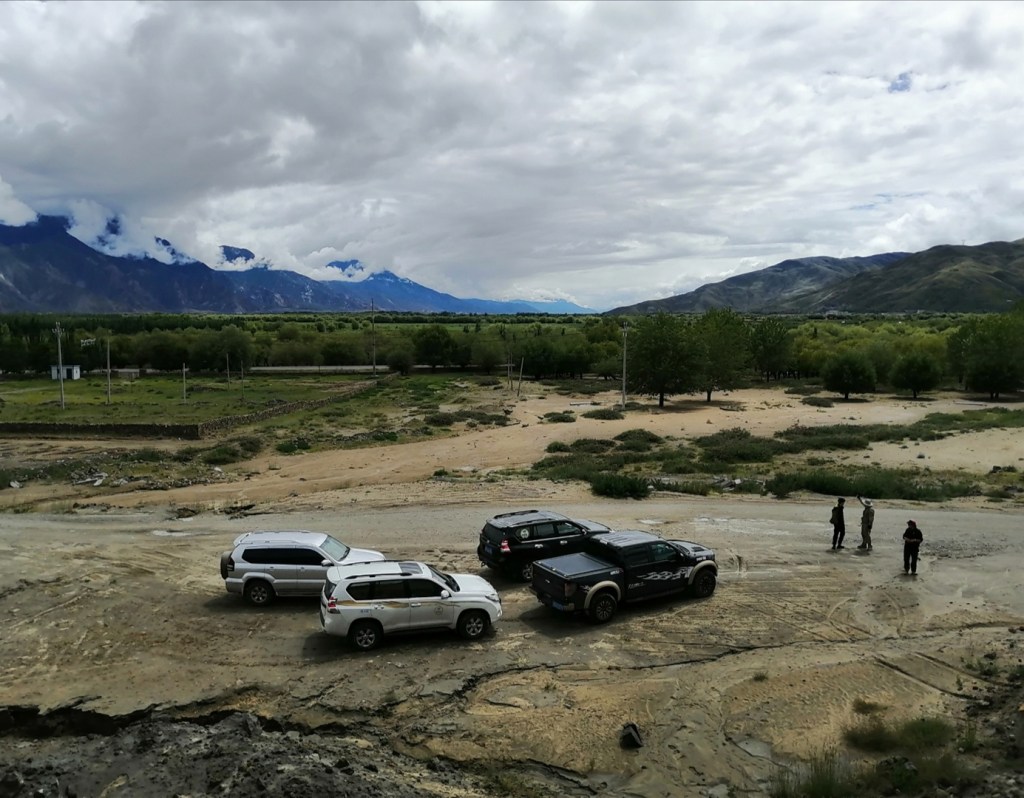
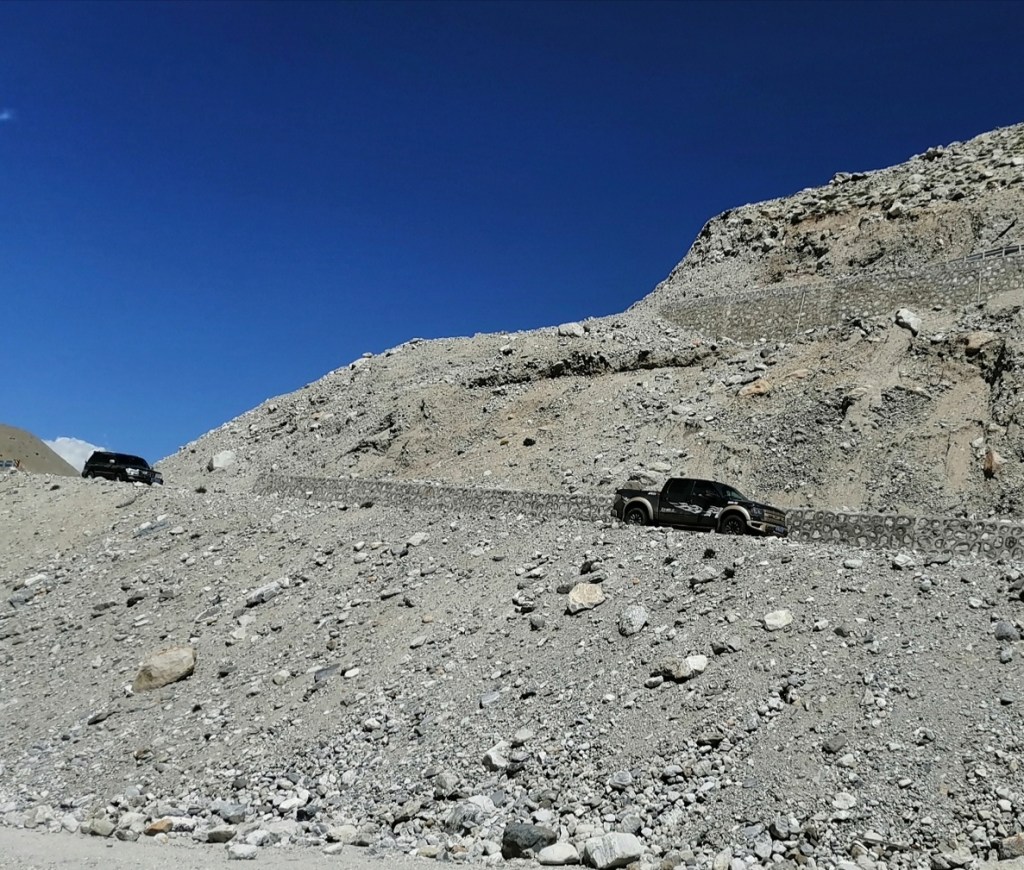
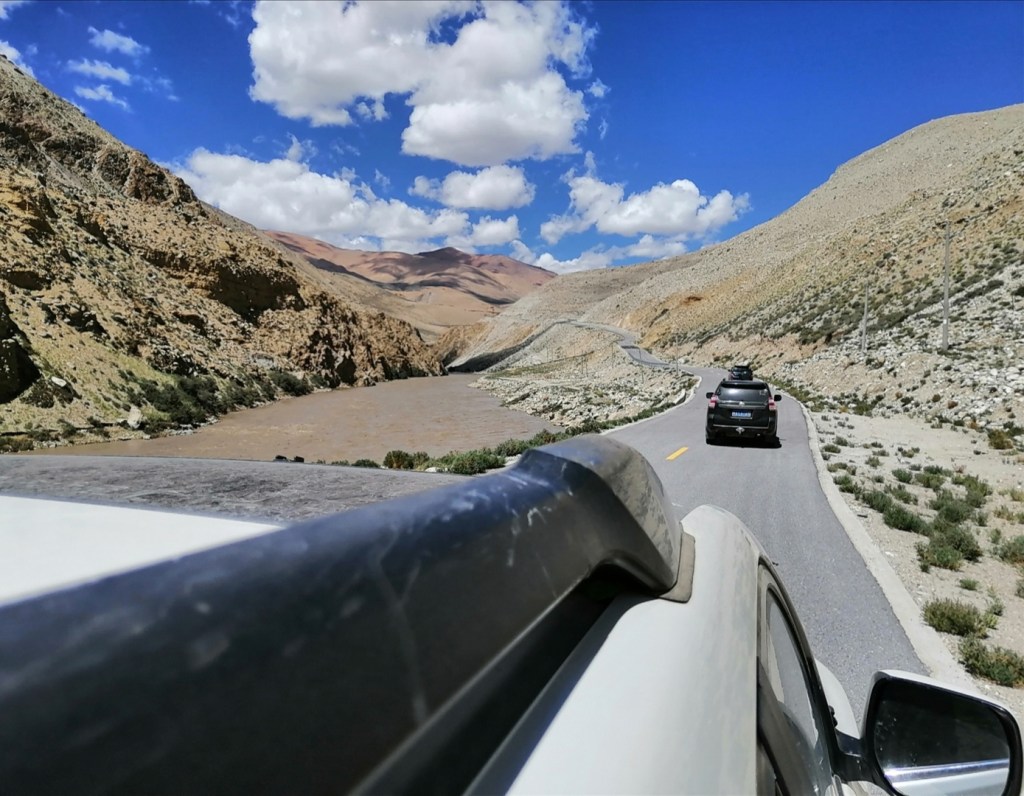
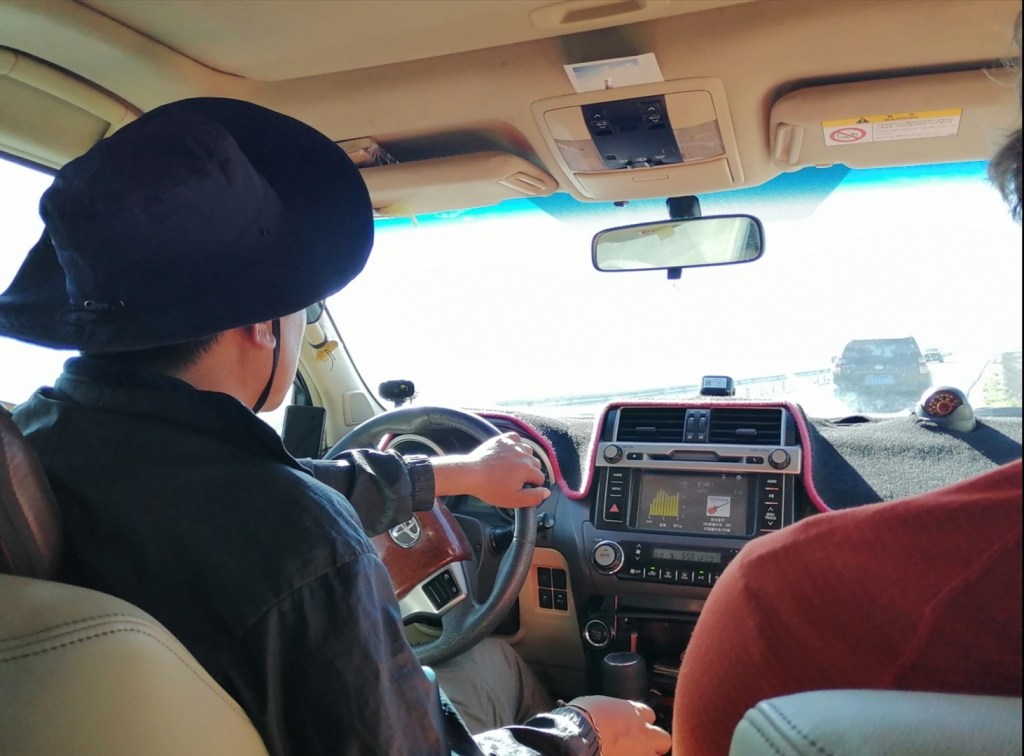
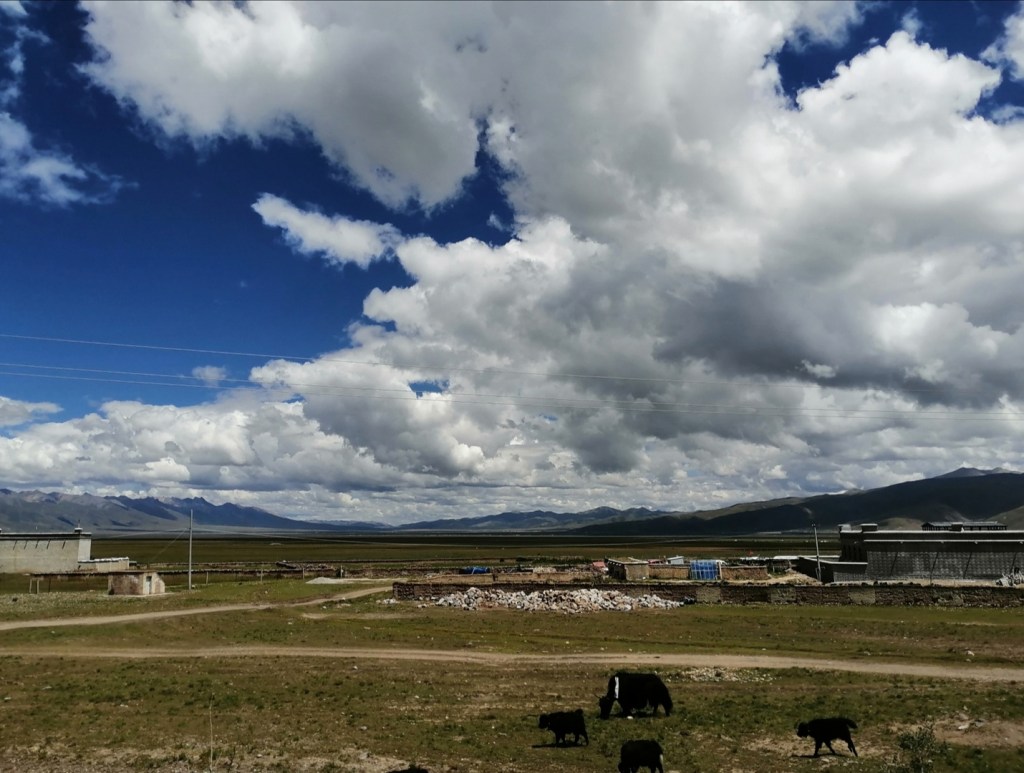
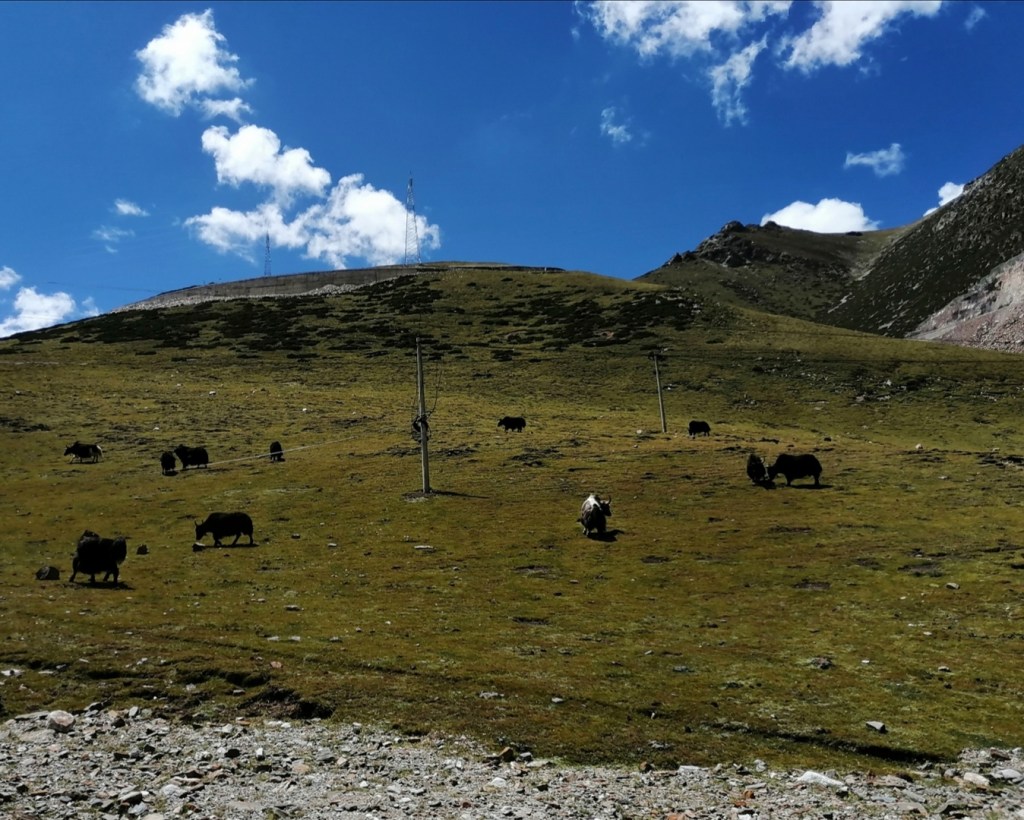
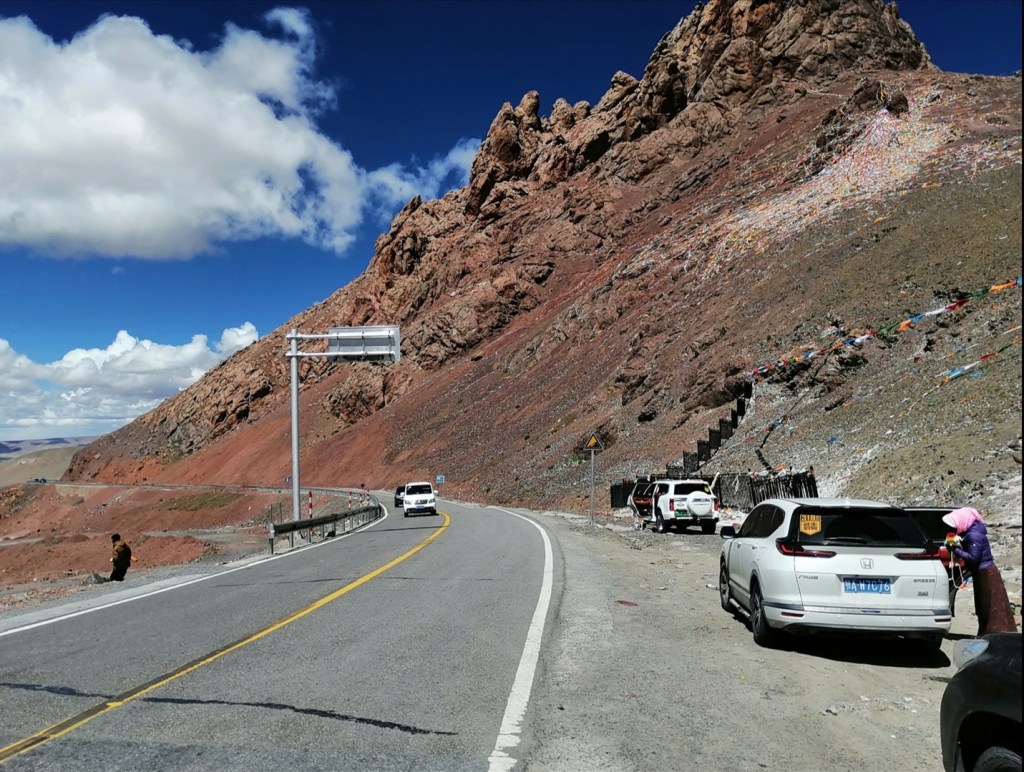
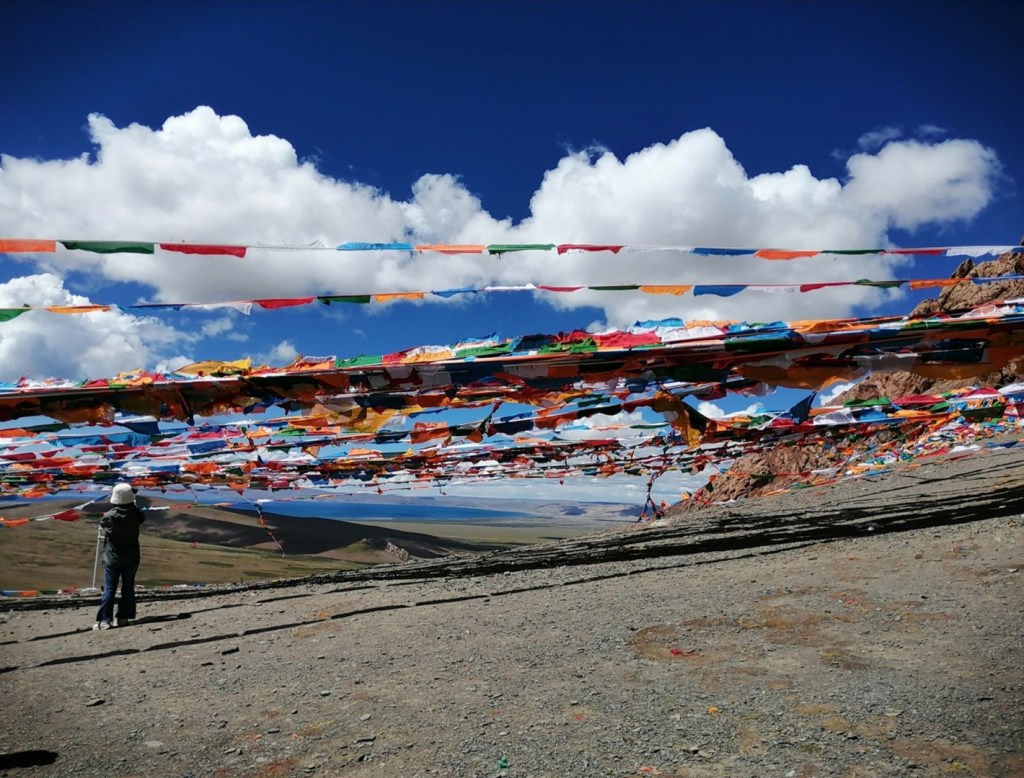
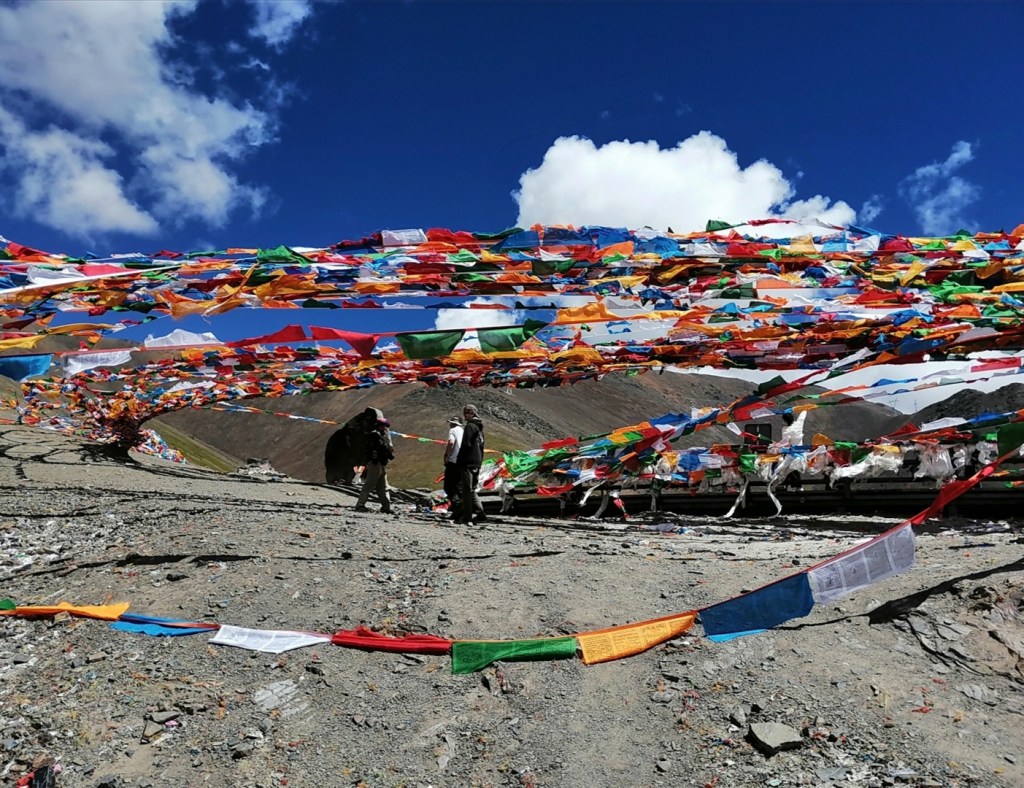
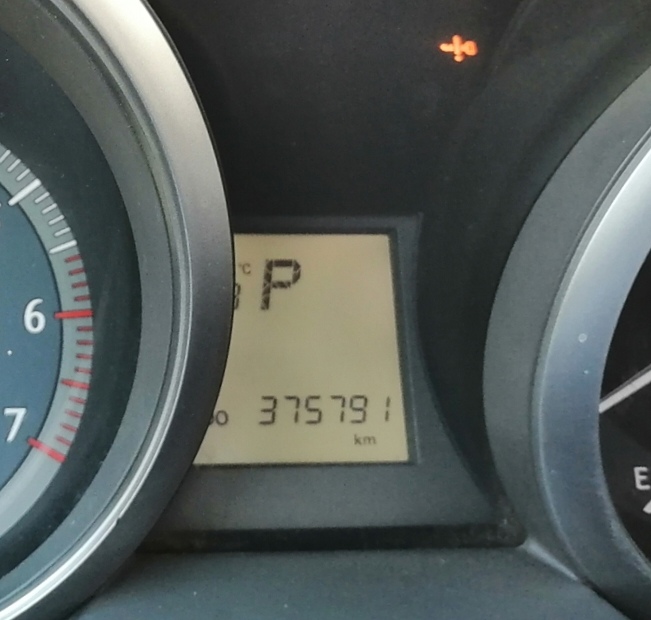
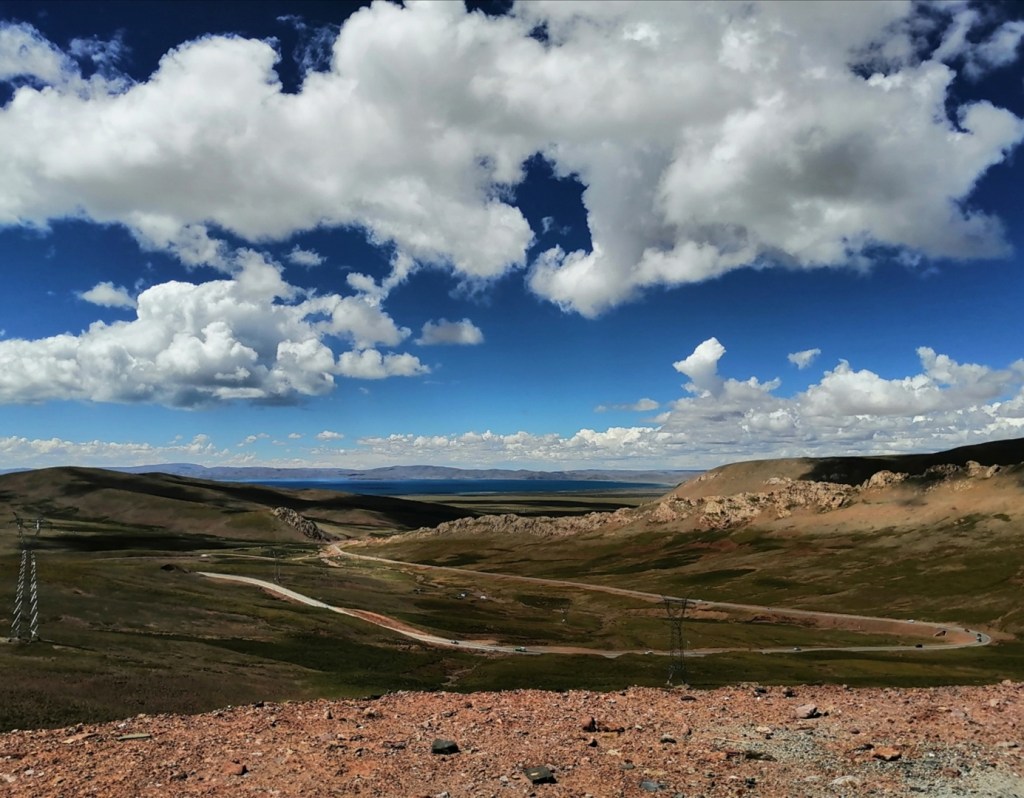
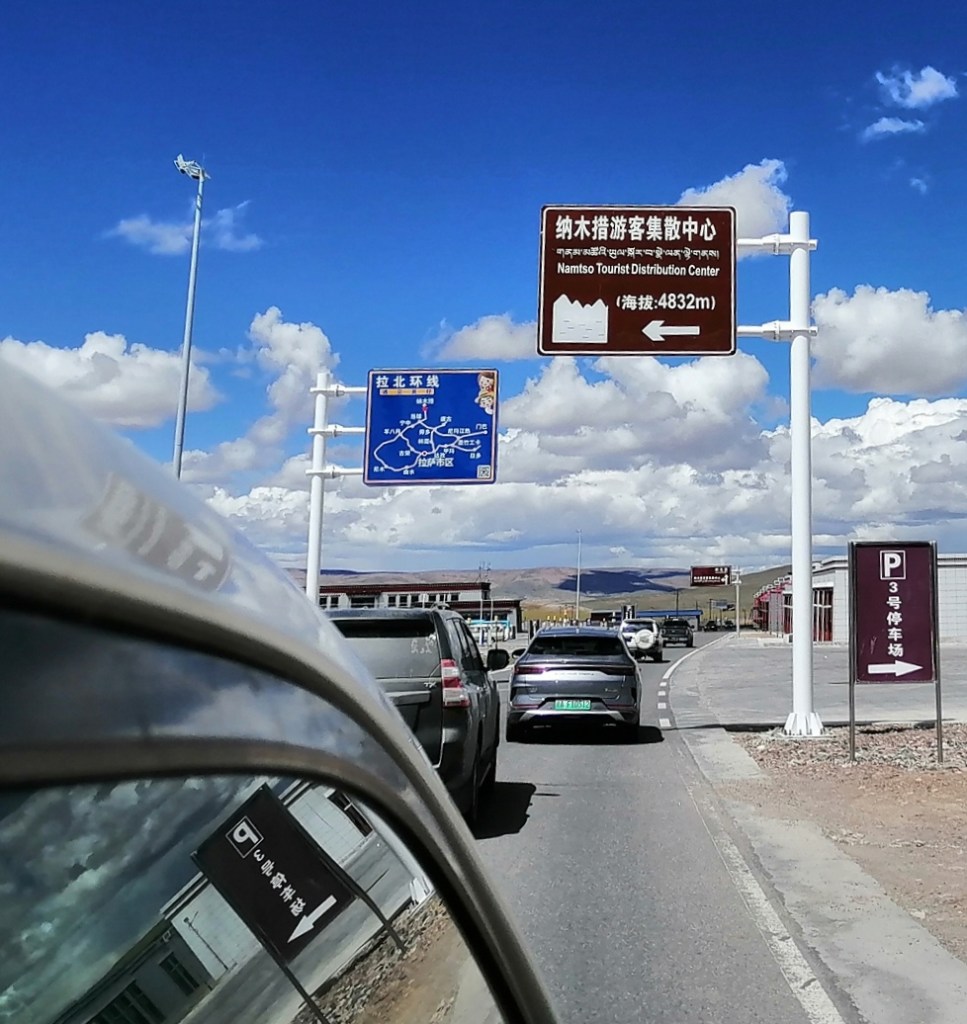
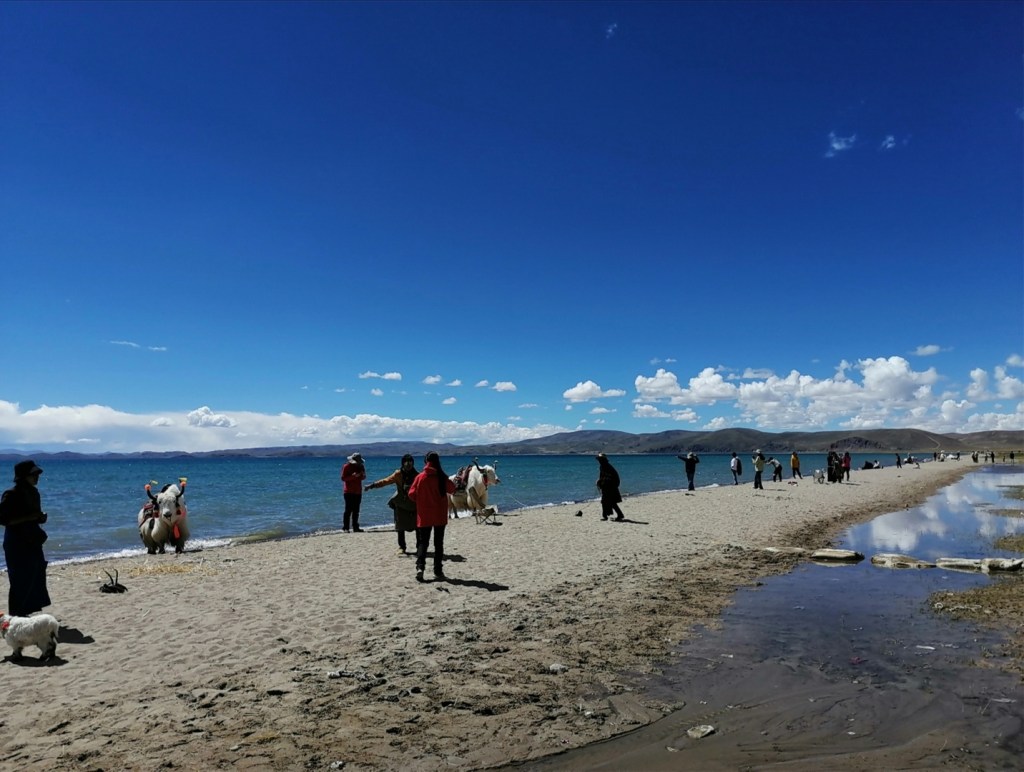
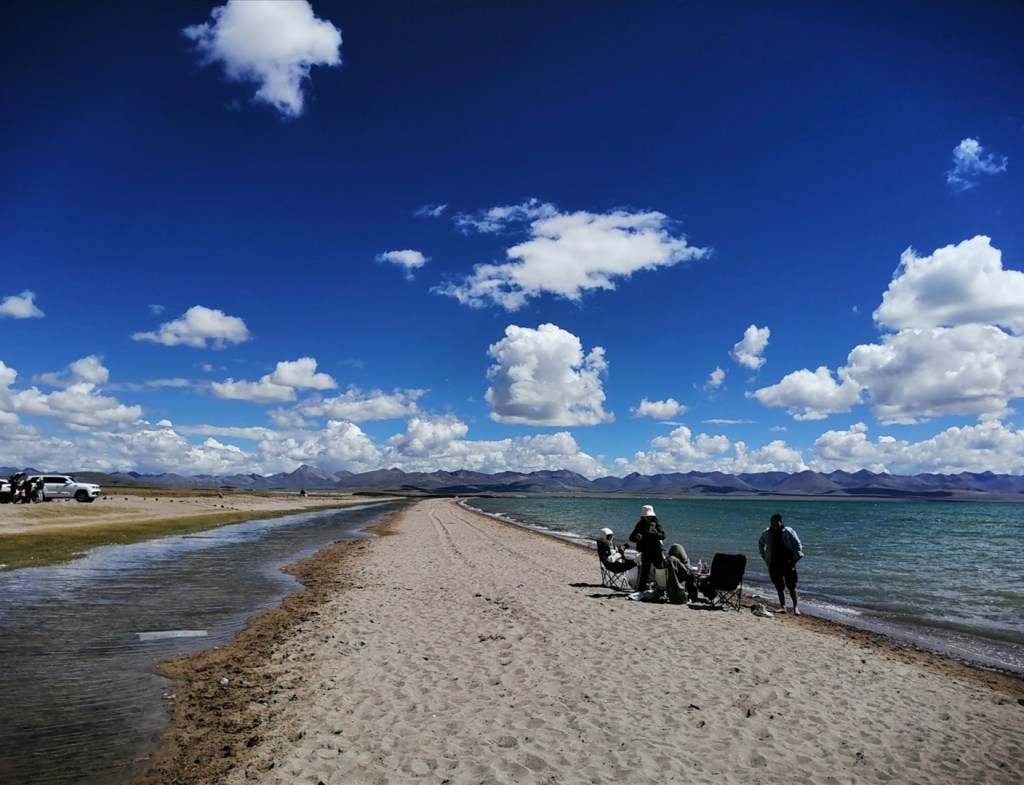
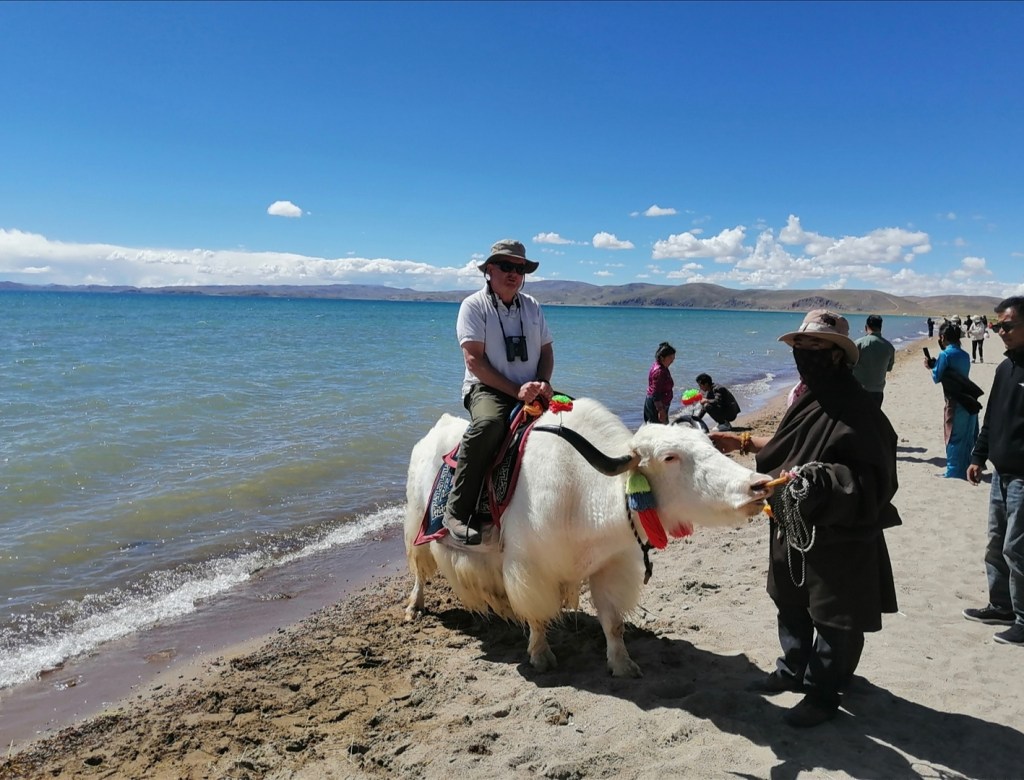
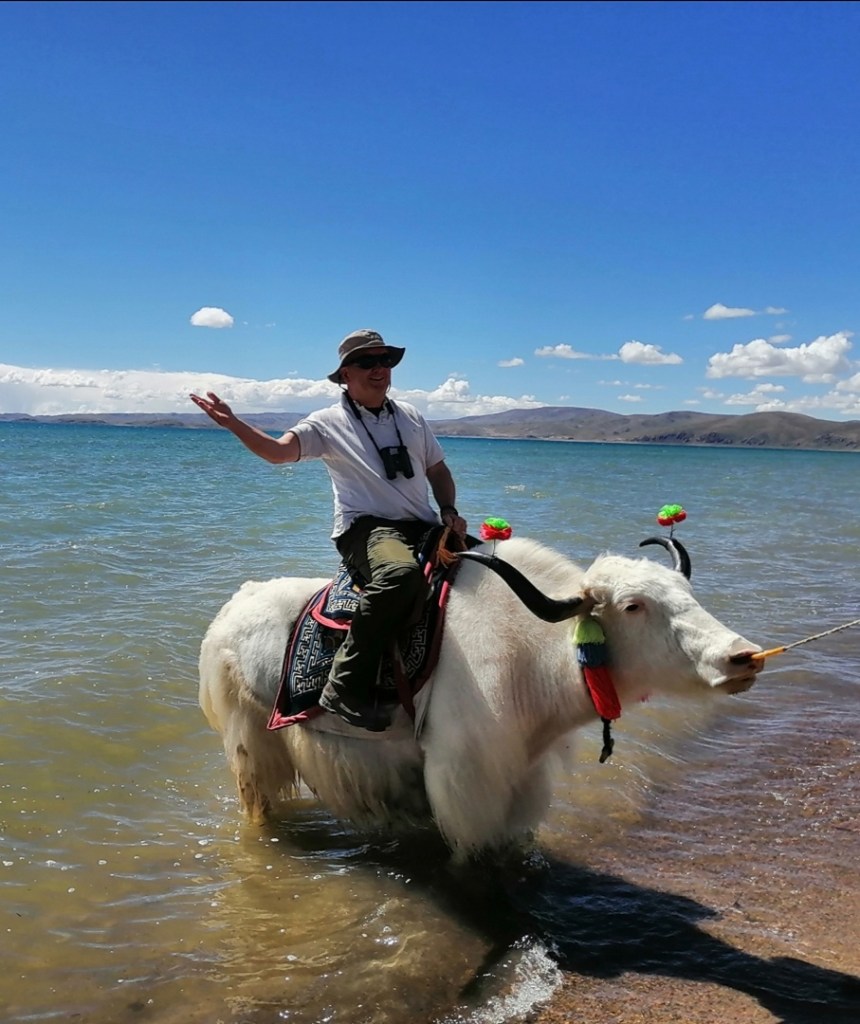
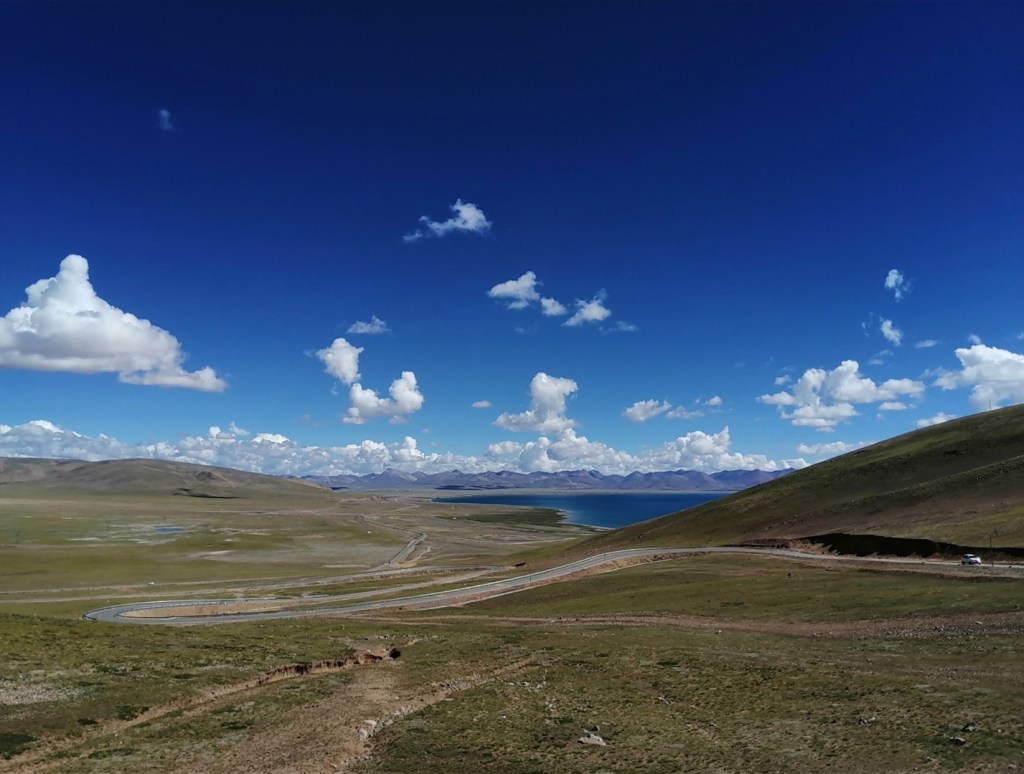
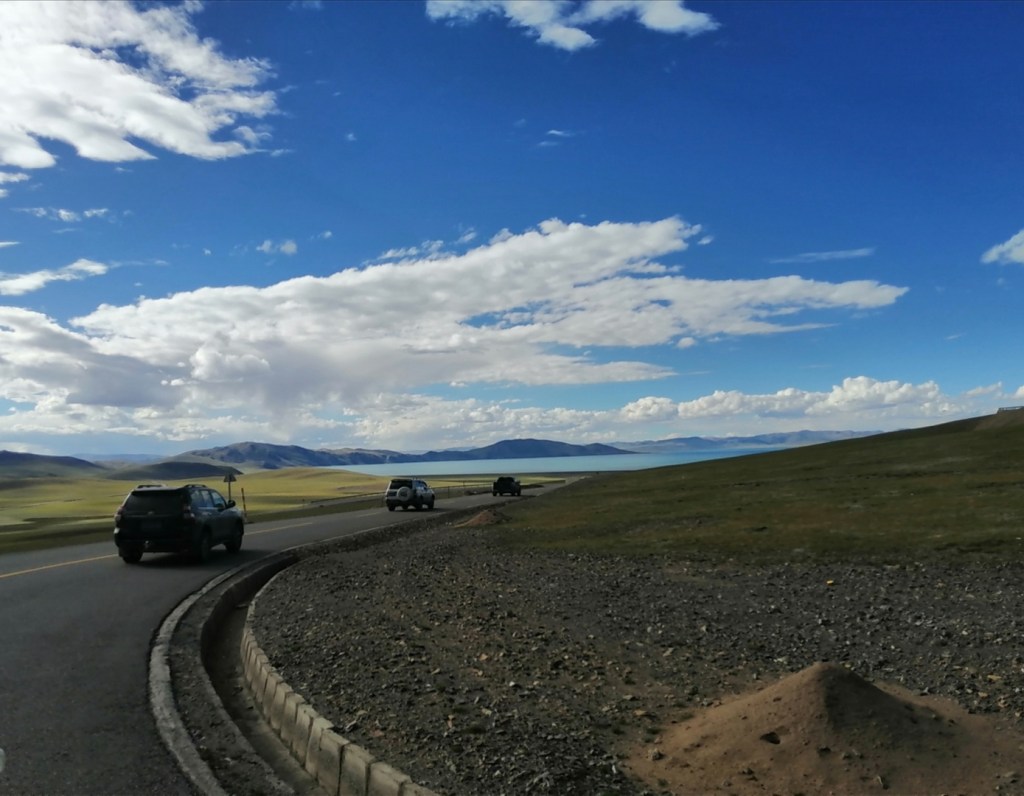
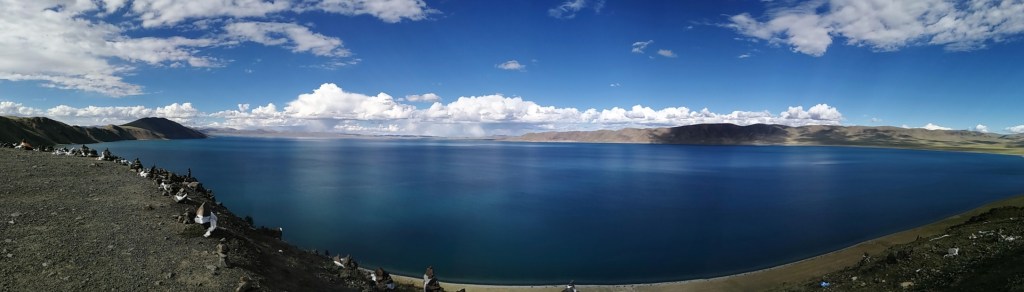
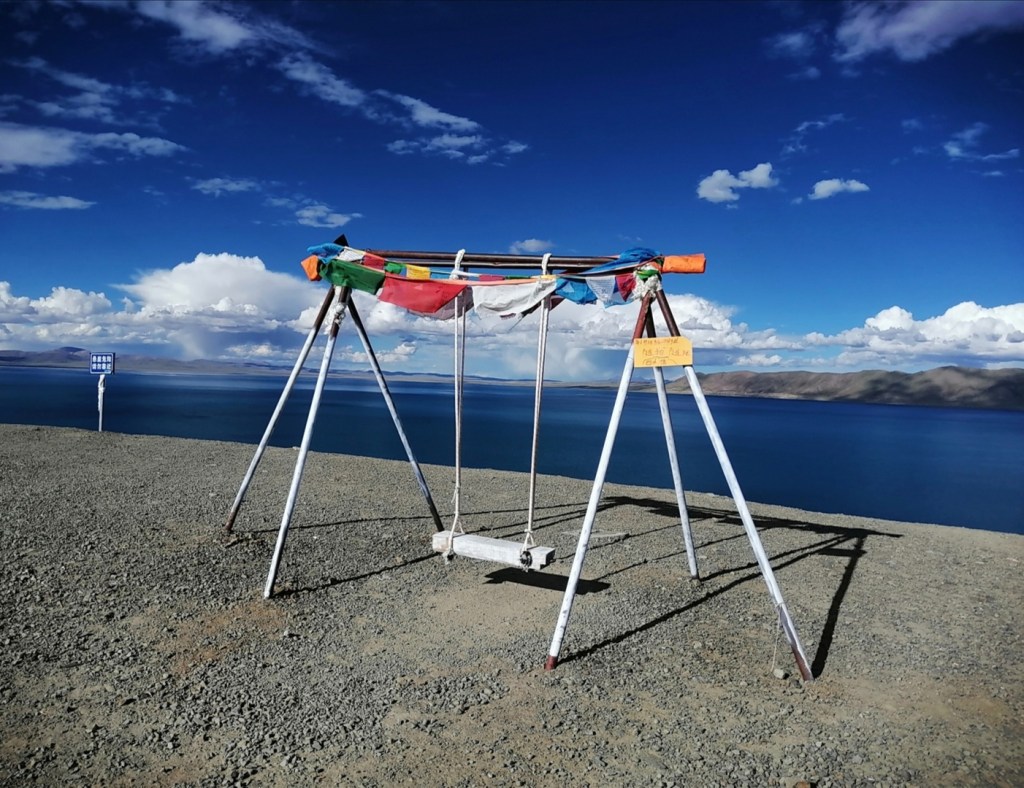
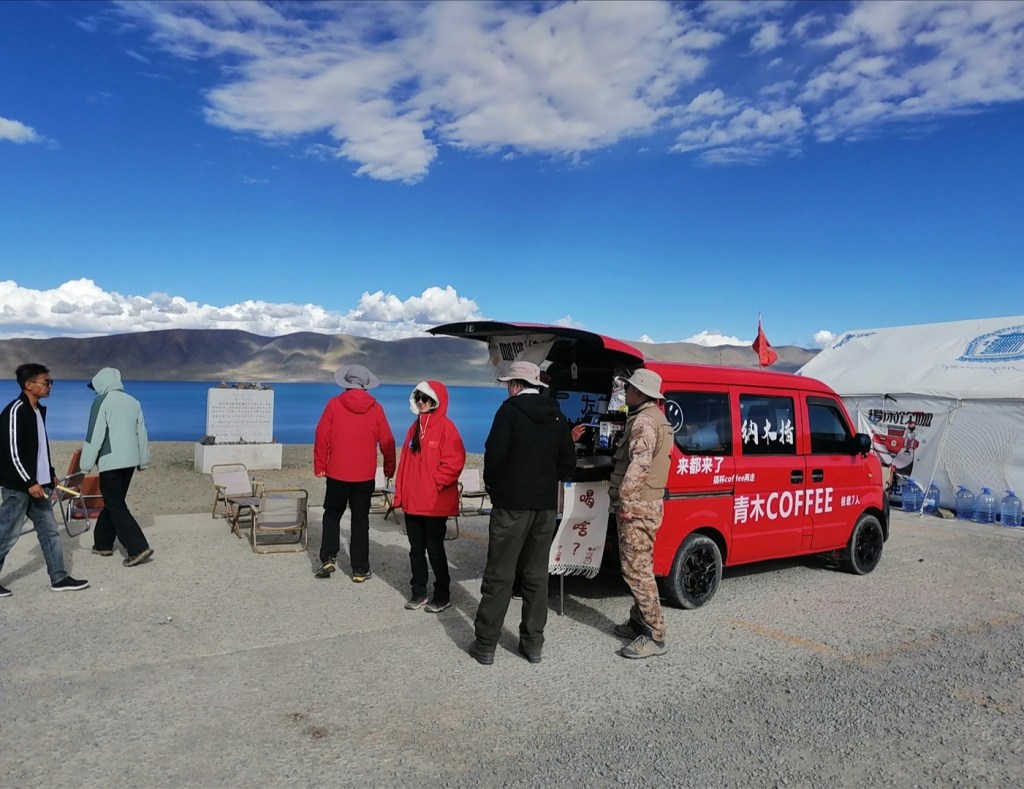
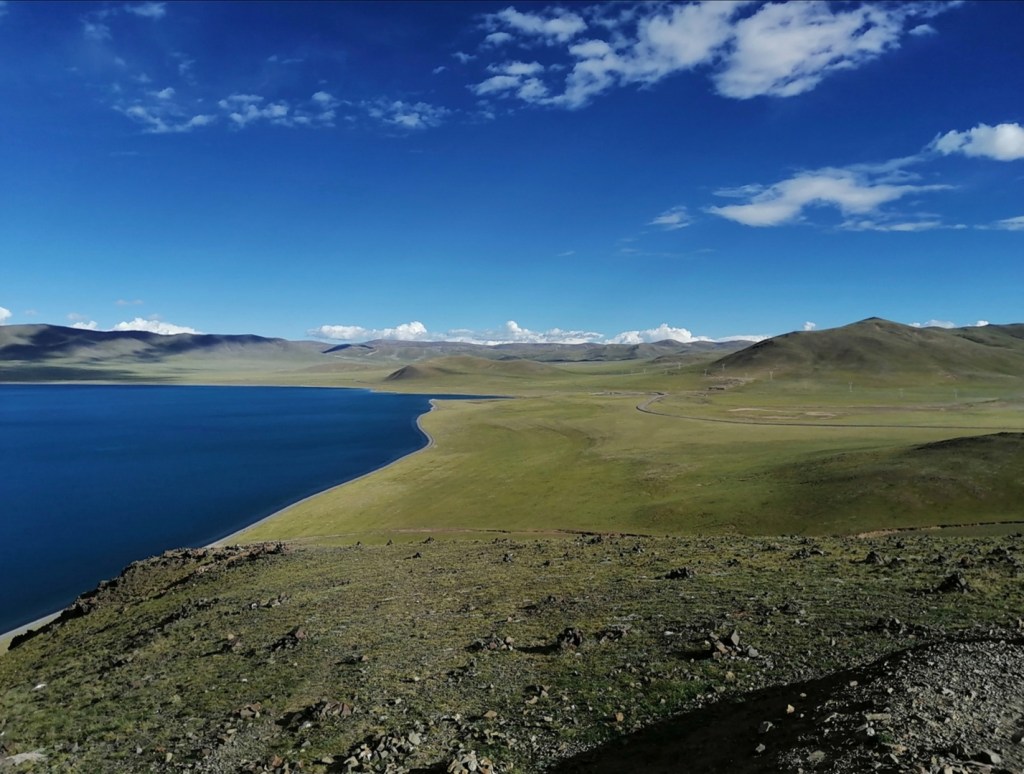
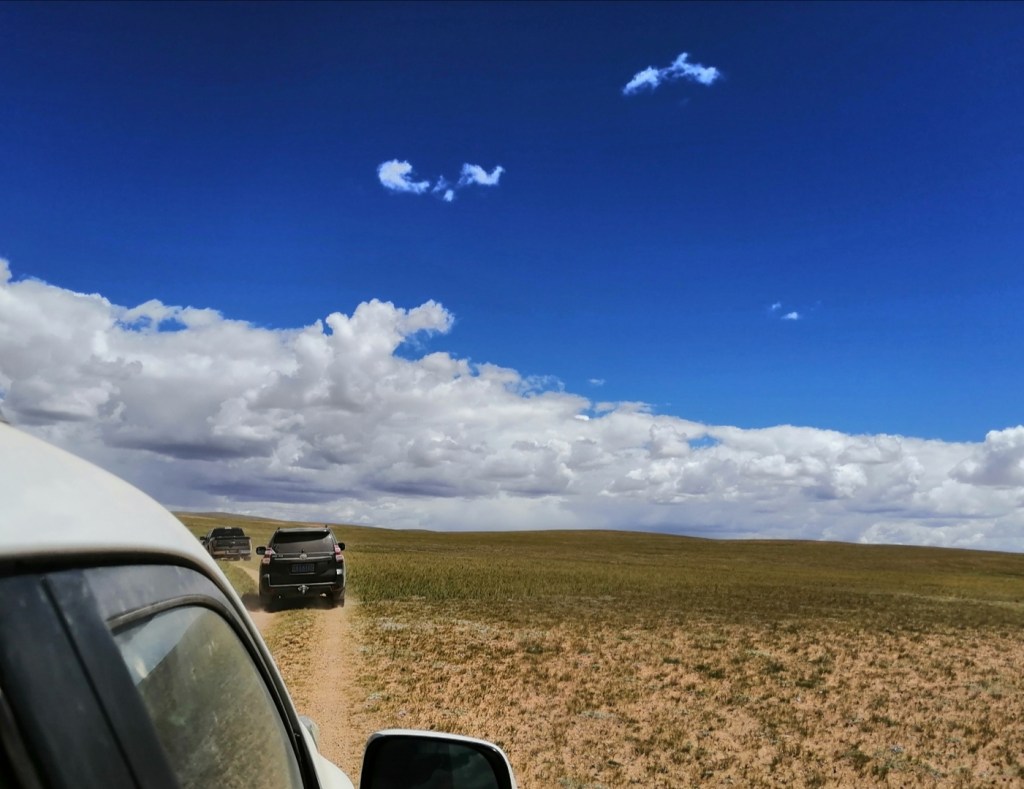
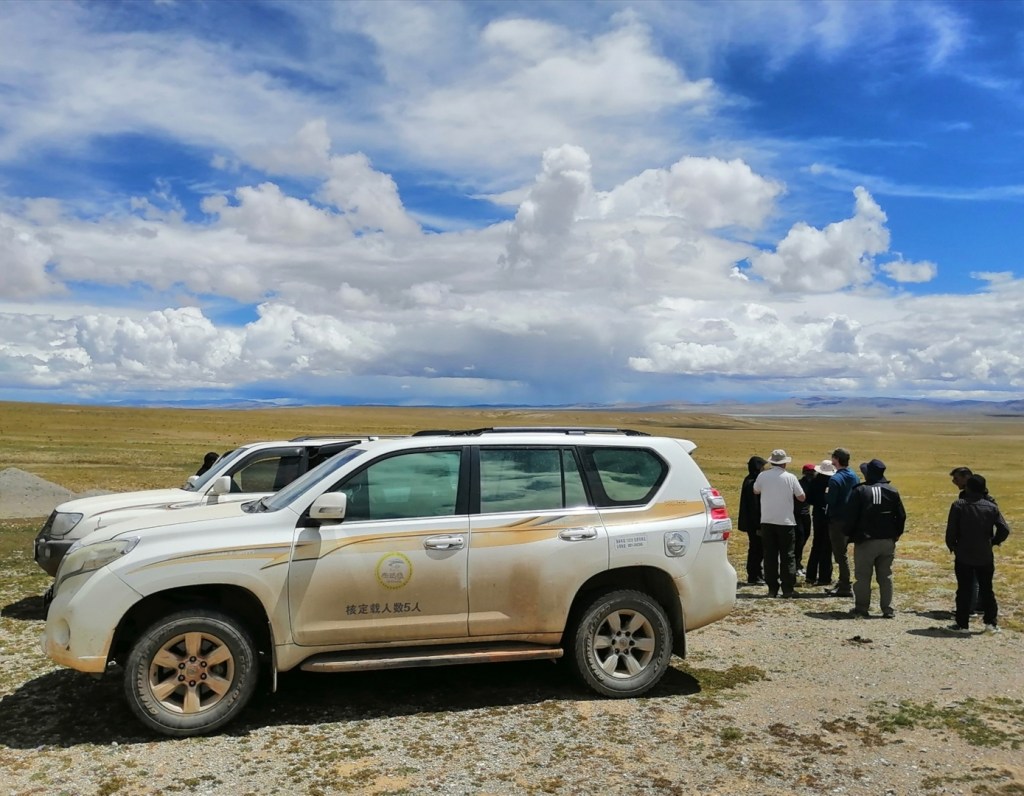
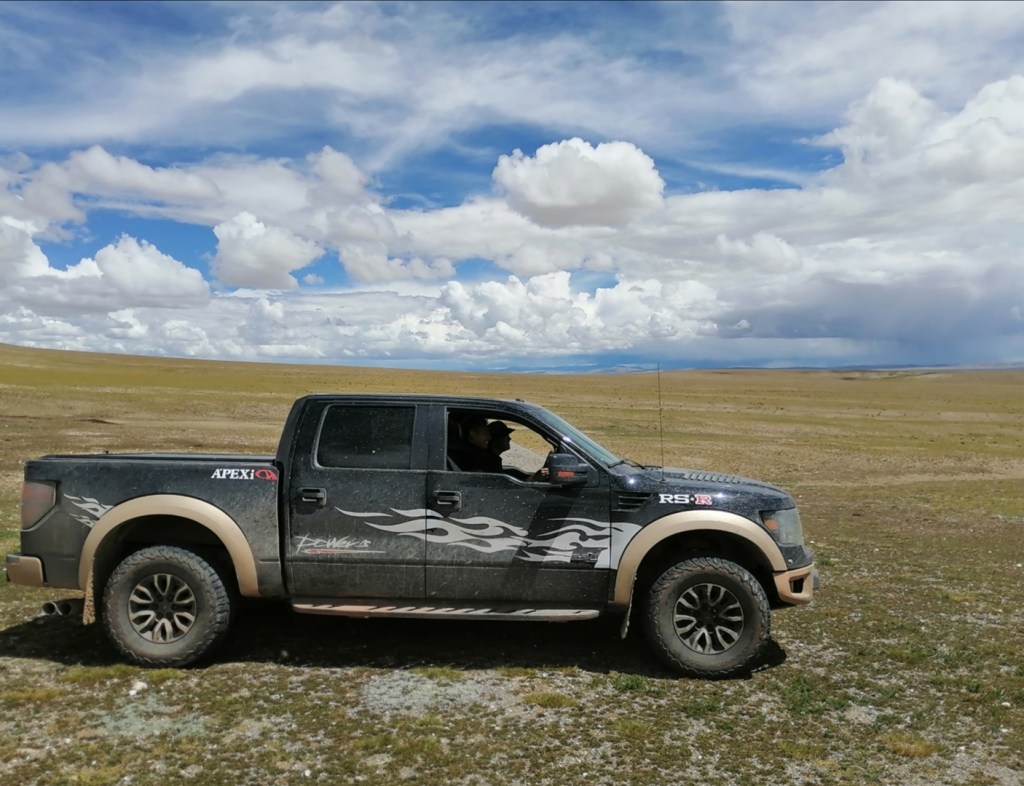
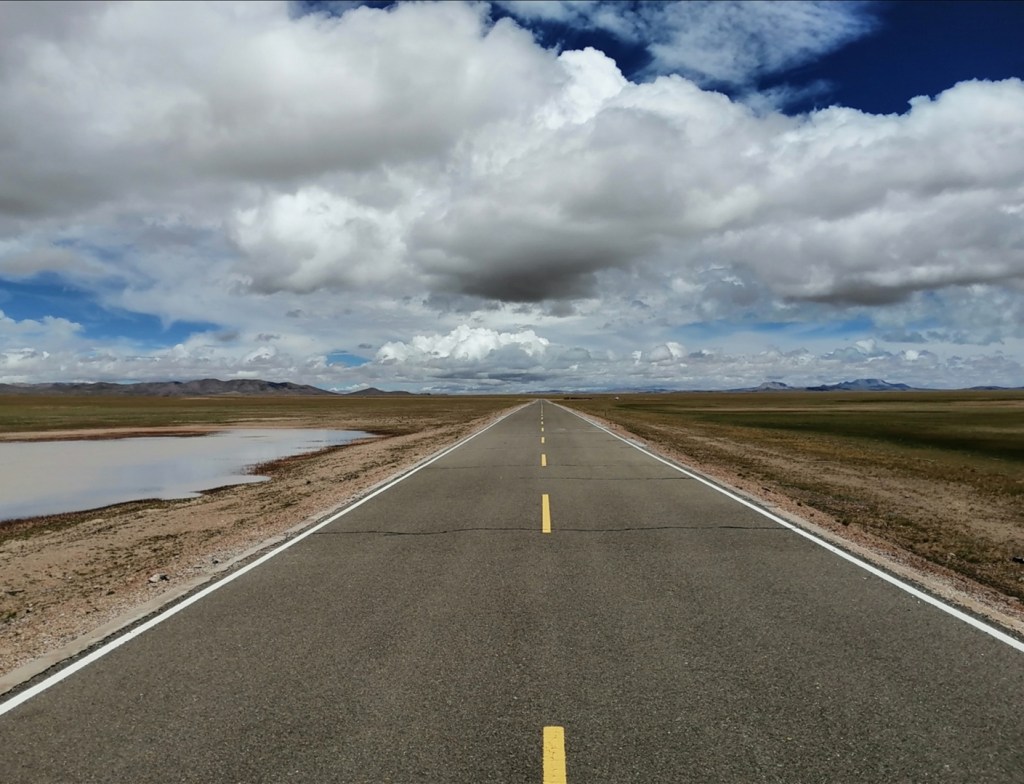
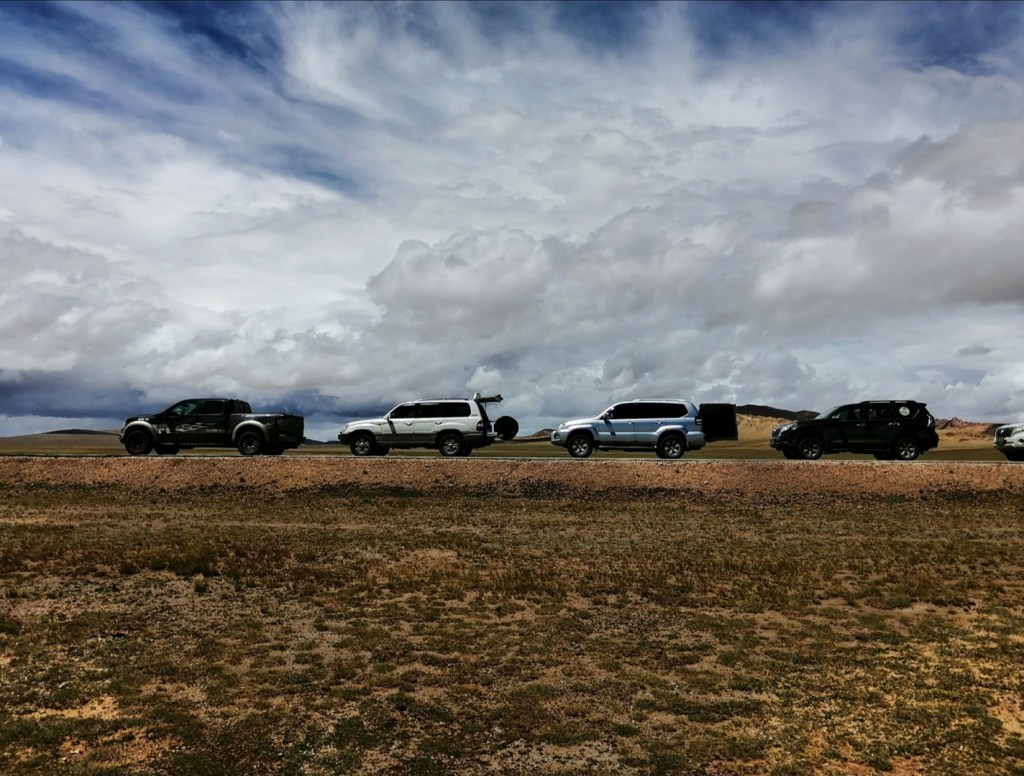
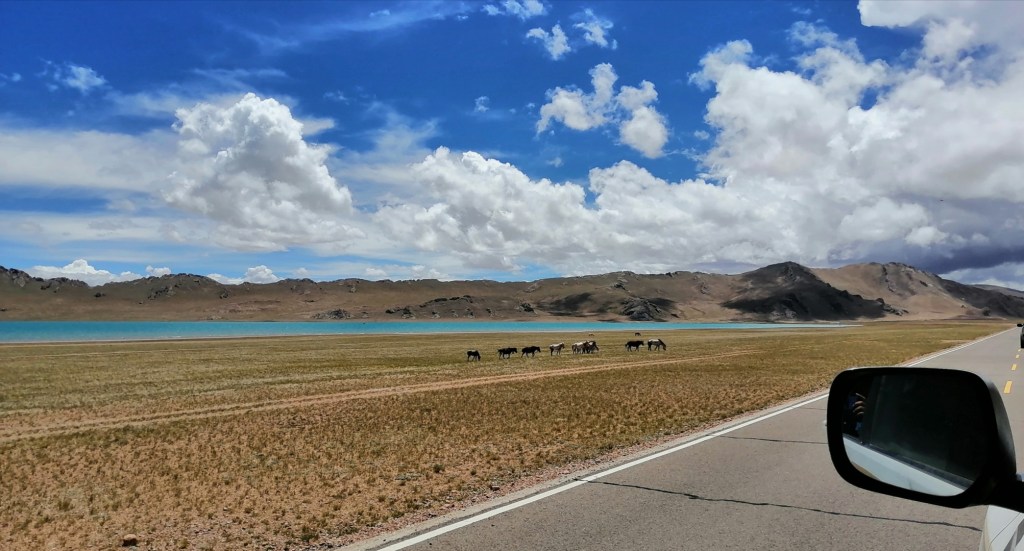
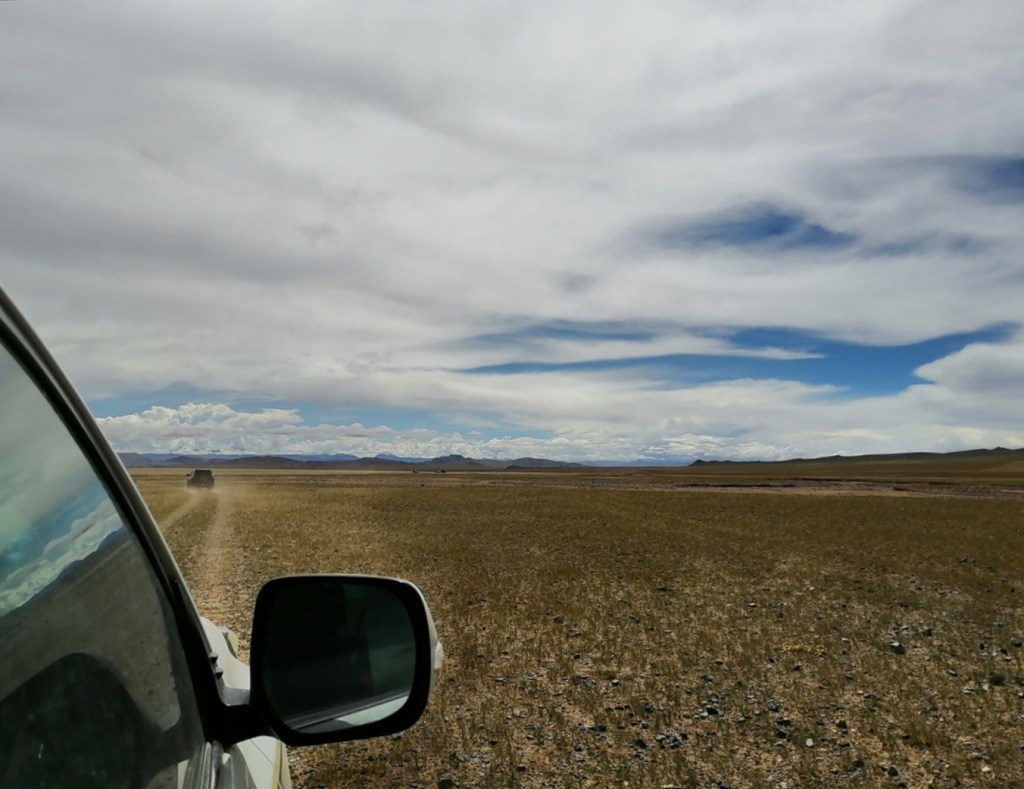
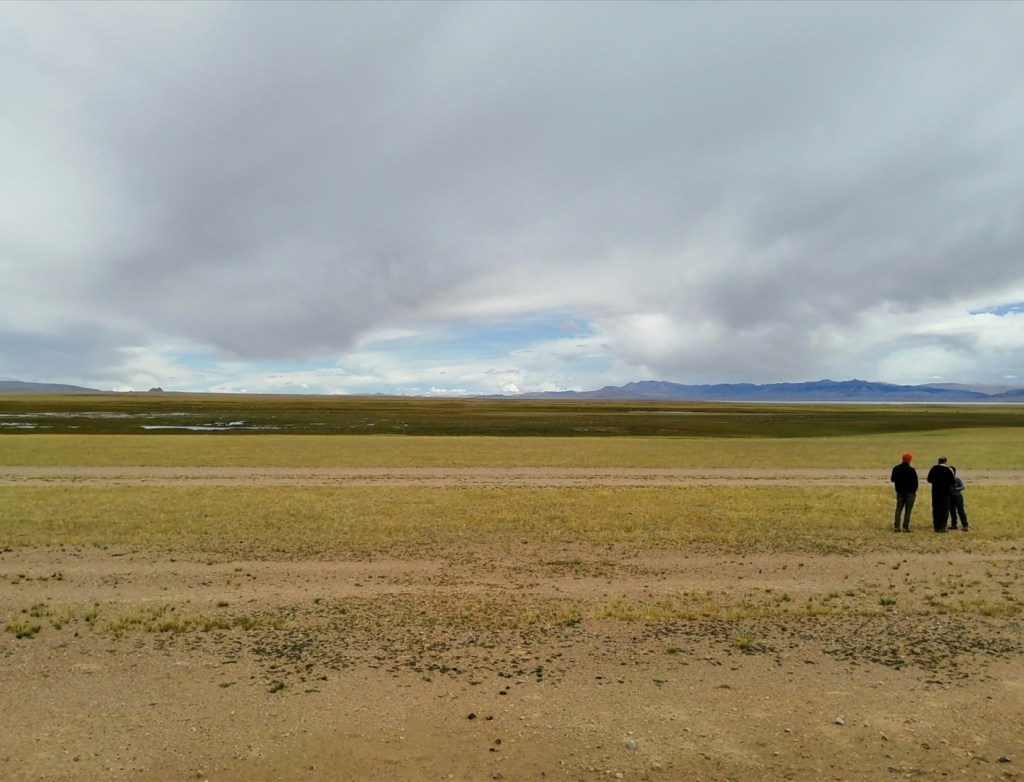
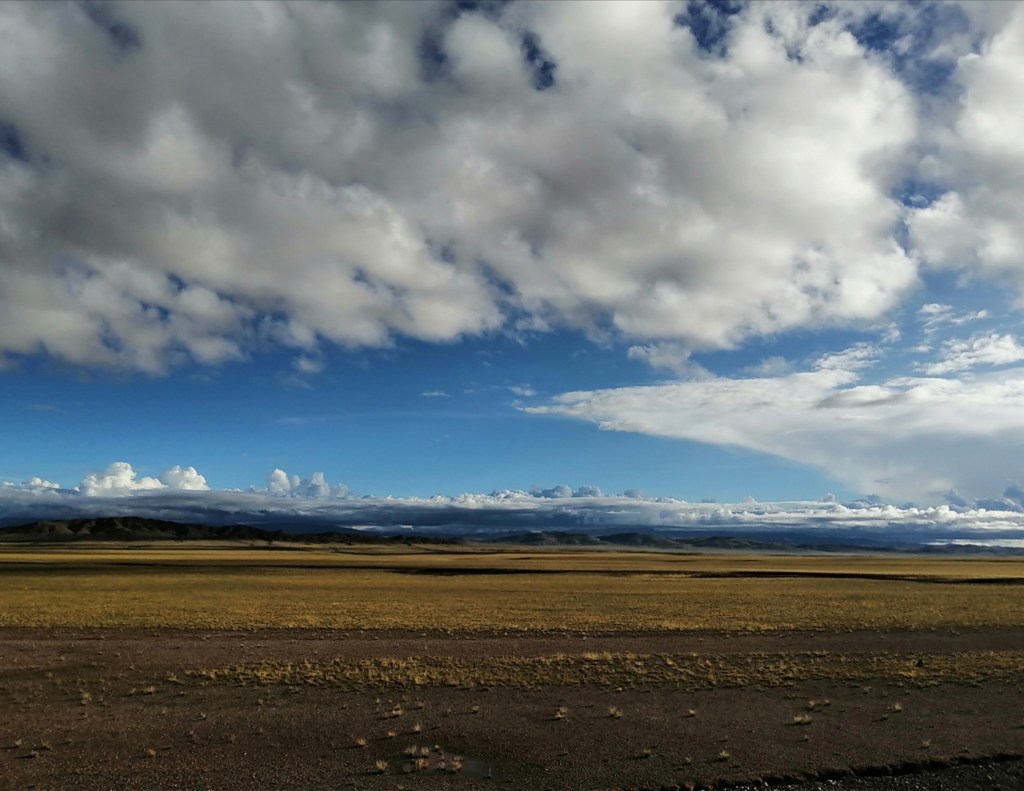
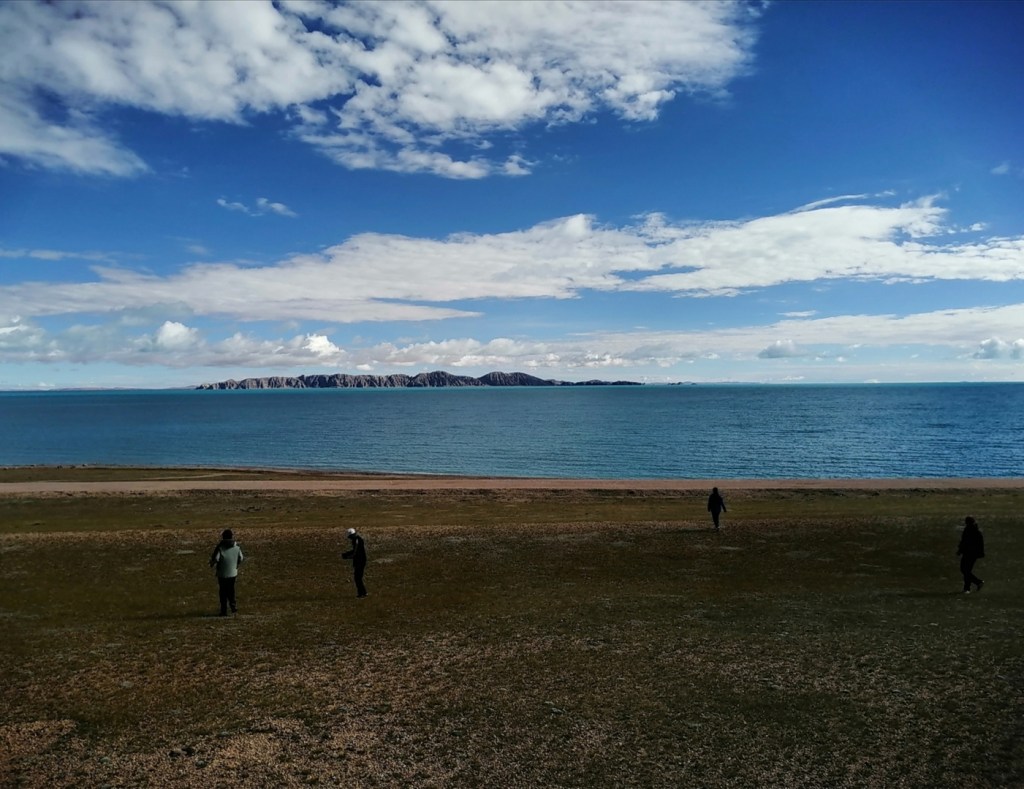
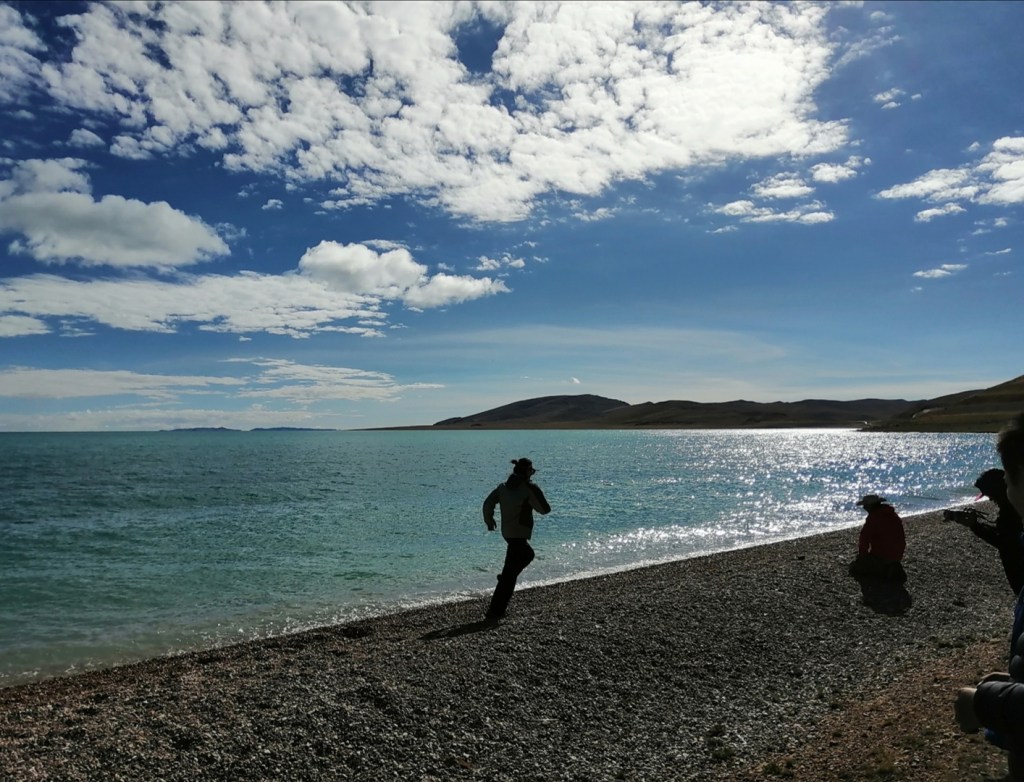
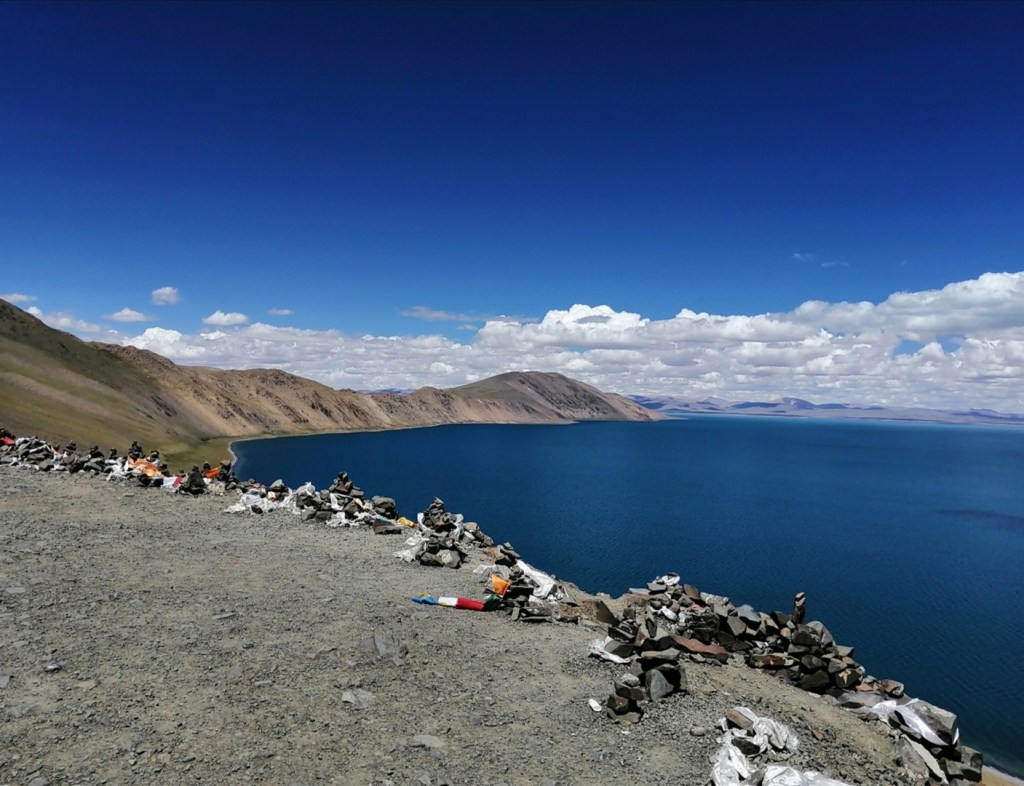
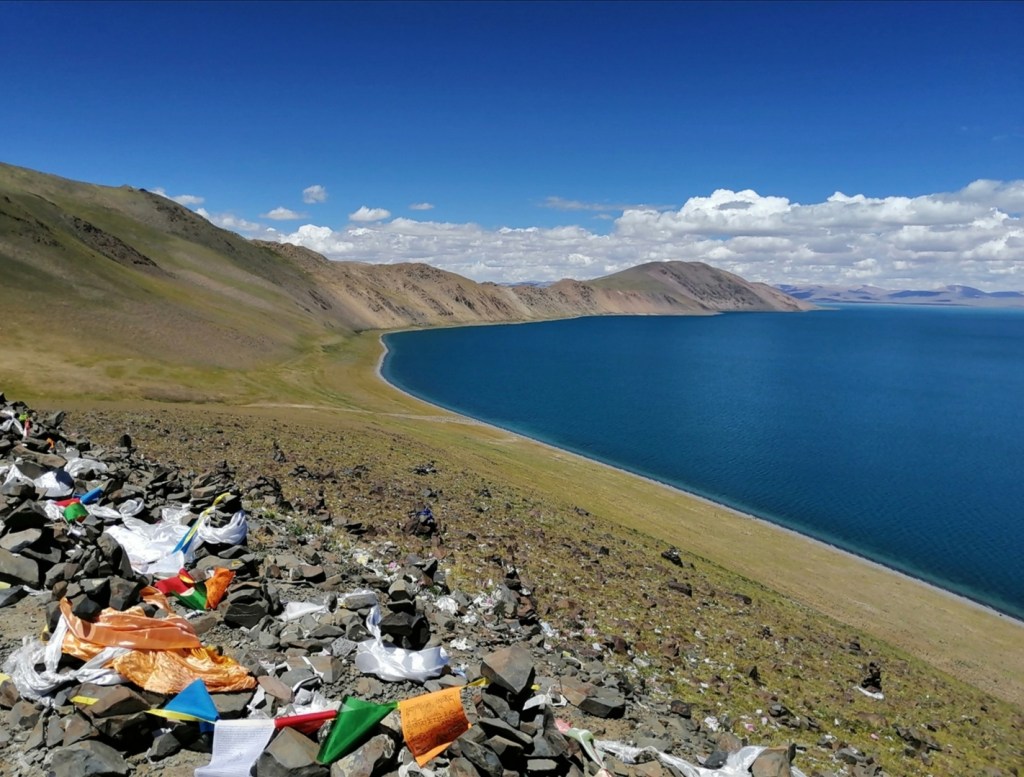
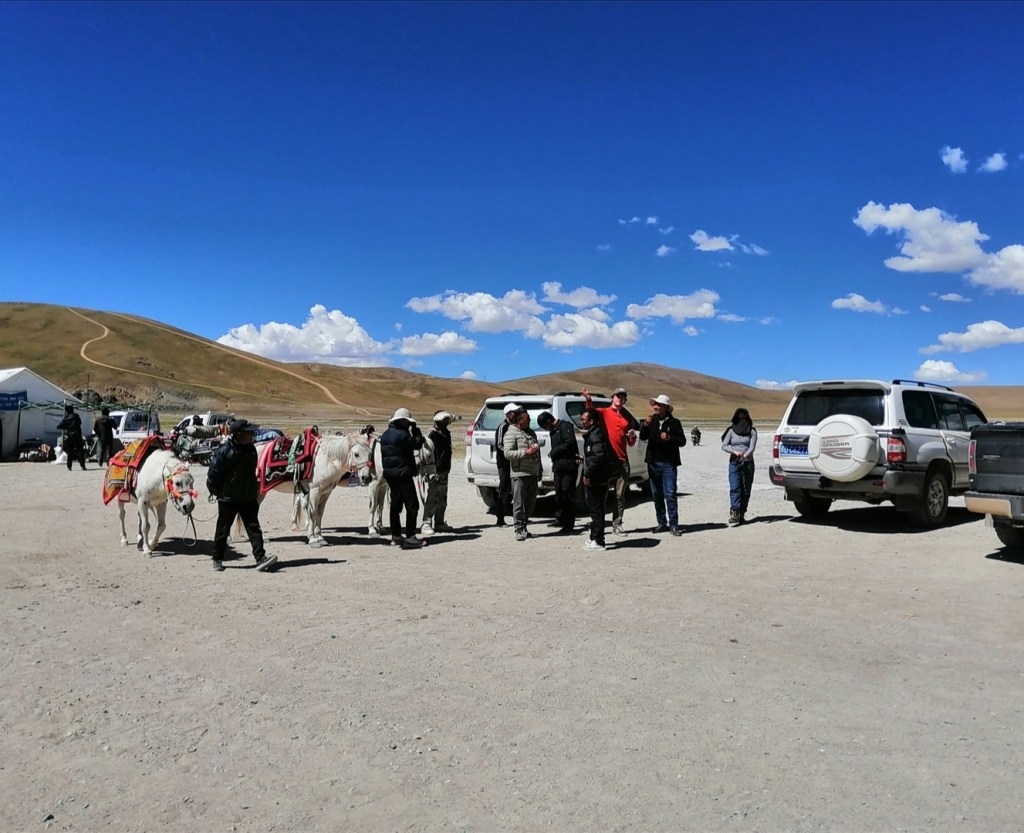
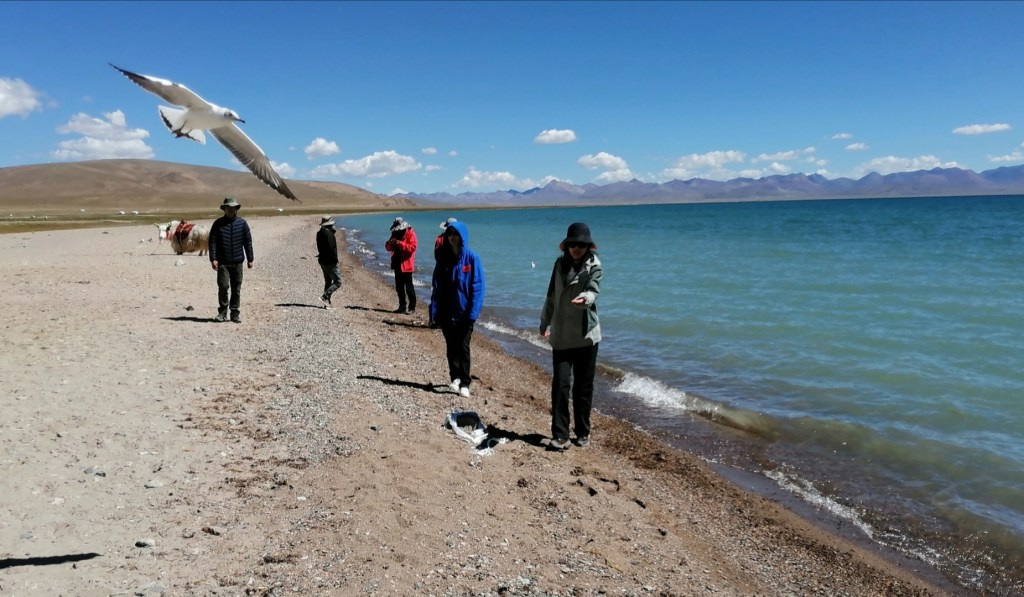
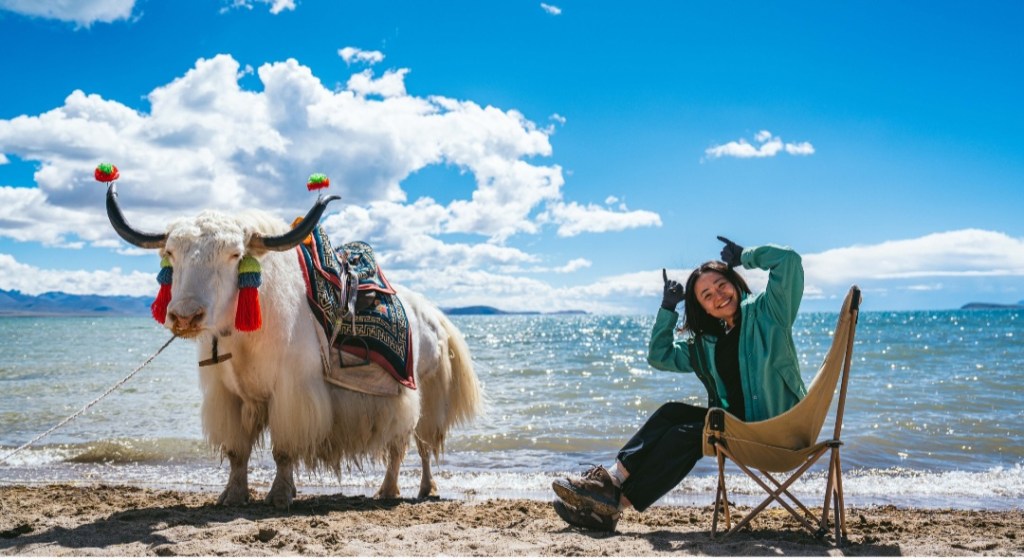
What I had failed to realise is that this pass is a highly significant drainage divide. Rain falling to the SE gets into the Lhasa River, the Yarlung, Brahmaputra, and into the Indian Ocean. Rain falling to the NW gets into Tibet, into an internally drained basin. The landscape changes dramatically from that point: we are in Tibet proper, with low relief and elevations of 5000 m on average. There are a lot of lakes too. And it gets colder and drier. After a photo session at the pass (where I’m feeling very good – totally rested and acclimatised?) we drop down to beautiful Namu Co (Co means lake in Tibetan). There are many tourists taking pictures. The colours are stunning and we have to take pictures too. After a while, Hugh comes to me and says “do you have any cash by any chance? We’ve taken a lot of pictures of this beautiful white yak, maybe we should give something to the owner”. I give 20 Yuan to Hugh who gives them to the yak owner. The owner is so happy that he drags Hugh by the arm onto the yak! “You have to take a picture on the yak in the lake”. There was clearly no point in arguing, so you will see a picture of Hugh on a white yak in a lake 😁. We then drive to Baingoin where we will spend three nights, going through gentle hills and valleys, and seeing beautiful lakes, some nested within grabens that are very obvious in the topography. I note that the Toyota Land Cruisers have done around 400,000 km. They are amazing. They are still so smooth, comfortable and able on and off road! I am feeling very good: maybe dropping to 3500 m before going up again was good for acclimating? Unfortunately, Xiao Bai is not feeling great. Her temperature is OK but she’s feeling nauseous. We will have to keep an eye on this. We have a delicious dinner, and it’s great as the restaurant as a table big enough to sit everyone, including our drivers! Eliot and I (mostly Eliot) do a bit of work in the evening, trying to get a DEM and process it with LSDTopoTools on a clean laptop (not easy). We eventually go to bed, hoping that sleeping at 4800 m will be OK.
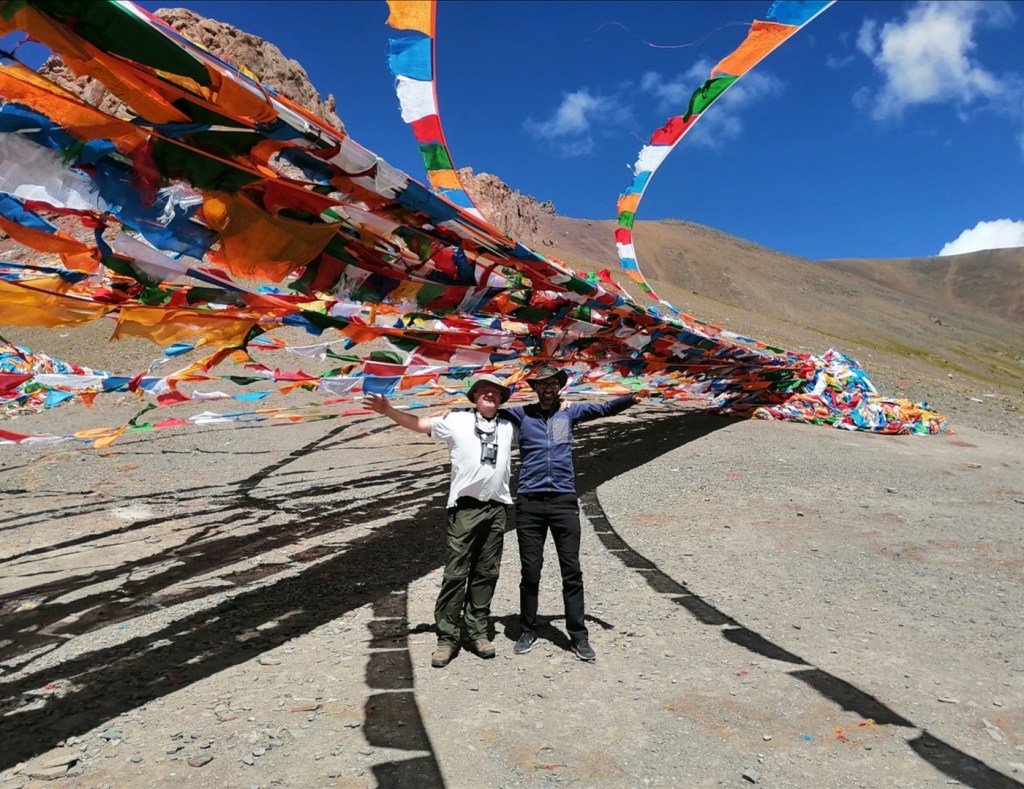
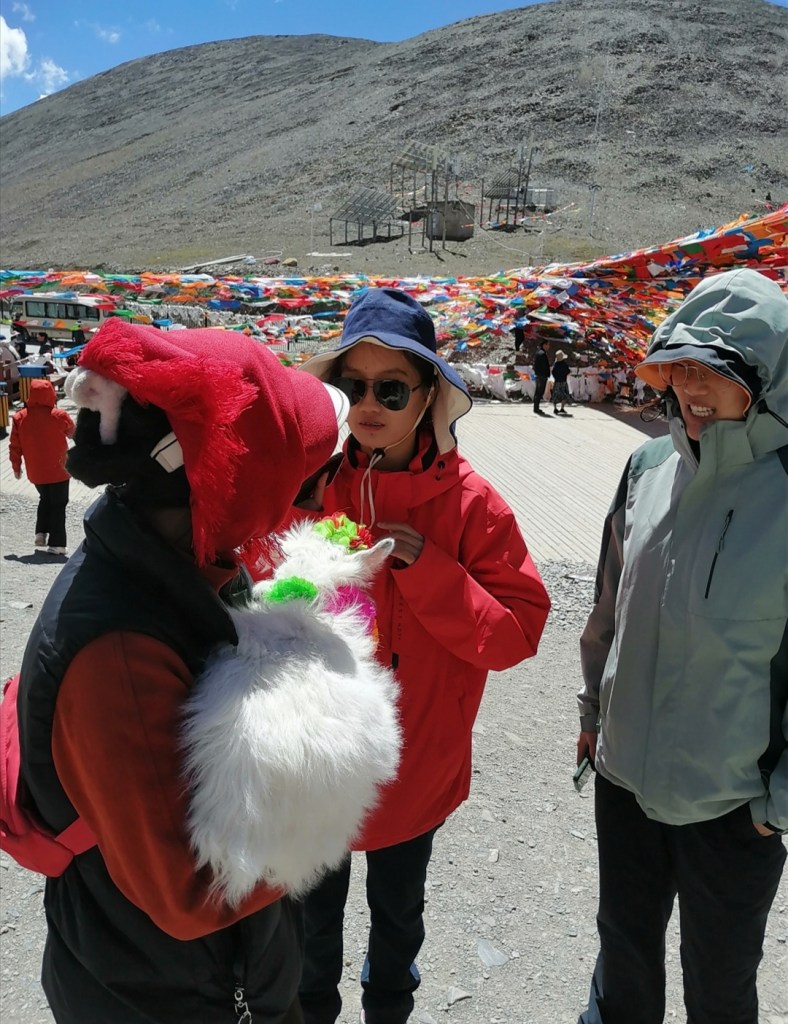
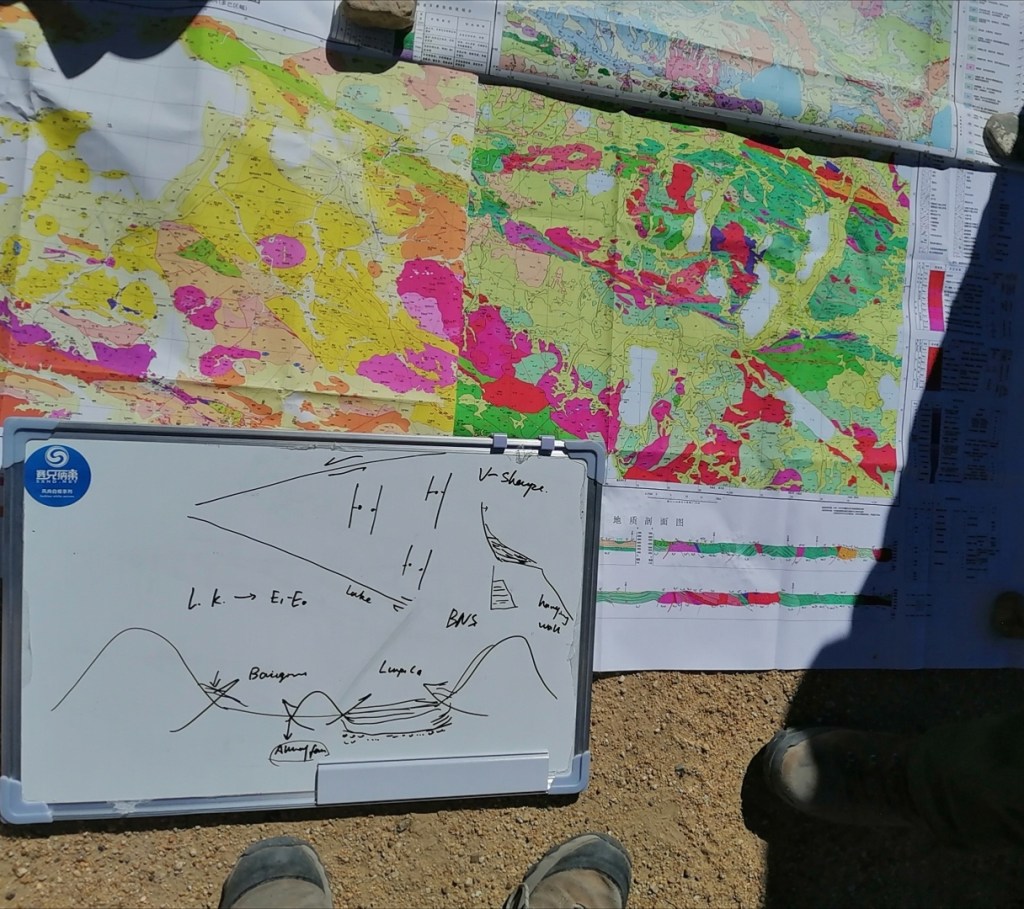
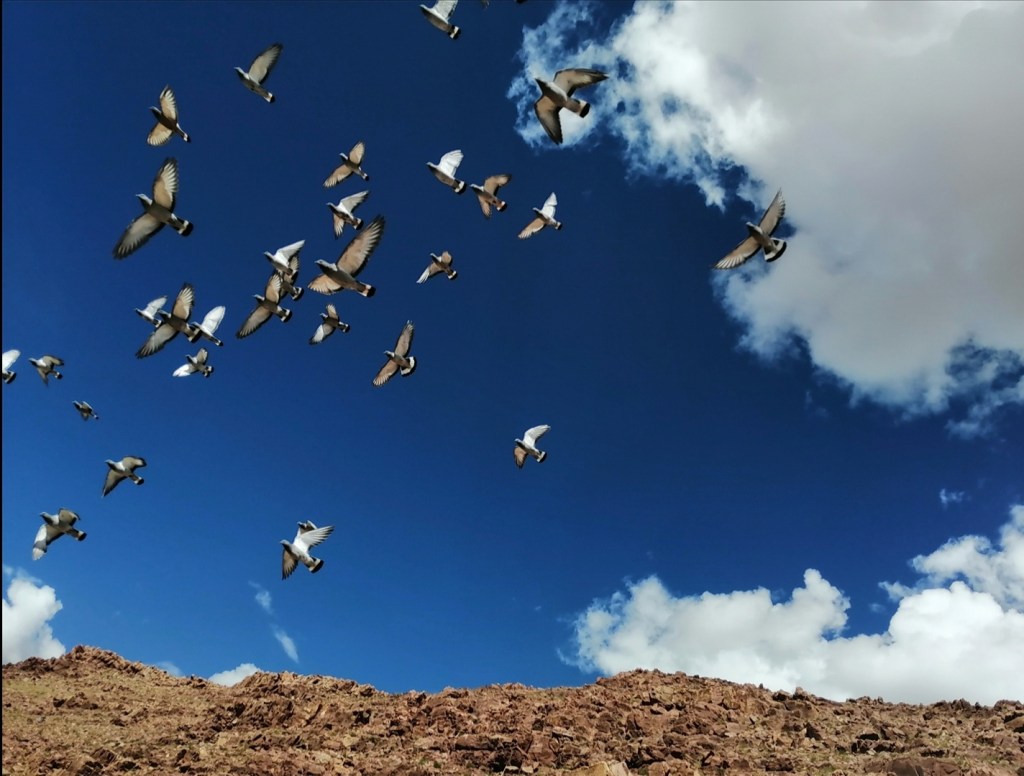
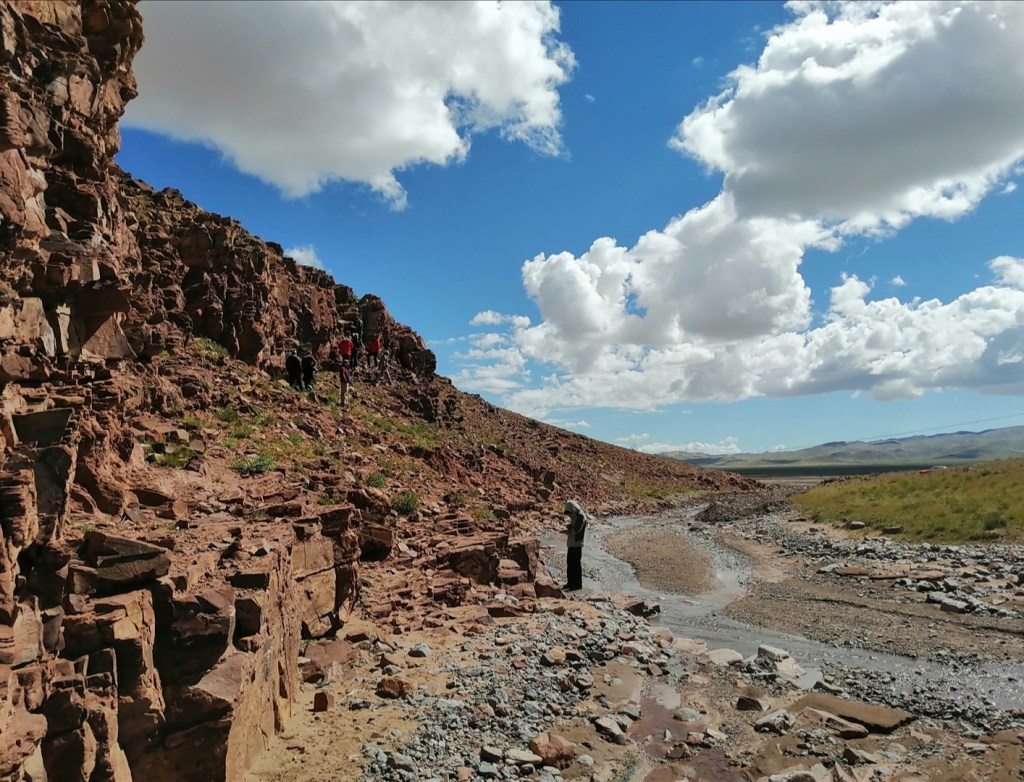
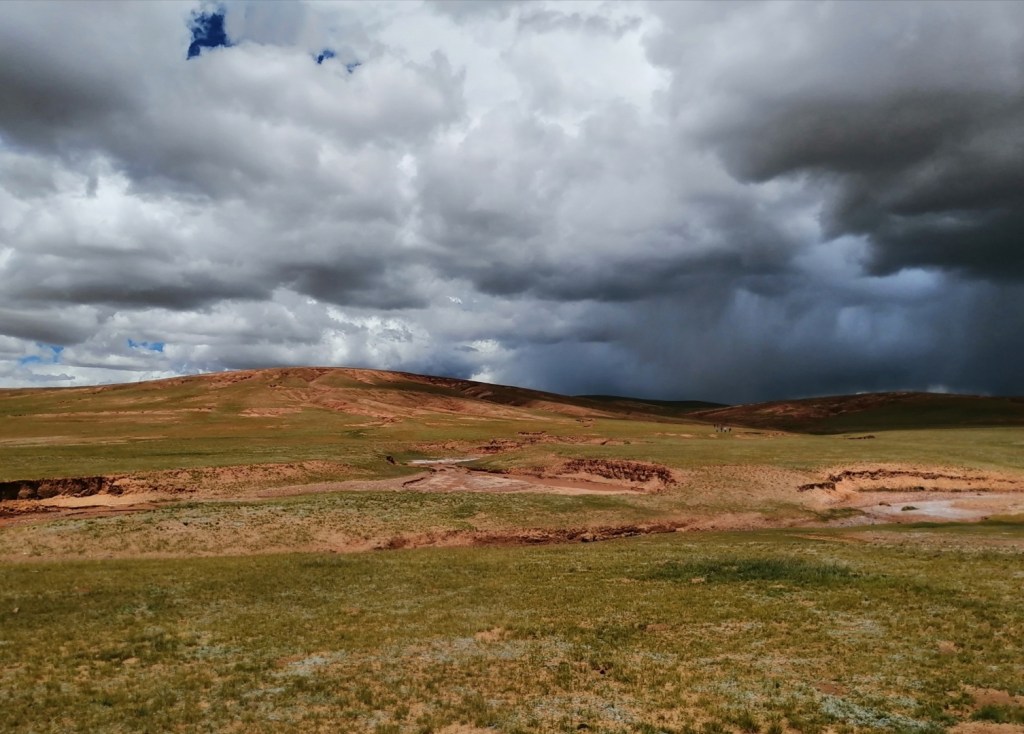
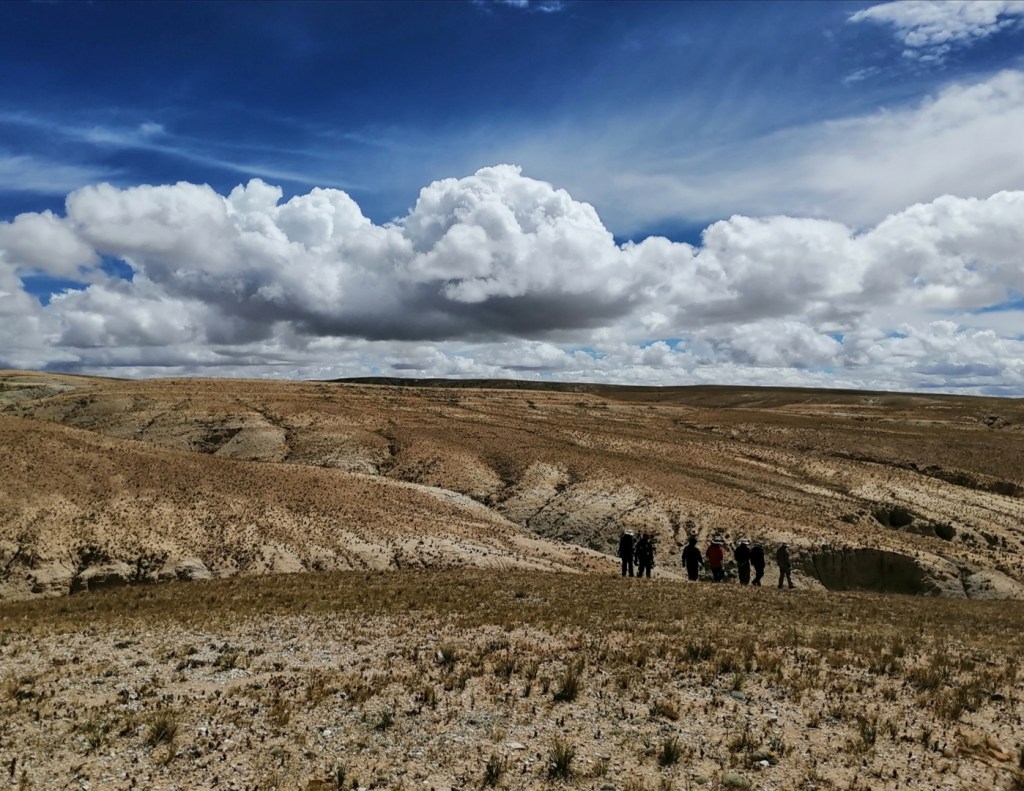
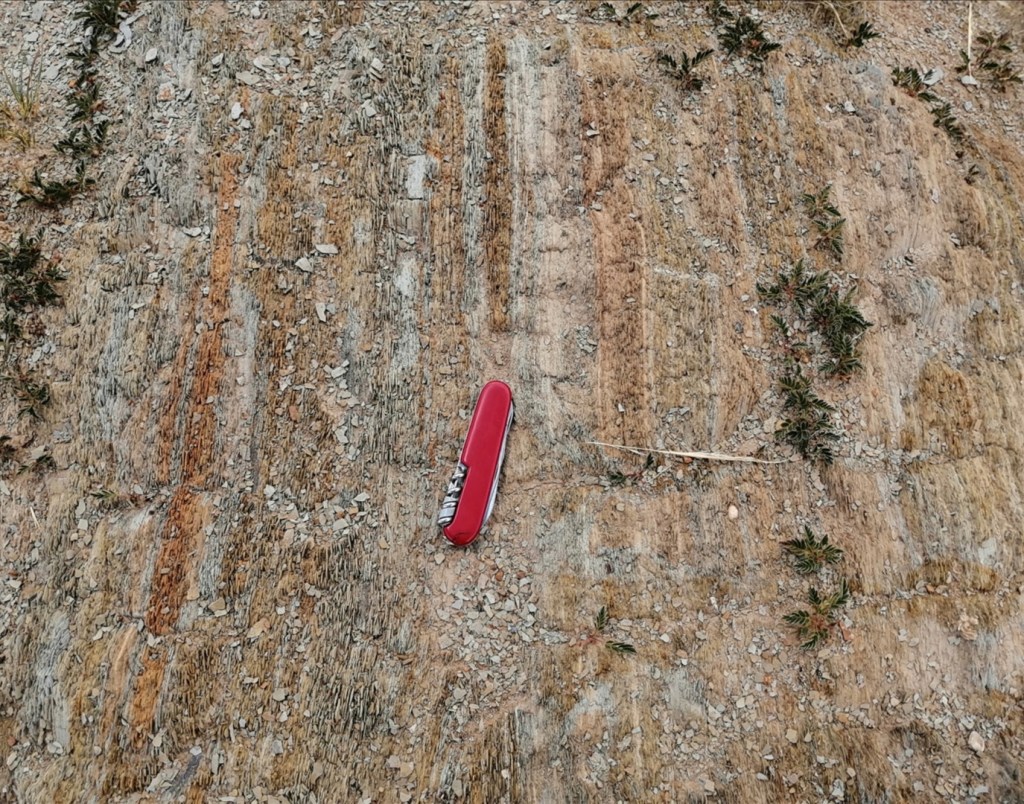
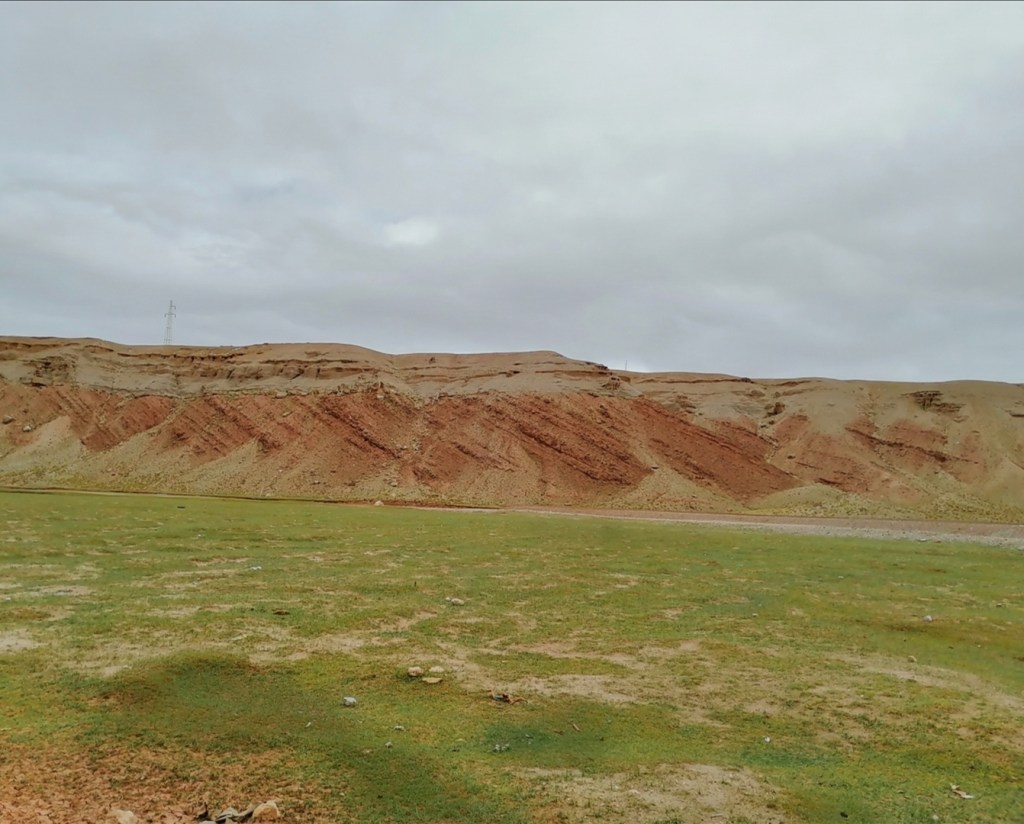
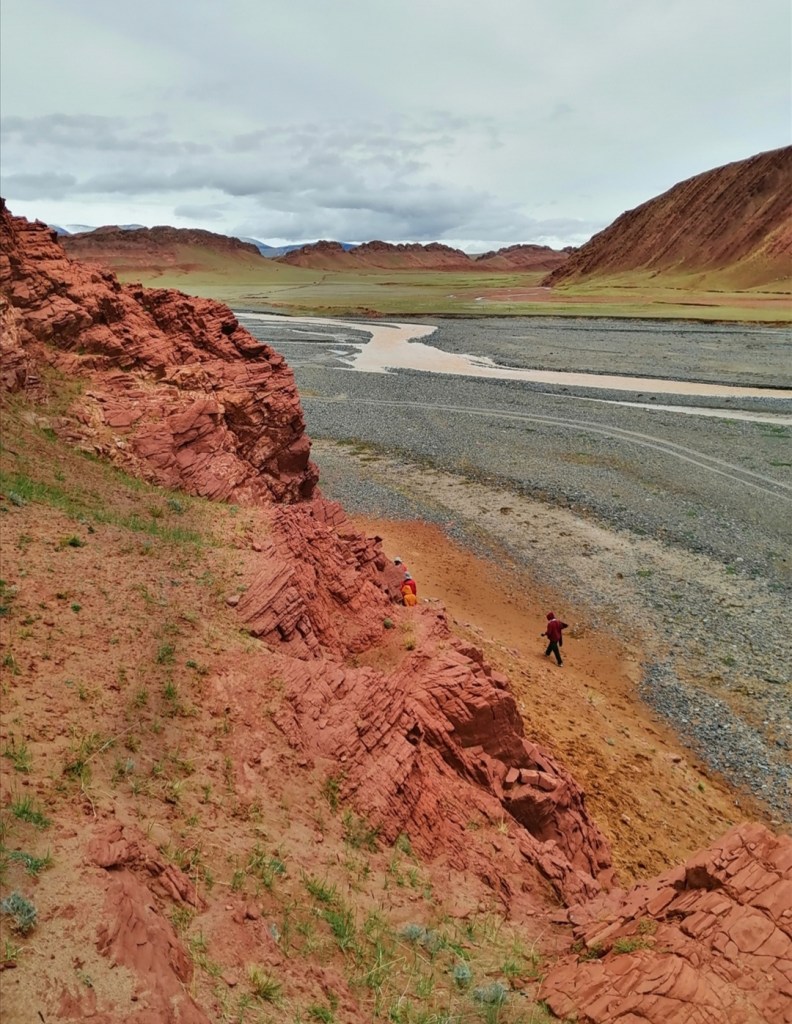
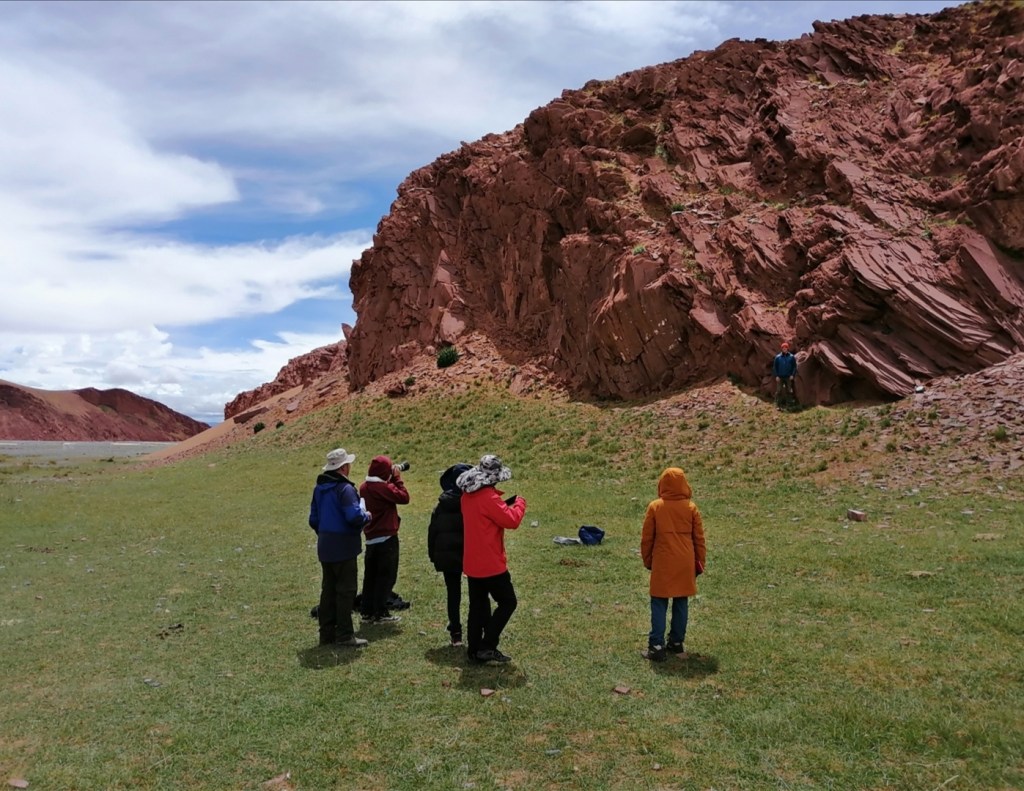
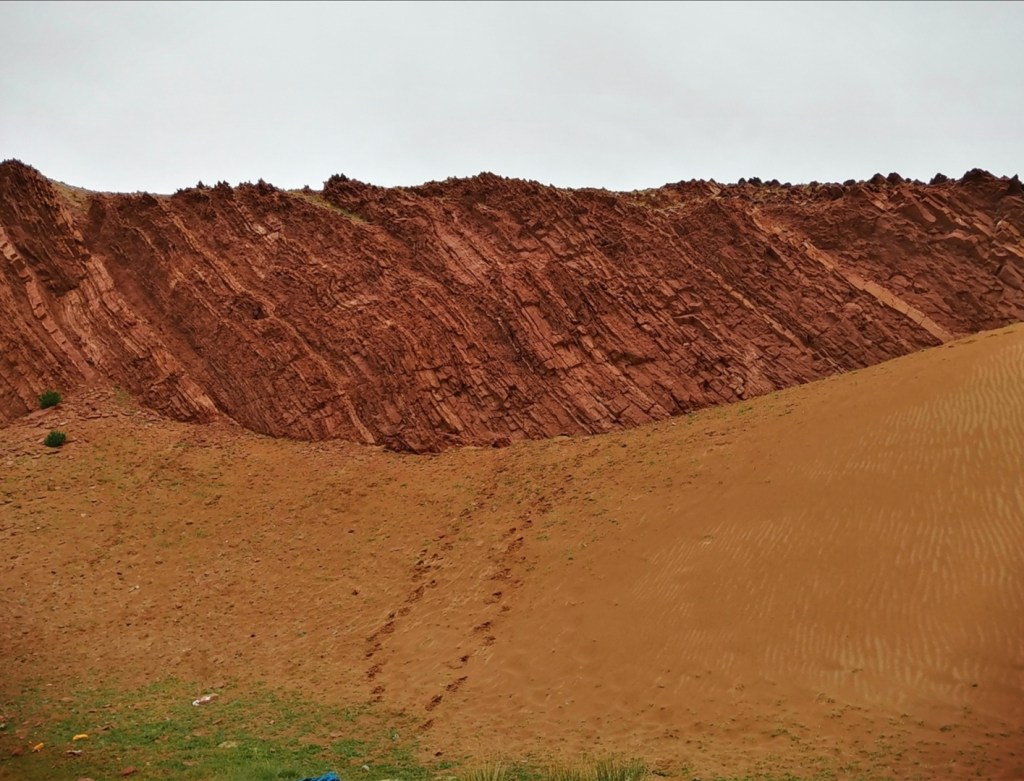
21st August: I had a horrible night, waking up regularly gasping for air and having low blood O2 levels. I used some of the O2 canisters throughout the night but woke up feeling quite rough and with a headache that didn’t dissipate all day. You won’t see many pictures today because I spent most of the day either lying on the grass or sleeping in the car with the O2 machine turned on! Xiao Bai stays at the hotel as she is not feeling a 100% neither. The aim of today was to look at the sediment of the Bangong Basin, on the northern edge of the Lhasa Terrane. We look at the sediment on the southern side first (cool red sand stones and conglomerate, and a flock of wild pigeons disturbed by the drone), then in the central part of the basin (I sleep in the car), then on the northern side (I feel a bit better so get a chance to see the sedimentary layers, including green gypsum, tilted to the vertical). We (mostly they) discuss the differences in the rocks in terms of sources of sediment, environment of deposition and tectonics, and how they changed through time. I’m happy I managed to keep my O2 levels between 85 and 92% all day. Zhongpeng puts a big O2 canister in our room for the night, which should help. We have a nice dinner and I go to bed feeling a bit better (less dizzy and with less of a headache). Hopefully we all feel better tomorrow!
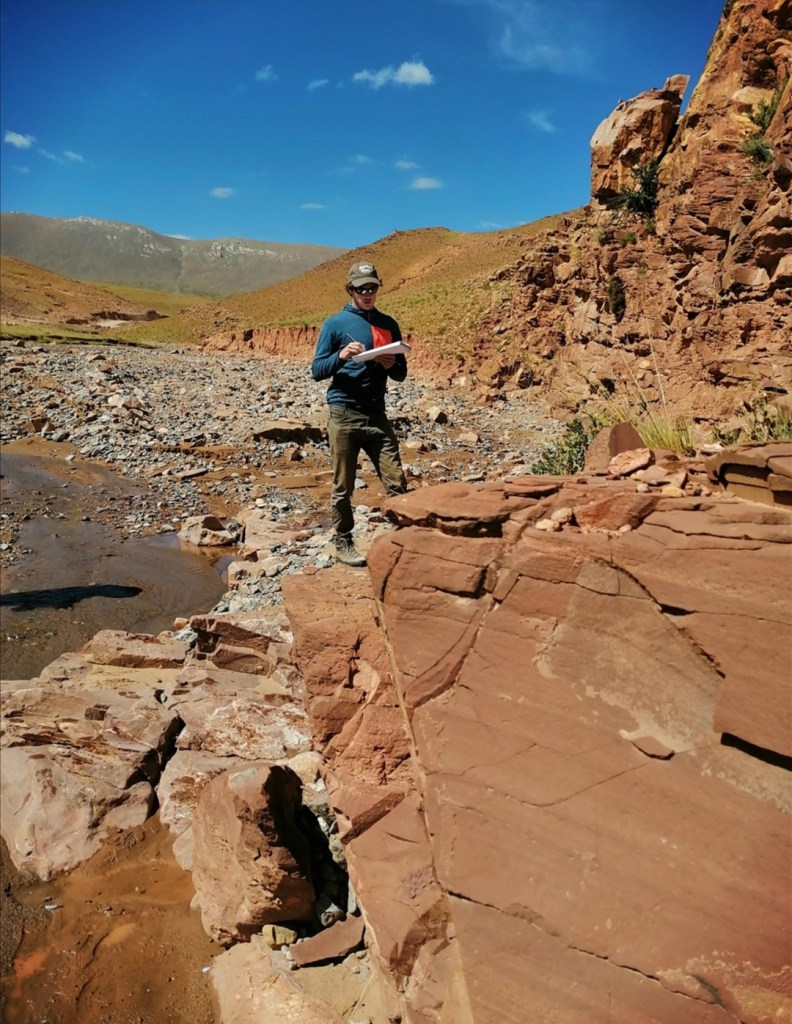
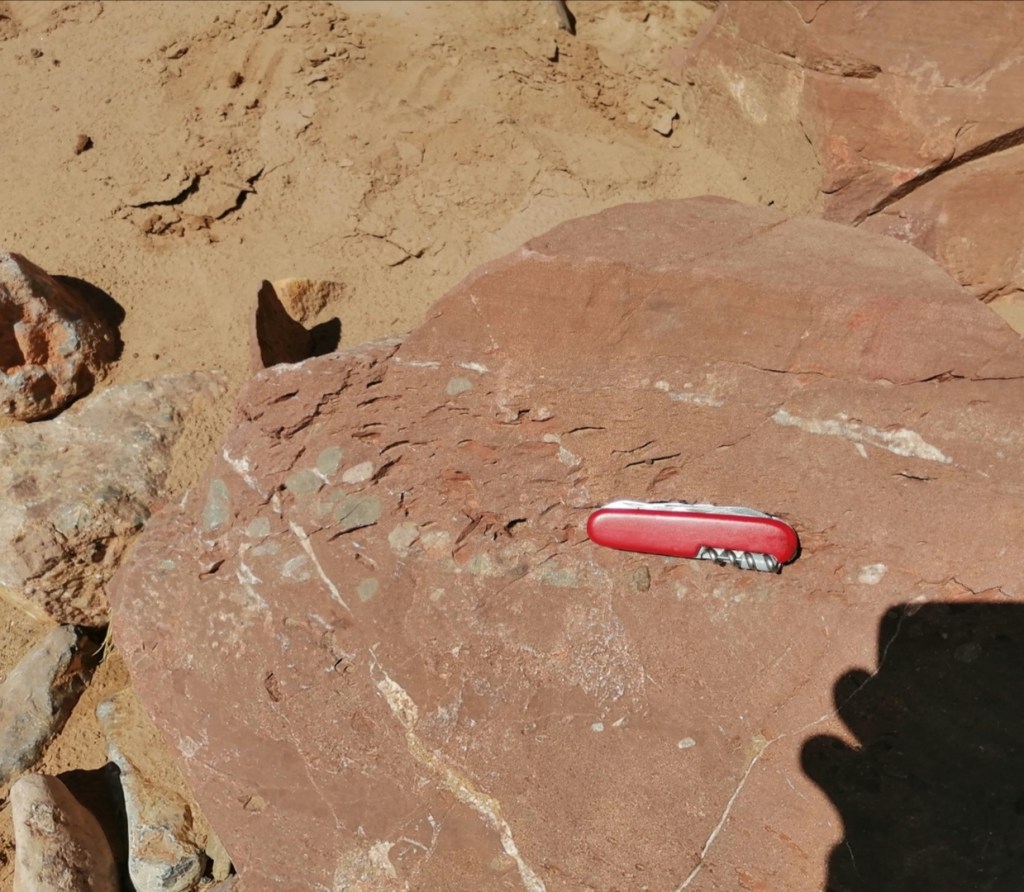
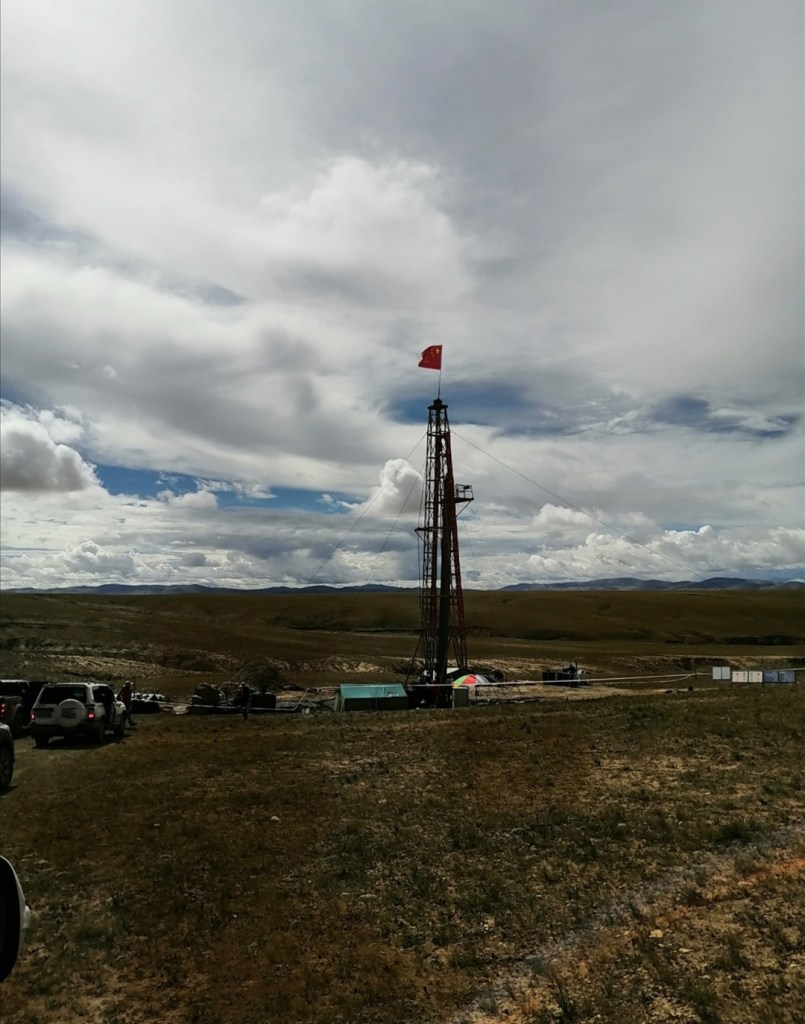
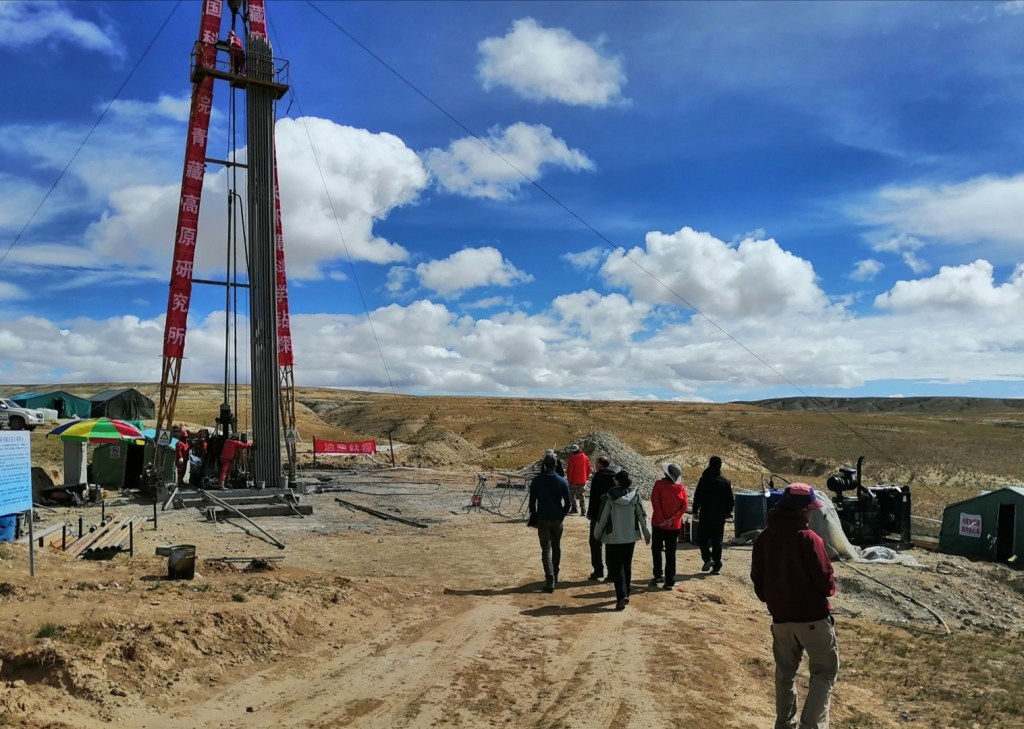
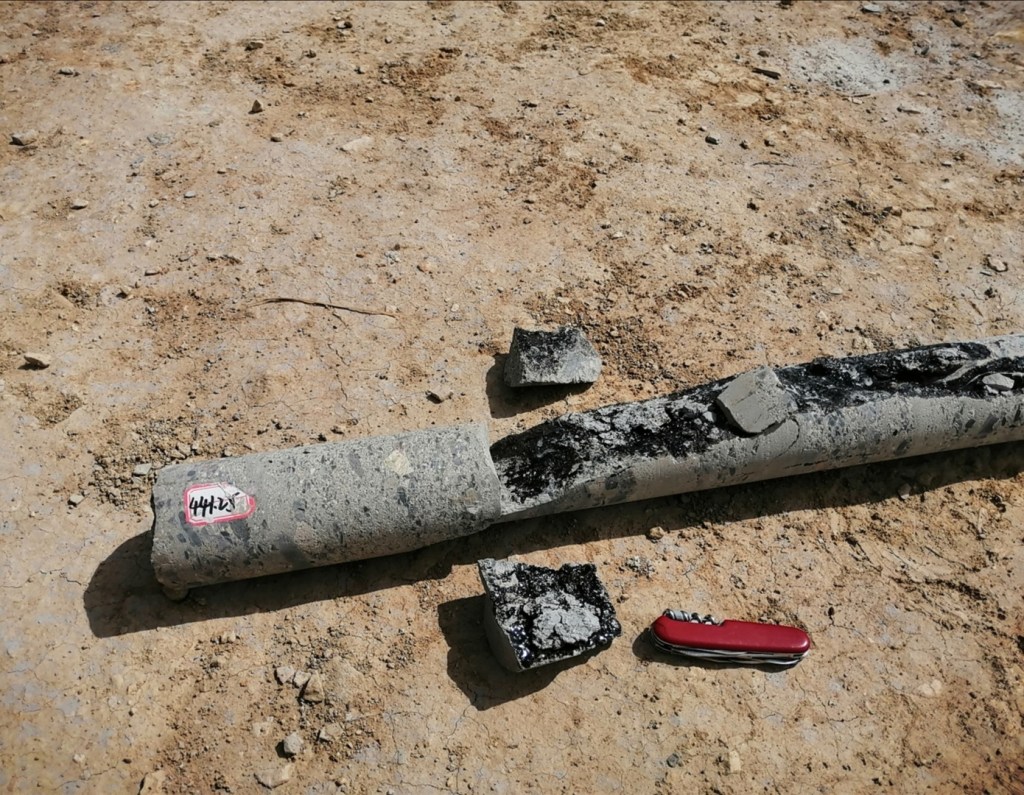
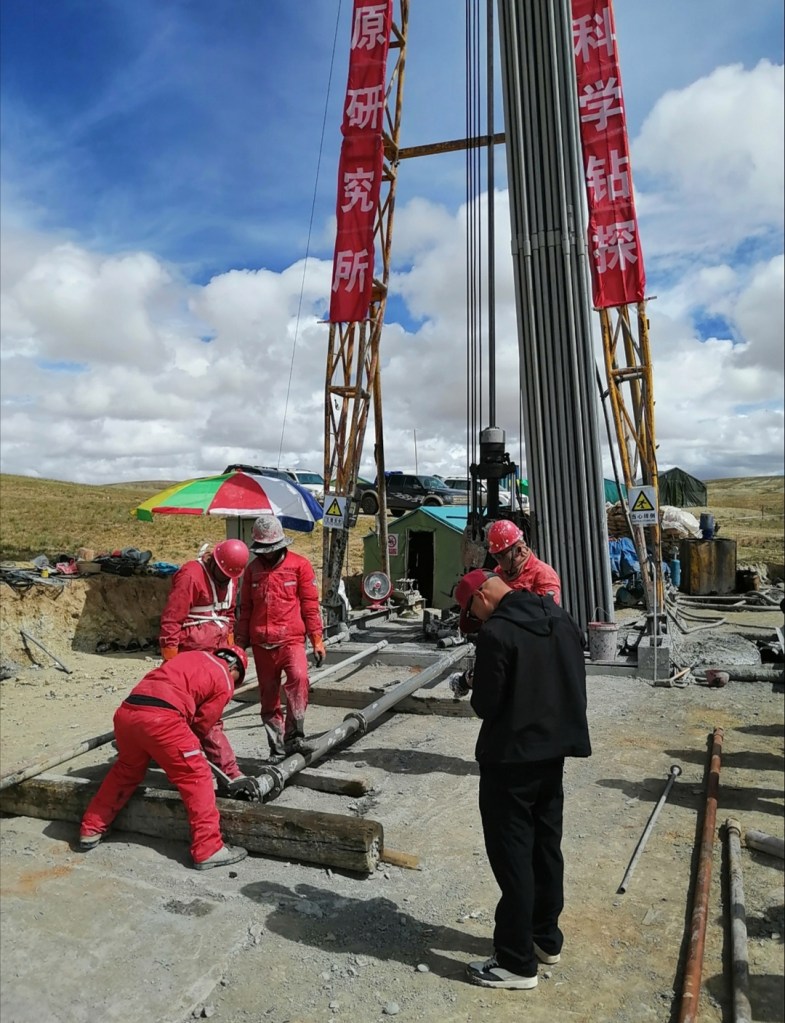
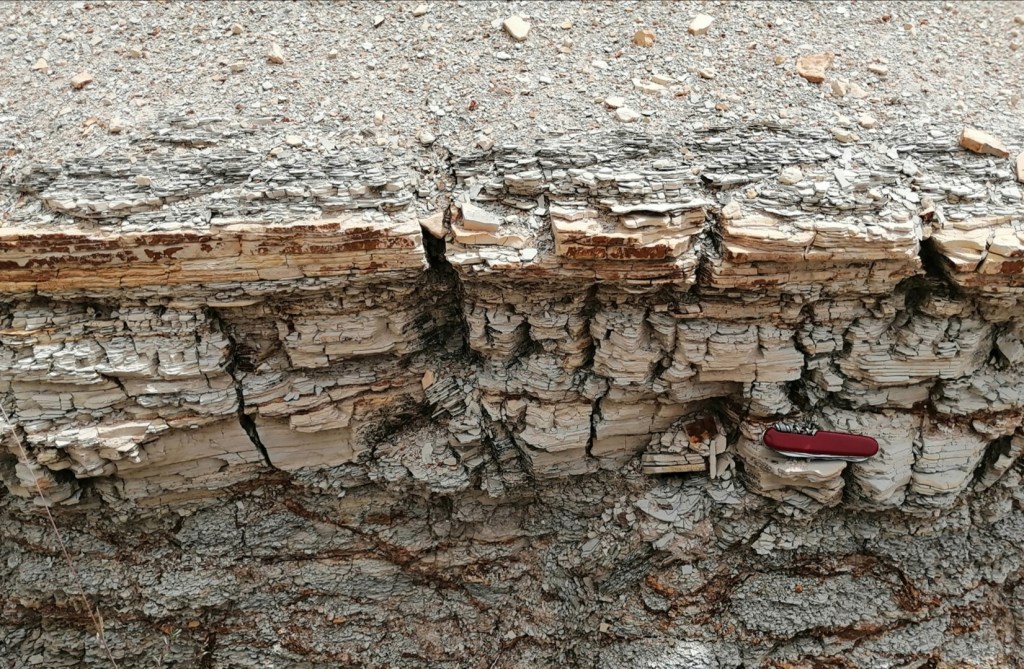
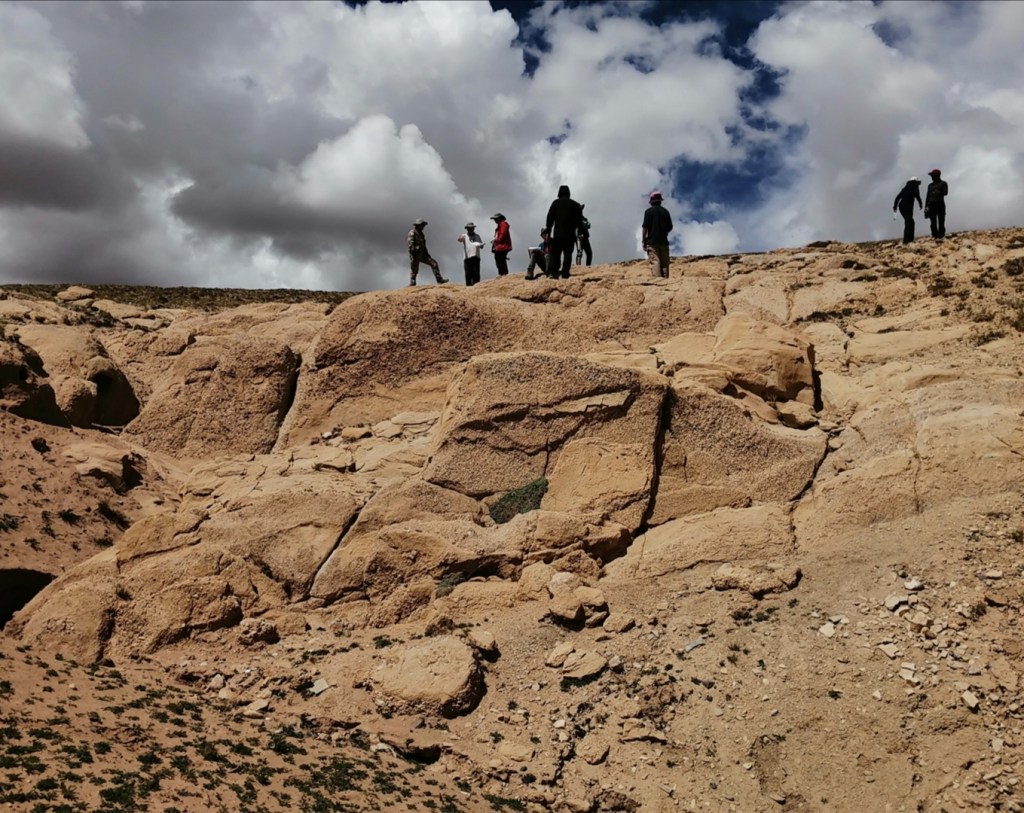
22nd August: I slept very well! I woke up at 88% O2, and kept my blood levels between 90 and 94% all day! The O2 canister in the room has certainly helped, and acclimatisation to some extent. The headache is gone, despite spending most of the day at elevations around 5000 m! We have a lovely breakfast at a very busy eatery next to the hotel. Today, we visit the Lunpola Basin, the highest petroliferous basin in the world. The basin is north of the Bangong Basin and contains up to 4 km of sediment. The exposed sediment is aged between 38 and 9 Ma (million years), and the beds are relatively undeformed (horizontally bedded) in the centre of the basin. We start by visiting a scientific rig that is aiming to core up to 1000 m depth in the centre of the basin. They have reached 750 m so far, and we are lucky to witness a 3-m long core being brought to the surface from a depth of around 750 meters! We see example of sediment from the cores: siltstone, sandstone, conglomerate and bituminen. We walk to see some rocks exposed on the hillside, aged 21 Ma (age of the top of the core): they are finely laminated muds (lake sediment) that contains all sorts of fossils, including fish.
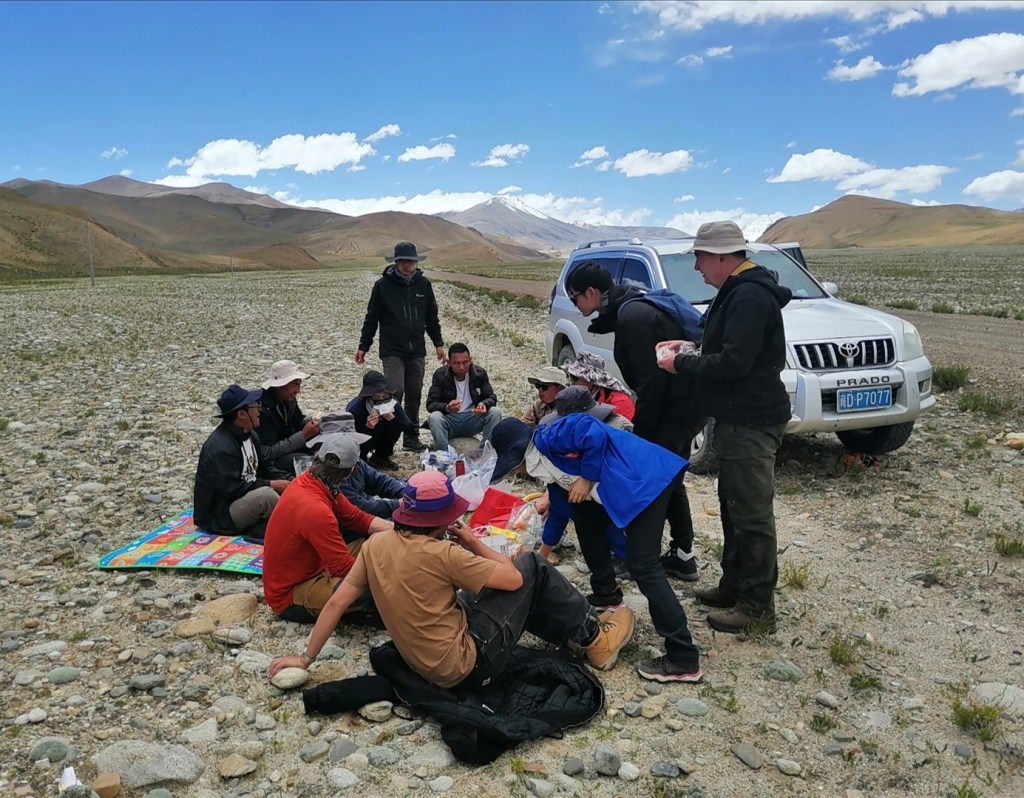
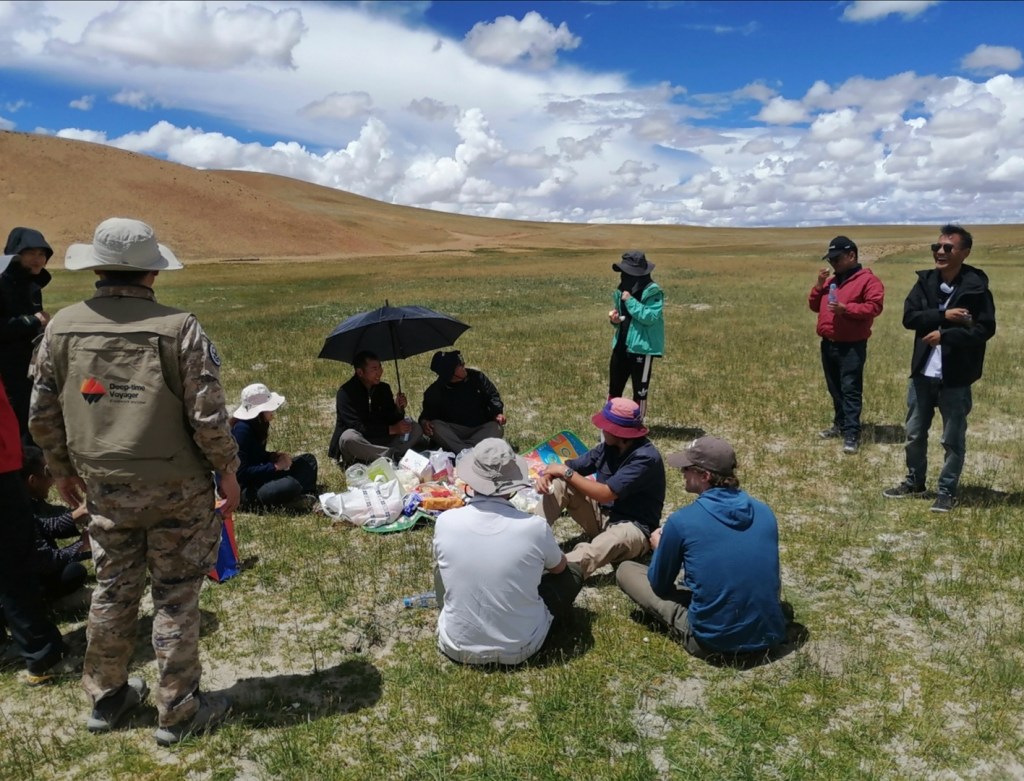
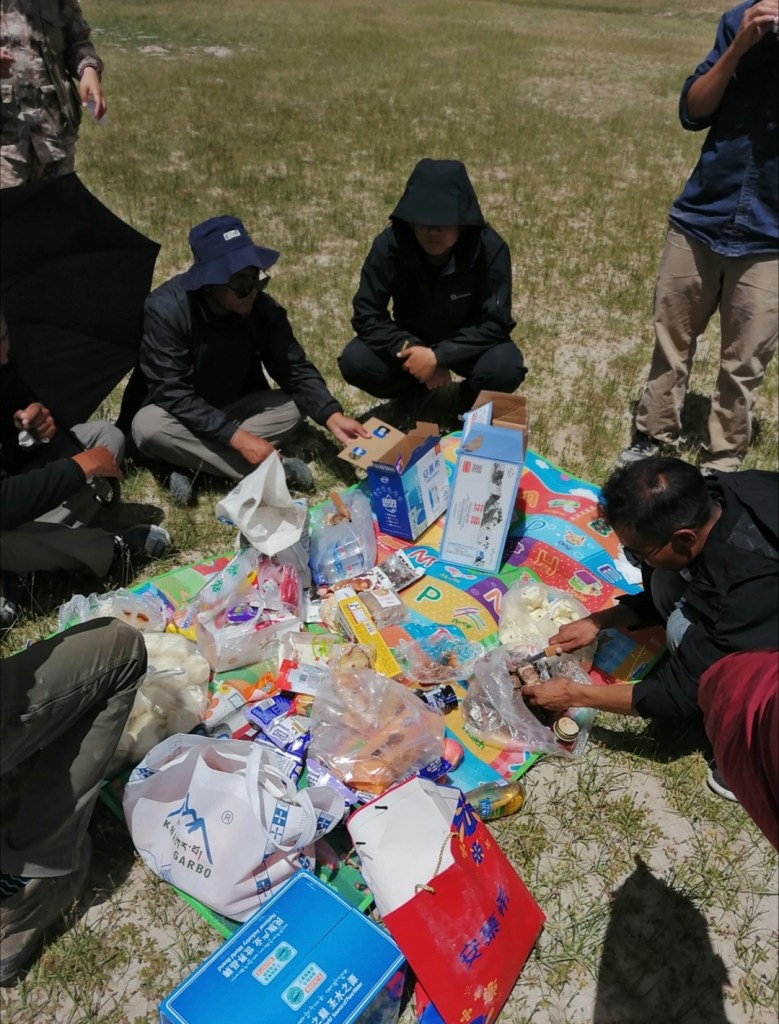
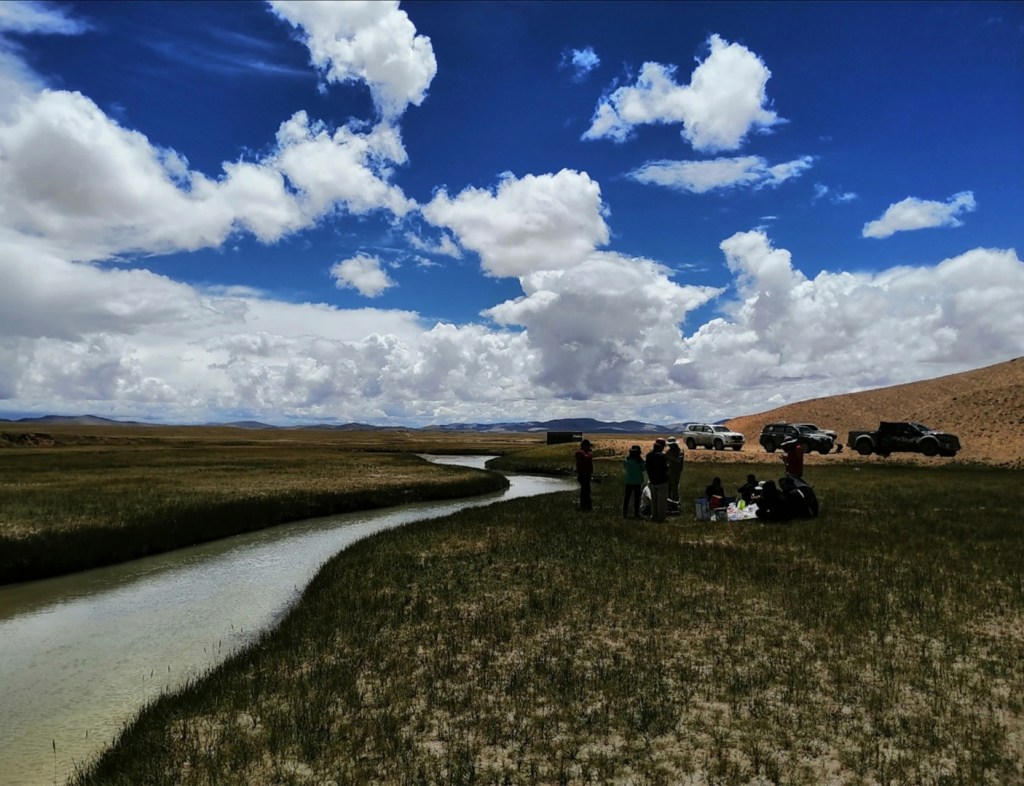
We then drive north, to the edge of the basin where the rocks have been folded to the vertical under a thrust coming from the north: this means we can easily travel through the succession and identify changes in the environment at the time of the deposition of the sediment. We have a picnic first by a lovely small river. Picnic consists of various bits of processed food, leftovers from breakfast, chili sauce and yak meet brought by a ranger, Jiashi, who joins us for the day. We then go to see the section which, over maybe 20 meters, dramatically changes from river sediment (gravel, sand, evidence of channels and fluvial transport) to mudstone (deep lake): this section demonstrates lake levels rising very rapidly. We discuss fluvial processes and their record in stratigraphy with Xinhang, in particular the difference between meandering and braided channels. We then have a long drive back to Baingoin. I’m feeling very well! A bit tired but well.

The wildlife today has been amazing: wild yaks and deer, athletic wild donkeys “chasing” our convoy on the move (this was particularly spectacular), birds of prey, a fox, some geese and cranes, and chipmunk-like rodents. The landscapes were incredible too: just so vast (les grandes étendues)! It feels like being in the Serengeti! You won’t see pictures of wildlife in this blog though, as my phone camera is not good enough. I’ll add links to Darwin’s and our photographer’s pages in due time.

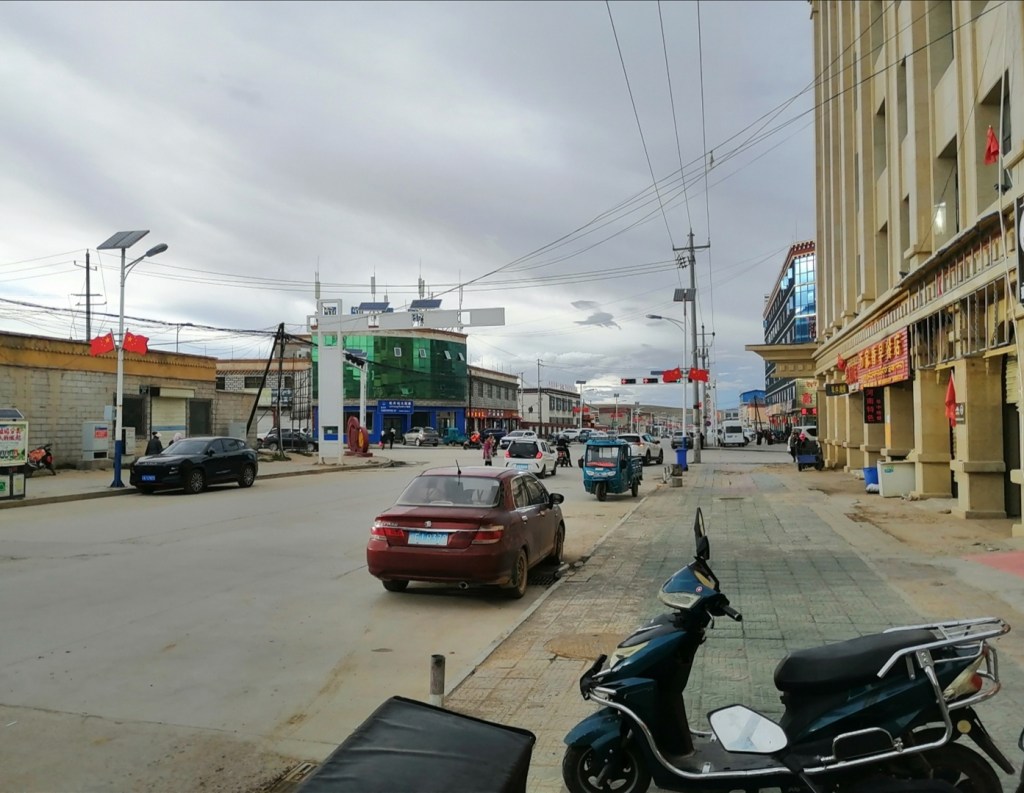
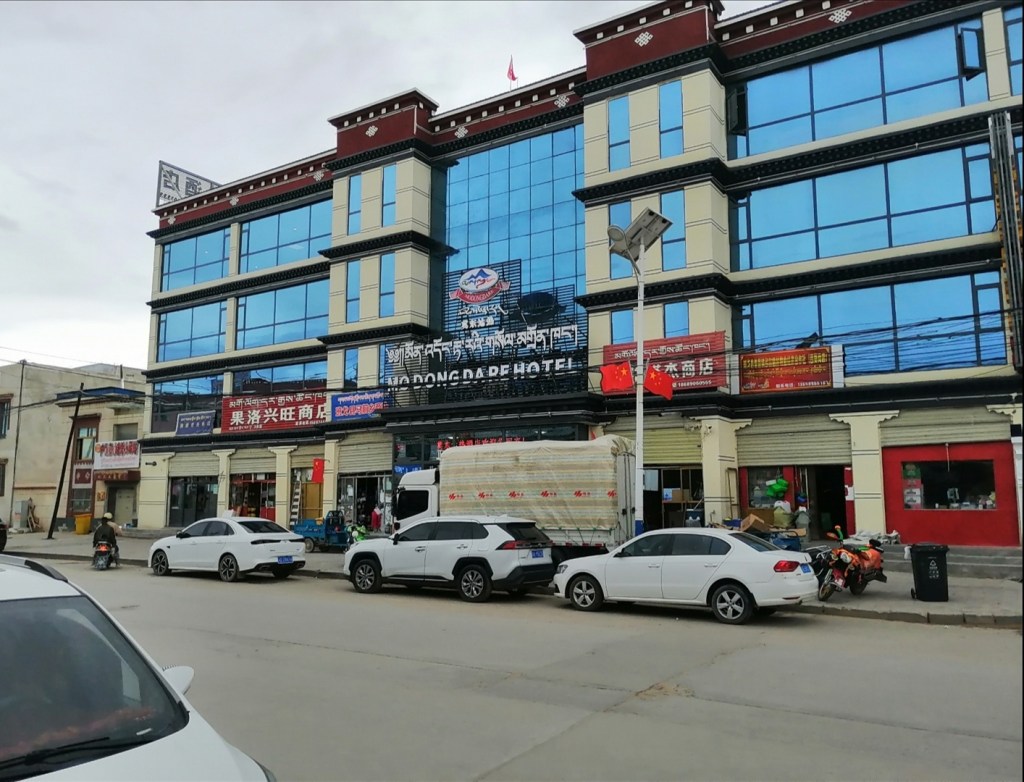
We’re back at the hotel at 6pm, tidy ourselves up and go for dinner. They clearly don’t see foreigners very often here: the stares are insane! But most people end up smiling and trying to say a little something, which is nice. Baingoin is actually very nice, with many young trendy-looking people around, and little busy shops everywhere. We have a nice dinner. Xiao Bai is feeling better. All is good! We put the O2 on in the room tonight again: better safe than sorry!
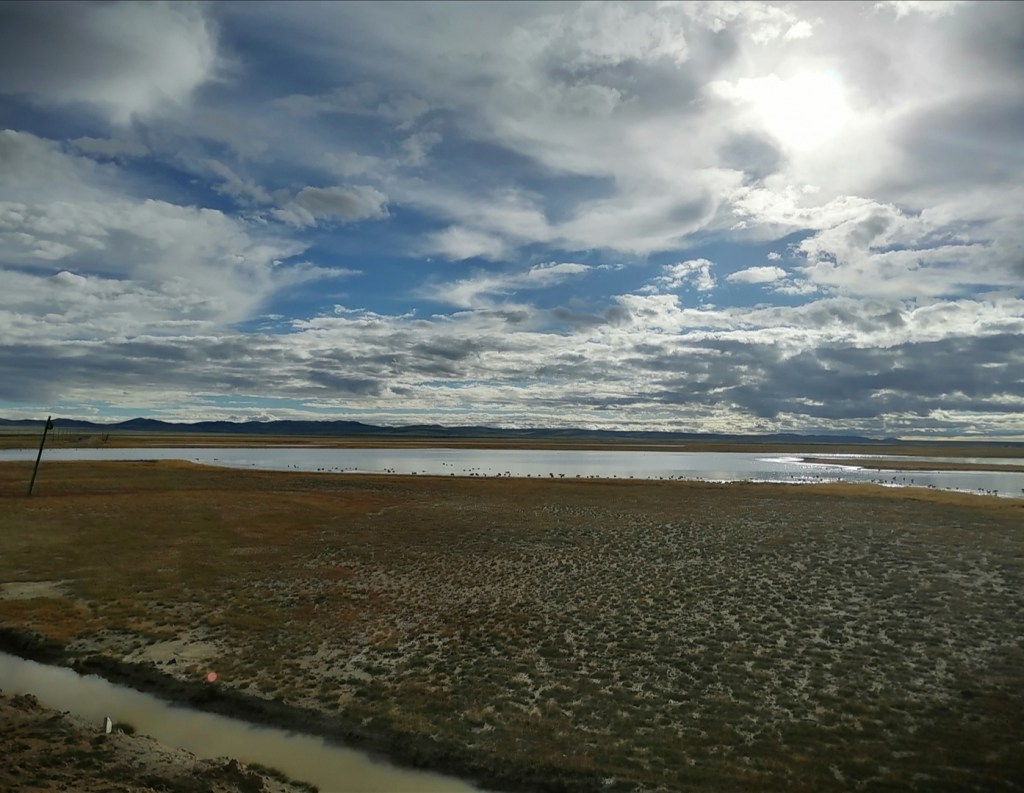
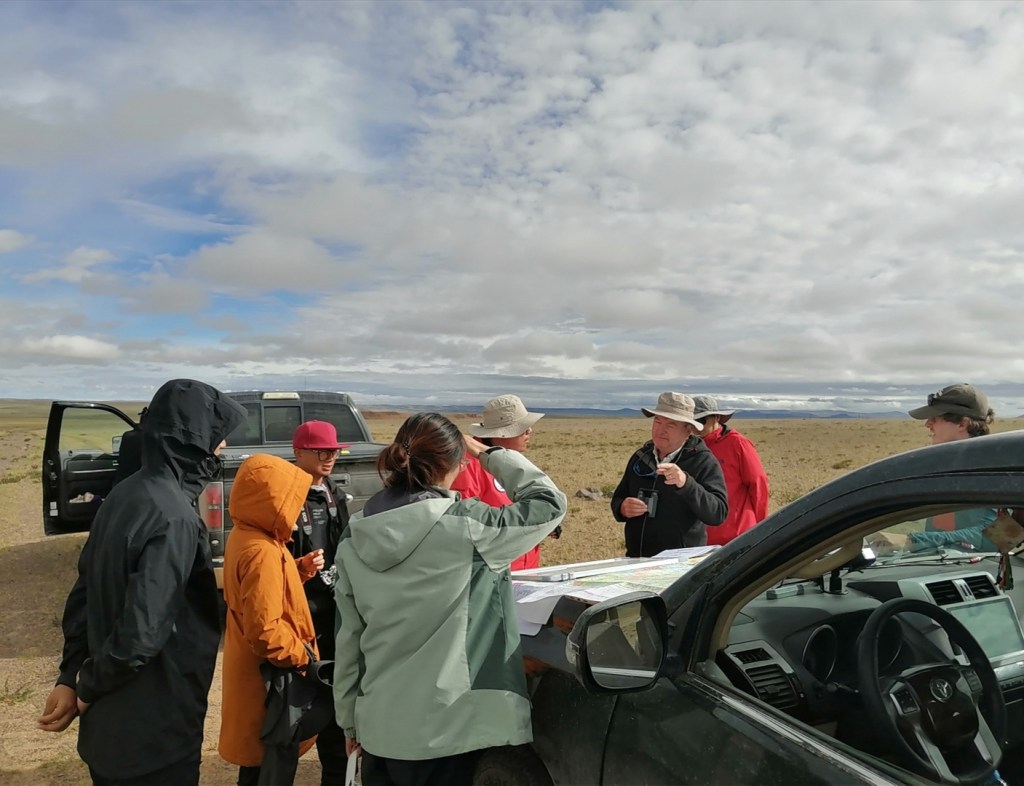
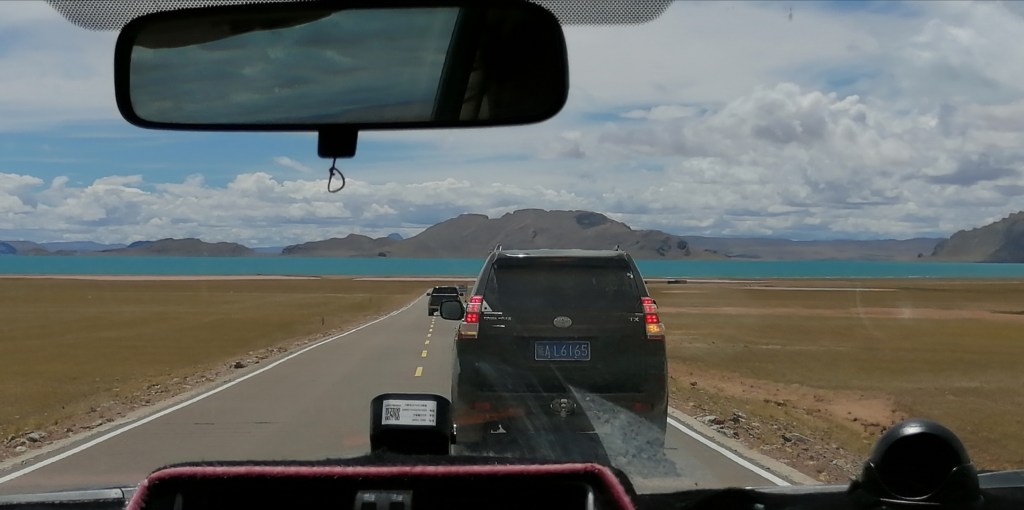
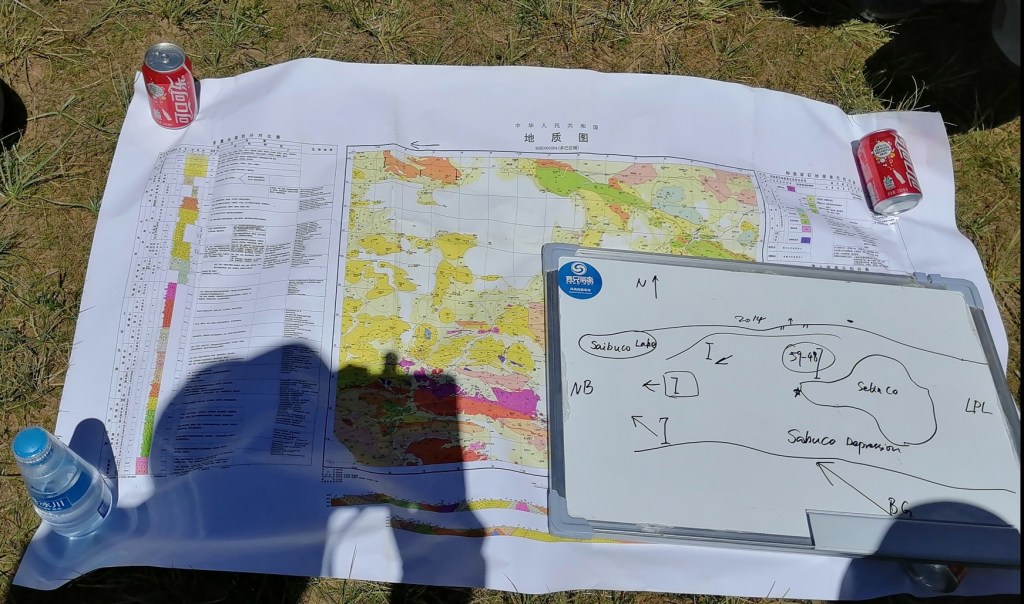
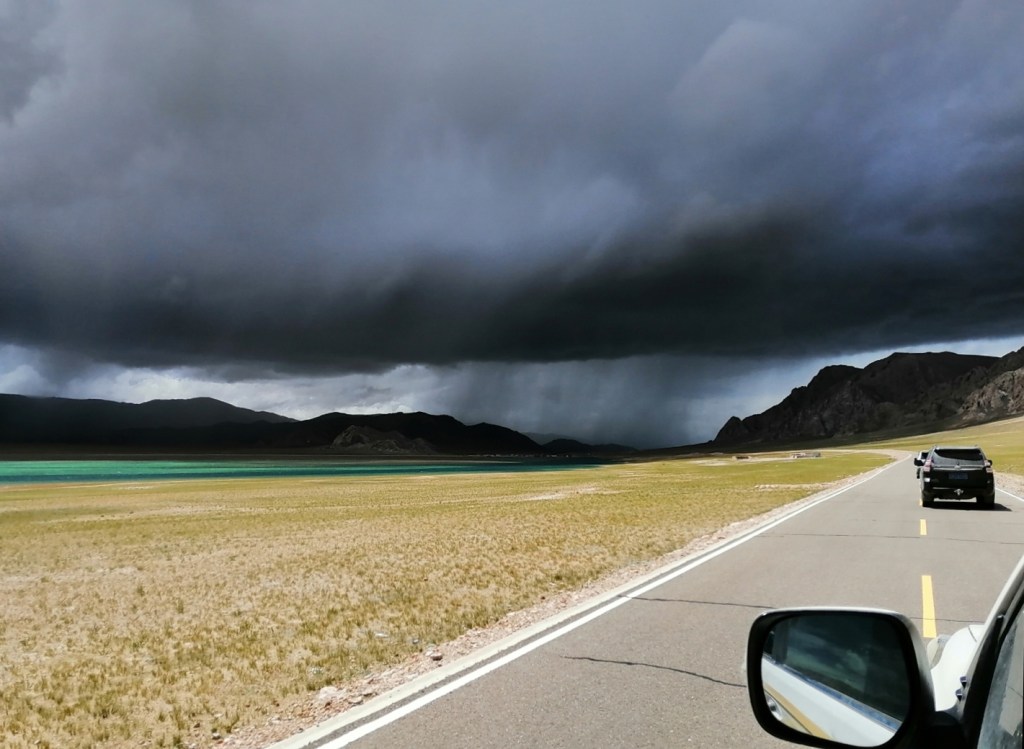
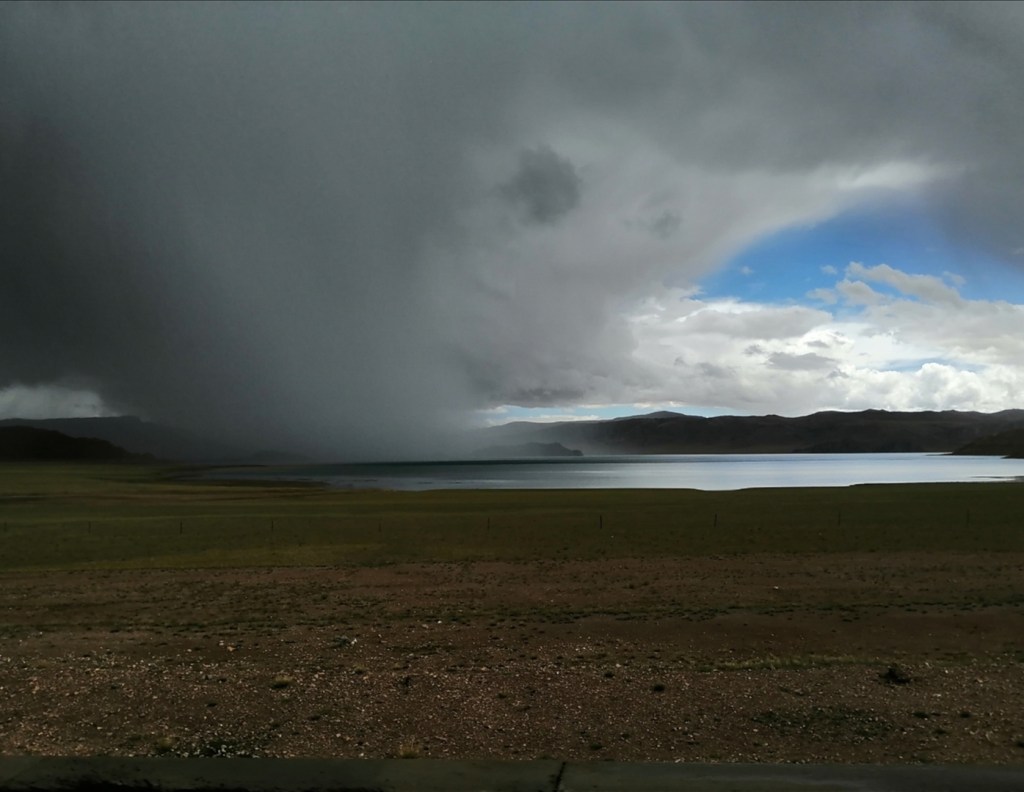
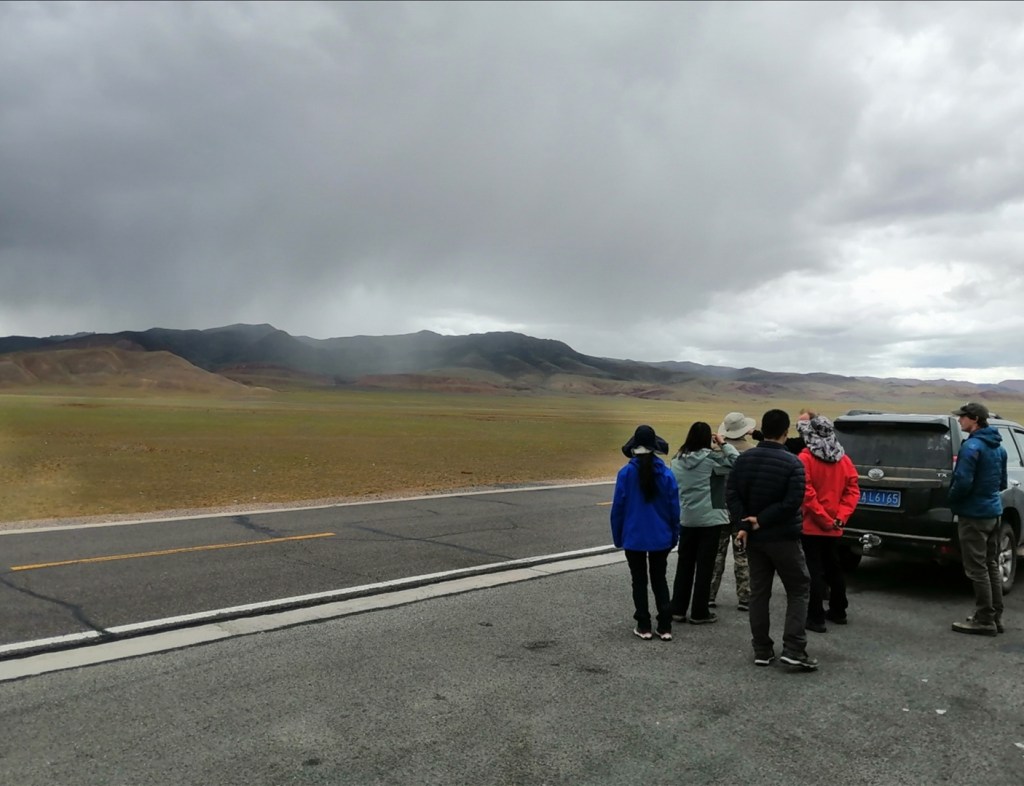
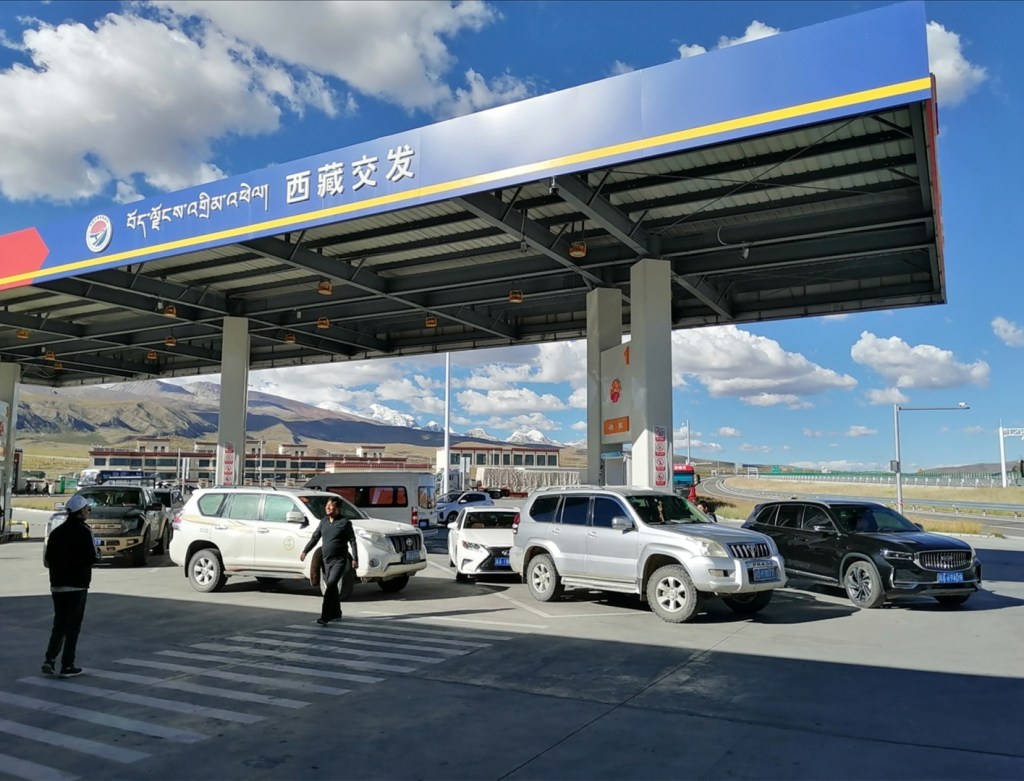
23rd August: good night! We have an early breakfast, load the cars, and we’re off to Nima, further west, at a slightly lower elevation of 4500 m. Weather is overcast. As we drive west, we pass salt lakes, some of which are exploited. We drive through a saddle between a smallish lake and the huge Selin Co lake further west: we see devastation. It looks like a dry, active river bed, and the road is being repaired. Zhongpeng tells us this used to be marshes, but Selin Co overflowed last September, for the first time in living memory, and the marsh and the road got wiped out! We discuss how such events may be preserved in the sedimentary record. Actually, we spend most of the day thinking about modern processes, as the current topography is similar to some extent to that in the late Cenozoic, and about the signature of these processes (river and delta processes, large floods, glaciation) in stratigraphy. We have a quick stop at the Zayazangpu River, the largest internally draining river in this part of Tibet. We’re now on the NW margin of the Lunpola Basin. To the north, formations that make up the Qiangtang Range (Cretaceous limestone that makes large white cliffs, mélange, sandstones) are thrusted over towards the south, and the sediment have been tilted to the vertical. Zhongpeng has studied this section which is around 35 Ma old and shows a transition from conglomerate (river) to delta to shallow lake. We drive around Selin Co counterclockwise, have a quick lunch at its NW tip (I hope I won’t regret eating that very smelly / rotten piece of yak), and are given an introduction to another section nearby, dated 59-48 Ma. It appears the Nima, Lunpola and Bangong basins were connected in the early Cenozoic, forming a large W-E depression (with palaeoflow directions consistently to the W), then topography rose in between the basins, potentially associated with strike-slip movement (transpression / transtension?) As we keep driving west, we drive through pretty dramatic rainstorms. We have a quick stop at 4pm shortly before Nima, where we are introduced to the North and South Nima basins, and the spectacular glaciated peaks of the Qiangtang Range to the north (elevation > 6000 m). We arrive at the Sunshine Hotel in Nima at 5pm (Nima means sun in Tibetan). We check in and get refreshed while poor Xinhang is (again) on paperwork duty for us. We have dinner (and we thought people starred at us in Baingoin!) then have a project discussion all together.
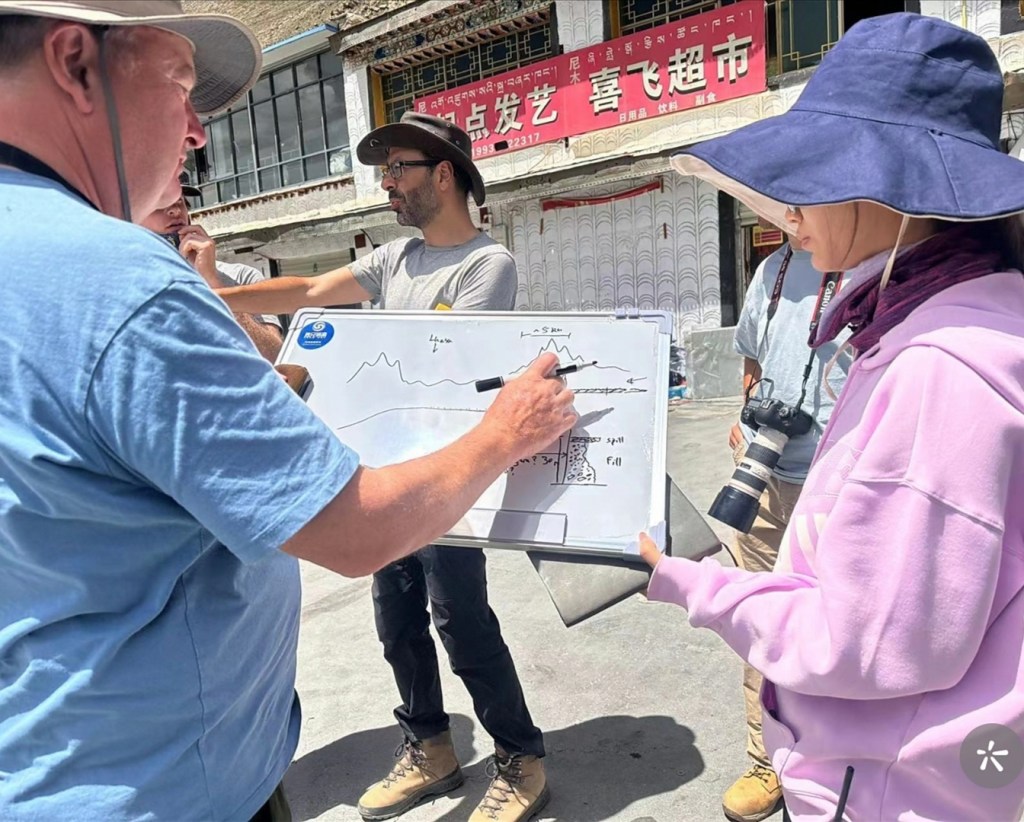
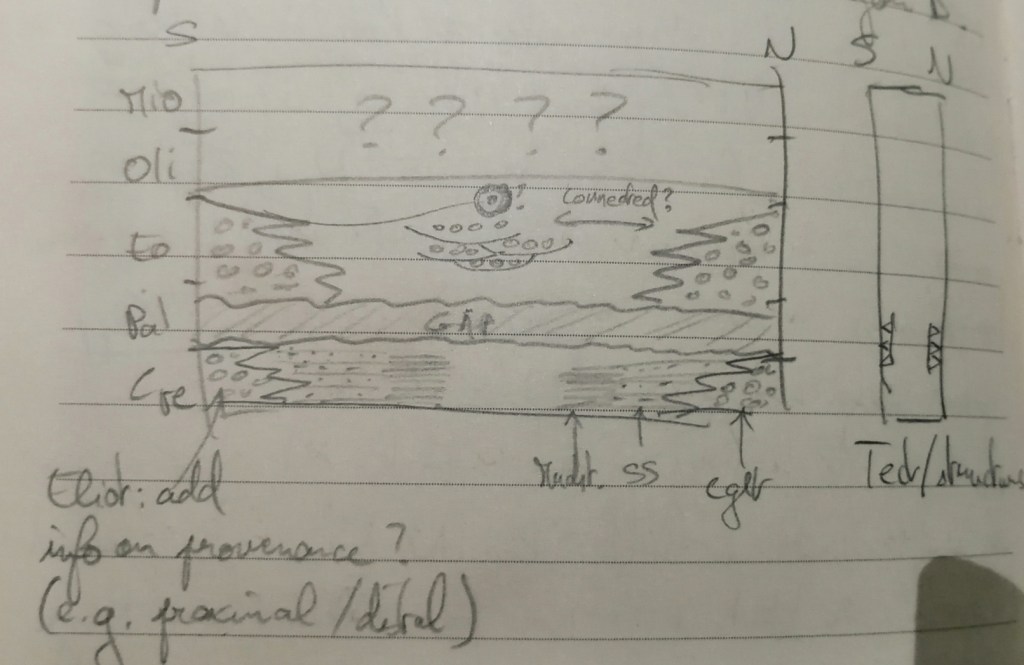
Among the things we discuss, Hugh mentions the benefits of making chronostratigraphic diagrams for each basis, as shown below. While it looks like the different sections outcropping in the region have been studied in great details, it appears many gap persists, and more could be done to better constrain the dynamics of the past river systems and the type of landscape they were flowing across. Such diagrams could really help identify these gaps, in particular in the Paleocene-Eocene which is the period Xinhang focuses on. I really like the idea. We then go to bed, without forgetting to plug the 02 in the room. I don’t know what Zhongpeng and his colleagues are on, but they appear full of energy; we’re wiped!
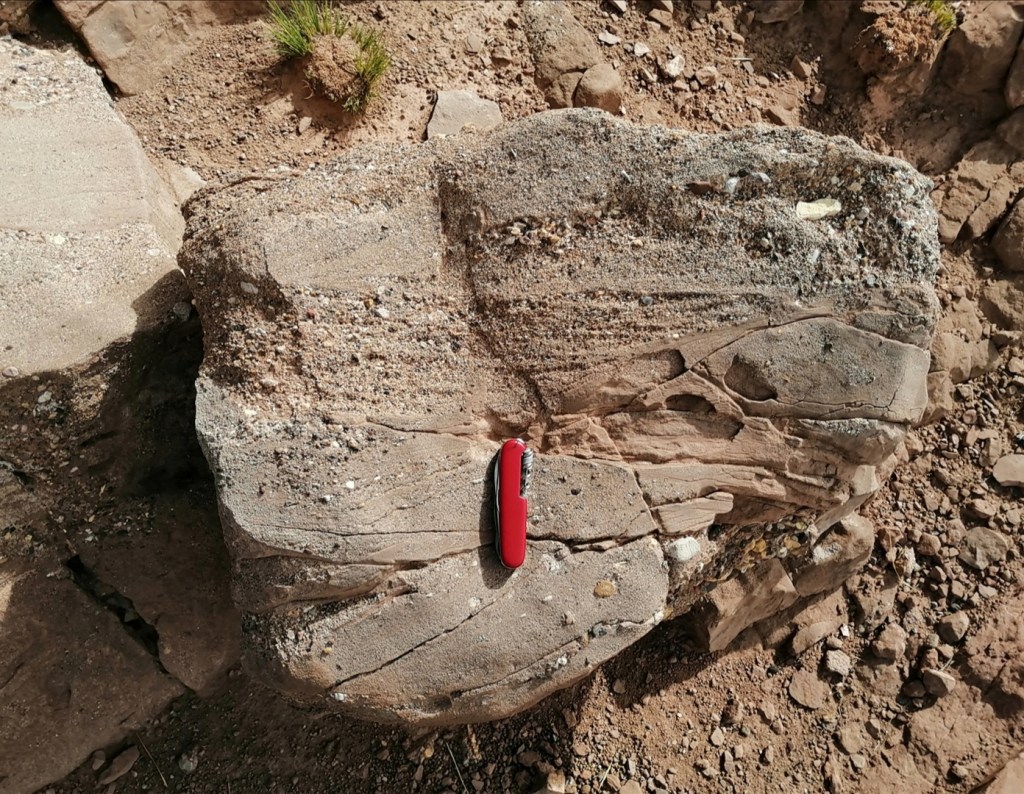
24th August: I had a good night and am feeling good overall. Today, we focus on some of the Nima Basin sections documented in particular by De Celles and colleagues. Another ranger called Jiashi joins us for the day. We start by looking at section 1NM, just around the corner. We have a vertically bedded Oligo-Miocene succession with again a mixture of fluvial sandstones and conglomerate, as well as mudstones and lacustrine limestones (the latter probably needing a sustained lake environment for 100s to 1000s of years, being up to 20 cm thick). Are we looking at meandering or braided rivers? Can we get a paleo-discharge for a river that transported coarse sand as bedload? The river system seems to transition from meandering (isolated sandy channels within thick mudstones) to braided, but it is not clear cut: can rivers be mixed braided-meandering? Again, we try to draw parallels with the modern river nearby that shows multiple bars within a broadly meandering channel. We are in the south Nima Basin and the rivers at the time were transporting clasts of various lithologies sourced from the south (Lhasa block). The weather is not amazing so we have coffee and cake at a local café in Nima.
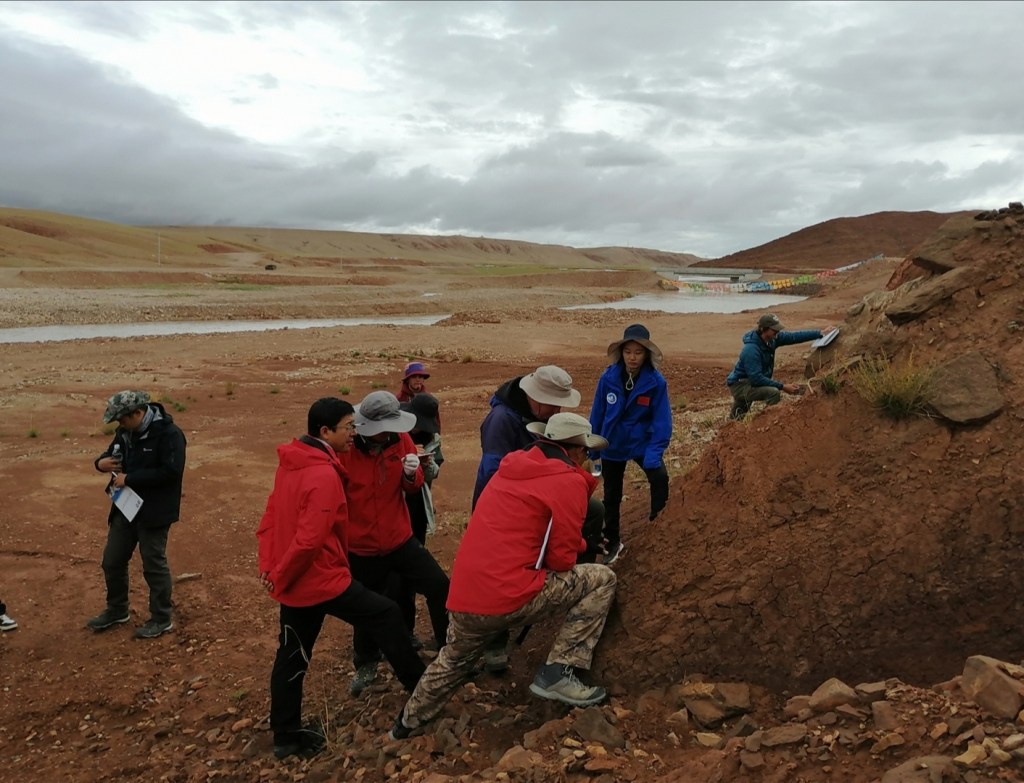
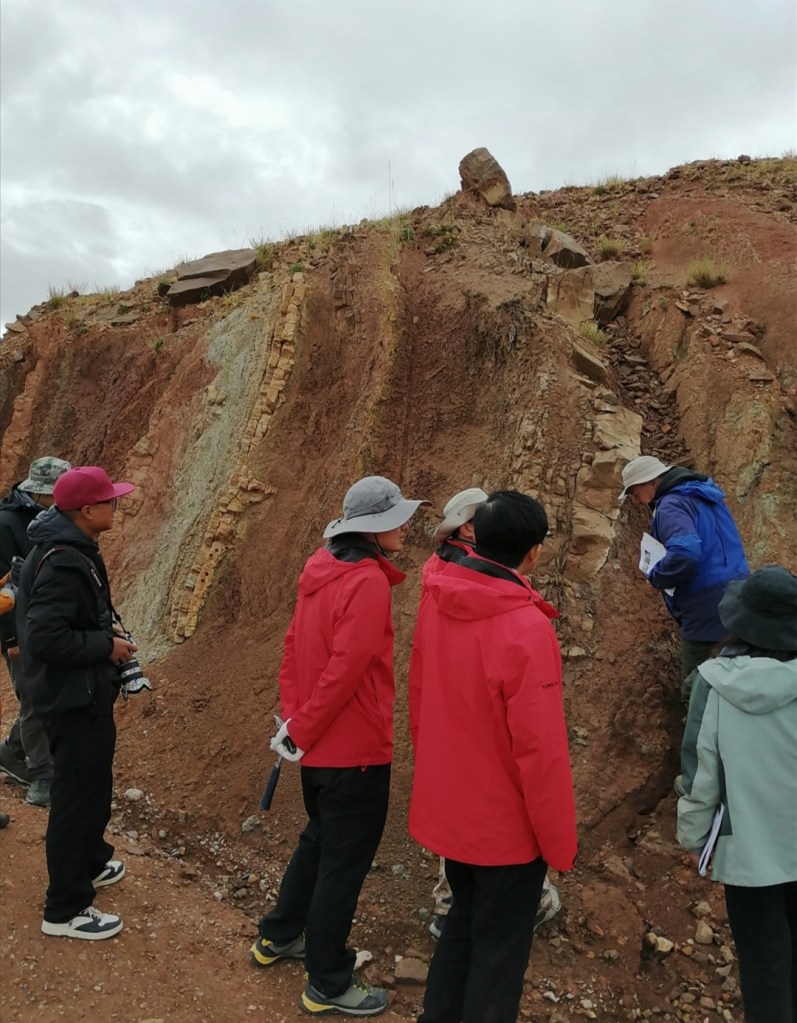
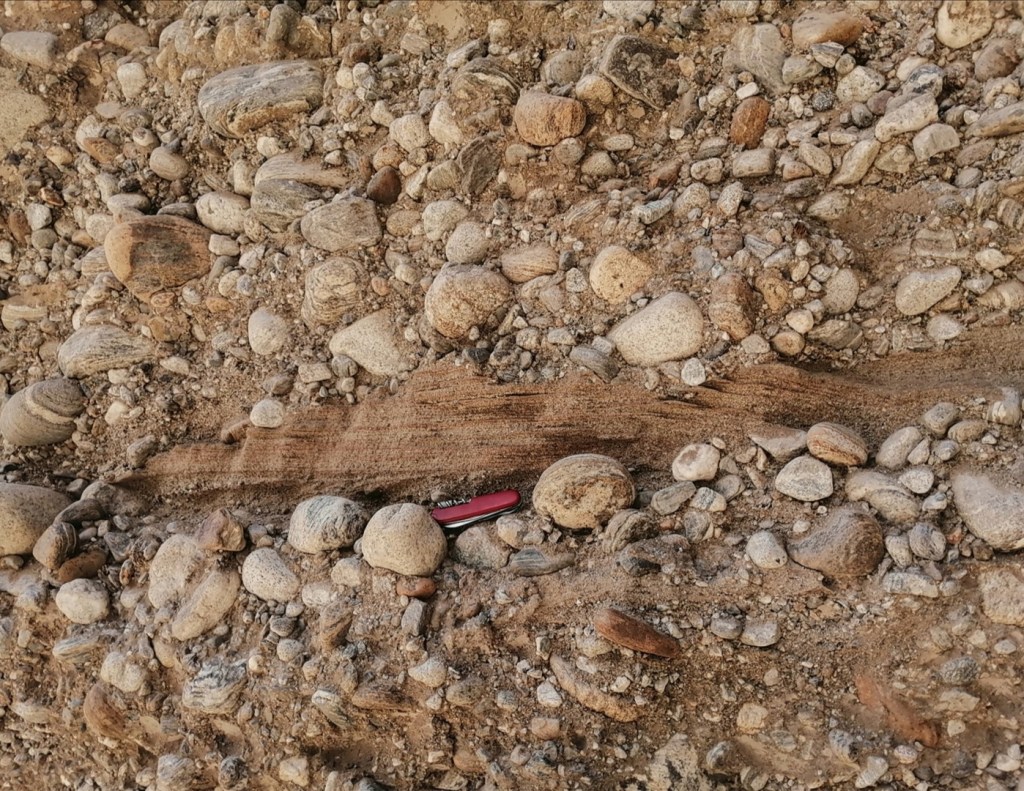
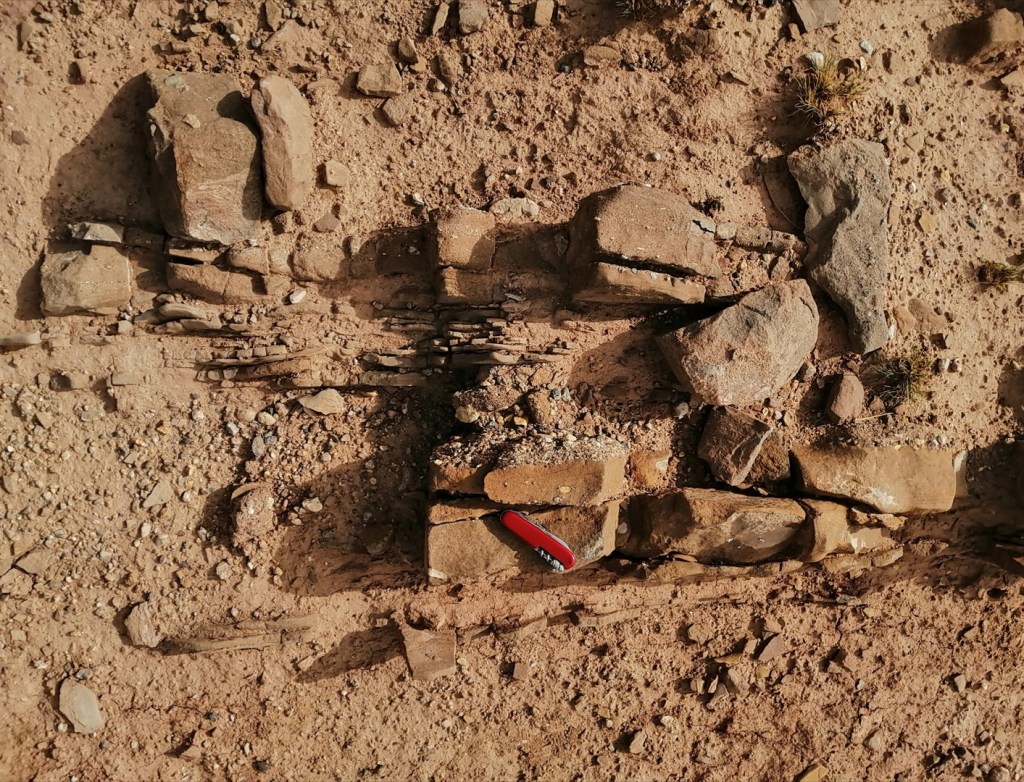
We then move to the North Nima Basin, section 2MK which has only one pollen age. We have lunch. Here, we see beautiful aeolian sediment, intercalated with more fluvial sediment: rivers probably crossed a dune field, and the sand grains are neither very well sorted nor well rounded. Unlike in that Sahara where grains can be transported by wind for hundreds of km, here there is more interactions between fluvial and aeolian processes, similar to Xiao Bai’s modern site on the Yarlung! We then get into conglomerate, vertically bedded, sourced from the North (Qiangtang Terrain). There is a huge diversity of clasts, rounding, sorting: this was a very dynamic river, with depth up to 2 m. How different was it from the modern nearby? It could have been of similar size: in particular, the grain size of the transported sediment is very similar (although the modern transports 90% beautiful silicified limestone). Was it an axial river? A major tributary? We discuss the lack of sorting in some beds: mass flow? Not necessarily, as researchers have shown that flash floods transporting large amounts of sediment can have limited vertical sorting / surface armouring (e.g. Gary Parker’s books). Could this be a flashy river? We observe a sharp transition to sandstone-mudstone, then back to conglomerate: could this demonstrate avulsion?
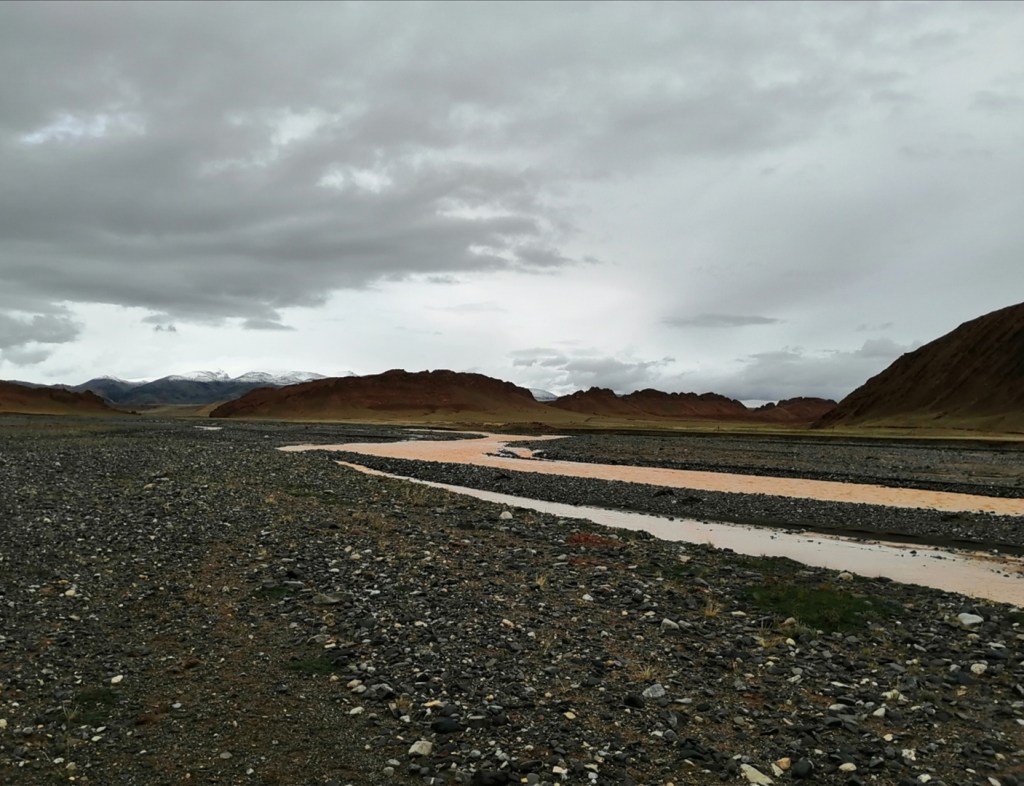
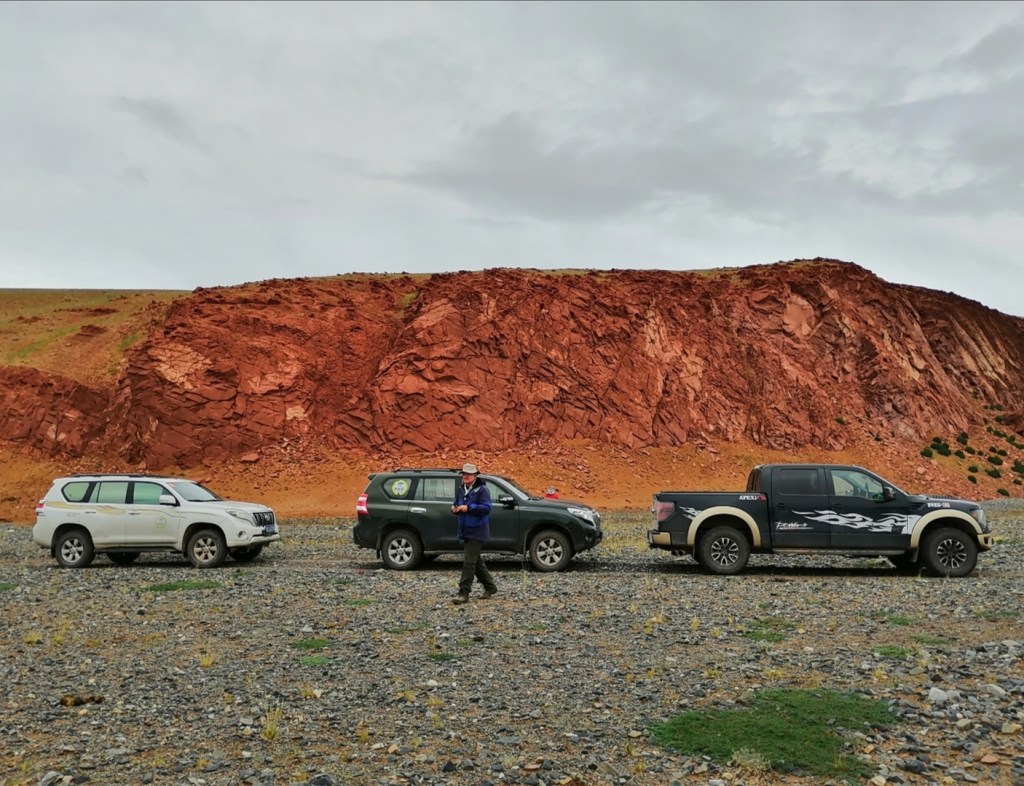
We finally drive back towards Nima and east for a few km, back to the site we briefly looked at yesterday evening. We see amazing wildlife in the way; the wild donkeys and cranes are amazing. We arrive section 2DC, south Nima Basin. Sediment was sourced from the south (Lhasa Block), and we see the units from the Lhasa Block being thrusted over the sediment towards the North (+ growth strata?) Again, some beautiful sedimentology here: so much could be done looking at pebble lithology and shape! We see beautiful river sediment with gravel, sand, channels, cross-beds, scour surfaces, and even some wave ripples testifying to a shallow lake environment. Hugh says that the fetch distance of the wind that created the waves can be calculated based on the grain size of the sediment and wavelength of the ripples: this can give a minimum estimate of the size of the body of water. We discuss methods to get grain size and other grain characteristics from vertically bedded conglomerate. We then go back to the hotel where we have a productive discussion with Zhongpeng, Xinhang, Xiao Bai and Gao Yan about the current status of each project and potential for future work. Wait, is this really the last day in the field?! We have dinner in town, and then get ready for our last night at high elevation. Tomorrow, we have a very long drive (700 km) to Lhasa.
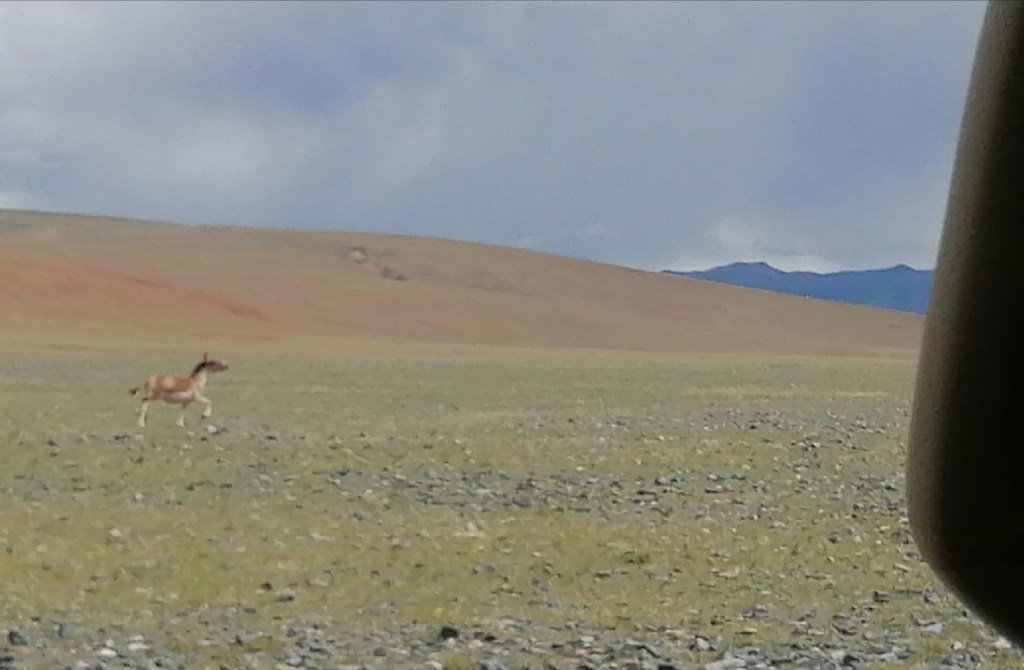
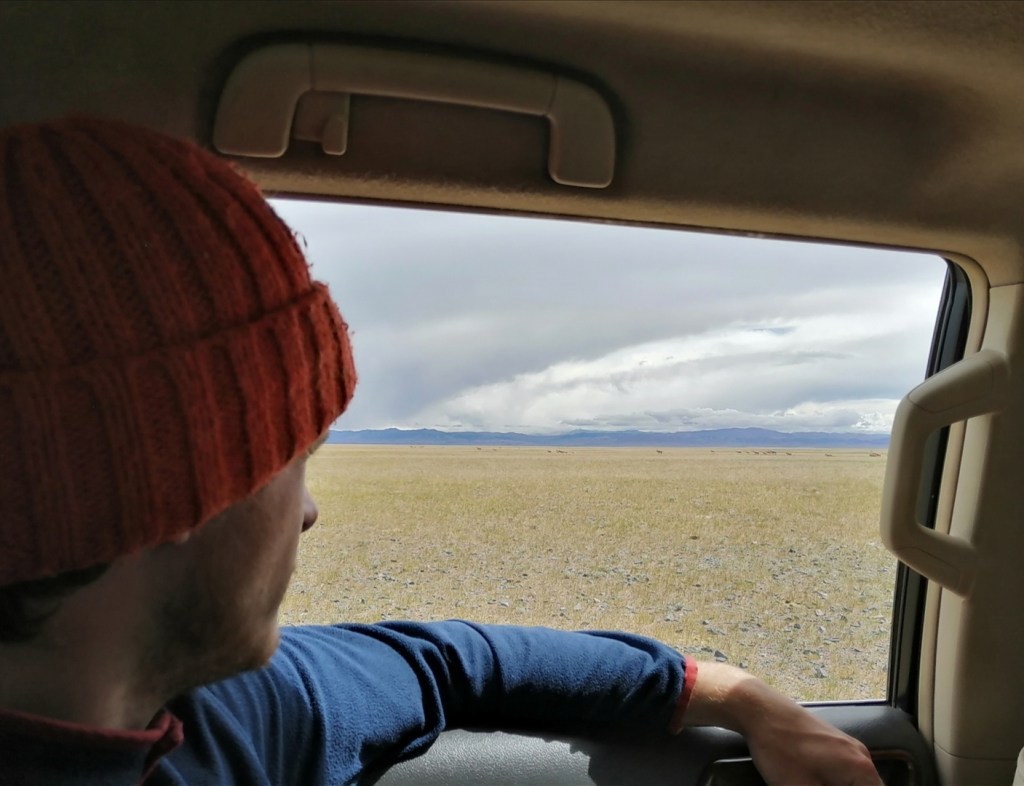
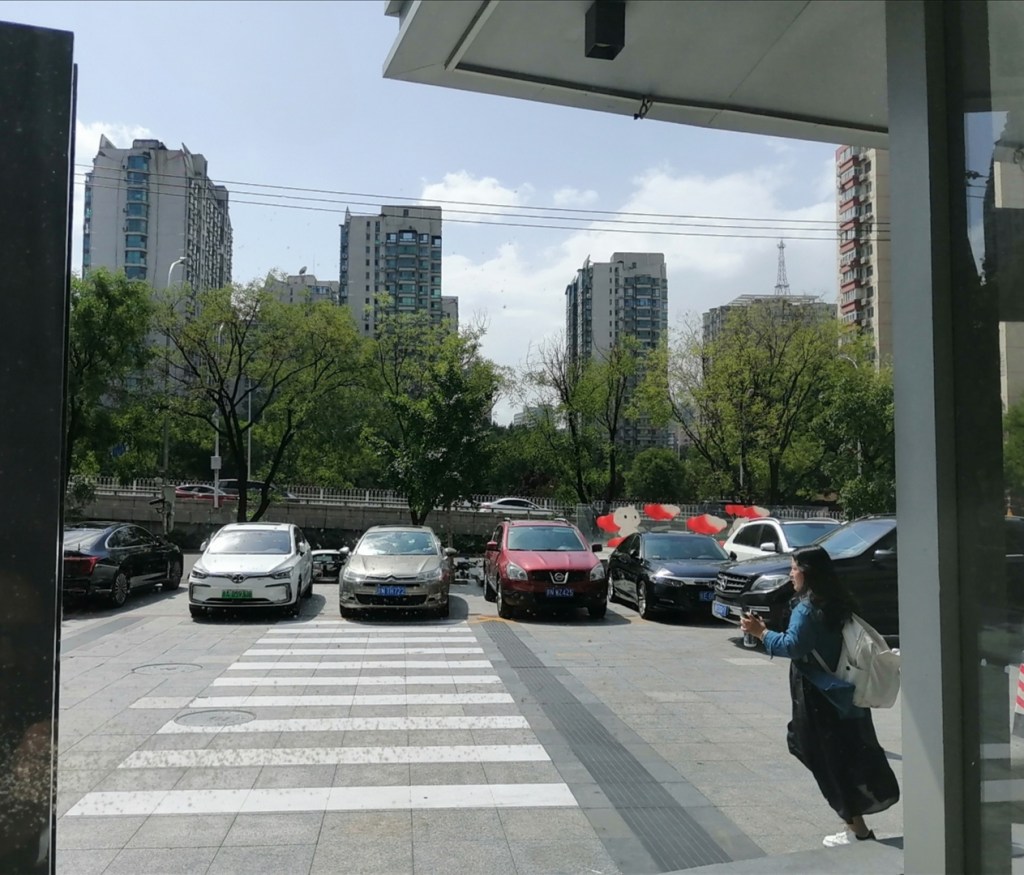
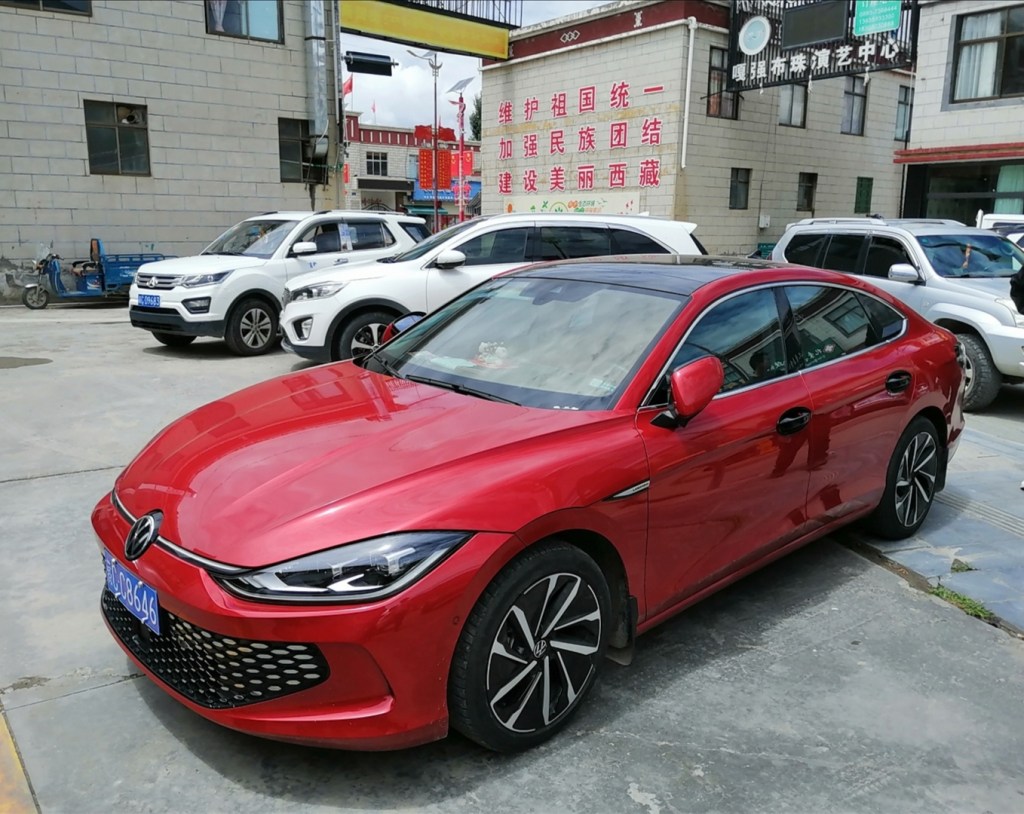
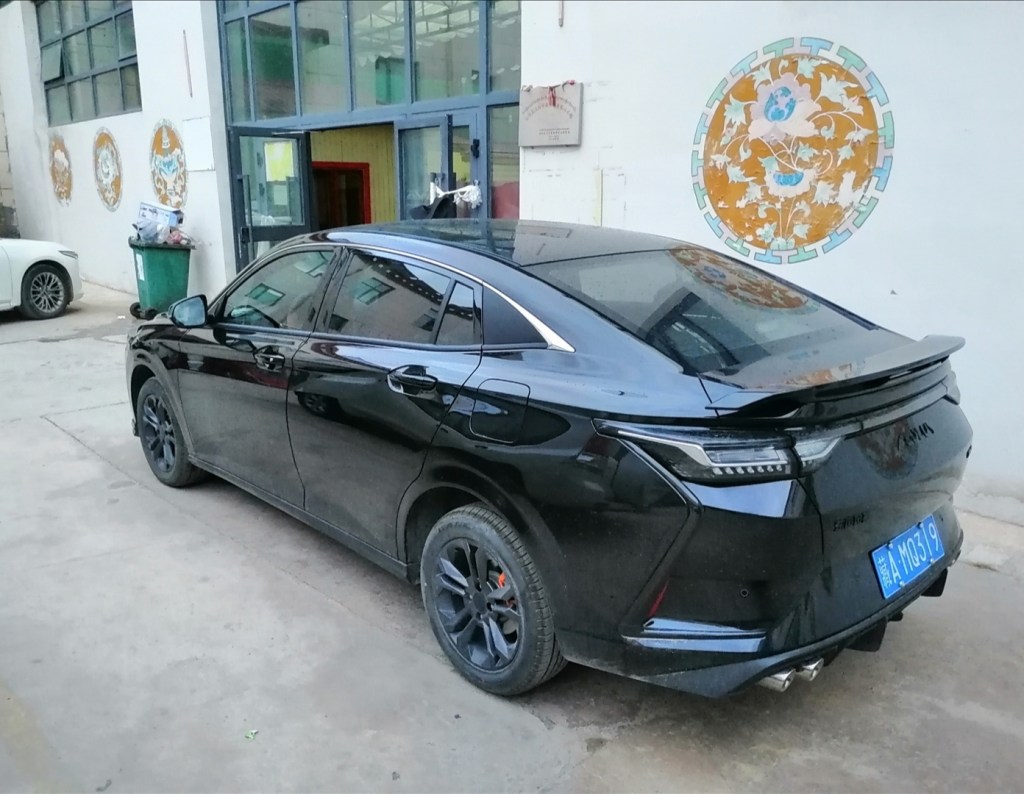
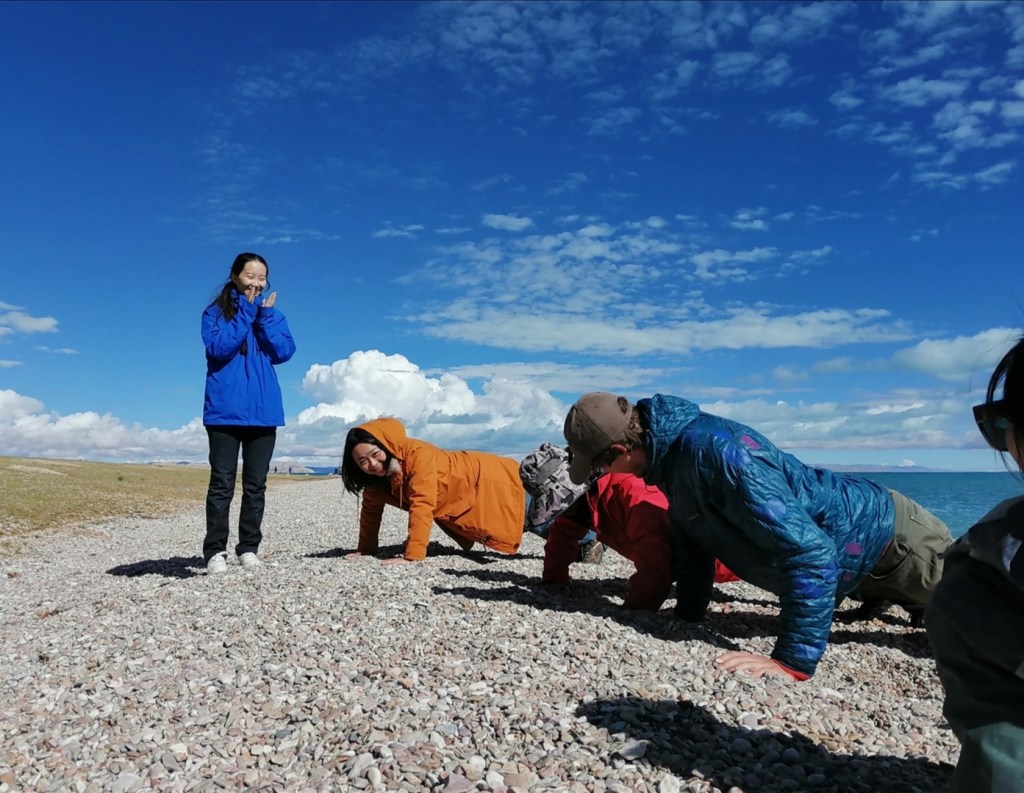
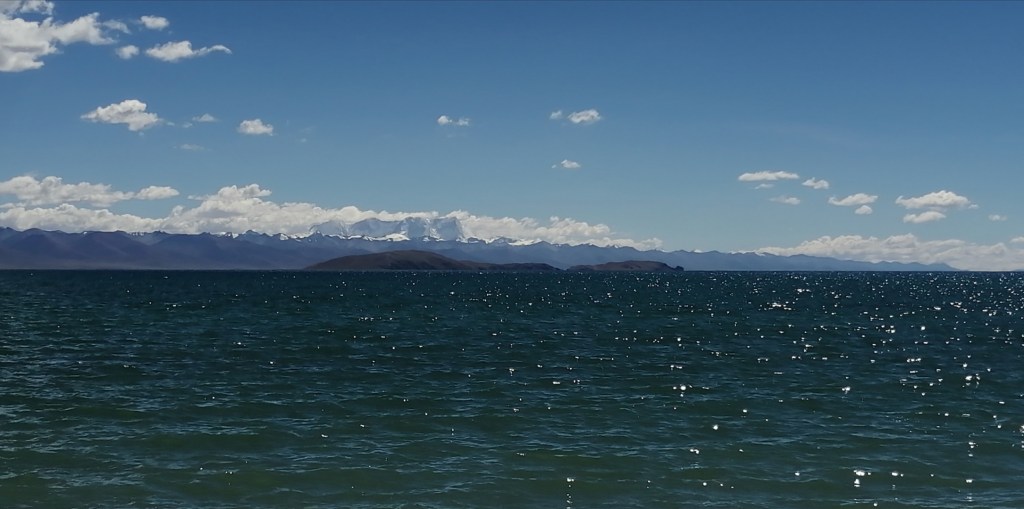
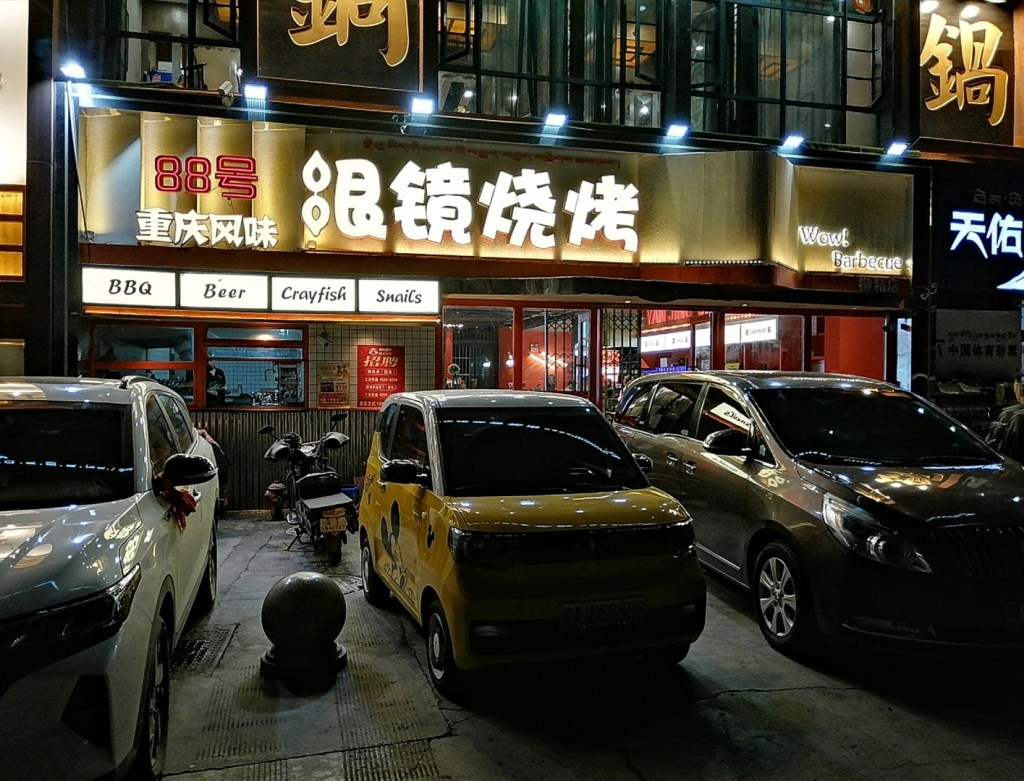
25th August: travel back to Lhasa. We have an early start, leaving Nima at 8am. The parking is very busy and I get overexcited about the sleek Chinese sedans on display (why can’t we have good looking cars like that in Europe?) We travel via the south side of Selin Co, with a brief stop to look at beautiful palaeo-shorelines, take pictures and work out a bit since we now have all these excess red blood cells! On the way, we witness the ingenuity of drivers trying to avoid average speed cameras: they either take a break or drive off-road around the cameras, which creates some intriguing situations (small cars driving across rocks, or cars getting stuck behind fences). We have a quick stop at Nam Co as well: no yak riding, but a stunning view over the 7000 m peaks that make up the shoulder of the half-graben. Interestingly, the slopes are very steep on that side of the uplifted block, and gently dipping on the fault side (I would have expected the opposite). Is it a low angle normal fault? We arrive in Lhasa at 19:30. Chindo is clearly very happy to be back, as he blasts one of his favourite songs (“Fly” by Anu, a popular Tibetan band), windows down, while we drive to a BBQ place! We have a very lively evening, with many toasts. Since I don’t like beer, Miao decides to make me toast with soy milk. Not the best idea: my poor tummy. Or maybe it was the crayfish. Or the shellfish. Or something else… I sleep OK nevertheless. Tomorrow, we have a day off in Lhasa, which should be nice!
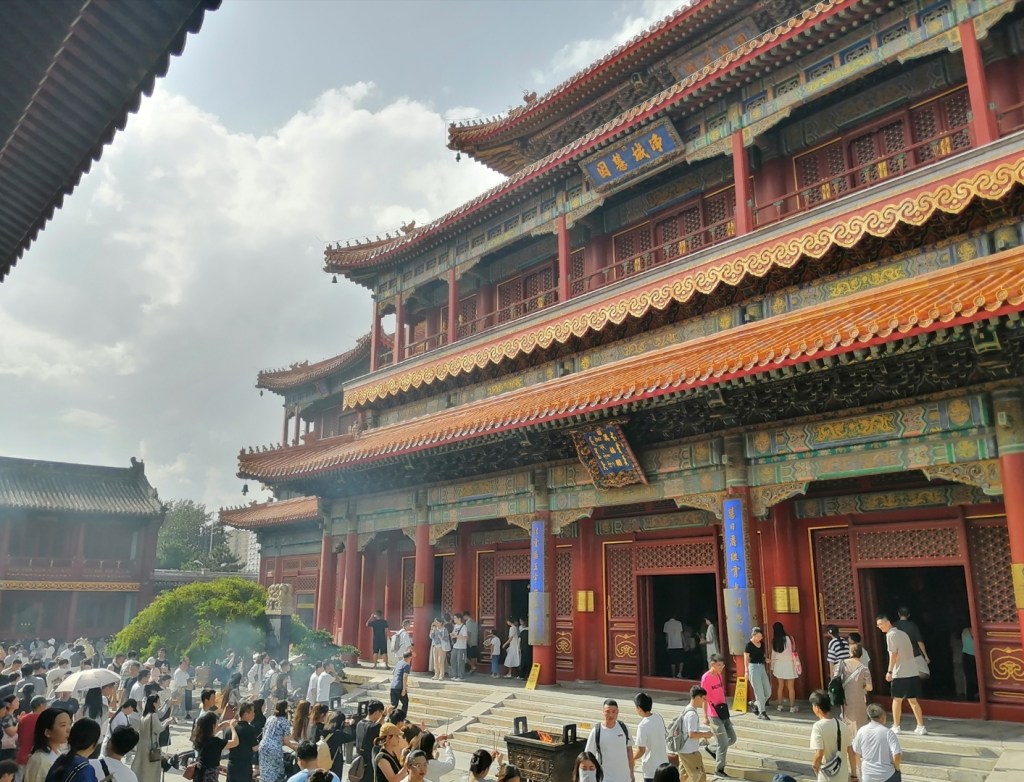
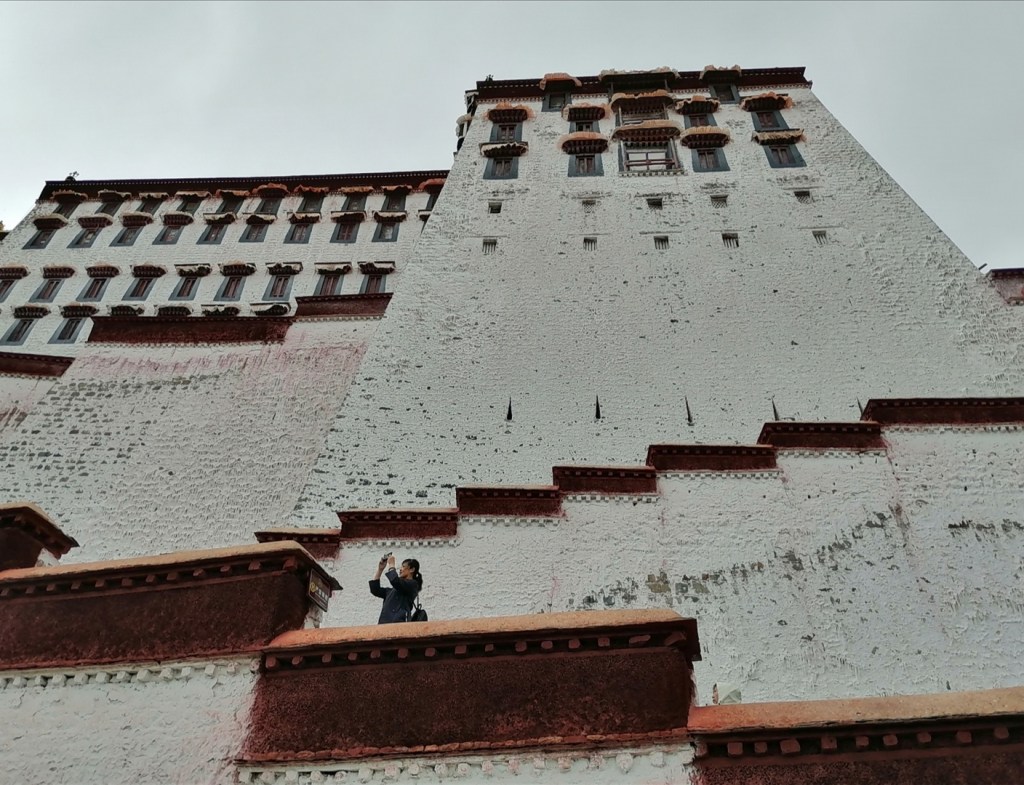
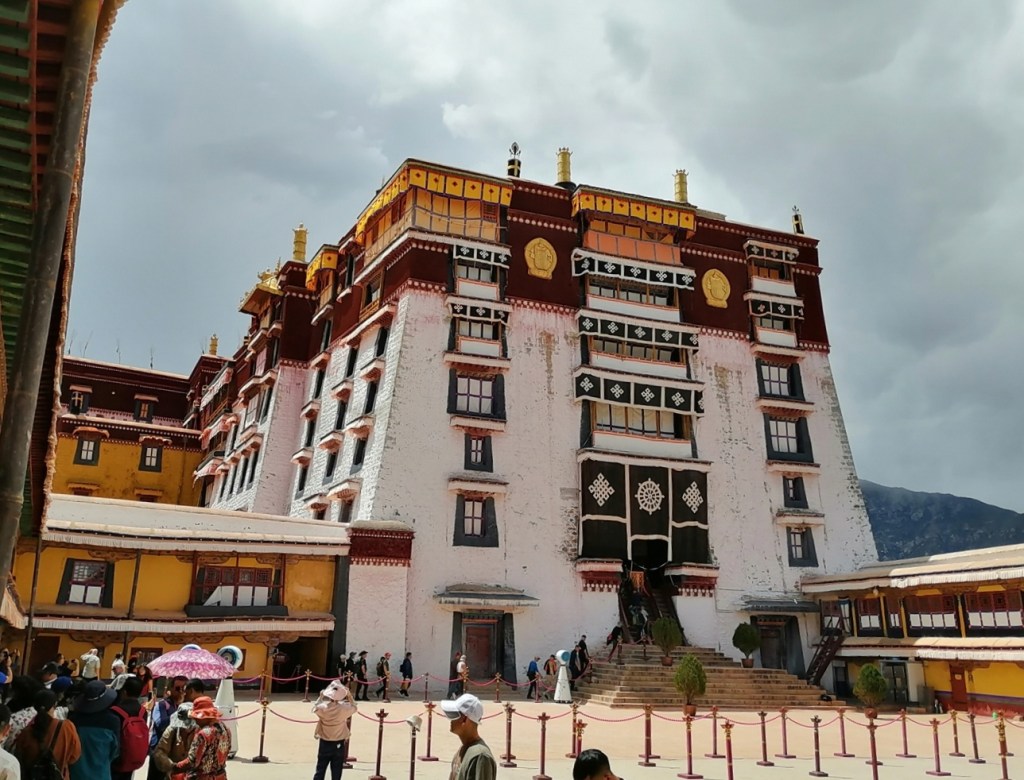
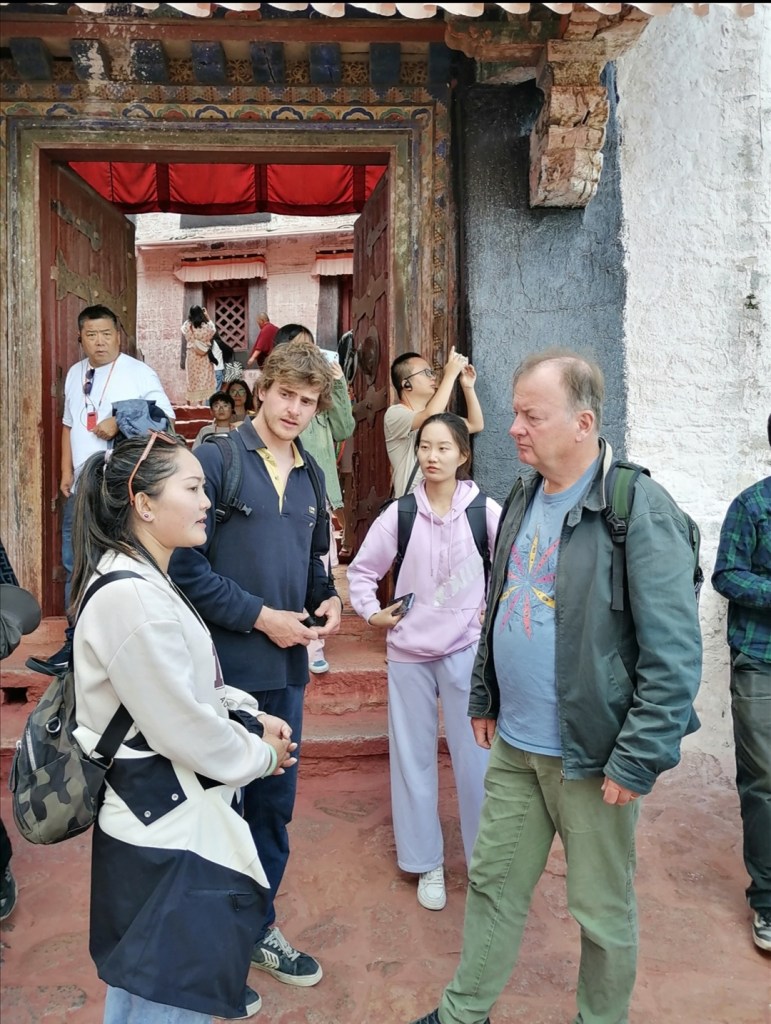
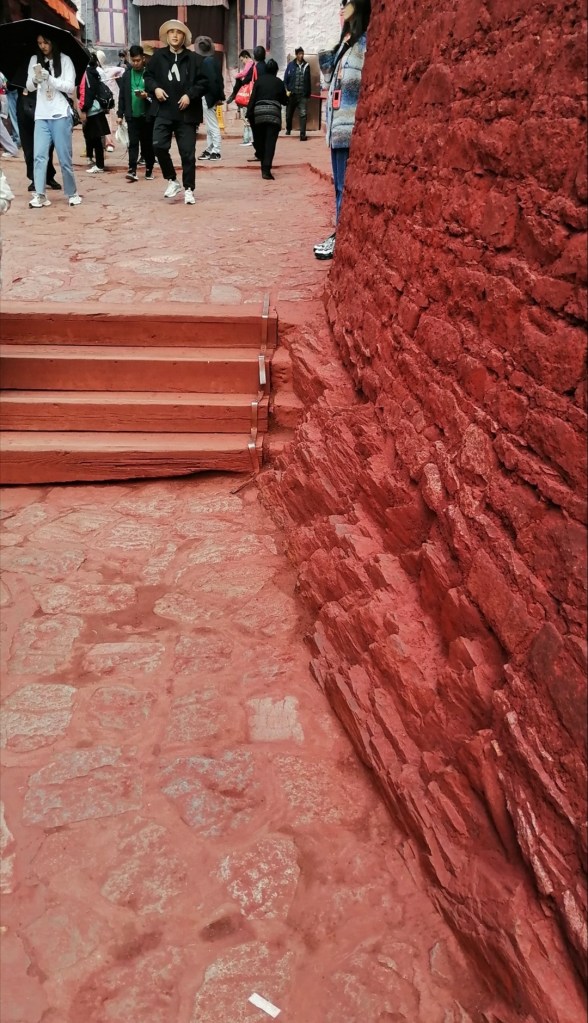
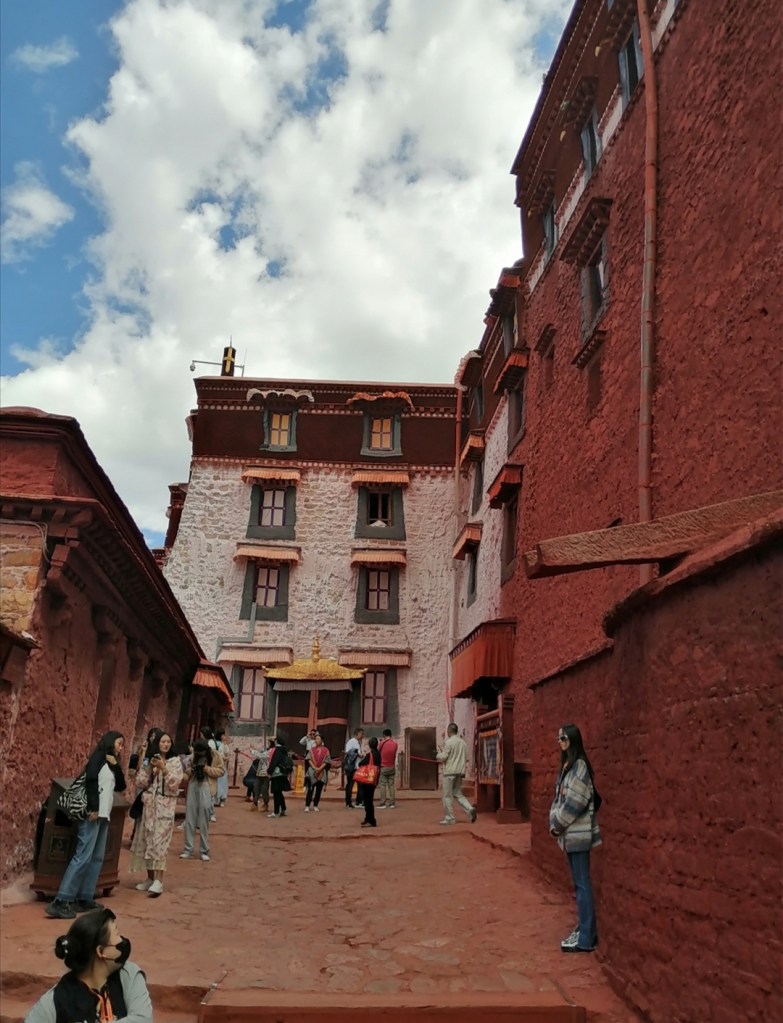
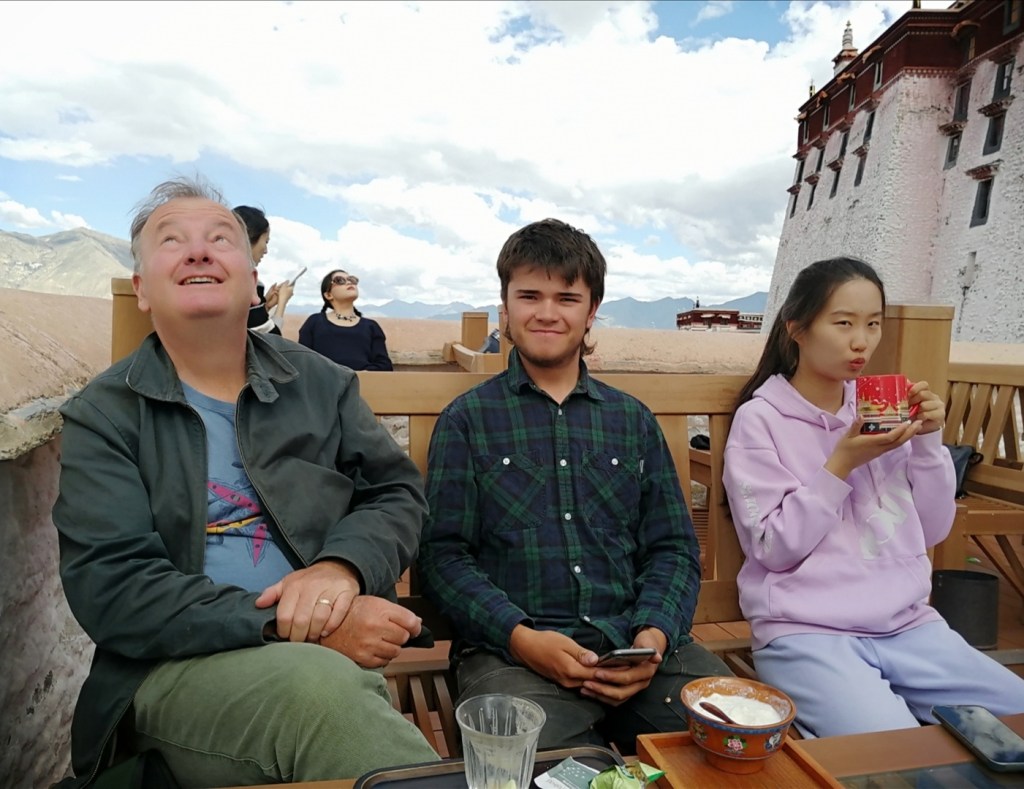
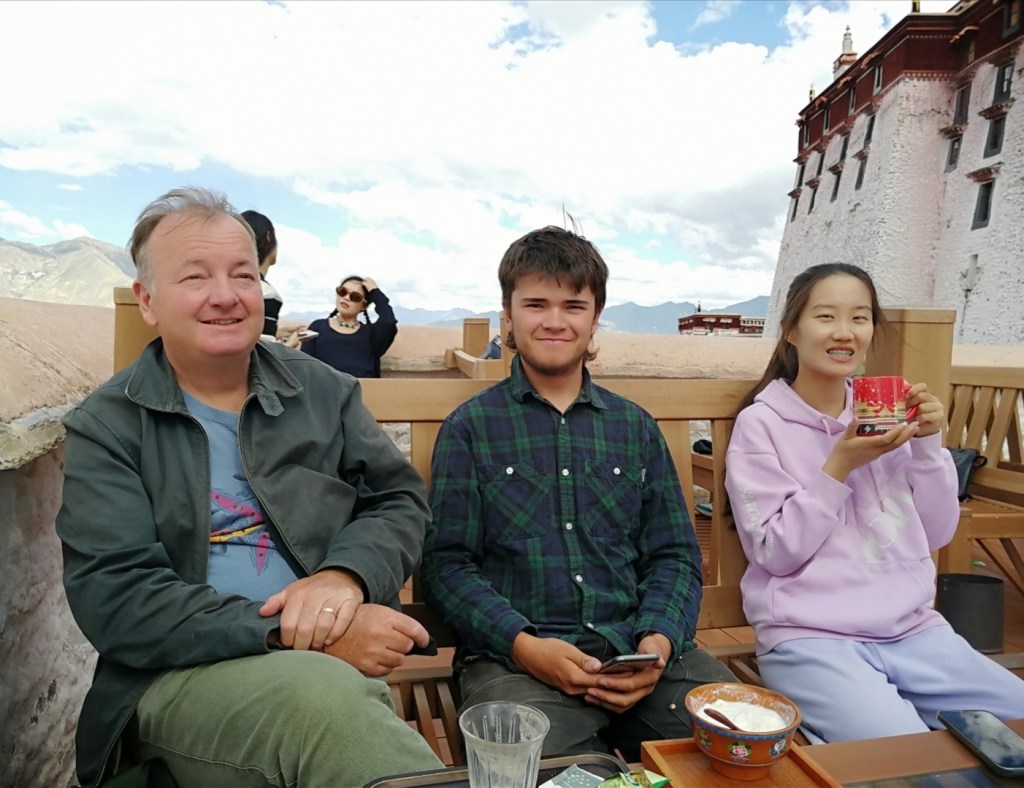
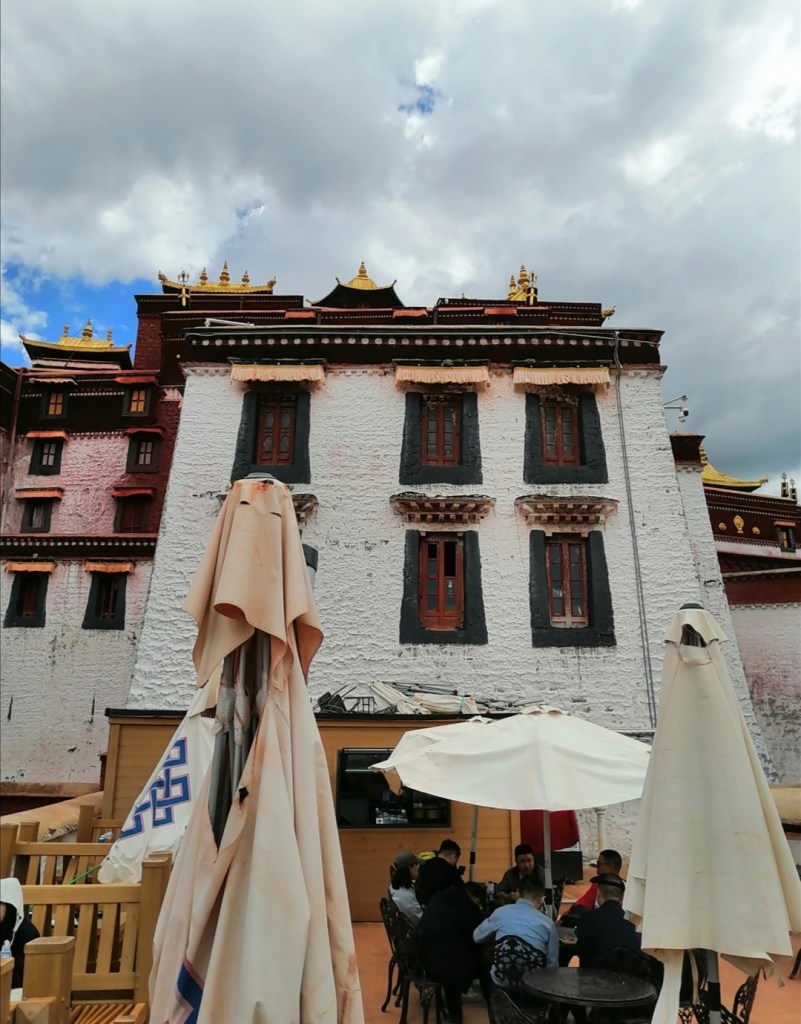
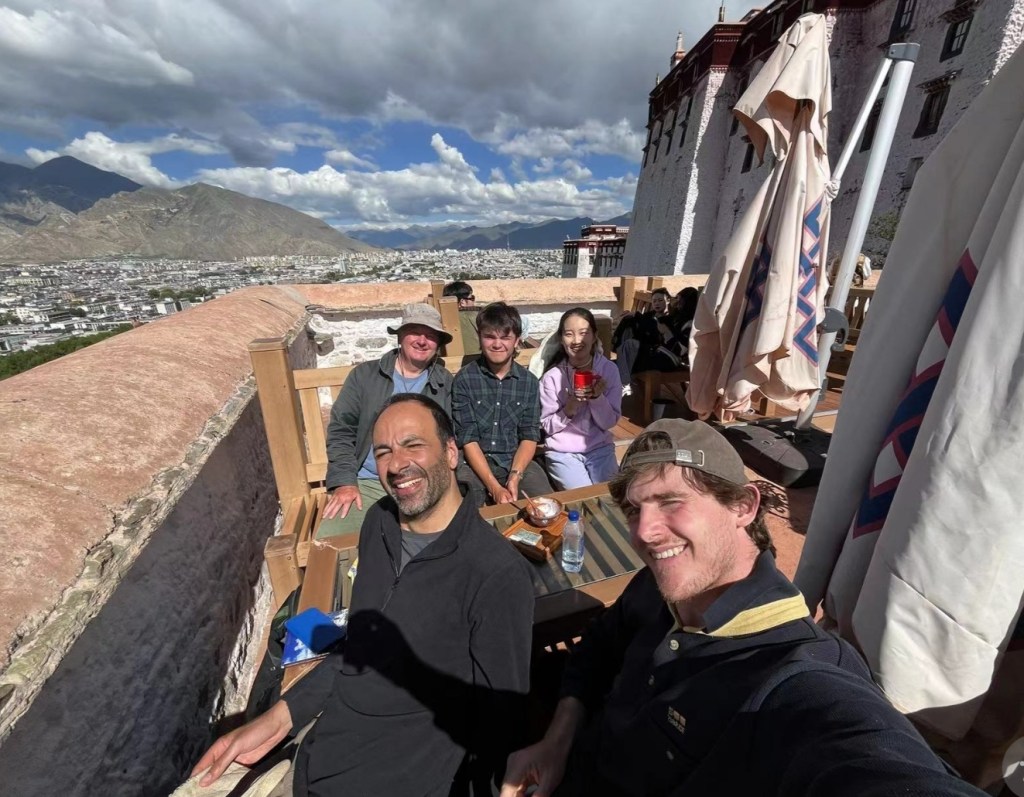
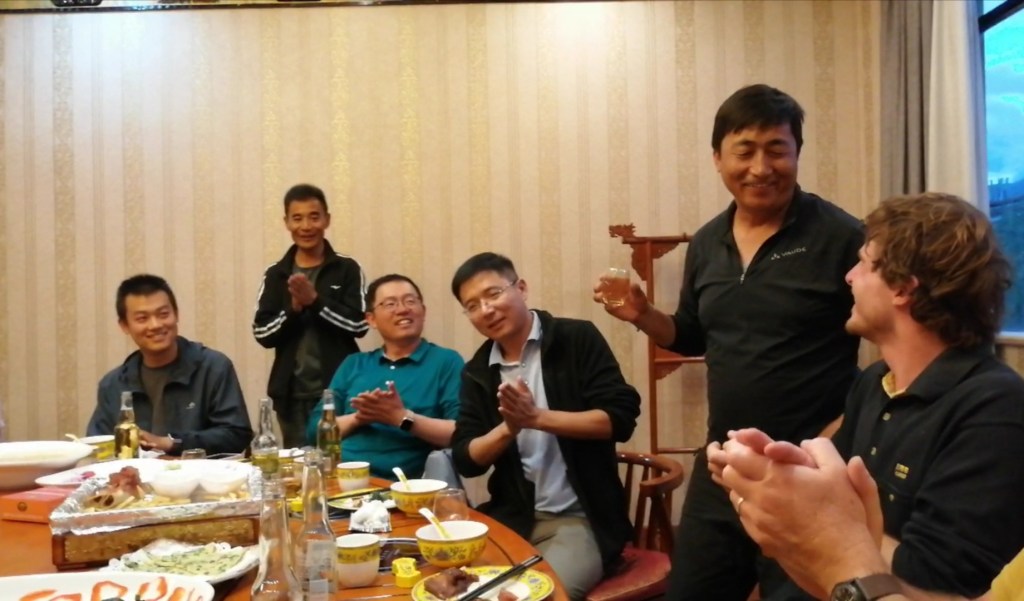
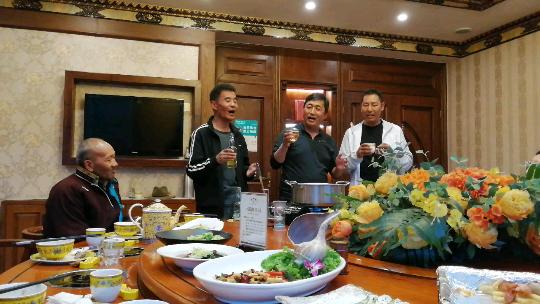
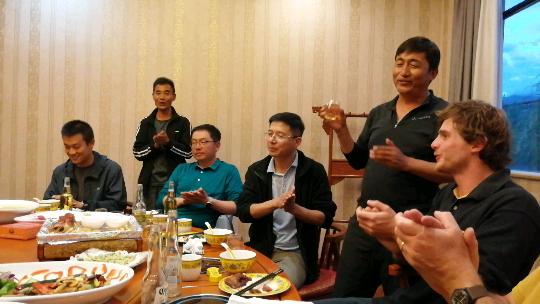
26th August: day off in Lhasa! We have a lazy morning (breakfast at 9am). It is crazy to feel totally fine at 3600 m elevation. We say goodbye to Gao Yan, and Xinhang takes us on a sightseeing / shopping tour in the morning. The boys then go to KFC (they were doing so well until now!) while I just have light snacks at the hotel. I do a bit of work, and then it is Xiao Bai’s turn to take us on an extraordinary visit of the Potala Palace, a monumental site with important historical significance: thank you for getting tickets for us, as well as arranging a lovely Tibetan guide, Lapa, to take us on the tour! The day ends with an unforgettable dinner with the whole team, featuring many toasts, singing in Tibetan (with the drivers), Chinese and English, dancing and games! A wonderful conclusion to a wonderful trip! Photos are not amazing are they are screenshots of videos, but they should give you an idea of the vibe…
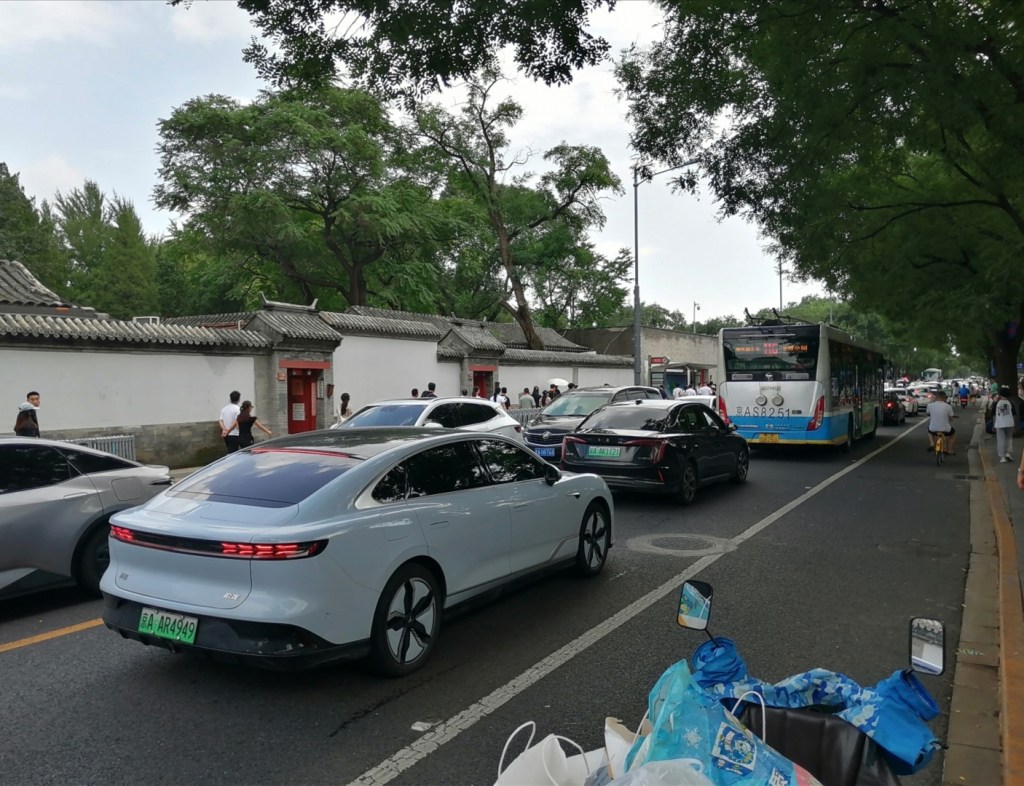
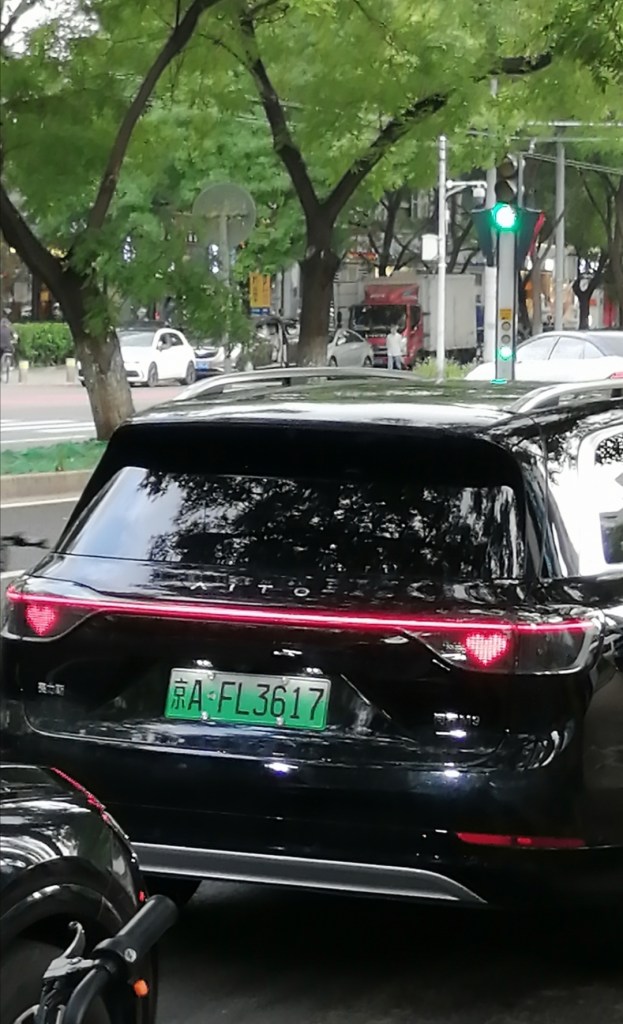
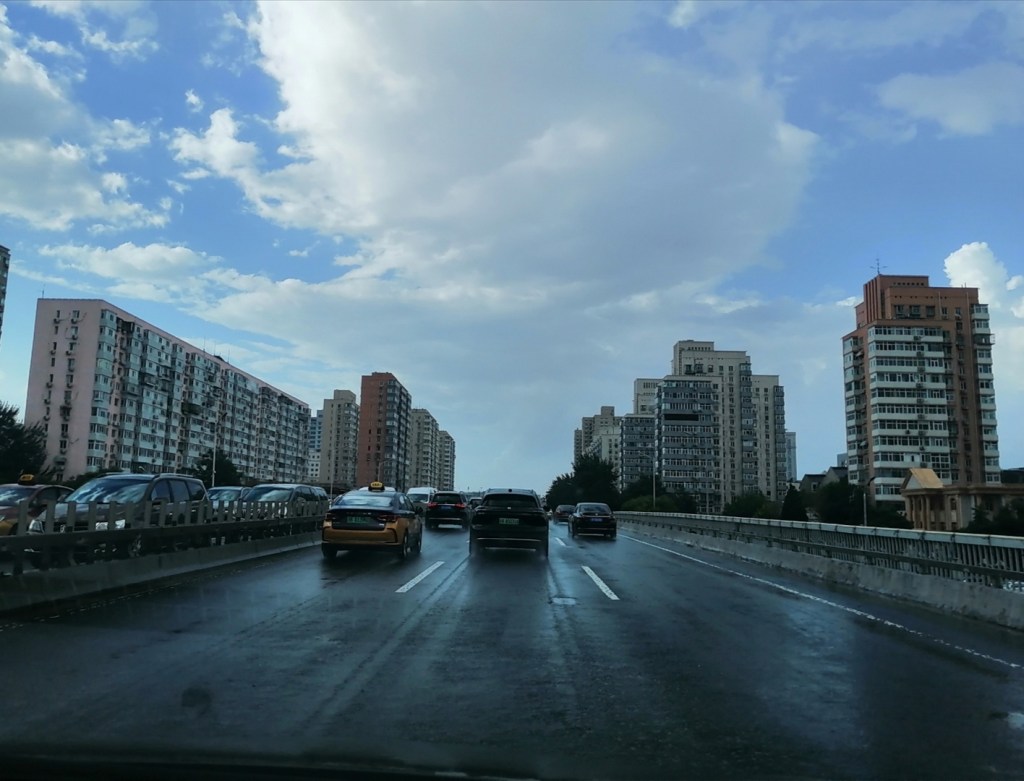
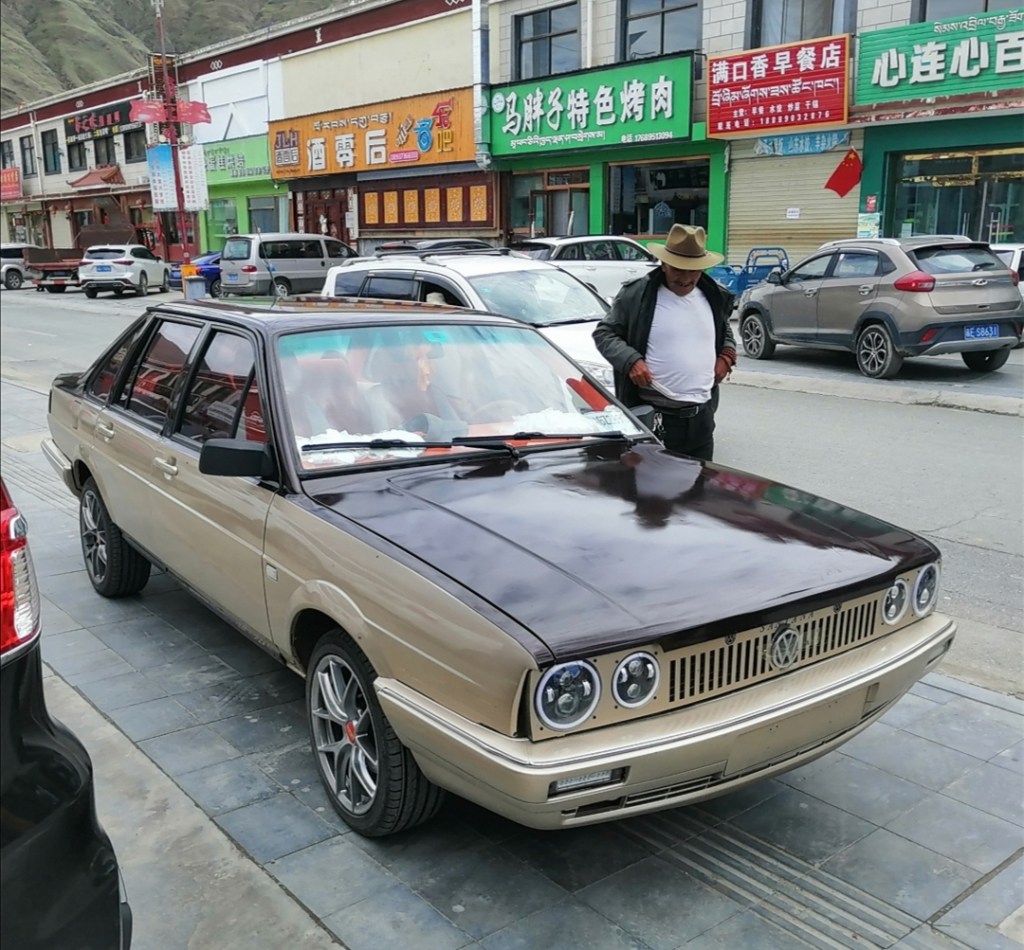
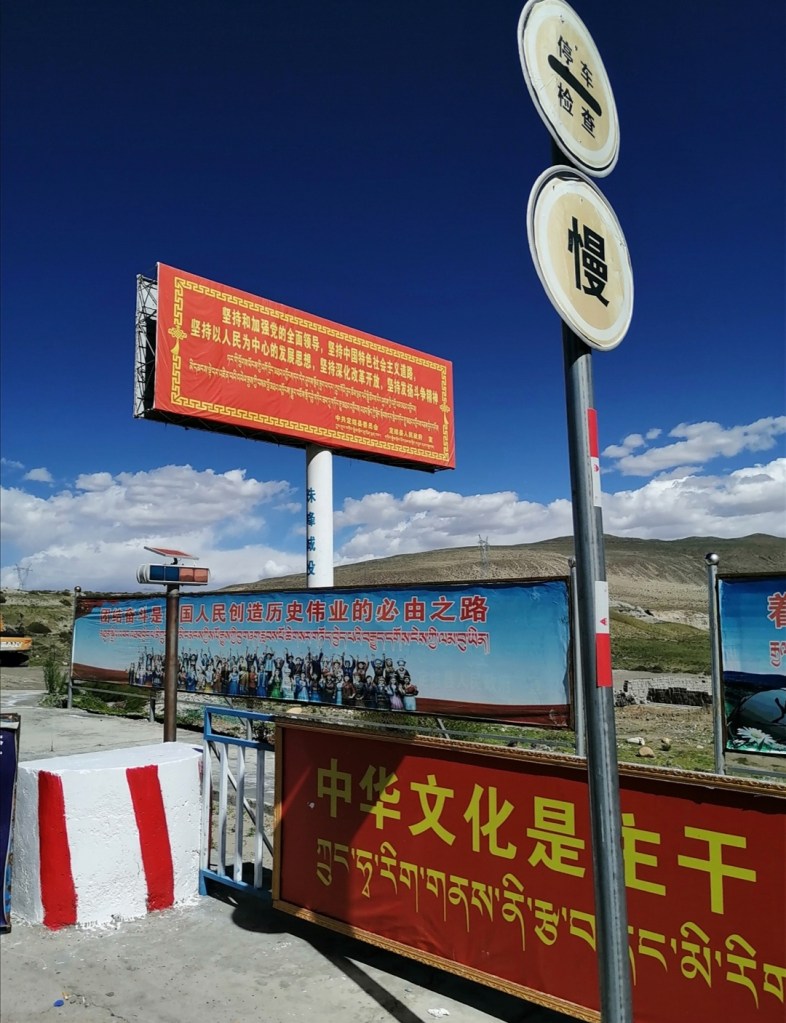
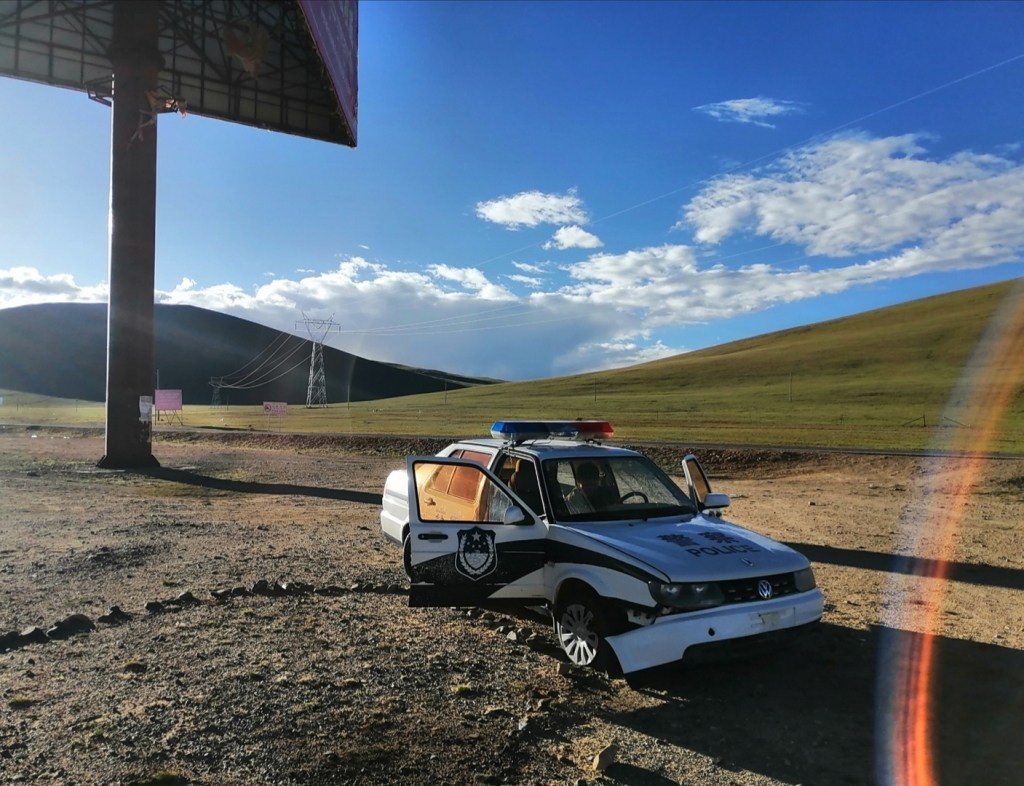
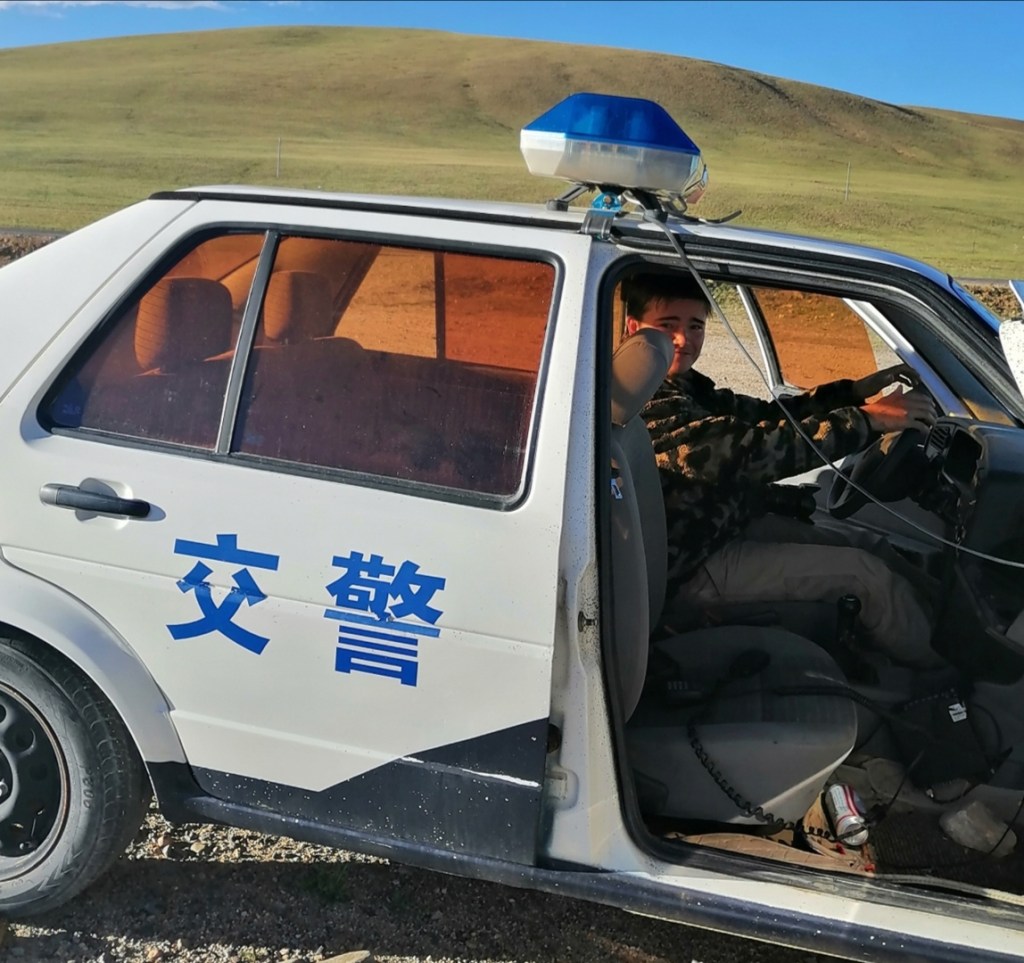
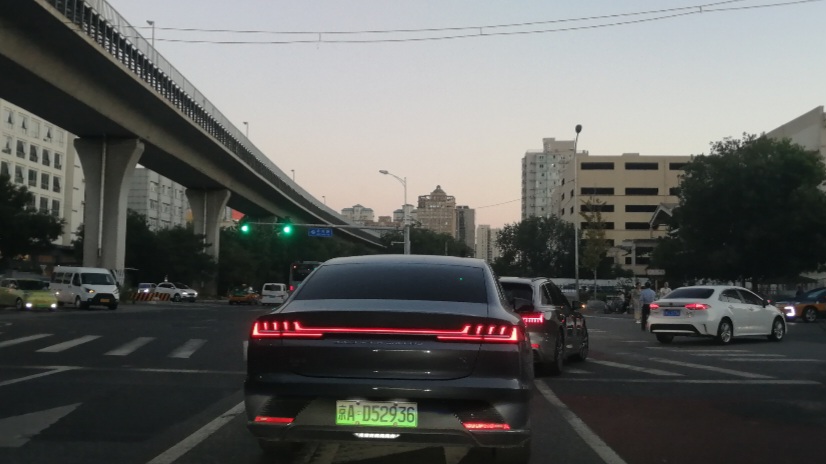
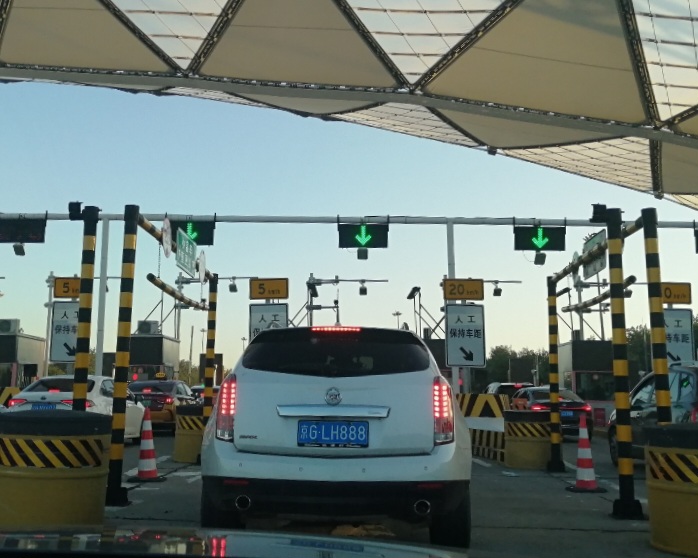
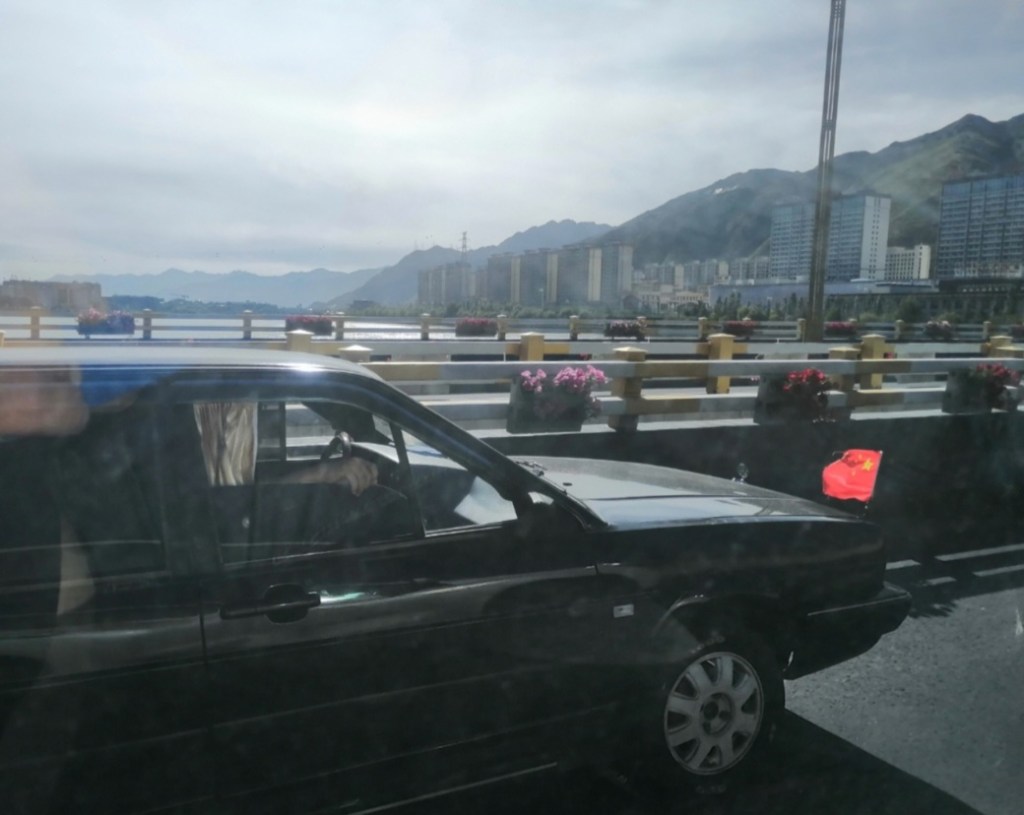
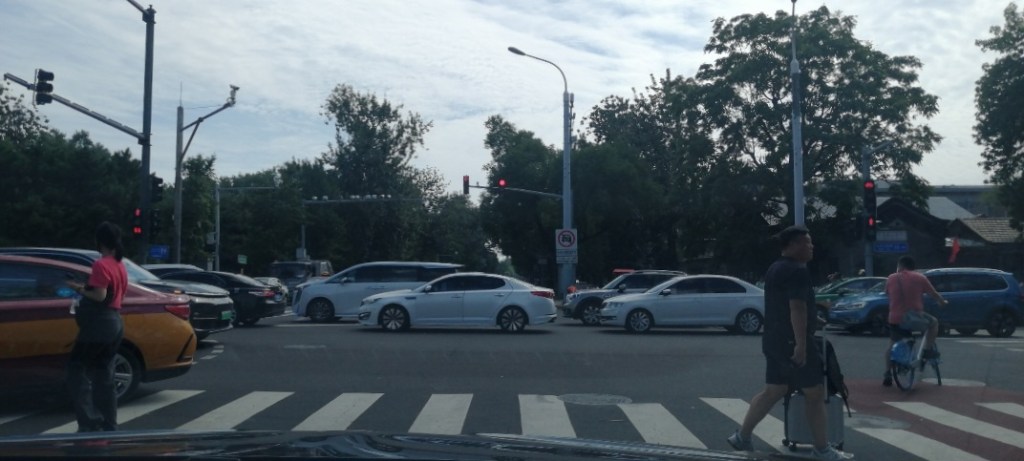
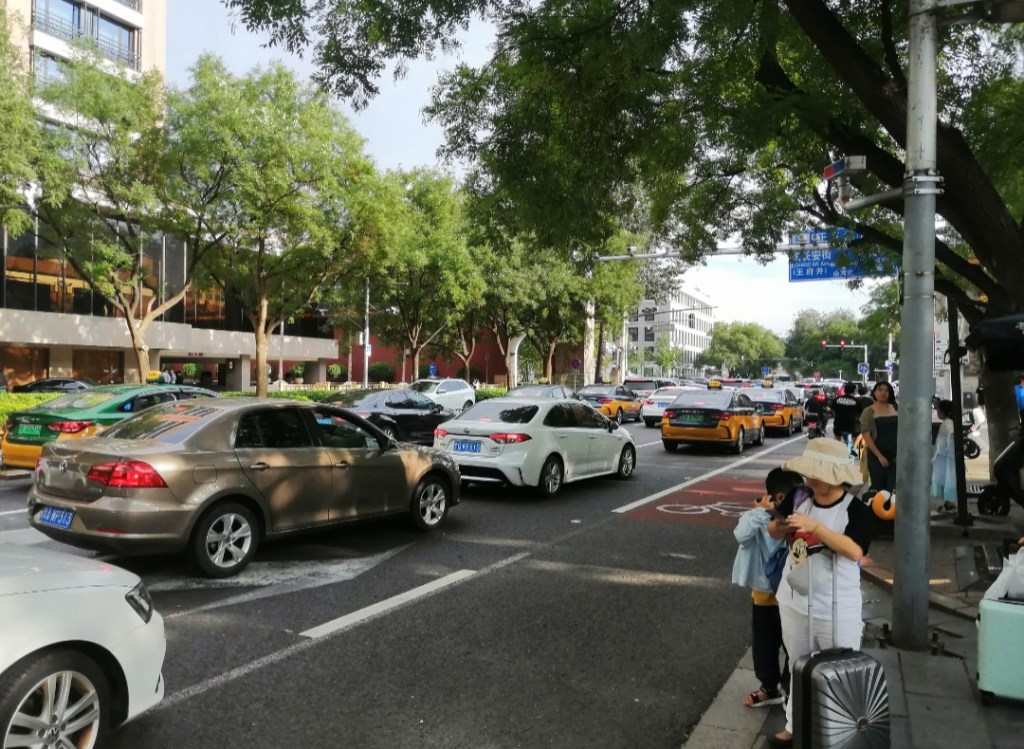
27th August: travel back from Lhasa to Beijing. Travel is trouble-free and takes the whole day. Not many pictures today, everyone is exhausted. I can’t help but reflect on contradictory elements of traffic: a patriotic Volkswagen, and how some of the most popular American cars here are from brands that reflect the American dream (Cadillac, Lincoln). It seems that while China has a very clear political line, it chose to be open to foreign economic elements that bring benefits to the country, rather than isolation. Maybe one of the reasons it learnt so quickly, and is now running ahead in automotive design and technology (in the electric vehicle sector in particular).

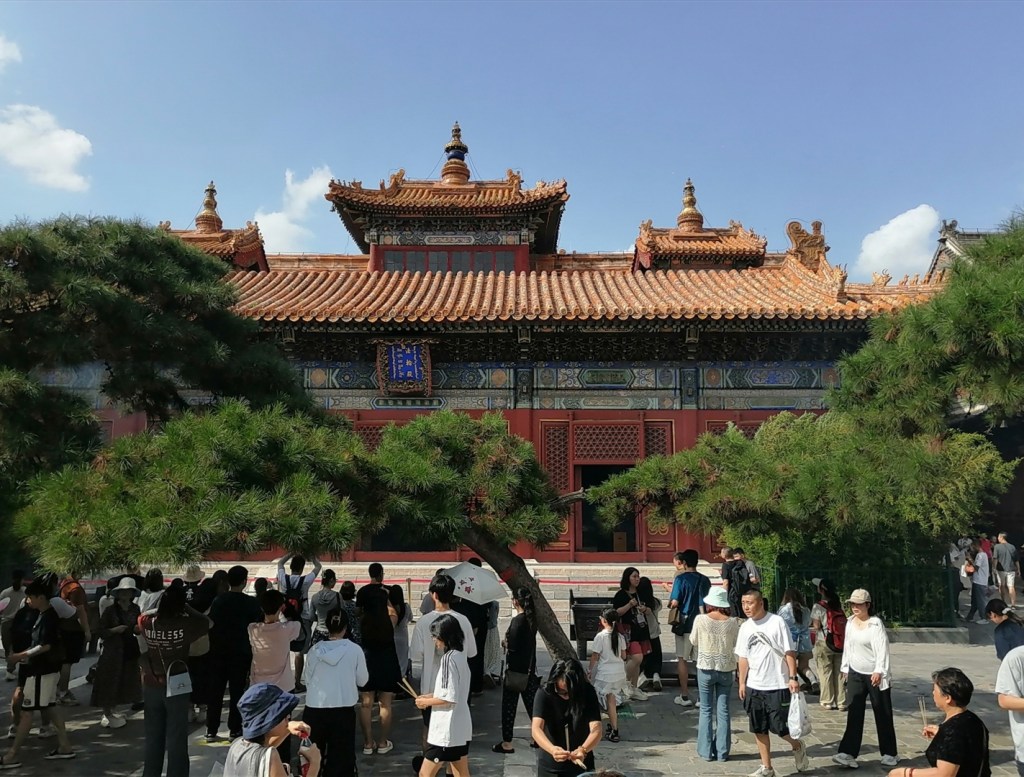
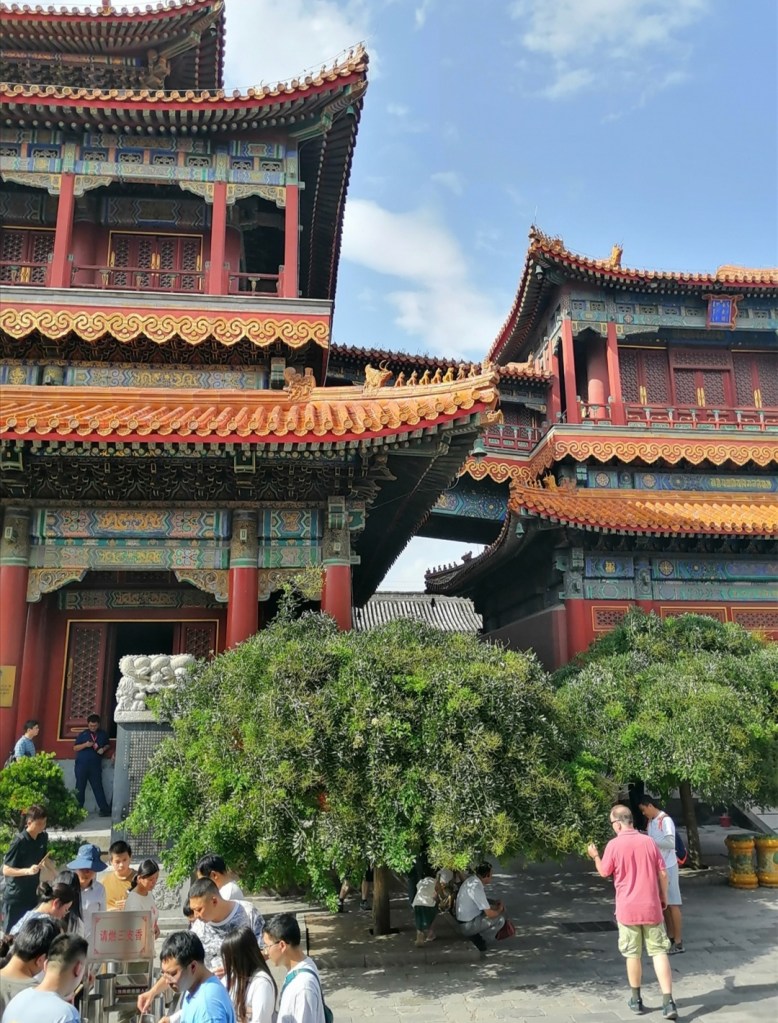
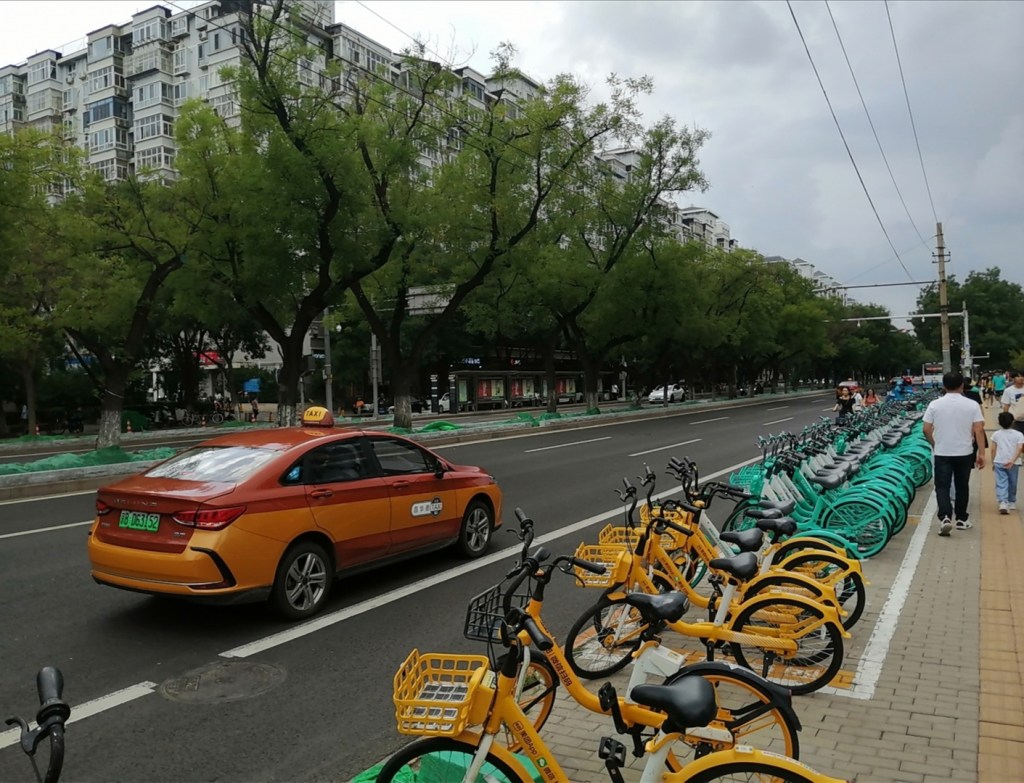
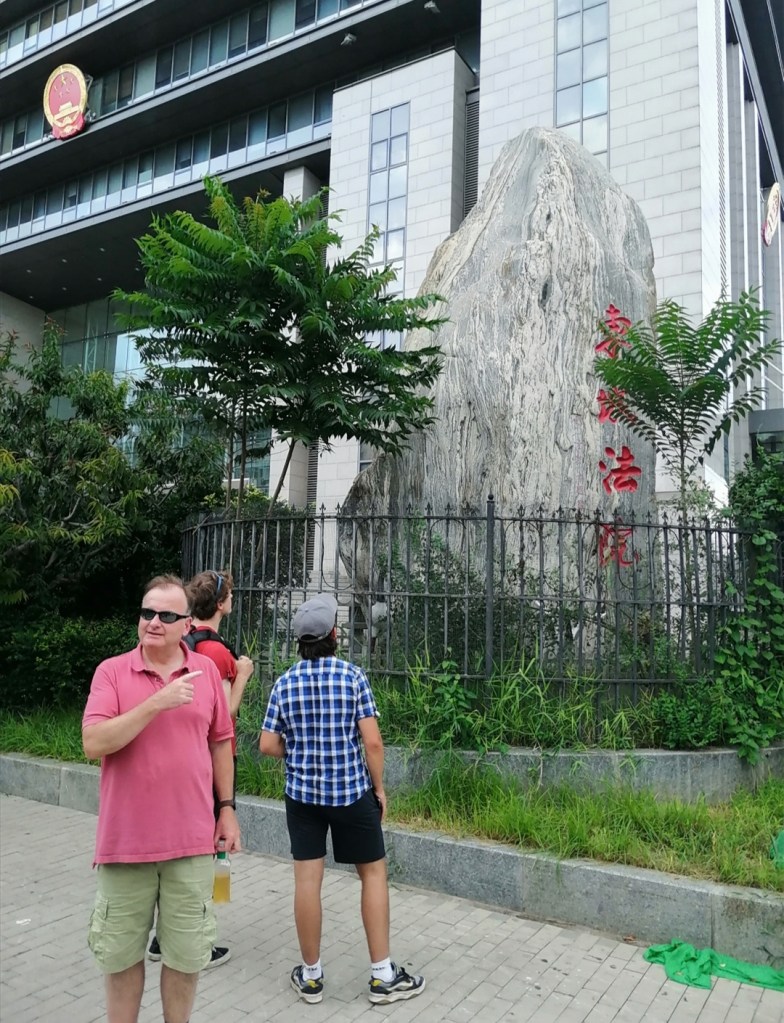
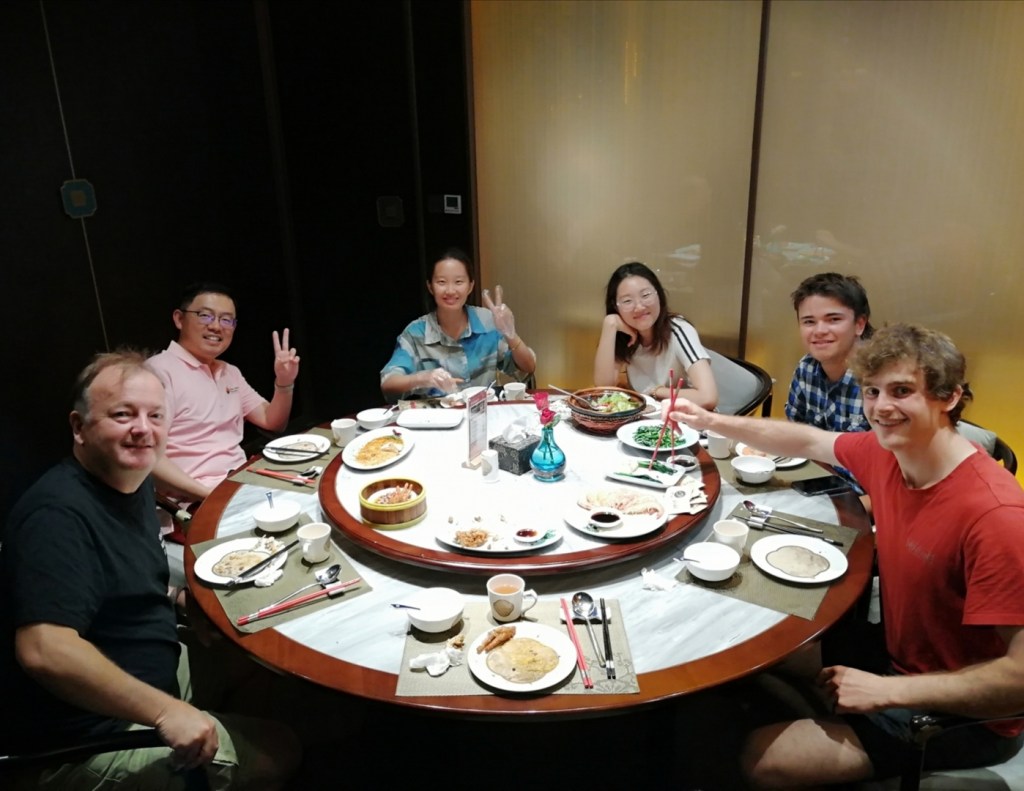
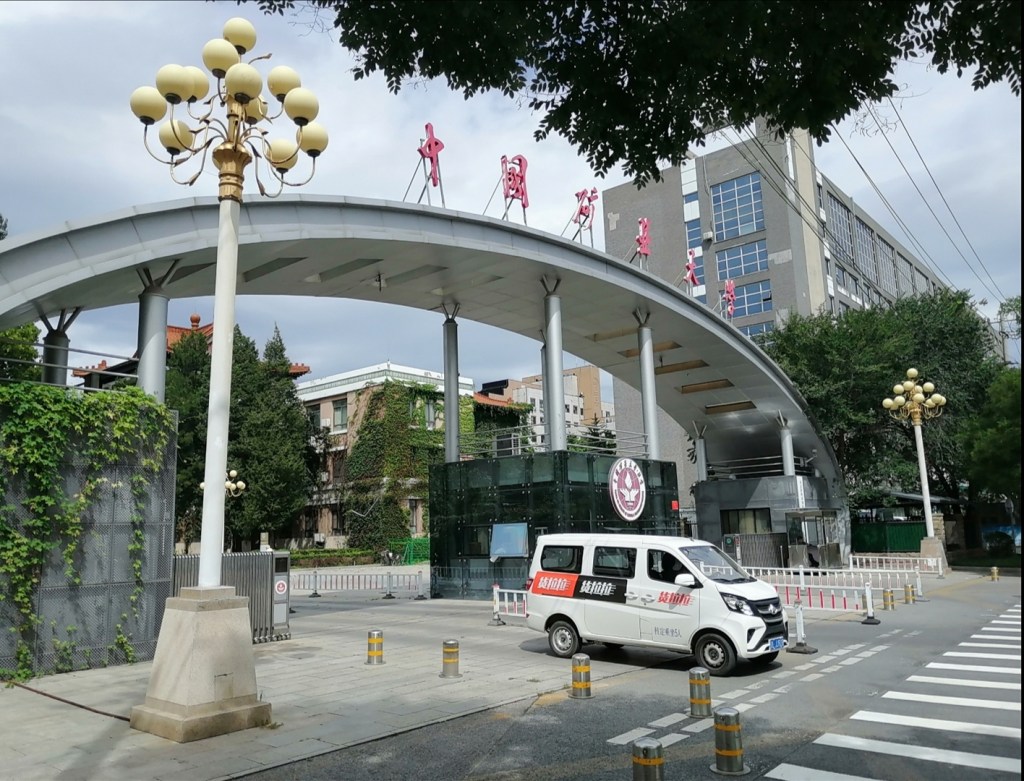
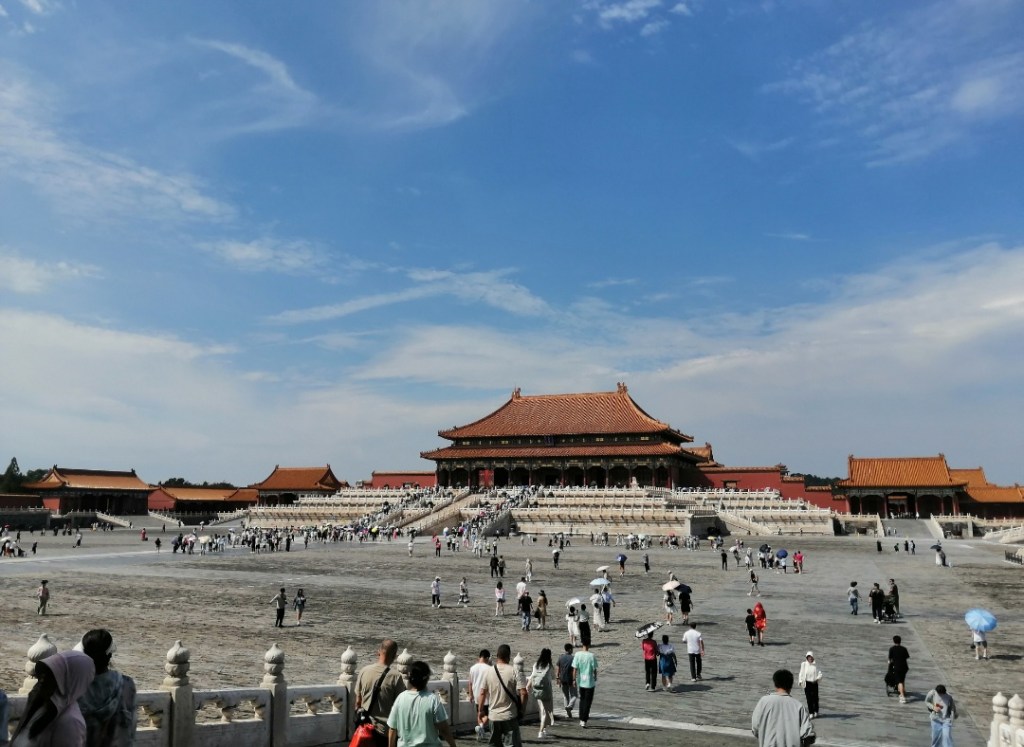
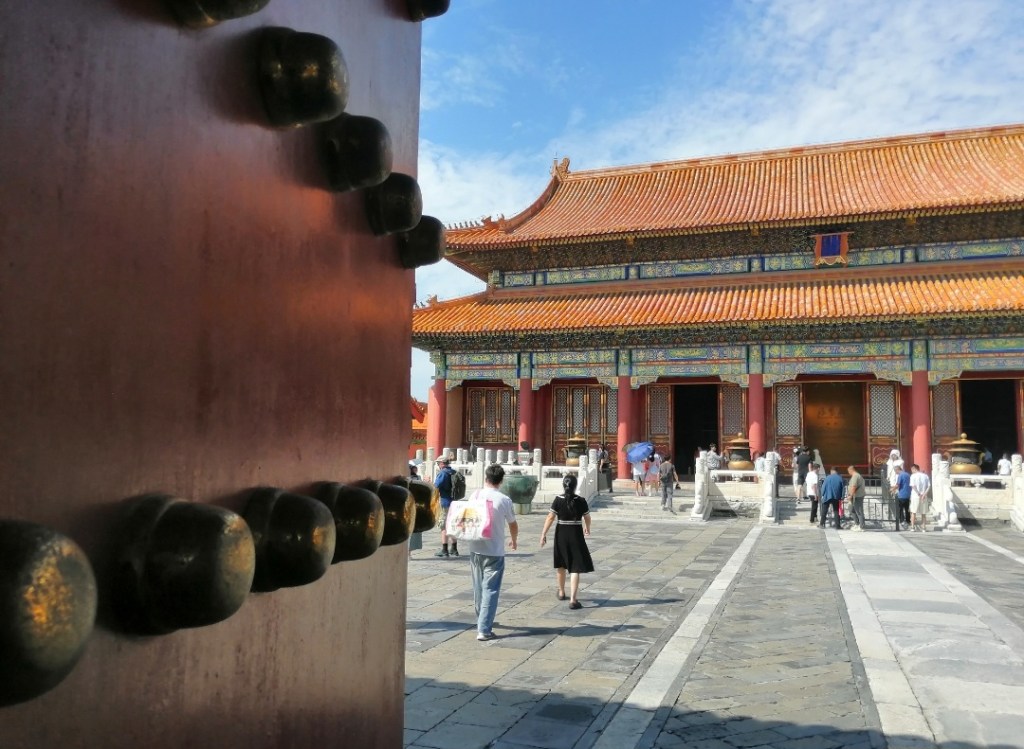
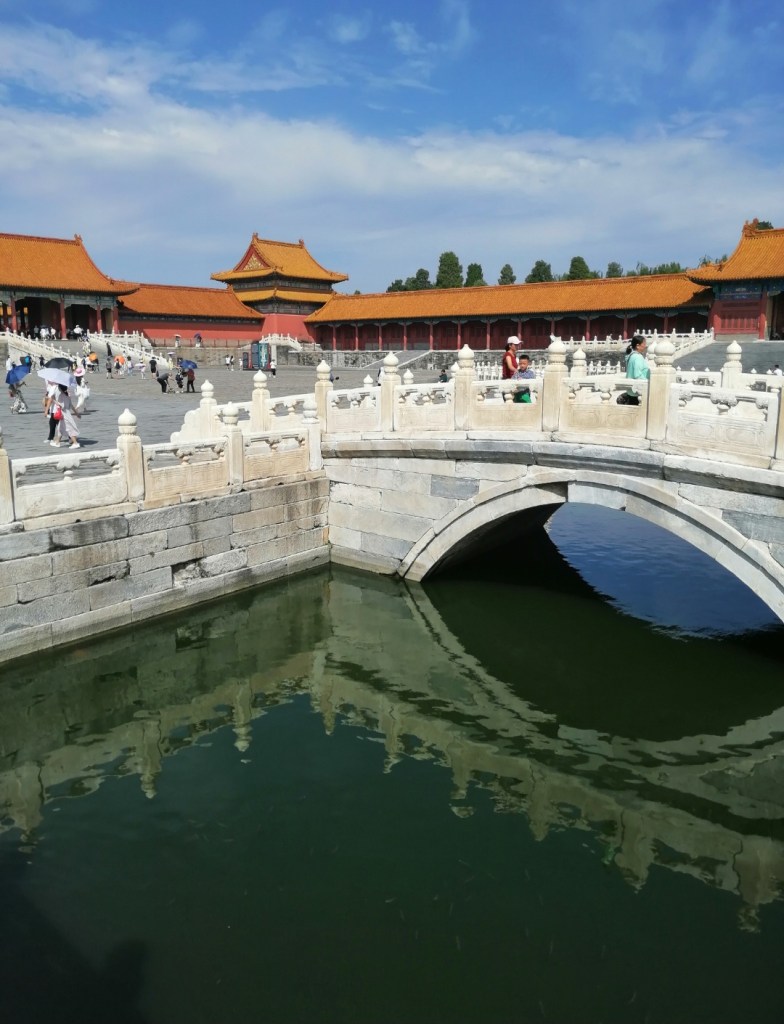
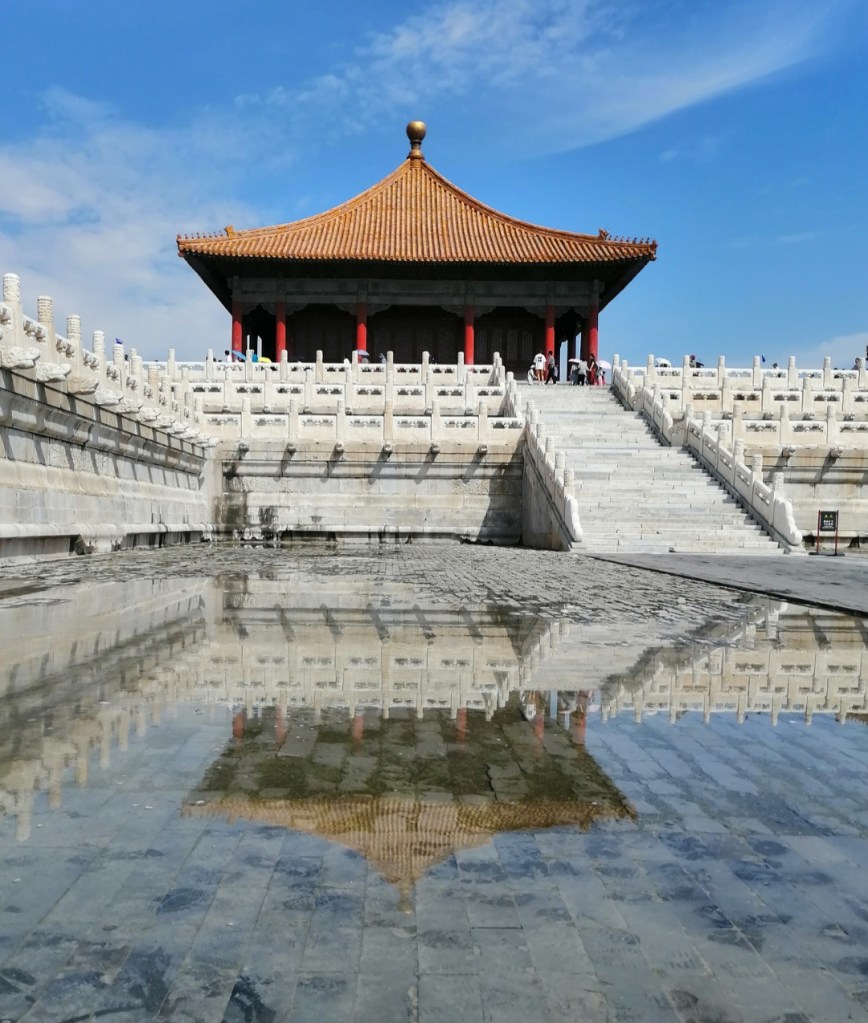
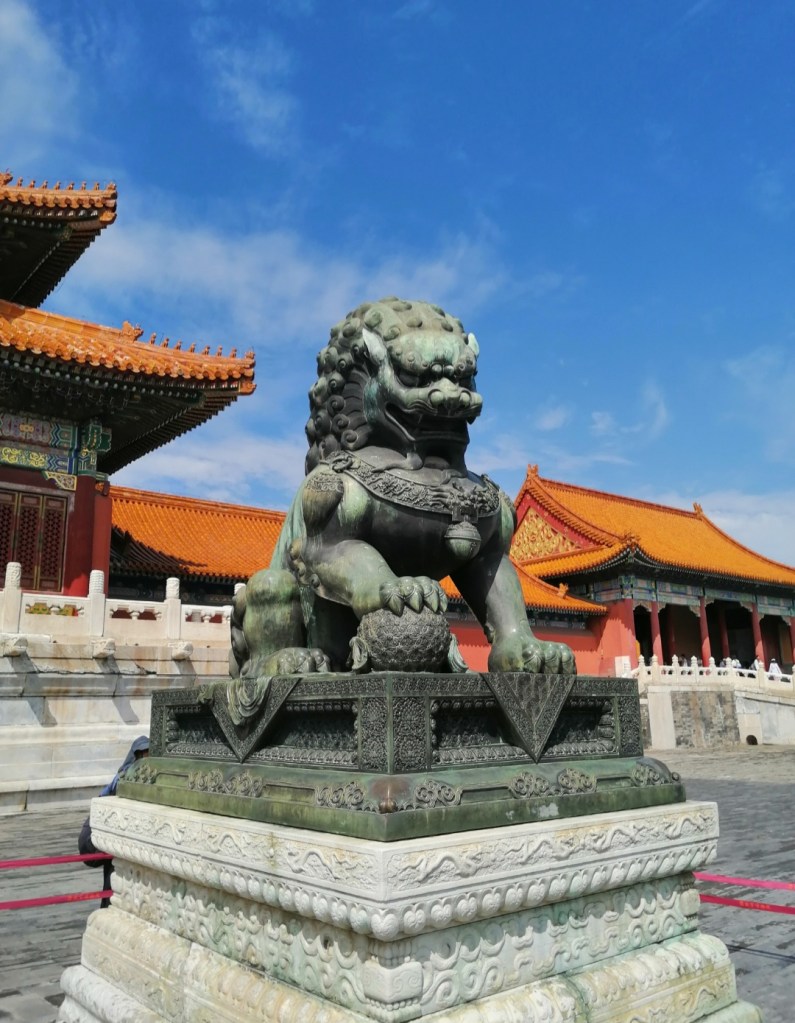
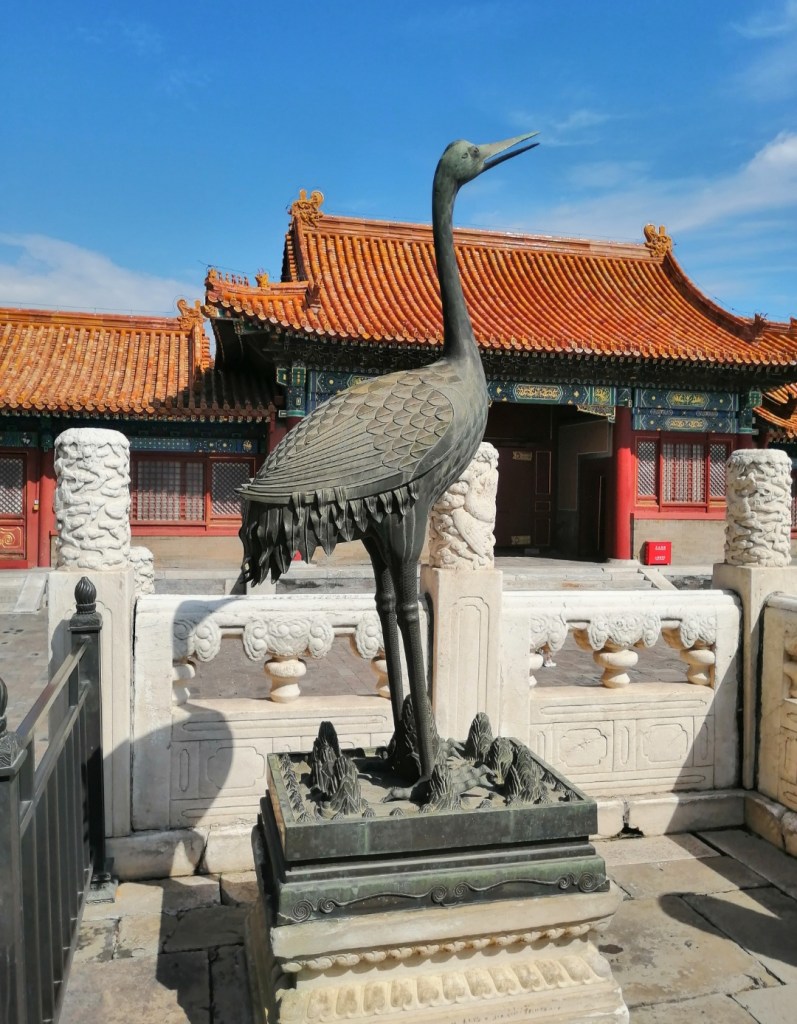
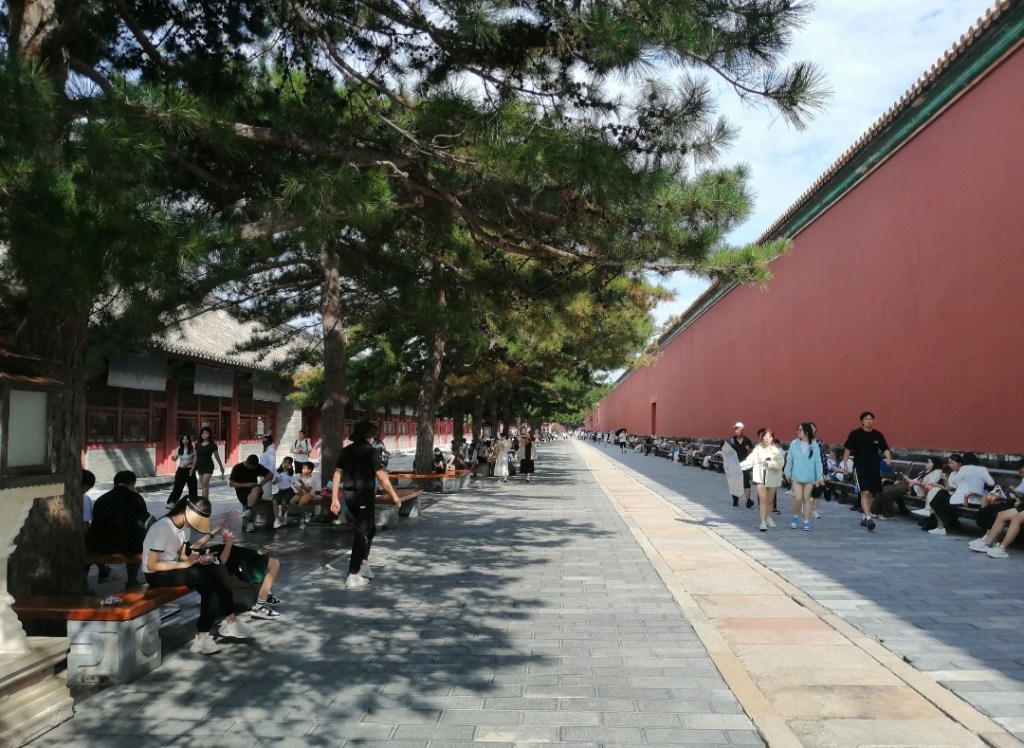
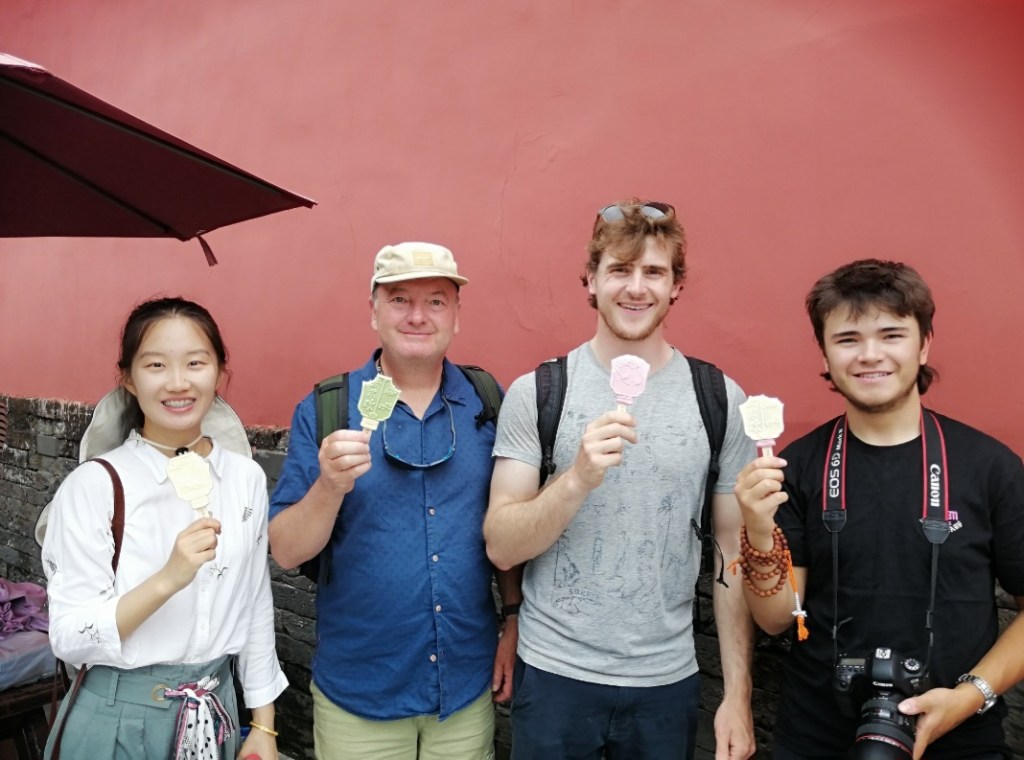
28th August: it was weird to have a room to myself – where is my roomate? Who can I speak French to? Eliot apparently feels the same, which is quite reassuring. He probably enjoyed having a lie in though, as there is no rest for me, or Xinhang! Xinhang kindly picks me up at 8 to the Institute of Geology at the State Key Laboratory of Earthquake Dynamics, where I am scheduled to give a seminar. It is lovely to see Huiping Zhang and Yifei Li who were in Edinburgh a couple of months ago. The talk (on the journey of sediment grains, from source to sink) goes very well and is followed by a nice discussion session, visit of the amazing new labs (chemistry + Optically Stimulated Luminescence), and a delicious lunch. Xinhang then “transfers” me to Xiao Bai who is taking Hugh, Eliot, Darwin and I to a visit of the Forbidden City! The city is so hot, that is quite a contrast with Tibet, but I enjoy the oxygen. The Forbidden City is extraordinary. As millions of tourists descend to the site, it is easy to forget that it used to be forbidden. Only a few selects were allowed in, and I can’t help thinking about how they must have been wowed when they penetrated this space. Interestingly, there are very few trees, and apparently there were even fewer: “spies and assassins can hide behind trees”. The walk is exhausting, due to the heat and the shear size of the place. We end the visit with a walk along a shaded alley where shops sell all sorts of beautiful art works (many related to tea), and ice creams! We drive through Tiananmen Square and the business district on the way back to the hotel. Xiao Bai then helps me collect the 15 model cars that she helped me order online for my collection (thank you Xiao Bai). Then it is shower and packing time. Zhongpeng takes us to the airport two batches: Eliot and I, then Hugh and Darwin. We get to say goodbye to our wonderful hosts/colleagues, and travel all back home safely. What an adventure, and hopefully something that leads to future collaborations. We certainly have a lot to think about!

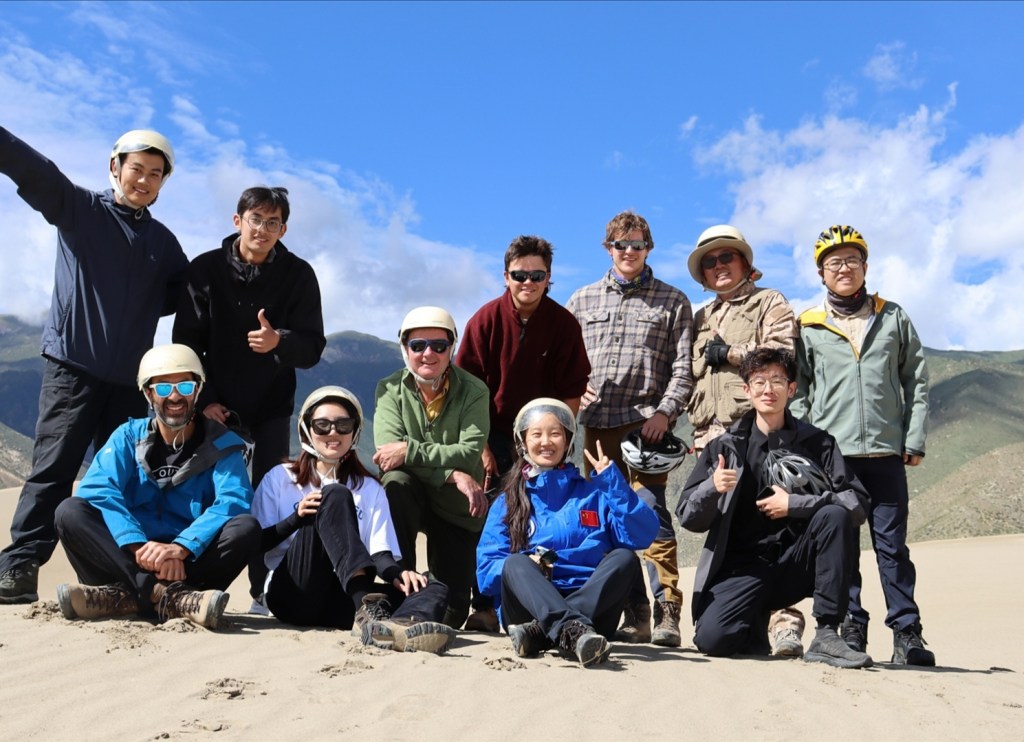
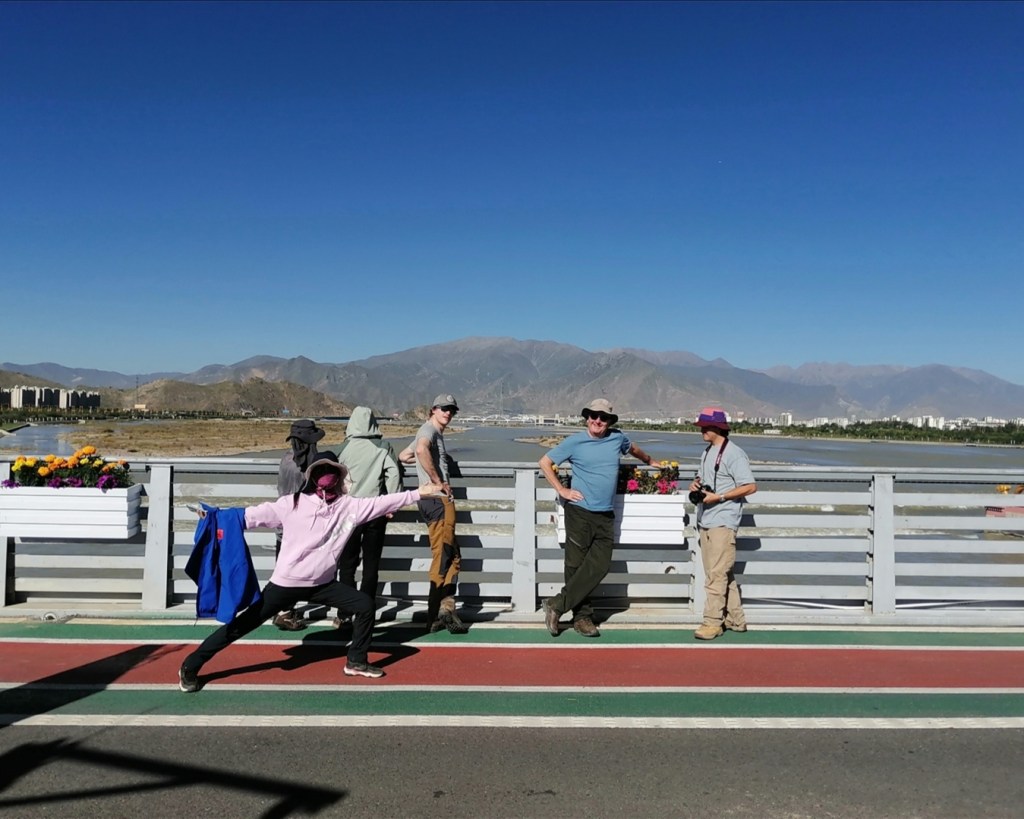
I am hoping to get pictures of the whole team below. Please be patient as I collect the pictures and check the names’ spelling!

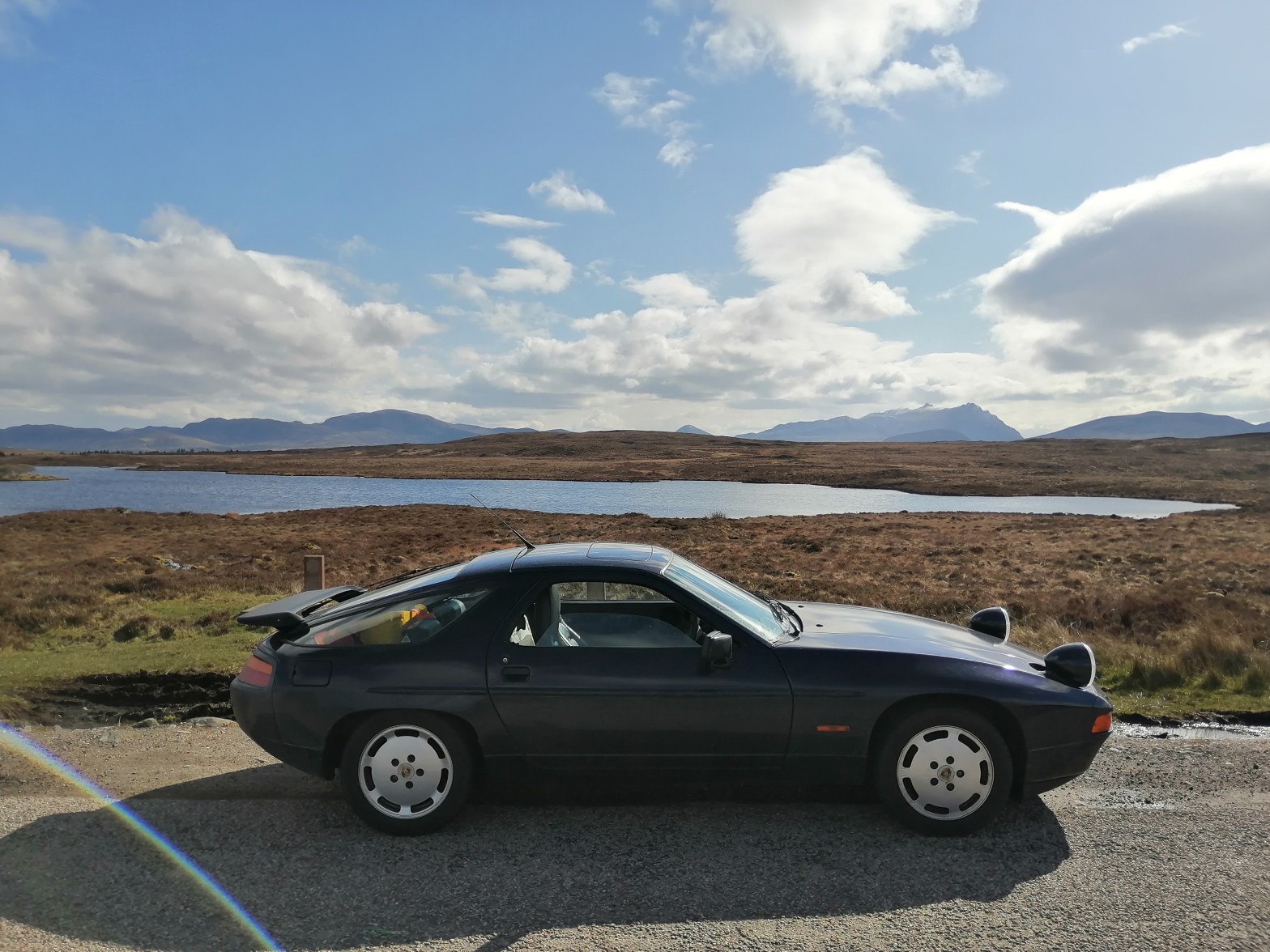
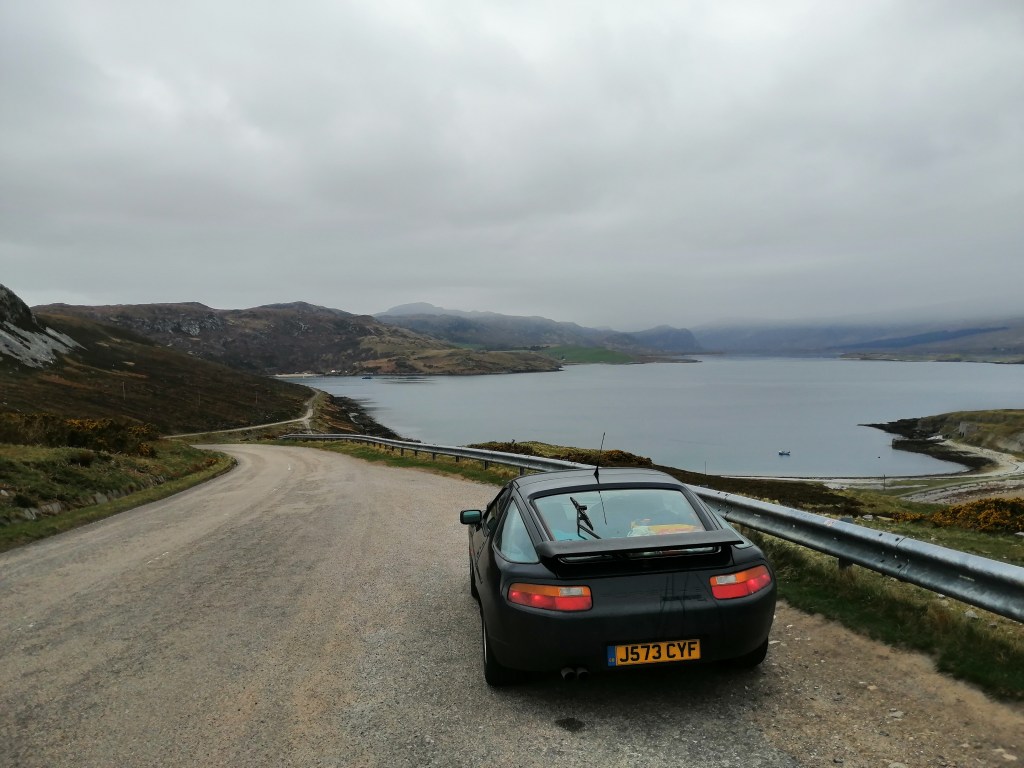
Scotland North Coast 500: road trip with the 928 S4, April 2023

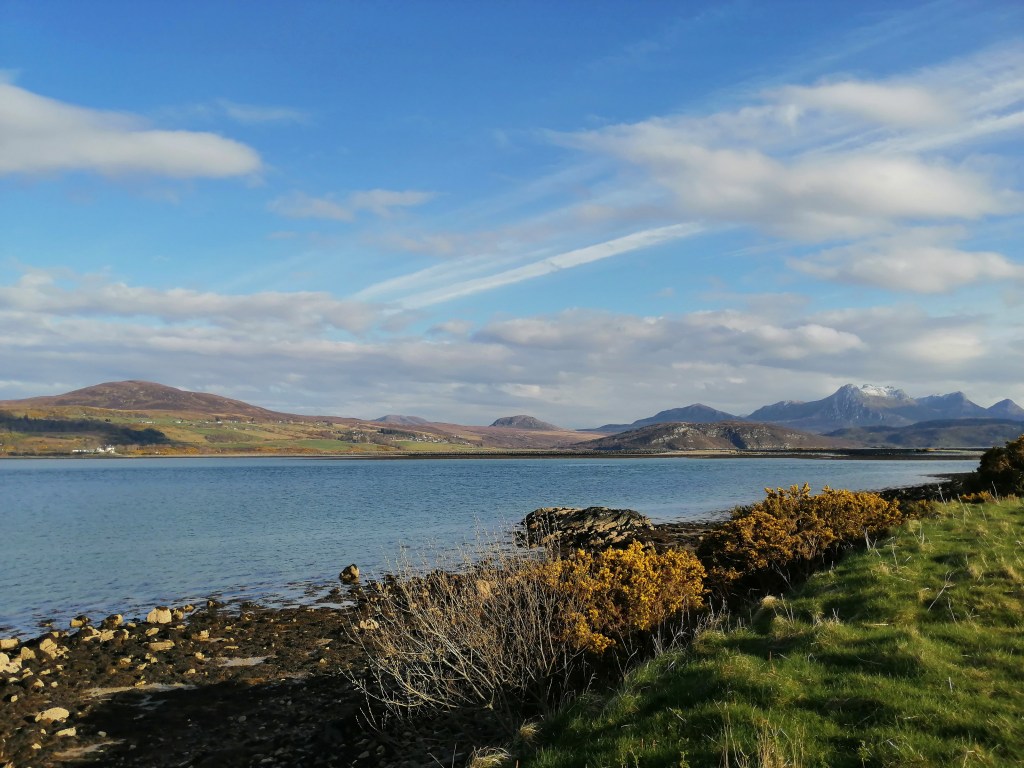
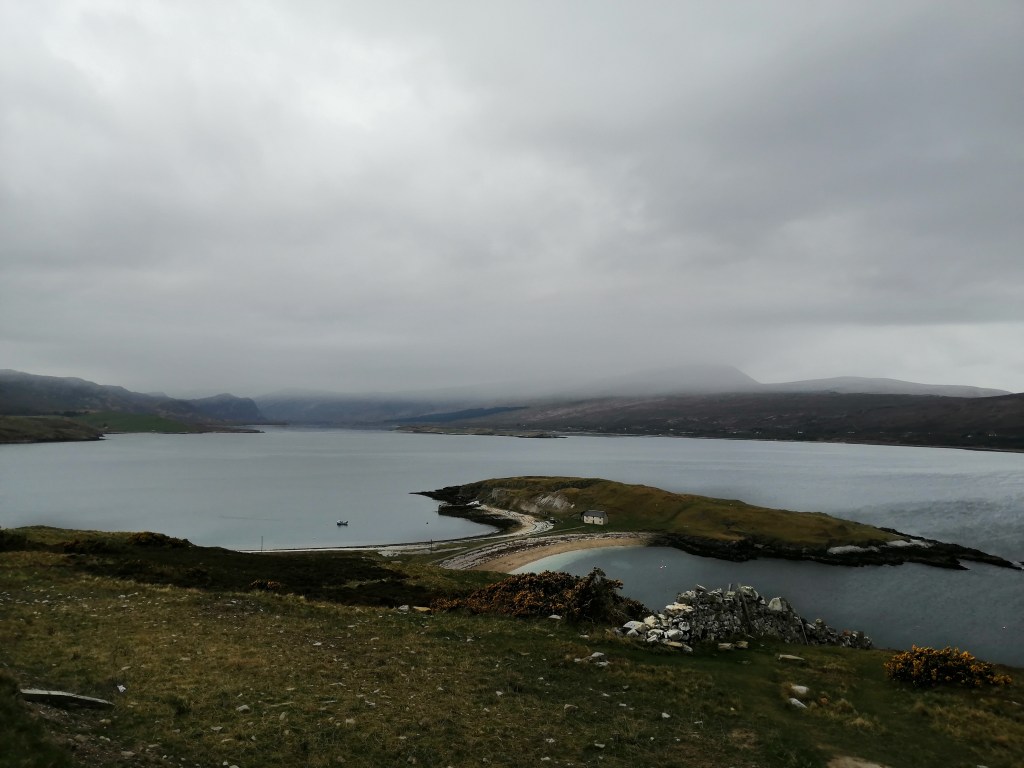
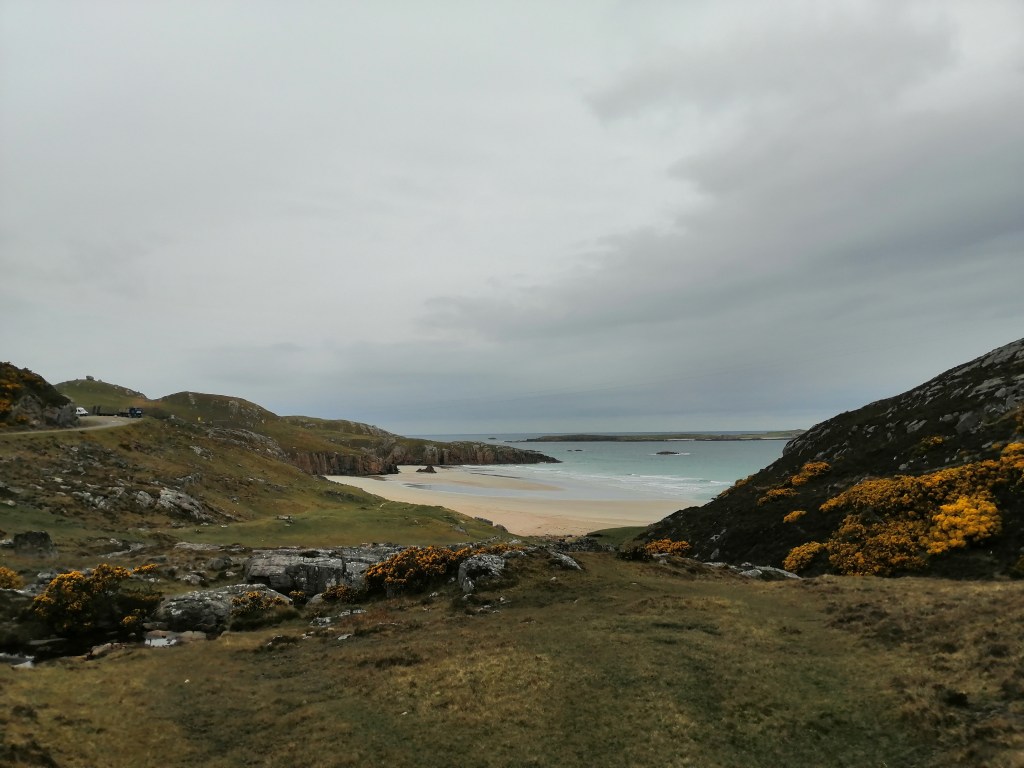
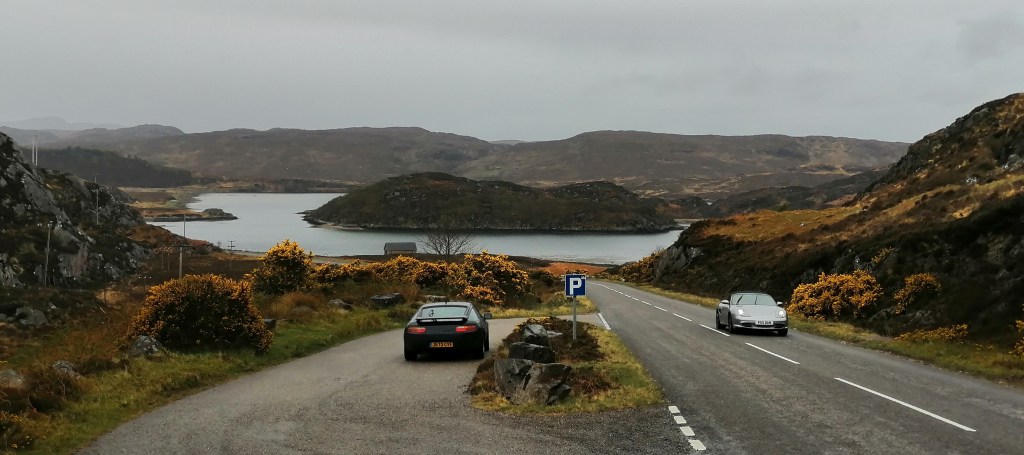
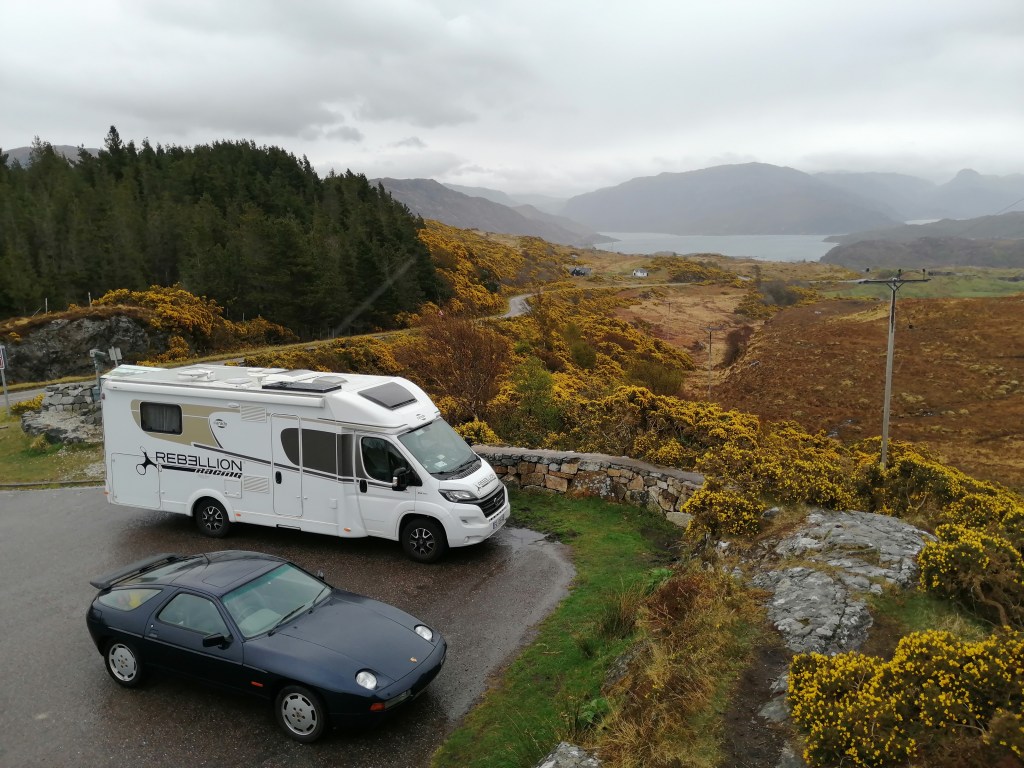
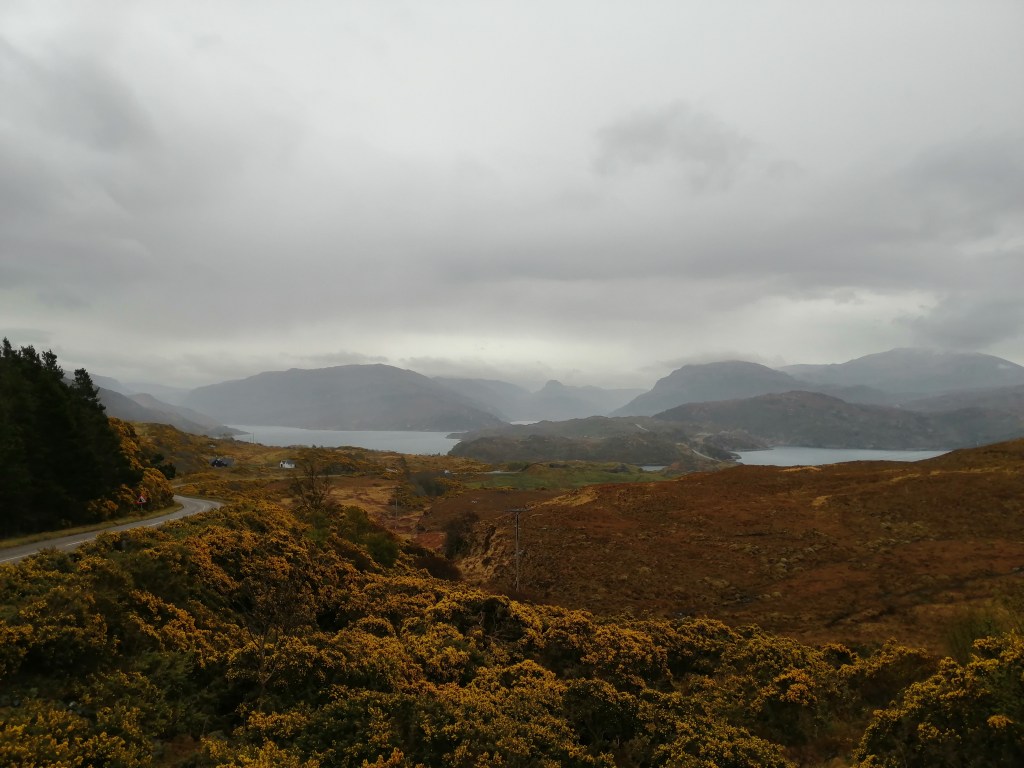
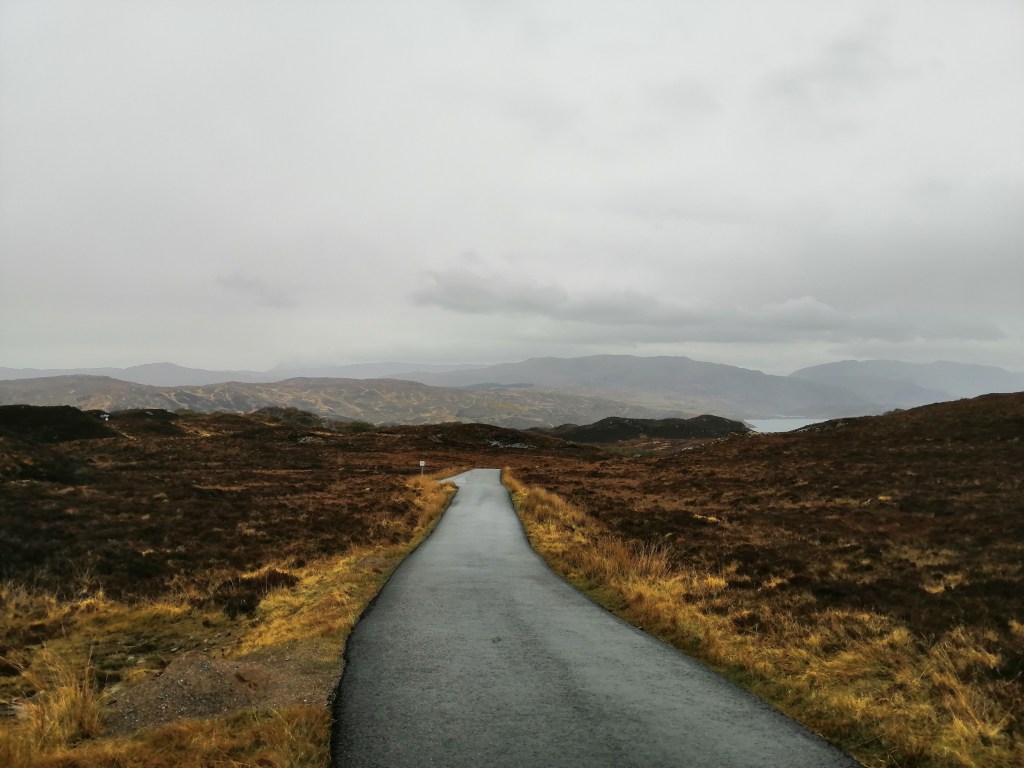
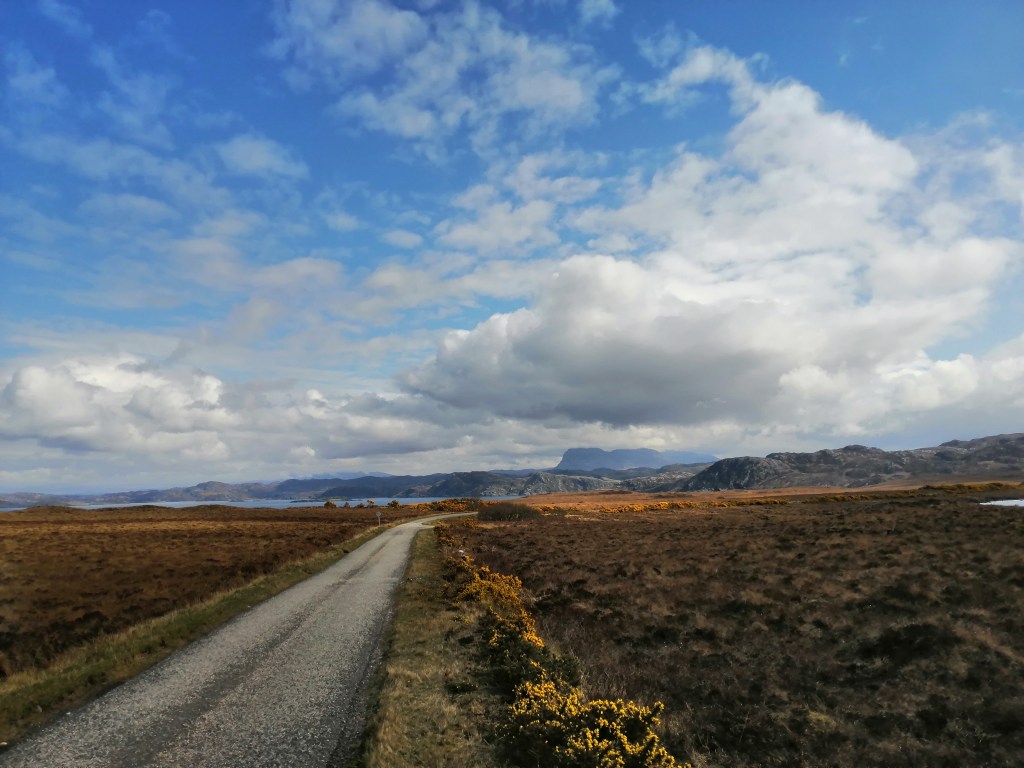
This is not really a geomorphology trip, but the landscapes I drove through are some of the most beautiful in the world (in my opinion), so this blog is not completely out of place here. I will start with a bit of background on the car: if you are not interested in cars, you may skip this section and go straight to the next one about the trip!

Background: the Porsche 928 S4

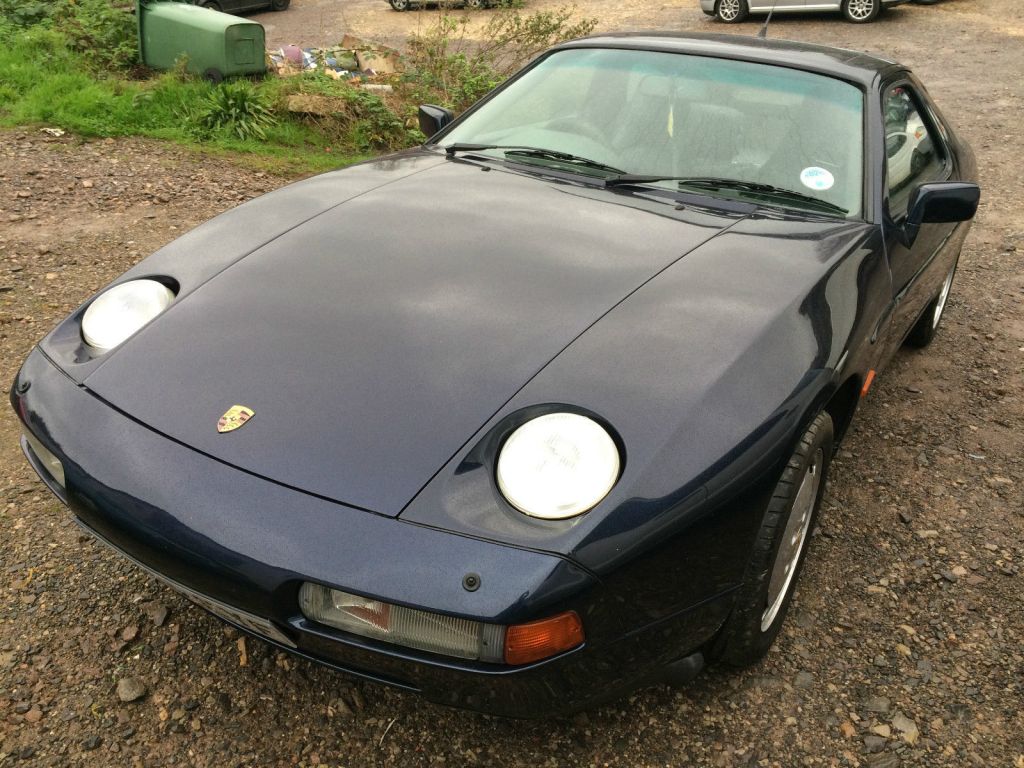
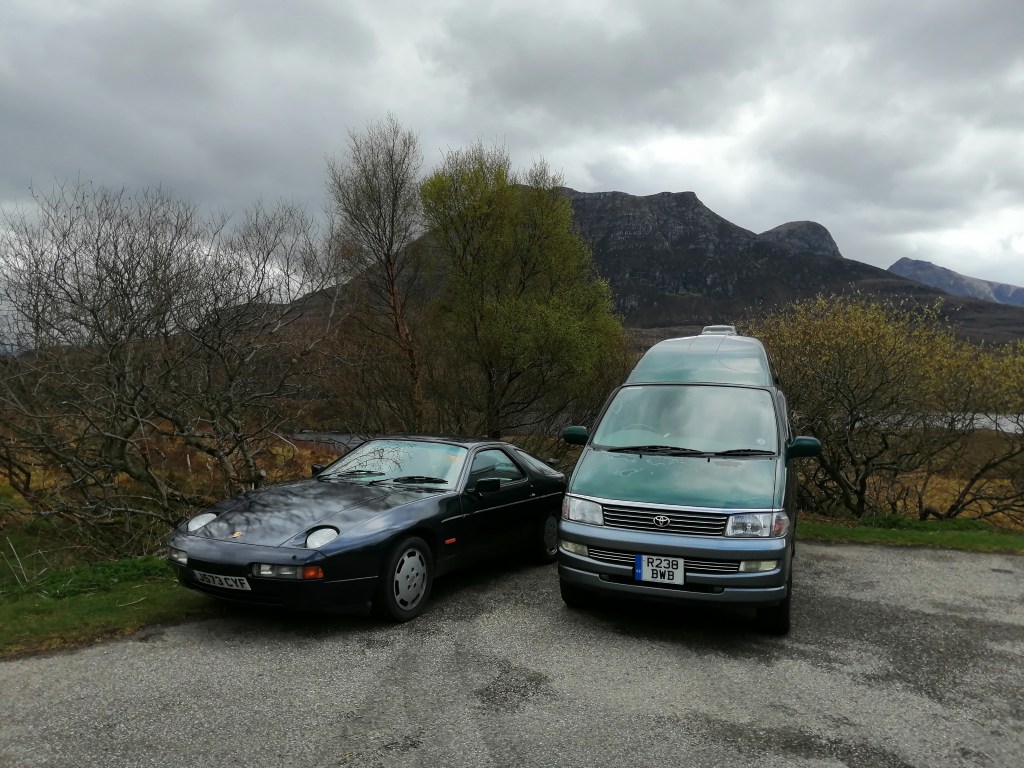
A bit of context: for those who don’t know yet, I am a car enthusiast. I grew up in a garage (my car was a mechanics) during the Group B rallying era, and have been obsessed with cars since I was a kid. The first time I came across the Porsche 928 S4, I was 12, and its unique design (including the cool pop-up headlights) left me speechless. I drove my first one in the Arcade game Chase HQ, where one stops criminals by bashing their cars in high-speed chases: https://www.youtube.com/watch?v=Dfz2qofmZx0.

In 2012, I had a bit of an midlife crisis, with my 1985 Peugeot 205 GTi dying of rust and other events in my life. I therefore bought myself a 1992 Porsche 928 S4 on ebay! I paid the price of an 8-year old Ford Mondeo (you could get them cheap at the time) and it has been an “interesting “experience, to say the least! The driving couldn’t be more different than with the 205: the 928 has a 4-gear automatic gearbox(!) and a 5-litre V8 engine that allows it to top nearly 160 mph! The car has a lot of torque, and a weight of nearly 2 tons. It is a cruiser that was initially designed for the USA market, not a sports car for very windy roads. The car is incredibly smooth, comfortable and practical, believe it or not, as I demonstrate in this video: https://www.youtube.com/watch?v=ICpvQf8x0Dw. The fuel consumption is atrocious (20 mpg).

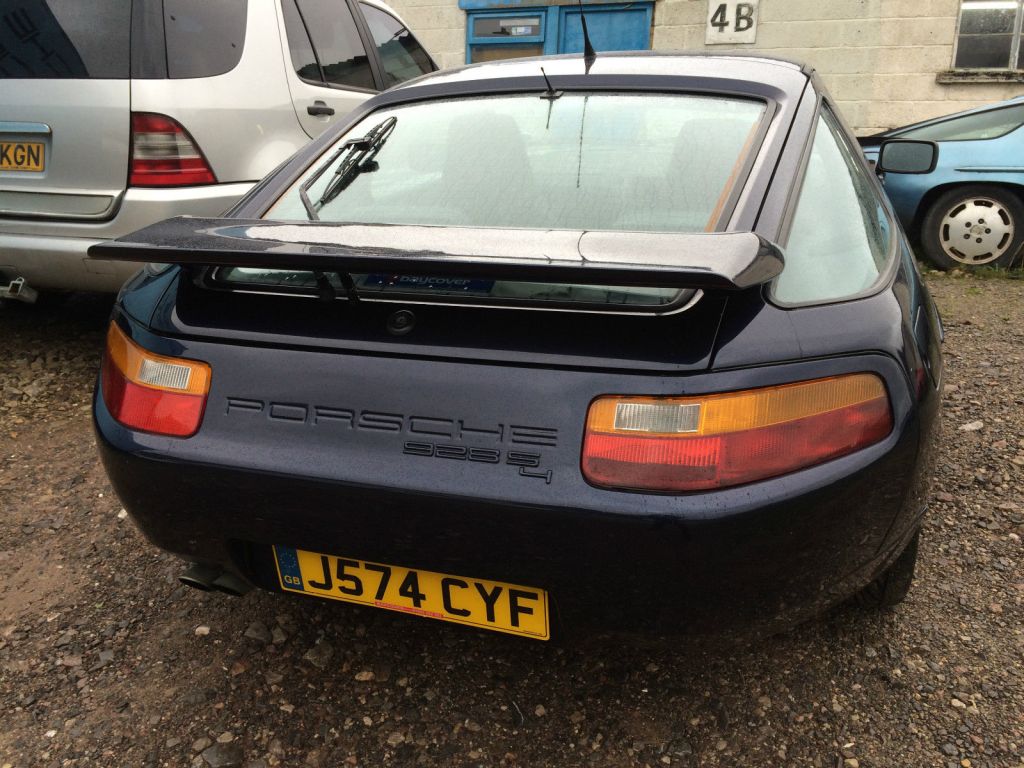
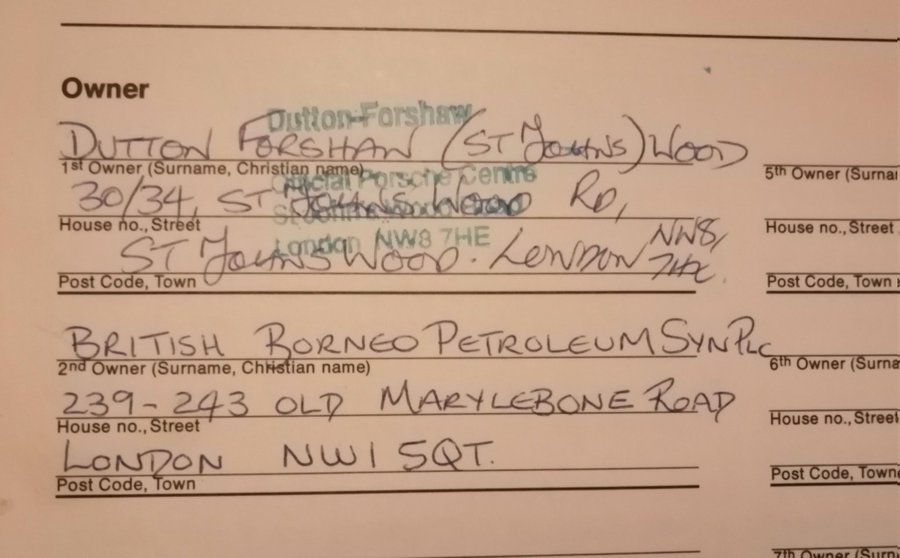
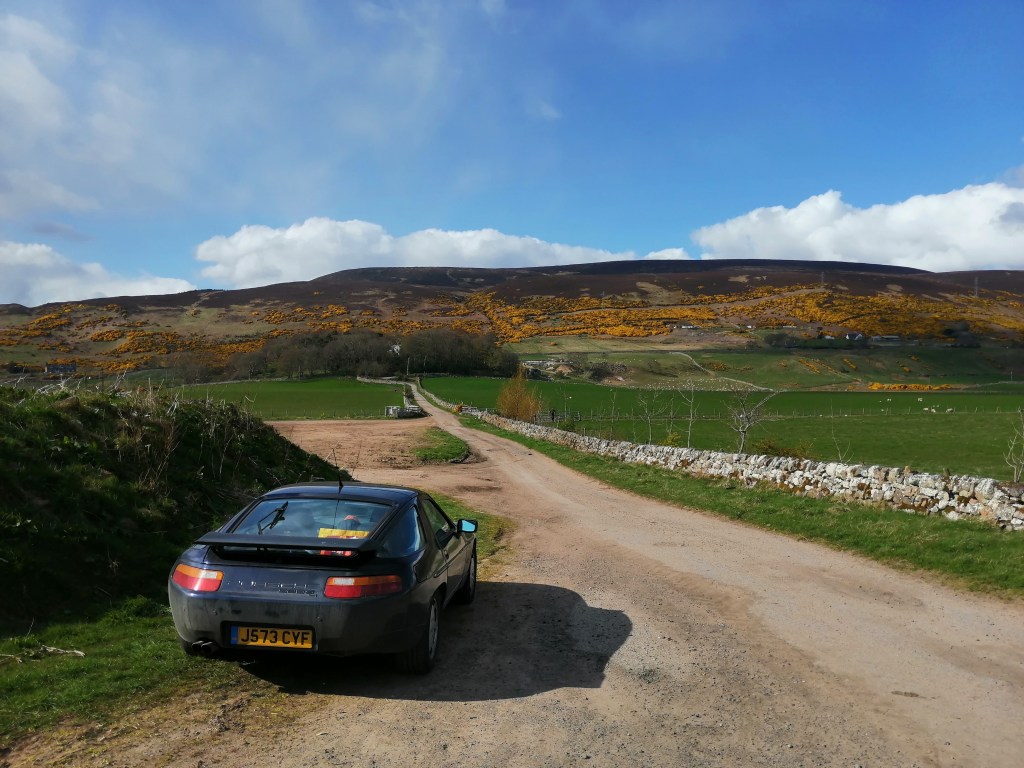
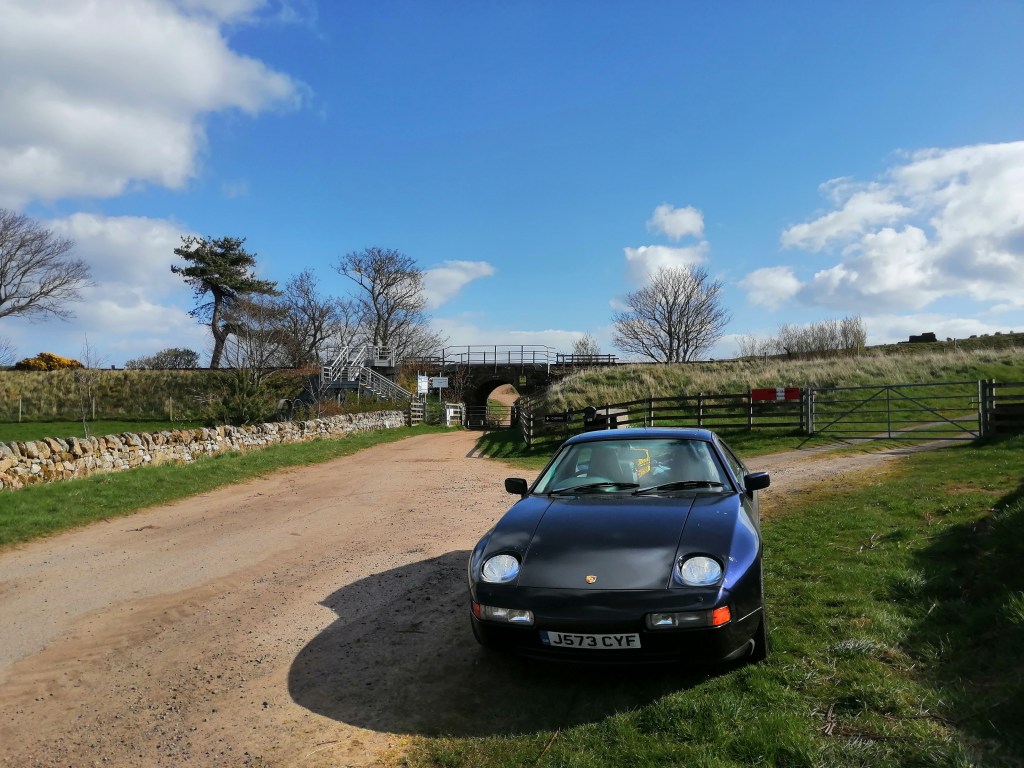
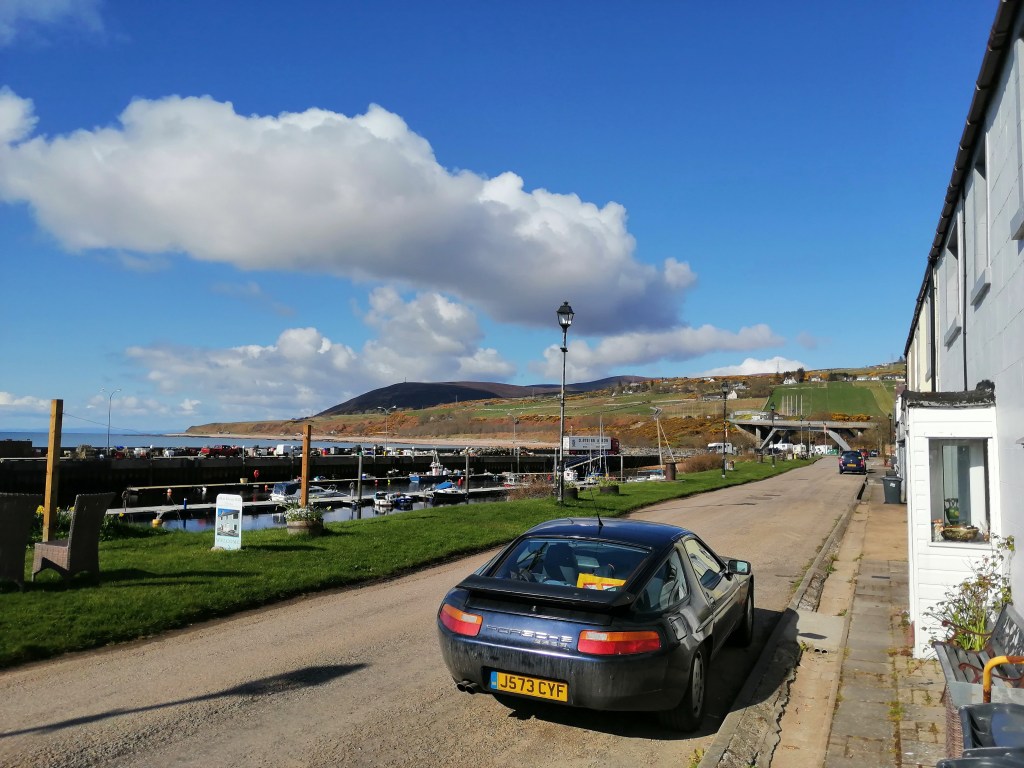
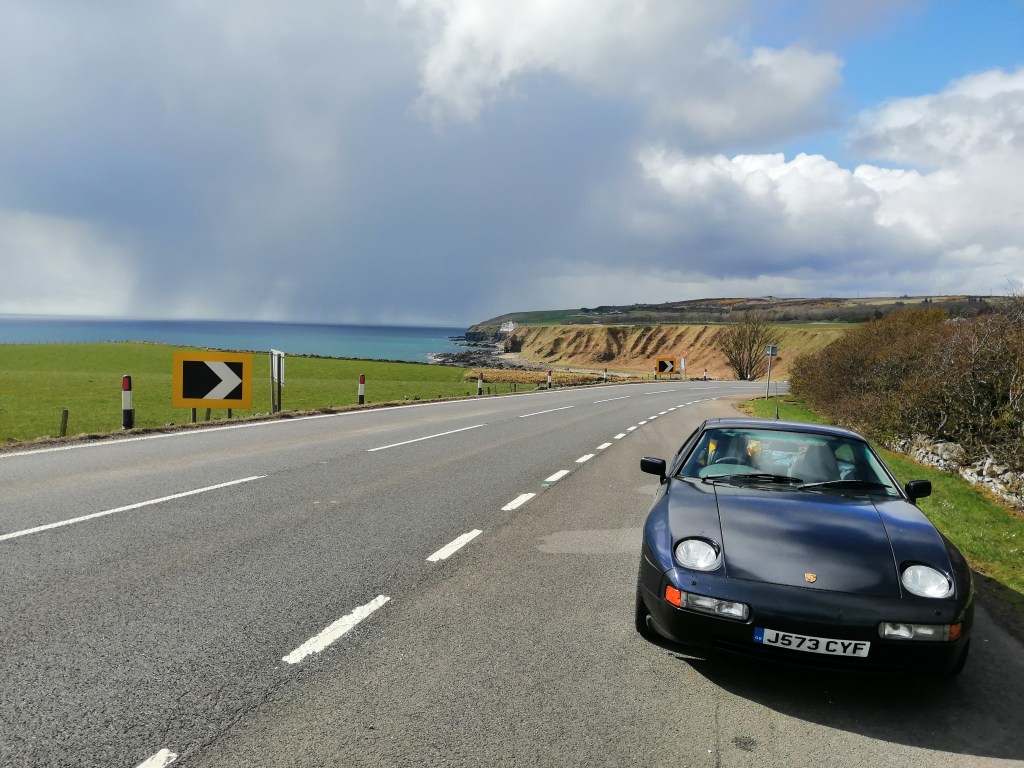
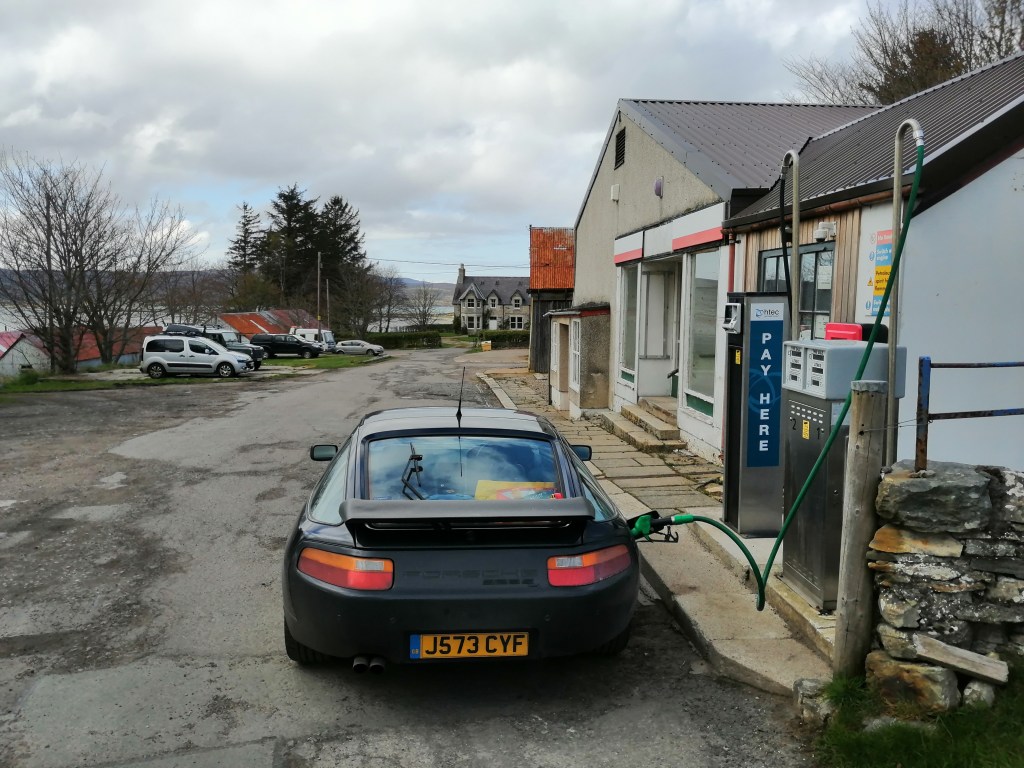
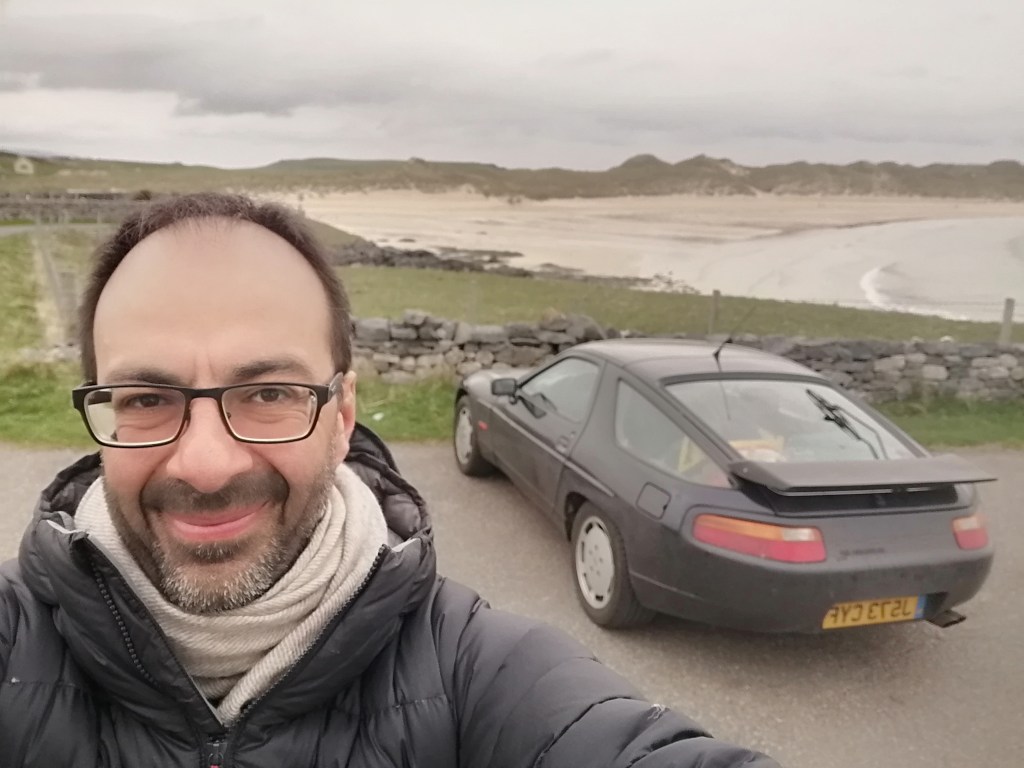
The car had 10 owners before me, and what could be an interesting story: it has a twin. I found the twin for sale on ebay in 2014, and they are so similar that I thought someone was trying to sell my car! Registration of my car is J573CYF. The one for sale was J574CYF. They were both registered on the 16th January 2012, and the first registered owner of mine was the “British Borneo Petroleum Syn Plc”, which makes me wonder whether they were bought as “company cars”? The twin had 180,000 miles in 2014, and seems to have become SORN in 2021.

My 928’s twin for sale on ebay in 2014
First registered owners of my 928

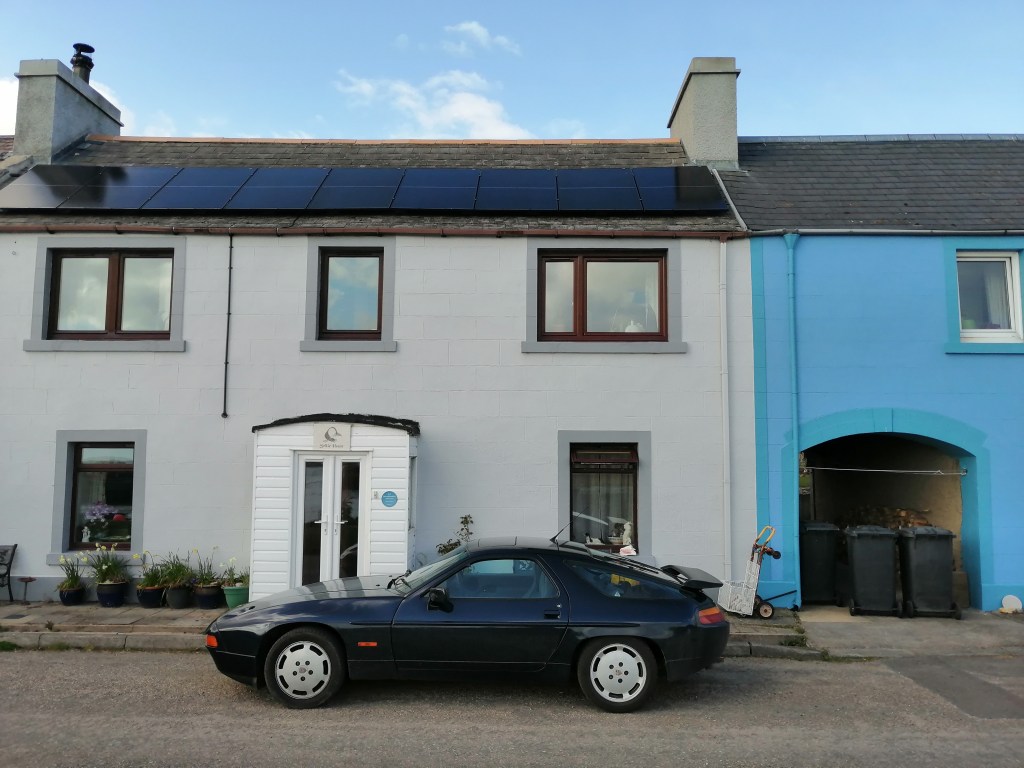
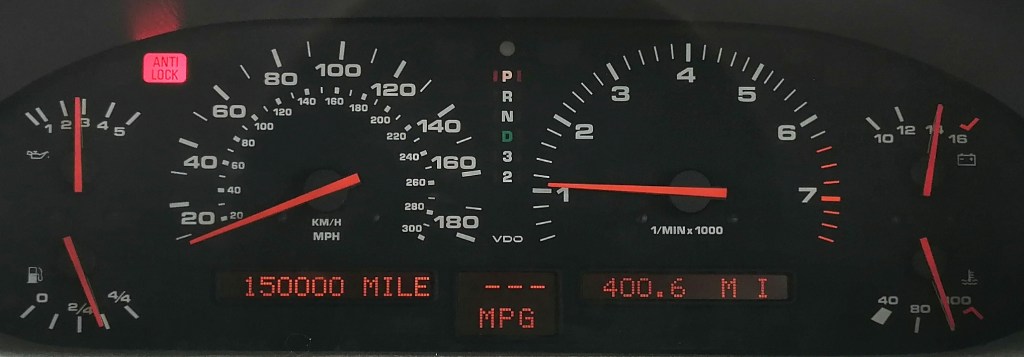
We had many adventures and the car never let me down, except numerous battery and electrical problems (partly solved by installing a battery switch on the car). But after 11 years of ownership, it is becoming very hard to keep the 928 going, with spare parts coming at exorbitant prices and sometimes being just impossible to find anymore. The 928 is 31-year old and has done 150,000 miles, and corrosion is starting causing problems. And because it is made of aluminium, it is nearly impossible to repair (if you want to know more about why aluminium is so difficult to weld, check out this very interesting and technical article: https://www.uti.edu/blog/welding/aluminum-welding). So, I thought I should sell the car to someone who has the financial and/or technical means to keep it going, before it rusts to dust like the 205. But I had to do a last farewell road trip, and the north of Scotland was the obvious candidate: I have always dreamt of taking the 928 up there as the roads and scenery are extraordinary, but I never did it as I was worried about a breakdown.

The trip: North Coast 500 (NC500)

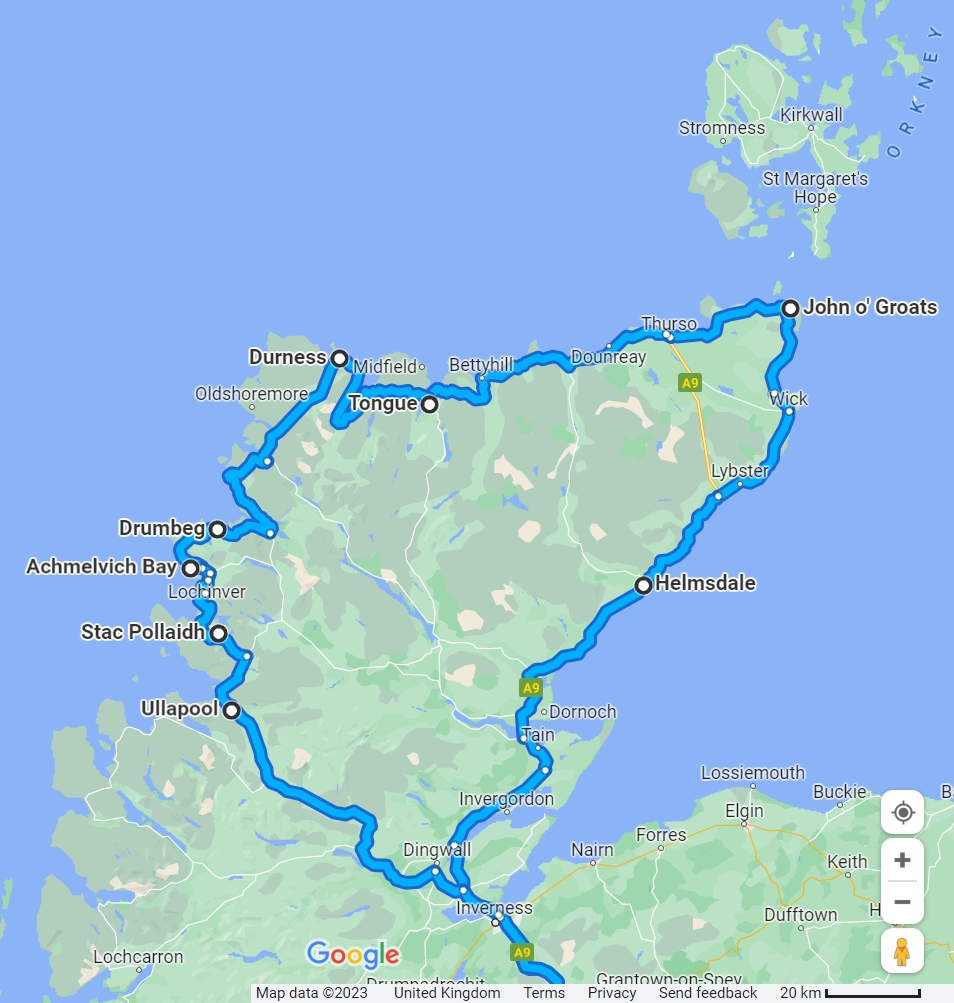
The NC500 is a 500-mile long loop around the far north of Scotland that has been promoted in the past few years to increase tourism in the area. It worked, and better than they were expecting, with thousands of campervans coming to the area from the UK, France, the Netherlands, Germany, etc. over the summer and causing mayhem for locals, with overwhelmed little towns and beauty spots, and traffic jams as most of these roads are single track with passing places. April should be ok I thought, and it was…

25th April: trip to Helmsdale

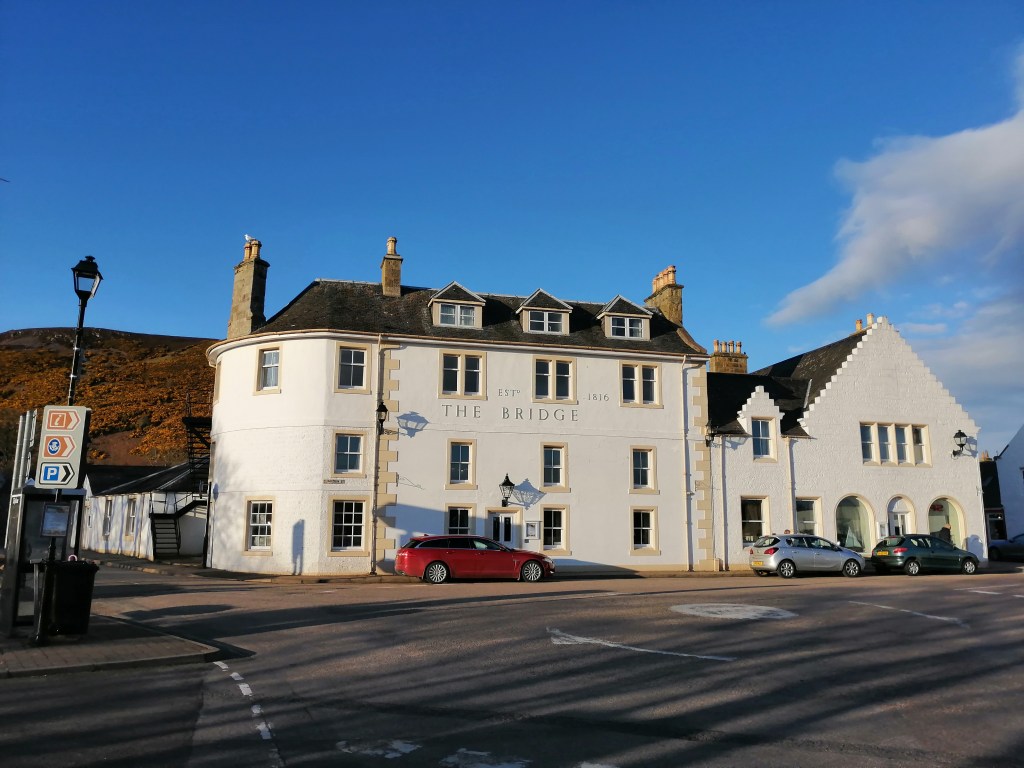
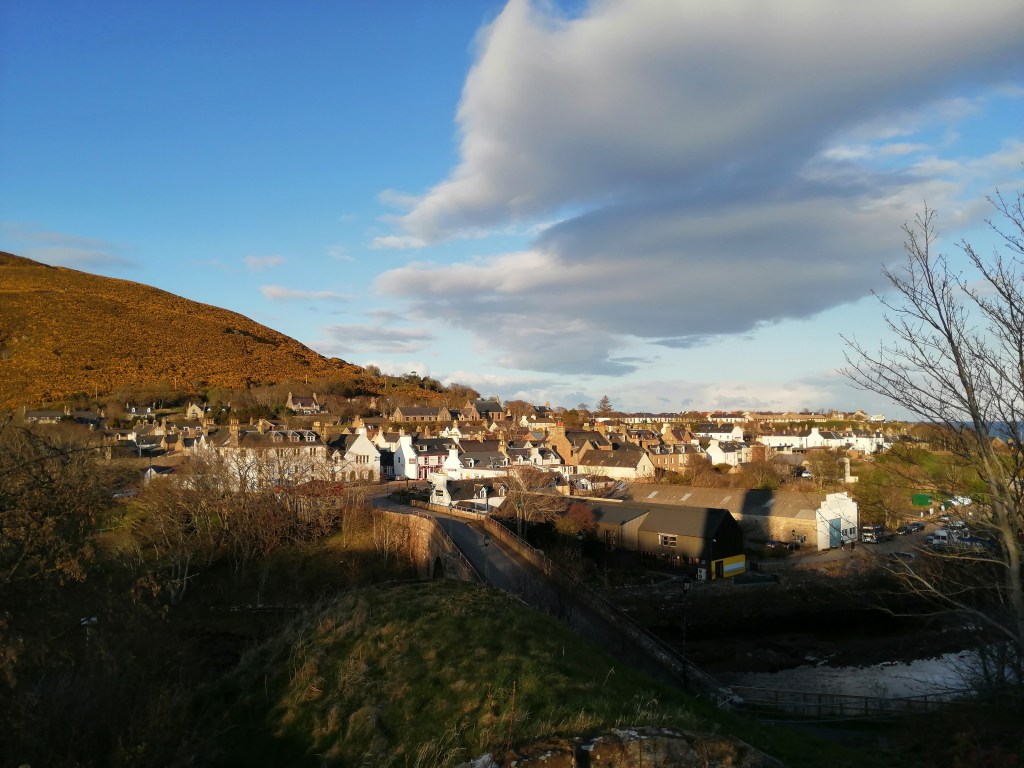
I initially didn’t plan to do the NC500, just go around Assynt which I find very beautiful, but the weather forecast for the NW was not great. The east on the other hand looked ok, and I had been to Helmsdale many times for a Geophysics field trip I used to demonstrate on. I decided to aim for Helmsdale, and booked a B&B at the last minute.

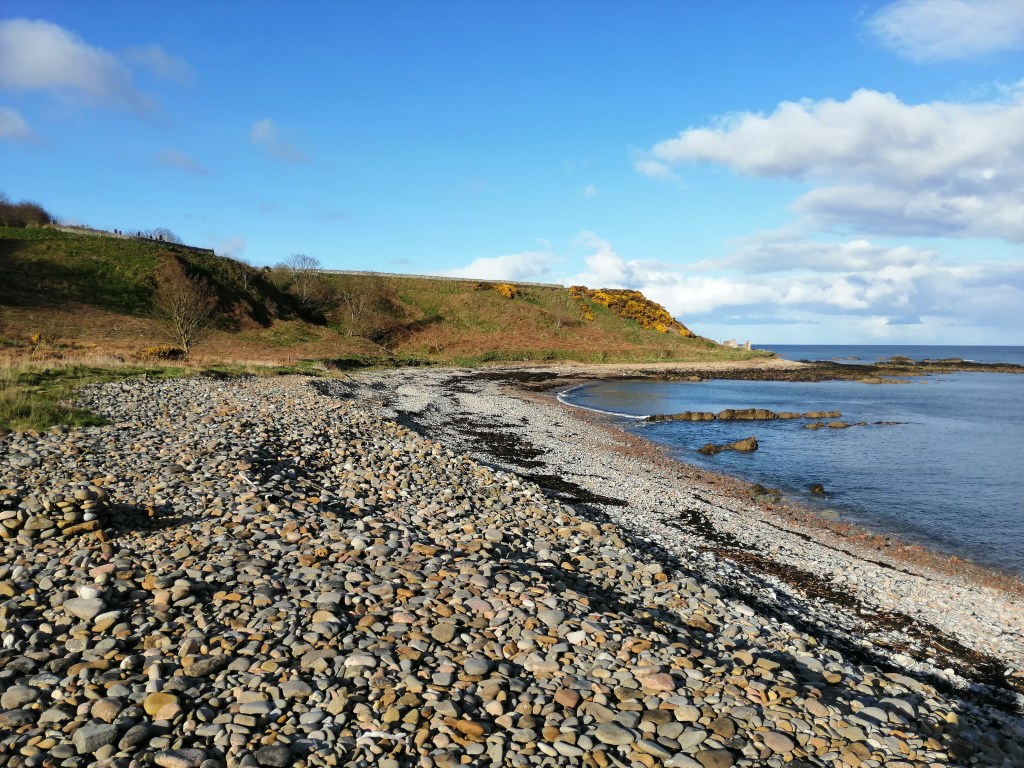
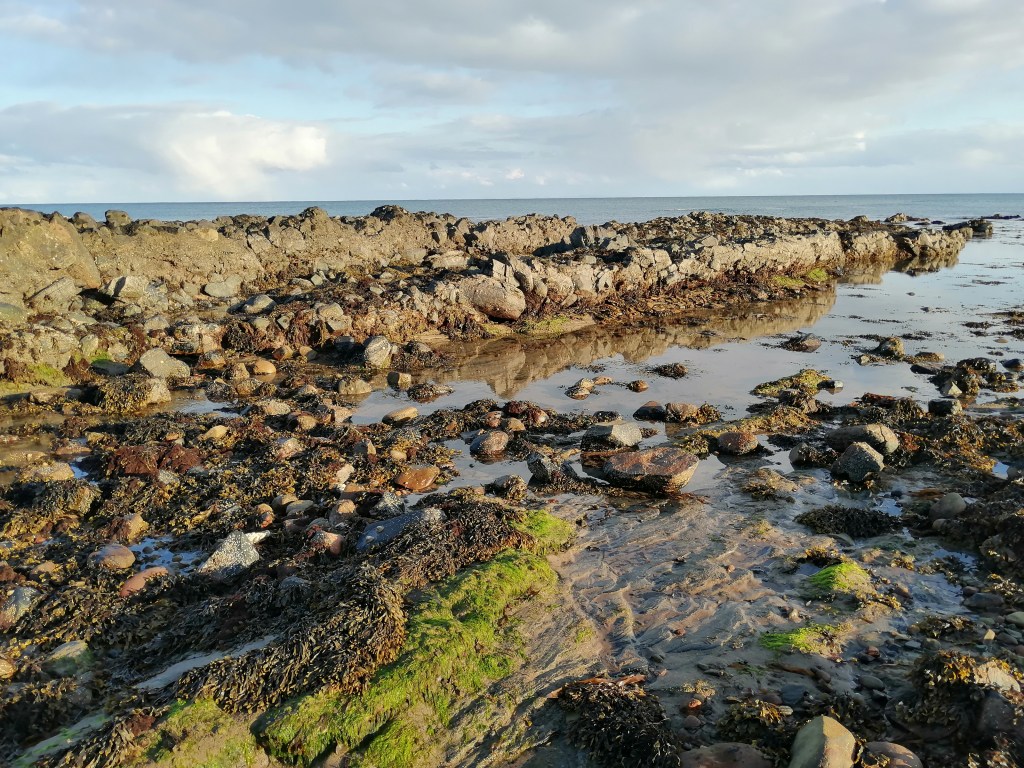
I had forgotten how spectacular the geology was here! Below, the Helmsdale’s fault scarp in all its glory, very round pebbles, a raised beach (from isostatic rebound), and the extraordinary boulder beds, intercalated within blach shales, testifying to the intermittent fault scarp’s submarine collapse during the opening of the North Sea. And some (old) giant puffball mushrooms – did you know they could grow up to 1.5 m in diameter?! https://en.wikipedia.org/wiki/Calvatia_gigantea

26th April: Helmsdale to Tongue via John o’Groats

It is at that point that I decided: I’m so close to the north coast, and I have never been further north, why not doing the NC500? That was an excellent decision, although the trip was almost cut short, as you will see below…

The day is looking good!
Well, that doesn’t look so good. I find an open garage in Helmsdale and enquire. “That’s not a small job, and certainly not something I can do now!” I ask: “that’s the timing belt, right?” He says “I’m afraid so, try to turn it off and on again and see what happens”. I do as he says and the problem disappears! It reminds me of printers in the old days! We’re back on the road!

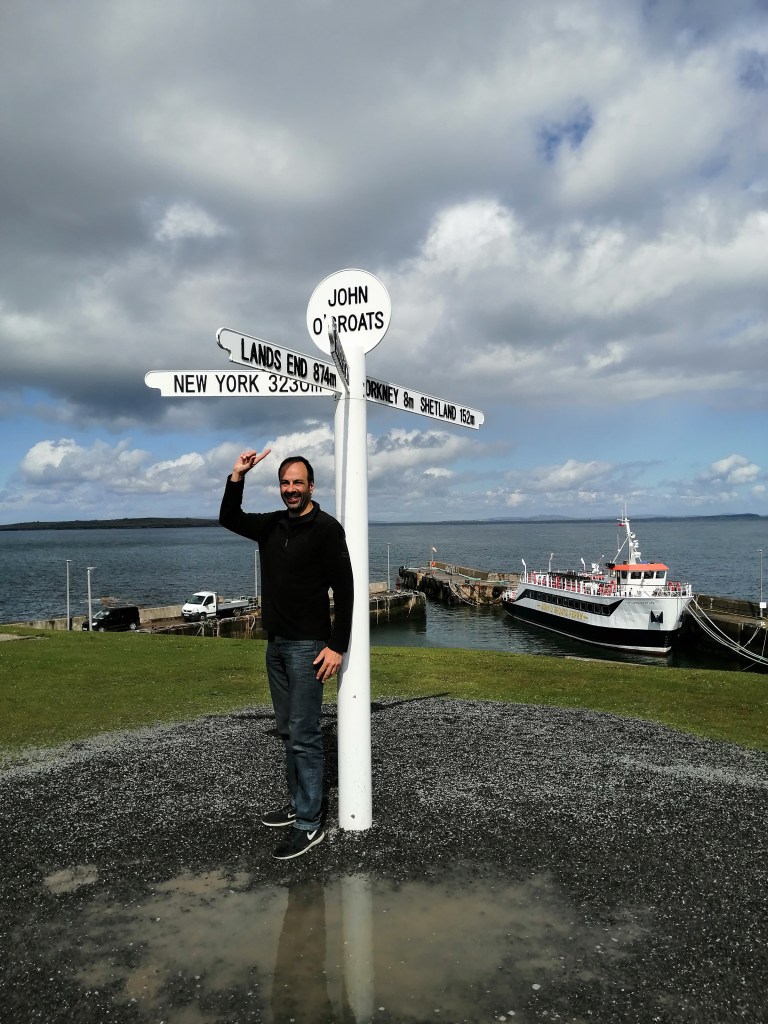
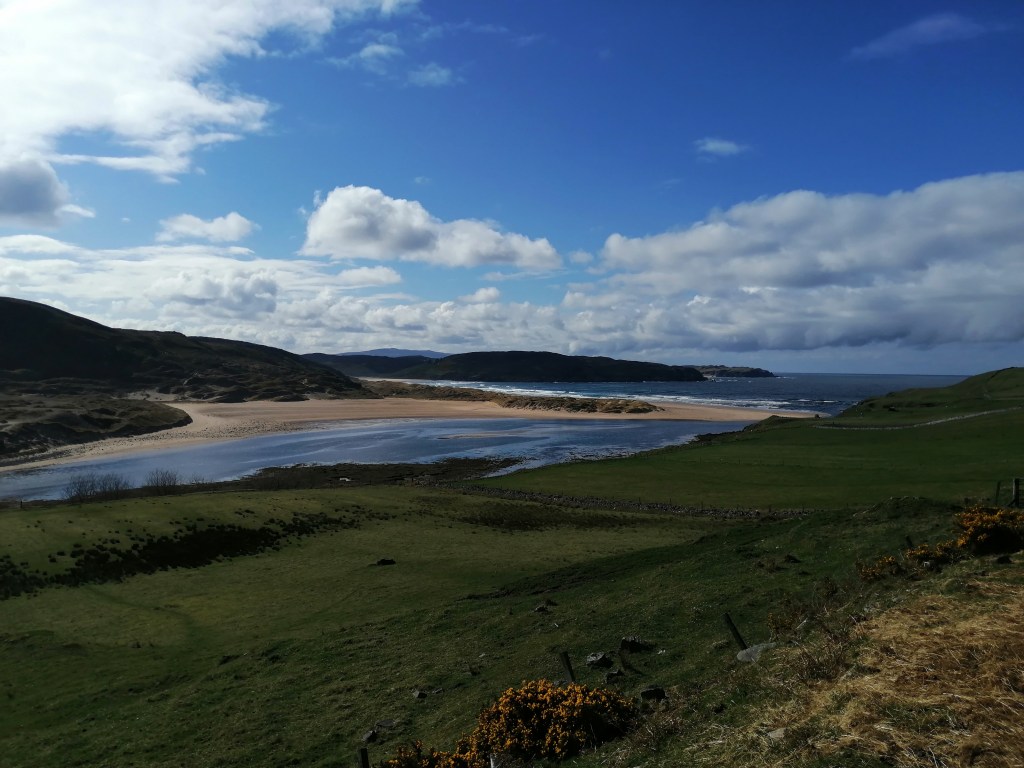
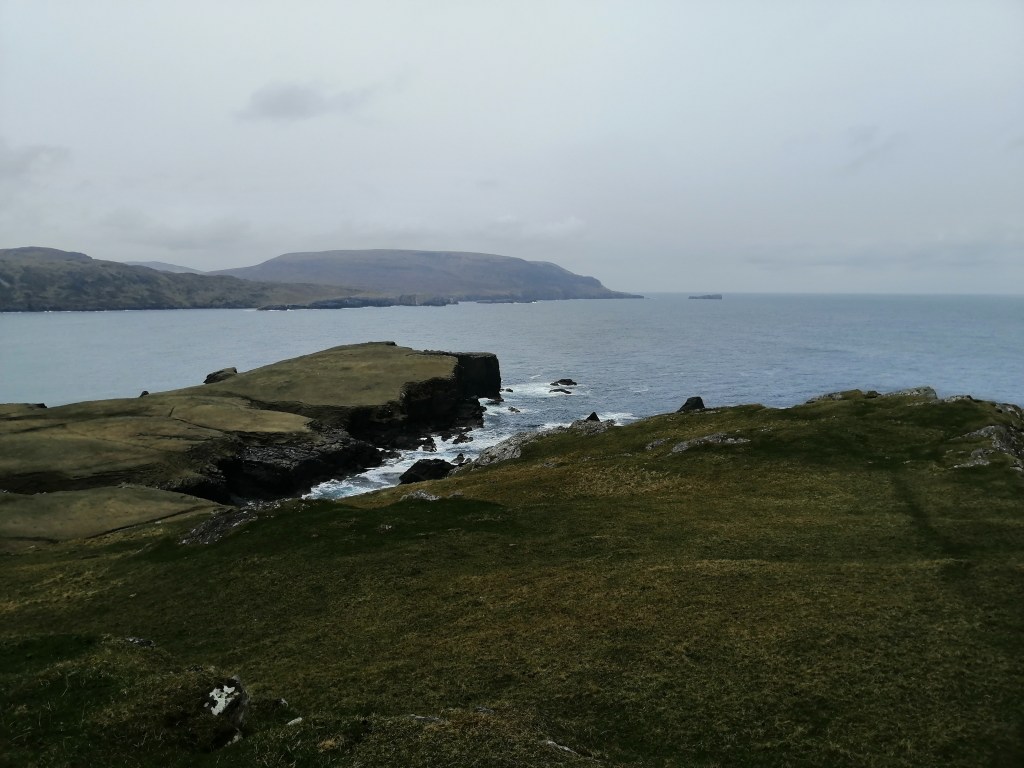
We make it to John o’Groats, with a view over Orkney and impressive stacks of Devonian sedimentary rocks:

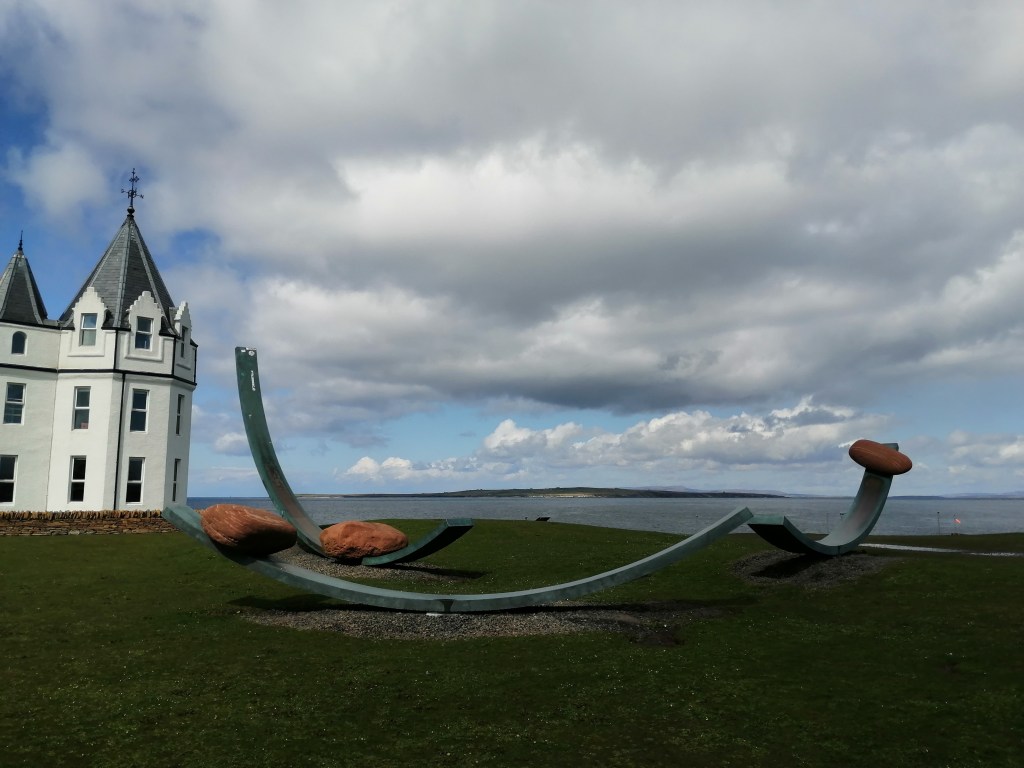
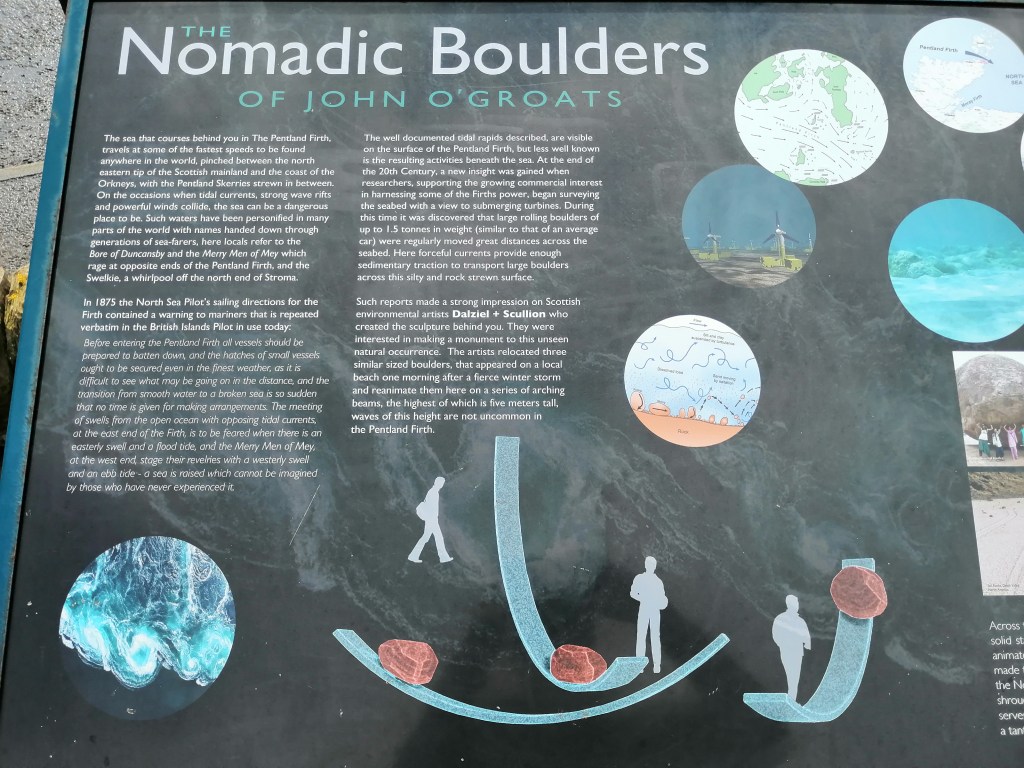
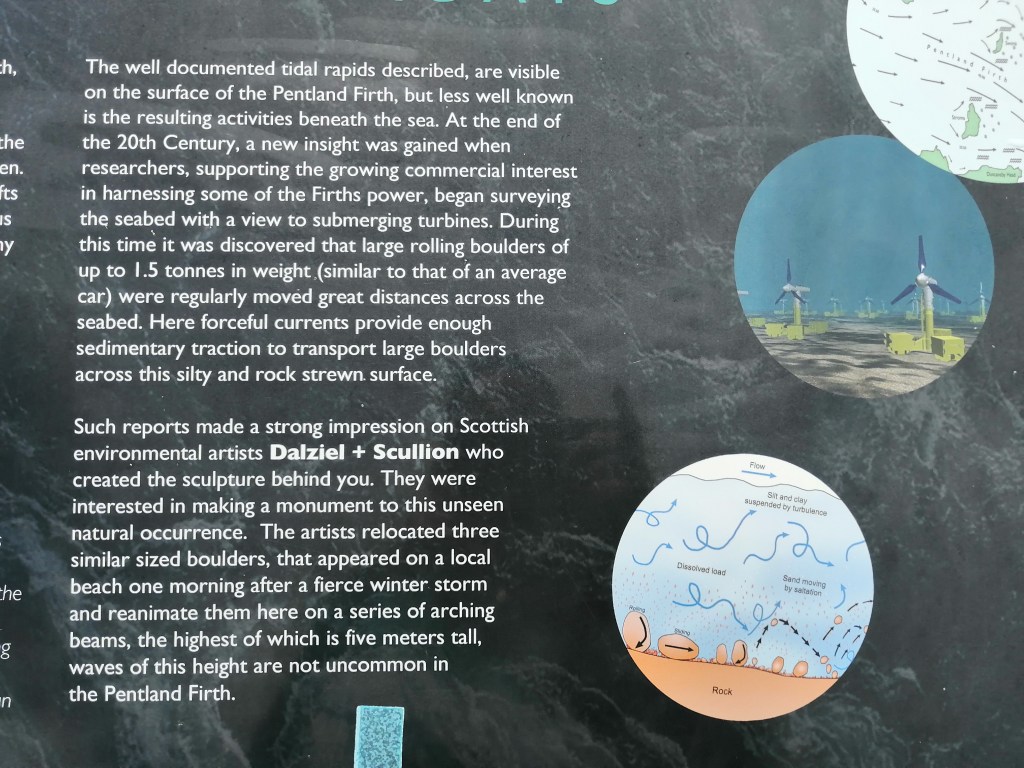
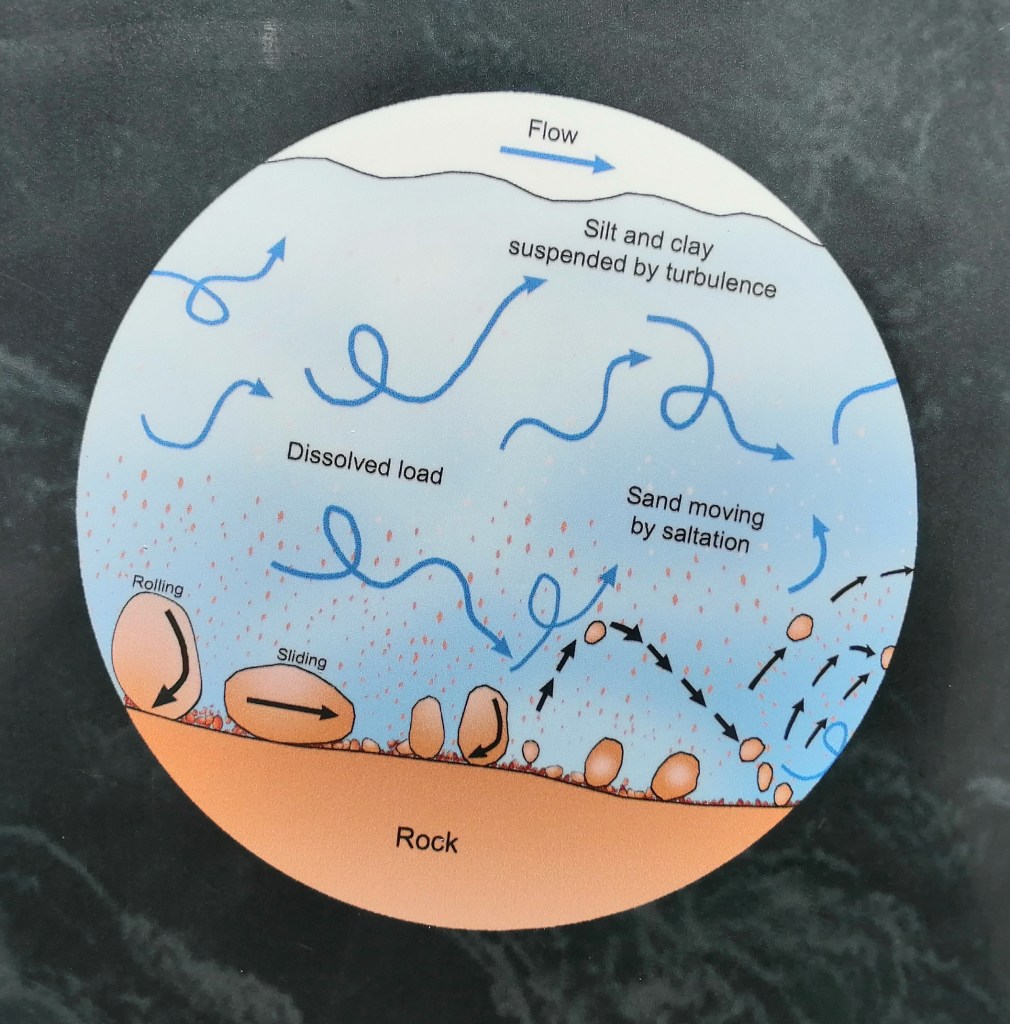
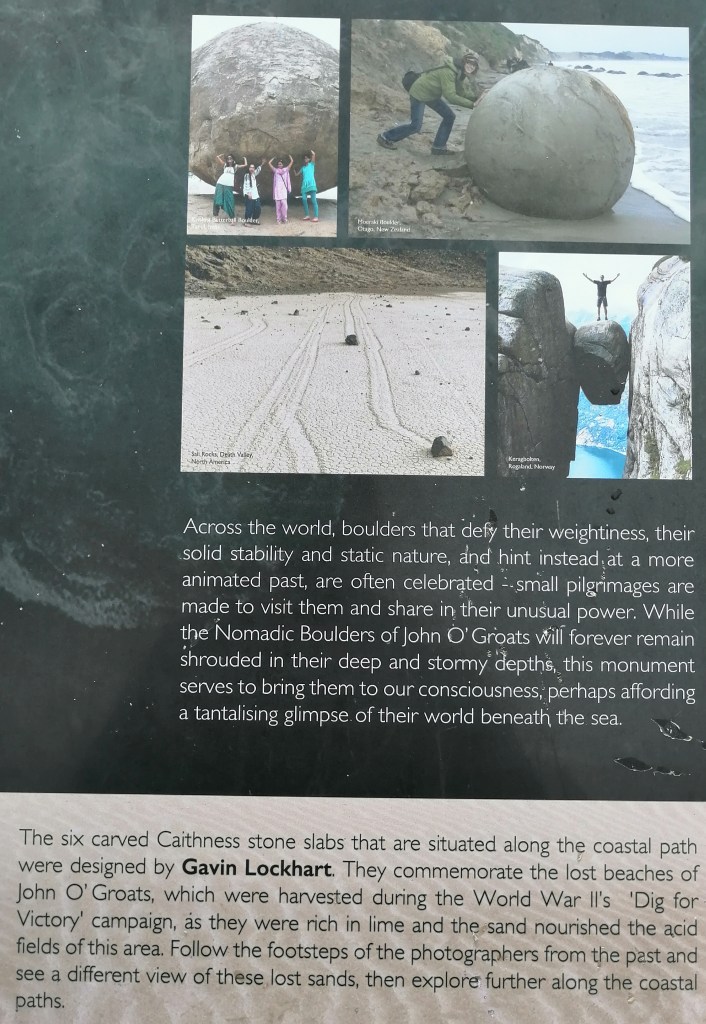
There is even a boulder appreciation poster and sculpture! They found evidence that strong underwater currents regularly move 1.5 ton boulders! I love the boulder quote, the suspension vs saltation diagram and the sculpture they inspired:

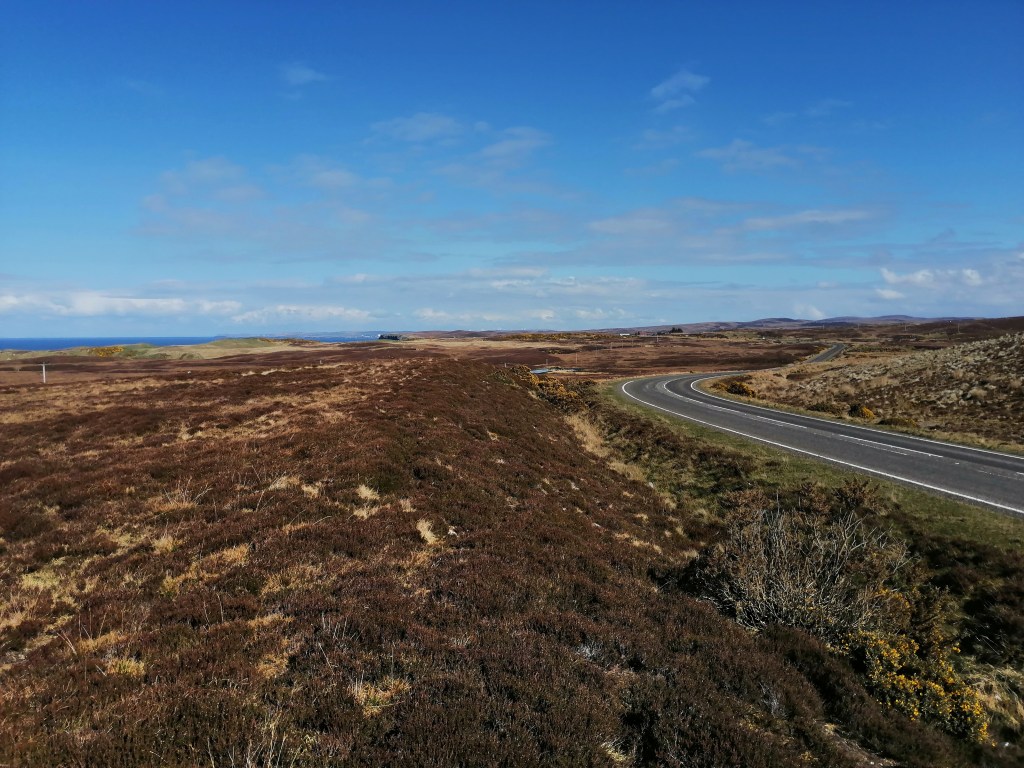
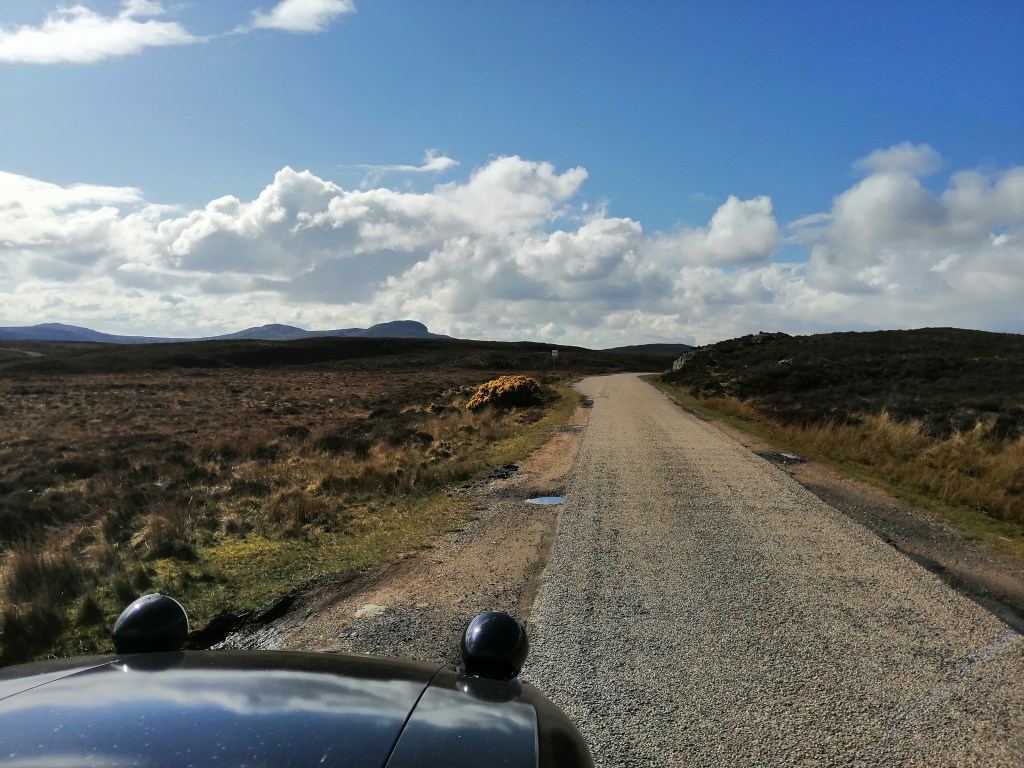
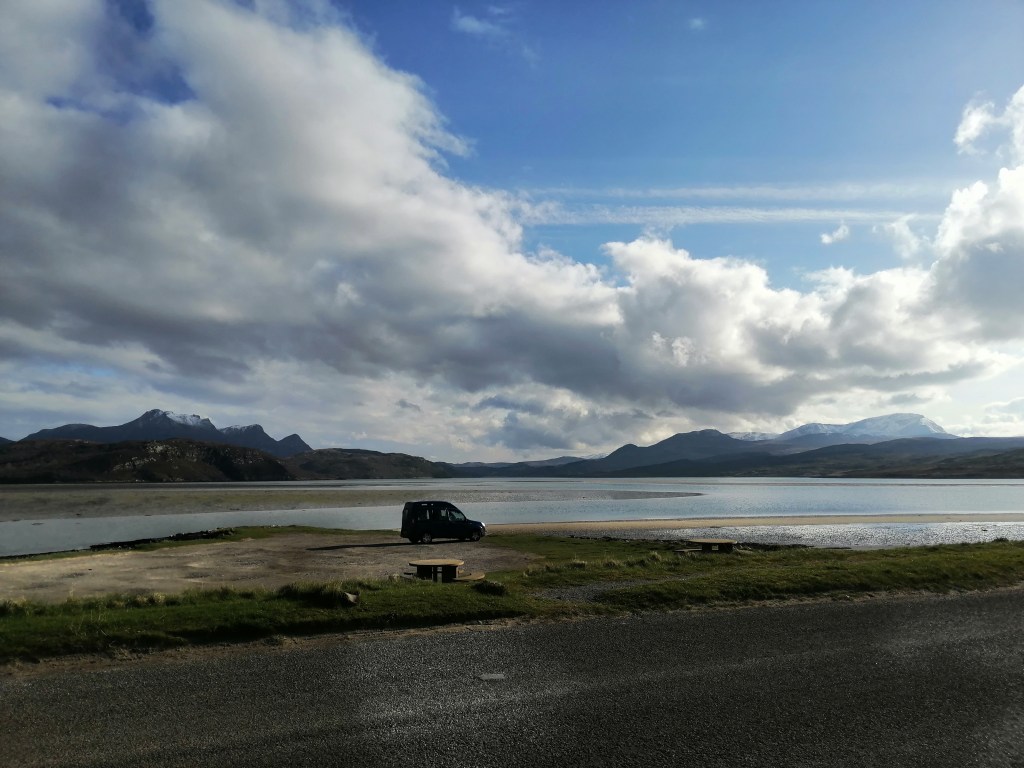
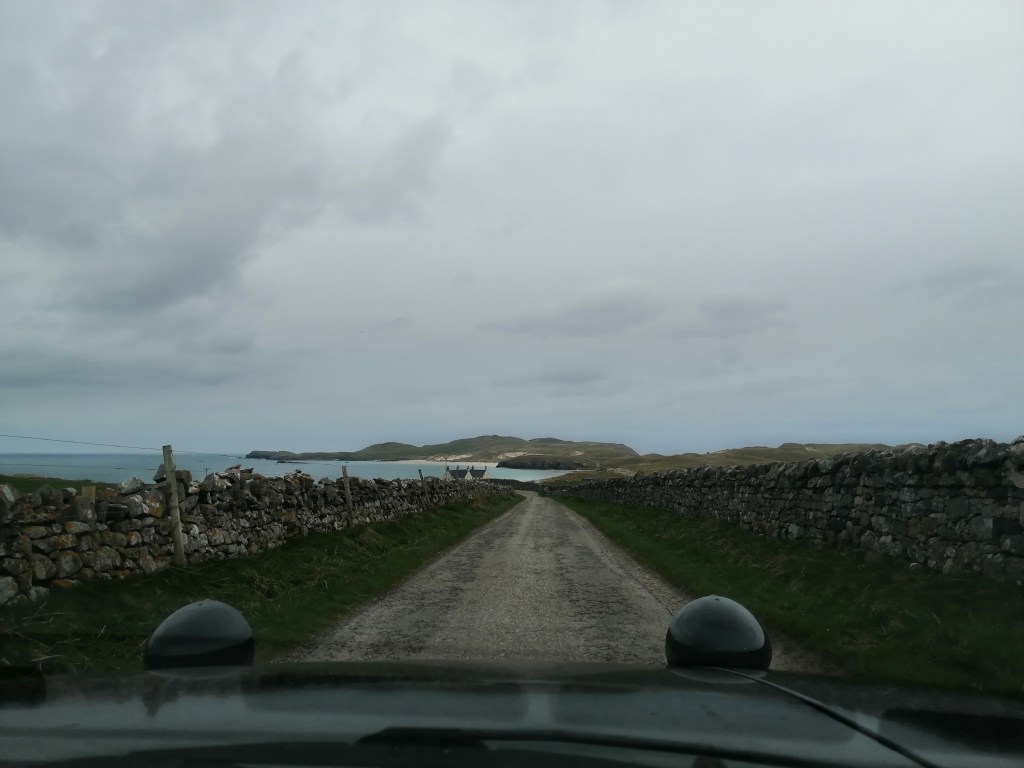
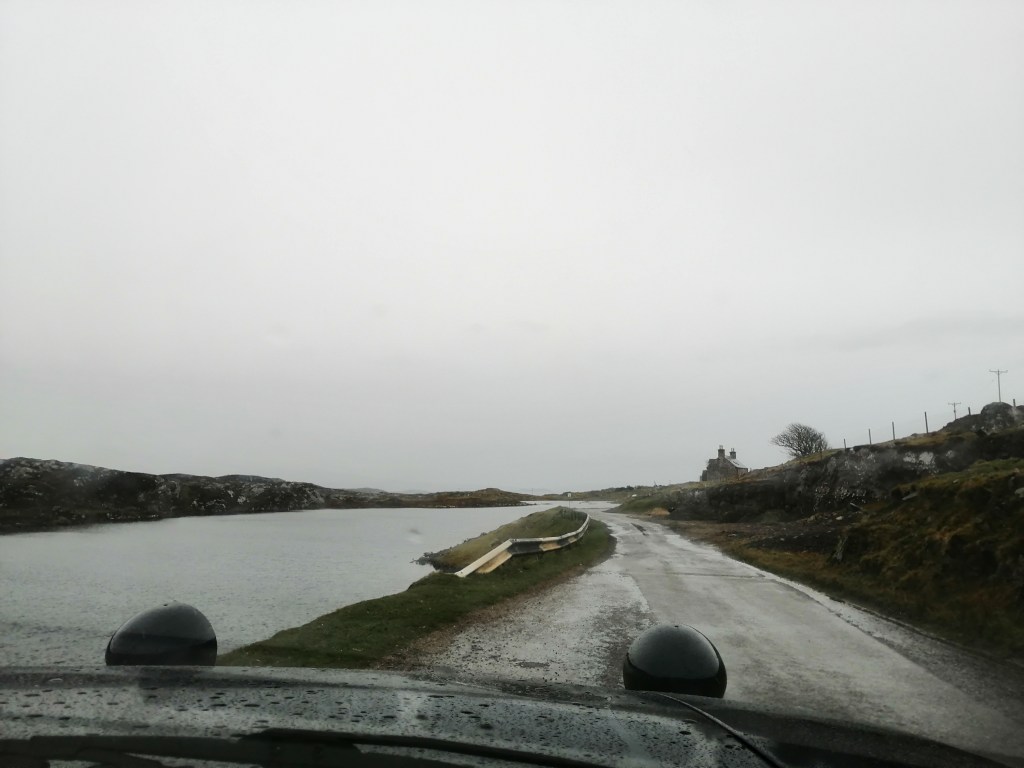
I decide to make my way to Tongue where I will spend the night. The road to Tongue rapidly turns into a beautiful single track road. Very little traffic. Just bliss.

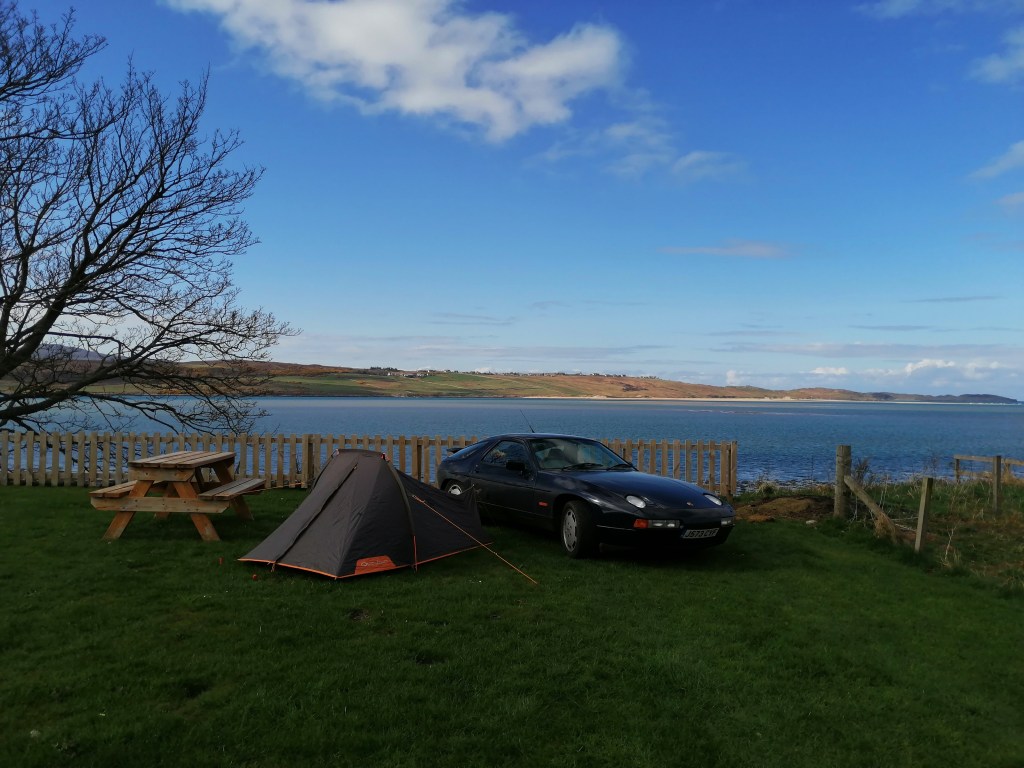
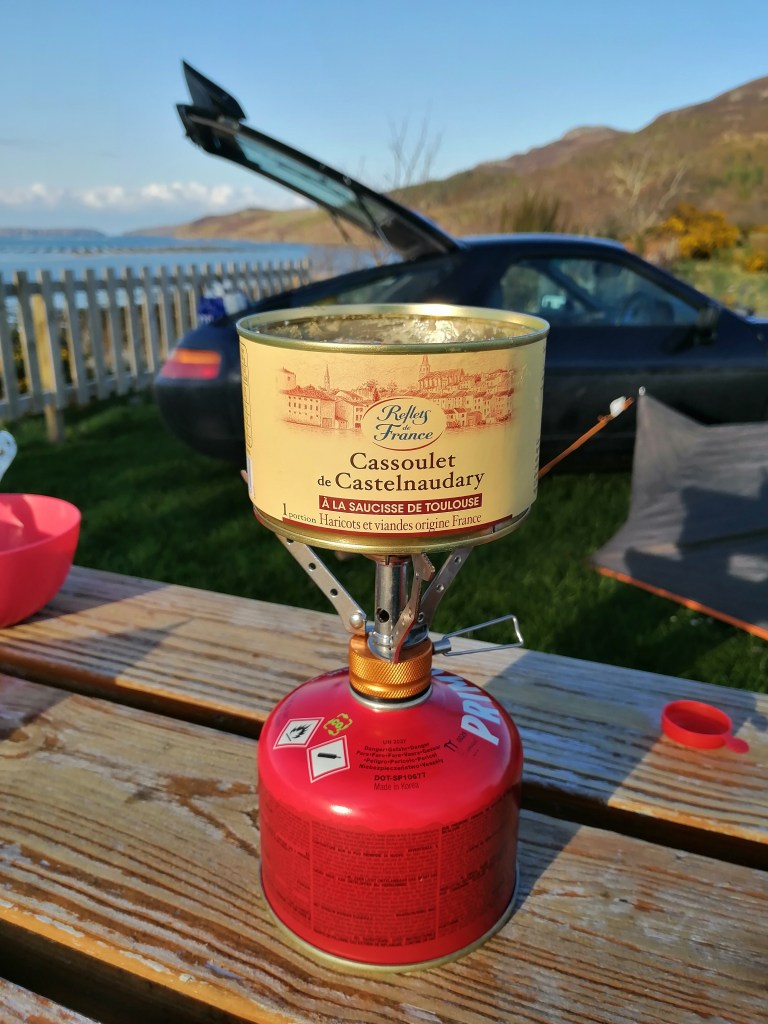
Time to refuel and settle down. Unfortunately, I realise I forgot to take a pan with me. Tea will taste of cassoulet tomorrow at breakfast…

27th April: Tongue to Achmelvich via Durness

The night was cold and the weather is menacing, but the 928 and I are ready to explore more!

Quite a milestone!!!

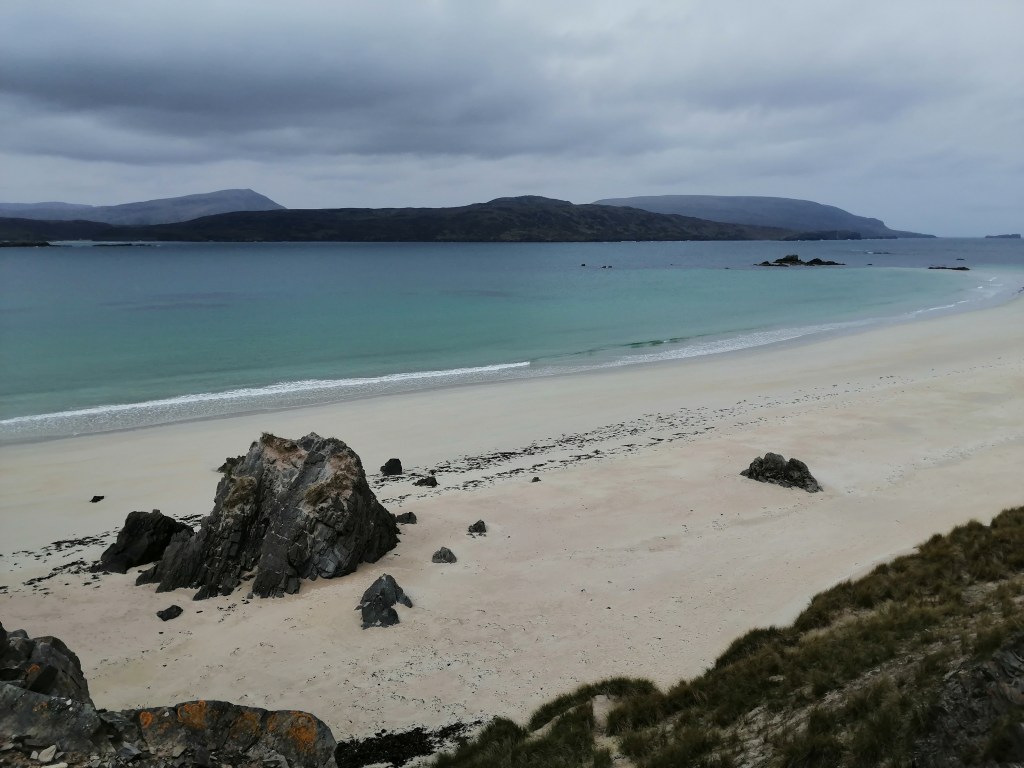
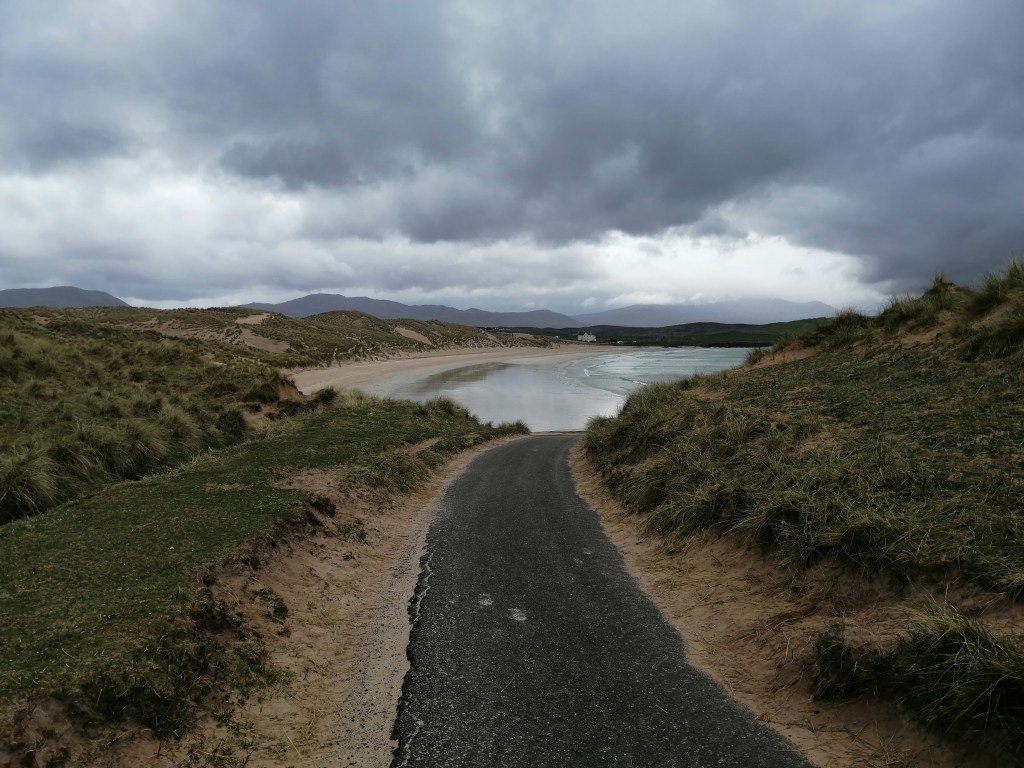
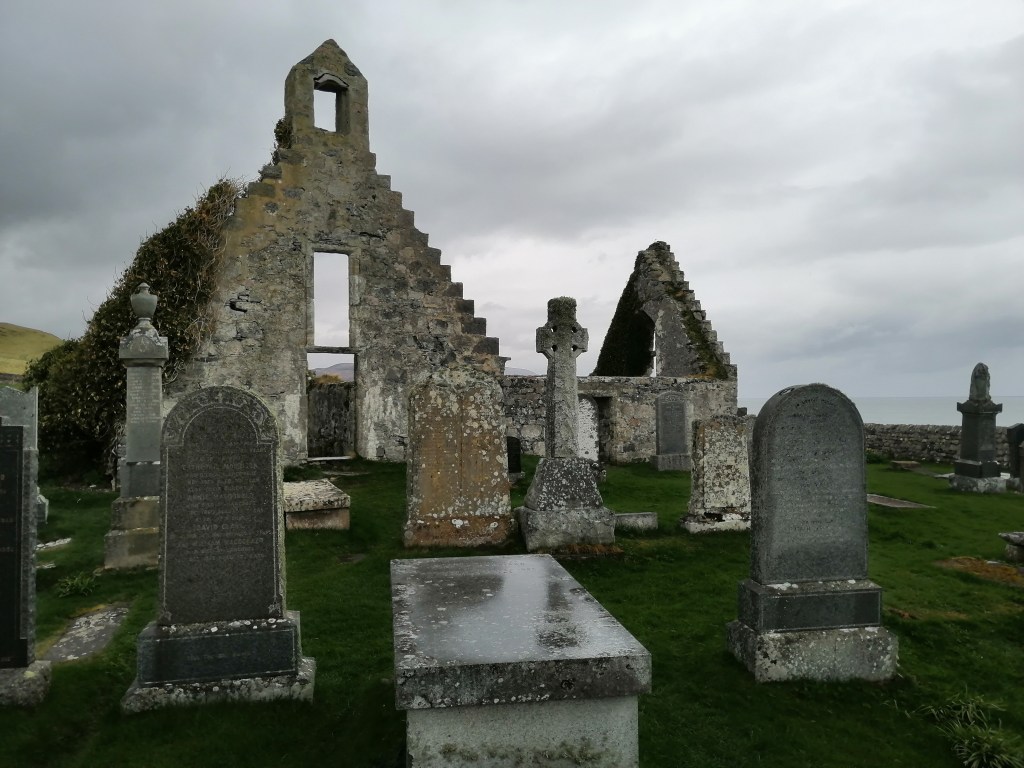
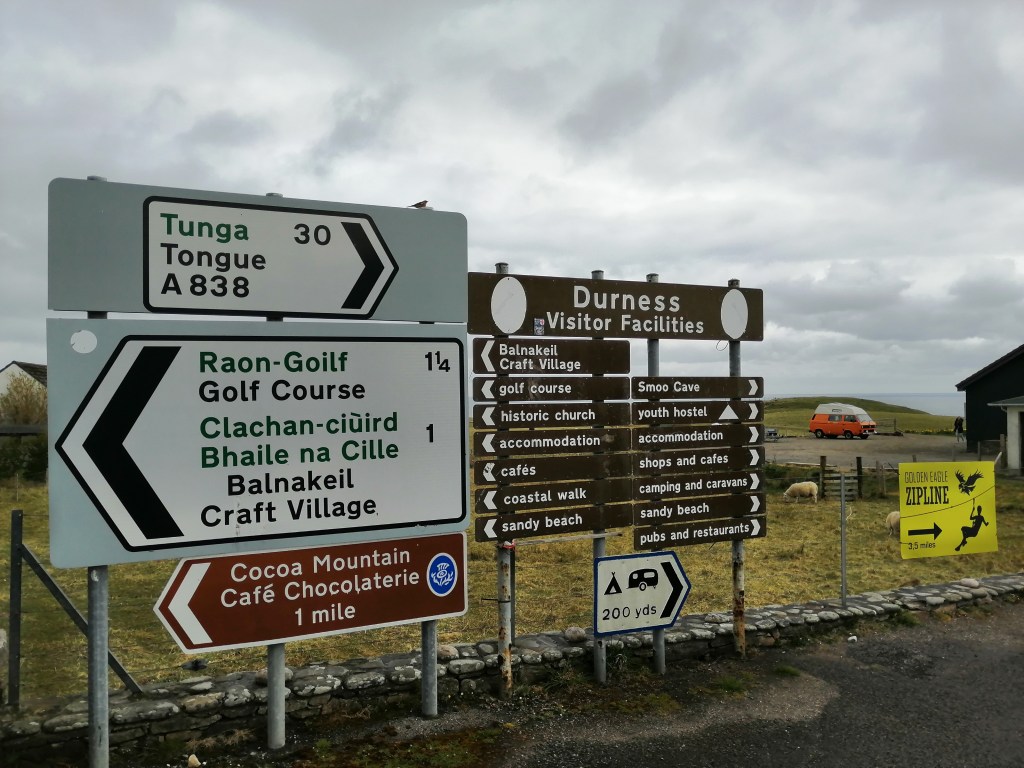
Balnakeil Beach in Durness is spectacular. I really enjoyed a stop at Cocoa Mountain too, probably the northernmost Chocolatier in the UK!

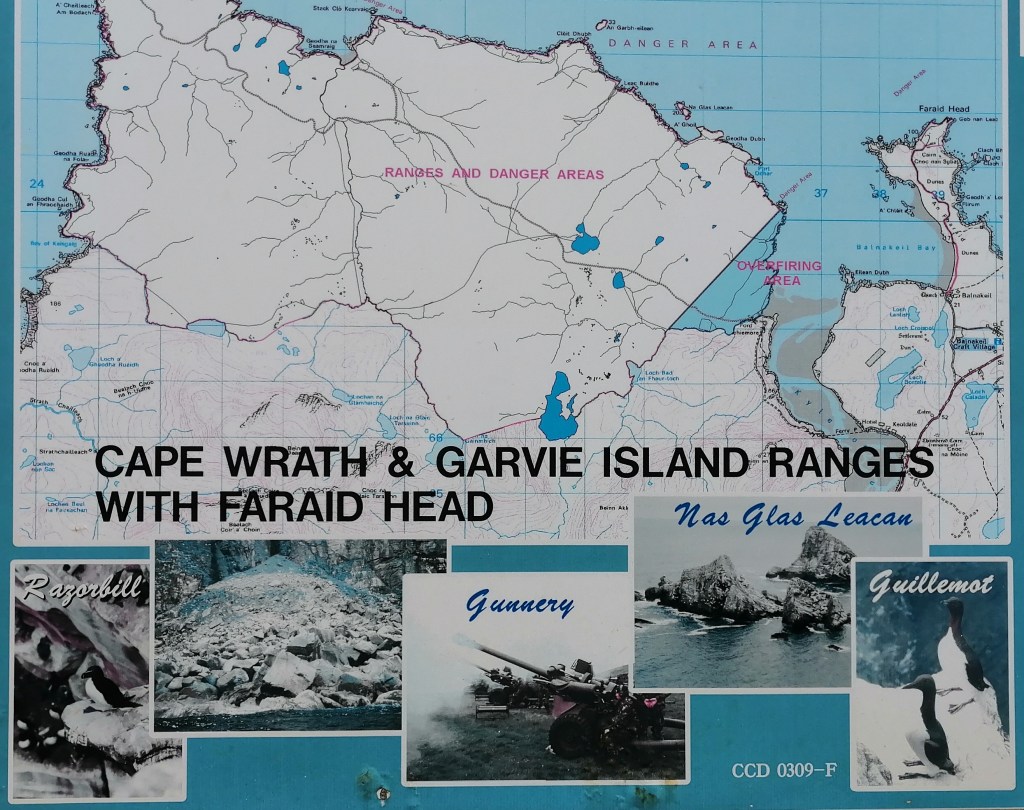
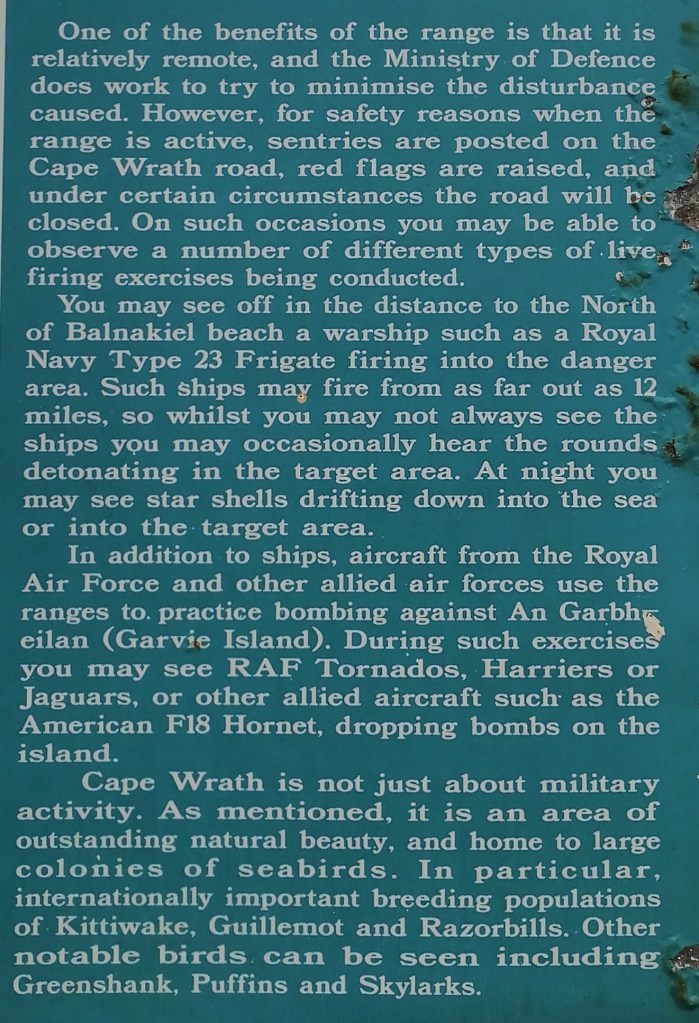
The signs introducing the Cape Wrath Bombardment Range include sentences and pictures that I would have never thought I would find in close proximity, including “area of outstanding beauty” and “you may see RAF Tornadoes dropping bombs”, or “Razorbill” and “Gunnery”. Very interesting though!

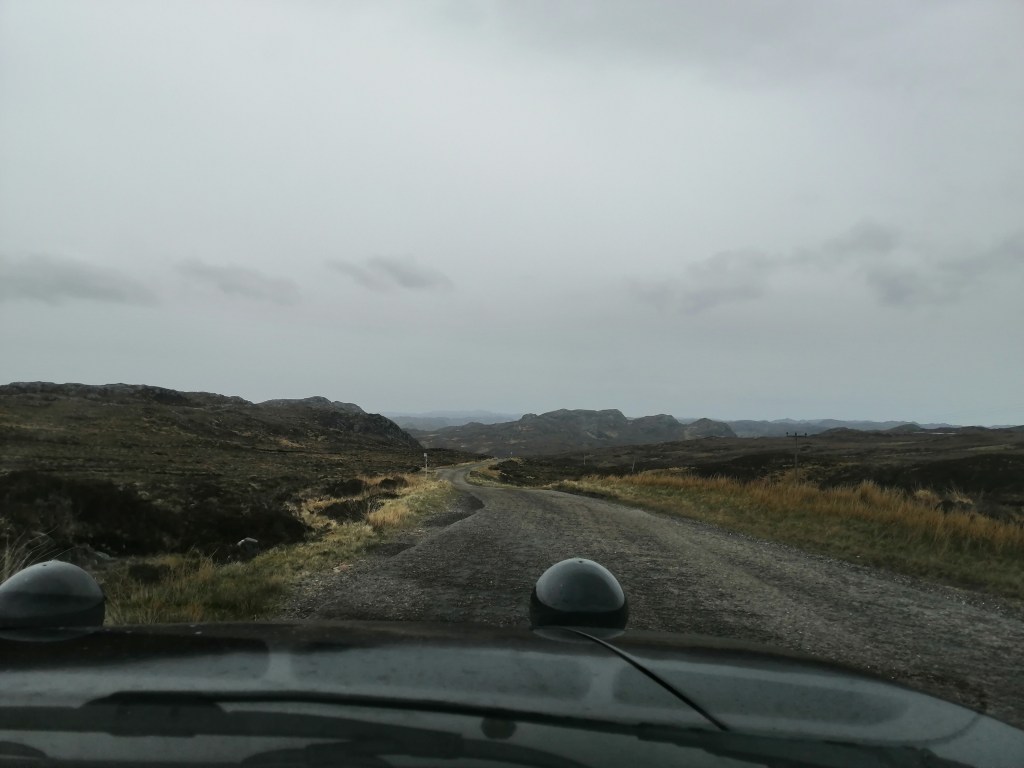
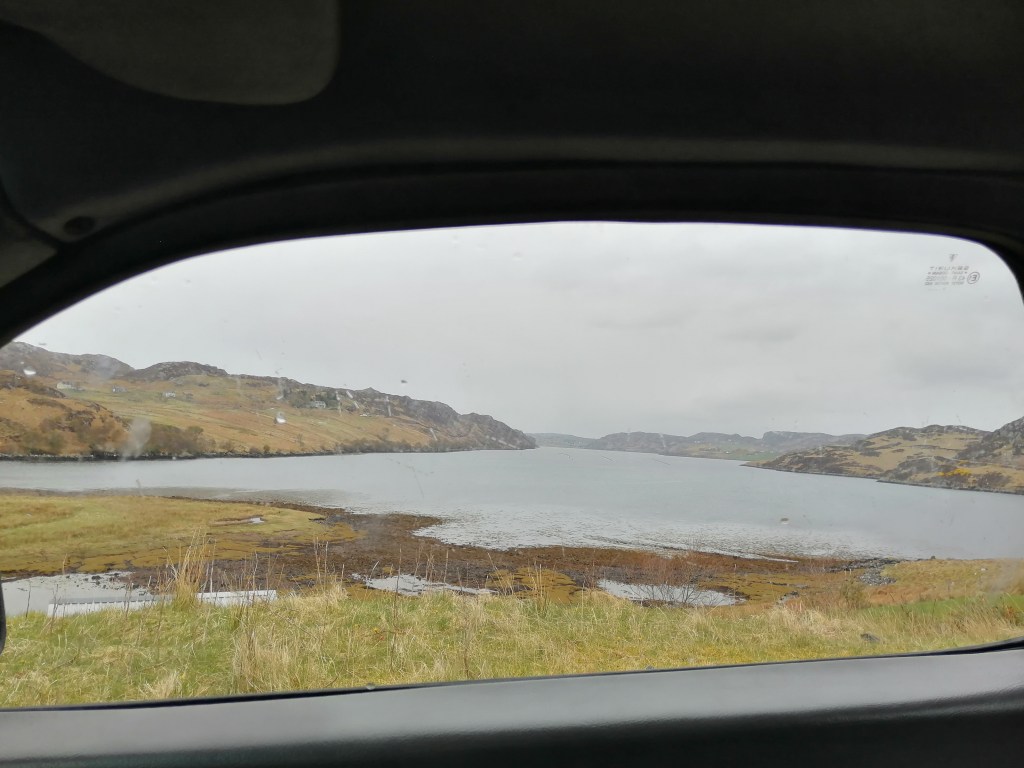
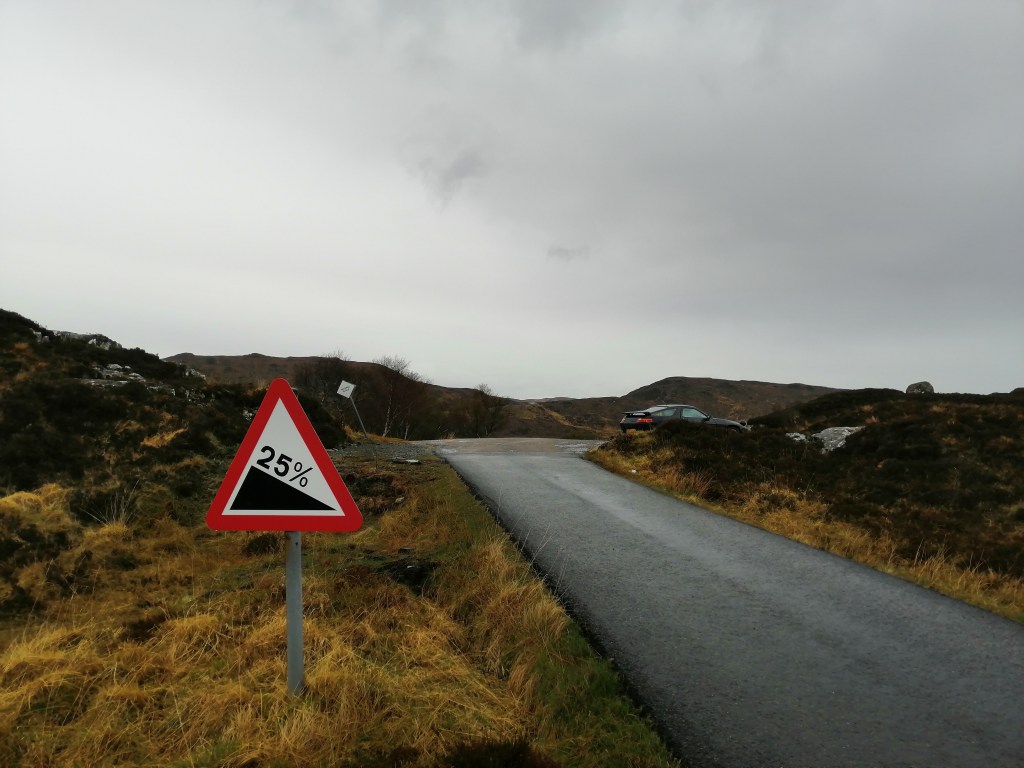
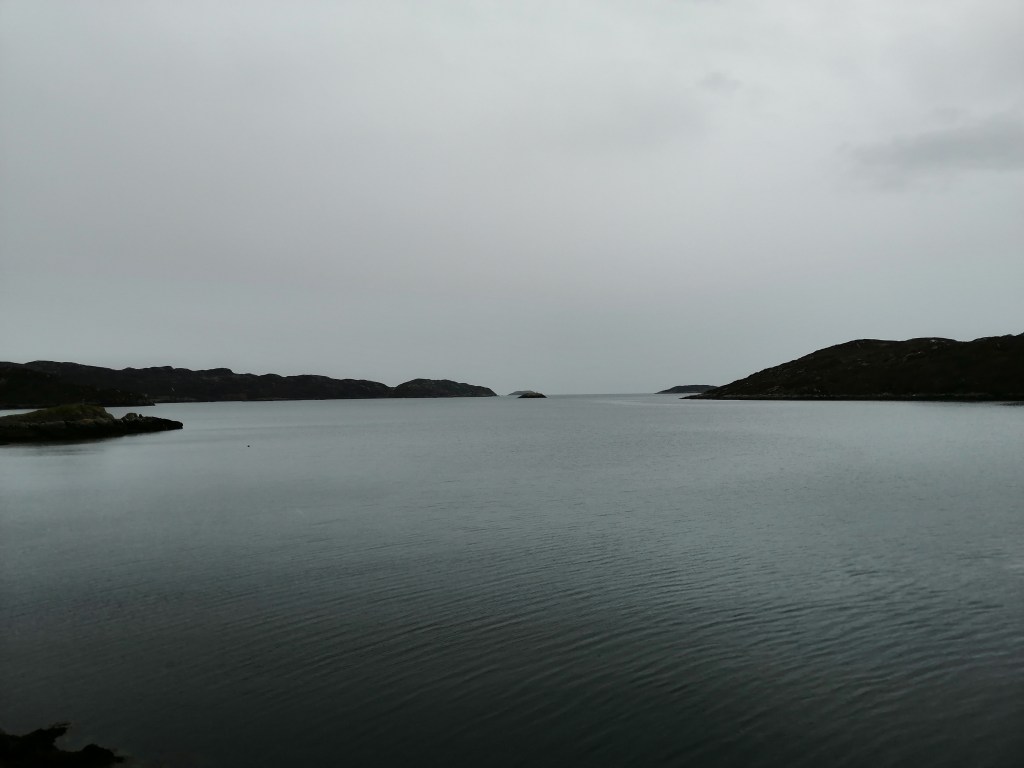
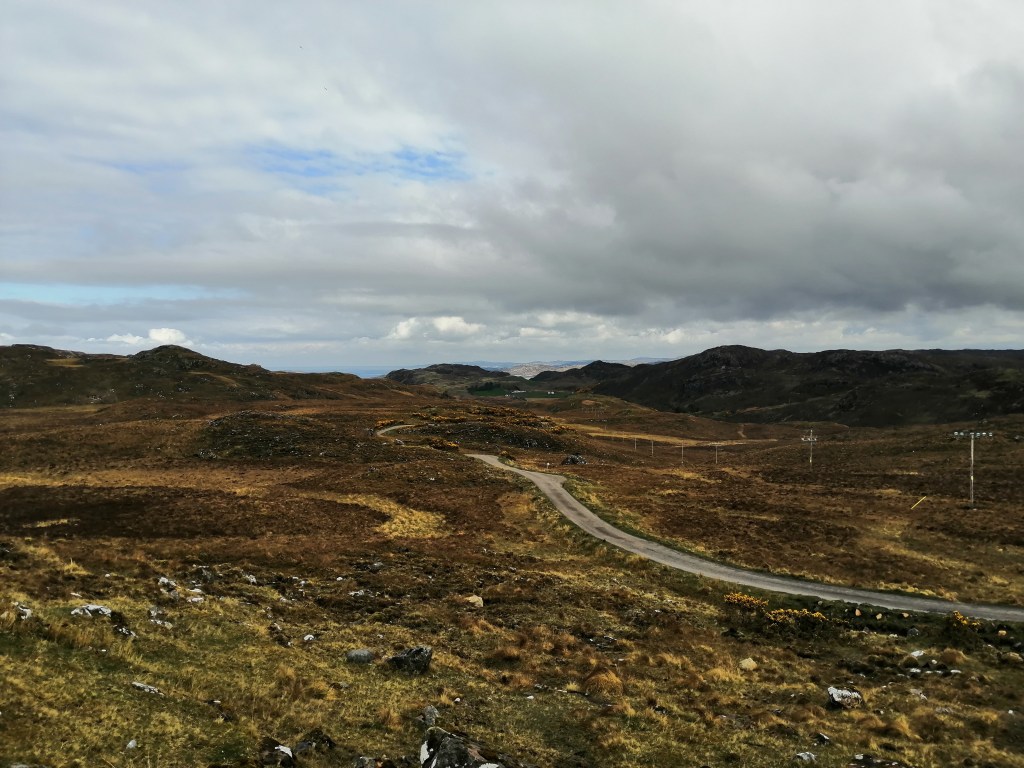
The drive to Lochinver is relatively wet but the roads are absolutely stunning, with barely any traffic. The tiny single track along the coast is hard work though, incredibly sinuous and steep. That was very tiring. But there is reward in Lochinver…

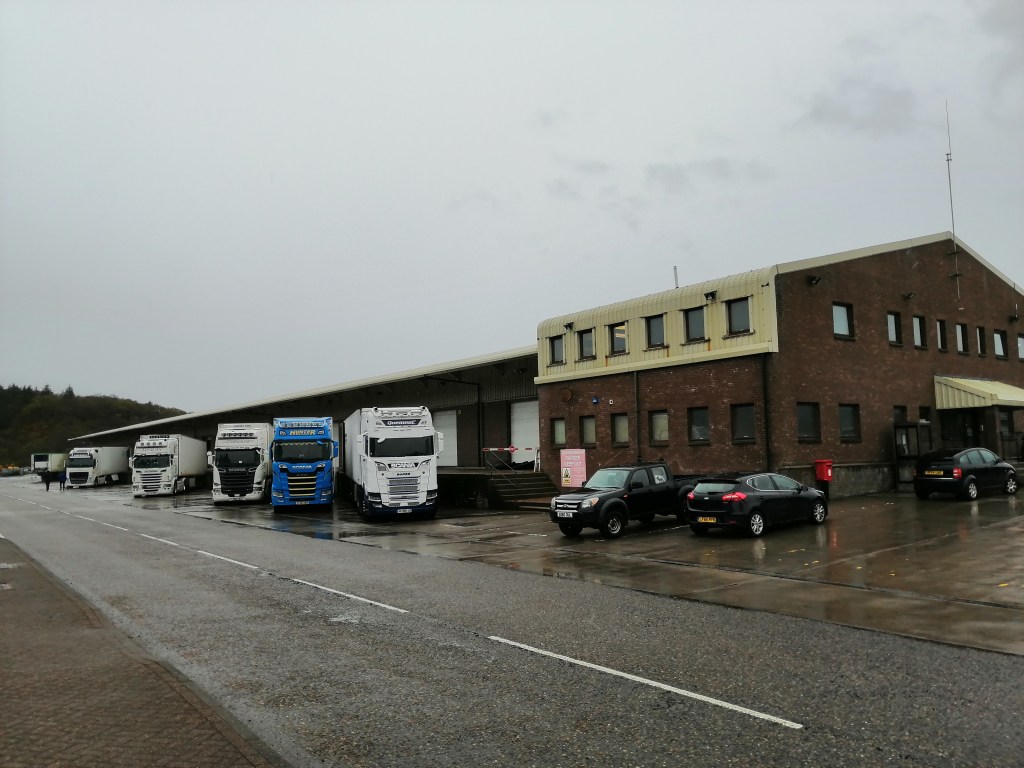
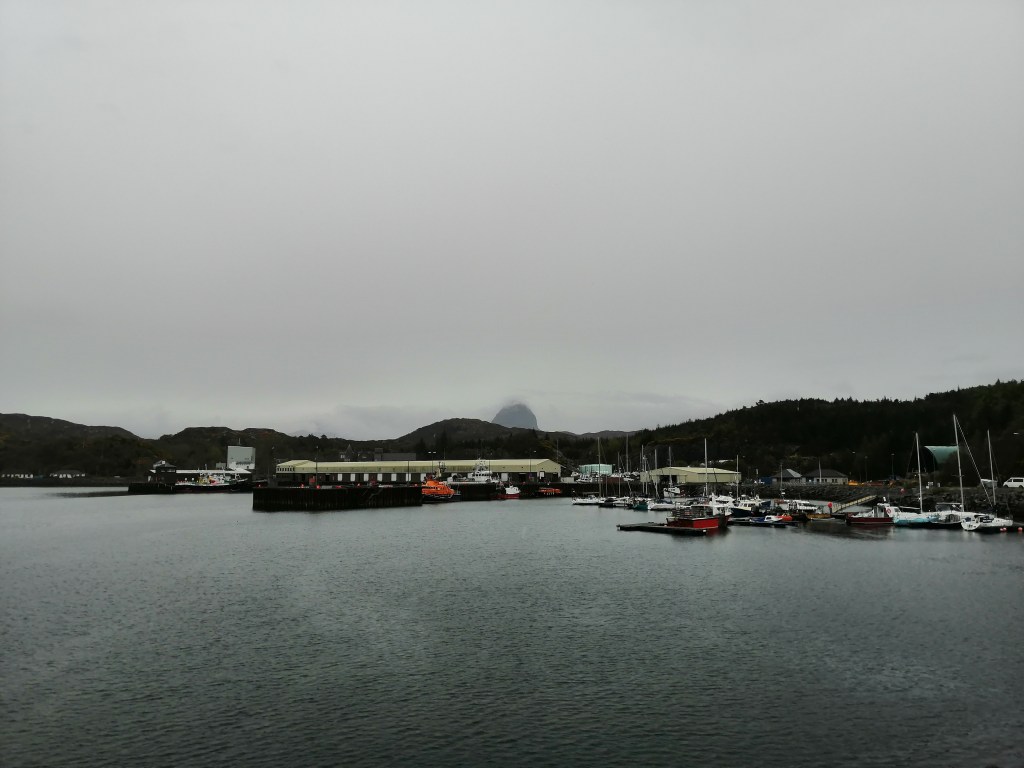
In Lochinver, Spanish and French lorries are waiting to load fish and seafood, but fortunately some of the catch makes it to the local restaurants, and I get a chance to sample it. I feel it is well deserved after the sandwiches and nibbles of the last couple of days.

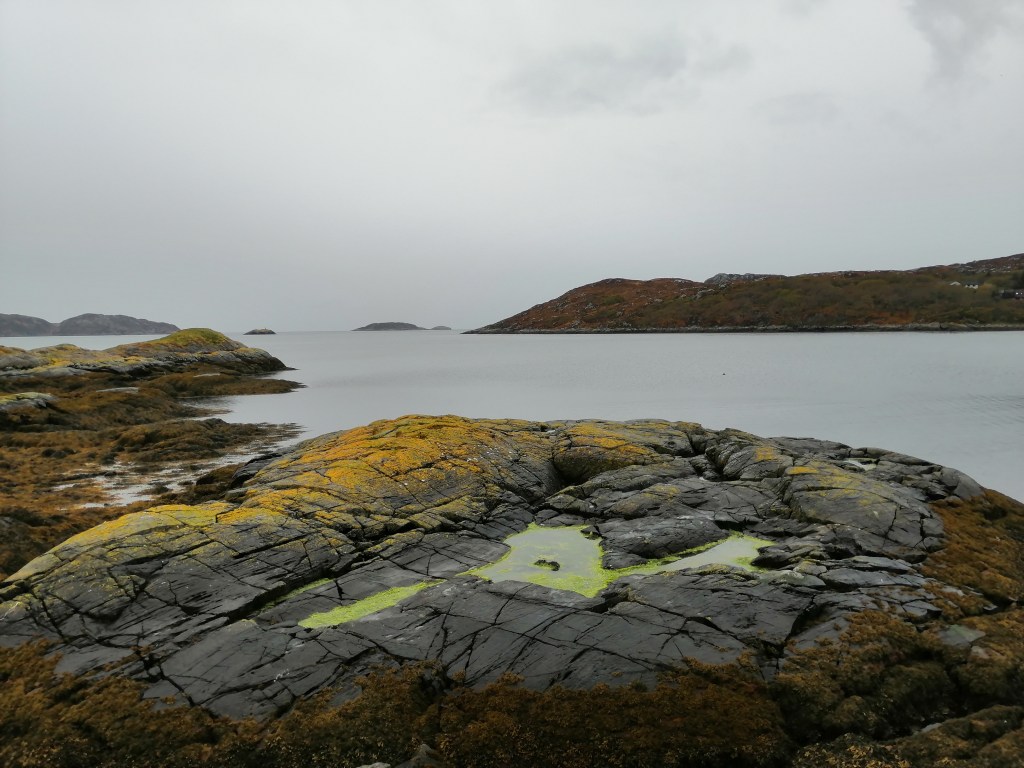
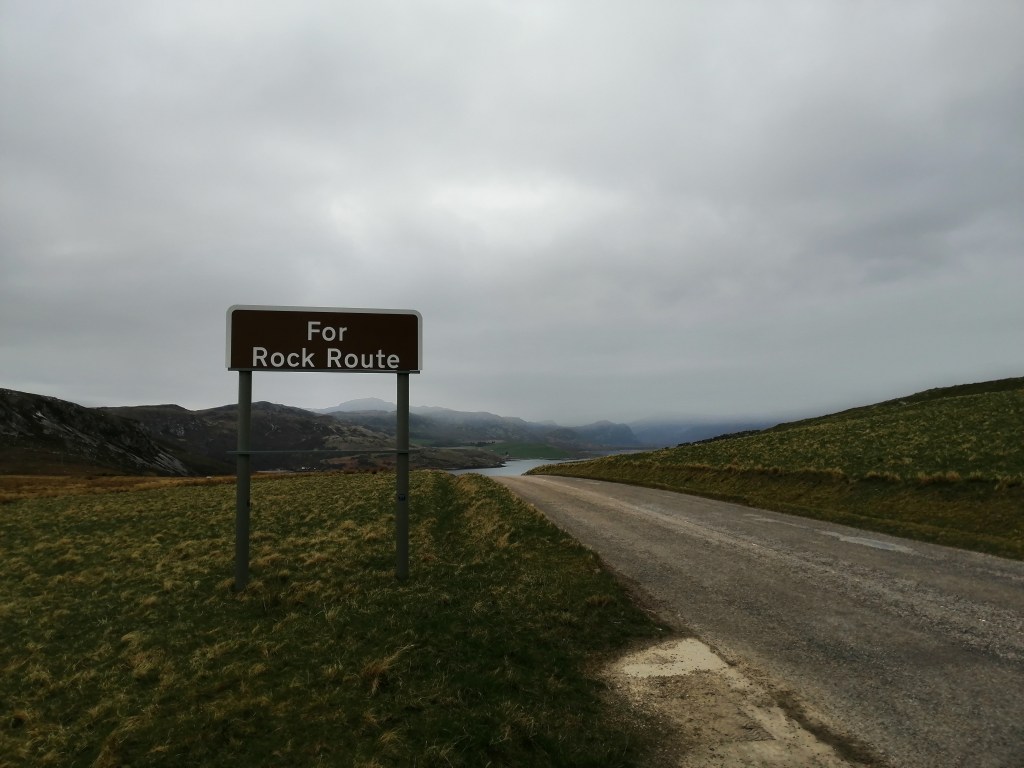
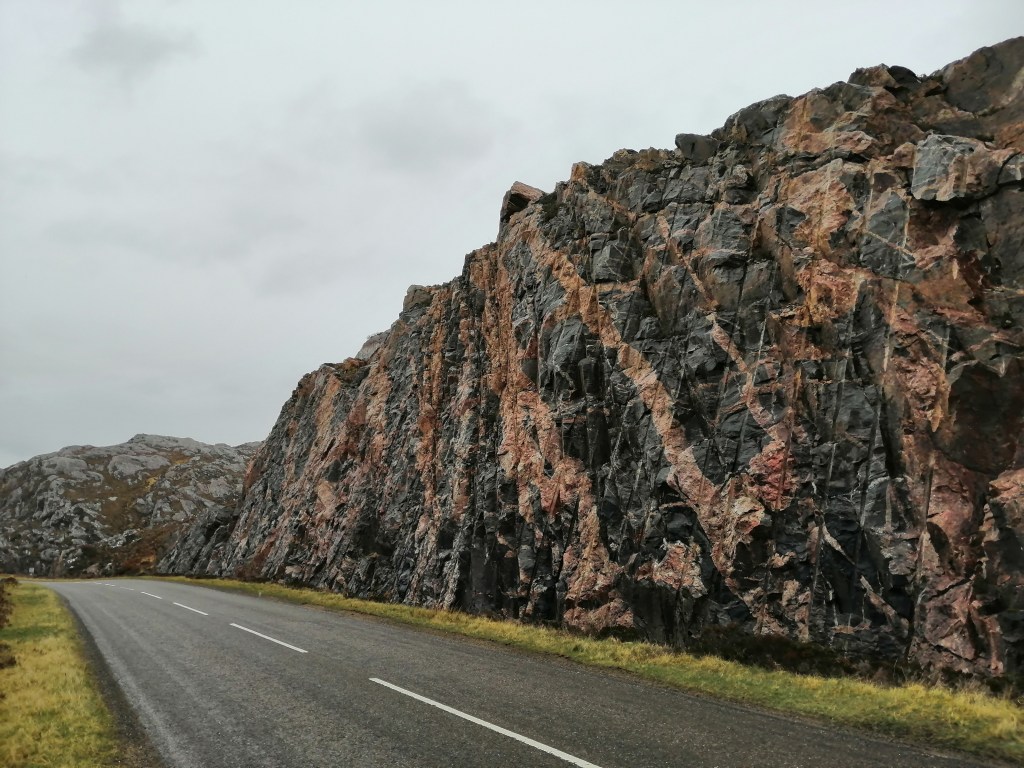
For the geologists and geomorphologists, some beautiful features along the “Rock Route”: seepage channels with incredible flights of terraces, and some crazy things happening to the poor 2 billion-year old Lewisian gneiss.

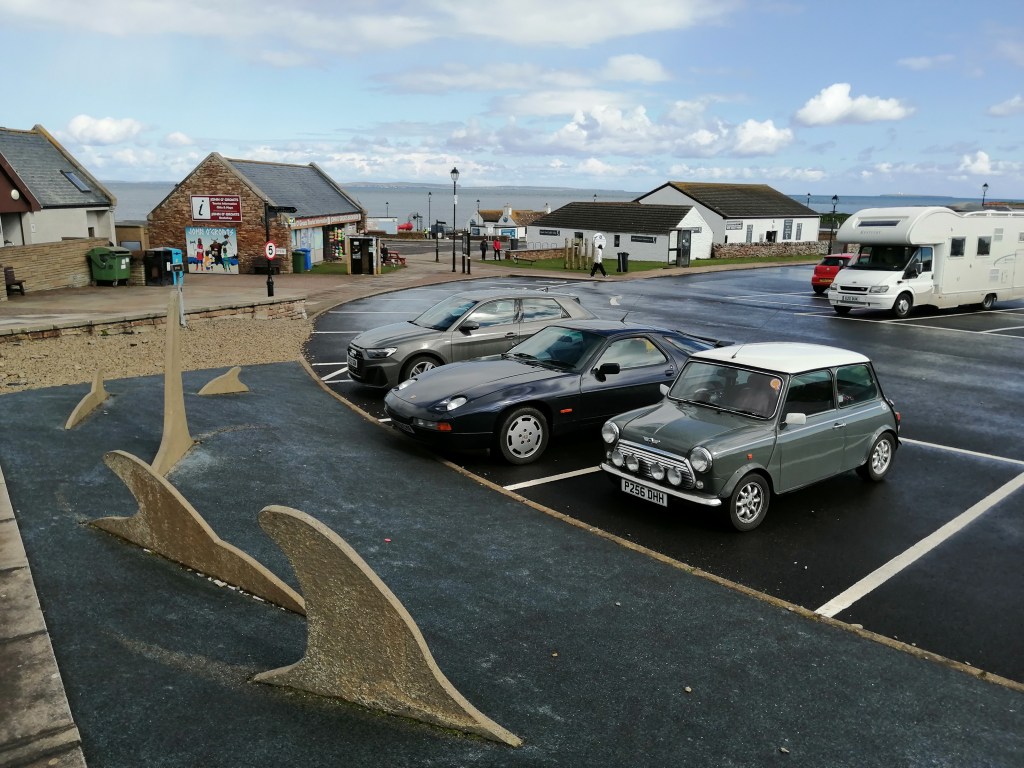
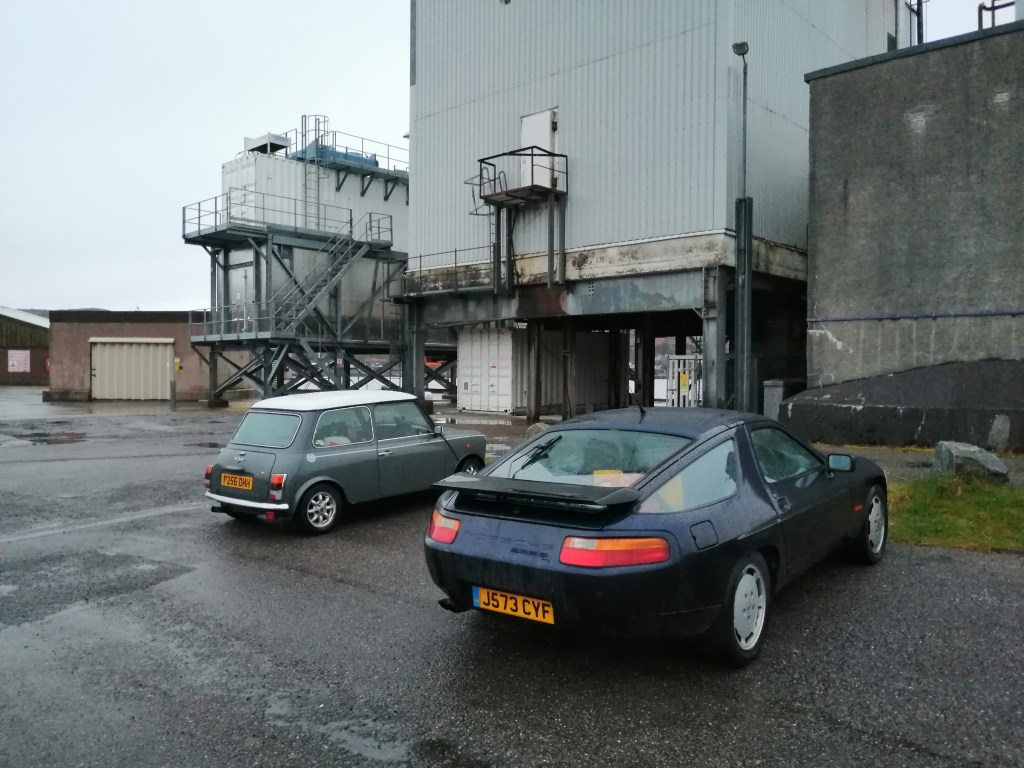
Deja vu in Lochinver: the 928 in a conversation with the Mini we met in John o’Groats!
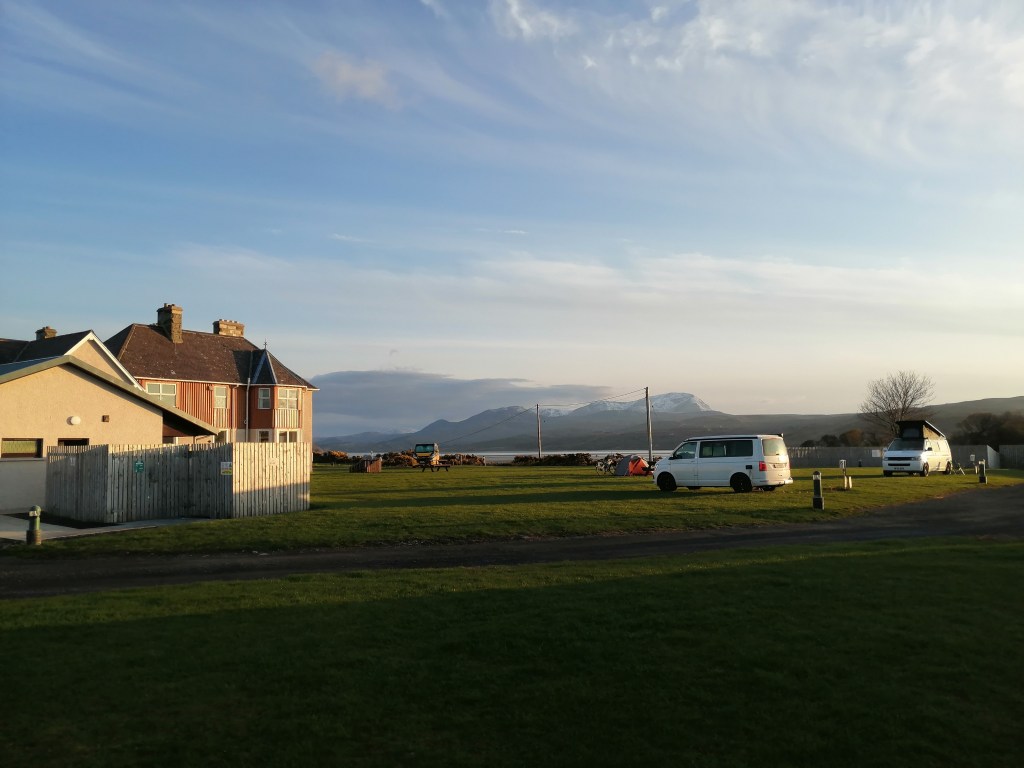
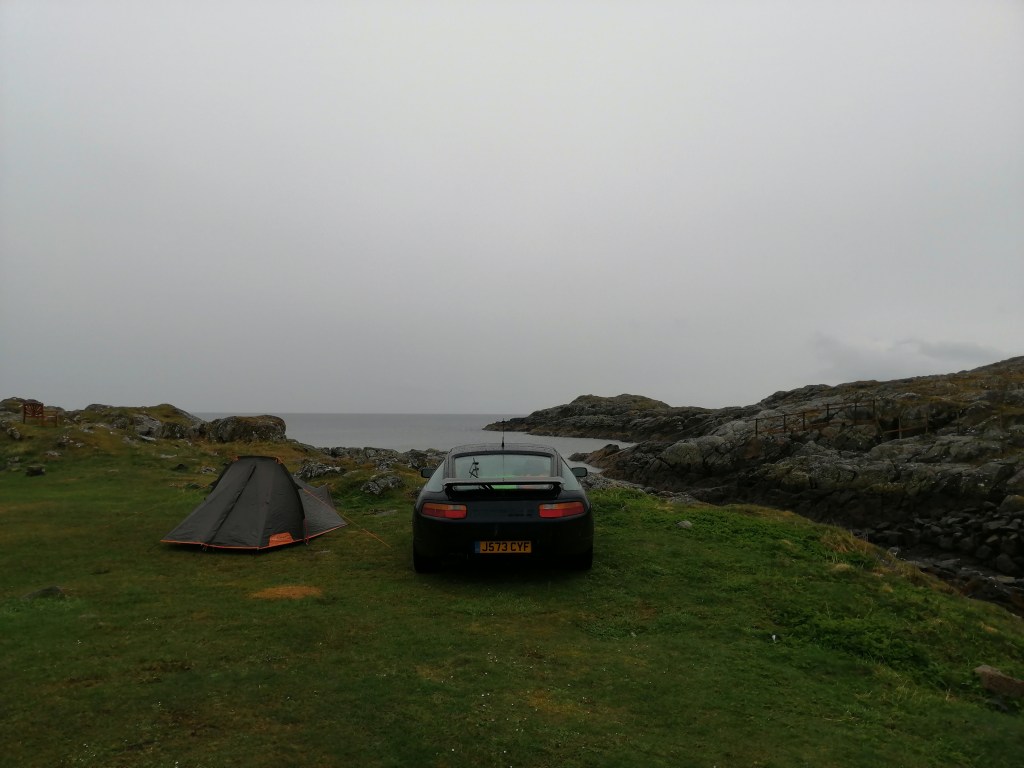
Spot for the night at Achmelvich campsite

28th April: going home, but not without climbing Stac Pollaidh

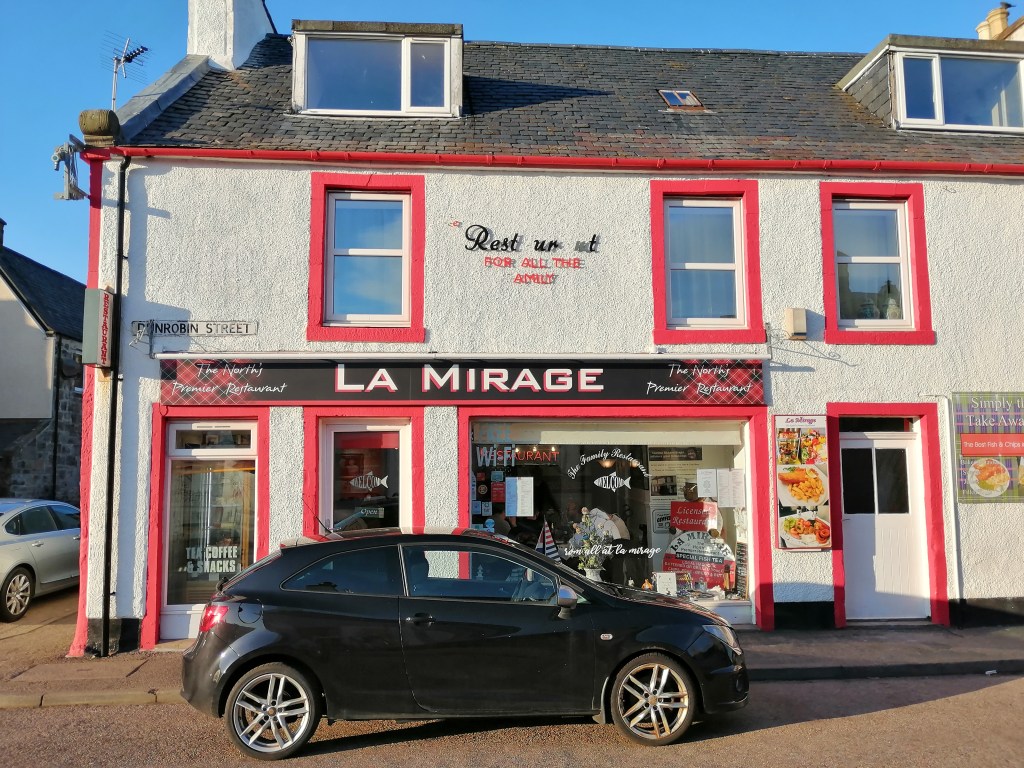
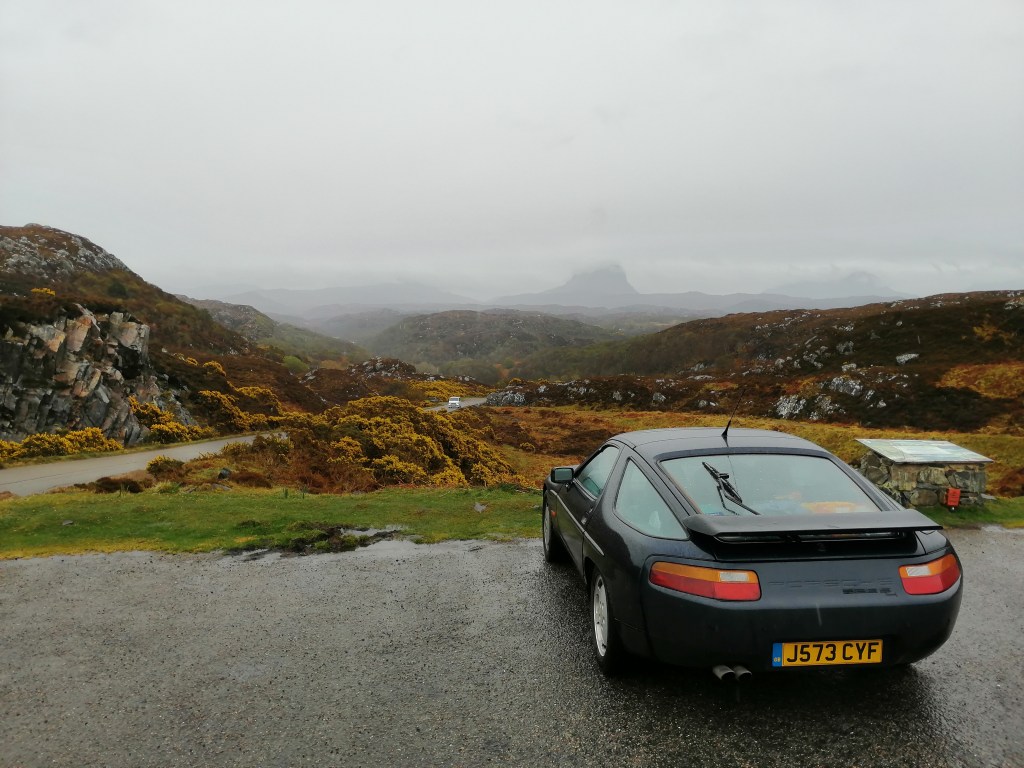
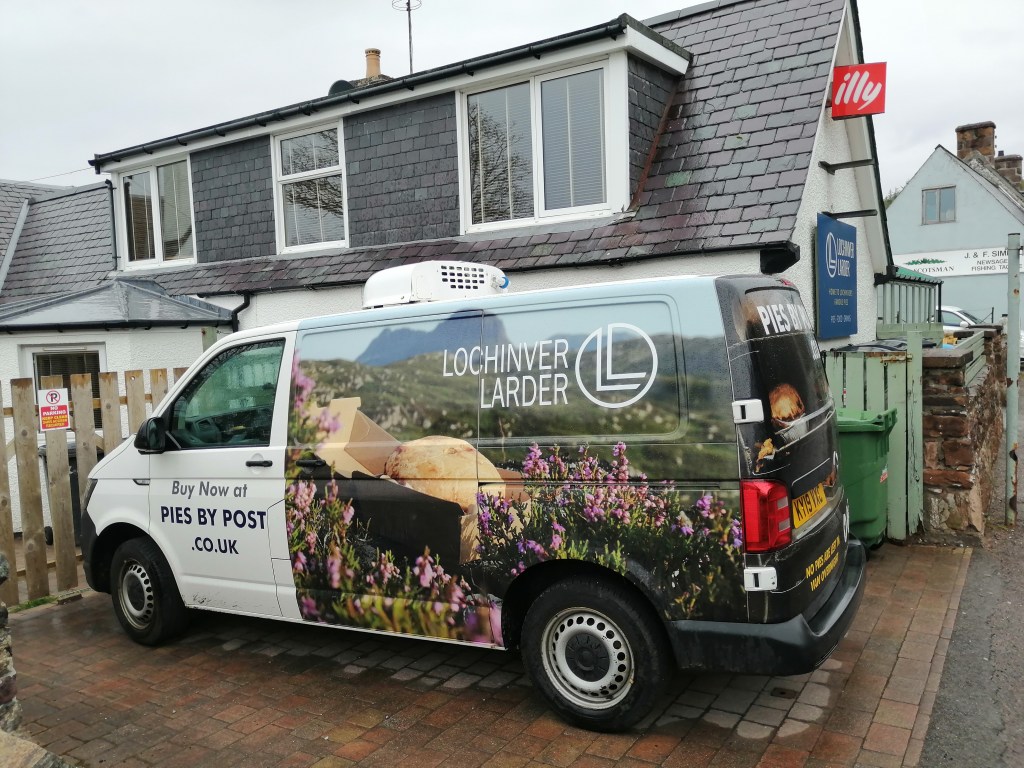
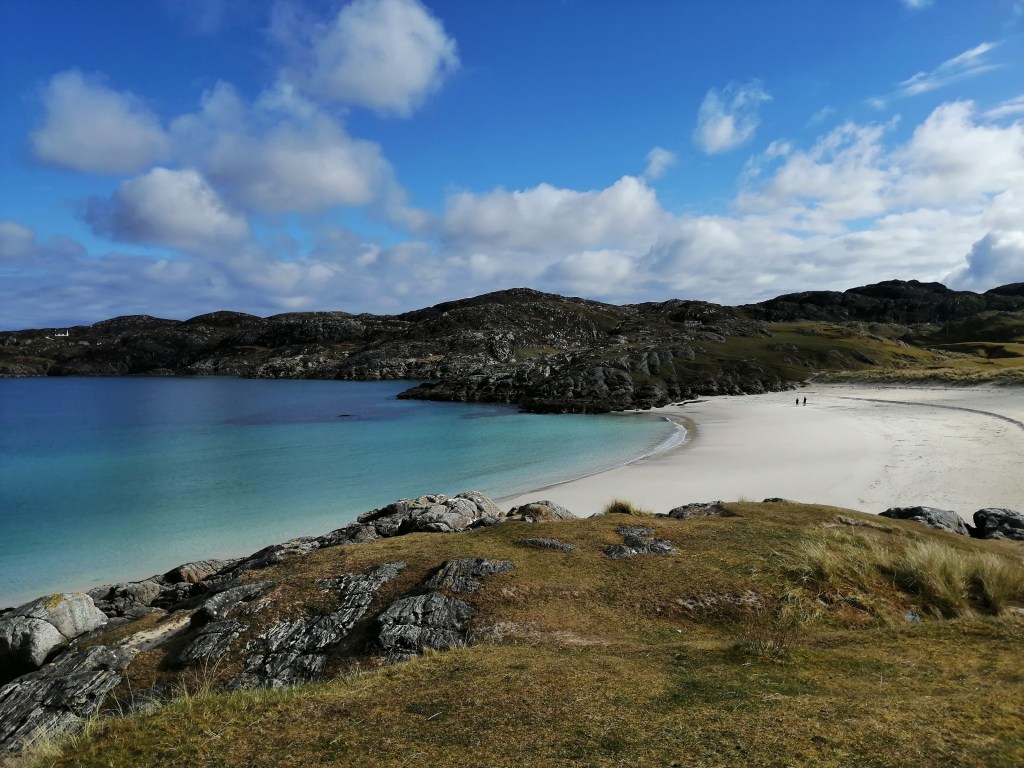
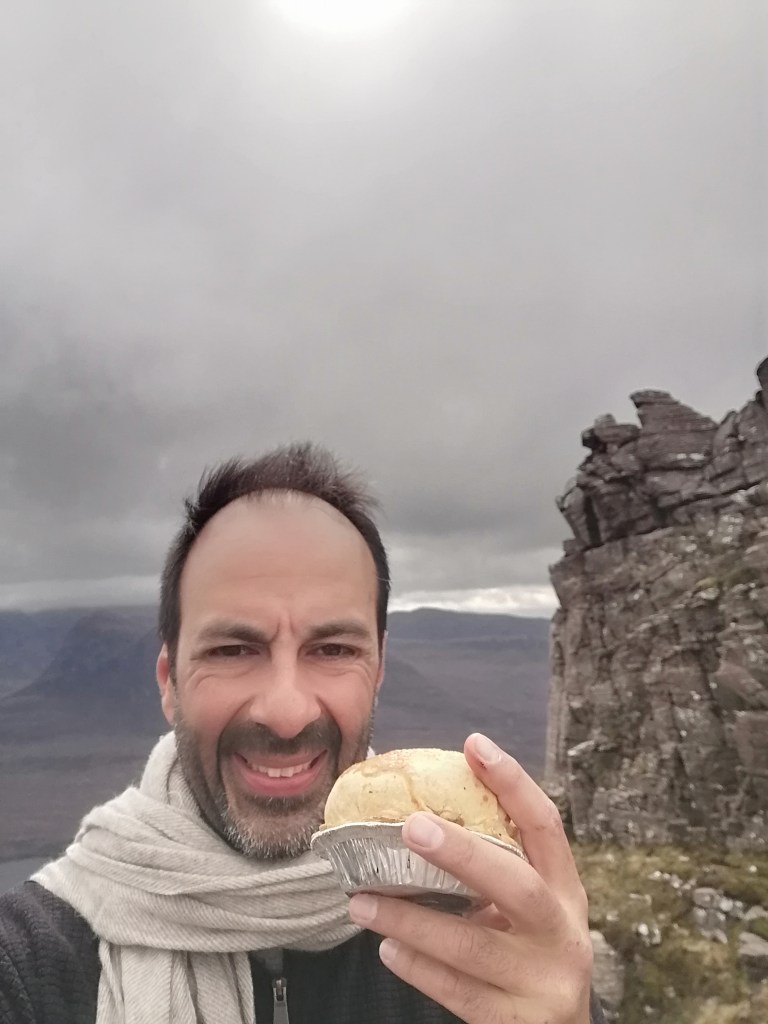
After a breakfast on Achmelvich beach, I drive to Lochinver to stock on pies from the Lochinver Larder. These are by far the best pies I have ever had: https://www.lochinverlarder.com/. And then I take the coastal road to Stac Pollaidh. I absolutely love this area.

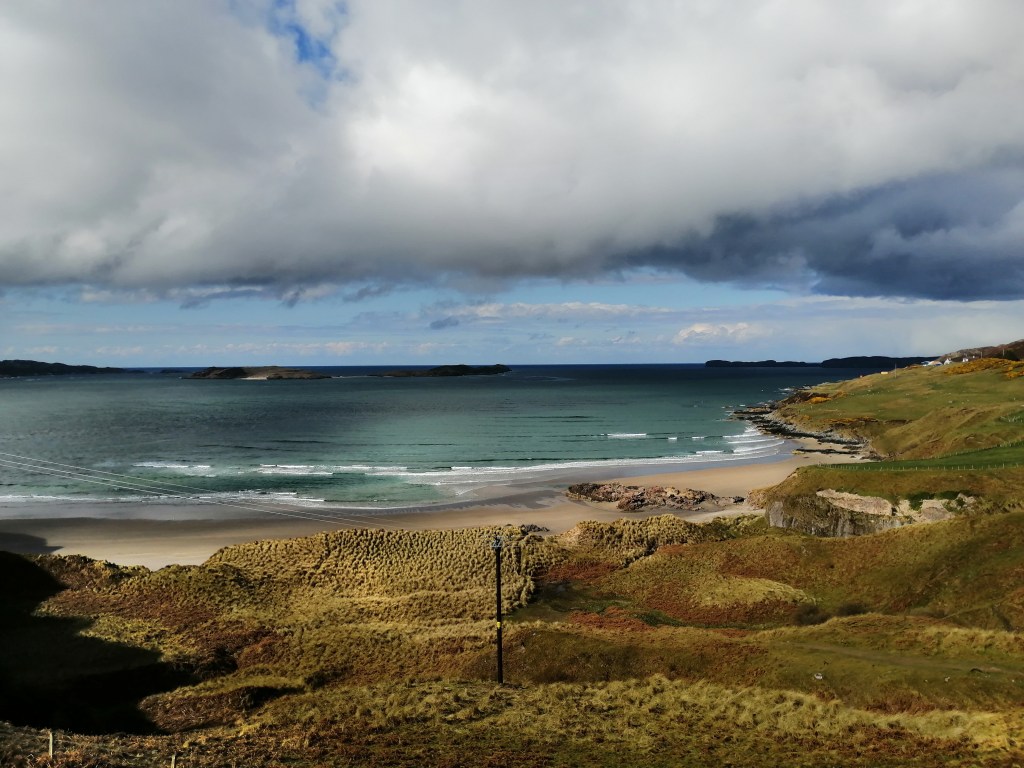
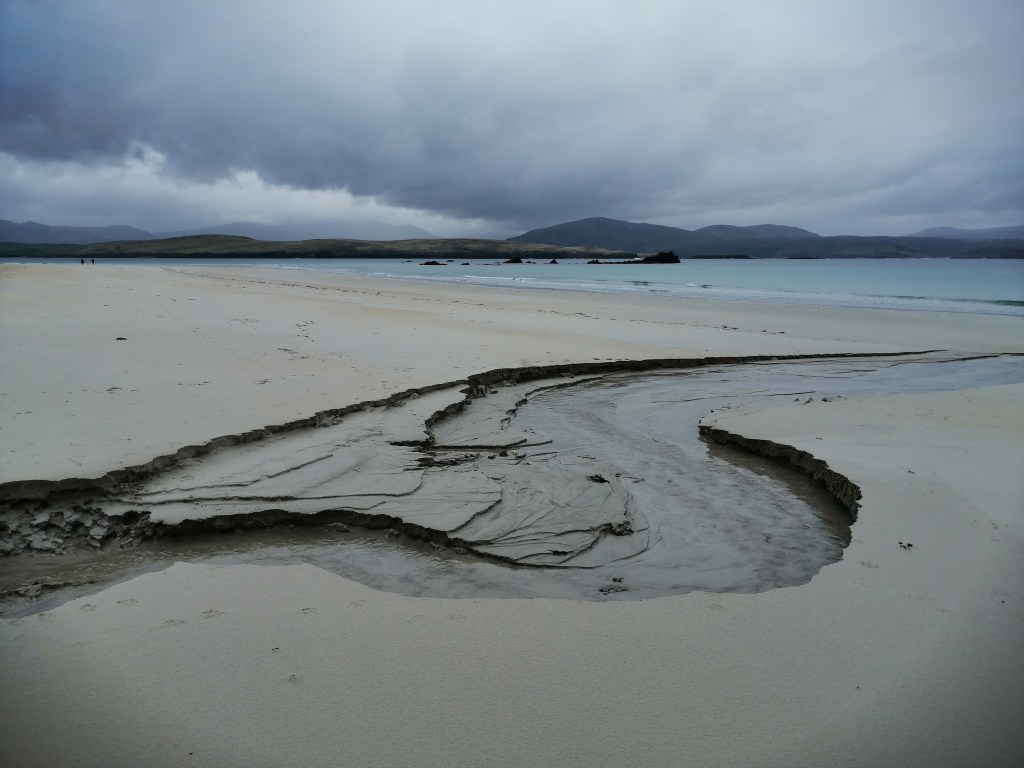
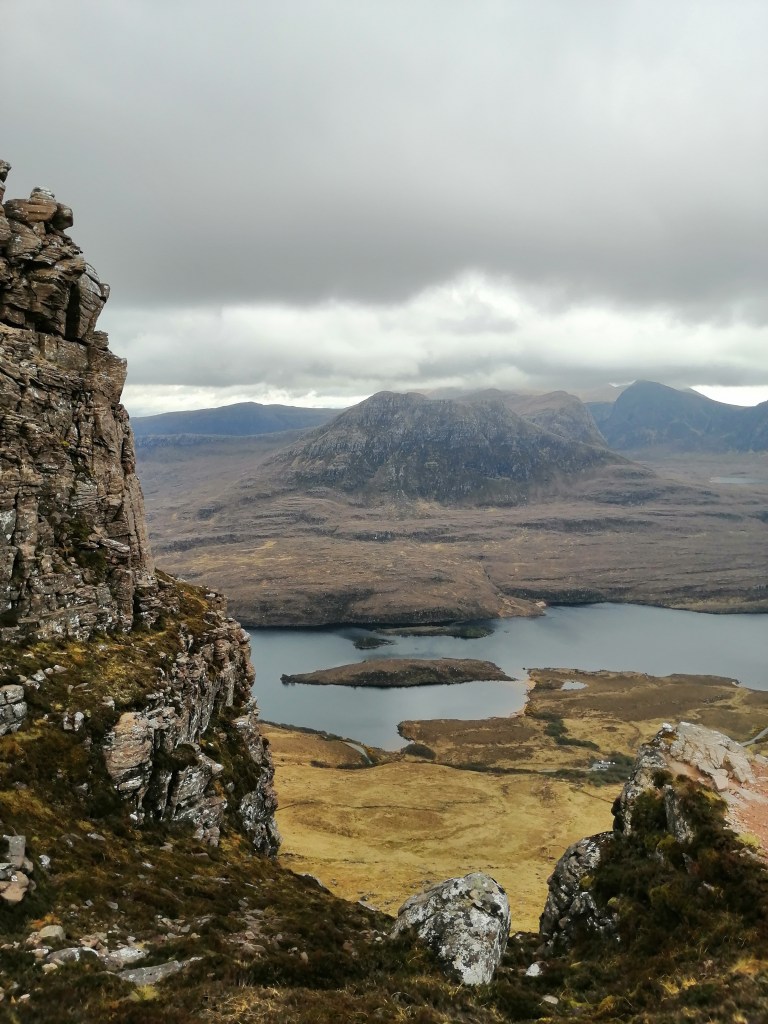
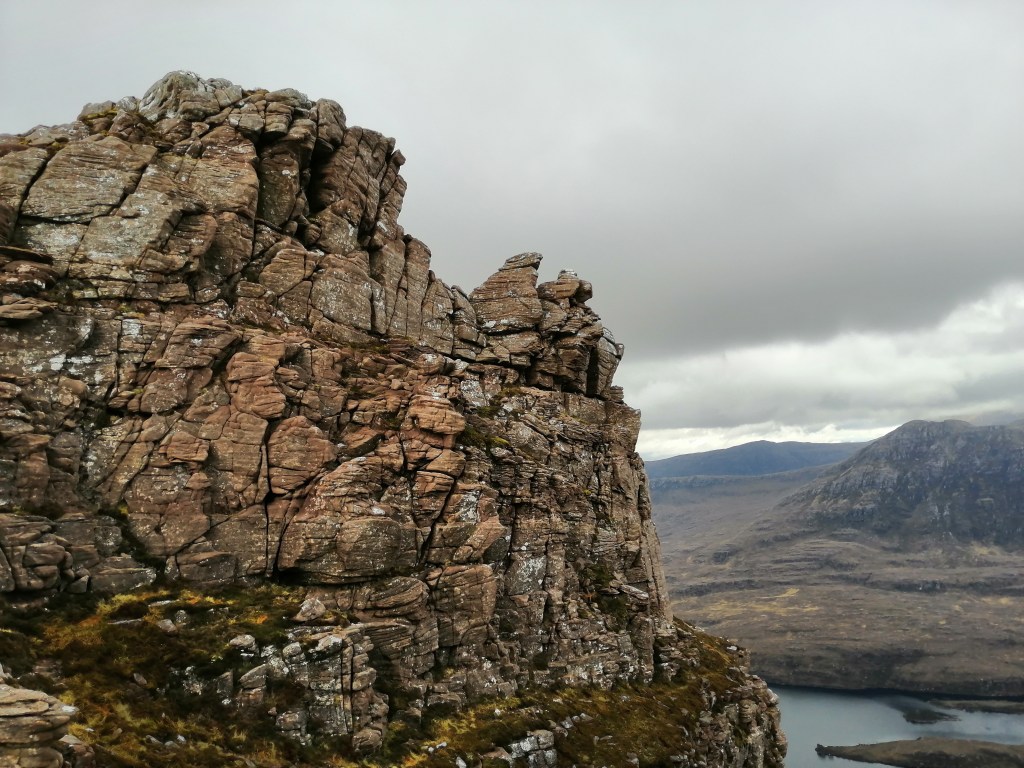
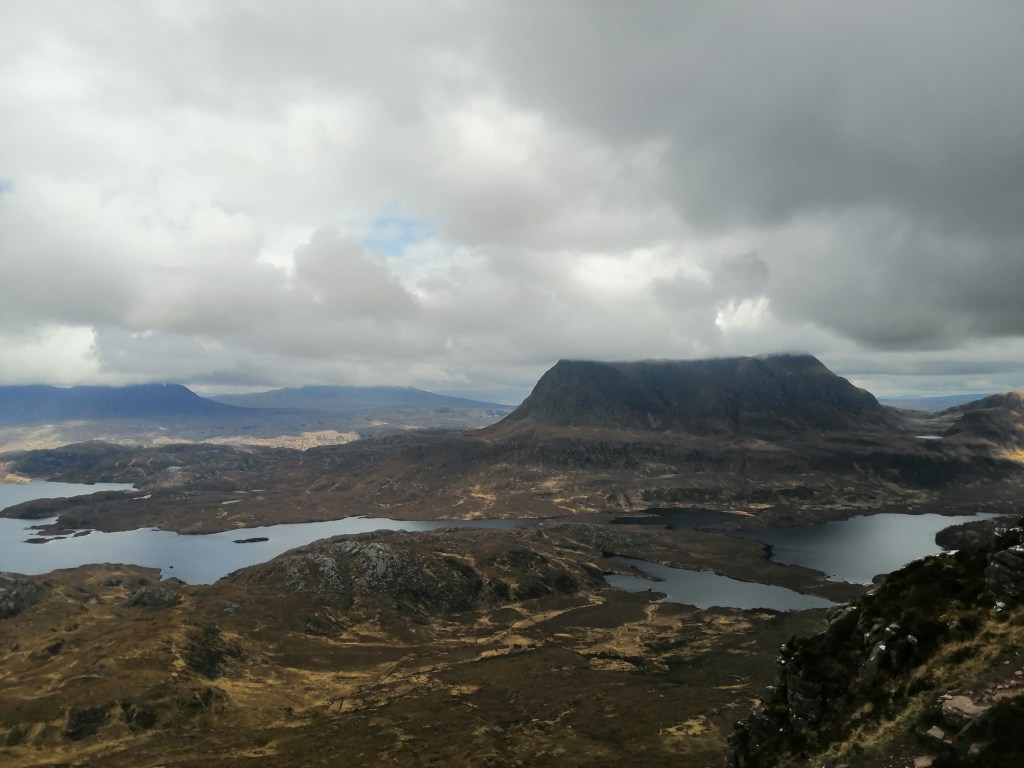
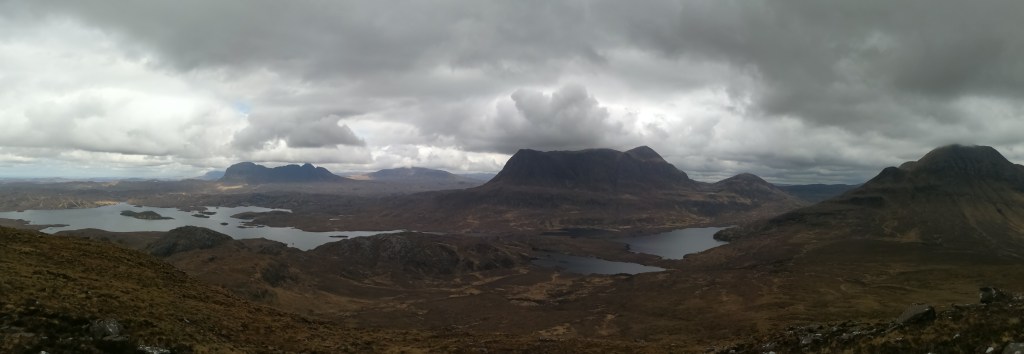
The climb to Stac Pollaidh is very pleasant, in particular when it ends with a Lochinver Larder pie. Stac Pollaidh is a stack of 0.6 to 1 billion-year old sandstones resting on the Lewisian gneiss. When glaciers carved the area during the last glacial periods, they left blades of sandstone between ice streams (including Stac Pollaidh and Suilven), and carved the surface of the Lewisian, leaving a multitude of depressions that are now lakes.

And that’s it! I then drove back home and did not encounter any problem. I guess that was the main surprise: I really didn’t think the car would make it, but the only problem I had in 750 miles is that the CD player stopped working. Not bad for a 31-year old car that has been driven the equivalent of six times around the globe!

The experience has been incredible. The last few months have been fairly stressful and nothing allows me to evade the stress of daily life like a road trip: me, my car, a tent and a rough outline of a plan that can be adapted depending of what I find when I get there. There are treasures everywhere. I absolutely loved this road trip, and the 928 has contributed to that. The power, the handling, the comfort and the practicality are unique. I love the fact that I drive a unique piece of automotive design and history, and keep it alive by doing so (there are only 240 left on the road in the UK). That is probably the biggest negative outcome of this trip: I don’t want to sell it anymore. Can I afford to keep it going? I need to check how bad the corrosion is, and then we will see. Histoire a suivre…
There is always the question of sustainability. Driving a gas-guzzler is certainly not a good thing for the environment. However, I drive the 928 very little and do less than 1,000 miles a year. The emissions would be half that of a fuel-efficient car (e.g., doing 60 mpg) doing 6,000 miles per year. Also, I don’t think I would have emitted much more on that trip than the campervans. I understand that every little helps, and this is why I drive the car very occasionally and bus or cycle to work.

Note that April is definitely a good time to do this. It was not too busy (most of the tourists were French, interestingly), and no midges.

I hope you enjoyed the adventure!

USA, February 2002: My first (road) trip to the USA.

In February 2002, Doug Burbank at University of California Santa Barbara organised a “Marsyandi Project” meeting for the researchers involved in the Nepal-focused project. My PhD project on pebble abrasion along the Marsyandi River was part of it, and my supervisor Jerome Lavé said I should go. I did not object.

The meeting was very interesting, although I must admit I struggled a lot, my English being poor and my American even worse; most attendees were from the USA. As a result, I did not manage to talk to many people, and I am not sure they understood much of my presentation, but I really appreciated how super friendly, welcoming and passionate everyone was!

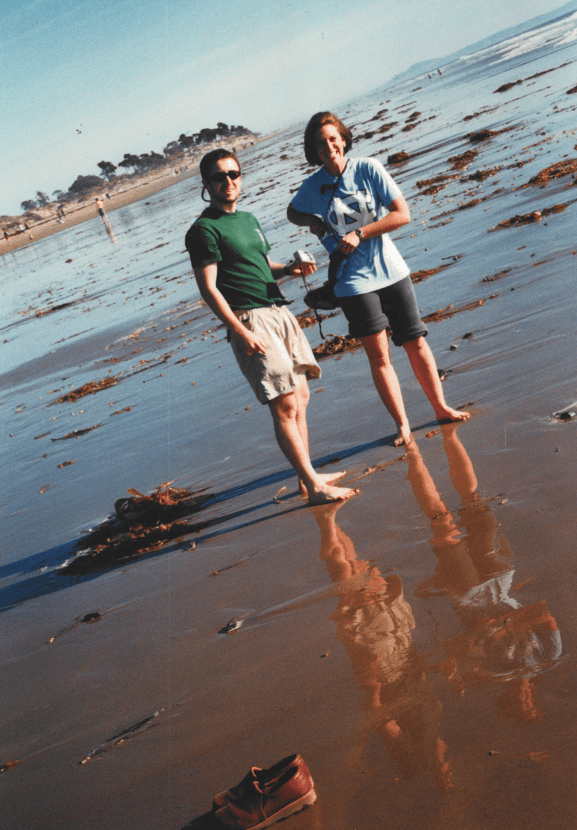
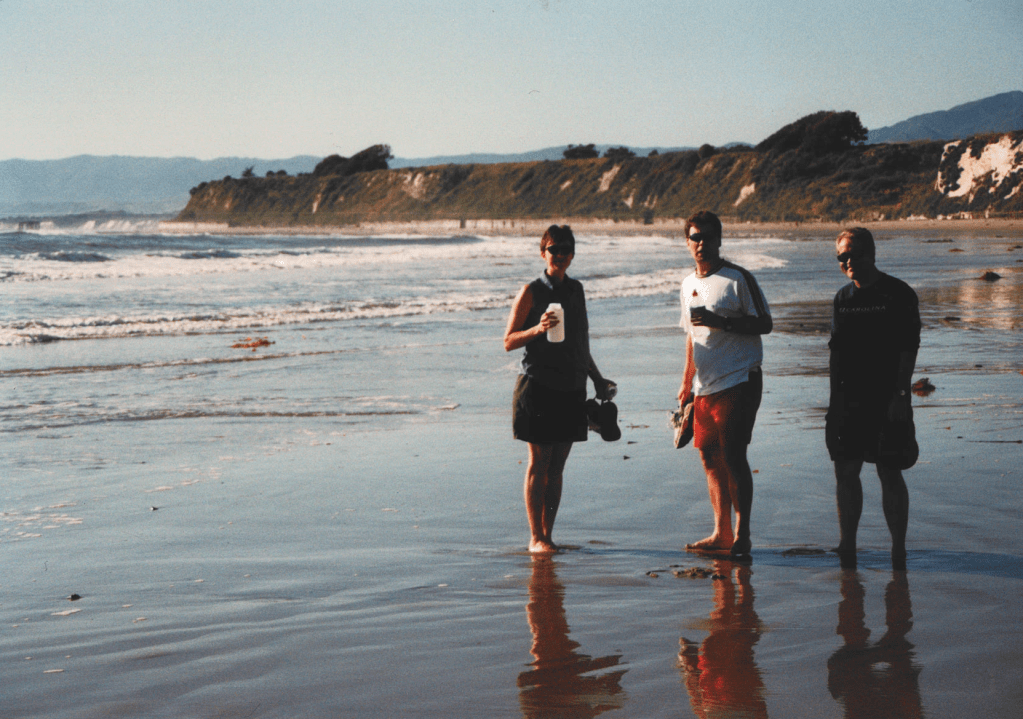
Some of the people at the meeting (Kate Huntington on the right?) and the Pacific Ocean in Santa Barbara
Some of the people at the meeting (Beth Pratt on the left, maybe Kip Hodges on the right?) and the Pacific Ocean in Santa Barbara

I had never been to the USA before but had always been fascinated by the landscapes of the Western USA: I therefore took an extra 3.5 days to visit. The plan was simple: rent a car, fill the boot with food and my sleeping bag and go. The question was: where? Doug Burbank very helpfully gave me some suggestions and a road atlas that I made copies of: Death Valley (“Titus Canyon is really worth it”), Bryce Canyon, and the Grand Canyon.

He probably suggested I do one of these, but that got lost in translation. This was before satnav and international roaming. Three and a half day and a gruelling 1,600 miles later, this trip had crystallised my love for the road trip, for adventure with not much planning, and for North American nature. This trip contained some of the best and the worst of what can happen on a road trip. This may be why I remember so much of it, as if it were yesterday. It was 20 years ago.

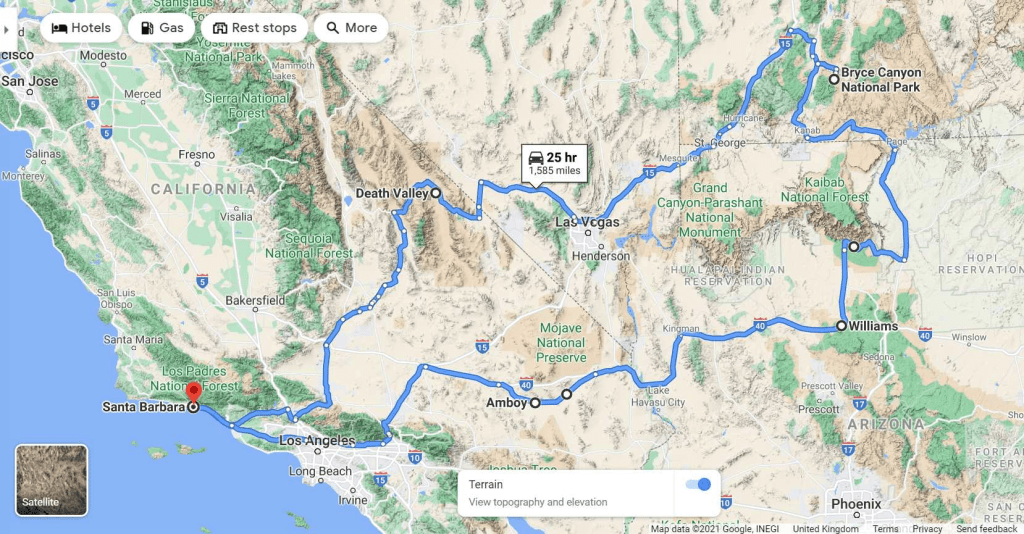
The trip (approximately – I didn’t have Google Map at the time)

(Half) day 1: Santa Barbara to Death Valley.

The meeting finished just after lunch time: I made copies of a few pages of a road atlas, dropped some of my stuff at PhD student Beth Pratt’s place (who kindly offered me to stay at her place on the last night before my flight), went to a local hire place and got a wee metallic green Chevy Metro for not much money. I loaded my belongings, went to a supermarket, got food for three days, and drove off towards Death Valley. The driving was very pleasant, and I was super excited. I distinctively remember two songs that were played all the time on the radio: a song by a young unknown Colombian artist called “Whenever, wherever”, and “This is how you remind me” by Nickelback. The late start meant I didn’t actually reach Death Valley, but by 11pm I decided I was close enough: I followed a dirt track for 100 meters, stopped, brushed my teeth, slipped into my sleeping bag and went for a sleep.

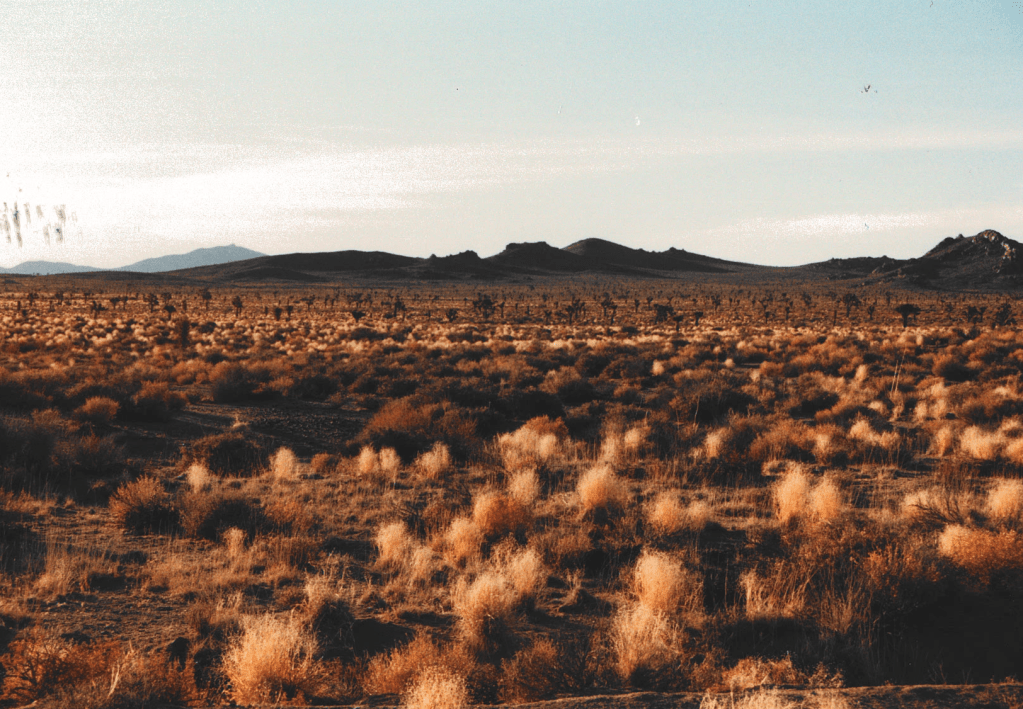
Day 2: Death Valley and Las Vegas. I woke up with the sunset into a completely surreal landscape. I had never seen anything like this.

Waking up not far from Death Valley after first night in the car
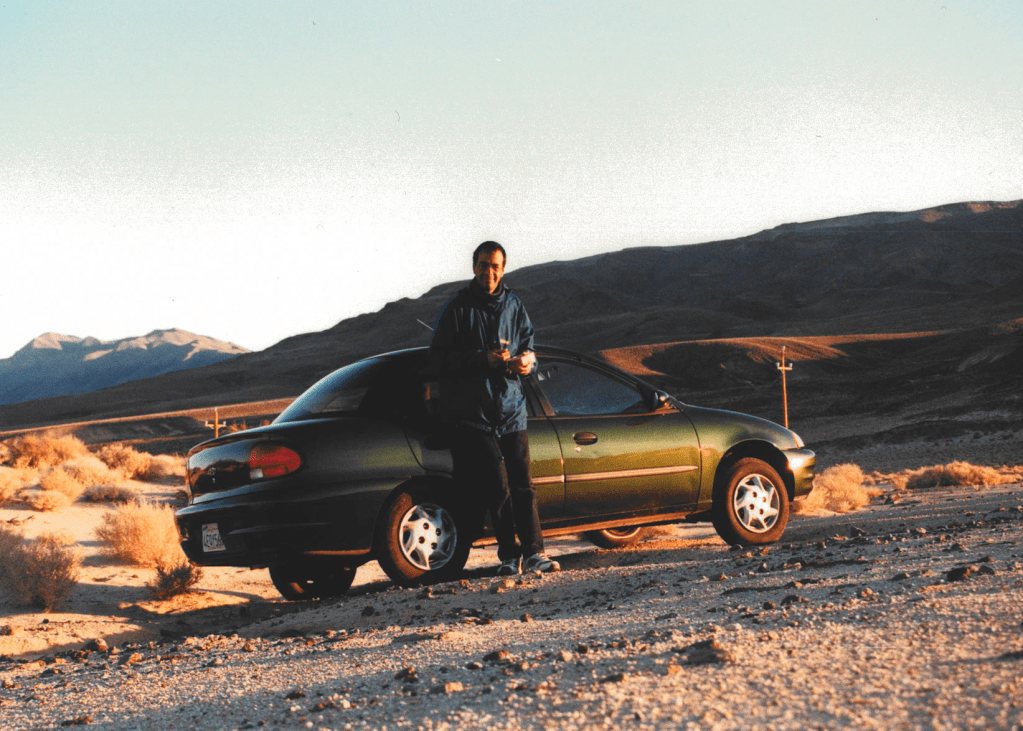
Me and my faithful Chevy Metro
Approaching Death Valley
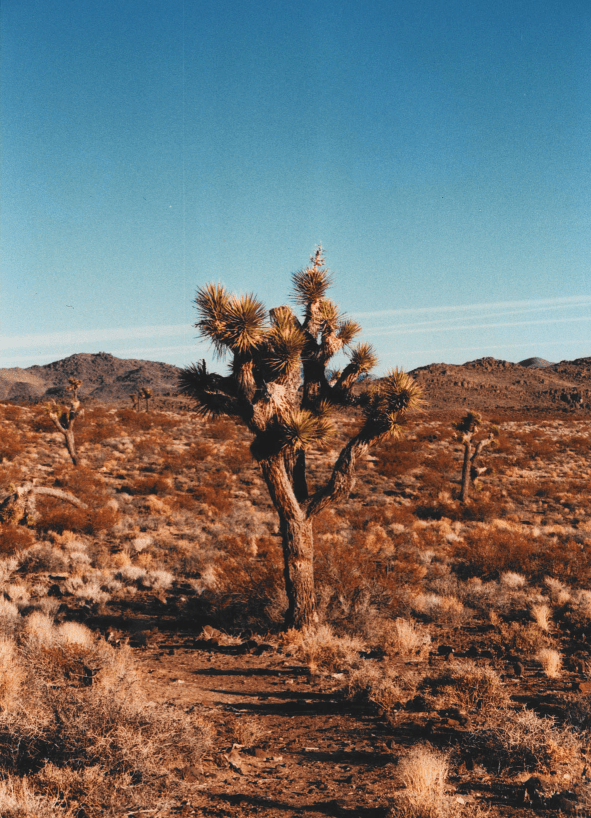
My first Joshua Tree

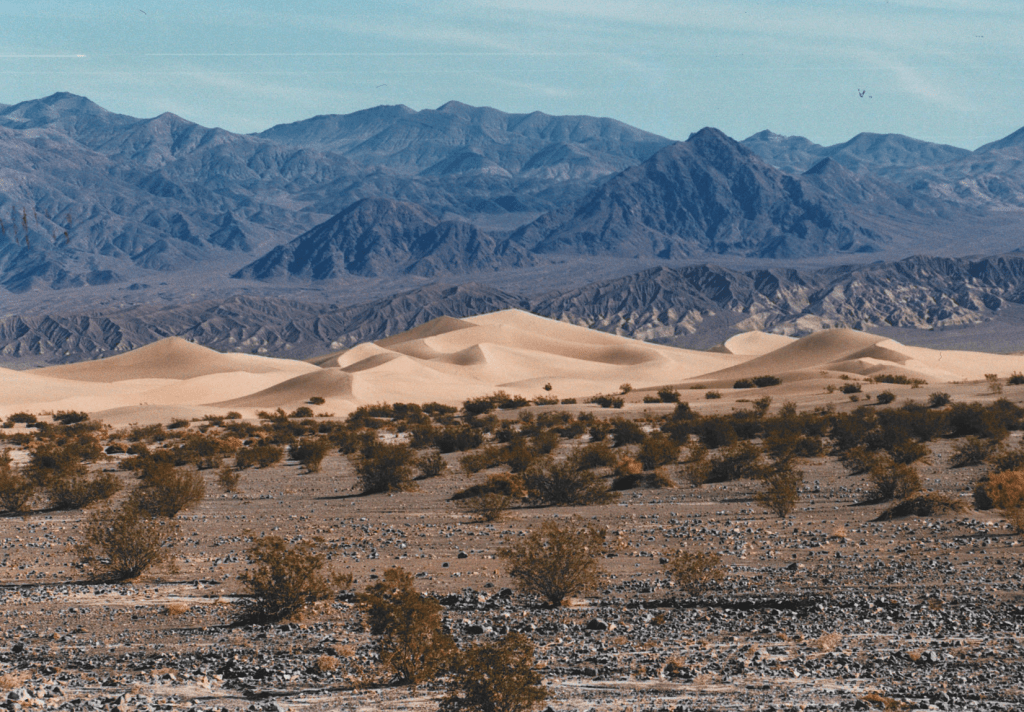
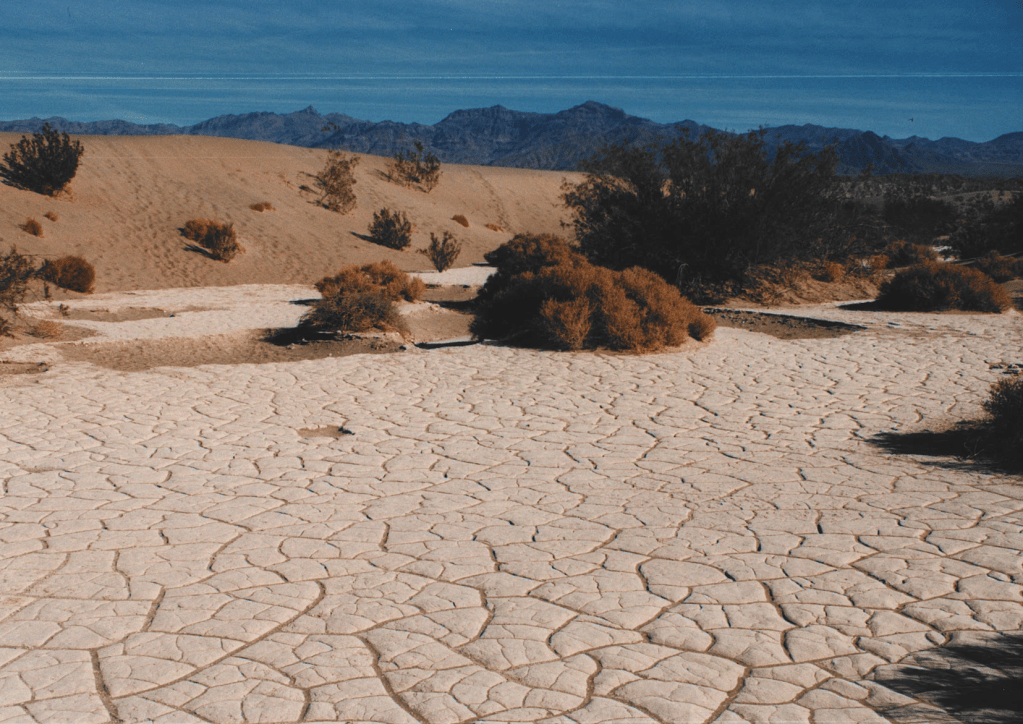
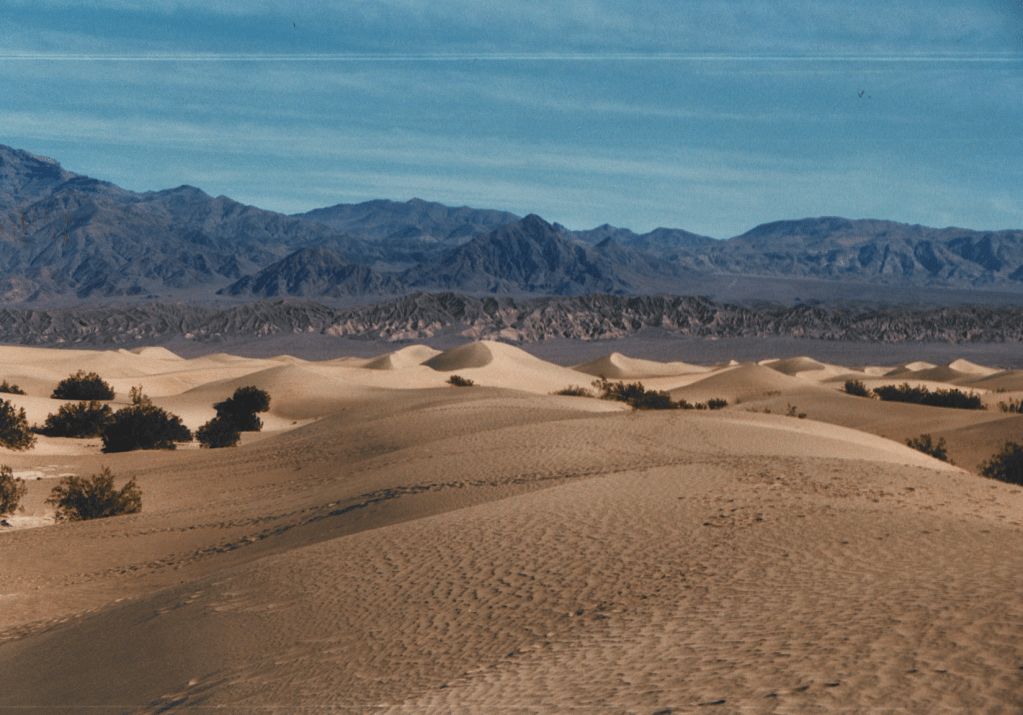
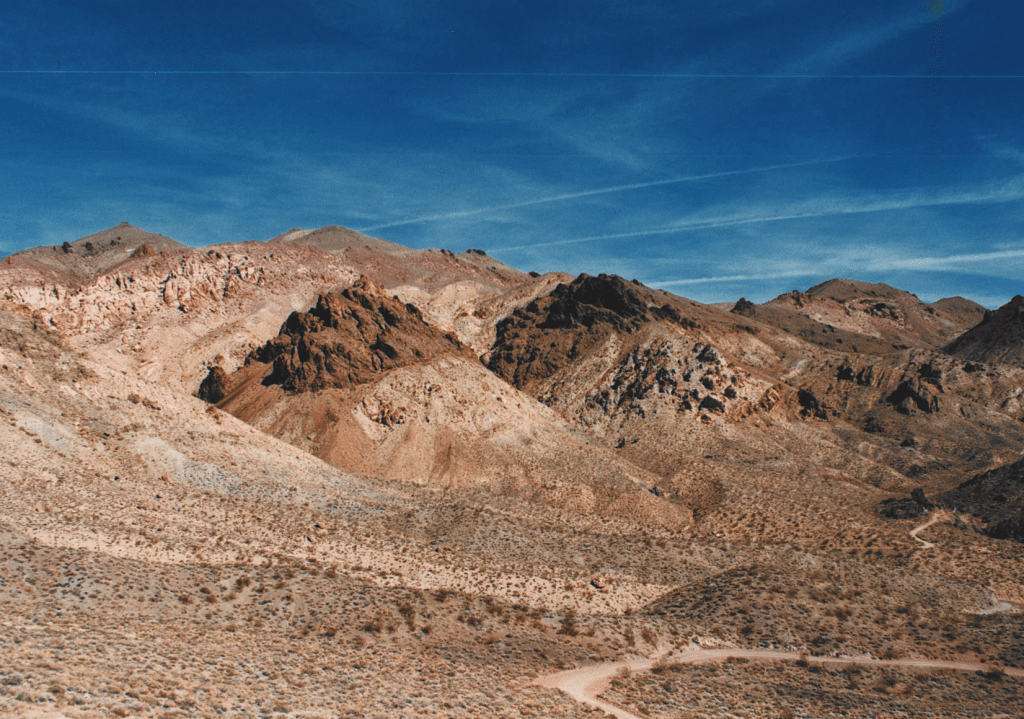
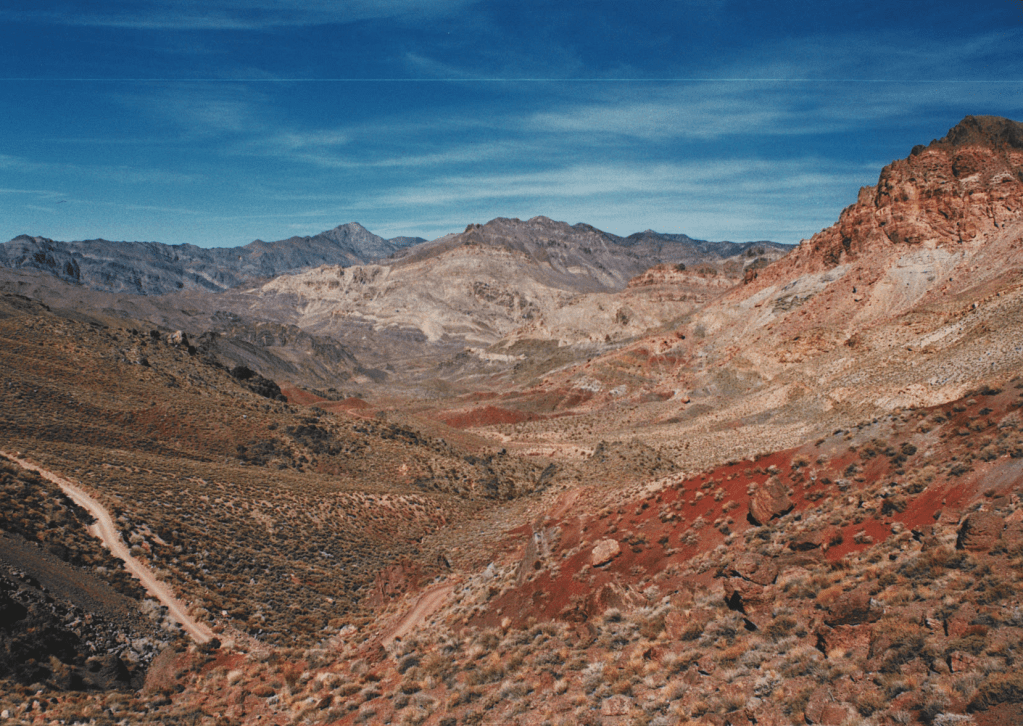
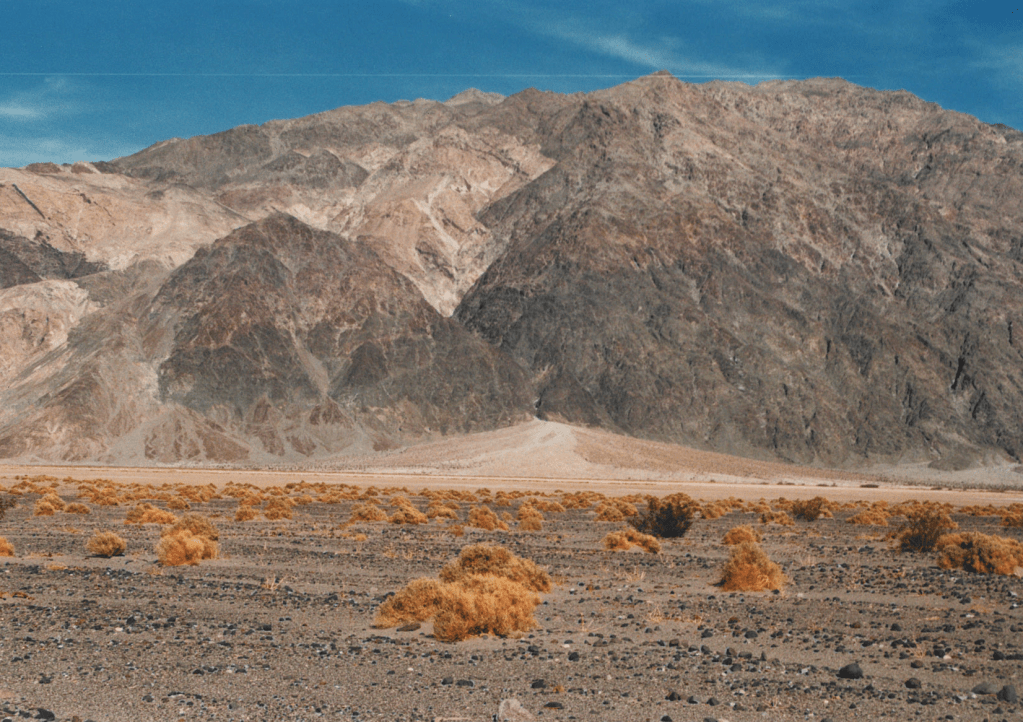
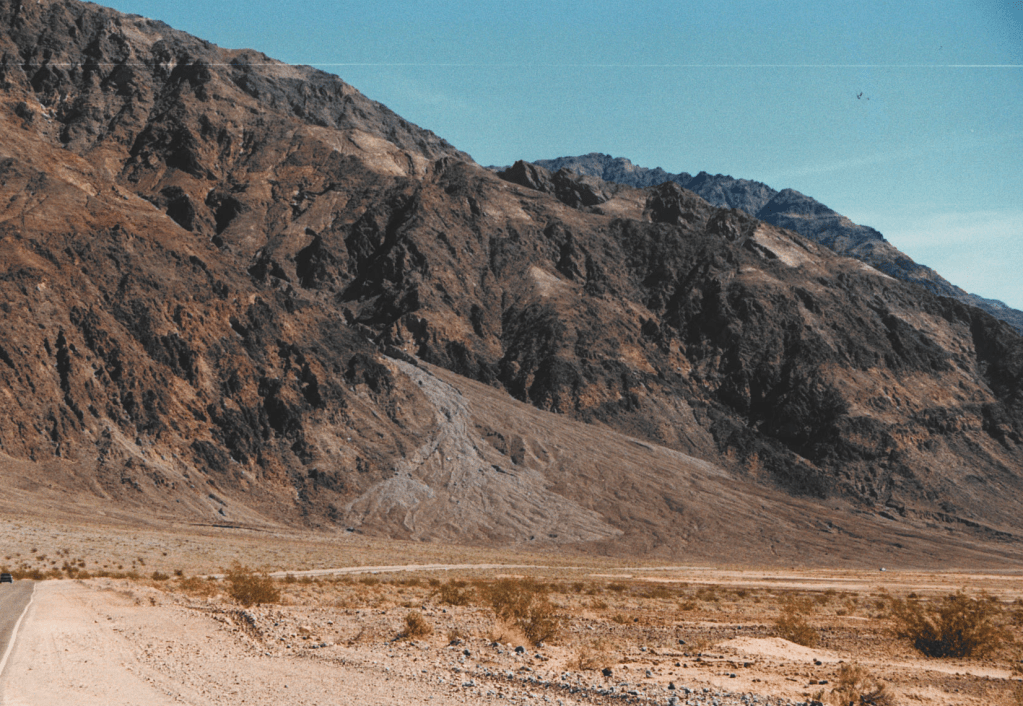
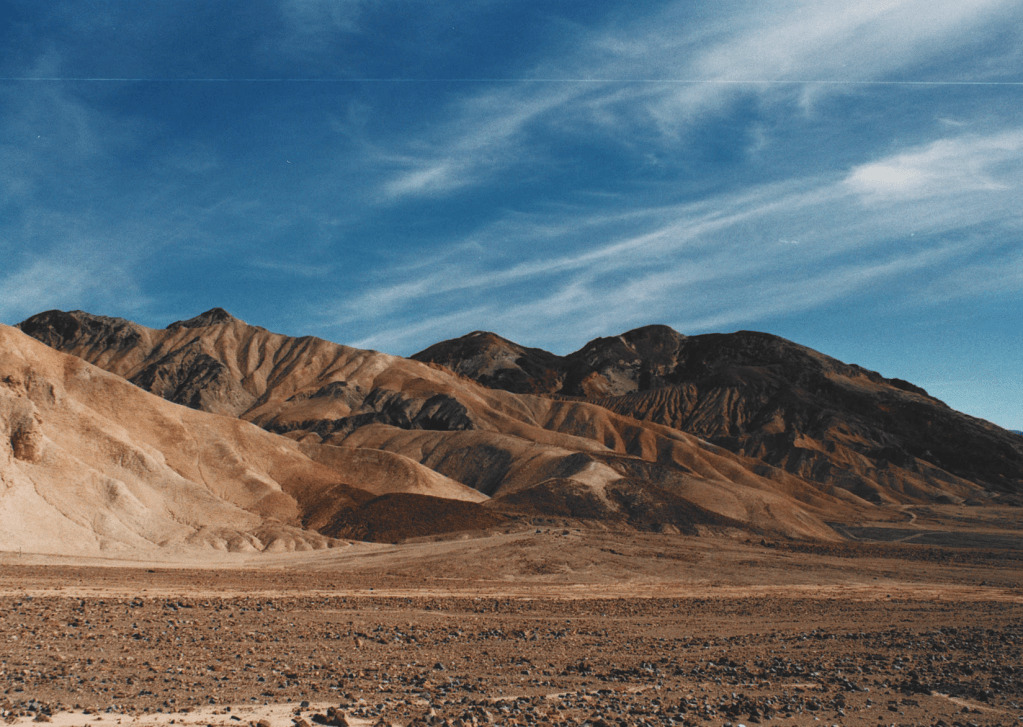
I had some juice and cakes, and went to explore Death Valley. I spent the whole day in awe at the rock formations and sedimentary structures, exploring dune fields, canyons and alluvial fans. There was barely anyone. The driving experience was not exceptionally pleasant in the valley, as the dirt roads tend to show “washboarding” or “corrugations”, which I only recently discovered was a physical phenomena – I always assumed these were left by tractors’ caterpillar tracks (https://en.wikipedia.org/wiki/Washboarding). As a scientist, I made a series of tests to see if the smoothness of the ride could be improved in any way, and discovered that the ride becomes smooth above 50 mph, but then the ability to steer is lost, which is not ideal.

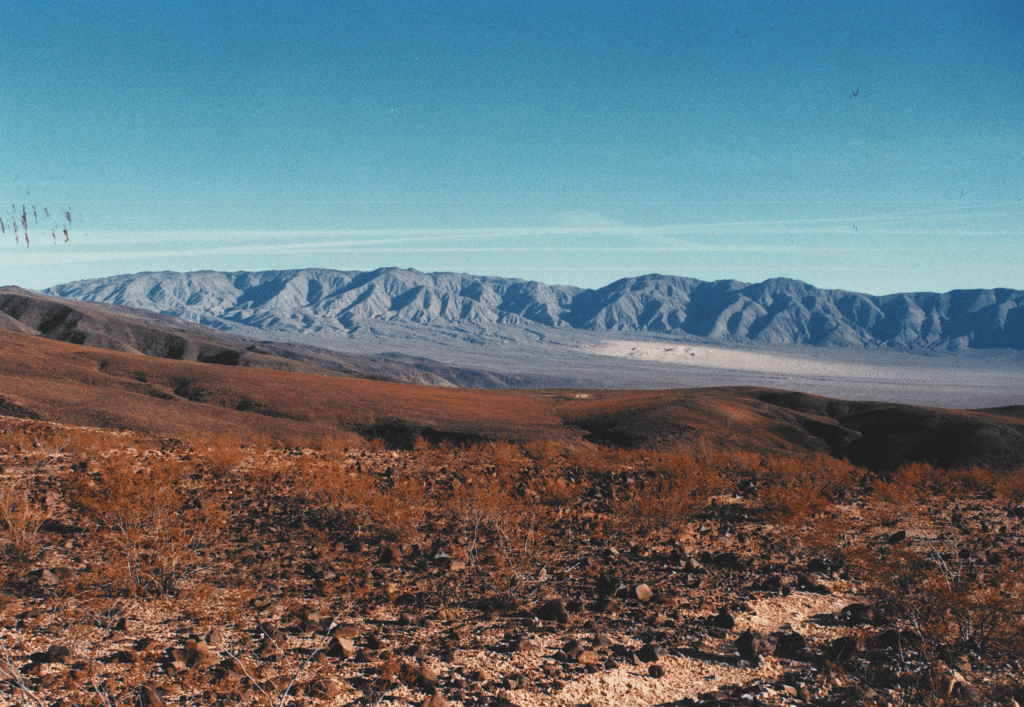
Basins, ranges, alluvial fans and dune fields, Death Valley
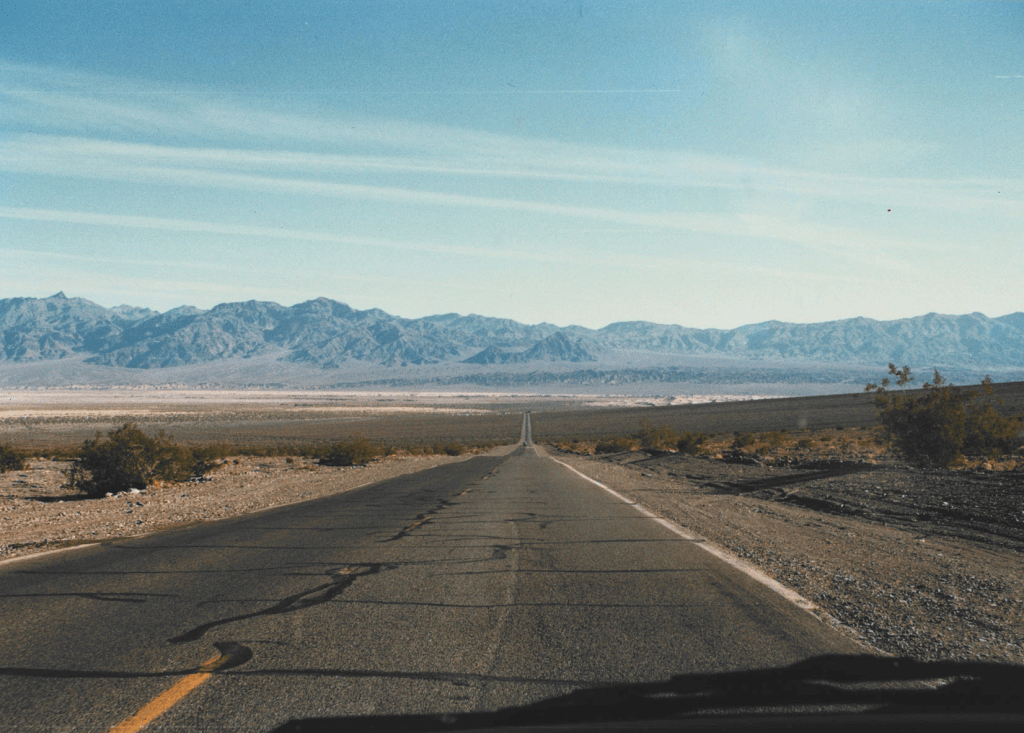
Road into Death Valley
Dunes, Death Valley
Dunes, Death Valley
Dunes, Death Valley
Death Valley

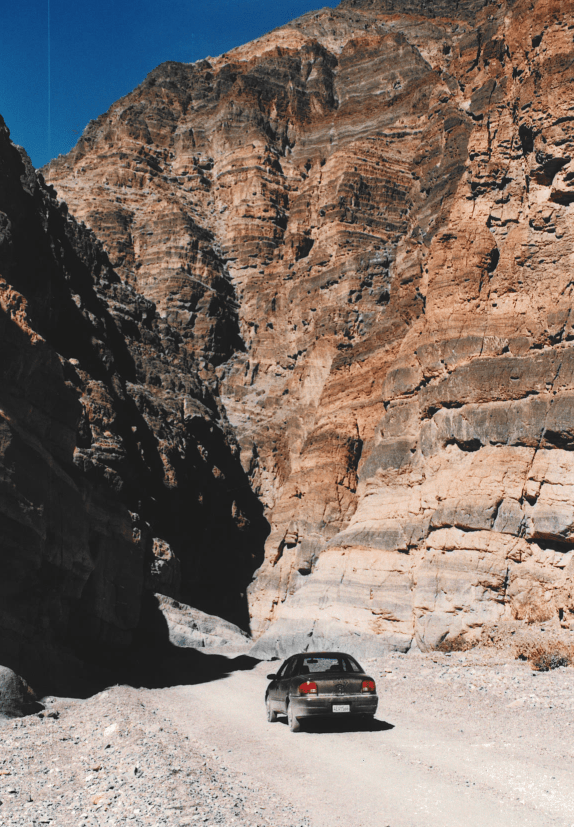
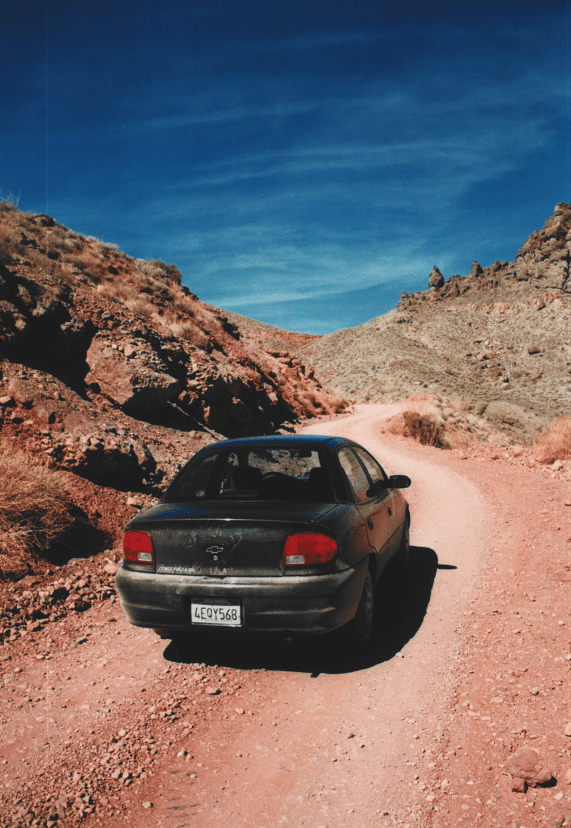
To get into Titus Canyon, you need to climb out of the valley on the NE flank, and then back down into the valley via the Titus catchment. As I reached the Titus Canyon trailhead, I was not pleased to read a sign that said “4×4 only”. I thought I would give it a try and turn back if it looked really impassable. I drove very slowly and carefully into the canyon and it was actually ok (and very safe compared to what I have seen drivers do with small cars in Nepal!) At some point, the track reached the river bed and the river bed became the track. It was made of perfectly sorted gravel: it was like driving on snow, but more controllable, which meant that you could easily drift the car around and you didn’t need to go fast to have fun! It was amazing. [Just to clarify, in case you hadn’t realised: I am really into cars and driving. My dad was a mechanics. I grew around cars. I am obsessed with them.]

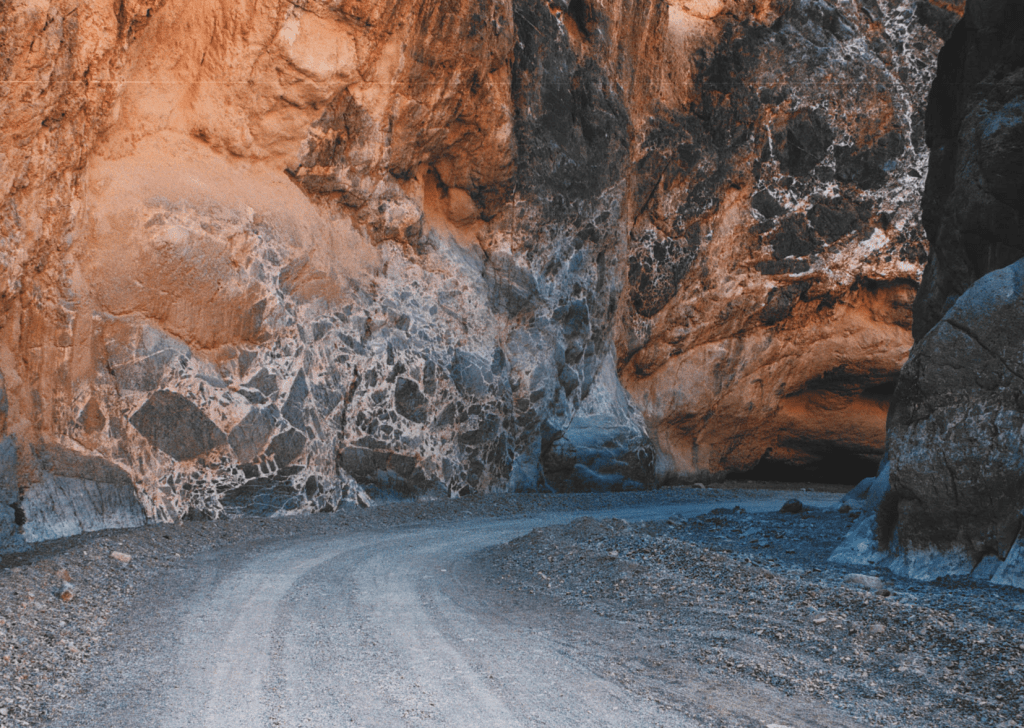
As I was getting closer to the outlet of the catchment, the bedrock walls got closer and closer. The last few miles were at the bottom of a deep, sinuous and narrow slot canyon only slightly wider than a car. It really felt like being a pebble transported down a canyon during a flash flood (thankfully with no impact with the banks). The polished bedrock walls exhibited all sort of colourful structural and sedimentary features, with a surprise around each bend. Finally, I reached the end of the canyon and suddenly emerged at the apex of the alluvial fan, with a panoramic view over Death Valley. It was truly spectacular, and I am incredibly grateful to Doug for having recommended this!

Bumpy dirt track, Death Valley
Entering the Titus Canyon catchment from the top
Green Chevy on red dirt track: getting into Titus Canyon
Entering the canyon
Feeling like a pebble in Titus Canyon
Coming out of Titus Canyon, in Death Valley: spectacular alluvial fans
Alluvial fans, Death Valley
Ridges, valleys and fans, Death Valley

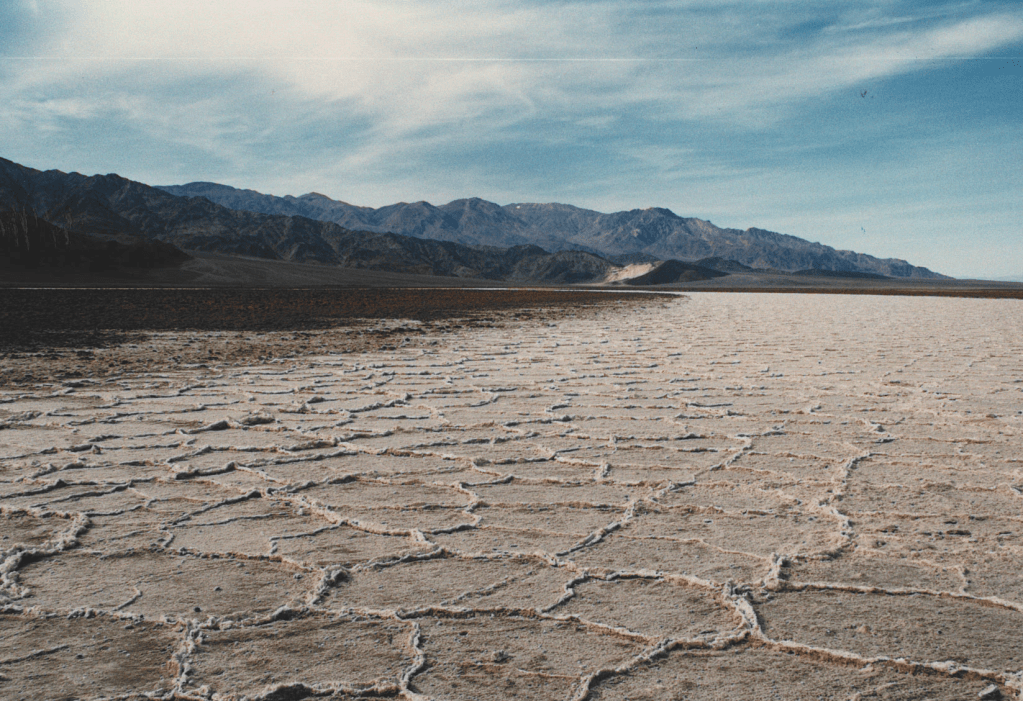
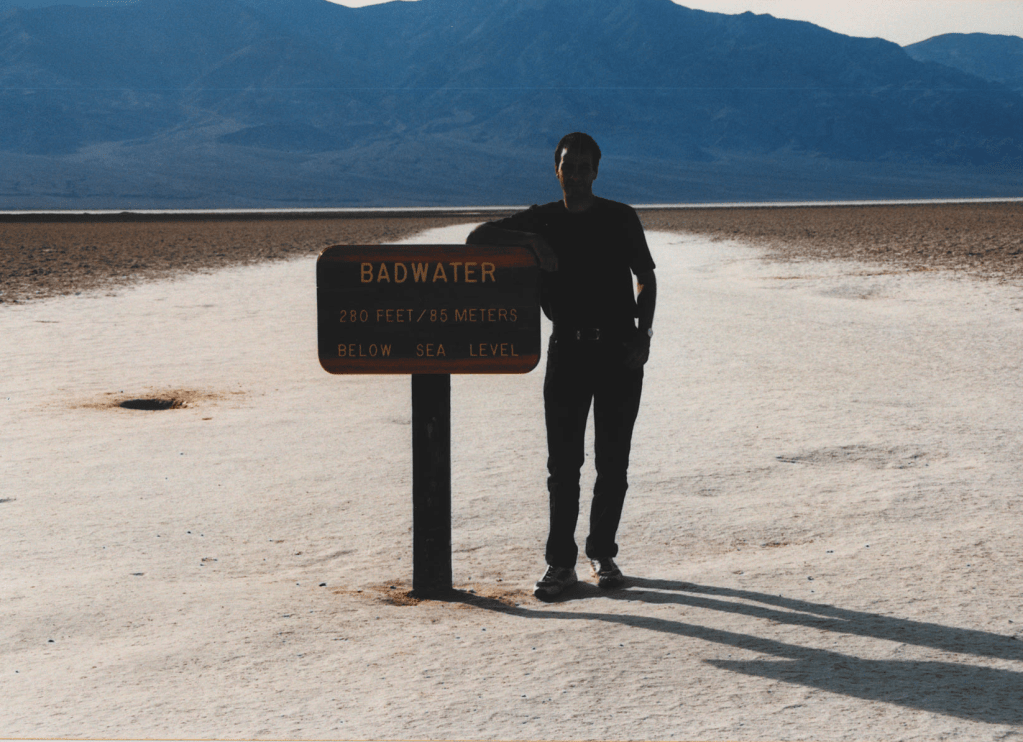
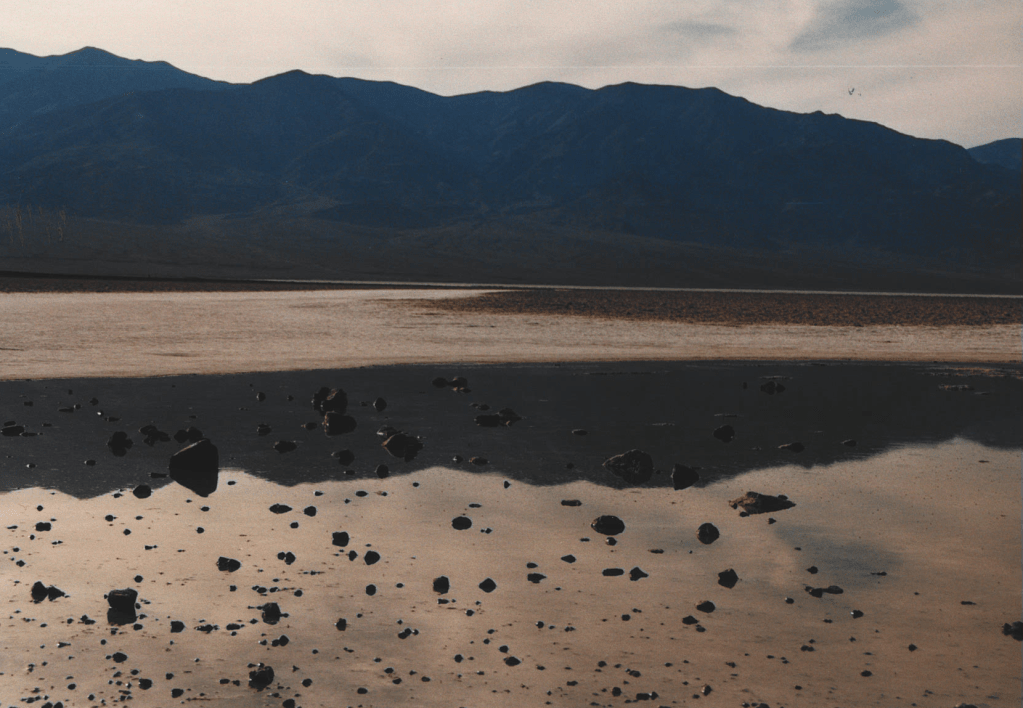
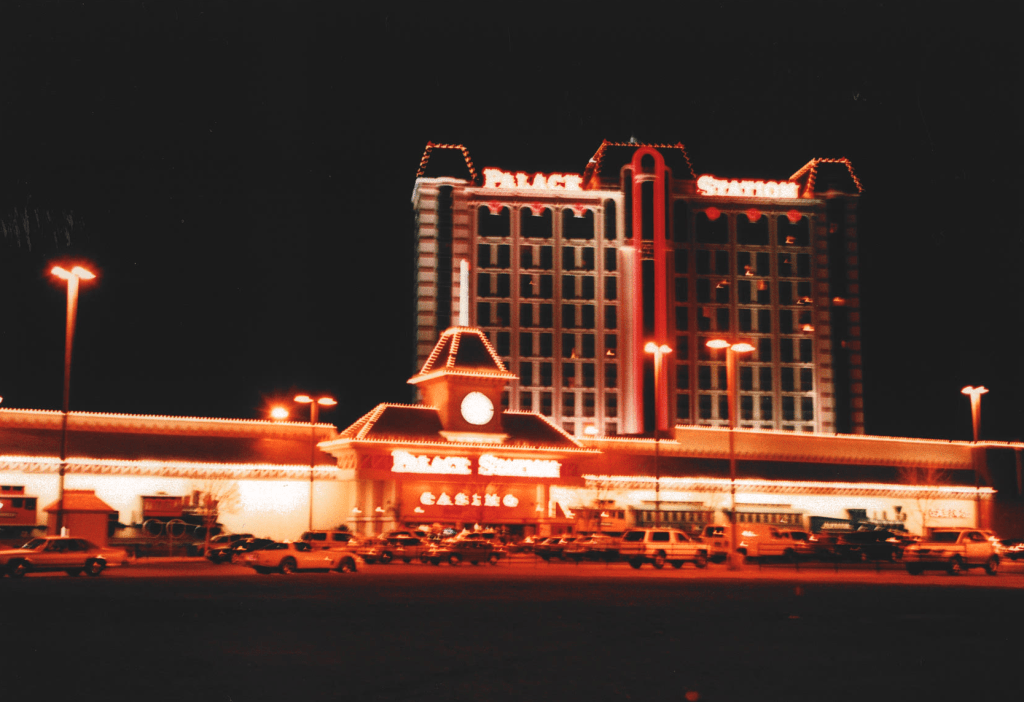
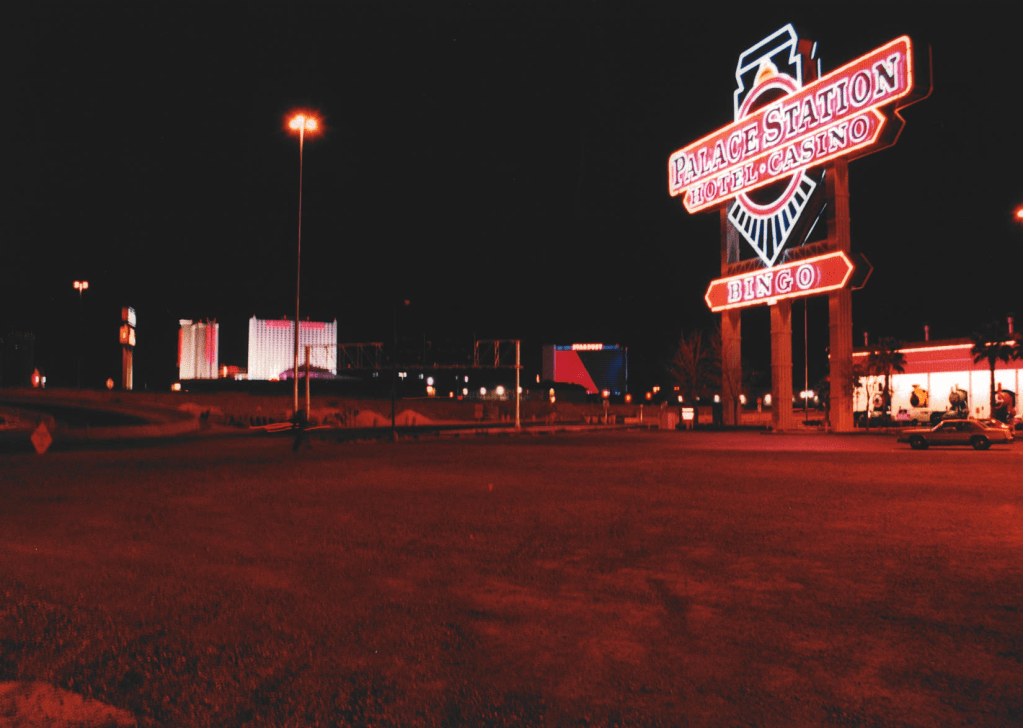
I spent the rest of the afternoon in the valley, visiting Badwater (85 meters below sea level) and other notable features. I then drove to Las Vegas, because I was really curious to see what it was like. I arrived at 11pm and was overwhelmed by the whole thing after one day in the desert. I found a petrol station to refill and tidy up (face wash, shaving). I went into the first casino I found, played quarters in a slot machine for around an hour and won $200. That was a happy me. I then drove off towards my next destination, stopped on a layby slightly out of Las Vegas and went to sleep. It was 1am.

Badwater, Death Valley
Badwater, Death Valley: the lowest point in North America, thanks to the extension that gave the Basin and Range province (85 meters below sea level)
Reflection at dusk, Badwater
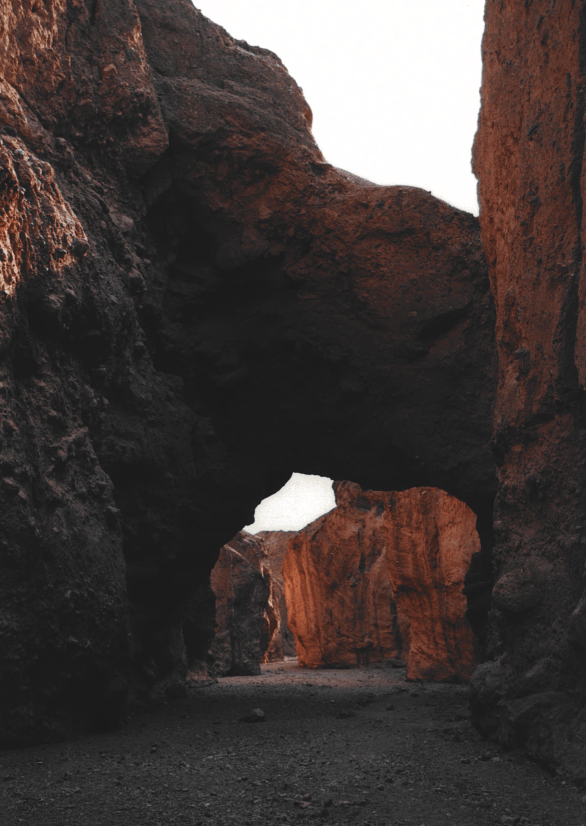
Natural arch, Death Valley
Palace Station, Las Vegas
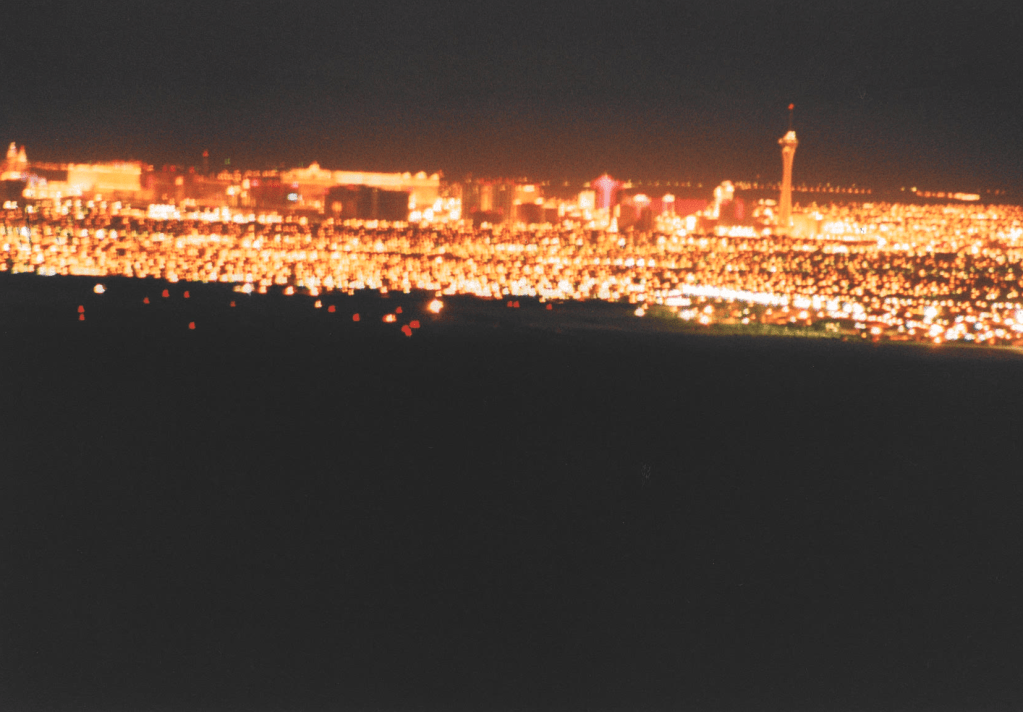
The Las Vegas lights from the layby where I spent the night.

Day 3: Bryce Canyon.

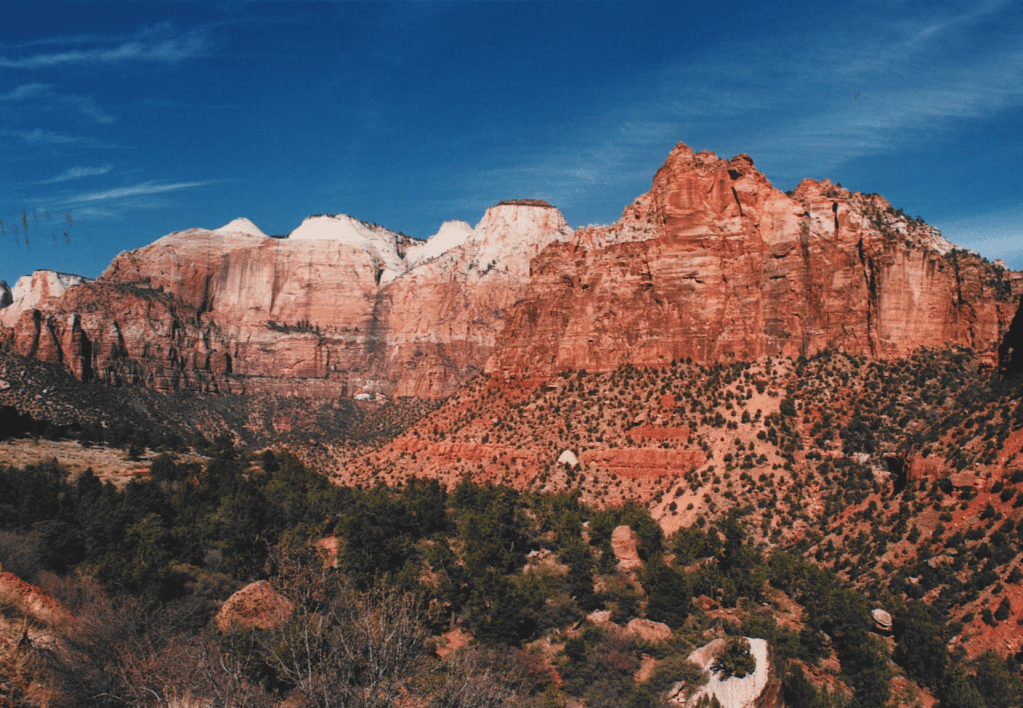
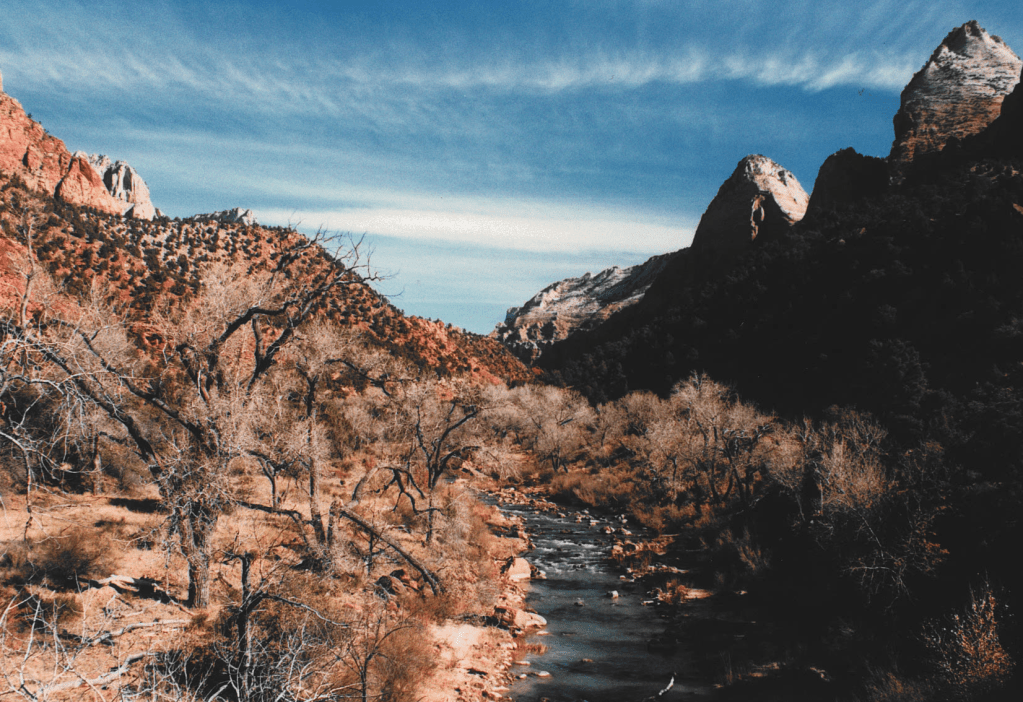
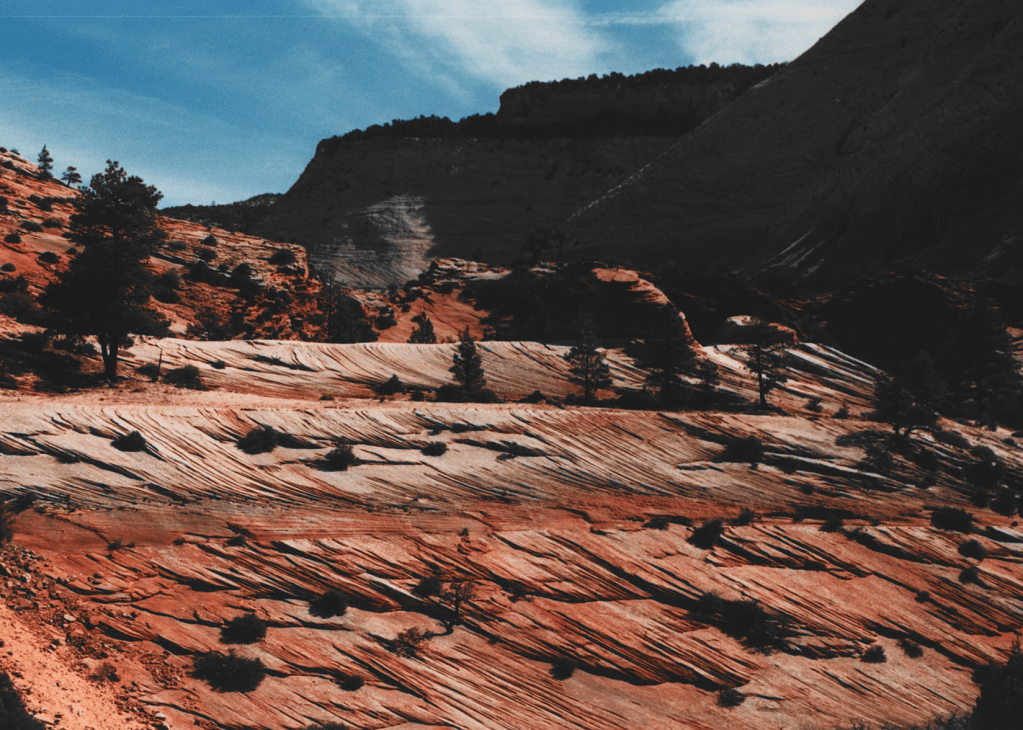
I woke up early with sunset, had a quick breakfast and made my way to Bryce Canyon. I don’t remember much of the road other than the drive through Zion park, with its incredible red cliffs and fossilised dunes. I wish I had more time to explore more but I didn’t, and I had a long drive. I powered through and reached the Bryce Canyon parking just after 2pm.

Driving through Zion National Park
Zion National Park
Fossilised dunes in Zion

Now, I had absolutely no idea what Bryce Canyon was: I just went because Doug said it was worth it. The approach is not particularly spectacular, as you arrive from the top through a forested plateau: there is not much of a view. I was hungry so ate my sandwich on the parking, and then decided to go for a walk: I filled my backpack with some biscuits and water, and followed the trail.

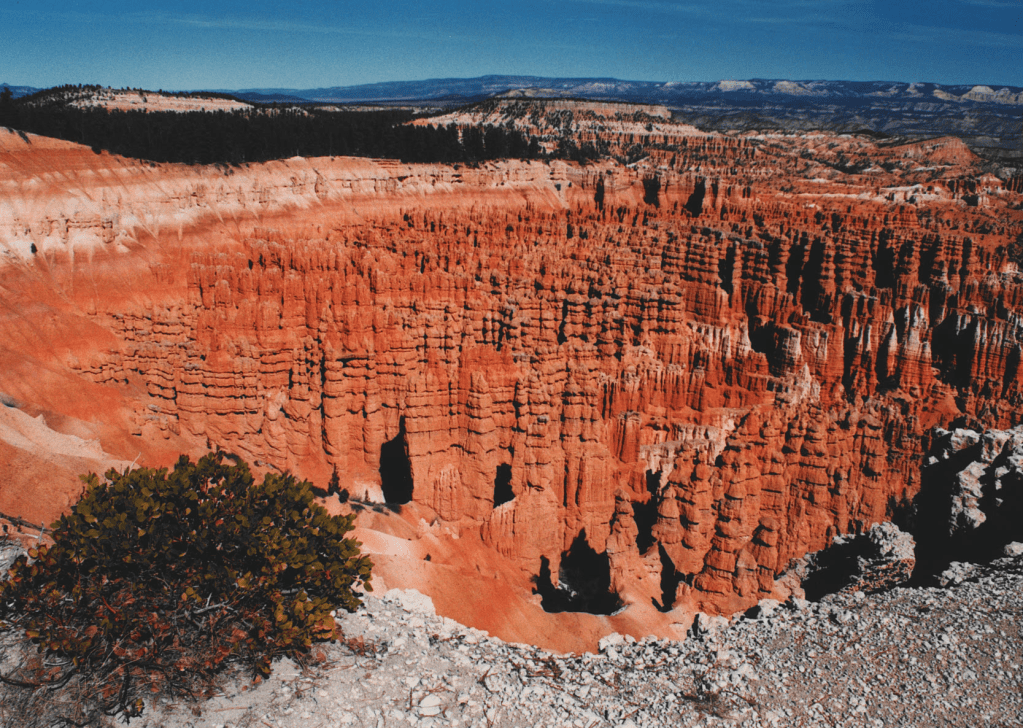
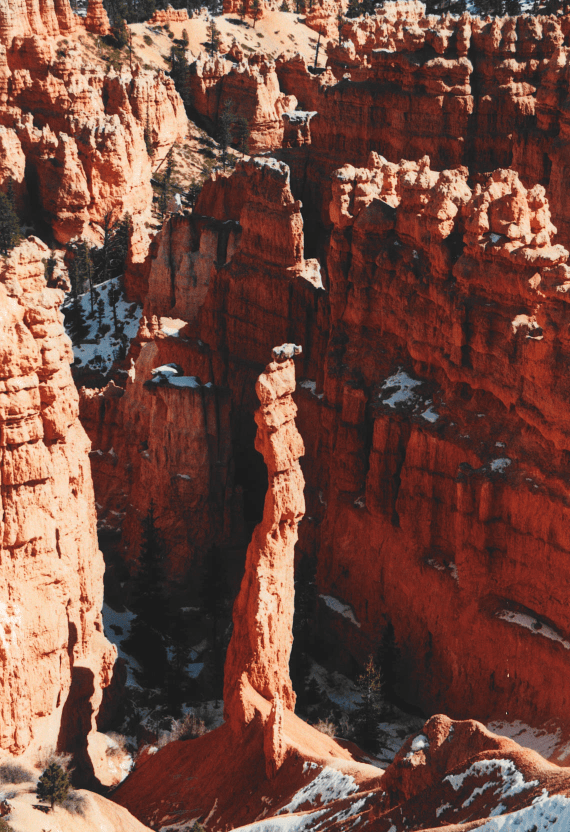
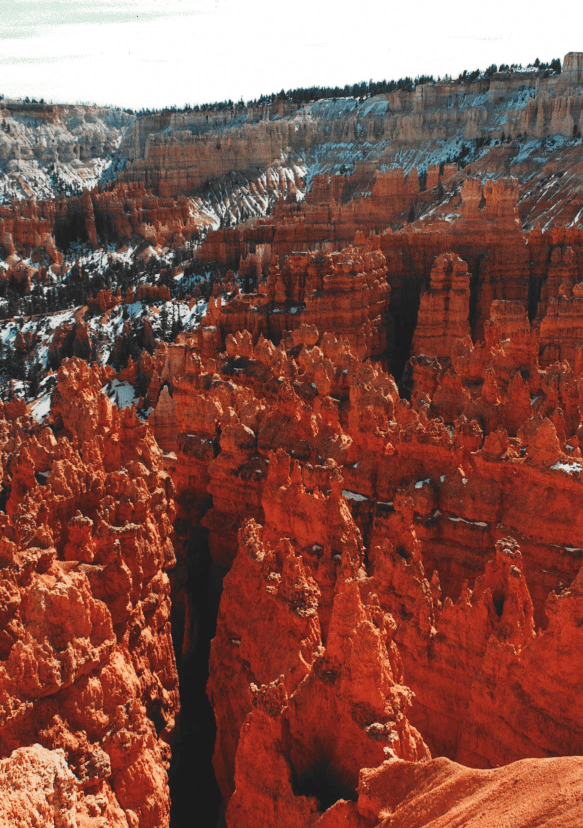
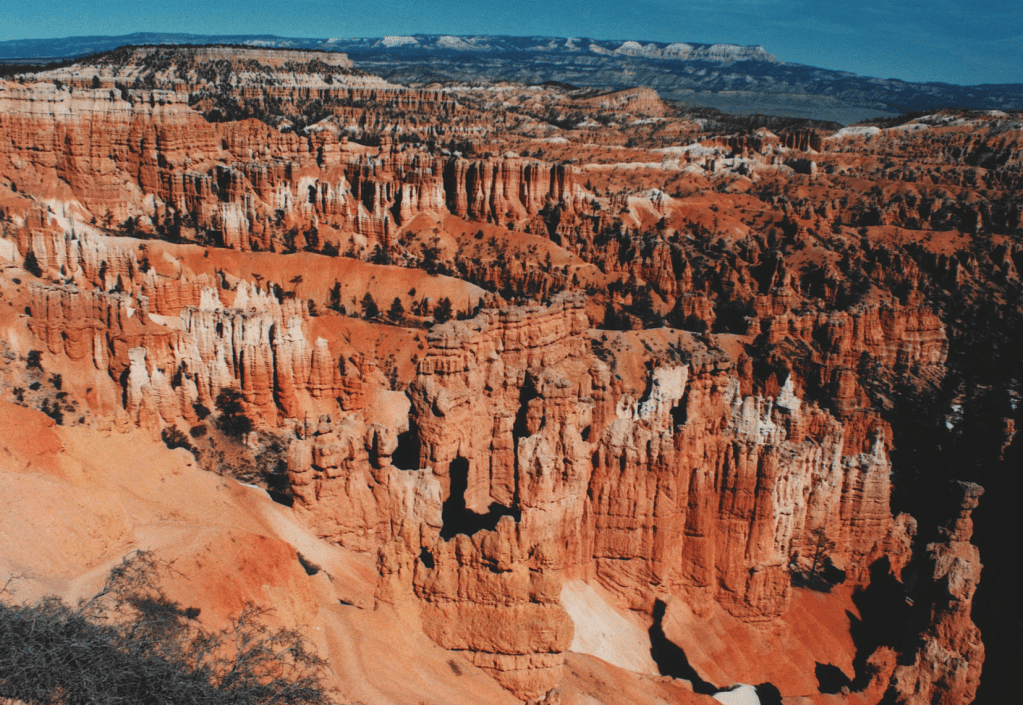
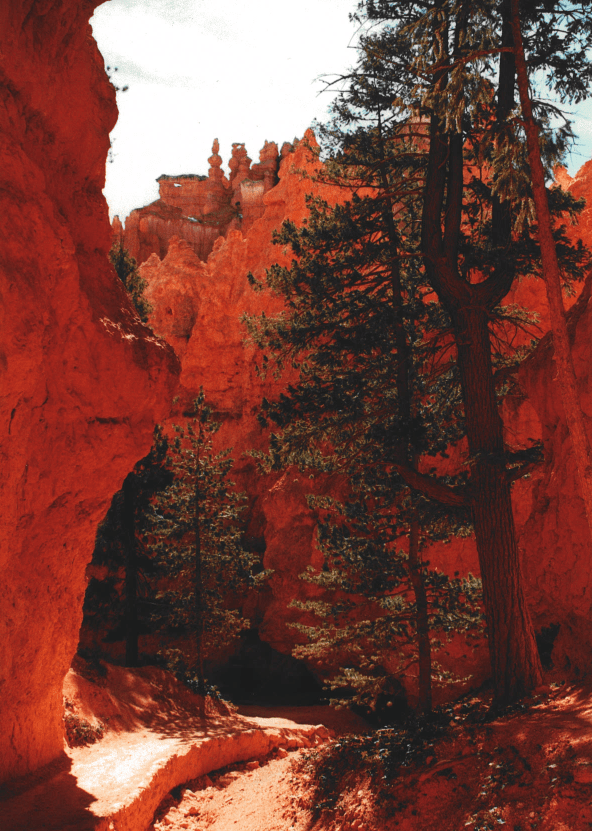
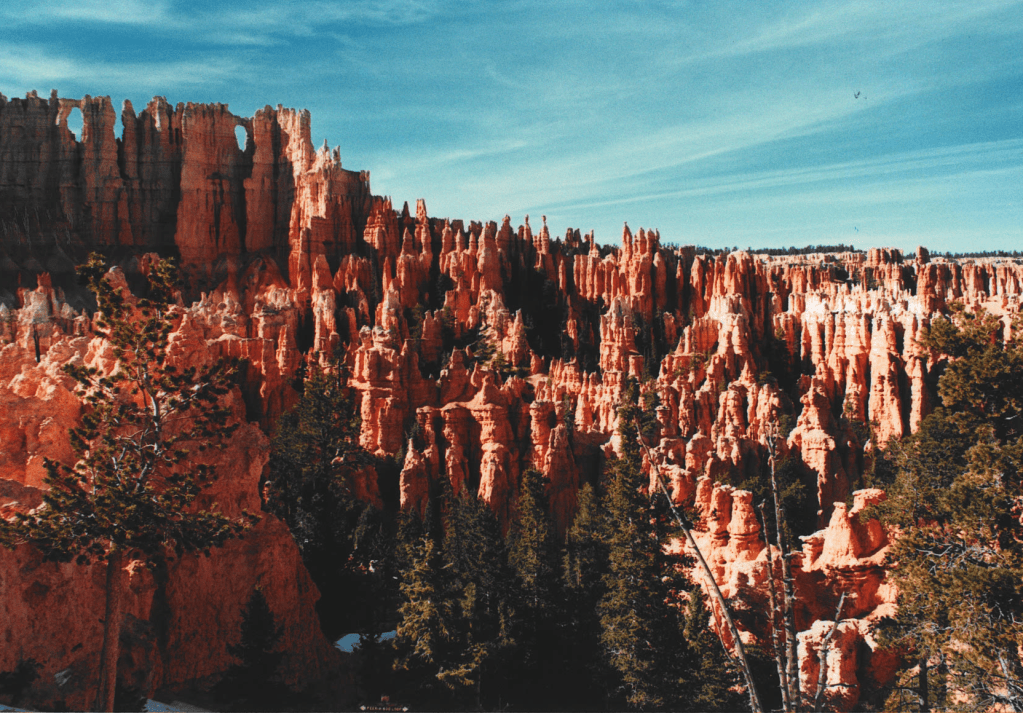
I have rarely been as mind-blown as I did when I reached the rim of the canyon. I sat there in awe for 15 minutes, just taking in the scale of the landscape. The photos don’t give it justice. I don’t have words to describe how amazed I felt. The colour palette had stunning contrasts between the red rocks, blue sky, green trees and white snow delicately sprinkled over. The geomorphological features were otherworldly, and I spent the next three hours hiking through an incredible maze of sharp ridges and narrow canyons. I came back to the car elated, and drove off just before sunset, towards my next destination, the Grand Canyon.

Walking from the parking to the Bryce Canyon trail head
Reaching the rim of Bryce Canyon. Mind blowing.
Bryce Canyon
Bryce Canyon
Bryce Canyon
Bryce Canyon
Bryce Canyon

The roads were clear and empty, and I may have got a little carried away. At some point, a pick-up truck came in the other direction and passed me. Just as it passed me, it turned around and suddenly I could see blue and red lights flashing in my mirror. Damn it. I had never heard of mobile speed cameras that could get your speed while moving in your direction.

I stopped and the pick-up truck stopped behind me. After a minute, I was wondering what they were doing, so I went out of the car to go and talk to them. When I told this to American people afterwards, they all went “are you mad?!” No one had explained me that you are supposed to stay in your car when you are stopped by the police, and that if you don’t you may get shot. Fortunately for me, by that point, it seems they had run my plates and figured out that it was a hire car, as this is the first thing the sheriff asked me after I said hello (he really looked like Walker Texas Ranger: same pick-up truck, same Chuck Norris beard, and same hat!)

He was very courteous and helpful. He asked me if I knew the speed limit (yes: 55 mph), and if I knew how fast I was going (answer from the speed gun: 68 mph). I apologised. He said the fine was $200 for excess in the 10-20 mph range, but that he would reduce it to $100 if I signed a paper testifying that I was going to respect the speed limit for the rest of the trip. The trick: if I sign the paper and get caught again, then I am in very serious trouble. He said that was their way to doing prevention rather than repression. I agreed to sign the paper and paid the $100. They told me to be safe and I was back on the road. This was my first speeding ticket ever.

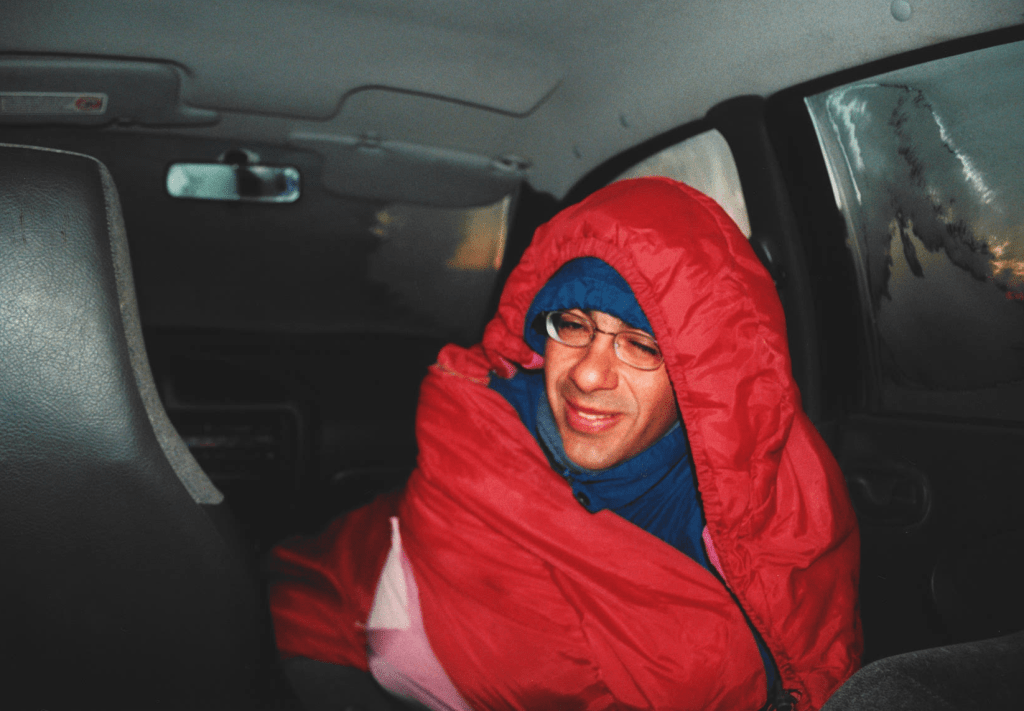
I found a petrol station near Page, on the Colorado River and parked on the far end of the parking. I washed and shaved in the bathroom, had dinner and went to sleep. I hadn’t anticipated that the elevation was quite high, around 1300 m (4000 ft), and that it would get very cold during the night. By midnight, I think I was wearing all the clothes I had in my crappy sleeping bag. I didn’t sleep well.

It was very cold on the third night!!! Yes, the ice on the windows is inside the car
Scenic location for my third night

Day 4: Grand Canyon, back to Santa Barbara.

I woke up with sunset at around 6am and had to spend a wee while scraping the ice on the windows inside the car.

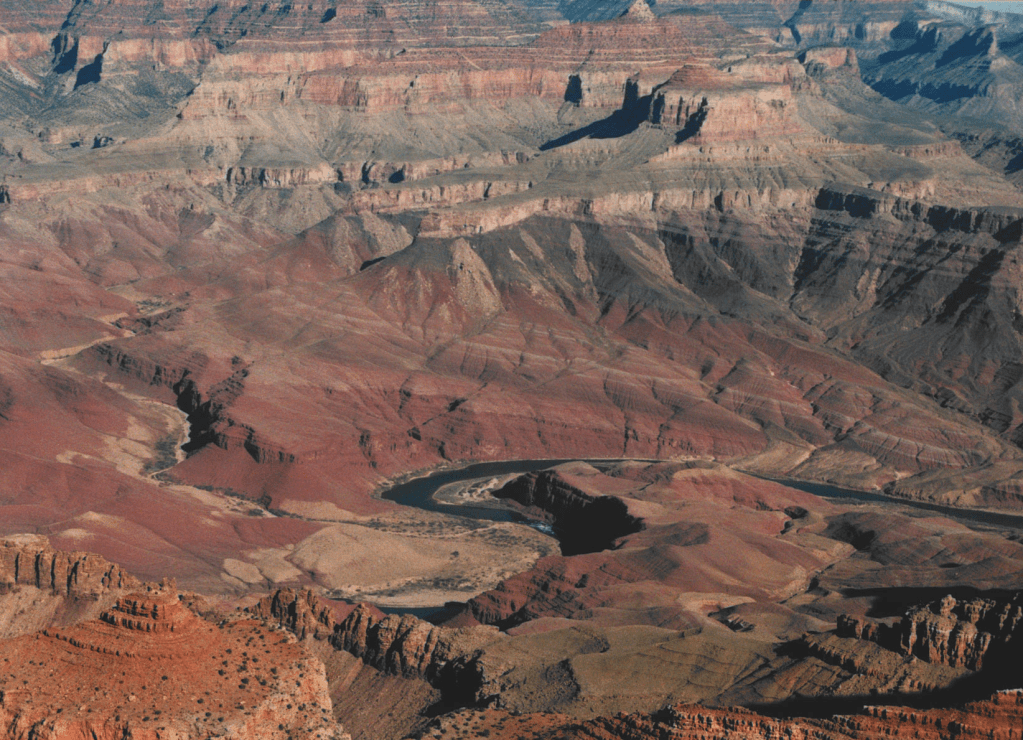
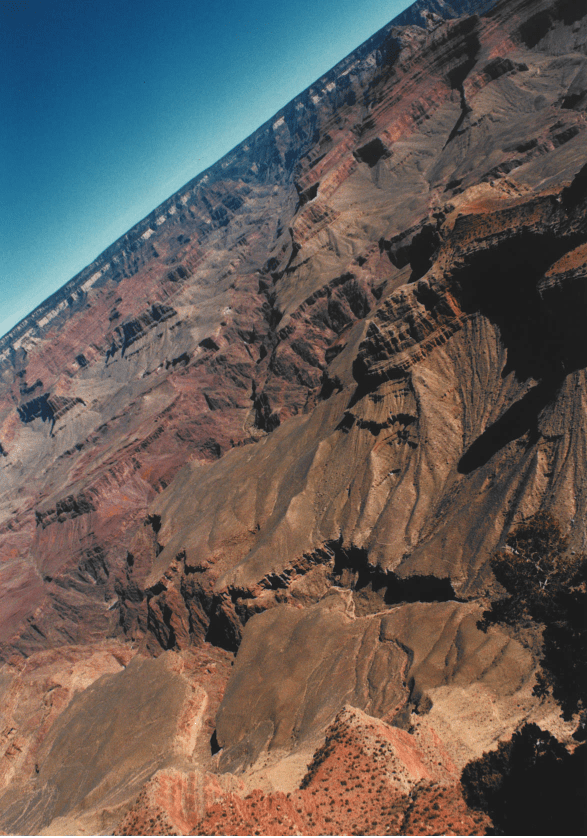
My aim was to spend the morning along the southern rim of the Grand Canyon and then spend the afternoon driving back to Santa Barbara. I had a leisury drive, stopping regularly to take on the impressive views, and talking to random people as I was reconnecting to civilisation (I hadn’t seen many people on the previous two days). One thing that struck me, and I remember it distinctively, is the reaction people had when I told them I was French. This was shortly after 9/11 and the disagreement over the war on terror. On three occasions during this trip, people asked me something along the lines of “oh, you’re French, is it true that French people hate us and, why do they hate us, we haven’t done anything wrong, have we?” I tried to explain that there was political disagreement between our two countries, but that I didn’t think French people hated people from the USA on a personal level. It did make me feel sad.

On the way to the Grand Canyon
The Grand Canyon in all its glory
Grand Canyon and Colorado River
Making new friends
Grand Canyon

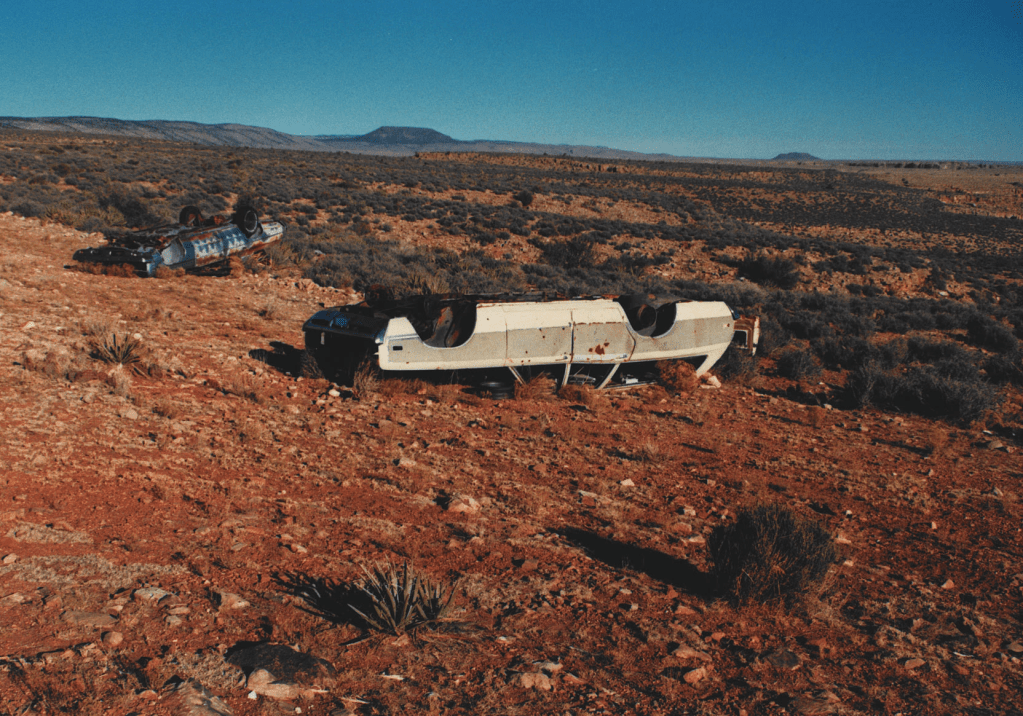
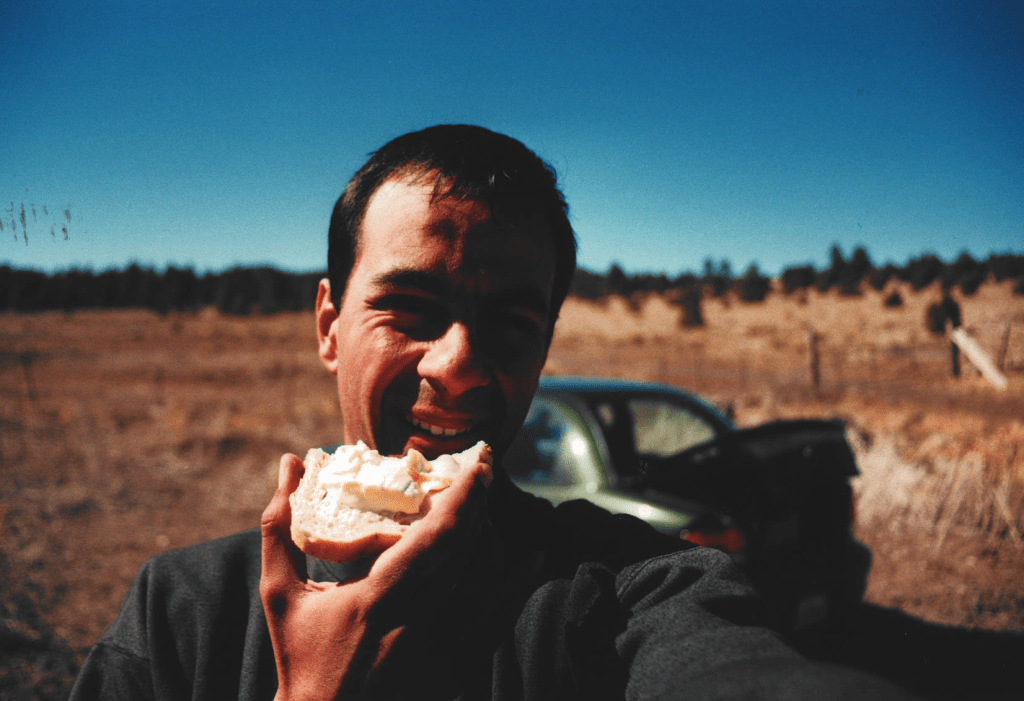
I had lunch (I remember I had bread and a lot of cheese left), and then started driving back “home”. I distinctively remember going through Williams at around 2pm and seeing a road sign that said “Los Angeles 400 miles” or something like that. I stopped as soon as I could. Based on my initial planning, I thought I would be 200 miles from Santa Barbara at that point. The sign said 400 miles to LA, that is, 500 miles to Santa Barbara. I started gathering the bits of maps I had printed out of the road atlas and came to the horrific realisation that because the roads are so few and so straight in this part of the world, I somehow missed a page. It was 2pm. I was 500 miles (800 km) from my destination, and I was flying back home the following day from LA at 12 noon (so had to be at the airport at 10am). That was probably one of the most stressful moments in my life.

Cheese sandwich shortly before I realised my miscalculation
Petrol station. I should have filled up there.
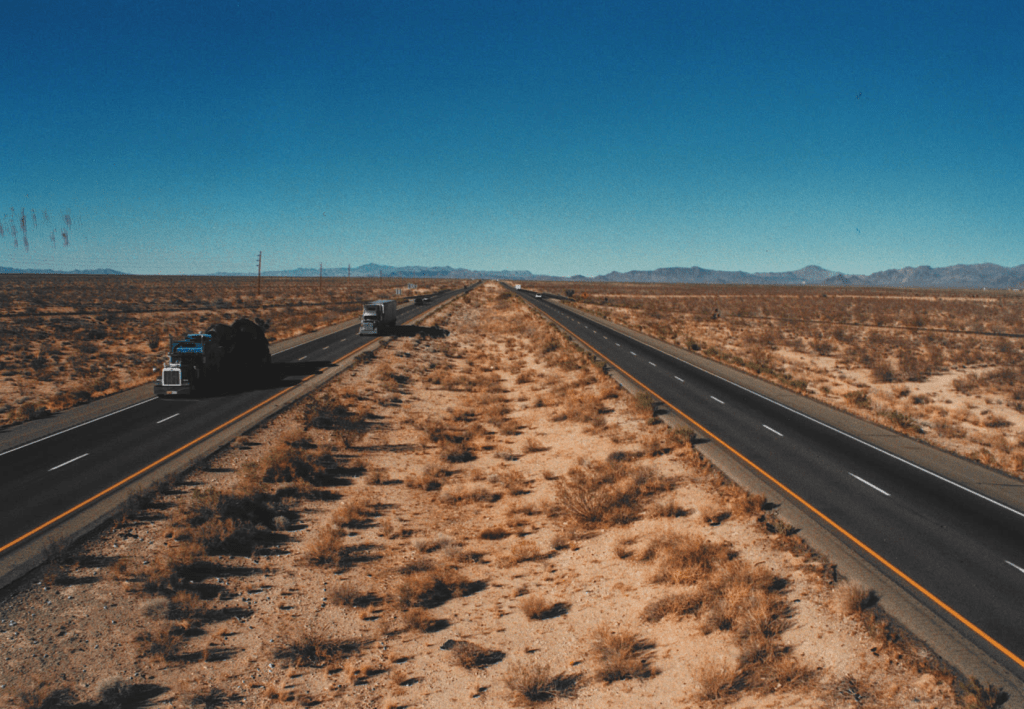
Motorway

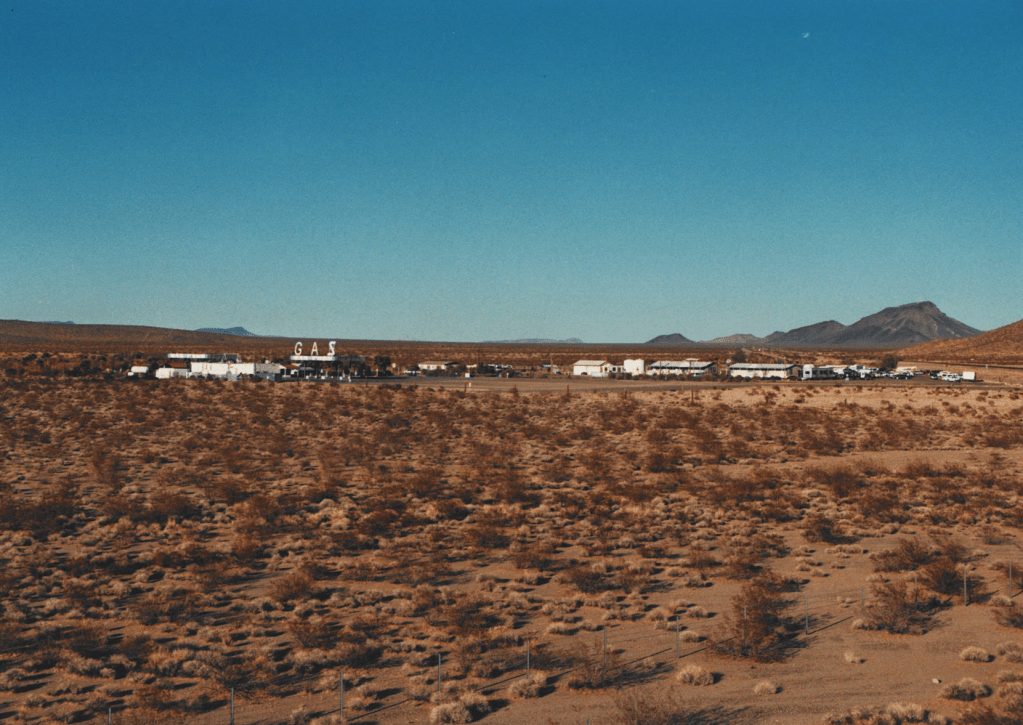
There was not much I could do: let’s drive. I couldn’t even let Beth know I would be late: I didn’t have a phone and I couldn’t find her phone number anyway! So I drove. And drove. And I was getting very tired. I had a few 15-minutes power naps on the way, when I felt I was falling asleep, but I mostly drove. And at some point, for some reason, I decided to alter my course as I was getting very bored by the long straight soporific motorways: I would take a small detour via Amboy, and refill my tank there because I was starting to run low on petrol. I still hadn’t got into the habit of “refill as often as you can as you don’t know when the next petrol station will be”, despite some close calls. I think tiredness and stress were starting to seriously affect my judgement then.

So I left the dual carriageway at some point and drove towards Amboy, with a nearly empty tank. Shortly after, I hit a roadwork section, with a 20 mph speed limit. It was a straight road with no one around, clearly no one actively doing road works, but I had signed this piece of paper I gave to the sheriff. So I drove at 20 mph. For nearly 20 miles. I was screaming my head off in the car. And then I reached Amboy, which was essentially a ghost town. My petrol needle was in the red, I hadn’t seen another soul for hours, and sun was setting (it was around 6pm). I freaked out.

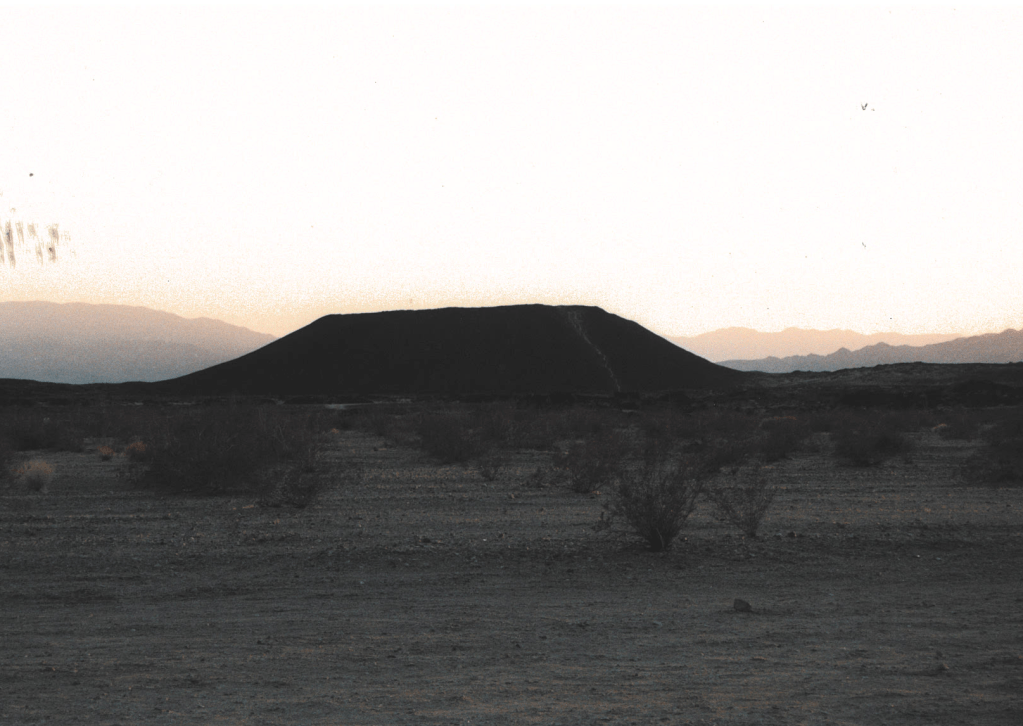
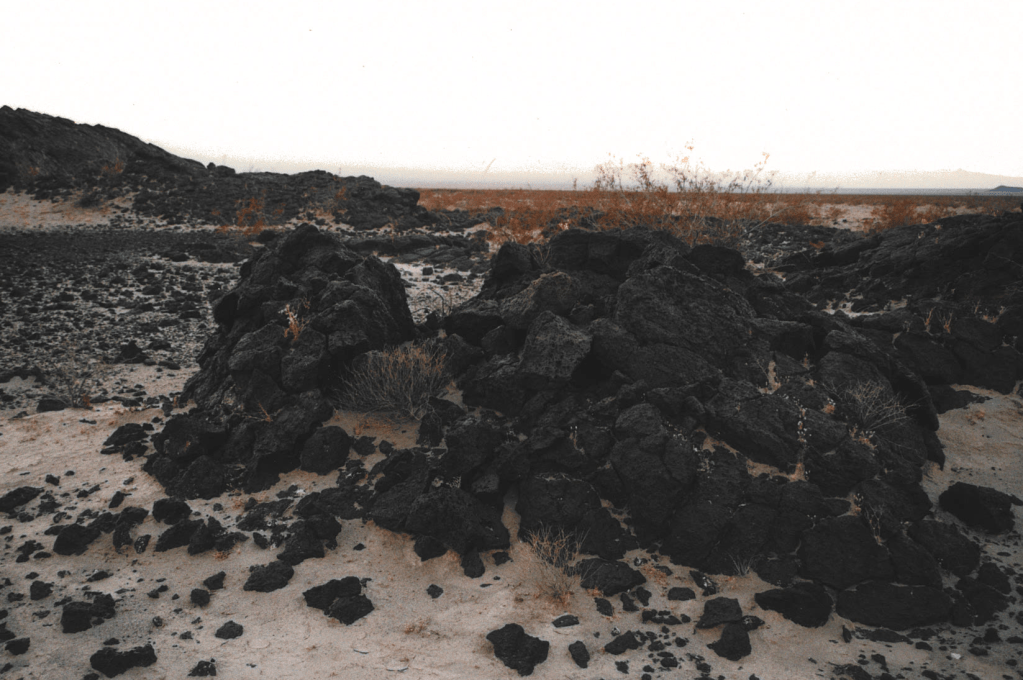
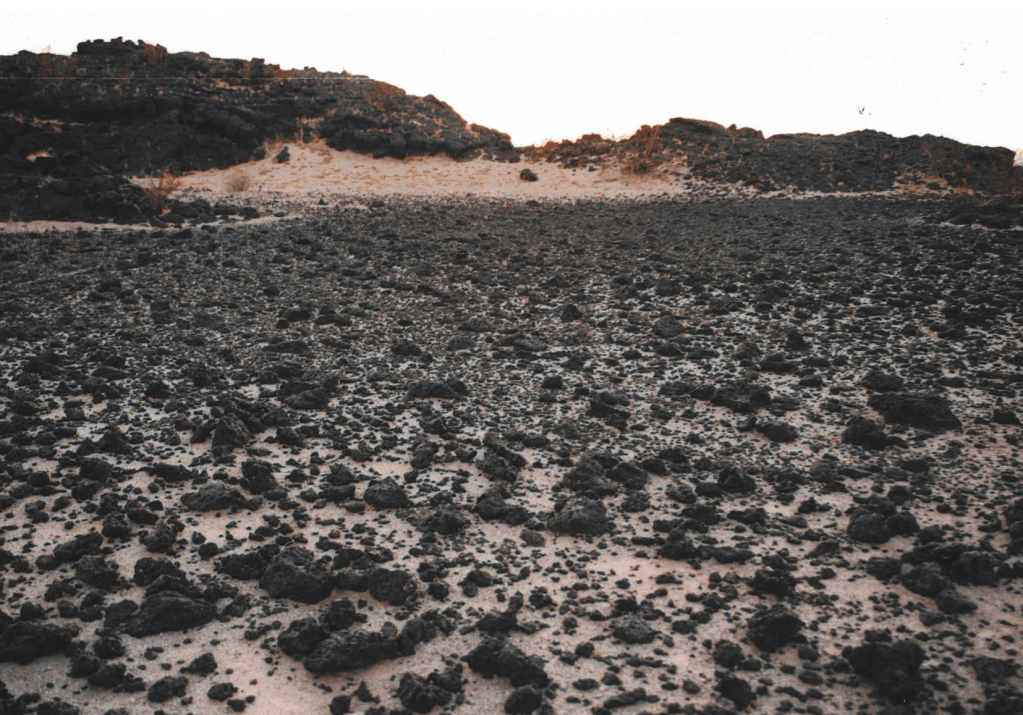
I parked, had a good cry, and then noticed tourist signs about Amboy Crater explaining that some of the volcanic activity in the area was as young 10,000 years! I didn’t go all the way to the crater but had a 30-minute walk through the lunar-looking landscape as I was trying to calm down. It did the trick to some extent. As sun set, I resumed my journey. The distance to the nearest city back on the motorway (Ludlow) was 30 miles: I would drive as far as I could, and walk if I ran out of petrol close enough, that was the plan. I treaded as lightly as I could on the throttle, and was on my way. I don’t think I ever talked so much to a car as on that trip.

Amboy crater
Amboy volcanics (some are as young as 10,000 years)
Amboy volcanics
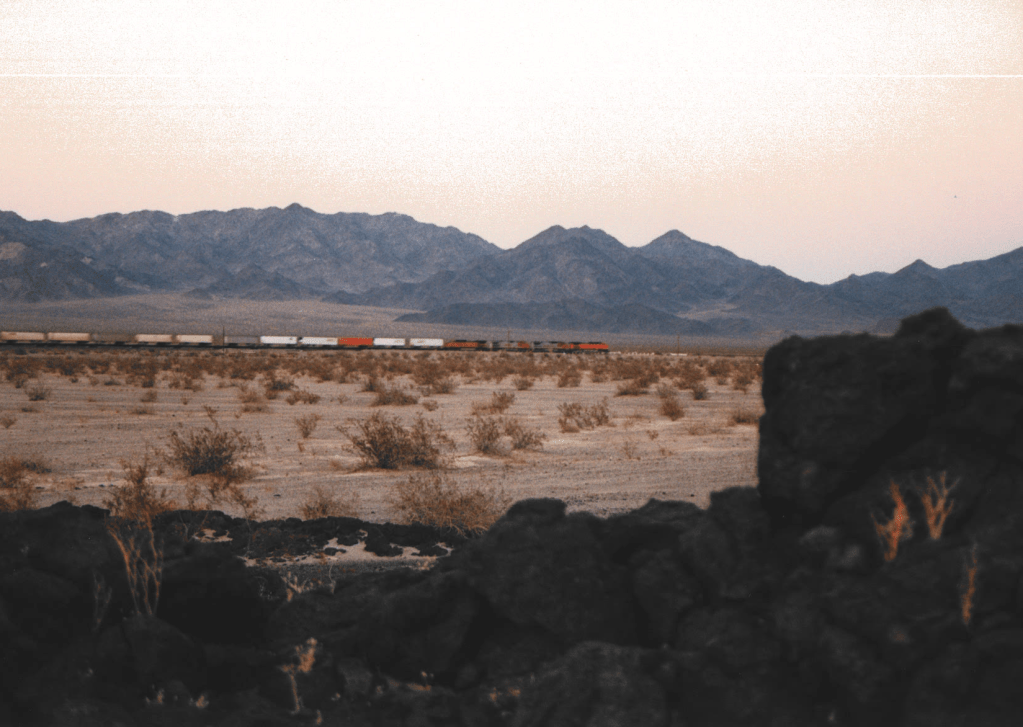
Freight train

I think I lost track of time. It got very dark. The car kept going. And then at some point a level crossing closed in front of me. What were the chances?! Because I had seen some of the km-long trains in the area before, I knew I was there for a while. The gauge needle was at the very bottom of the red but I turned off the engine, knowing I may not be able to start again. The train came and it was very long indeed. I stared at the dark wagons passing one by one, lost in my thoughts, when a miracle occurred: headlights in my mirror! A car! Behind me! As the car stopped, I came out of mine, trying to look as un-menacing as I could, and I explained the gentleman my situation. I asked if he was okay to follow me just in case I ran out of petrol, and he said yes. I felt so much better. After a while, the train cleared the crossing and we were on our way. The car actually started and made it to Ludlow. I may have kissed the wee car at that point.

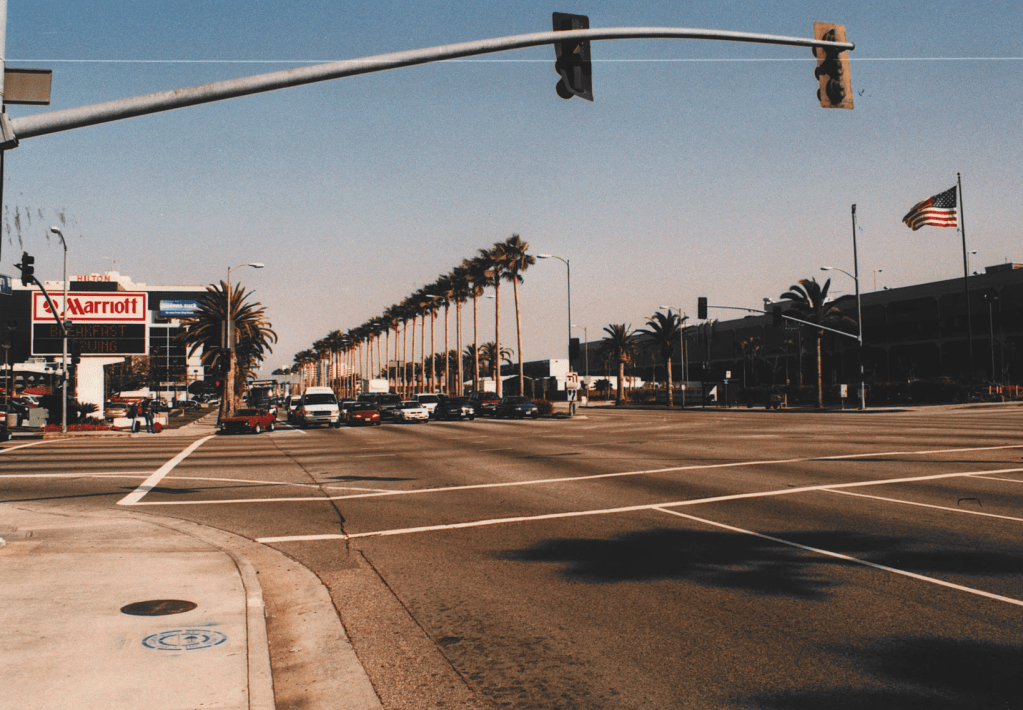
From Ludlow, the drive was relatively straightforward, although I managed to take a few wrong exits in LA and had to do a few extra detours – I really didn’t need that! But remember, that was before satnav: I actually had to read the road signs! It was past midnight when I came out of LA. At some point my muscles were aching really bad and I had to stop: I took the first exit I found and stopped by the roadside. It was dark and there was no one around. I came out of the car and started stretching when, under the motorway bridge, I heard some noise. A car started, lights turned on, and the car accelerated at a terrifying speed towards me. At that point I was too tired to react so I probably looked like a bunny in the headlights. I froze, and it was probably a good thing: by the time the car reached me, tyres screeching to a halt, blue and red lights were flashing, siren blaring, and someone was shouting on a loudspeaker. Blinded by the spotlight in my face, I instinctively raised my arms.

The policemen must have quickly realised I was no threat. They came out of their car and one of them had a big smile on his face: I must have looked terrified (I was). They told me I could relax, and asked me what I was doing. They explained me that there had been dodgy dealings going on in this place and that they were trying to ambush the criminals. They said they would stay with me until I was finished with my stretching. So, I finished my stretching, a bit frazzled, and got back on the road for the final part of my journey.

I reached Beth’s apartment in Santa Barbara around 1am I think. I felt terrible to arrive so late. Beth said she was not expecting me anymore, but wanted to know what happened, so we did end up having a chat, and I probably went to bed around 2am. That was a long day.

Day 5: travel back home!

I woke up at 6am because I had to prepare my bag, as well as refill and clean the car which was very filthy before returning it. I must admit I felt a bit sad when I returned it, as my companion didn’t let me down on that adventure. I then got on the bus to LA airport, got there, checked in my bag, and decided to have a quick lunch with what was remaining from the trip: some bread, a tin of tuna, and some ketchup. Unfortunately, my can opener was on my Swiss army knife which was in the bag that had been checked in. I therefore had a ketchup sandwich. I went back in the airport, went to my gate, onto the plane, fell asleep, and woke up halfway across the Atlantic. I was so tired I didn’t even notice we took off.

Last picture of the trip. I think I was waiting for the bus to the airport

I will never forget this adventure. I had many afterwards, and I have been lucky to travel to some wonderful places for my job (or not), but this trip was a defining moment. It gave me this drive to try to make the most of any new opportunity to discover a new place, its landscapes, its people and its culture. A road trip is wonderful: the car allows you to go at your own pace and make your own path, while also providing a safe haven (you can sleep in it, keep warm and dry in the worst situations). It allows you to change plans at the last minute and visit places off the beaten track. I met extraordinary people, saw extraordinary places and had extraordinary food in locations where only local people tend to go.

I guess I tried to do a bit more planning following this trip, as there were some very desperate moments I would not want to re-experience. The balance of “time in the car” versus “time exploring without the car” was also leaning too far towards the former to my liking. Satnavs, Google and international roaming make planning easier these days; maybe too much? Nevertheless, I always try to ensure there is an element of spontaneity and unplanned activities in my trips, sometimes to the despair of some of the people who end up tagging along. These tend to be the most memorable parts.

I understand road trips are not incredibly environmental friendly, but the advent of the electric car may offer some greener options for the future!

I really enjoyed reliving this adventure through this blog. I hope you enjoyed the story!

Mikaël Attal, February 2022

Philippines 2019 – A taste of Filipino cuisine

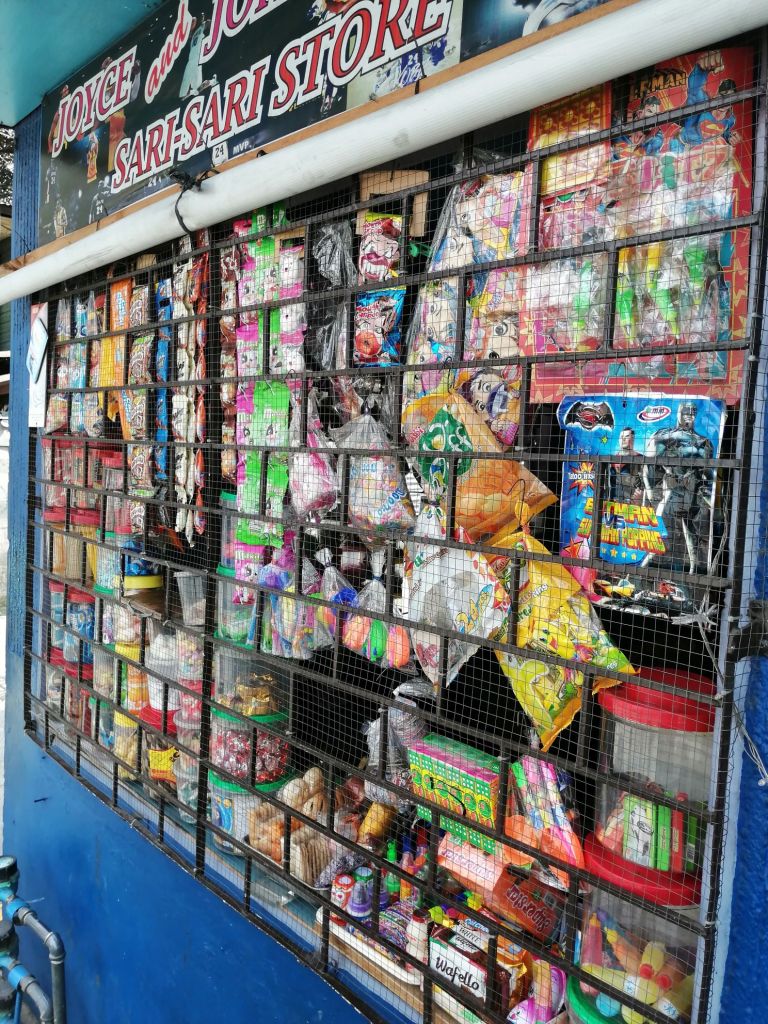
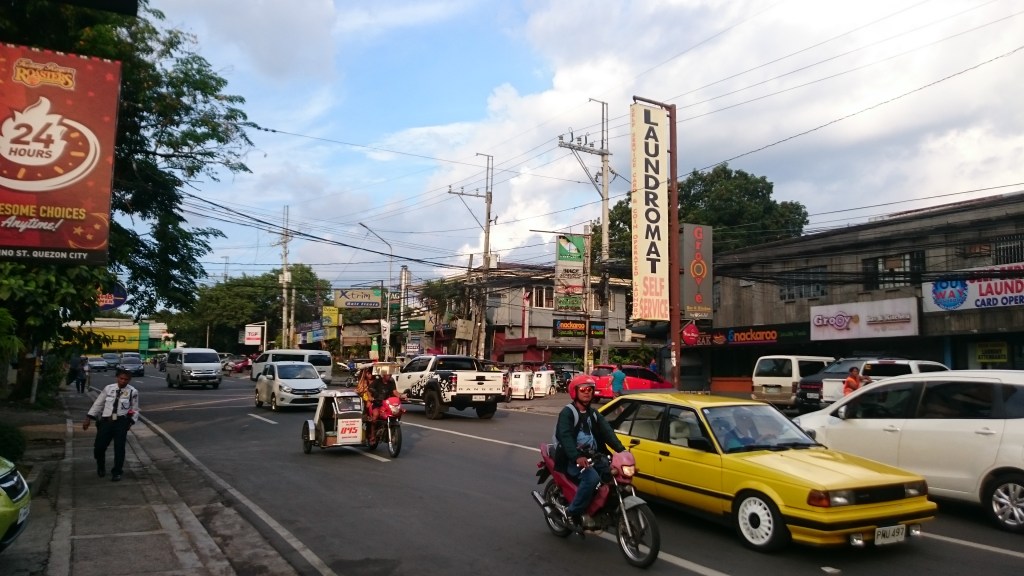
One of the highlights of visiting the Philippines is the food. Filipino cuisine is mostly unknown in Europe: when is the last time you saw a Filipino restaurant? It is not Thai, it is not Chinese or Indian, it is not Japanese. It mixes a range of influences (including Mexican and Spanish) into something unique, diverse and tasty… as long as you are not vegetarian / vegan. Most dishes are meat or fish based, and rice is the staple food. But vegetarian restaurants are starting to sprout in places. Actually, many dishes involve vegetables, but if you go to a restaurant and order only a vegetable dish with rice, you will be warned “but this has no meat”, as in: “are you sure this is the only thing you want to eat?” It systematically happened to me!
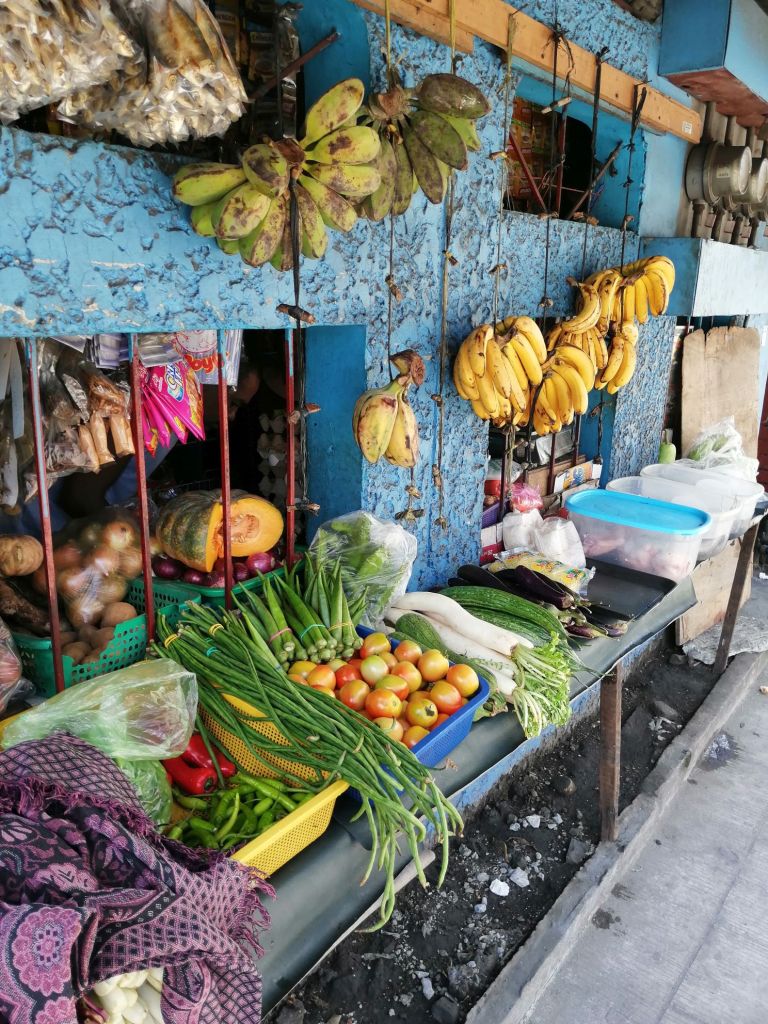
The Philippines have a huge diversity of fruits and vegetables, including beans and aubergine, okra, chilli, cabbage, many varieties of local bananas, mangoes (yellow and green), as well as more exotic things such as chayote, calamansi (a tiny lime used everywhere in food), dalandan, guava and guyabano (very tasty!) Fish is eaten fresh or dry. In terms of meat, pork is king, with chicken probably coming second, and then pretty much anything that can be eaten.

Small market shop selling fruits, vegetables and bits of meat (in boxes) in Cubao
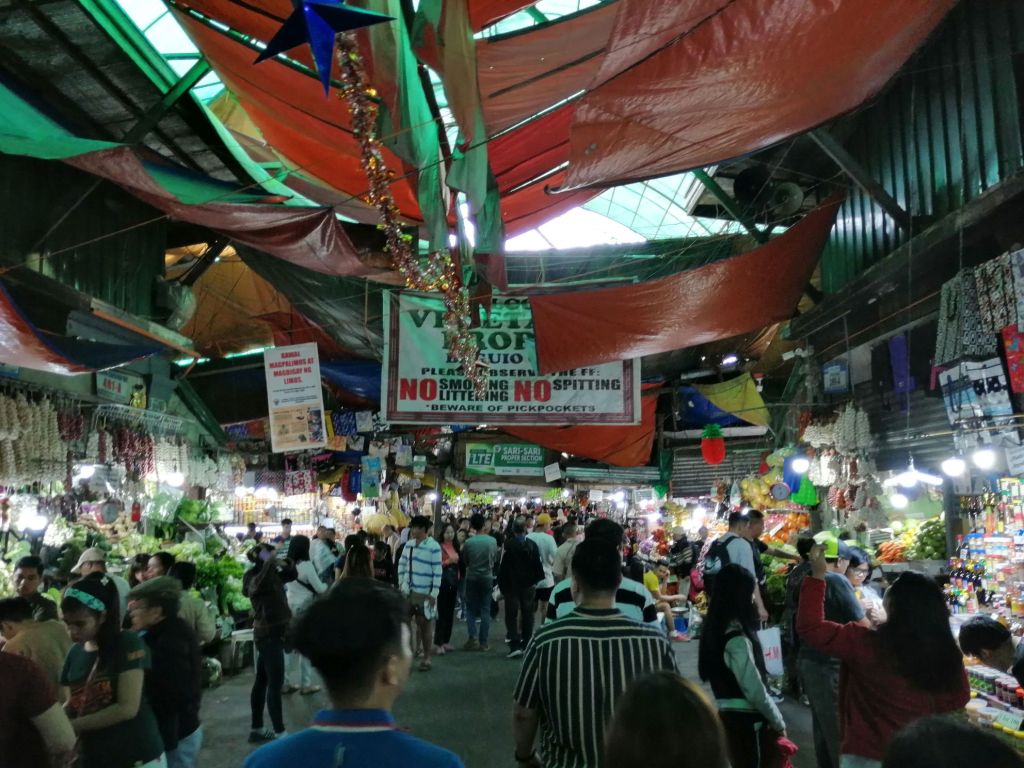
Dry market in Baguio
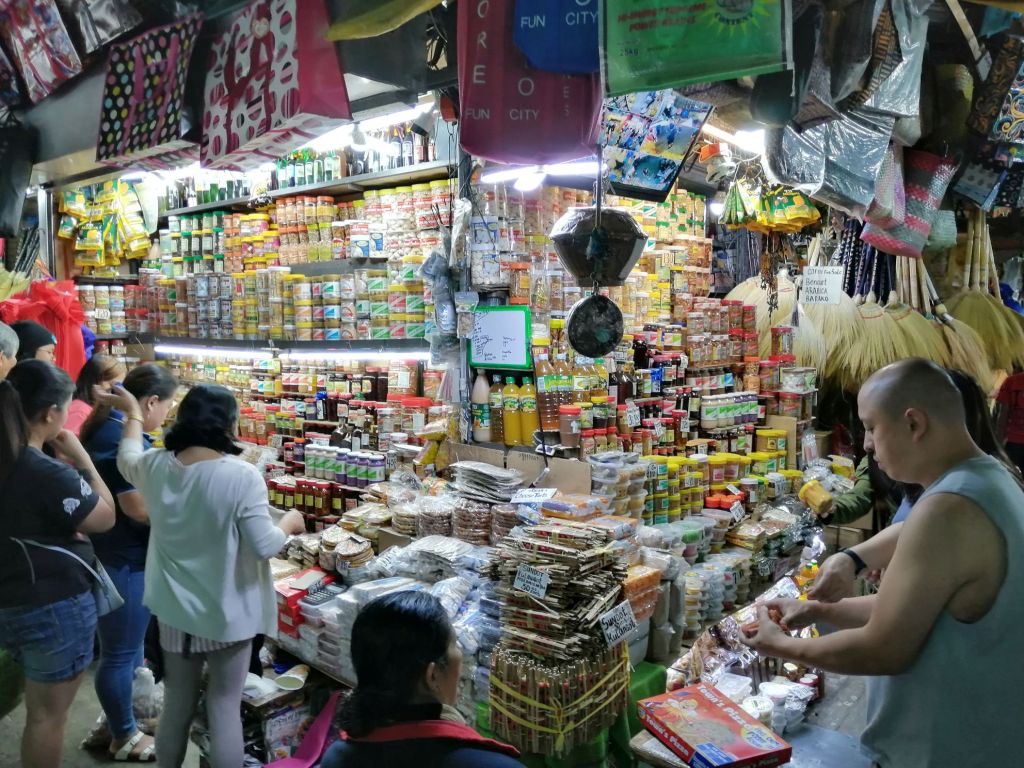
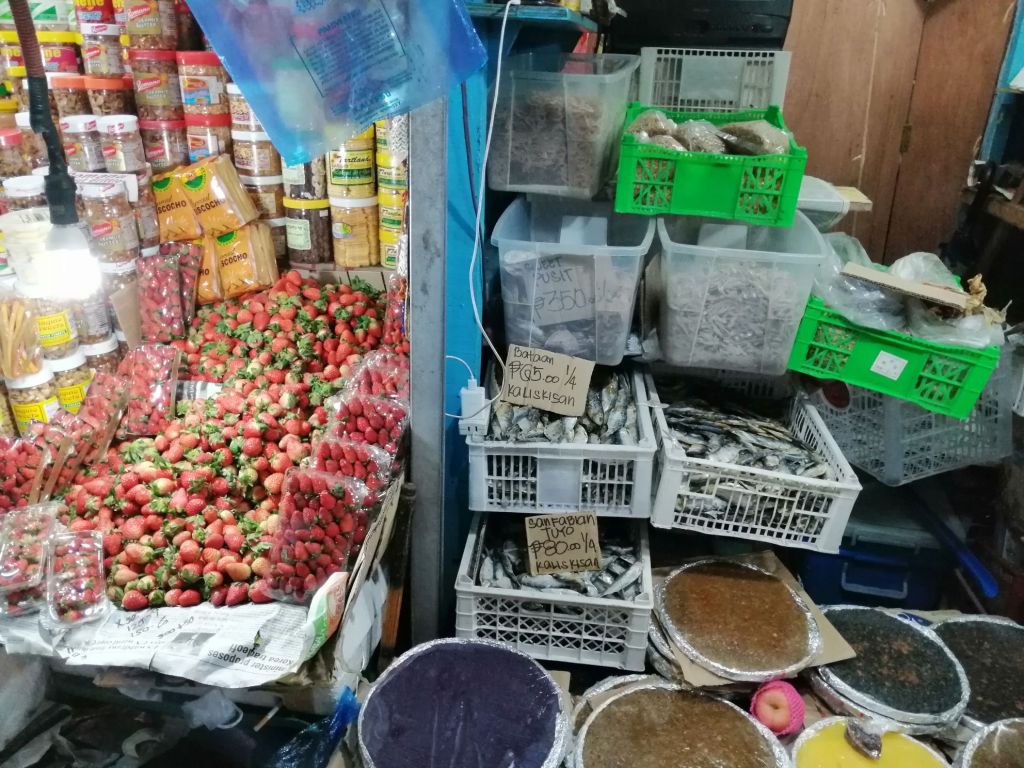
Dry fish and strawberries, local specialties at the dry market in Baguio

There is no waste: all bits will be accommodated in a range of ways, from the delicious traditional bulalo (bone marrow soup) to the challenging chicken head skewers. I drew the line on the latter: as far as I can tell, eating one of these involve a lot of crunching, chewing, sucking and spitting bits (as demonstrated by our driver!) which didn’t seem particularly attractive.

But back to the eateries! The three most popular, based on my experience, are:

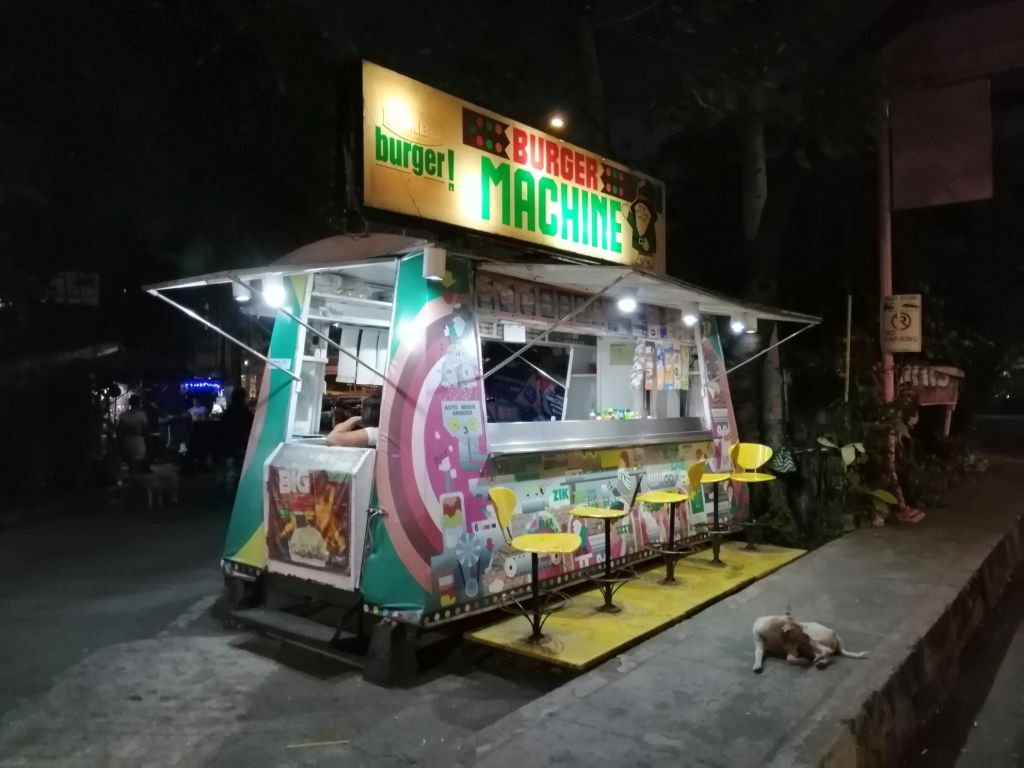
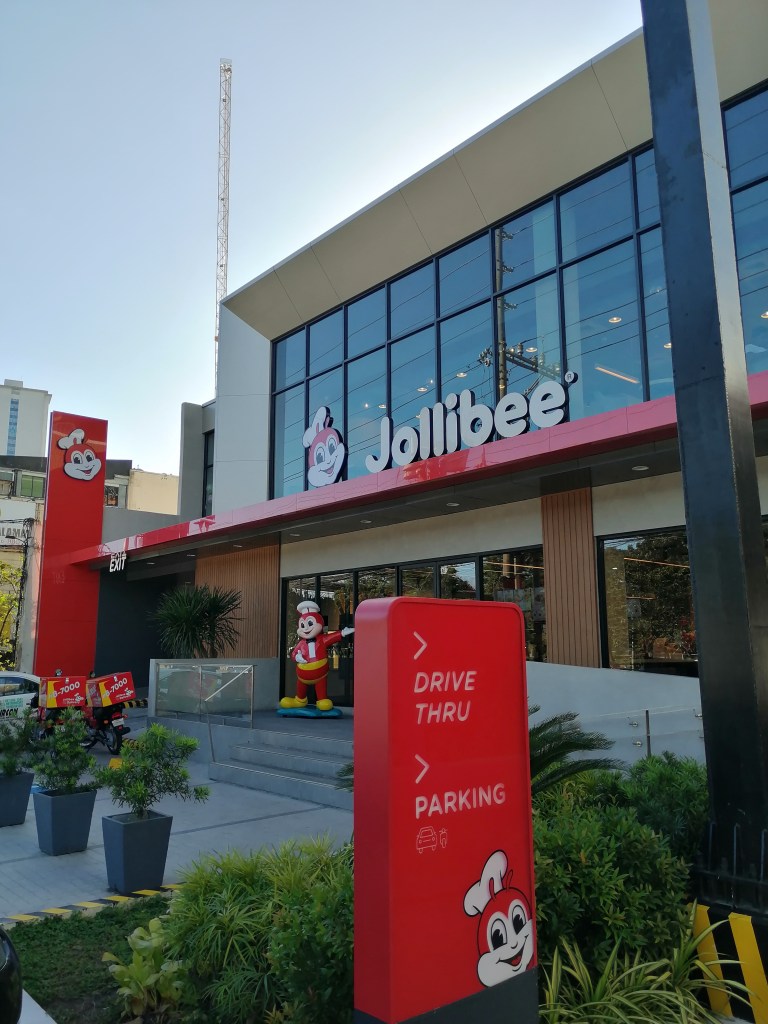
  • Fast food. They are probably the fastest growing type, as the USA lifestyle is being sought after. The usual suspects are there: McDonald’s, KFC, Burger King, as well as Jollibee which is the homegrown, #1 fast food chain in the Philippines. I won’t develop on these: you will get the same thing as back home, only with rice. Oh and Jollibee will serve spaghettis Filipino style (with sweet tomato sauce).
Jollibee, the Filipino fast food chain
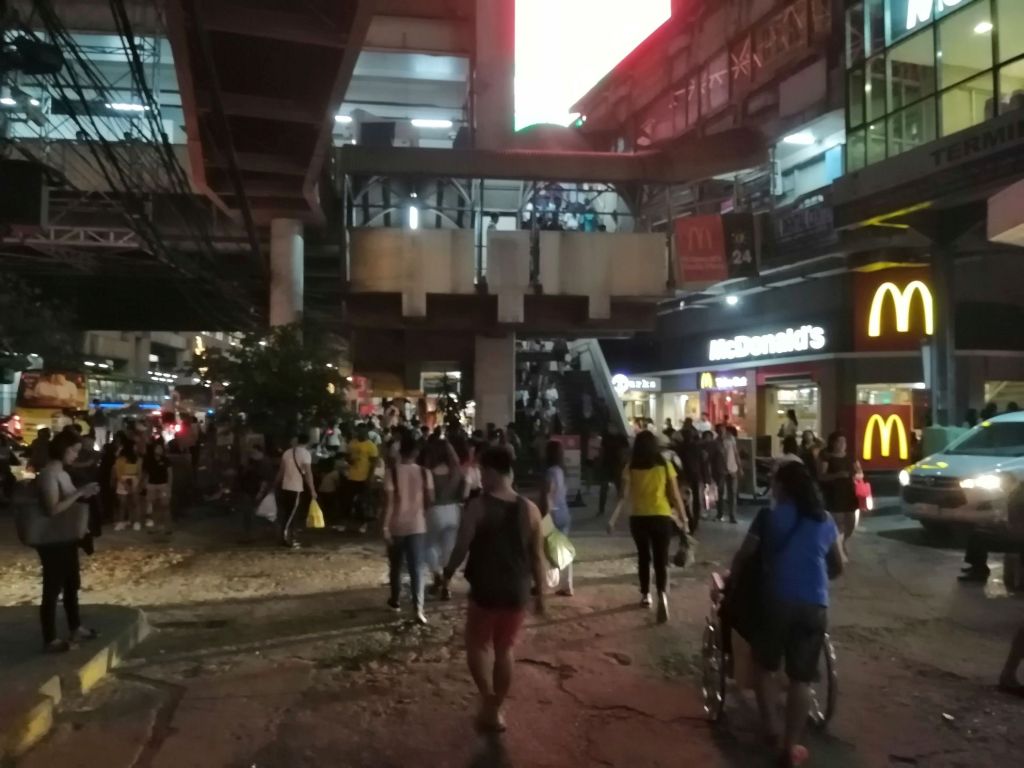
McDonald’s at the busy Taft Avenue metro station, Manila
Fried chicken, a Filipino favourite
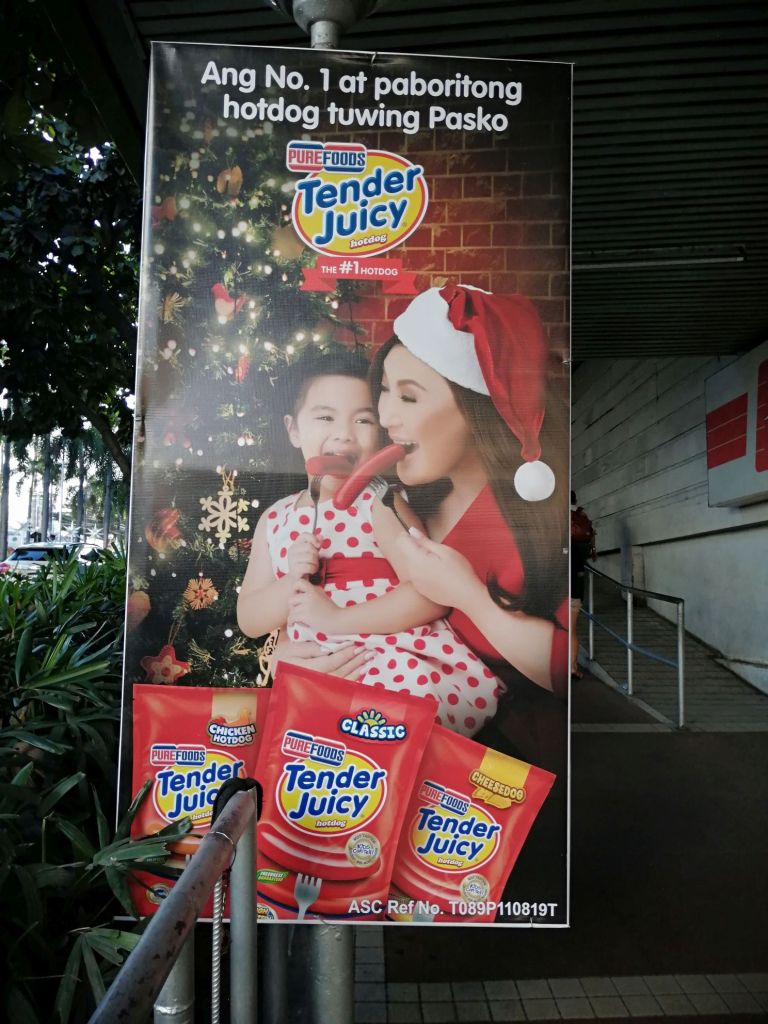
Who could say no to hot dogs? Or cheese dogs?
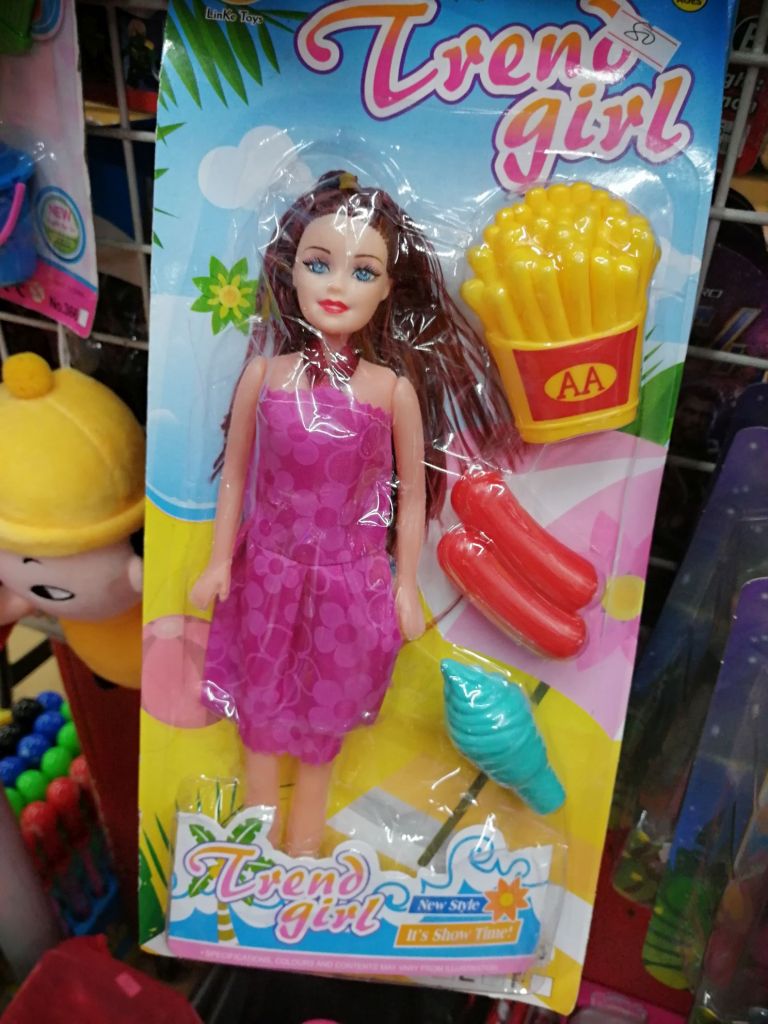
Trend girl eats chips, sausages and ice creams
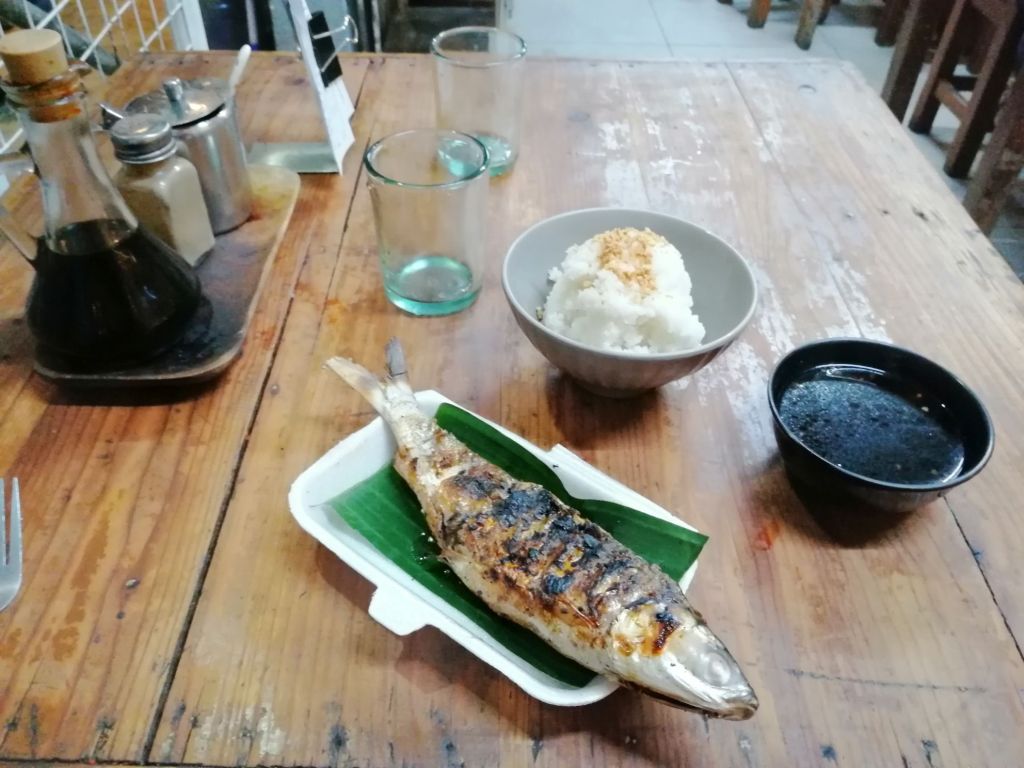
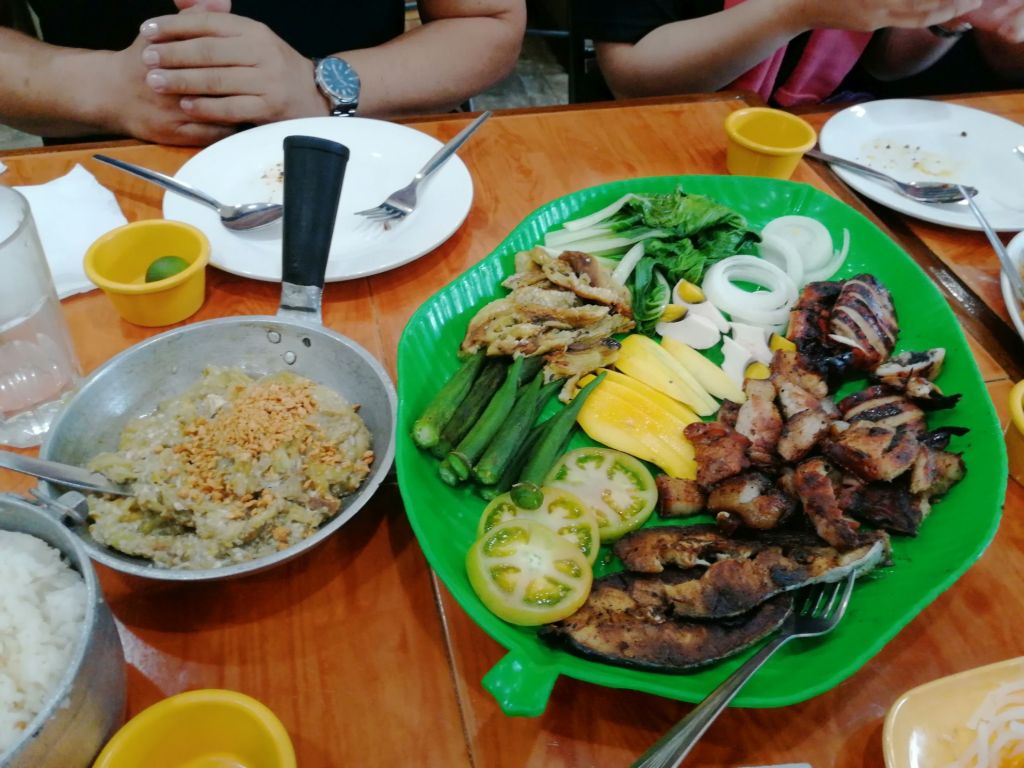
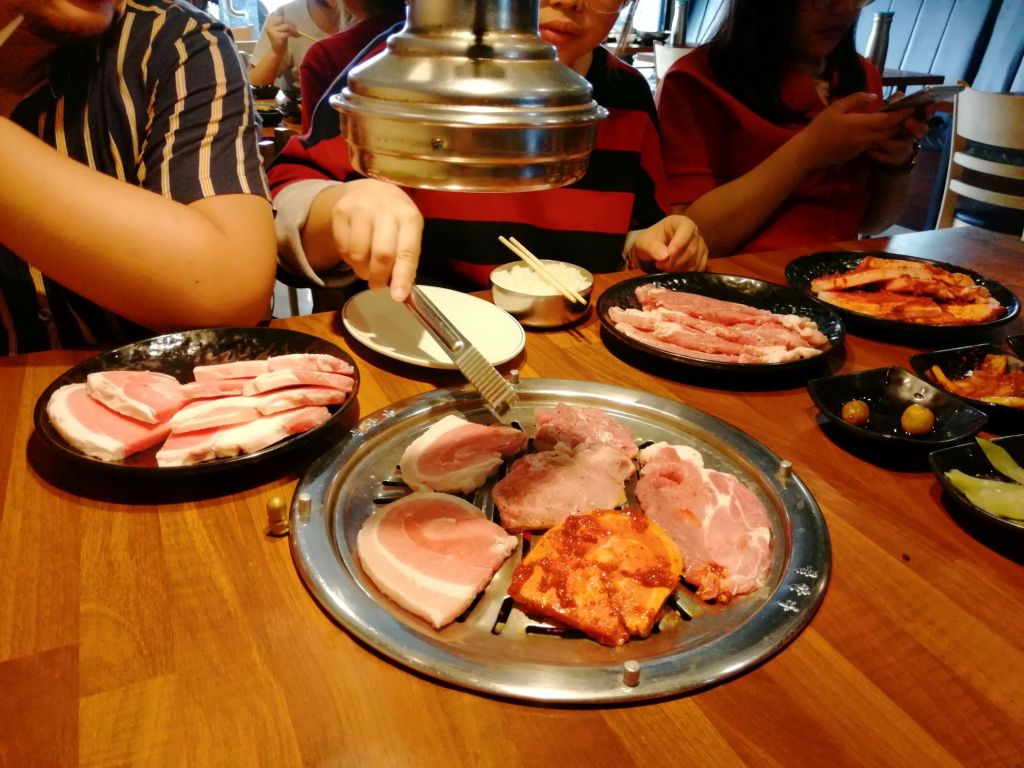
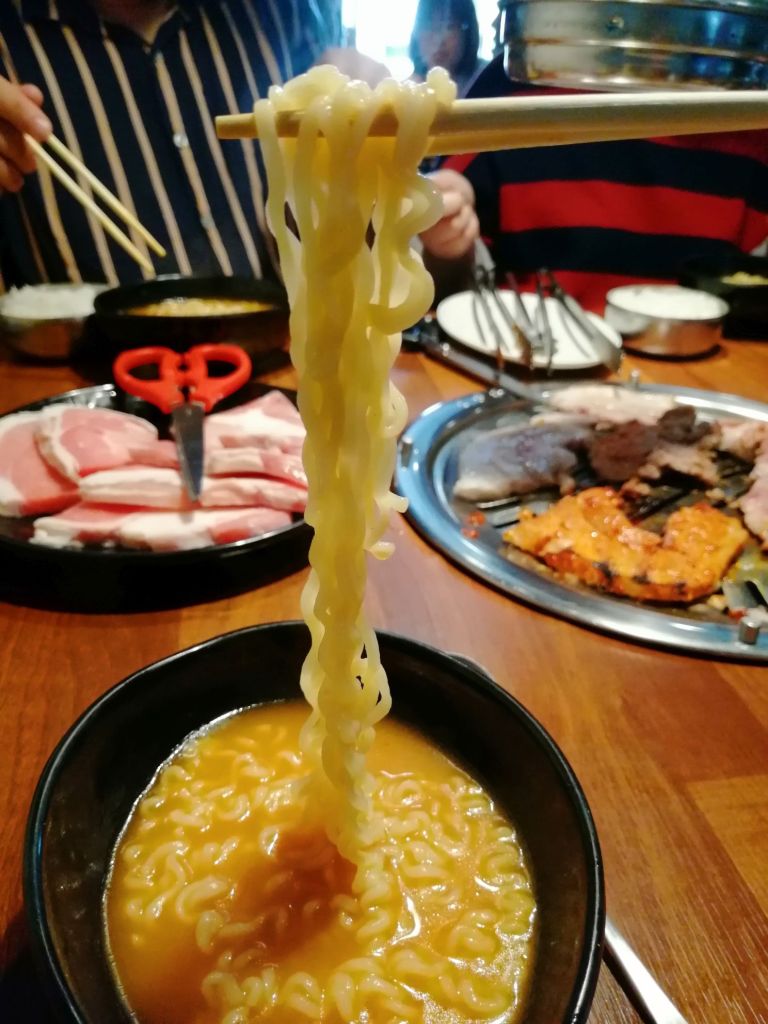
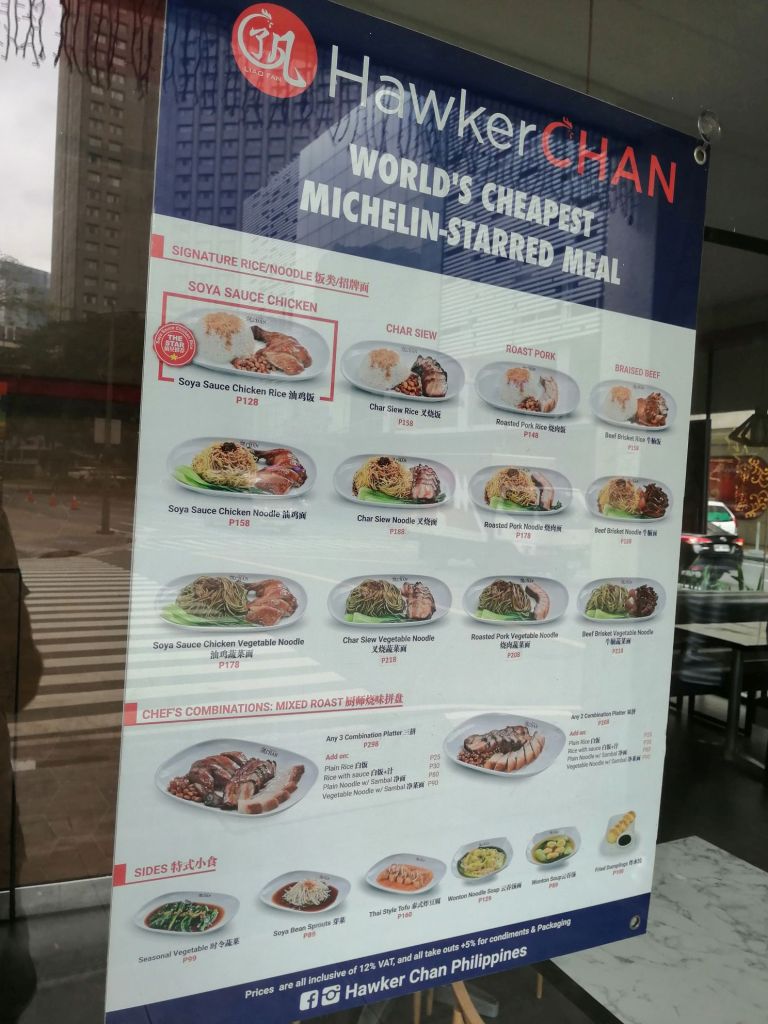
  • Restaurants: there is a lot on offer, in particular in Manila. I would say the most common are Asian: Japanese, Chinese, Thai, as well as many Korean BBQ places (there is a large Korean community in the Philippines). They do love their noodles / ramen here! I haven’t seen much European or Indian, except for a few pizza and pasta places. There are of course many traditional Filipino restaurants, including those that serve the unmissable “lechon” (hog roast) which is the food of choice when people celebrate an event. Food is not too expensive: typically £2-3 for a course, which can go up to £8 in fancy restaurants. In Makati, Manila’s business district, there are a few top restaurants with mains up to £20, but that is the exception rather than the norm. There is also a restaurant claiming the world’s cheapest Michelin meal there!  
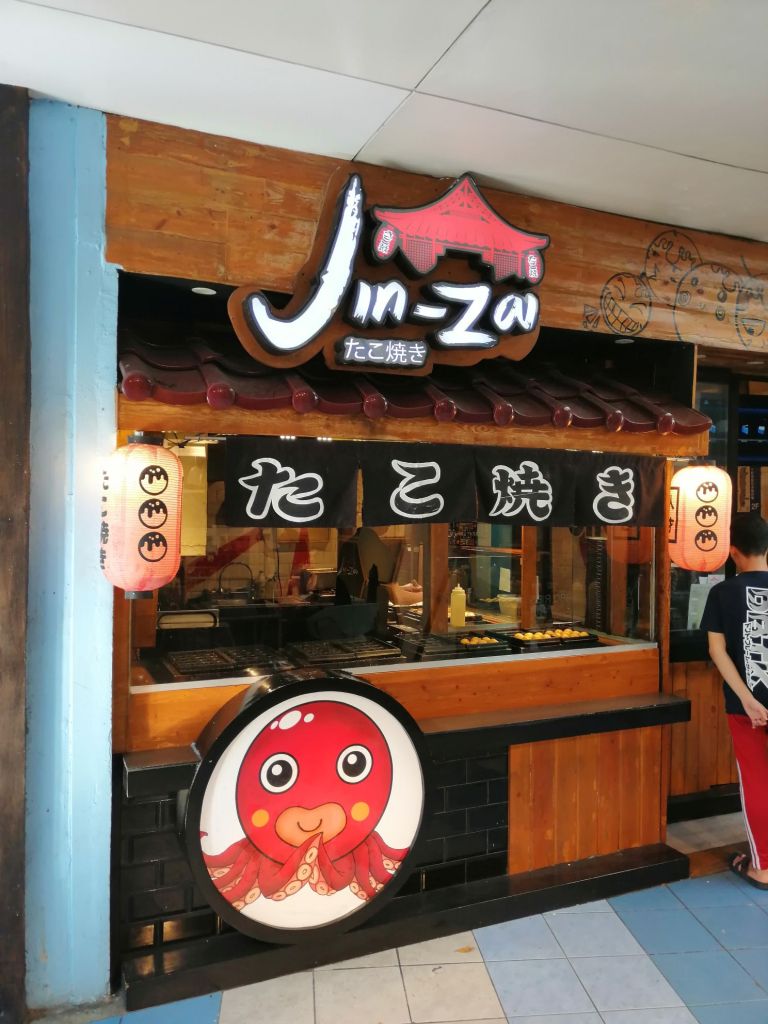
Japanese restaurant
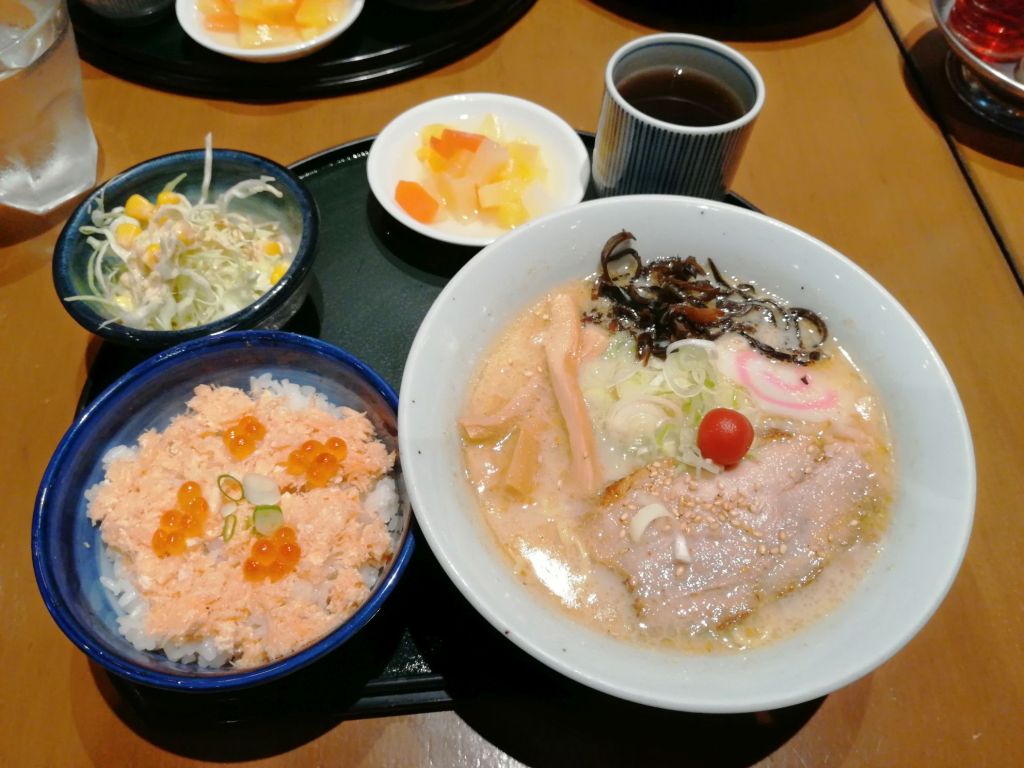
Ramen!
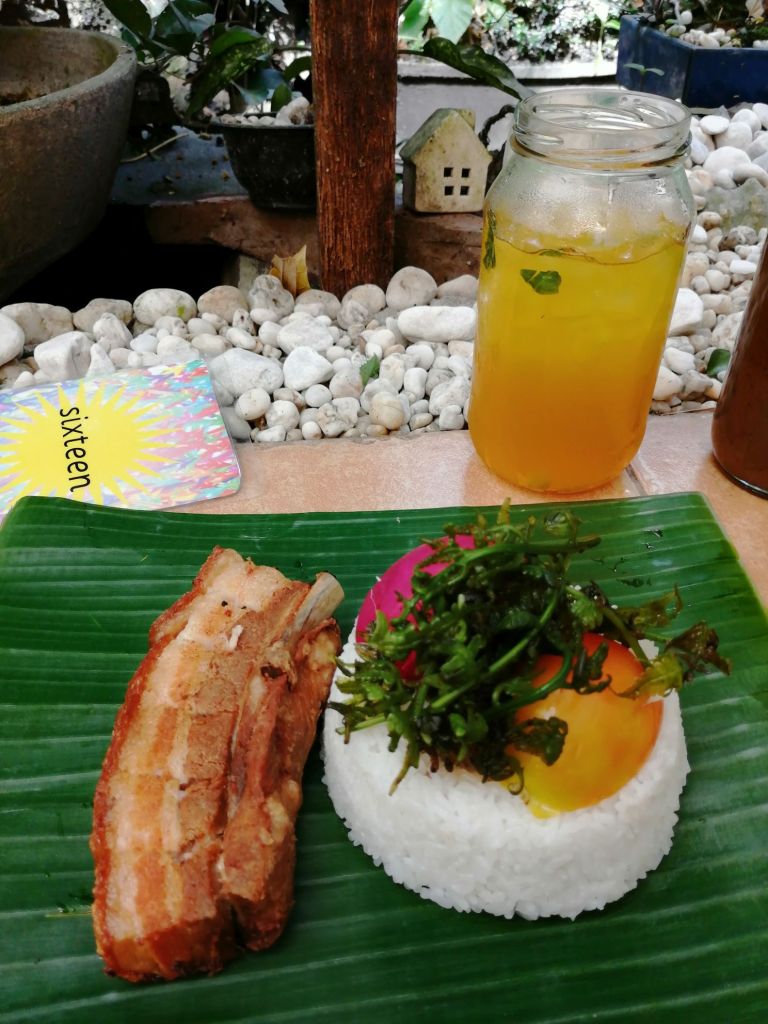
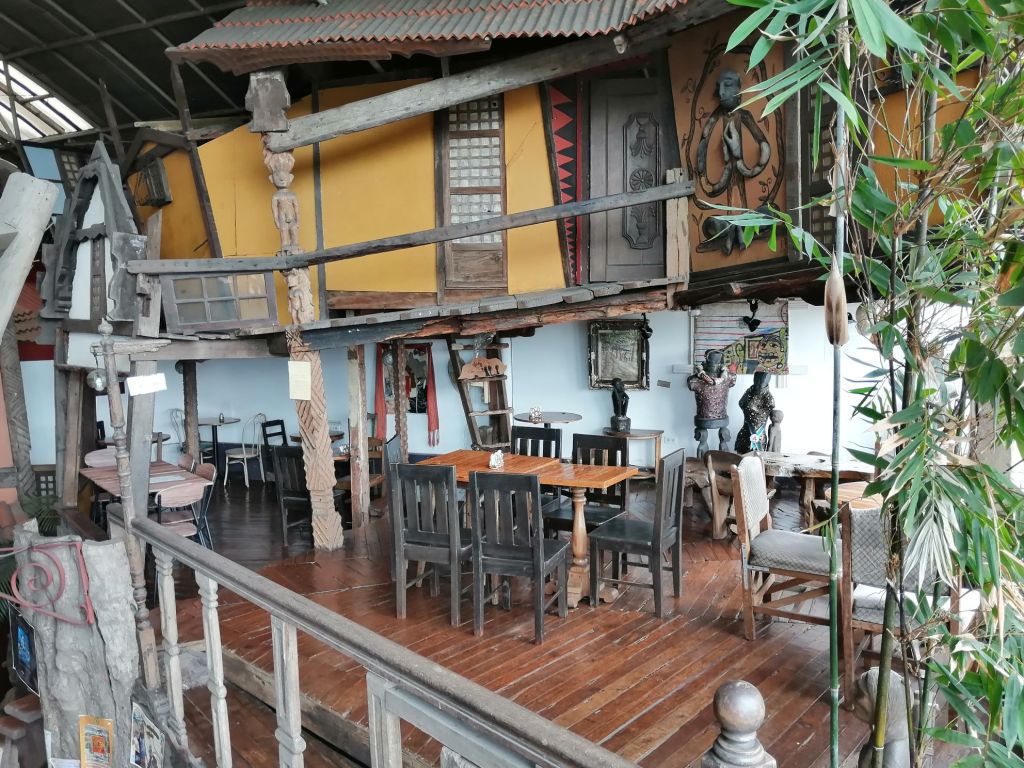
Adobo (?) pork belly with rice, salt egg (purple), tomato and fern salad at Gubat QC, a bonsai garden restaurant near the UP campus. No cutlery or plates there. The food is delicious, as is the traditional iced tea.
Maong grill, UP campus
Grill at Solibao, Baguio
Korean BBQ (Samgyupsal)
Korean BBQ with noodles
Incredible “Oh my Gulay” vegetarian restaurant on the top floor (6th floor) of a building in Baguio
World’s cheapest Michelin starred meal in Makati!
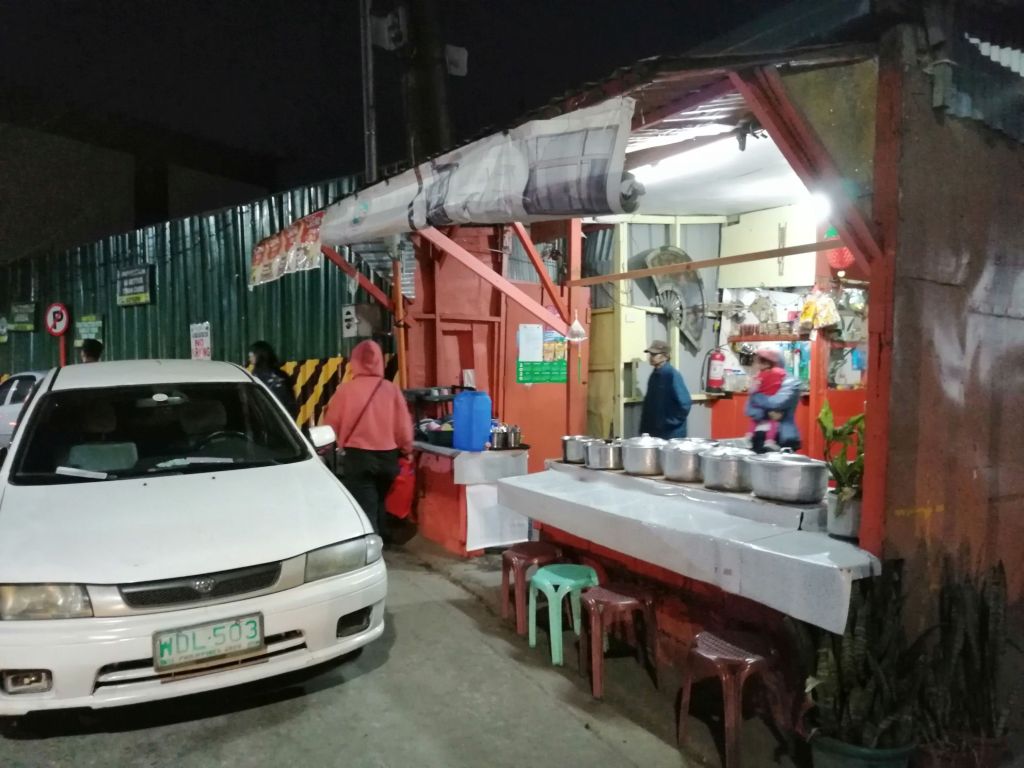
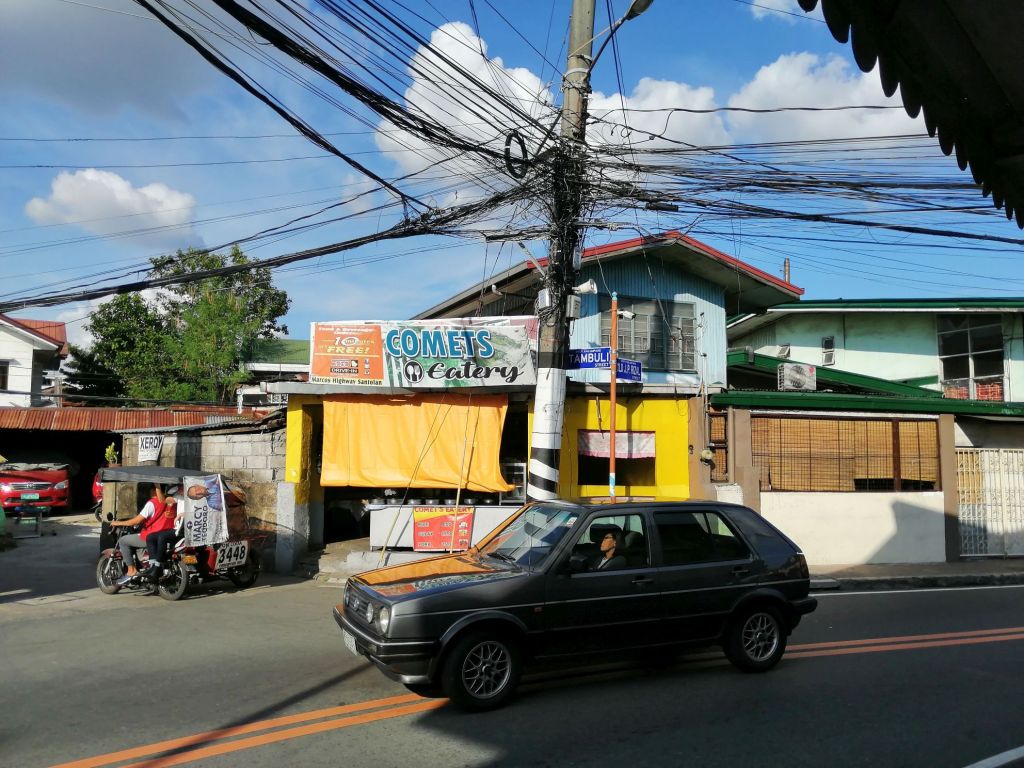
  • Then, there are the turo-turos. These are probably the best places to appreciate traditional Filipino food. They are local eateries you can find everywhere, open until late: the dishes are presented in a glass cabinet or in pots, and you point at what you want (“turo” actually means “point”) before seating on a plastic chair wherever you find space. A meal is between £0.70 and £1.50, including rice. You will find things grilled, fried or cooked in sauce, including some delicious vegetable dishes (but you will be warned these are “vegetable only”). Many dishes are slow cooked; some of my best food experiences have been in turo-turos. Some of my worst too, I must admit: there was a meal once, I have no idea what it was, and I honestly don’t want to know. But I’d say 9 out of 10 have been worth it! Tonight, I tried “sisig” which I have seen advertised in many places: clearly a traditional dish. It was tasty but the consistency was intriguing. I have just discovered it is grilled bits of pig’s jowl (I am pretty sure the cartilaginous bits were slices of ears).
Turo-turo in Baguio. They come in all sizes and shapes.
Comets eatery, Marikina, Manila
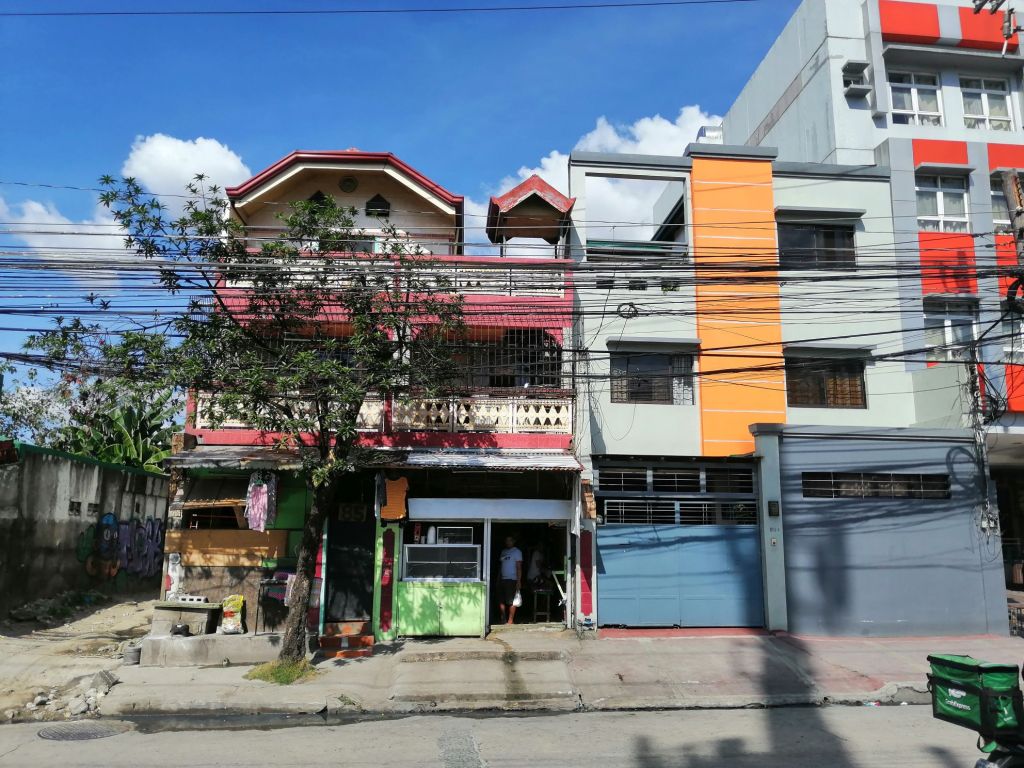
One of my local turo-turos, 1 minute away from home
Find a seat and eat!
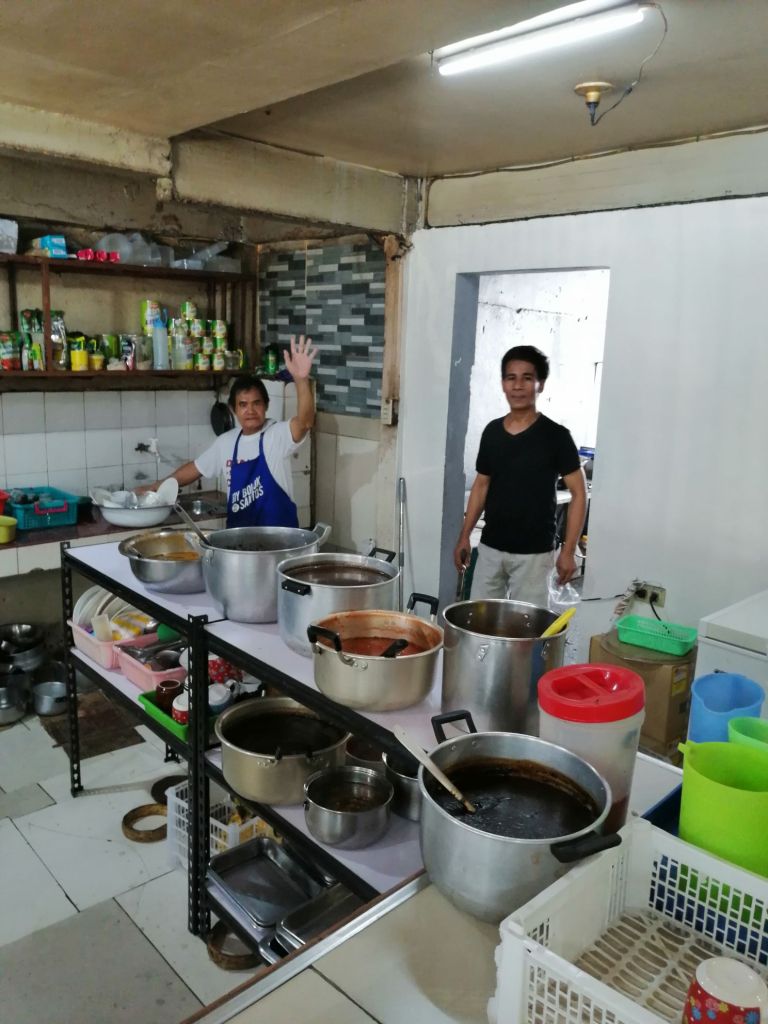
Chefs at work at Baby’s Carinderia in Marikina, Manila
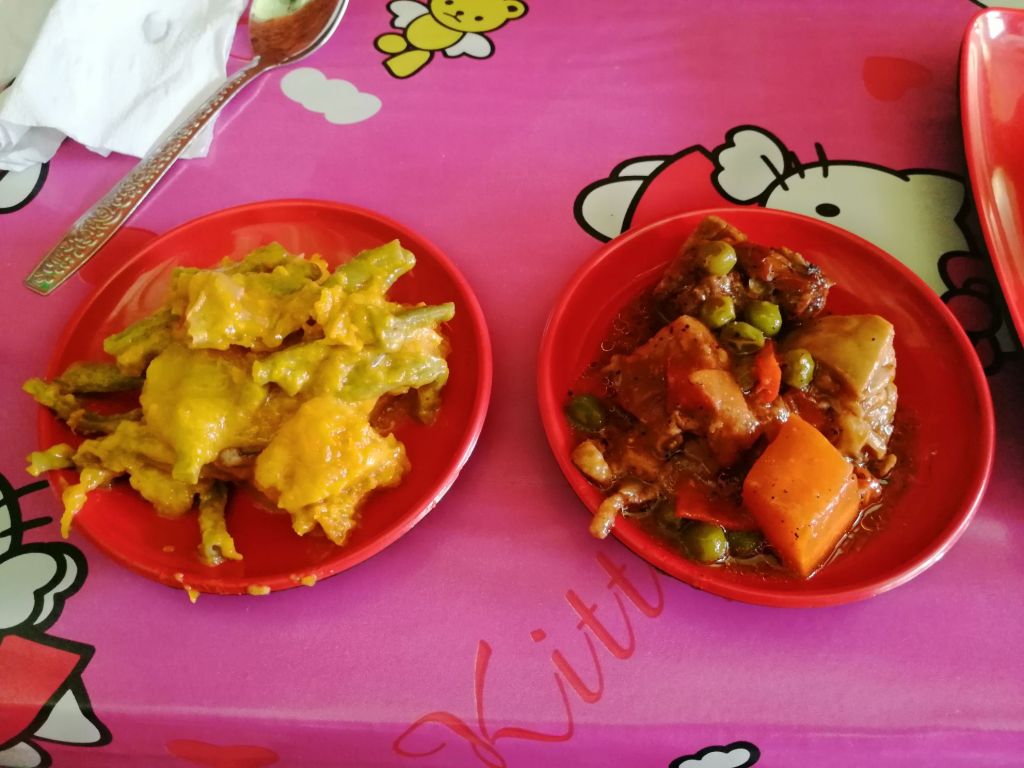
Squash (?) and beans in coconut sauce (left), chicken stew (right). Served with a good portion of rice. £1.20.
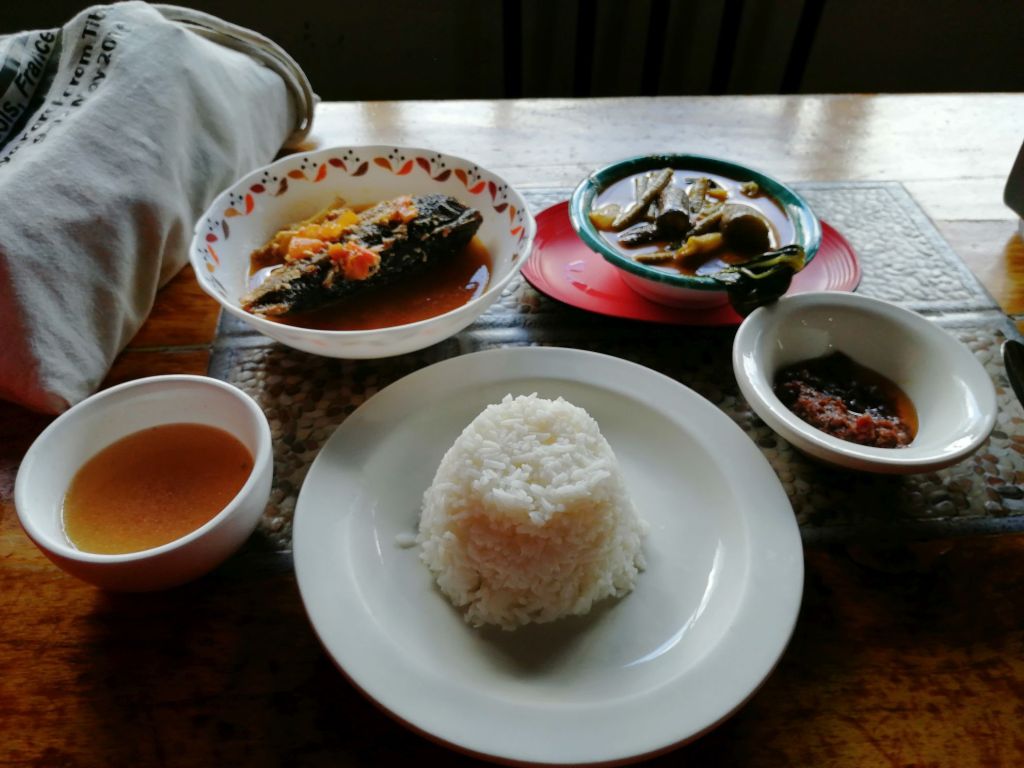
Another £1.20 meal, including fish in ginger and tomato sauce, sauteed aubergines and pak choi, and pickle + soup.
At my local turo-turo on the last night. When I told them I was going back home, the lady shouted “time for a photo!” Lovely place, lovely food, lovely people and lovely smile!

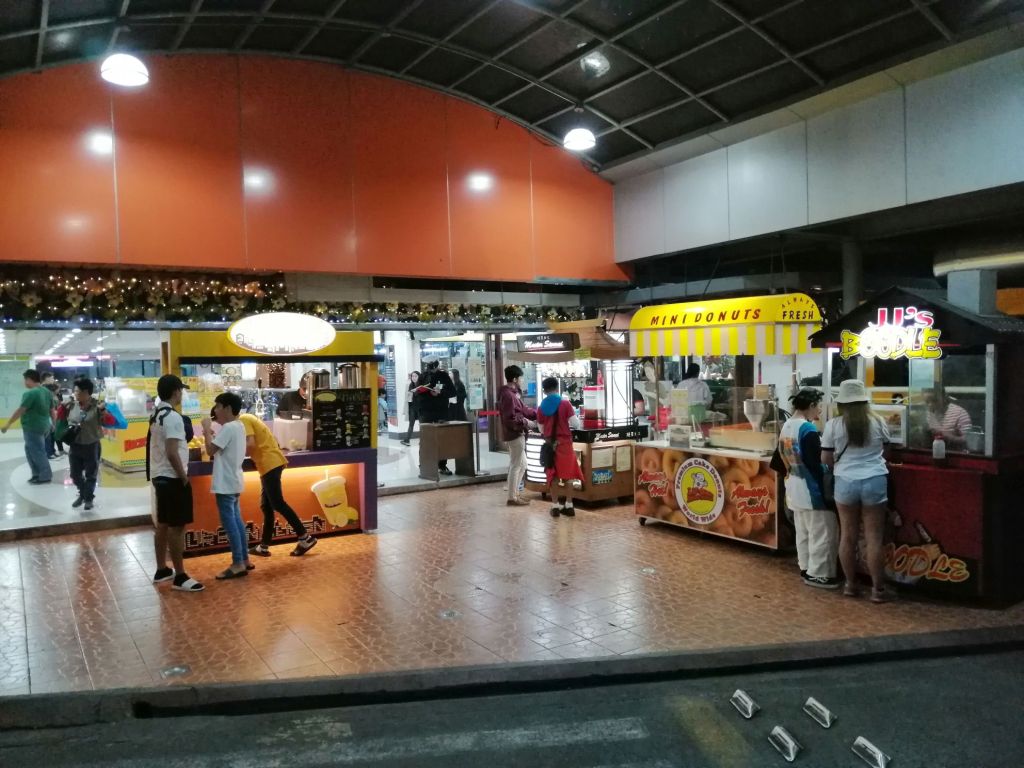
There is also a lot of street food, including street BBQ and street frying stands, but I haven’t been courageous enough to try the latter on my own. Food is available everywhere at any time, because Filipinos do love to eat all the time. Three meals a day does not apply here!

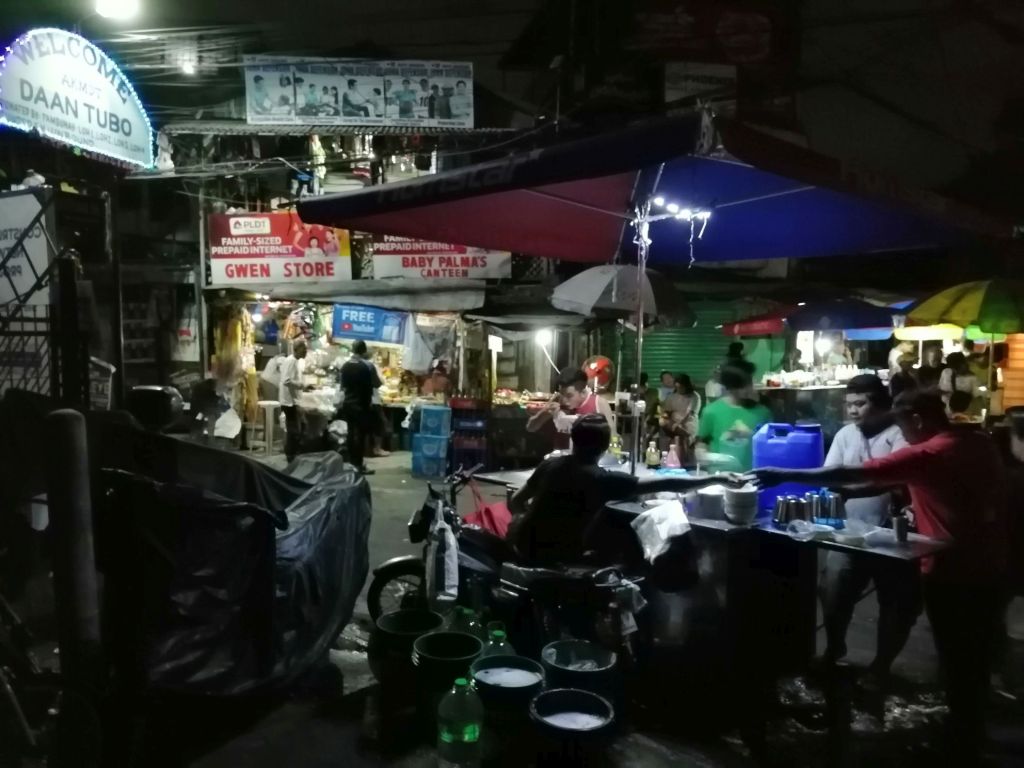
Street food near UP campus
Needing a snack?
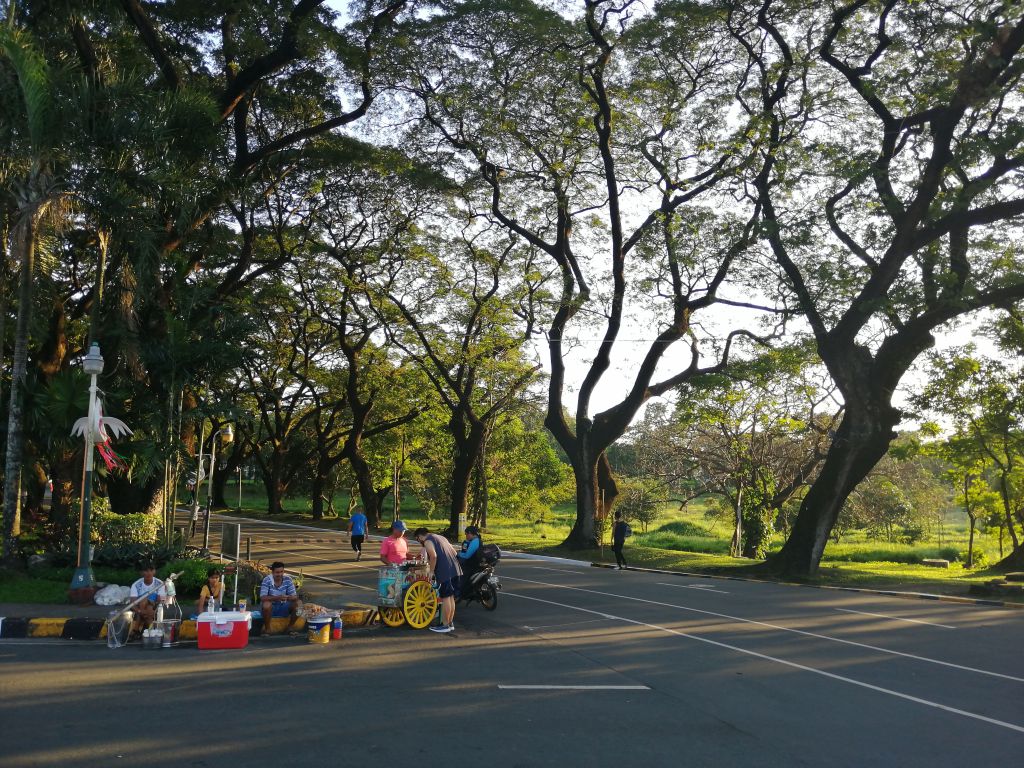
Ice cream on UP campus
Spoiled for choice, Baguio
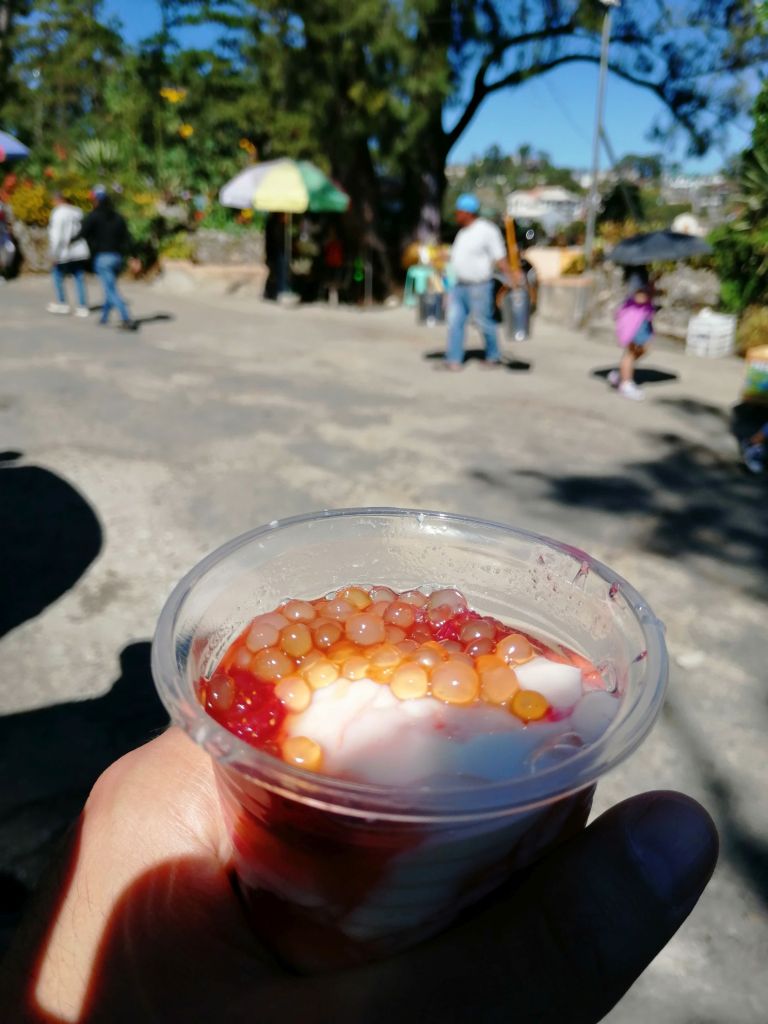
Taho, a silky tofu substance served chilled with tapioca pearls and sweetener, here a local strawberry sauce in Baguio. Served by local vendors on foot. Very tasty!

A final outlet of choice: the café of course! The Philippines produce coffee, and their baristas are well trained: excellent coffee is readily available, usually served with cake. For those seeking something more refreshing, iced coffee or pearl milk tea are popular choices.

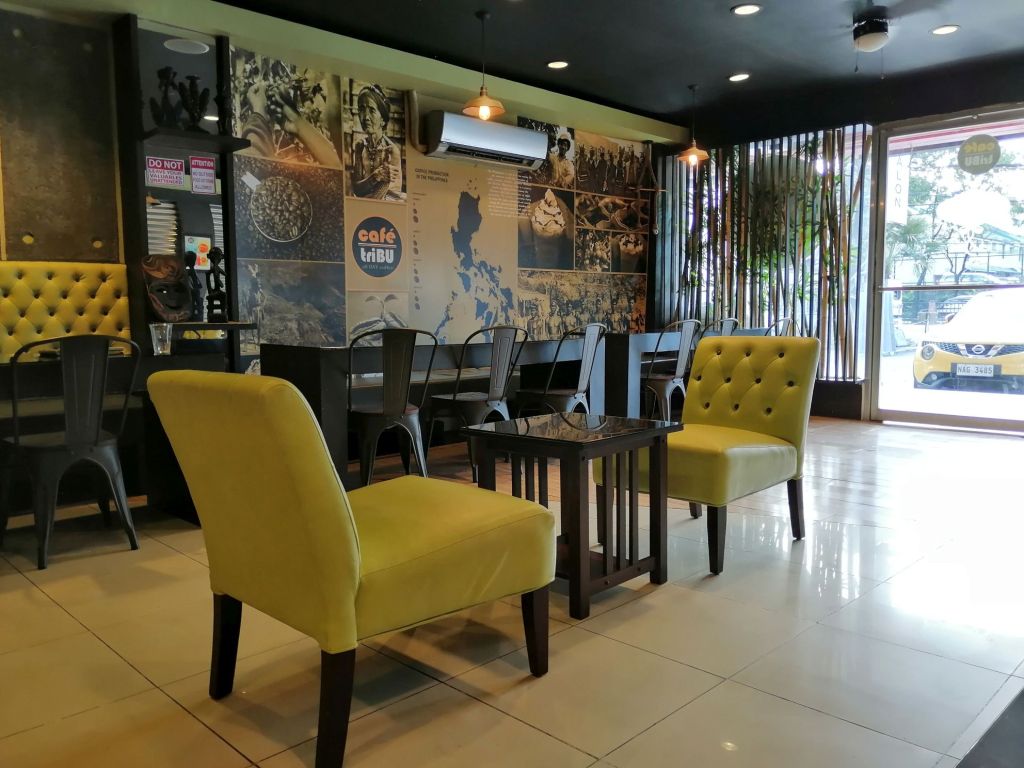
It is easy to find nice cafes with relaxing atmosphere in cities. They serve excellent local coffee. Cafe triBU, on Ortigas Avenue, Manila
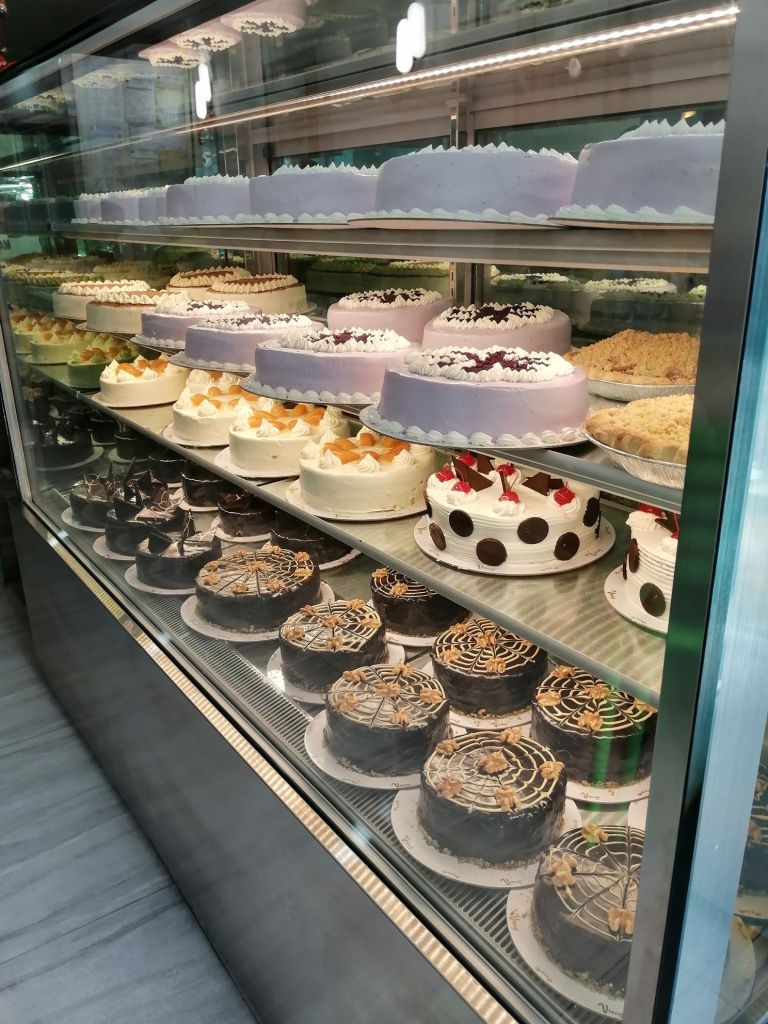
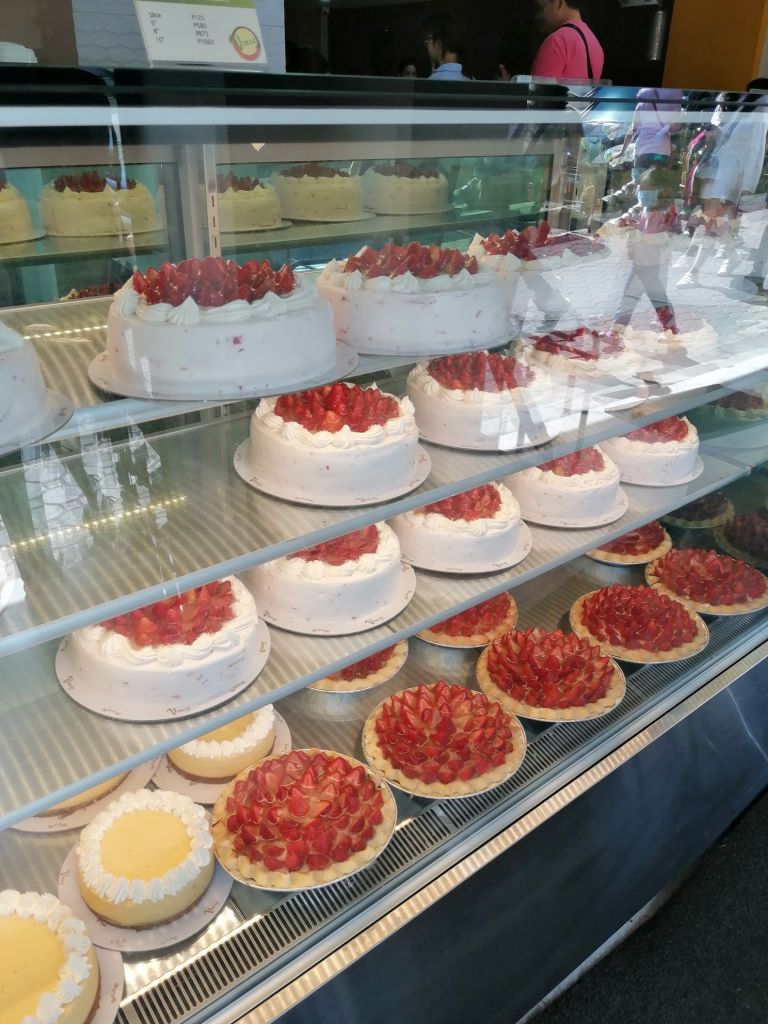
Vizco’s famous cake shop in Baguio…
… with their bestseller – local strawberries
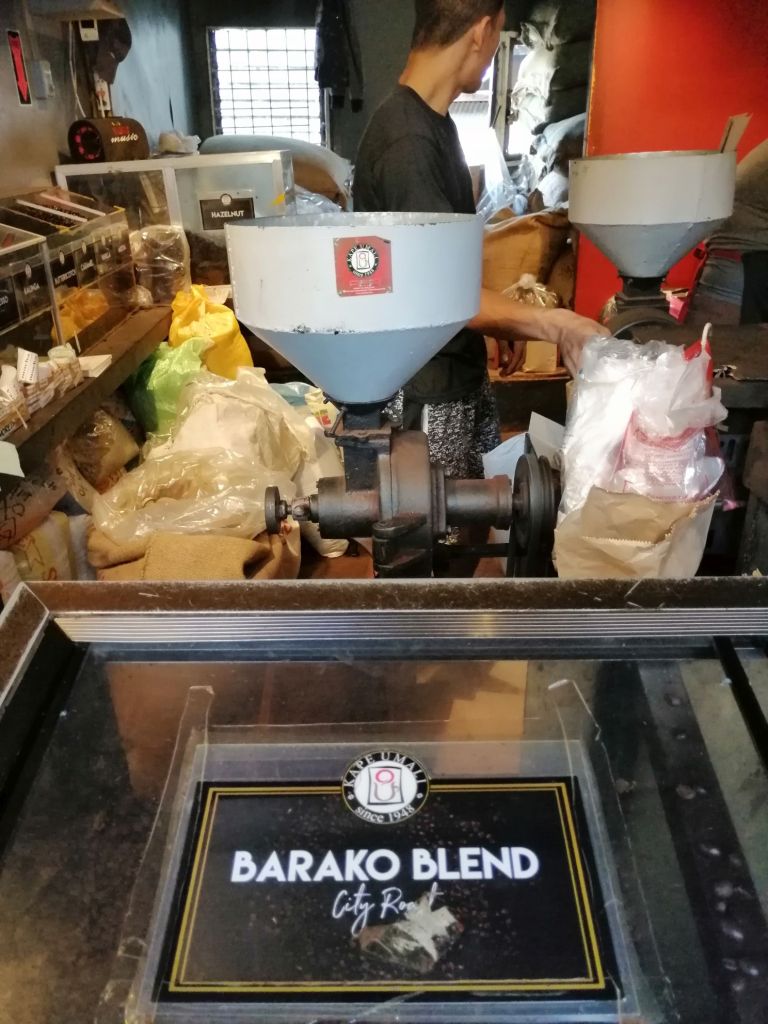
Get your fresh coffee beans ground at this shop in Baguio

If you want to do your own cooking, there are markets and a range of supermarkets, from the ubiquitous convenience store to the giant mall’s supermarket.

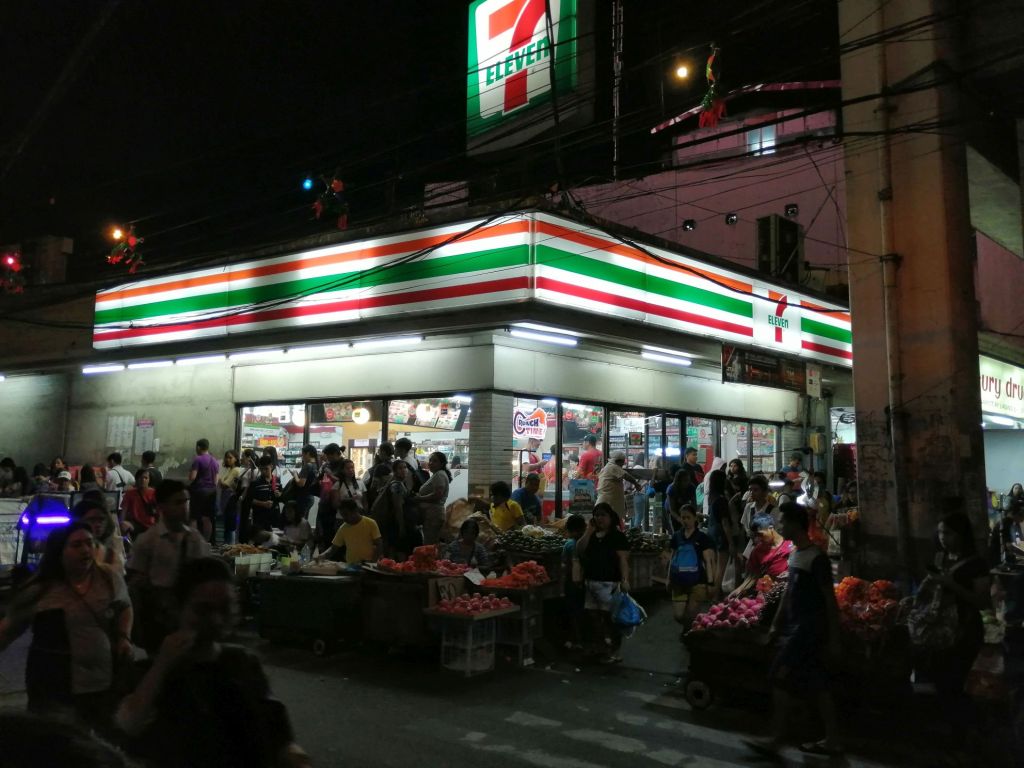
Local 7 Eleven shop
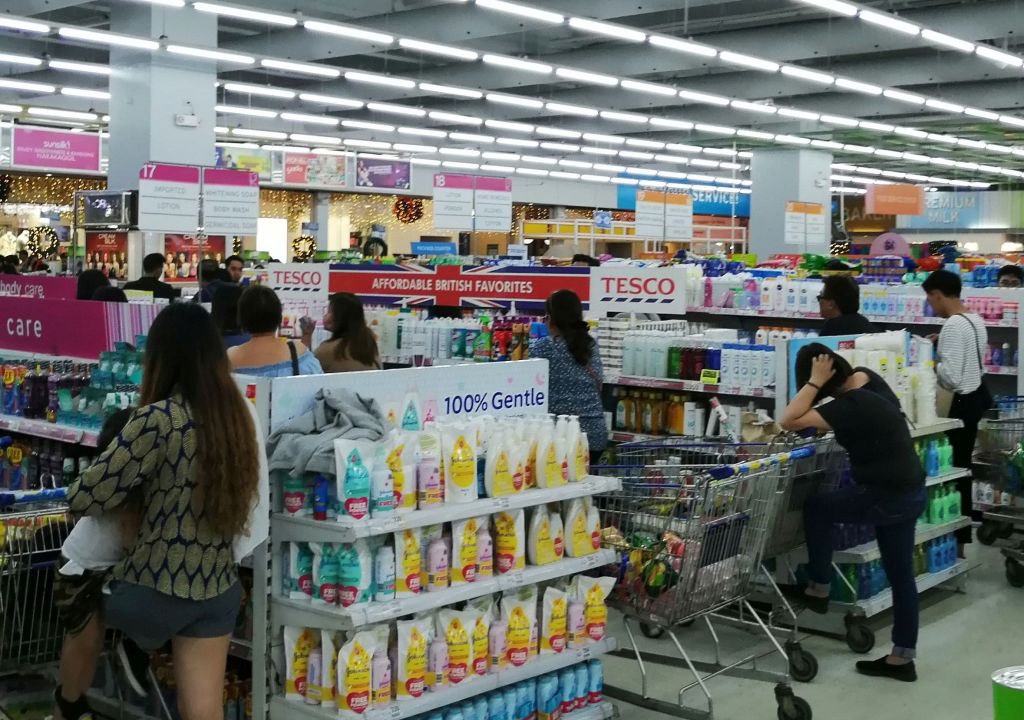
Get your Tesco affordable British favourite at this large supermarket in Baguio

Asked what I missed the most? Cheese, without hesitation! Not much cheese on offer in the Philippines. Also, they don’t really do sandwiches here, but again this is something you can get used to considering the many alternatives that exist. You can have an ice cream sandwich though: one or two scoops? On a cone or in a roll?

I haven’t spent long enough in the country to become an expert, and I certainly don’t remember the name of all the dishes I have tried (and neither did I photograph every single one!) Hopefully, this excites your palate and make you want to know more about this overlooked cuisine. Bon appetit!

Philippines 2019 – Boracay Island

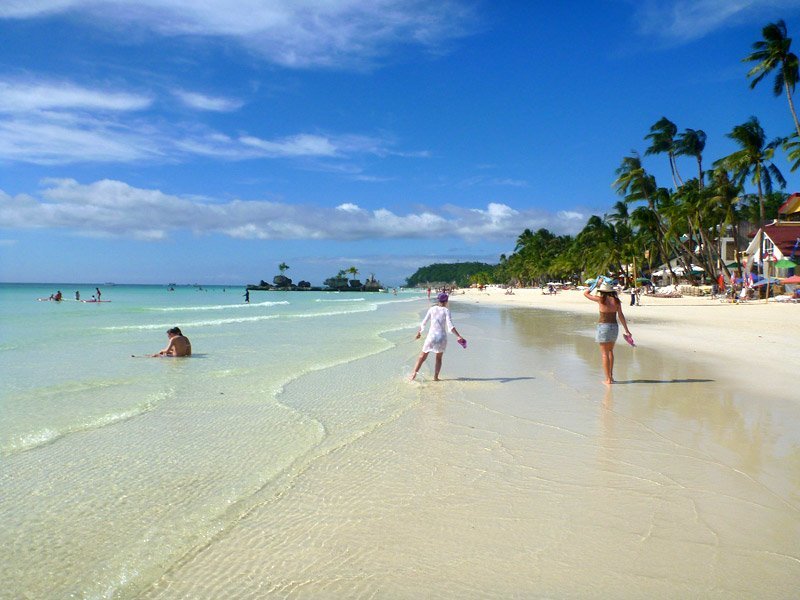
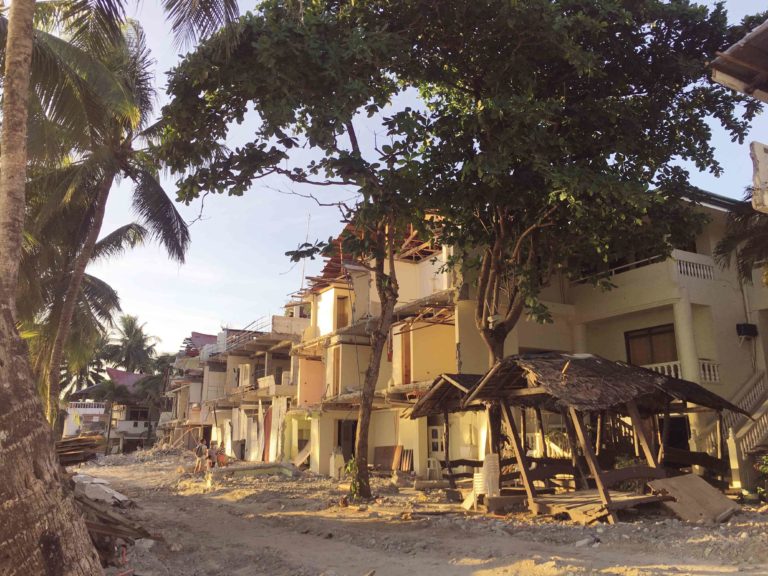
Boracay’s White Beach, from boracaycompass.com

After what happened in Manila, my friends wanted to show me a different side of the Philippines. They therefore took me to Boracay, which is a tiny island (7 km long) featuring one of the most idyllic-looking beaches in the world.

The island is one of the Philippines’ top attraction. Unfortunately, it is also victim of its success: 2 million visitors a year (more than 5,000 a day on average) took their toll on the environment and on some of the local communities. Urban development went mad, including many buildings without planning permission.

Click on this link to see the evolution of Boracay over the last 40 years with Google’s Earth Engine

Development was wild and the lack of planning for water and waste management led to widespread toxic algal blooms around the island. In 2018, the government ordered the complete island shut down for 6 months. The army was called in and clean-up operations were carried on, including the demolition of the buildings that did not comply with the regulations. Such a radical decision should be hailed as a victory for the environment, but the decision is shrouded in controversy, as the government also granted planning permission for a $500 million beachfront casino by a Macau-based casino operator at the same time. This excellent article in The New York Times provides an overview of what happened, as well as nice pictures highlighting the appeal of the island:

Note that I didn’t have a replacement camera when I went there, which was a blessing, as I tend to be obsessed with trying to document everything I find exciting (and I do find a lot of things exciting). Going to such a place without a camera was actually incredibly enjoyable. This article will be illustrated with pictures from the web…

There are regular flights from Manila to Caticlan, which take less than one hour (flying is a convenient way to go around a country made of 7,000 islands). We flew Air Asia, a very fast expanding low cost airline that operates fairly large planes on this route: ours was a shiny Airbus (I think an A320) with 3+3 seats on each rows. This is relevant, as Caticlan airport has a very short runway, with the sea at both ends: this is the strongest breaking I have ever experienced on landing, and an internet search shows a few planes have overshot in the past (but not by much fortunately).

Caticlan and its airport, from Google Map
One of the new Air Asia Airbus planes, similar to the one flying to Caticlan. Now everyone can fly. Photo from https://traveluxblog.com/2017/05/17/airline-review-air-asia/

From the airport, tricycles will take you to the port, and then it is a 10-minute boat trip to Boracay. Local taxis / minibuses (including electric ones which were introduced after the clean-up) will then take you to your hotel. At the port, officials check hotel bookings to prevent people from sleeping on the beach (which apparently contributed to the hygiene problem).

I fully understand now what the hype is about. White Beach is incredibly beautiful, with its stunning fine sand, turquoise sea, pretty boats, coconut trees and cafes, restaurants and hotels lining the beach. On the island, there is a huge range of accommodation available, with prices varying from £10 to £500 a night. The range £30-40 is well supplied: this amount gets you a very nice room in a very nice, well-located hotel. As a joke, I was showing my friends what they would get for that price in Edinburgh, Loughborough or Manchester. We stayed there for three days.

The Boracay Compass has made a short article about White Beach, which presents it nicely. This is why people go there:

It is very busy but somehow doesn’t feel too overwhelming, in particular in the middle of the day when very few people dare facing the incredibly strong sun. Interestingly, people lying in the sun in the middle of the day are mostly Westerners, and very few westerners visit the island – most tourists are Filipino or Asian. Westerners want to get as tanned as possible, whereas it seems Filipino and Asians want their skin to be as fair as possible (they may also try to avoid skin cancer); so the latter will wear long sleeves and hats and avoid the sun.

Sunbathing in Boracay. Picture from https://www.panaynews.net/boracay-foreign-workers-warned-secure-mayors-permit-or-face-deportation/
Beachwear favoured by some people to avoid tanning or being sunburnt. Buy yours on Shopee.ph!

But it is at sunset that you realise how many people are actually on the island, as everyone congregates on the beach to take the perfect picture. The picture may look like that:

Beautiful sunset from https://adventurousmiriam.com/the-insanely-beautiful-sunsets-of-white-beach/
Sunset and traditional boats from https://www.viajeroyale.com/product/paraw-sunset-sailing-boracay-5-6-persons/

But on the ground it feels more like this:

White Beach at the end of the day, from https://annaeverywhere.com/boracay/

It was interesting to see the significant number of people whose main purpose seemed to be to take pictures. Some seem to have travelled alone too. I noticed a few young Asian women who dressed nicely, got on the beach, set up their photo equipment with great care, took a few smiley pictures with a beautiful background, then picked up everything and left. That is perfectly fine, but I couldn’t help notice how sad some looked once they took their pictures (which made me sad too). You will be pleased to know that Boracay is on the list of top Philippine destinations for influencers:

https://www.preview.ph/culture/influencer-approved-summer-beach-destinations-philippines-a00268-20190320

Despite the crowds, White Beach was overall a very pleasant experience. It is very pretty and very clean. I heard people saying it has improved a lot since the clean-up. Accessibility has been improved too, and there is still obvious evidence of the demolition that took place: some hotels have been completely razed and nature is taking over, while buildings that advanced too far on the beach have been “trimmed”!

West Cove hotel. Image from CNN Philippines
West Cove hotel now. It looks like they didn’t have planning permission. Photo from http://www.positivelyfilipino.com/magazine/boracay-in-rehab
Examples of buildings whose front has been trimmed, as they were built too far into the beach. Photo from https://newsinfo.inquirer.net/1133603/20-cited-for-violations-in-boracay-road-rehab

Tourists get solicited quite a lot by touts on the beach who try to sell massage, island hoping, diving and other activities. But most are not too insistent and will acknowledge your refusal if you just say “thank you po” (“po” meaning “sir / madam”).

In terms of food choice, there is a lot on offer, though the prices are around twice what you would pay in Manila. However, the view is a bit more spectacular, the air more breathable, and the fresh seafood is amazing! As are the calamansi and mango muffins at the Real Coffee and Tea Café.
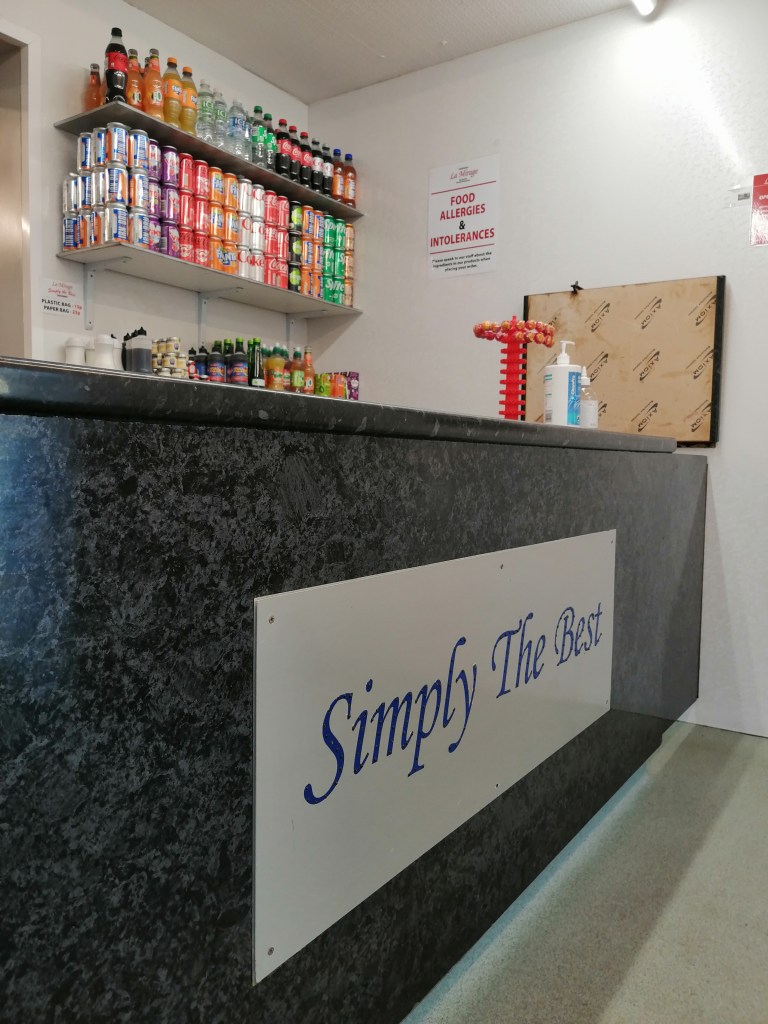
Example of seafood on offer at restaurants. Crabs, shrimps and lobsters are a local specialty. Photo from https://www.phtourguide.com/seafood-in-boracay/
Real Coffee restaurant and its renowned Calamansi muffins are a favorite of visitors on Boracay island. Fernando G. Sepe Jr., ABS-CBN News
Calamansi muffin at the Real Coffee and Tea cafe. I really enjoyed the mango one too! Photo from https://www.yummy.ph/news-trends/real-coffee-calamansi-muffins-boracay-a1756-20181226-lfrm2

In the evening, the beach becomes very lively. The bars and restaurants are bustling with people, there is live music and people chill out on the beach. My friends tell me that following the clean-up, there has been a realignment of the clientele: the different outlets now cater for people seeking relaxing, civilised experiences rather than loud parties and drunken nights on the beach, which is nice (I’m too old for that!)

On one of the days, we booked an island hopping trip: 25 people get on one of the traditional boats and are taken around the island. The program includes sightseeing, snorkelling on the reef and a delicous traditional buffet at the company’s own restaurant in Caticlan, all that for around £11!

Typical mean of transport for island hopping. Photo from https://www.myboracayguide.com/transporttype/boracay-transport-Standard-Transfer-4

That was a very unique experience, with highlights including:

1. The very rugged coastline in the north, with limestone cliffs, caves and birds: the whole island is a reef that is being uplifted. There are large fruit bats on the island, but they are struggling with the increasing pressure from urban development.

Cliffs on the way to bat caves, from https://www.youtube.com/watch?v=-9SV2Jo9Ax8.

2. The beautiful turquoise sea and golden Puka beach (perfect for ice cream!)

Puka Beach. How do they manage to take pictures with so few people on them?! Photo from https://boracaycompass.com/puka-beach-guide/

3. Snorkelling and feeling like you are in a tropical fish tank. It really looks like the fishes are attracted by people. It seems some boat people feed them but even without that, there is a huge concentration of colourful fishes, corals and sea slugs. Note that in reality, the water appears more turbid than on the pictures, simply because there is so much going on with the density of boats and swimmers.

Snorkelling on the reef. It genuinely felt like that! Photo from https://www.uitvconnect.com/newspaper/boracay-alluring-island-philippines

The rest of the time, my friends and I walked to some of the less touristy parts of the island. Some are very beautiful, with traditional villages, wetlands and dense forests persisting in places, but one cannot help noticing the pace of development and the amount of land that is converted into real estate. I am not talking here about local development. I am talking about GIGANTIC hotels, resorts and golf courses to cater for the select few who can afford it. The Google image below will make you realise the scale of the development, and makes me understand better the cynicism of those who saw the island shut down as a promotional stunt rather than something that truly addresses the environmental problems facing the island.

Google image of Boracay, showing extensive forest removal and resort building in the North. The scale of it is insane.

As I was flying back, I was reflecting on the experience. It was wonderful, and I would be hypocritical if I said I didn’t enjoy it. But I flew there and occupied one of the hotel rooms, so I contributed to the problem. And I feel the pressure on such environments is going to become more and more intense, as wealth increase in Asia as fast as cities become densely populated and unnatural: people will seek such experiences more and more, and more and more people will be able to afford them. I don’t think anything will stop the growth of this sort of tourism, so what is the solution? Is there a way of managing this growth better and making it more sustainable? Food for thought…

Philippines 2019 – mishap in Manila

I am in the Philippines for one and a half months, taking advantage of a break from teaching to try to develop projects with colleagues at the University in Quezon City, on the outskirts of Manila.

Last week, I was the victim of a “tourist trap” while I visited Manila. It cost me quite a bit, but it could have been much worse. I decided to write the details for myself, but then thought I would share my experience. I am probably lucky to have been the victim of criminals with some sort of morals, but being drugged and robbed is not fun. Imagine a “Hangover” type scenario: you wake up somewhere you have never been before, feeling incredibly dizzy and disoriented, and have no recollection at all of what happened past one point in the evening. On the bright side, there were no tattoos or tigers involved, my body seems to be in one piece (I have all my teeth) and I should have the results of my medical exams this week.

One week later, I have recovered physically, and probably mentally to some extent (though I think I won’t be as trusting as I was before, in particular to “sweet old ladies”). I can even see comedy in some of the events that have happened. I hope this read is informative and entertaining!
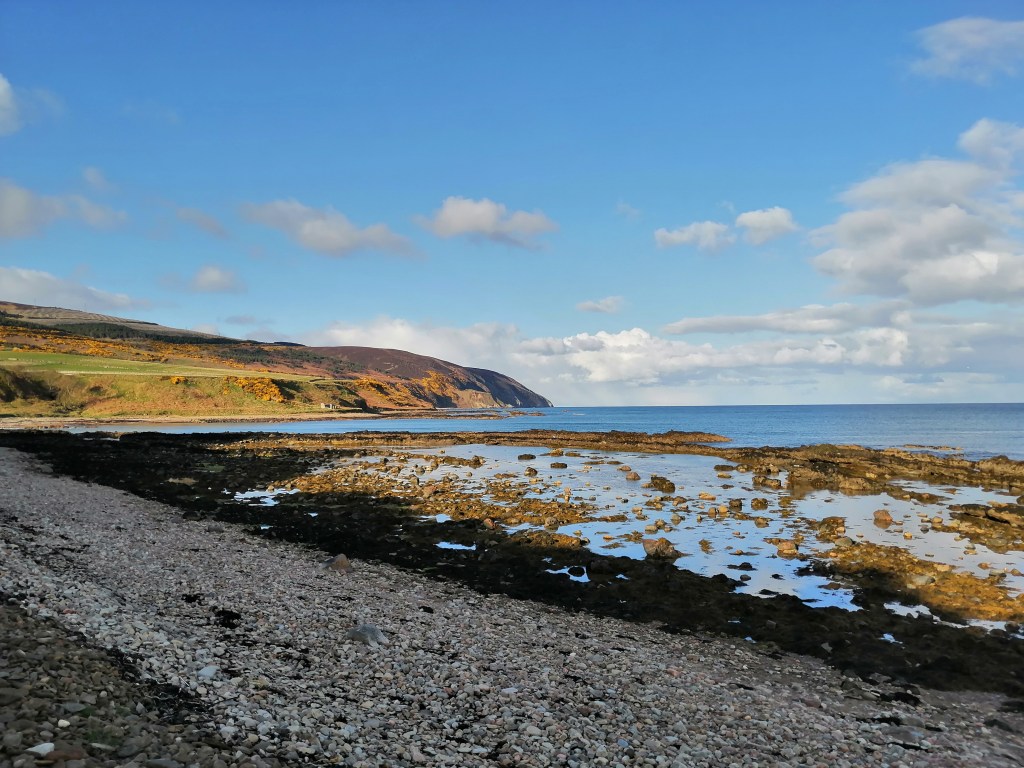
The day had started well: I have a studio in Quezon City but decided that, to make the most of Manila for the weekend, I should book a hotel in town for Saturday night. I did, and I made my way to Manila through my first Jeepney ride to Cubao (I may write another post about the Jeepneys at some stage), followed by a pleasant train ride to Recto, just east of Chinatown, which was my first target (I had designed a broad itinerary using the insightful Lonely Planet guide).

I visited the bustling Quiapo market with colourful stands selling things as diverse as fruits, vegetables, colourful eggs and fishes, car and tractor engines, and loudspeakers whose power was demonstrated at the sound of techno music. There was a mass in the church so I couldn’t see the Black Nazarene, but the sight of the gigantic church with hundreds of attendees was spectacular enough.

I walked to Chinatown and stopped at a small restaurant for lunch. I shouldn’t have asked the waitress for advice.

“What’s your favourite?”

“I love oyster cake, it’s one of our specialties”.

“Ok, I’ll take one”.

“We also do noodles, do you want some?”

“Yeah sure, let’s go for noodles”.

“Any dumplings? That’s also one of our specialities”.

“Er… Ok, let’s have some dumplings”.

I therefore assumed the portions were small, but they were not! And those who know me know that I don’t like to waste, and that I have quite a large appetite. I ate the delicious seafood noodles, managed to eat the dumplings, and probably ¾ of  the oyster cake. How do you make an oyster cake? It looks to me that you take around 30 oysters and some spring onions, and make a huge omelette with that. It’s heavy, incredibly gloopy and sticky, and it really tastes of oyster (this element is important for the rest of the story). I thought I was going to die. It cost the price of three meals, which is not much there, but I thought I’d save on dinner because I’d certainly not need any.
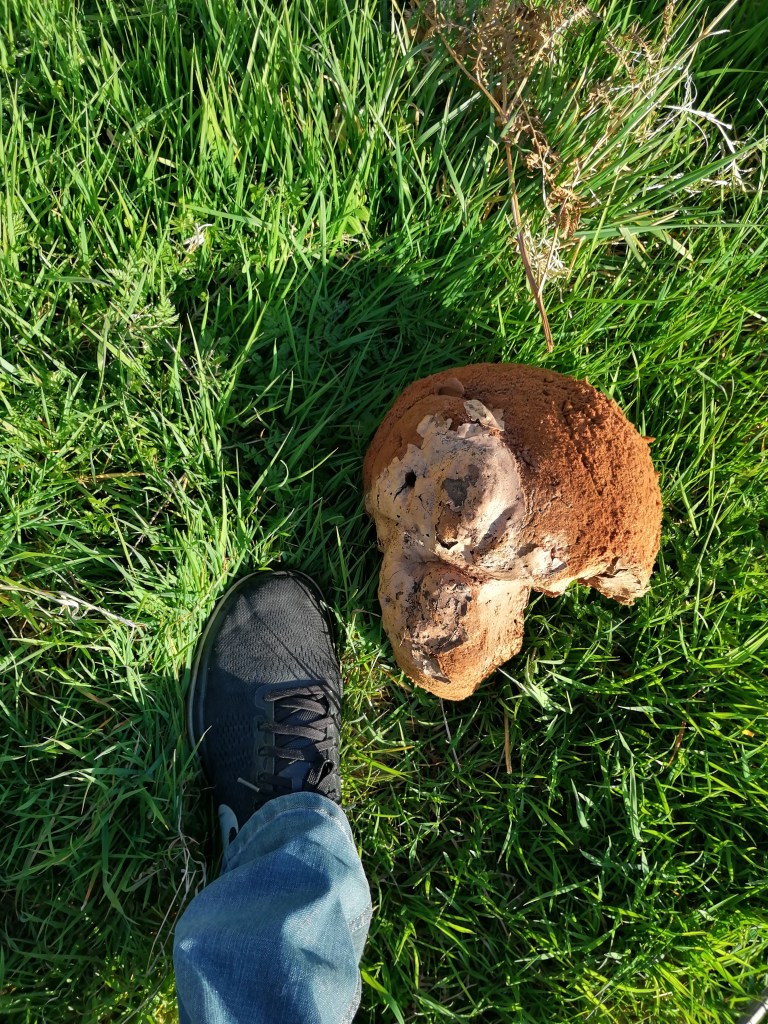
I then visited Chinatown’s Binondo area, which is one of the parts of Manila that had best survived the assault of WWII (which means a few buildings survived rather than none – most of Manila was flattened). There are a few pre-war buildings with beautiful designs, including the 1938 Calvo Building which houses a museum including “a trove of pre-WWII photographs and memorabilia”. The photos of Manila in the aftermath of the war are heart-breaking. But today, this area is victim of another assault, as most of the buildings with less than five storeys (including the ones that survived the war) are being torn down and replaced by giant, soulless 30+ storey skyscrapers. Admittedly, some of these old buildings are very poorly – climate is not kind to cement here. But some areas just look like they have been bombed, except that development is the cause. It may bring a better way of life for people? I will let the future judge…

I then walked towards and around Intramuros, the fortified part that is at the heart of the city and was flattened during the war. Some buildings have been reconstructed in a beautiful way, so there is an interesting mix of designs including ancient to the 70s. The traffic in and out of the port nearby is insane, as containers come and go, distributing goods across SE Asia.

I then arrived at Rizal Park, south of Intramuros, which is dedicated to Philippine hero Dr Jose Rizal who was executed on this place in 1896, at the age of 35. He had a pretty remarkable life, and I will just copy an excerpt from the Lonely Planet guide: “in his short life, he managed to speak 22 languages, found a political movement, write two novels, become a doctor in ophthalmology, and gain recognition as an acclaimed artist; he was also a world traveller and a fencing and martial-arts enthusiast. While in exile, he discovered two species of frog and lizard (both named after him), and he won the lottery”.

The park is very nice, and there is a memorial dedicated to Rizal, including bigger-than-life bronze statues commemorating his life, and ending with the execution scene, which I found poignant. The park itself is incredibly busy with thousands of tourists. It was around 16:00, I was thinking about slowly walking to the Malate promenade that offers views over Manila Bay and is on my way to the hotel. I will visit museums and Intramuros properly tomorrow.

This is when I was accosted by a lady, probably aged 50-60, and her younger brother. They were from Cebu, one of the Philippines’ 7000 islands, visiting Manila. She is a kindergarten teacher, spoke very good English, and all of us were in a similar mindset: “it’s hot, we’ve been walking all day, let’s take it easy and relax for the end of the day”. After some pleasant chat, I said I was going to the Promenade and they said they’d be happy to join.

As we were looking at the view and chilling out, the lady said she had a lady friend from Cebu who was living in Manila, who offered to go and visit the Bamboo Organ Church in Las Pinas, 5 km south. That was one of the attractions on the Lonely Planet, and we still had plenty of time. I remember thinking “what could go wrong?” I realise afterwards I clearly lacked imagination at the time, as far as “what could go wrong” was concerned. I said “ok, maybe, let’s just see when your friend arrives and we can decide”; traffic was horrendous at the time.

The lady came with a friend in a car. She was around the same age, very elegant, looking very respectable, spoke perfect English, and this is when I fell in the trap. I joined them and we drove south. We stopped at a small shop to get drinks and snacks for the evening. I don’t like beer so bought two Tanduay Ice bottles. It’s like Smirnoff Ice, one of these sweet refreshing drinks with 5% alcohol (which come in 330 ml bottles). They also bought some. I paid for it, which may become important later. I opened my bottle and drunk it on the way to the church. They offered me snacks but I refused, as I was still blotted from my enormous lunch.

We arrived at the church where there was a mass, and it was very nice indeed. A pretty unique church in a unique setting, and yes the organ is made of bamboo (and it sounds like an organ). The second lady was full of historical facts, which was great! They then said “5 minutes away, there is a place where they make and sell traditional Christmas lanterns, would you be interested?” I said yes, and we were back in the car. I opened my second bottle and started drinking, as it was very hot. We arrived there and it was enchanting indeed! The whole street was lined with colourful little workshops making and selling their own Christmas decorations! At that point, I felt very privileged, being able to witness all these with true friendly and generous Philippine people.
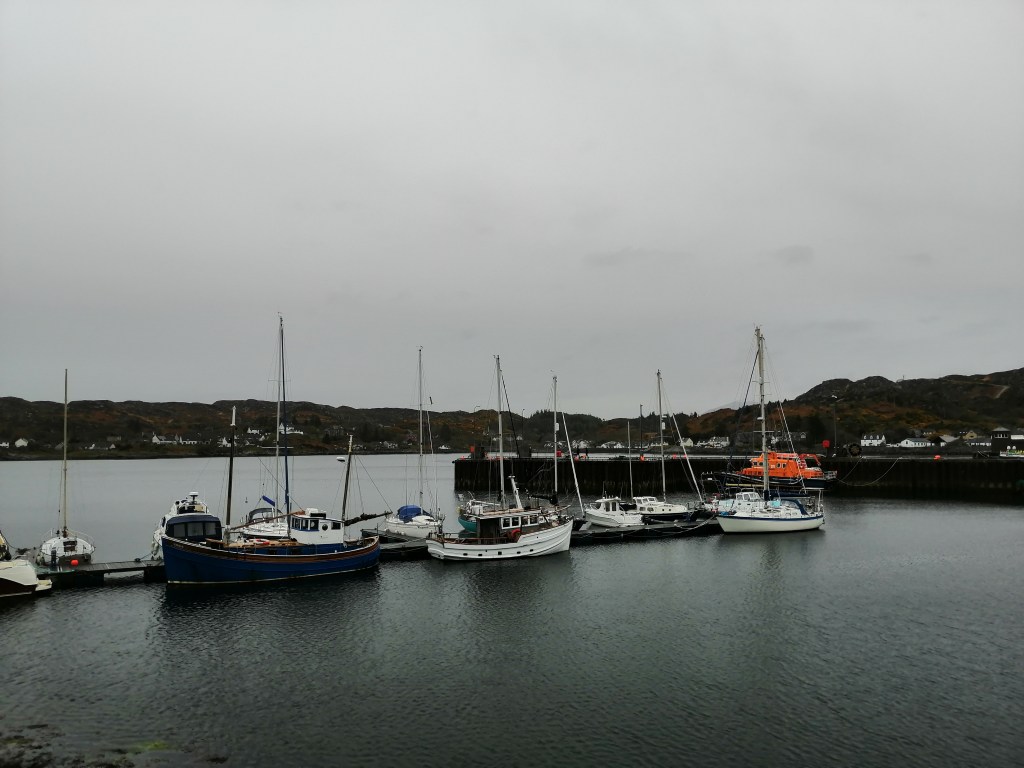
They said I should buy a lantern for my studio, and I thought “why not?” I saw a beautiful one for ~£15, but I rarely have a lot of cash in my wallet so I had to get some extra notes from inside my passport which was inside my rucksack. Because I grew up in Nice, I have learnt to be suspicious, so I tried to hide, but it was hard to do that in the shop. I must say at that point that this attitude of always being on my guard paid off until that evening, as I had never been robbed before!

I took my lantern and we got back in the car. Time to go back! I finished my second Tanduay Ice, we stopped at a petrol station, and… I woke up the following day at ~8 am in a hotel room.

My memories of what happened immediately next are very blurred, but I was dizzy, had a massive headache, and was completely disoriented. I checked myself and my belongings: my two RBS cards were gone, as was my phone and the cash in my wallet and in my passport (~£50, as I never have too much cash on me, fortunately). On the bright side: I still had my wallet and passport, and it appears I am in the hotel room I booked. However, I hadn’t checked-in before! How did I get there?

I went to the bathroom and realised I had been sick on the floor and bathroom mat – all my senses identified the oyster cake. So, the first thing I did was clean the floor and the mat! It is interesting what one does when in shock. I think I then had some paracetamol, a shower. I put my things back together, checked out (all very blurry), went to the street, I think I ate and drunk something from a shop, and then I asked directions to the police station. People were very helpful and there was one around the corner.

There, I was met by very friendly and understanding policemen. Interestingly, when I told them the story, they showed me pictures of suspects. I instantly recognised the second lady on one of them, and then I’m pretty sure I recognised the first lady and her “brother” on other ones. The policeman said “this is their modus operandi, you are not the first one, and you’ve likely been drugged”. That made a lot of sense: I was drugged, maybe through my second drink. I blacked out, they took what they wanted, and somehow got me back to my hotel.

Because the incident started in Rizal Park, I was taken in a police car to the Rizal Park station. There, they thought I should go to the Manila central police station to make my statement, so they took me there in another police car. This is still fairly blurry but I am pretty sure that I visited five police stations in the day and travelled in three police cars, including one with blaring sirens to progress through traffic. Anyway, I got there and gave my statement while being fed cakes and Lucozade.

It was late afternoon, and the inspector then realised that the crime had been committed in Las Pinas, so I had to go to Las Pinas police station, ~10 km south, at rush hour! Even a police car would take forever. Worry not my friend, there is something called Angkas in Manila: imagine Uber, but on a motorbike! They booked me one, and before I even knew what was happening, I was on a motorbike for the first time in my life, being driven through crazy Manila traffic for nearly an hour. I think we reached 60 mph on some clear sections of the motorway. I also think I was still high on drugs because I really enjoyed the whole thing, maybe a bit too much! I distinctly remember thinking at some point “I’d pay good money to have that much fun”.

We got to the local police station in Las Pinas. A policeman was waiting for me. I explained what happened and they put me in a police car to the huge Las Pinas central police station. There, an inspector took my statement in great details. I was questioned and fed more cakes. I still had the receipt from the shop where I bought the drinks and snacks, and the inspector thought that’d be a good lead, as they had the address and time of purchase, and there are likely CCTVs there – they may even be able to identify the car as it is a petrol station! Paying for shopping (despite the insistence of the thieves that they pay) may pay off. The inspector said they probably took my phone to not be identified on pictures.

I must admit everyone had been incredibly kind and supportive throughout the day. They also probably thought I was a bit of a numpty. I imagine they thought I “asked for it”, somehow, as drinking alcohol in public (including cars) is not permitted in the Philippines. I didn’t know that, and they must have perceived that I was ready for a night of debauchery, or something like that.

When this was over, they told me to be more careful in the future, booked me a Grab taxi (like Uber here) and wished me farewell. I arrived home around 23:00 I think. At that point, I think I realised that I had been having the hiccup all day, maybe a side effect of the drug?

What a ******* weekend! But the night still had surprises in store.

I thought I should probably block my cards ASAP, so I got onto the online chat with RBS, who looked at my account and said they were going to go through recent transactions to see if any fraud had happened. It happened that on Saturday, at around 20:30, I withdrew around £500 in five transactions involving both my credit and debit cards.

“Ok, I didn’t withdraw that cash, these are the thieves”.

“Chip and PIN were used”.

“What?”

“Did you write your PIN number inside your wallet?”

“NO! The PIN number was only in my head!”

“Could they have seen you using your PIN code at a cash machine or when you paid for some shopping?”

“NO, I hadn’t used the cards for days, I prefer using cash because of the cost of international transactions!”

The implications of this were terrifying. I must have given the code to the criminals, or even withdraw the cash myself. And I had absolutely no recollection of that.

I then started looking on the internet, and I learnt about these drugs that, if well dosed, don’t just knock you out but supress your freewill and make you completely docile. See for example: https://www.nomadichustle.com/getting-drugged-in-colombia-scopolamine/. I also found this article, with someone who seems to have experienced something scaryingly very similar in Manila: https://www.lonelyplanet.com/thorntree/forums/asia-south-east-asia-islands-peninsula/topics/manila-scam-drugged-by-two-sweet-old-ladies. That was 6 years ago, maybe these ladies don’t age, or I’m not good at assessing the age of Philippines people (I initally told the police they were mid-40, then I thought “wait, I’m nearly that age now, and they were definitely older!”).

I think I understand now what the victims of the “rape drug” feel. What is terrifying is that it was not like: “oh, I’m suddenly feeling very sleepy, what is happening?” It was more like an ON/OFF button, and within seconds my mind was switched off, but I was still awake and doing things, dictated by the criminals. I hate to think about what else I may have done, and I have now decided to stop trying to retrieve my phone (which I was trying to locate with a Sony app, with no success). I just remembered the end of the three Hangover films, when they find the camera…

That would also explain how they got me to my hotel, because I hadn’t checked-in so they could have not followed me there: they must have just asked me! The policeman said they probably got someone (like a taxi) dropping me at the hotel. I have been told that the guard on duty at the hotel took me to my room, but I can’t remember when or how I got this information.

I just have a very very very faint, vague memory of something that may have happened while I was “unconscious”. I don’t know if this is true or just the result of my mind making up a story which I wish were true: I was sick. In the car. Oyster cake. If that is true, this car will never smell the same again! Somehow, that made me happy.

This was one of the scariest thing I’ve experienced in my life, but not the scariest because most of the scary facts came after the crime was committed. I am really annoyed at these people and I hope the police catches them, though most people here seem to have doubts about it – police have greater concerns.

What is very weird though, is that part of me is grateful to the criminals to some extent, in the sense that bringing the victim of your crime to a safe place after the crime is committed involves greater risk. They are clearly professionals, and they are criminals, but they took me back to my hotel room. They could have left me unconscious in the street. They didn’t take my wallet, just the two RBS cards, so I will be able to function with the two other bank cards I have. They didn’t take my passport, just the cash that was in it. And that is going to make my recovery much much easier!

What I have learnt is: criminals will go to great lengths to take what they want. As I said earlier, I have always been very careful and this is the first time I have been robbed. To achieve that, the thieves had to drug me. So, listen to your mothers: don’t talk to people you don’t know! And beware the “sweet old ladies of Manila”. I’ve always assumed young attractive women would be used to set such traps, but I was wrong.

In the aftermath of that, I must admit the level of support I received has been overwhelming (in a good way). From the University’s insurance provider first, who has been incredibly responsive and supportive. From our Health and Safety manager too. From my colleagues and friends here in Manila. From people on Twitter as well! And from anyone else I met here as a result of this “adventure”: the police, but also the nurses and doctors at the medical centre where I was examined. The people at the medical practice said they had never heard of anything like that, and that they felt sorry and ashamed of their country: “these are not our values”. They also insisted I should go on TV to alert the opinion and make the enquiry progress, because otherwise nothing will happen. I politely declined the offer, as I think I have attracted enough attention for now. All I want now is to move on and enjoy the rest of my stay.

My colleagues and friends here said that they will make sure the rest of the trip makes up for what happened. I also suspect I will be on a tighter leash from now on!

Everything we experience on a daily basis changes us. Some days are more transformative that others. The saddest part of this story is that I realised how easy it was for these people to take advantage of me. The result is that I don’t want to go out and meet new people anymore, which is one of the attractions of travelling abroad. I don’t want to go to unfamiliar places on my own anymore. My suspicion levels have been raised to maximum. Maybe it is a good thing. Maybe it will relax eventually. I don’t know, we will see.

I am staying in the Philippines until the end of the year. I have never really written a travel blog but maybe it is a good idea. Hopefully, the next stories will reflect better the wonderfulness of this country and its people (with pictures – once I have bought a new camera). Watch this space for more stories about Jeepneys, food and Honda Jazz, among others!

Mikael Attal, Geomorphologist at the University of Edinburgh, UK

I am a Senior Lecturer in Geomorphology at the University of Edinburgh. I study the shape of landscapes, rivers and sediment, and I travel to places that have interesting problems to solve, both for teaching and research. In particular, I work in tectonically active areas, which are typically areas with big mountains and steep and powerful rivers, along which people are trying to live.

Because scientists tend to travel to places where tourists don’t necessarily go, our experiences are often very unique, in a good and sometimes in a bad way! For long, I have been trying to find a platform to share my experiences, and I am on Twitter for example: https://twitter.com/mickymicky06s

But my most recent experience required something a bit more substantial. It is not every day that someone ends up drugged and robbed while visiting a capital city! I will start with this unfortunate story today, but am hoping to follow with more positive experiences soon! I hope you will enjoy reading about these.

Design a site like this with WordPress.com
Get started